S&P 500 Falls for Third Consecutive Day, Dollar Breaks Through 13-Month High, Gold Dips Below 4000, Oil Below 70, Bitcoin Below 60000 Mark, Micron and Qualcomm Spark Major Chip Stock Rebound

华尔街日报Dipublikasikan tanggal 2026-06-25Terakhir diperbarui pada 2026-06-25

Abstrak

U.S. stocks were mixed, with the S&P 500 falling for a third consecutive session as tech weakness offset gains in other sectors. The Nasdaq underperformed, with the AI semiconductor sector plunging nearly 10%. Micron and Qualcomm, however, sparked a major after-hours rally in chip stocks, with Micron surging over 16% on a strong earnings report and outlook driven by AI-related memory demand. The dollar rose to a 13-month high, pressuring dollar-denominated assets. Gold tumbled below $4,000 per ounce, and oil prices crashed, with WTI crude falling below $70 a barrel to its lowest level since before the Iran conflict, as geopolitical risk premiums faded with improved Middle East supply flows. Bitcoin briefly fell below the $60,000 mark. Treasury yields dropped sharply, with the 10-year yield falling 9 basis points, supported by the drop in oil prices easing inflation concerns. Market focus now turns to upcoming PCE inflation data for further direction on Fed policy.

The weakness in the tech sector led to mixed intraday performance for major U.S. stock indices. Oil prices fell to their lowest level since the outbreak of the Iran war, and the fading inflation risk premium pushed the 10-year U.S. Treasury yield down by 9 basis points in a single day.

The dollar broke through a 13-month high, weighing heavily on the commodity markets. Gold prices briefly fell below $4000, oil dropped below $70, and Bitcoin once dipped below $60,000.

Micron Technology's stock jumped over 16% after-hours as the company reported earnings that beat analyst expectations. An AI-driven shortage of memory chips is driving product prices significantly higher. The Nasdaq 100 ETF rose 1% after-hours.
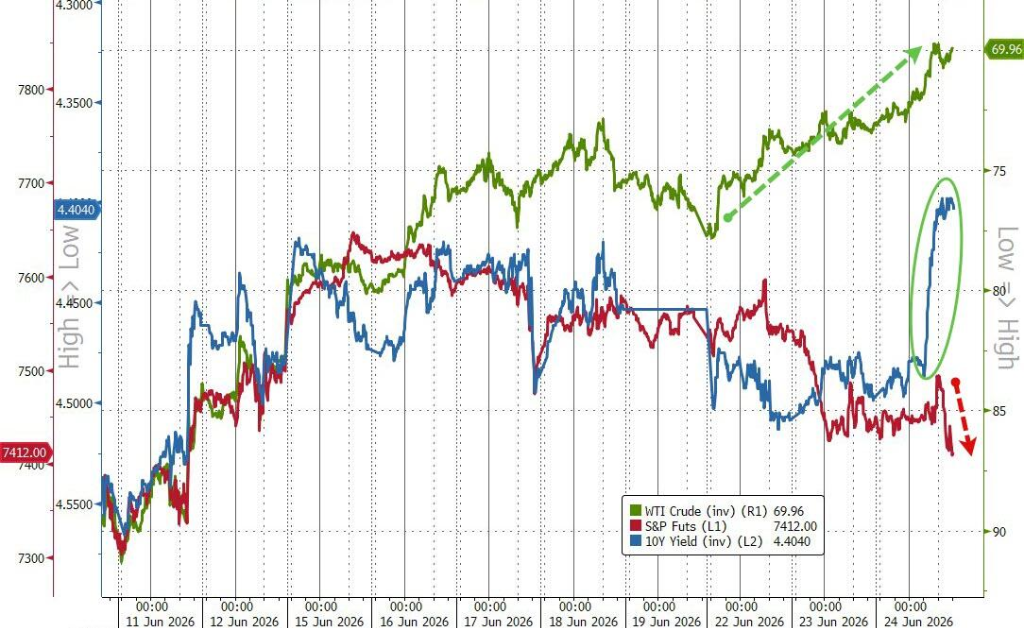
Following an overnight V-shaped recovery in South Korean stocks, the three major U.S. indices initially rose after Wednesday's opening. However, selling pressure began as European markets closed and persisted with each rebound attempt. The Nasdaq experienced the largest decline, while the Dow Jones and the small-cap index barely managed to hold onto gains.
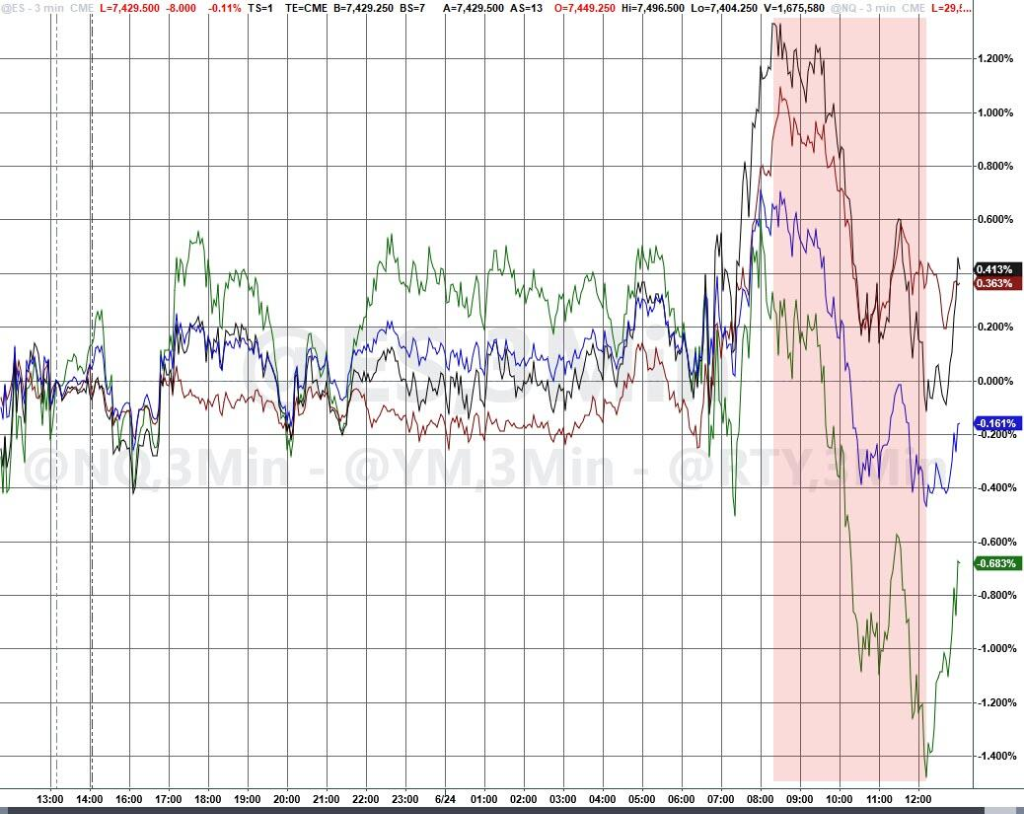
Notably, despite overall index pressure, more than 310 stocks in the S&P 500 closed higher on the day. The 'Magnificent Seven' tech giants underperformed the remaining 493 S&P components, showing a clear "rotation" pattern in the market.
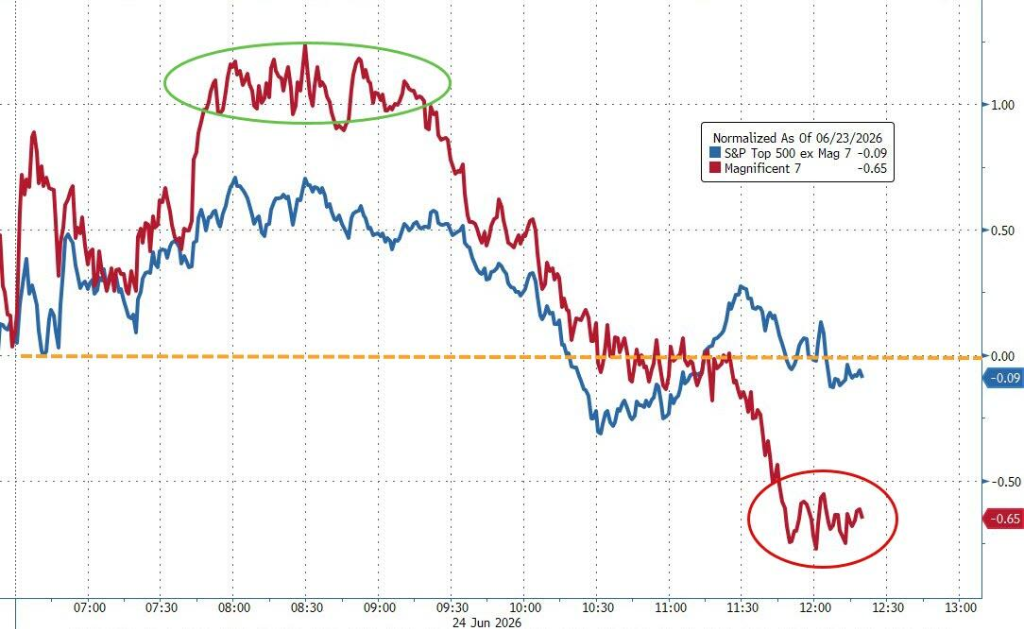
Technology and energy stocks were the biggest drags of the day, while consumer discretionary and industrial sectors relatively outperformed. Over the past two days, the AI "leader" sector has shown notable weakness. The S&P 500 index (excluding the AI sector) actually rose over 1%, while the AI semiconductor sector plummeted nearly 10%.
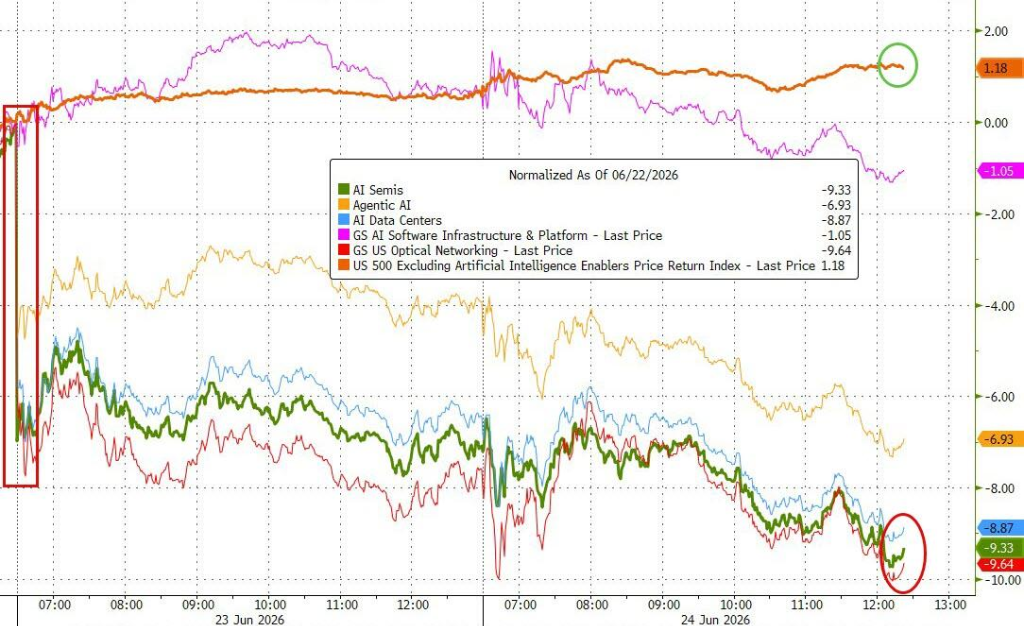
The Philadelphia Semiconductor Index fell 0.82% for the day. Qualcomm dropped over 4%, Arm and Marvell Technology fell over 3%, ON Semiconductor declined over 2%, and Micron Technology also fell 0.81%.

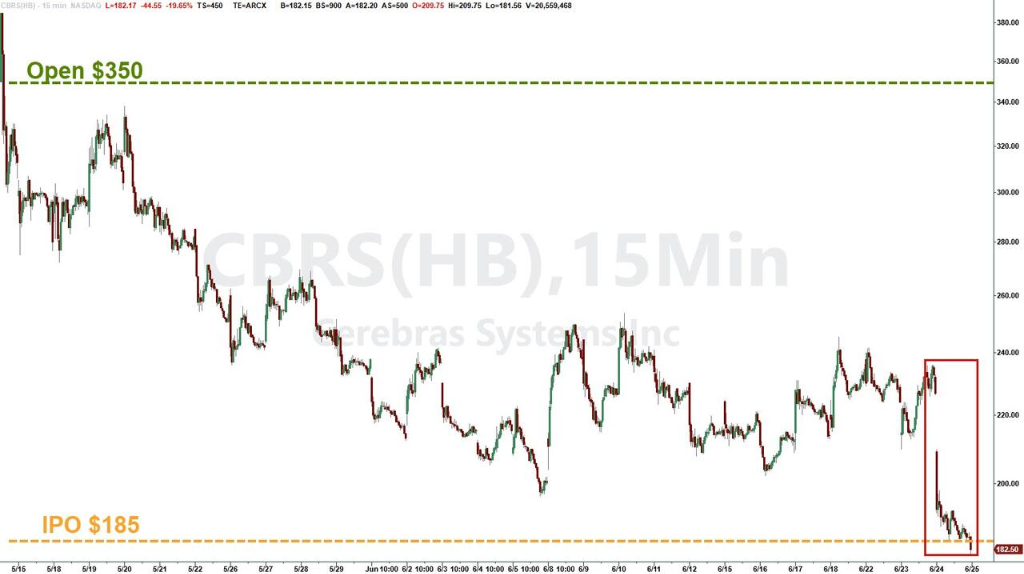
Cerebras Systems plunged about 19%, falling below its IPO issue price after the company forecast its full-year profit margin would be lower than Q1 levels in its first post-IPO quarterly report.
OpenAI announced the launch of its first self-developed AI chip, codenamed "Jalapeño," jointly developed with Broadcom on the same day, further increasing competitive pressure on external chip suppliers.

Mark Hackett of Nationwide believes the recent tech weakness is more of a position adjustment and rotation rather than a fundamental warning signal. Rick Gardner of RGA stated:

Stocks rose too fast and too much; a pullback was almost inevitable. For investors underweight this sector, this correction actually provides a buying opportunity, as the fundamentals of this sector remain strong.

Micron Technology's after-hours report of its fiscal 2026 Q3 (ended May 31) results and guidance became a key variable for whether the market could stabilize.

As mentioned by Wall Street News, Micron's Q3 revenue grew approximately 346% year-over-year to $41.46 billion, about 16% above analyst expectations. Non-GAAP adjusted EPS grew over 12-fold to $25.11, more than 20% above estimates.

Analysts generally believe the guidance is even more important than the quarterly data itself. Micron expects Q4 adjusted revenue between $49 billion and $51 billion, implying record revenue this quarter. The midpoint guidance of $50 billion is 15.6% above analyst expectations.

Nomura pointed out that the implied volatility premium for Micron's earnings in the options market exceeded the market impact of recent Federal Reserve meetings. The options market implied a breakeven volatility range of about ±7% to 8%. If the actual price movement reaches 10% and breaks this range, the market may interpret it as a signal verification of demand in the semiconductor and AI industry chain, potentially triggering broader directional volatility in tech stocks.

In the end, Micron's after-hours sales forecast was comprehensively ahead of market expectations, causing its stock price to jump over 16%, drawing a provisional pause to the tech sell-off of the previous days.
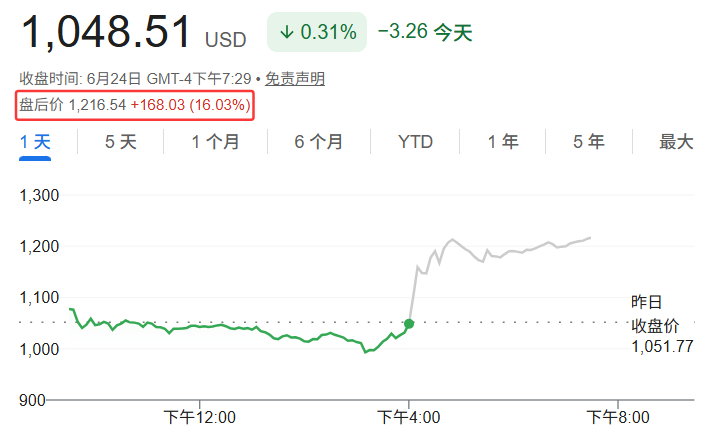
Memory stocks hit highs again after Micron's report, and the rally wasn't limited to Micron or just 16%. Influenced by Micron's results, Qualcomm's stock price also rose over 10%.

At an investor day event on Wednesday, Qualcomm made a series of positive comments on the growth prospects in the AI field. The company stated that its expansion into data center chips would generate "billions of dollars" in revenue in the fiscal year starting in October.

Other U.S. chip stocks also surged after-hours. Memory stocks Western Digital, SanDisk, and Seagate Technology all jumped over 10%.

Arm and Applied Materials rose over 6%, ASML and Intel gained over 4%, AMD climbed over 3%. In early Thursday Asia-Pacific trading, Nasdaq 100 index futures once surged over 2%.

According to International Energy Agency estimates, UAE oil exports have recovered to nearly 85% of pre-war levels, reflecting a significant increase in oil shipments via the Strait of Hormuz in recent weeks.

Just the UAE alone sold about 60 million barrels of crude from within the Persian Gulf in recent weeks. Data shows vessel traffic through the Strait of Hormuz has reached new highs since the signing of the Memorandum of Understanding and continues to rise.
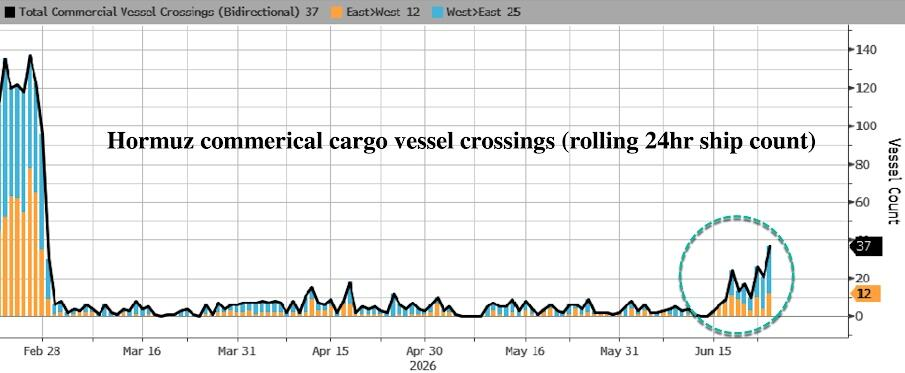
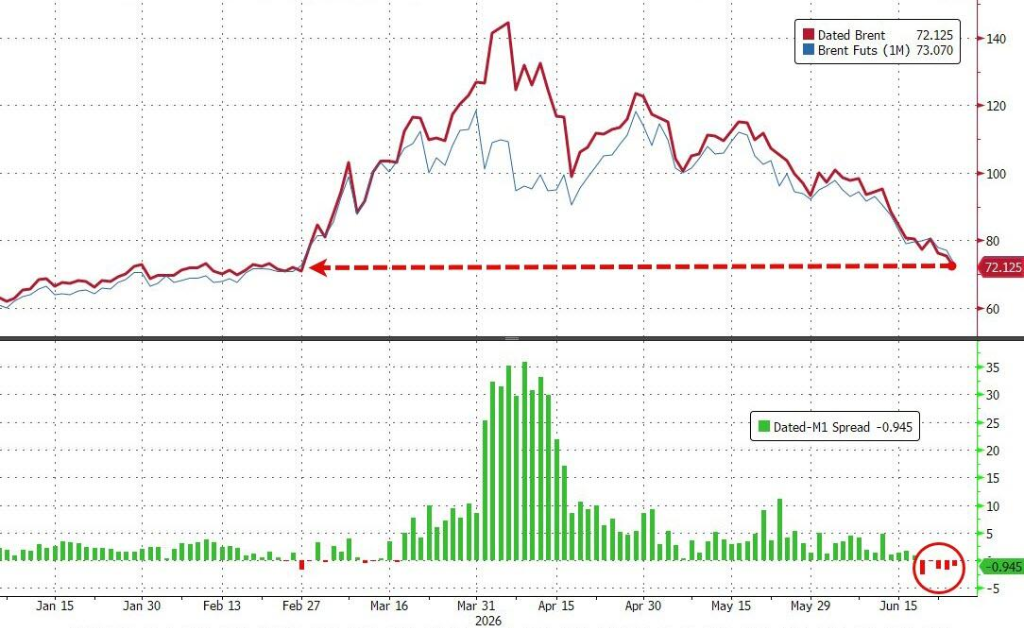
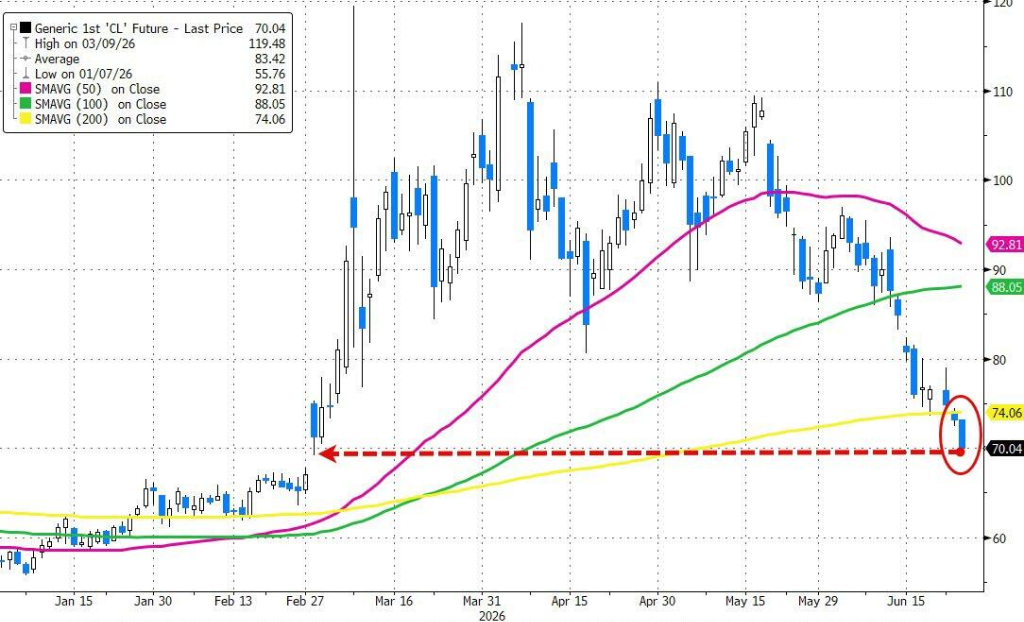
The spot crude market also softened, with premiums for regional crudes relative to benchmarks from the North Sea to West Africa rapidly declining. WTI crude futures broke below $70, touching near pre-war lows, with a daily drop of 4.5%.
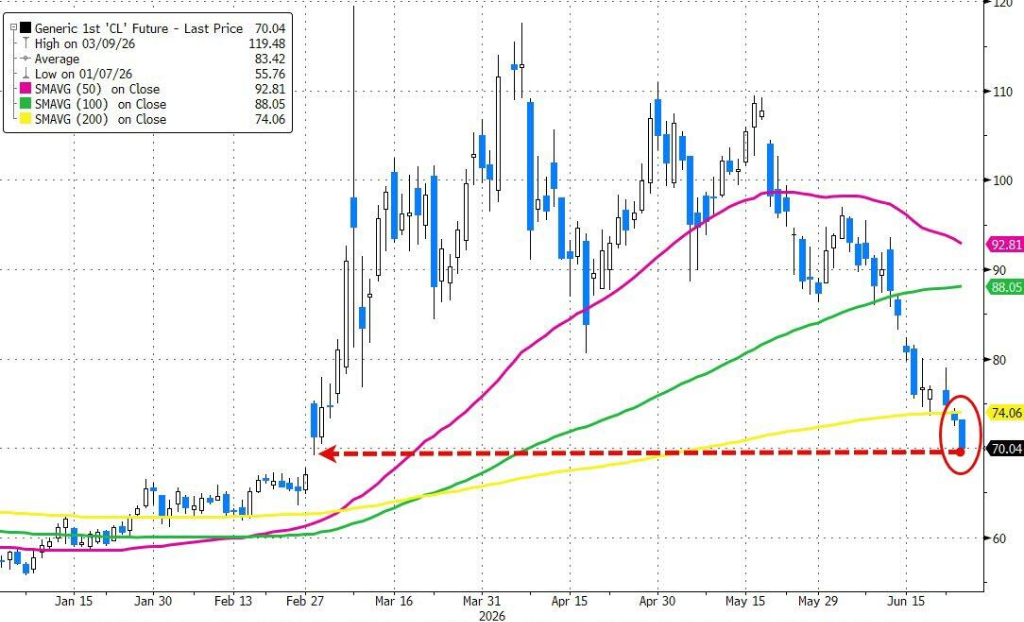
Brent crude has largely erased all the geopolitical risk premium accumulated since the outbreak of the Iran war.
On the news front, Trump posted on social media on the 24th, stating Iran had informed the U.S. it would not impose any transit fees, insurance fees, or other charges on vessels passing through the Strait of Hormuz. However, he also threatened that negotiations would terminate immediately if this information was false.

He also revealed the U.S. would unfreeze some Iranian funds for purchasing U.S. agricultural products, but no funds have been unfrozen yet. He told reporters after meeting with Senate Republicans:

I see oil just fell below $70, who would have thought this would happen? And this is during wartime. Iran is behaving very well.

Stephen Innes, Managing Partner at SPI Asset Management, pointed out, "The oil price decline is not because the market believes geopolitical risks have disappeared, but because the improvement in physical flows has been faster than expected."

Options market data shows investors are positioning for further downside in oil, with put option volume exceeding call options. The most actively traded contracts are August and September expiry puts with strike prices between $60 and $68.

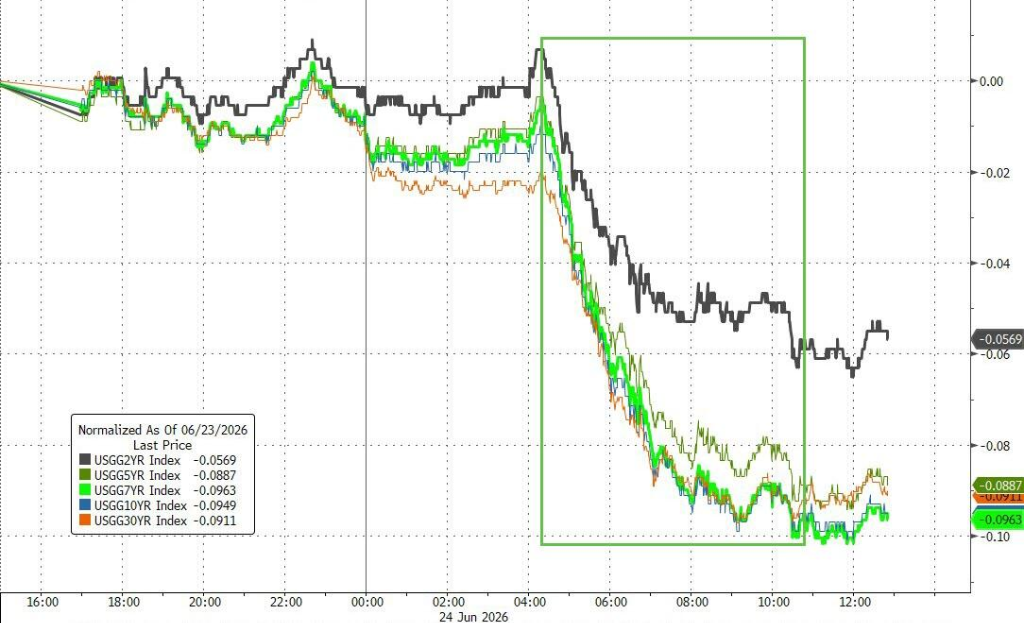
The oil price decline provided a clear boost to the bond market. The 10-year U.S. Treasury yield fell 9 basis points to 4.40%, and the 30-year yield touched 4.85%, its lowest level since April 8th.
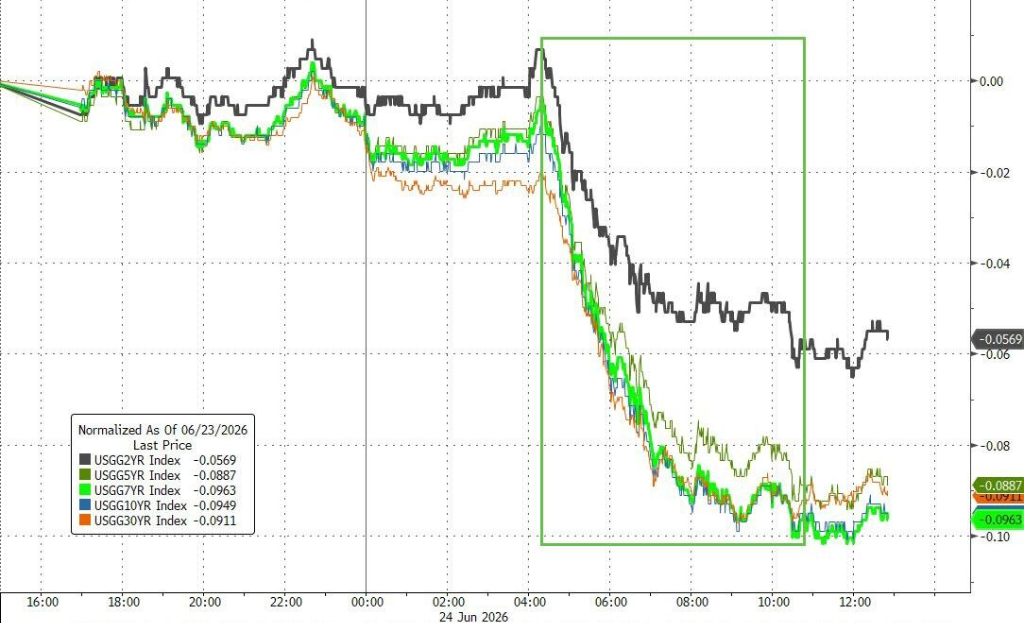
The PCE price index release on Thursday will be the next key node. Forecasters expect the May data to show acceleration on both a monthly and yearly basis, providing a new reference for the Federal Reserve's policy direction.

Goldman Sachs Chief Economist Jan Hatzius reiterated that his baseline forecast remains for no rate hike, citing that a lasting peace in the Middle East would create a more moderate inflation environment than the Fed currently expects.
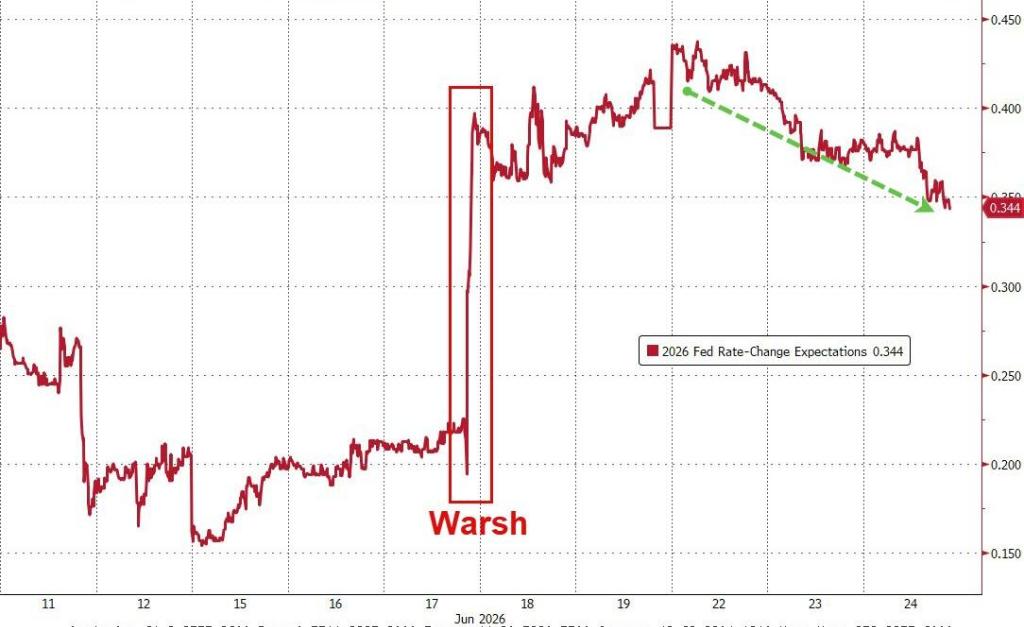
The logic chain for gold's pressure is clear: cooling geopolitical tensions reduce safe-haven demand, rising Fed rate hike expectations support a stronger dollar, and a stronger dollar directly depresses dollar-denominated precious metal assets.

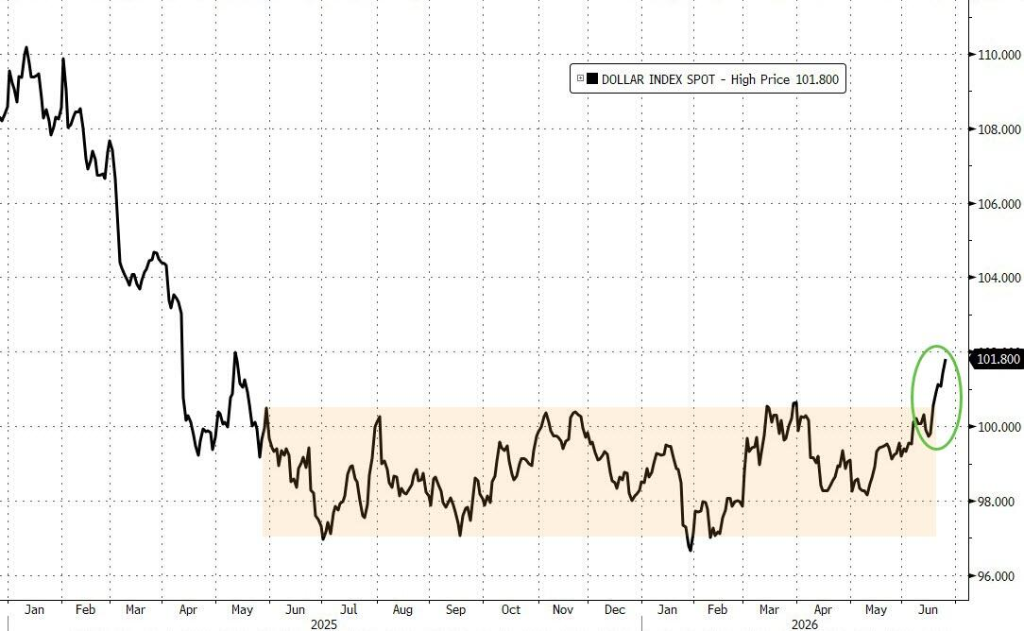
The U.S. Dollar Index (DXY) continued to hit new 13-month highs.
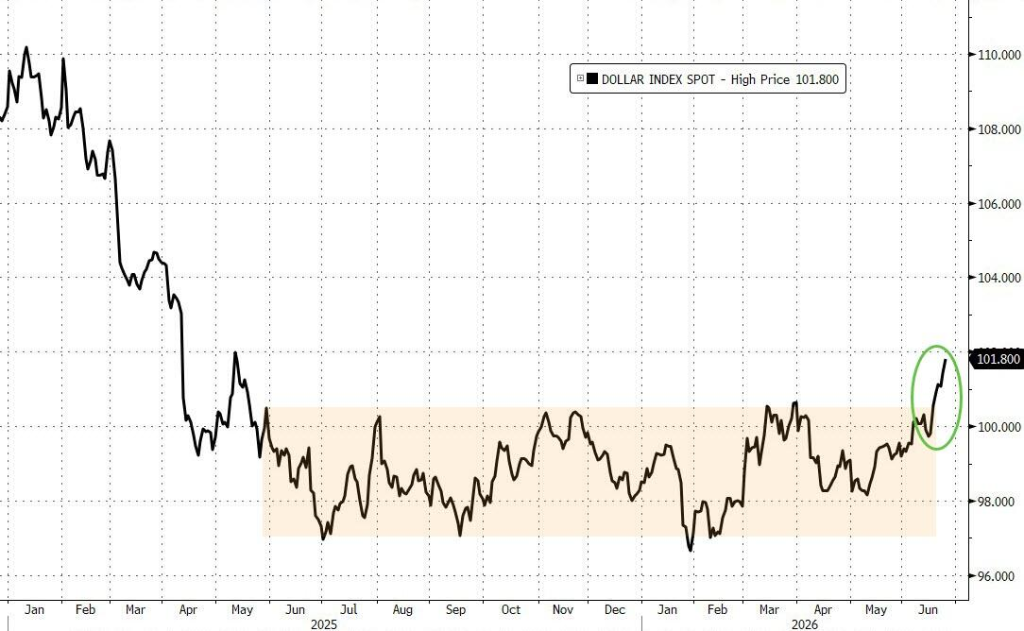
On the policy front, U.S. Treasury Secretary Besant stated on CNBC that negotiations with Iran involved having Iran price its oil and gas exports in dollars, Venezuela is returning to the dollar system, and Russia is expected to return to dollar settlements after the Russia-Ukraine conflict ends. He characterized these developments as part of a broader reshaping of the dollar's global dominance.

Besant also predicted U.S. GDP growth could return to 3% within the year. The strong dollar narrative thus gained policy endorsement, further suppressing gold's attractiveness.

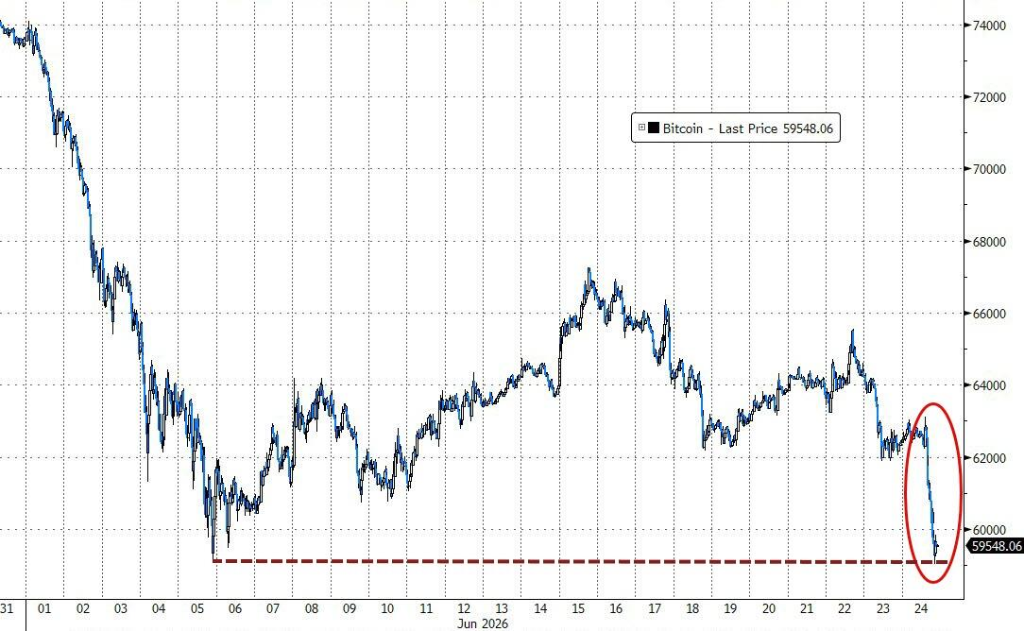
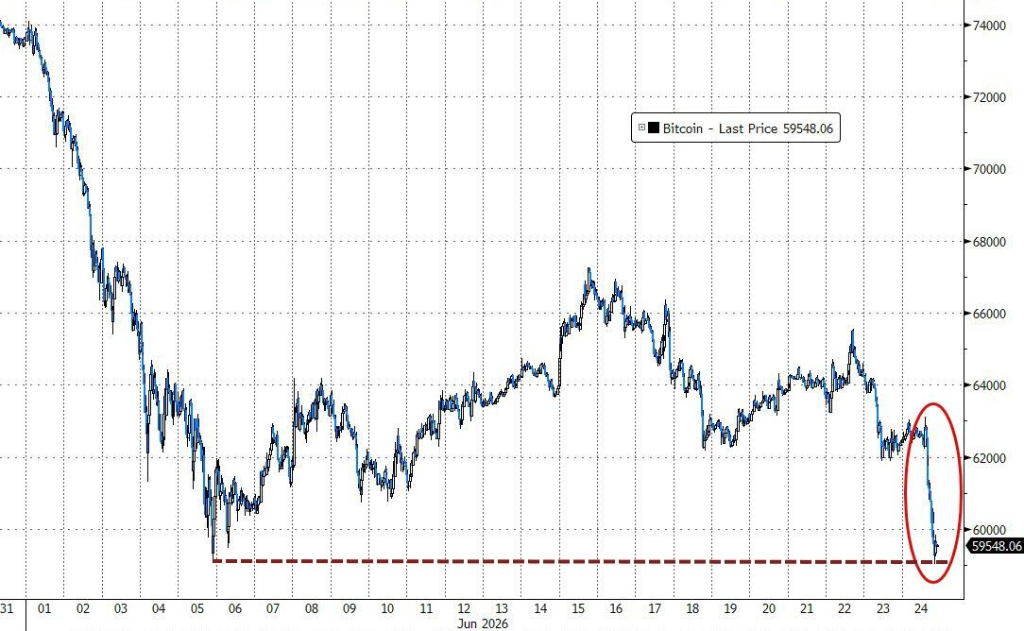
Amid the strong dollar, Bitcoin plunged over 5.3%, once breaking below the $60,000 mark during the session.
Persistent weakness in tech stocks on Wednesday left the S&P 500 essentially flat, with the Nasdaq Composite falling 0.41%, but the Dow Jones Industrial Average rising 0.36%. The Nasdaq Biotech Index and the Regional Bank Index hit record closing highs. Cerebras Systems plunged 19% during the session.

Major U.S. Stock Indices:

  • The S&P 500 Index closed down 7.24 points, or 0.10%, at 7358.22.

  • The Dow Jones Industrial Average closed up 182.06 points, or 0.35%, at 51848.90.

  • The Nasdaq closed down 110.403 points, or 0.43%, at 25476.636. The Nasdaq 100 Index closed down 127.216 points, or 0.43%, at 29220.056.

  • The Russell 2000 Index closed up 0.37% at 2986.629.

  • The VIX Volatility Index closed down 4.31% at 18.65, showing an M-shaped pattern since 00:00 Beijing Time.

U.S. Sector ETFs:

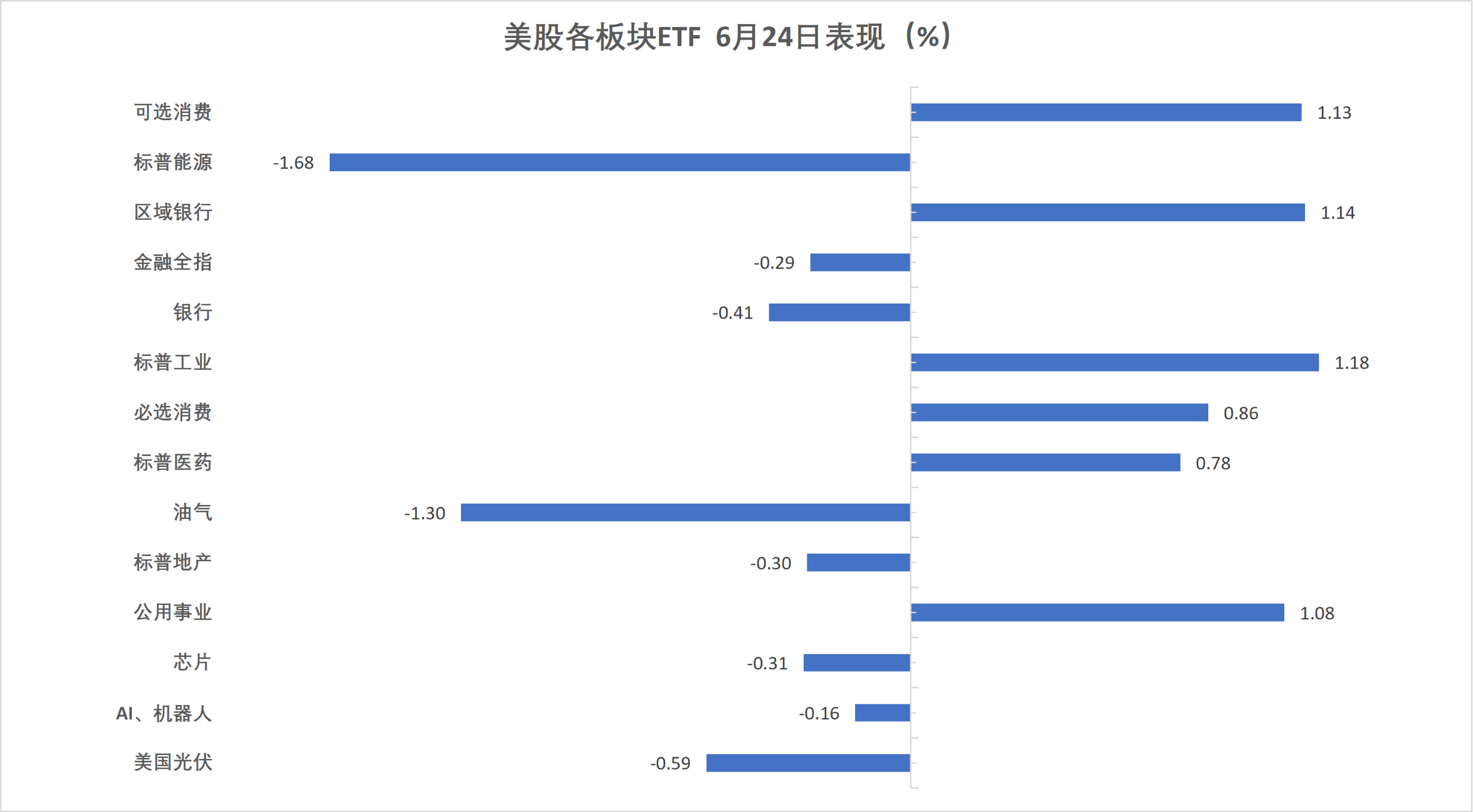
  • Most U.S. sector ETFs closed higher. The Global Airlines ETF rose 4.17%, the Biotech Index ETF, Regional Bank ETF, Consumer Discretionary ETF, and Utilities ETF rose up to 1.93%.

(U.S. Sector ETFs on June 24)

Magnificent Seven Tech Giants:

  • The Wind Magnificent 7 Index fell 0.70%.

  • Amazon rose 0.11%, Google (Class A) fell 0.25%, Apple fell 0.38%, Nvidia fell 0.56%, Meta fell 0.78%, Tesla fell 1.61%, Microsoft fell 2.27%.

Chip Stocks:

  • The Philadelphia Semiconductor Index closed down 0.18% at 13458.195.

  • TSMC ADR rose 1.01%, AMD fell 0.15%.

Chinese Stocks:

  • The Nasdaq Golden Dragon China Index closed down 1.77% at 5847.87, approaching its September 20, 2024 close of 5838.26 and its August 28, 2024 close of 5399.48.

  • Among popular Chinese stocks, Nio, Meituan, and Alibaba fell at least about 3%, Baidu fell 2.3%, PDD fell 1%, Tencent rose 2.4%, ASE Technology rose 3.5%.

Other Notable Stocks:

  • Circle fell 6.20%.

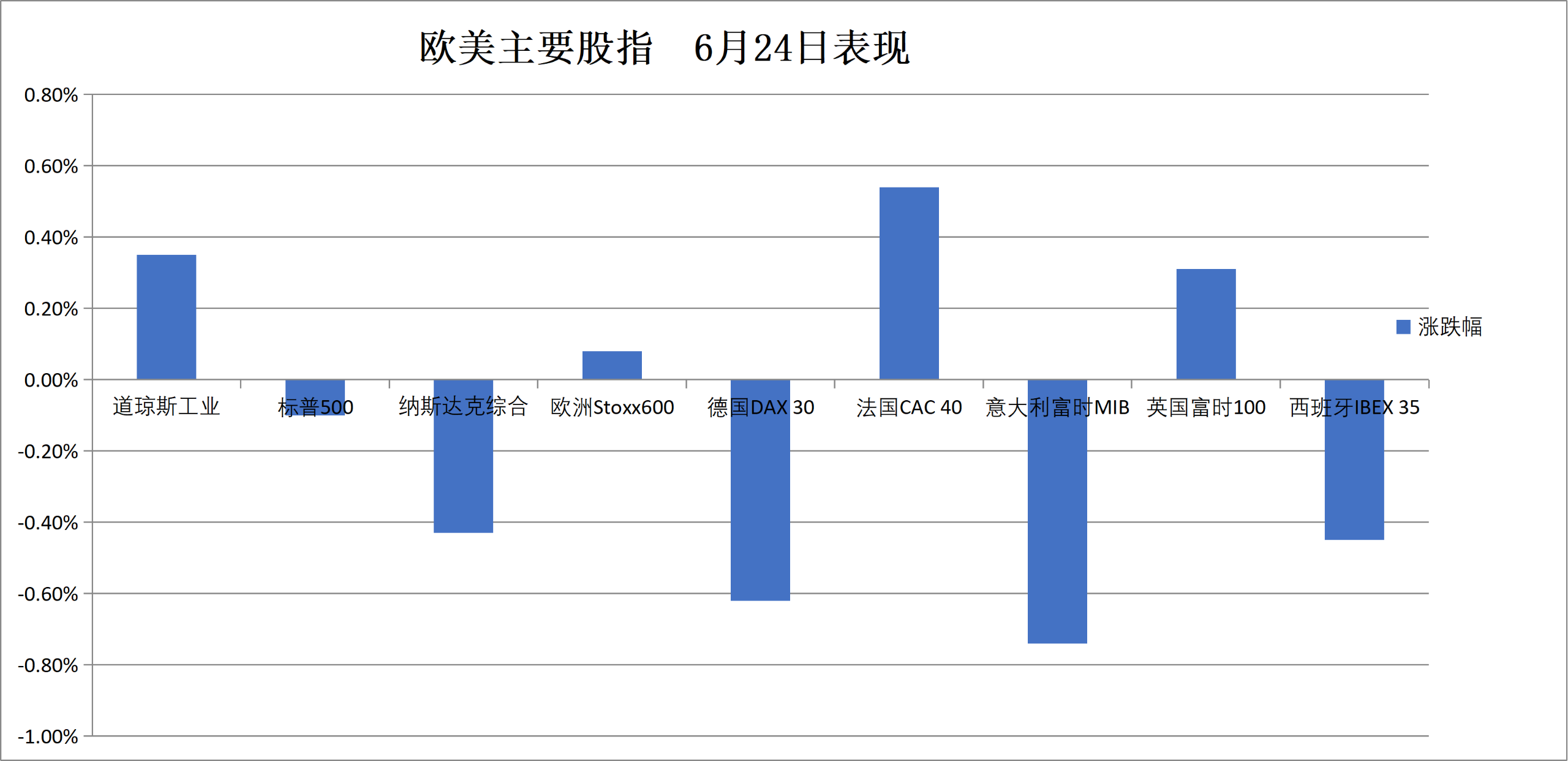
Eurozone blue-chip stocks closed down over 0.2%, with defense stock Rheinmetall (RHM) falling over 18.6%, leading declines among constituents. German stocks closed down over 0.6%, Defense ETF fell over 2.6%, UK's FTSE 250 rose over 0.7%.

Pan-European Indices:

  • The STOXX Europe 600 Index closed up 0.08% at 635.16.

  • The EURO STOXX 50 Index closed down 0.25% at 6214.70.

National Indices:

  • Germany's DAX 30 Index closed down 0.62% at 24740.36.

  • France's CAC 40 Index closed up 0.54% at 8385.49.

  • The UK's FTSE 100 Index closed up 0.31% at 10461.63.

    (Performance of Major European and U.S. Indices on June 24)

Sectors and Stocks:

  • Among Eurozone blue-chips, Germany's Rheinmetall (RHM) closed down 18.65%, Argenx fell 7.92%, Eni fell 3.28%, Deutsche Bank fell 2.58%, Volkswagen fell 2.44%.

  • Among all constituents of the STOXX Europe 600, Soitec closed down 10.888%, Hochschild Mining fell 9.03%, KGHM Polska Miedź S.A. fell 7.29%, joining RHM and Argenx as leading decliners.
Medium and long-term U.S. Treasury yields fell over 10 basis points. Eurozone sovereign bond prices rose broadly, with the 10-year Greek bond yield down about 6 bps. The UK 30-year gilt yield fell about 8 bps.

U.S. Treasuries:

  • At the New York close, the yield on the 10-year U.S. Treasury note fell 10.47 basis points to 4.3922%.

  • The 2-year yield fell 5.28 bps to 4.1456%; the 30-year yield fell 10.57 bps to 4.8396%.

    (Yields on Key U.S. Treasuries)

European Bonds:

  • At the European close, the yield on the 10-year German Bund fell 5.5 bps to 2.865%, in decline throughout the day.

  • The UK 10-year Gilt yield fell 7.0 bps to 4.684%. The 2-year yield fell 3.7 bps to 4.129%.

  • The French 10-year OAT yield fell 5.2 bps to 3.629%.
Dollar recovery, emerging market currencies fell for the fifth consecutive session.

U.S. Dollar:

  • At the New York close, the ICE U.S. Dollar Index rose 0.18% to 101.592, trading between 101.356 and 101.800 during the session.

  • The Bloomberg Dollar Index rose 0.27% to 1226.97, trading between 1223.32 and 1228.36, approaching its November 21, 2025 high of 1228.98 around 21:12.

    (Bloomberg Dollar Index)

Offshore Renminbi (CNH):

  • At the New York close, USD/CNH stood at 6.8132, up 184 pips from Tuesday's New York close, trading between 6.7910 and 6.8195 during the session.

Cryptocurrencies:

  • At the New York close, Bitcoin plunged over 5.3%, once breaking below $60,000 during the session. Ethereum fell 3.10%.

(Bitcoin Price)
International oil prices hit new closing lows since late February.

Crude Oil:

  • WTI July crude oil futures closed down $2.87, or 3.92%, at $70.34 per barrel.

(WTI Crude Oil Futures)

  • Brent July crude oil futures closed down $3.34, or 4.33%, at $73.74 per barrel.

  • Middle East Abu Dhabi Murban crude futures fell 3.43% to $67.24 per barrel.

Natural Gas:

  • NYMEX July natural gas futures settled at $3.2210 per million British thermal units.
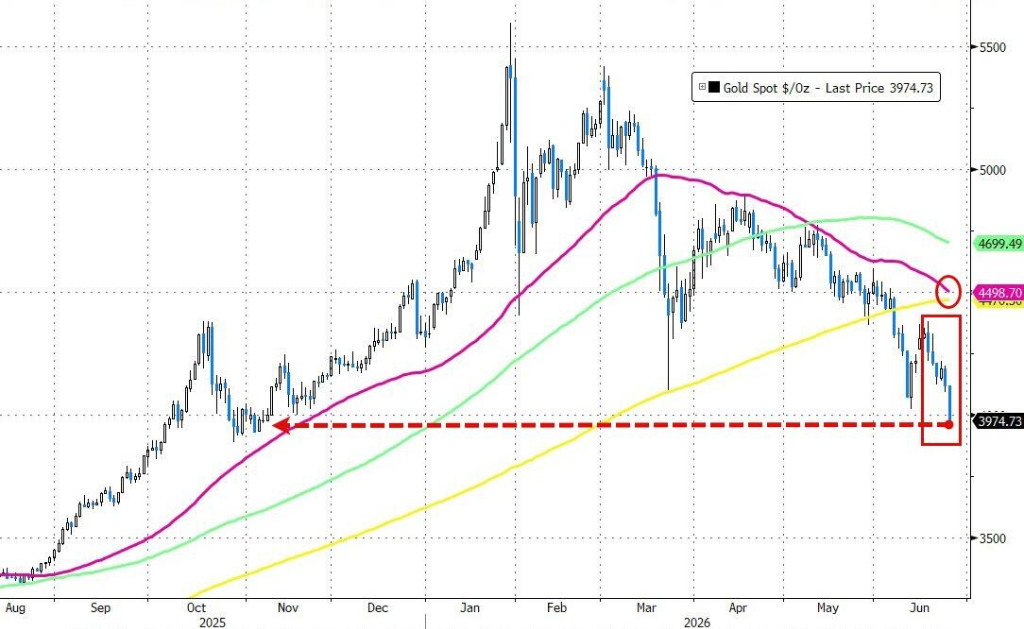
New York gold futures fell 3.2% Wednesday, spot gold lost the $4000 psychological level, silver fell over 6%. Aluminum prices returned to pre-Iran war levels on a stronger dollar and hopes for restored Gulf supply.

Gold:

  • At the New York close, spot gold fell 2.86% to $3999.08 per ounce, in decline throughout the day.

(Spot Gold Price)

  • COMEX gold futures fell 3.21% to $4016.40 per ounce, hitting a low of $3975.70 around midday in New York.

Silver:

  • At the New York close, spot silver fell 6.72% to $57.4512 per ounce, trading between $62.3762 and $55.6125, approaching its November 28, 2025 low of $53.3447 around 02:04.

  • COMEX silver futures fell 6.64% to $57.940 per ounce.

Other Metals:

  • At the New York close, COMEX copper futures fell 2.57% to $6.0525 per pound.

  • Spot platinum fell 4.25%, spot palladium fell 5.01%.

  • LME copper futures closed down $284 at $13,086 per metric ton. LME tin closed down $1,473 at $49,681 per ton. LME nickel closed down $354 at $16,818 per ton. LME aluminum closed down $110 at $3,122 per ton.
Kripto yang Sedang Tren

Pertanyaan Terkait

QWhat were the key factors behind the significant drop in oil and gold prices according to the article?

AThe drop in oil prices was primarily driven by an unexpectedly fast improvement in physical oil flows from the Middle East, particularly increased exports from the UAE through the Strait of Hormuz, which erased the geopolitical risk premium from the Iran war. The decline in gold was attributed to a stronger US dollar reaching a 13-month high, cooling geopolitical tensions reducing safe-haven demand, and supportive policy statements from US officials reinforcing the dollar's strength.

QWhat was the market impact of Micron Technology's earnings report, and why was it significant?

AMicron Technology's earnings report, which exceeded analyst expectations and provided strong forward guidance, triggered a major after-hours rally in chip stocks. Micron's stock jumped over 16%, and other semiconductor companies like Qualcomm and Western Digital saw gains exceeding 10%. It was significant because it acted as a key signal for demand in the AI and semiconductor supply chain, potentially halting a recent sell-off in tech stocks and leading to a broader market rebound.

QHow did the performance of the so-called 'Magnificent 7' tech stocks compare to the broader S&P 500 index on the day described?

AThe 'Magnificent 7' tech stocks underperformed the broader S&P 500 index. The article notes that the S&P 500 (excluding the AI sector) actually rose over 1%, while the Magnificent 7 index fell 0.70%. This indicated a market rotation, where money moved away from the dominant tech leaders into other sectors like consumer discretionary and industrials, with over 310 S&P 500 components closing higher for the day.

QWhat geopolitical and policy developments contributed to the strength of the US dollar as mentioned in the article?

ASeveral factors contributed to US dollar strength: 1) Progress in US-Iran negotiations, including Iran reportedly agreeing not to charge fees for Strait of Hormuz passage and discussions on allowing Iran to price oil exports in dollars. 2) Potential reintegration of Venezuela and post-conflict Russia into the US dollar system. 3) Supportive comments from US Treasury Secretary Bessent, who framed these developments as part of a broader reshaping of the dollar's global dominance and predicted a return to 3% US GDP growth.

QWhat was the divergent performance between major US stock indices (Dow, S&P 500, Nasdaq) on June 24, and what sector was the biggest drag?

AOn June 24, the major US indices showed divergent performance: The Dow Jones Industrial Average rose 0.35% (gaining 182 points), the S&P 500 was nearly flat with a slight 0.10% decline, and the Nasdaq Composite fell 0.43%. The biggest drag on the market was the technology sector, along with the energy sector. Specifically, the AI semiconductor sector was highlighted as plummeting nearly 10%, contributing heavily to the Nasdaq's underperformance.

Bacaan Terkait

BNB Chain Lampaui Solana dalam Dorongan Perdagangan Saham Dijitoken Senilai $5,2M

TL;DR BNB Chain mencapai volume perdagangan kumulatif ekuitas tokenisasi $5,2B (terutama didorong oleh Ondo Finance Global Markets sebesar $5,12B), melampaui Solana yang sebesar $4,5B. Poin penting: bedakan antara "volume perdagangan kumulatif untuk saham tokenisasi" di BNB Chain dan "volume transfer kumulatif untuk ekuitas tokenisasi" di Solana. Inti Berita BNB Chain telah melampaui Solana dalam metrik volume perdagangan ekuitas tokenisasi, berdasarkan data dari dashboard Ondo Global Markets dan indeks RWA DefiLlama. Ini mencerminkan pergeseran selera risiko di pasar, di tengah arus ETF, leverage, dan likuiditas altcoin yang berputar. Kisah ini penting karena aset tokenisasi terkait dengan infrastruktur penyelesaian dan akses pasar. Peringatan Pasar kripto sering mengubah satu titik data sempit menjadi narasi luas. Data ini adalah sinyal, bukan jaminan. Aliran keluar tidak selalu berarti kehilangan keyakinan jangka panjang, dan pergeseran derivatif tidak menjamin pergerakan harga linear. Yang penting adalah memahami apa yang disinyalkan tentang posisi, kepercayaan, dan insentif. Langkah Selanjutnya Pantau apakah data selanjutnya mengonfirmasi tren ini melalui metrik lanjutan seperti aliran dana, metrik on-chain, open interest, atau pengumuman resmi. Ini akan menentukan apakah ini tema pasar yang bertahan atau sekadar pergeseran posisi jangka pendek. Kisah ini adalah satu bagian dari teka-teki likuiditas yang lebih luas yang harus dibaca bersama kondisi makro dan derivatif.

bitcoinist1j yang lalu

BNB Chain Lampaui Solana dalam Dorongan Perdagangan Saham Dijitoken Senilai $5,2M

bitcoinist1j yang lalu

Trading

Spot

Artikel Populer

Apa Itu $S$

Memahami SPERO: Tinjauan Komprehensif Pengenalan SPERO Seiring dengan perkembangan lanskap inovasi, munculnya teknologi web3 dan proyek cryptocurrency memainkan peran penting dalam membentuk masa depan digital. Salah satu proyek yang telah menarik perhatian di bidang dinamis ini adalah SPERO, yang dilambangkan sebagai SPERO,$$s$. Artikel ini bertujuan untuk mengumpulkan dan menyajikan informasi terperinci tentang SPERO, untuk membantu para penggemar dan investor memahami dasar-dasar, tujuan, dan inovasi dalam domain web3 dan crypto. Apa itu SPERO,$$s$? SPERO,$$s$ adalah proyek unik dalam ruang crypto yang berusaha memanfaatkan prinsip desentralisasi dan teknologi blockchain untuk menciptakan ekosistem yang mendorong keterlibatan, utilitas, dan inklusi finansial. Proyek ini dirancang untuk memfasilitasi interaksi peer-to-peer dengan cara baru, memberikan pengguna solusi dan layanan keuangan yang inovatif. Pada intinya, SPERO,$$s$ bertujuan untuk memberdayakan individu dengan menyediakan alat dan platform yang meningkatkan pengalaman pengguna dalam ruang cryptocurrency. Ini termasuk memungkinkan metode transaksi yang lebih fleksibel, mendorong inisiatif yang dipimpin komunitas, dan menciptakan jalur untuk peluang finansial melalui aplikasi terdesentralisasi (dApps). Visi mendasar dari SPERO,$$s$ berputar di sekitar inklusivitas, bertujuan untuk menjembatani kesenjangan dalam keuangan tradisional sambil memanfaatkan manfaat teknologi blockchain. Siapa Pencipta SPERO,$$s$? Identitas pencipta SPERO,$$s$ tetap agak samar, karena ada sumber daya publik yang terbatas yang memberikan informasi latar belakang terperinci tentang pendiriannya. Kurangnya transparansi ini dapat berasal dari komitmen proyek terhadap desentralisasi—sebuah etos yang banyak proyek web3 bagi, memprioritaskan kontribusi kolektif di atas pengakuan individu. Dengan memusatkan diskusi di sekitar komunitas dan tujuan kolektifnya, SPERO,$$s$ mewujudkan esensi pemberdayaan tanpa menonjolkan individu tertentu. Dengan demikian, memahami etos dan misi SPERO tetap lebih penting daripada mengidentifikasi pencipta tunggal. Siapa Investor SPERO,$$s$? SPERO,$$s$ didukung oleh beragam investor mulai dari modal ventura hingga investor malaikat yang berdedikasi untuk mendorong inovasi di sektor crypto. Fokus investor ini umumnya sejalan dengan misi SPERO—memprioritaskan proyek yang menjanjikan kemajuan teknologi sosial, inklusivitas finansial, dan tata kelola terdesentralisasi. Fondasi investor ini biasanya tertarik pada proyek yang tidak hanya menawarkan produk inovatif tetapi juga memberikan kontribusi positif kepada komunitas blockchain dan ekosistemnya. Dukungan dari investor ini memperkuat SPERO,$$s$ sebagai pesaing yang patut diperhitungkan di domain proyek crypto yang berkembang pesat. Bagaimana SPERO,$$s$ Bekerja? SPERO,$$s$ menerapkan kerangka kerja multi-faceted yang membedakannya dari proyek cryptocurrency konvensional. Berikut adalah beberapa fitur kunci yang menekankan keunikan dan inovasinya: Tata Kelola Terdesentralisasi: SPERO,$$s$ mengintegrasikan model tata kelola terdesentralisasi, memberdayakan pengguna untuk berpartisipasi aktif dalam proses pengambilan keputusan mengenai masa depan proyek. Pendekatan ini mendorong rasa kepemilikan dan akuntabilitas di antara anggota komunitas. Utilitas Token: SPERO,$$s$ memanfaatkan token cryptocurrency-nya sendiri, yang dirancang untuk melayani berbagai fungsi dalam ekosistem. Token ini memungkinkan transaksi, hadiah, dan fasilitasi layanan yang ditawarkan di platform, meningkatkan keterlibatan dan utilitas secara keseluruhan. Arsitektur Berlapis: Arsitektur teknis SPERO,$$s$ mendukung modularitas dan skalabilitas, memungkinkan integrasi fitur dan aplikasi tambahan secara mulus seiring dengan perkembangan proyek. Kemampuan beradaptasi ini sangat penting untuk mempertahankan relevansi di lanskap crypto yang selalu berubah. Keterlibatan Komunitas: Proyek ini menekankan inisiatif yang dipimpin komunitas, menggunakan mekanisme yang memberikan insentif untuk kolaborasi dan umpan balik. Dengan memelihara komunitas yang kuat, SPERO,$$s$ dapat lebih baik memenuhi kebutuhan pengguna dan beradaptasi dengan tren pasar. Fokus pada Inklusi: Dengan menawarkan biaya transaksi yang rendah dan antarmuka yang ramah pengguna, SPERO,$$s$ bertujuan untuk menarik basis pengguna yang beragam, termasuk individu yang mungkin sebelumnya tidak terlibat dalam ruang crypto. Komitmen ini terhadap inklusi sejalan dengan misi utamanya untuk memberdayakan melalui aksesibilitas. Garis Waktu SPERO,$$s$ Memahami sejarah proyek memberikan wawasan penting tentang trajektori dan tonggak perkembangannya. Berikut adalah garis waktu yang disarankan yang memetakan peristiwa signifikan dalam evolusi SPERO,$$s$: Fase Konseptualisasi dan Ideasi: Ide awal yang membentuk dasar SPERO,$$s$ dikembangkan, sangat selaras dengan prinsip desentralisasi dan fokus komunitas dalam industri blockchain. Peluncuran Whitepaper Proyek: Setelah fase konseptual, whitepaper komprehensif yang merinci visi, tujuan, dan infrastruktur teknologi SPERO,$$s$ dirilis untuk menarik minat dan umpan balik komunitas. Pembangunan Komunitas dan Keterlibatan Awal: Upaya jangkauan aktif dilakukan untuk membangun komunitas pengguna awal dan investor potensial, memfasilitasi diskusi seputar tujuan proyek dan mendapatkan dukungan. Acara Generasi Token: SPERO,$$s$ melakukan acara generasi token (TGE) untuk mendistribusikan token asli kepada pendukung awal dan membangun likuiditas awal dalam ekosistem. Peluncuran dApp Awal: Aplikasi terdesentralisasi (dApp) pertama yang terkait dengan SPERO,$$s$ diluncurkan, memungkinkan pengguna untuk terlibat dengan fungsionalitas inti platform. Pengembangan Berkelanjutan dan Kemitraan: Pembaruan dan peningkatan berkelanjutan terhadap penawaran proyek, termasuk kemitraan strategis dengan pemain lain di ruang blockchain, telah membentuk SPERO,$$s$ menjadi pemain yang kompetitif dan berkembang di pasar crypto. Kesimpulan SPERO,$$s$ berdiri sebagai bukti potensi web3 dan cryptocurrency untuk merevolusi sistem keuangan dan memberdayakan individu. Dengan komitmen terhadap tata kelola terdesentralisasi, keterlibatan komunitas, dan fungsionalitas yang dirancang secara inovatif, ia membuka jalan menuju lanskap keuangan yang lebih inklusif. Seperti halnya investasi di ruang crypto yang berkembang pesat, calon investor dan pengguna dianjurkan untuk melakukan riset secara menyeluruh dan terlibat dengan perkembangan yang sedang berlangsung dalam SPERO,$$s$. Proyek ini menunjukkan semangat inovatif industri crypto, mengundang eksplorasi lebih lanjut ke dalam berbagai kemungkinan yang ada. Meskipun perjalanan SPERO,$$s$ masih berlangsung, prinsip-prinsip dasarnya mungkin benar-benar mempengaruhi masa depan cara kita berinteraksi dengan teknologi, keuangan, dan satu sama lain dalam ekosistem digital yang saling terhubung.

97 Total TayanganDipublikasikan pada 2024.12.17Diperbarui pada 2024.12.17

Apa Itu $S$

Apa Itu AGENT S

Agent S: Masa Depan Interaksi Otonom di Web3 Pendahuluan Dalam lanskap Web3 dan cryptocurrency yang terus berkembang, inovasi secara konstan mendefinisikan ulang cara individu berinteraksi dengan platform digital. Salah satu proyek perintis, Agent S, menjanjikan untuk merevolusi interaksi manusia-komputer melalui kerangka agen terbuka. Dengan membuka jalan untuk interaksi otonom, Agent S bertujuan untuk menyederhanakan tugas-tugas kompleks, menawarkan aplikasi transformasional dalam kecerdasan buatan (AI). Eksplorasi mendetail ini akan menyelami seluk-beluk proyek, fitur uniknya, dan implikasinya untuk domain cryptocurrency. Apa itu Agent S? Agent S berdiri sebagai kerangka agen terbuka yang inovatif, dirancang khusus untuk mengatasi tiga tantangan mendasar dalam otomatisasi tugas komputer: Memperoleh Pengetahuan Spesifik Domain: Kerangka ini secara cerdas belajar dari berbagai sumber pengetahuan eksternal dan pengalaman internal. Pendekatan ganda ini memberdayakannya untuk membangun repositori pengetahuan spesifik domain yang kaya, meningkatkan kinerjanya dalam pelaksanaan tugas. Perencanaan Selama Rentang Tugas yang Panjang: Agent S menggunakan perencanaan hierarkis yang ditingkatkan pengalaman, pendekatan strategis yang memfasilitasi pemecahan dan pelaksanaan tugas-tugas rumit dengan efisien. Fitur ini secara signifikan meningkatkan kemampuannya untuk mengelola beberapa subtugas dengan efisien dan efektif. Menangani Antarmuka Dinamis dan Tidak Seragam: Proyek ini memperkenalkan Antarmuka Agen-Komputer (ACI), solusi inovatif yang meningkatkan interaksi antara agen dan pengguna. Dengan memanfaatkan Model Bahasa Besar Multimodal (MLLM), Agent S dapat menavigasi dan memanipulasi berbagai antarmuka pengguna grafis dengan mulus. Melalui fitur-fitur perintis ini, Agent S menyediakan kerangka kerja yang kuat yang mengatasi kompleksitas yang terlibat dalam mengotomatisasi interaksi manusia dengan mesin, membuka jalan untuk berbagai aplikasi dalam AI dan seterusnya. Siapa Pencipta Agent S? Meskipun konsep Agent S secara fundamental inovatif, informasi spesifik tentang penciptanya tetap samar. Pencipta saat ini tidak diketahui, yang menyoroti baik tahap awal proyek atau pilihan strategis untuk menjaga anggota pendiri tetap tersembunyi. Terlepas dari anonimitas, fokus tetap pada kemampuan dan potensi kerangka kerja. Siapa Investor Agent S? Karena Agent S relatif baru dalam ekosistem kriptografi, informasi terperinci mengenai investor dan pendukung keuangannya tidak secara eksplisit didokumentasikan. Kurangnya wawasan yang tersedia untuk umum mengenai fondasi investasi atau organisasi yang mendukung proyek ini menimbulkan pertanyaan tentang struktur pendanaannya dan peta jalan pengembangannya. Memahami dukungan sangat penting untuk mengukur keberlanjutan proyek dan potensi dampak pasar. Bagaimana Cara Kerja Agent S? Di inti Agent S terletak teknologi mutakhir yang memungkinkannya berfungsi secara efektif dalam berbagai pengaturan. Model operasionalnya dibangun di sekitar beberapa fitur kunci: Interaksi Komputer yang Mirip Manusia: Kerangka ini menawarkan perencanaan AI yang canggih, berusaha untuk membuat interaksi dengan komputer lebih intuitif. Dengan meniru perilaku manusia dalam pelaksanaan tugas, ia menjanjikan untuk meningkatkan pengalaman pengguna. Memori Naratif: Digunakan untuk memanfaatkan pengalaman tingkat tinggi, Agent S memanfaatkan memori naratif untuk melacak sejarah tugas, sehingga meningkatkan proses pengambilan keputusannya. Memori Episodik: Fitur ini memberikan panduan langkah demi langkah kepada pengguna, memungkinkan kerangka untuk menawarkan dukungan kontekstual saat tugas berlangsung. Dukungan untuk OpenACI: Dengan kemampuan untuk berjalan secara lokal, Agent S memungkinkan pengguna untuk mempertahankan kontrol atas interaksi dan alur kerja mereka, sejalan dengan etos terdesentralisasi Web3. Integrasi Mudah dengan API Eksternal: Versatilitas dan kompatibilitasnya dengan berbagai platform AI memastikan bahwa Agent S dapat dengan mulus masuk ke dalam ekosistem teknologi yang ada, menjadikannya pilihan menarik bagi pengembang dan organisasi. Fungsionalitas ini secara kolektif berkontribusi pada posisi unik Agent S dalam ruang kripto, saat ia mengotomatisasi tugas-tugas kompleks yang melibatkan banyak langkah dengan intervensi manusia yang minimal. Seiring proyek ini berkembang, aplikasi potensialnya di Web3 dapat mendefinisikan ulang bagaimana interaksi digital berlangsung. Garis Waktu Agent S Pengembangan dan tonggak Agent S dapat dirangkum dalam garis waktu yang menyoroti peristiwa pentingnya: 27 September 2024: Konsep Agent S diluncurkan dalam sebuah makalah penelitian komprehensif berjudul “Sebuah Kerangka Agen Terbuka yang Menggunakan Komputer Seperti Manusia,” yang menunjukkan dasar untuk proyek ini. 10 Oktober 2024: Makalah penelitian tersebut dipublikasikan secara terbuka di arXiv, menawarkan eksplorasi mendalam tentang kerangka kerja dan evaluasi kinerjanya berdasarkan tolok ukur OSWorld. 12 Oktober 2024: Sebuah presentasi video dirilis, memberikan wawasan visual tentang kemampuan dan fitur Agent S, lebih lanjut melibatkan pengguna dan investor potensial. Tanda-tanda dalam garis waktu ini tidak hanya menggambarkan kemajuan Agent S tetapi juga menunjukkan komitmennya terhadap transparansi dan keterlibatan komunitas. Poin Kunci Tentang Agent S Seiring kerangka Agent S terus berkembang, beberapa atribut kunci menonjol, menekankan sifat inovatif dan potensinya: Kerangka Inovatif: Dirancang untuk memberikan penggunaan komputer yang intuitif seperti interaksi manusia, Agent S membawa pendekatan baru untuk otomatisasi tugas. Interaksi Otonom: Kemampuan untuk berinteraksi secara otonom dengan komputer melalui GUI menandakan lompatan menuju solusi komputasi yang lebih cerdas dan efisien. Otomatisasi Tugas Kompleks: Dengan metodologinya yang kuat, ia dapat mengotomatisasi tugas-tugas kompleks yang melibatkan banyak langkah, membuat proses lebih cepat dan kurang rentan terhadap kesalahan. Perbaikan Berkelanjutan: Mekanisme pembelajaran memungkinkan Agent S untuk belajar dari pengalaman masa lalu, terus meningkatkan kinerja dan efektivitasnya. Versatilitas: Adaptabilitasnya di berbagai lingkungan operasi seperti OSWorld dan WindowsAgentArena memastikan bahwa ia dapat melayani berbagai aplikasi. Saat Agent S memposisikan dirinya di lanskap Web3 dan kripto, potensinya untuk meningkatkan kemampuan interaksi dan mengotomatisasi proses menandakan kemajuan signifikan dalam teknologi AI. Melalui kerangka inovatifnya, Agent S mencerminkan masa depan interaksi digital, menjanjikan pengalaman yang lebih mulus dan efisien bagi pengguna di berbagai industri. Kesimpulan Agent S mewakili lompatan berani ke depan dalam pernikahan AI dan Web3, dengan kapasitas untuk mendefinisikan ulang cara kita berinteraksi dengan teknologi. Meskipun masih dalam tahap awal, kemungkinan aplikasinya sangat luas dan menarik. Melalui kerangka komprehensifnya yang mengatasi tantangan kritis, Agent S bertujuan untuk membawa interaksi otonom ke garis depan pengalaman digital. Saat kita melangkah lebih dalam ke dalam ranah cryptocurrency dan desentralisasi, proyek-proyek seperti Agent S pasti akan memainkan peran penting dalam membentuk masa depan teknologi dan kolaborasi manusia-komputer.

946 Total TayanganDipublikasikan pada 2025.01.14Diperbarui pada 2025.01.14

Apa Itu AGENT S

Cara Membeli S

Selamat datang di HTX.com! Kami telah membuat pembelian Sonic (S) menjadi mudah dan nyaman. Ikuti panduan langkah demi langkah kami untuk memulai perjalanan kripto Anda.Langkah 1: Buat Akun HTX AndaGunakan alamat email atau nomor ponsel Anda untuk mendaftar akun gratis di HTX. Rasakan perjalanan pendaftaran yang mudah dan buka semua fitur.Dapatkan Akun SayaLangkah 2: Buka Beli Kripto, lalu Pilih Metode Pembayaran AndaKartu Kredit/Debit: Gunakan Visa atau Mastercard Anda untuk membeli Sonic (S) secara instan.Saldo: Gunakan dana dari saldo akun HTX Anda untuk melakukan trading dengan lancar.Pihak Ketiga: Kami telah menambahkan metode pembayaran populer seperti Google Pay dan Apple Pay untuk meningkatkan kenyamanan.P2P: Lakukan trading langsung dengan pengguna lain di HTX.Over-the-Counter (OTC): Kami menawarkan layanan yang dibuat khusus dan kurs yang kompetitif bagi para trader.Langkah 3: Simpan Sonic (S) AndaSetelah melakukan pembelian, simpan Sonic (S) di akun HTX Anda. Selain itu, Anda dapat mengirimkannya ke tempat lain melalui transfer blockchain atau menggunakannya untuk memperdagangkan mata uang kripto lainnya.Langkah 4: Lakukan trading Sonic (S)Lakukan trading Sonic (S) dengan mudah di pasar spot HTX. Cukup akses akun Anda, pilih pasangan perdagangan, jalankan trading, lalu pantau secara real-time. Kami menawarkan pengalaman yang ramah pengguna baik untuk pemula maupun trader berpengalaman.

1.5k Total TayanganDipublikasikan pada 2025.01.15Diperbarui pada 2026.06.02

Cara Membeli S

Diskusi

Selamat datang di Komunitas HTX. Di sini, Anda bisa terus mendapatkan informasi terbaru tentang perkembangan platform terkini dan mendapatkan akses ke wawasan pasar profesional. Pendapat pengguna mengenai harga S (S) disajikan di bawah ini.

活动图片