# Сопутствующие статьи по теме AI

Новостной центр HTX предлагает последние статьи и углубленный анализ по "AI", охватывающие рыночные тренды, новости проектов, развитие технологий и политику регулирования в криптоиндустрии.

The Next Earthquake in AI: Why the Real Danger Isn't the SaaS Killer, but the Computing Power Revolution?

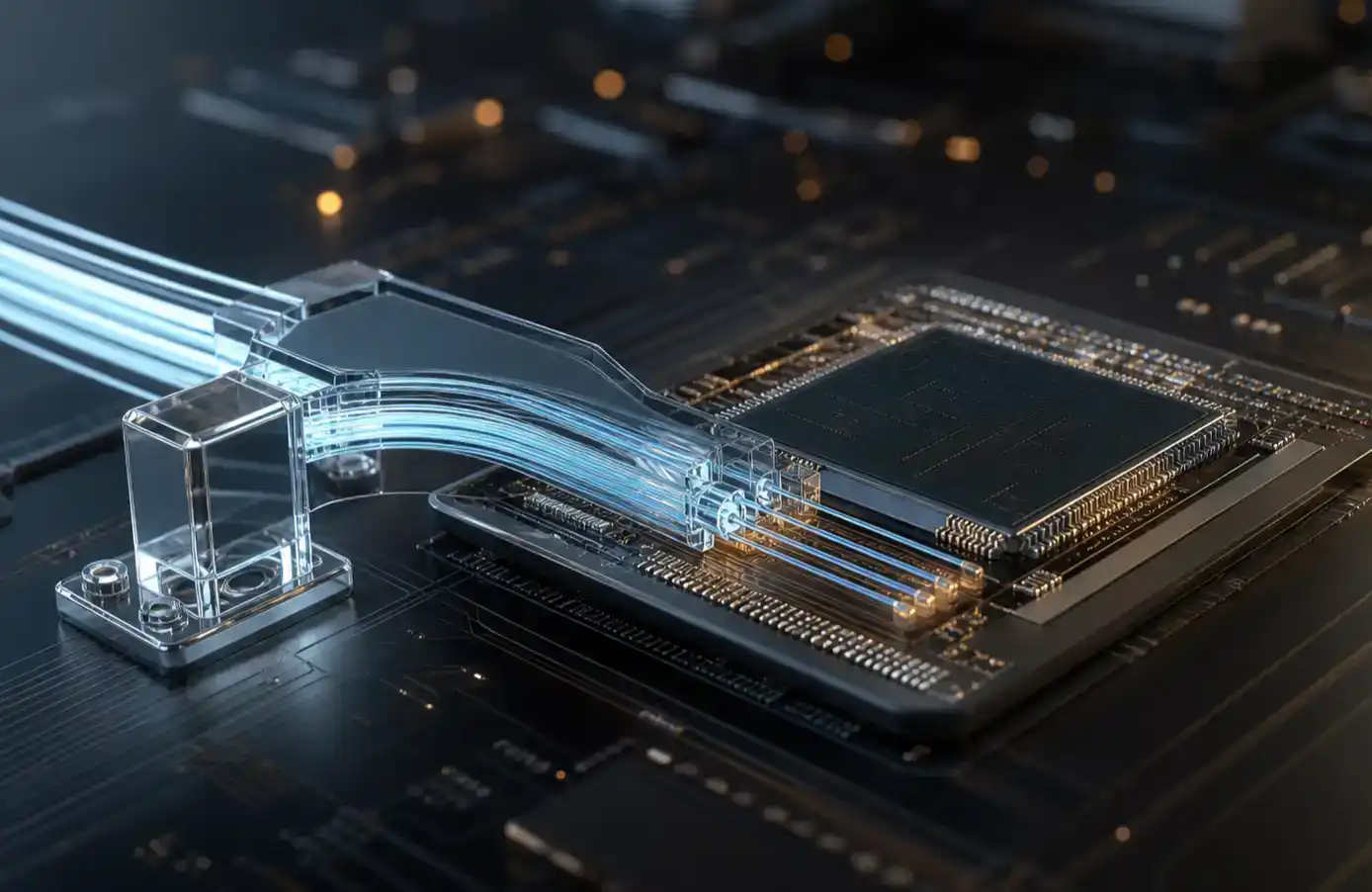
The next seismic shift in AI is not the threat of "SaaS killers" but a fundamental revolution in computing power. While many focus on how AI applications like Claude Cowork are disrupting traditional software, the real transformation is happening beneath the surface—in the infrastructure that powers AI. Two converging technological paths are challenging NVIDIA’s GPU dominance: 1. **Algorithmic Efficiency**: DeepSeek’s Mixture-of-Experts (MoE) architecture allows massive models (e.g., DeepSeek-V2 with 236B parameters) to activate only a small fraction of "experts" (9%) during computation, achieving GPT-4-level performance at 10% of the computational cost. This decouples AI capability from sheer compute power. 2. **Specialized Hardware**: Inference-optimized chips from companies like Cerebras and Groq integrate memory directly onto the chip, eliminating data transfer delays. This "zero-latency" design drastically improves speed and efficiency, prompting even OpenAI to sign a $10B deal with Cerebras. Together, these advances could cause a cost collapse: training costs may drop by 90%, and inference costs could fall by an order of magnitude. The total cost of running world-class AI may plummet to 10-15% of current GPU-based solutions. This paradigm shift threatens NVIDIA’s valuation, built on the assumption of perpetual GPU dominance. If the market realizes that GPUs are no longer the only—or best—option, the foundation of NVIDIA’s trillions in market cap could crumble. The real black swan event may not be a new AI application, but a quiet technical breakthrough that reshapes the compute landscape.

marsbit02/11 01:58

The Next Earthquake in AI: Why the Real Danger Isn't the SaaS Killer, but the Computing Power Revolution?

marsbit02/11 01:58

The Darkness Before Dawn: Crypto in 2026 = The Internet in 2002

"DeFi Cheetah argues that the current despair in crypto, marked by high-profile departures like Kyle Samani's shift to AI, is deceptive. The industry is at a critical inflection point, witnessing a rise of "fintech wrappers"—products from traditional finance (like bank-issued stablecoins or tokenized assets) that merely leverage blockchain for efficient settlement while retaining the old, rent-seeking intermediary structures. These wrappers, comparable to "Western Union with private keys," fail to capture value on-chain and fragment liquidity, representing an IT upgrade rather than true crypto innovation. Drawing a parallel to the dot-com bust of 2002, the author contends that just as early internet companies were merely "newspaper wrappers," today's fintech wrappers are placing old finance onto new rails. The real revolution will be built by those who embrace crypto's native properties: a global state instead of siloed databases, atomic composability instead of API integrations, and permissionless liquidity instead of walled gardens. The consensus view that blockchains are merely asset ledgers is where alpha is not found. The current downturn is a filter. The true builders who remain will focus on constructing what cannot exist on private servers, leveraging trustless coordination, permissionless access, and composability to solve problems legacy systems cannot. The work of building the sovereign internet is just beginning."

marsbit02/10 11:42

The Darkness Before Dawn: Crypto in 2026 = The Internet in 2002

marsbit02/10 11:42

活动图片