"Buying the Dip" on 400,000 BTC: Is $74,000 a Rebound or a Reversal?

marsbitОпубликовано 2026-03-05Обновлено 2026-03-05

Введение

Cryptocurrency markets have seen a strong rebound, with Bitcoin briefly surpassing $74,000 on March 5, marking a nearly 8% daily gain and reaching a one-month high. Ethereum also rose over 7% to around $2,100. Market sentiment has improved, with the fear index rising to 29, moving out of extreme fear territory. Key factors behind the rally include improved global risk appetite, driven by political events such as the nomination of Kevin Warsh for Fed Chair and the U.S. Senate's rejection of a resolution limiting military action against Iran. These events boosted confidence in policy continuity and reduced geopolitical risks. Bitcoin spot ETFs have shown consistent large net inflows since late February, reversing previous outflows. Over $40,000 BTC was accumulated in the $60,000–$70,000 range during the recent correction, indicating strong buying interest. Long-term holder selling pressure has also eased, supporting price stability. Stablecoin market cap remains high at over $310 billion, with USDC and other stables showing growth, reflecting sustained liquidity and capital inflow into crypto. Analysts like Cathie Wood and Tom Lee suggest the market may be nearing a bottom, with improving fundamentals and reduced selling pressure. However, investors are advised to remain cautious while recognizing emerging opportunities.

The cryptocurrency market has recently welcomed a long-awaited strong rebound. On March 5th, the price of Bitcoin once broke through the $74,000 mark, with a near 8% gain in 24 hours, hitting a new one-month high. BTC is currently oscillating in the $72,000-$73,000 range, with overall market sentiment warming up. ETH rose to around $2,100, gaining over 7%, and some altcoins saw minor rebounds.

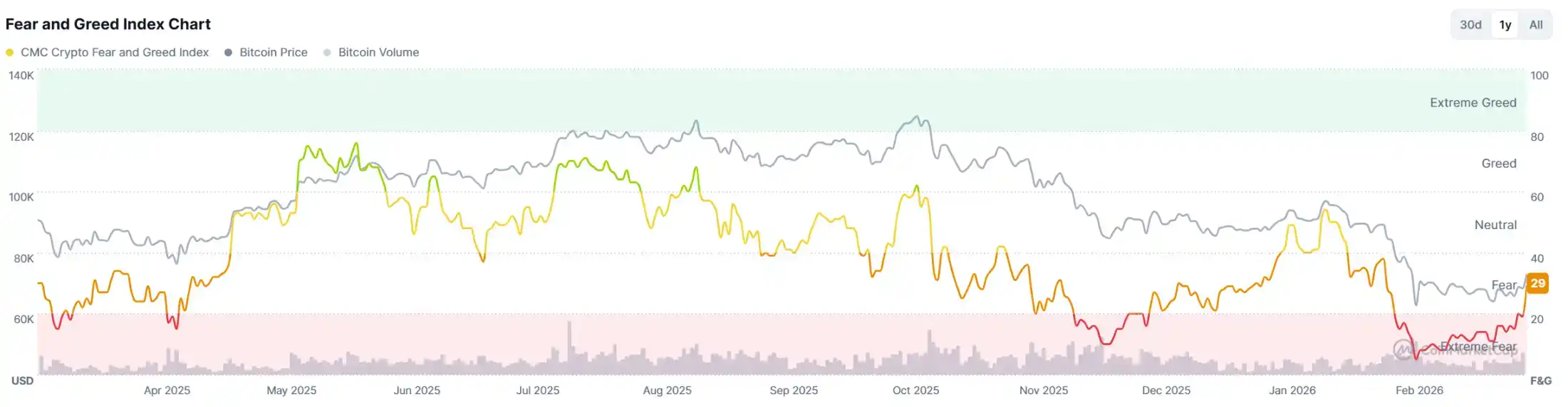
Regarding liquidation data, according to Coinglass, the total open interest across the network saw $595 million in liquidations over the past 24 hours, with short positions accounting for $482 million. The market fear index has also finally moved out of the extreme fear zone, rising to 29.
Recently, the White House formally submitted the nomination of Kevin Warsh to the Senate for the position of Federal Reserve Chair, and the US Senate rejected a war powers resolution limiting former President Trump's military actions against Iran. These two political events quickly boosted global risk appetite. The market widely believes that Warsh's nomination, as a renowned economist, significantly enhances the continuity of Fed policy and market-friendly expectations; the Senate vote result effectively alleviated concerns about an escalation of Middle East geopolitical conflicts, avoiding the worst-case scenario.

Gold, as a safe-haven asset, performed remarkably, currently hovering around $5,150-$5,300 per ounce. US crypto-related stocks rose across the board: MSTR closed up 10.37%, COIN up 14.57%, and CRCL up 5.63%.

Furthermore, according to Bitget market data, Japanese and South Korean stock indices opened higher. South Korea's KOSPI index rose 565.69 points to 5654.72 points, a gain of 11.02%; Japan's Nikkei 225 index rose 2319 points to 56564.54 points, a gain of 4.28%.

BTC Spot ETFs Have Seen Sustained Large Net Inflows Since Late February This Year

Data shows that prior to the end of 2025 and early February 2026, Bitcoin spot ETF data showed occasional large net inflows but more frequent large net outflows.

Since Bitcoin hit its all-time high in early October last year, until February 20, 2026, the holdings of US Bitcoin spot ETFs experienced the largest reduction of this cycle, cumulatively decreasing by approximately 100,300 BTC.

However, this trend began to change starting February 20th, showing multiple instances of significant net inflows.
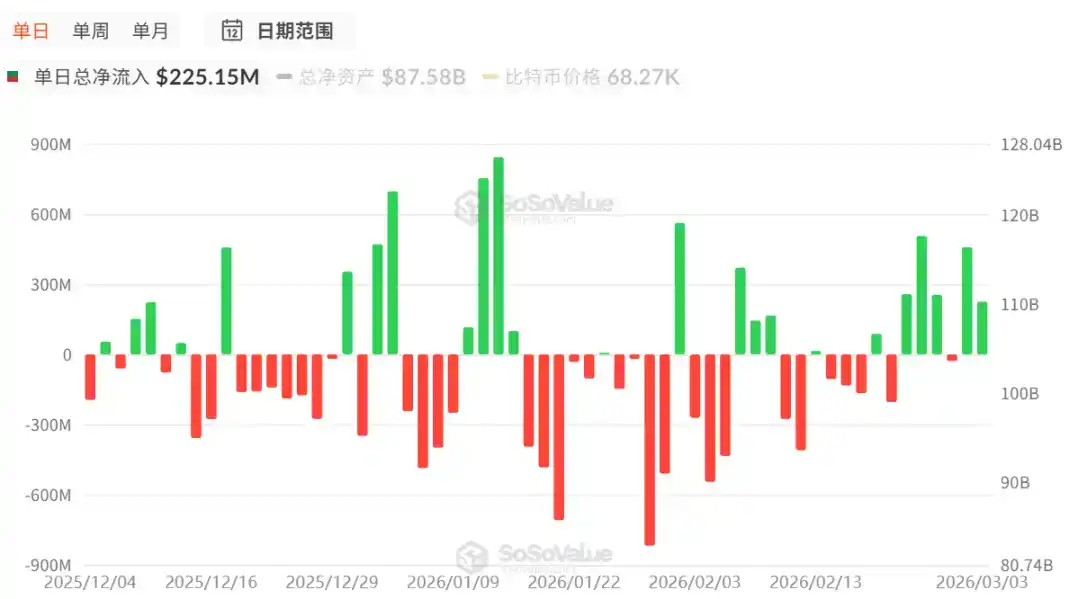
As of March 5th, there have been only 2 net outflows, and the values were not large, while the net inflows during this period included single-day large inflows of $458 million and $506 million.

With incoming funds beginning to warm up, the rise in BTC price is hardly surprising.

400,000 BTC Accumulated Between $60,000 and $70,000, Selling Pressure Easing

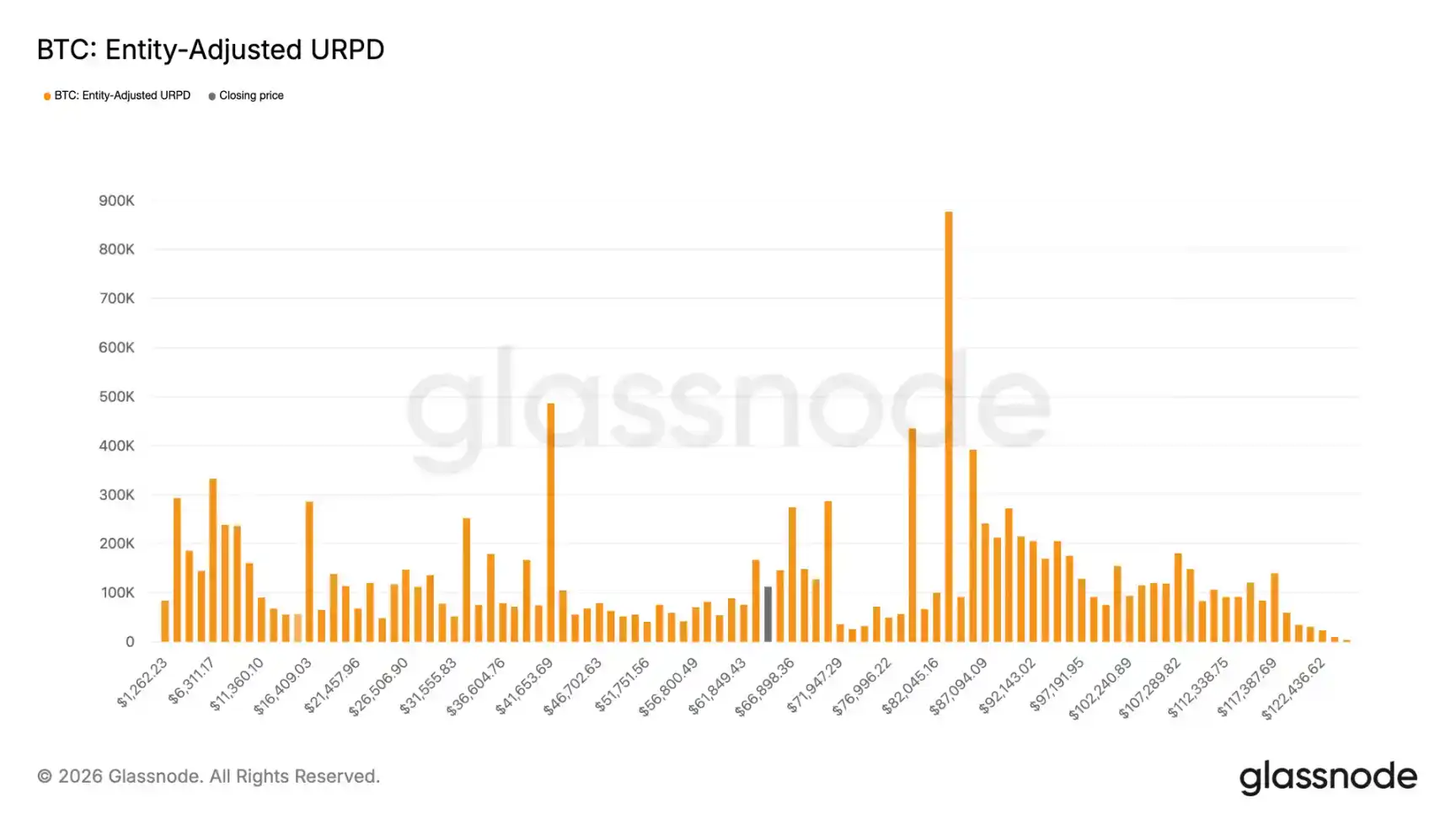
During the Bitcoin correction in February this year, according to Glassnode data, the market saw significant accumulation of筹码 (chips/positions) in the $60,000 to $70,000 range during the sharp pullback. Over 400,000 BTC were accumulated by investors, showing strong "buying the dip" behavior.

The supply of BTC in this price range has increased from approximately 997,000 on January 1st to about 1.43 million currently, an increase of about 429,000, or 43%. Currently, over 8% of the non-exchange circulating supply has a cost basis concentrated in this range, forming a dense holding band.
In addition, data charts from March 3rd show that after months of sustained net selling, the net position change of Long-Term Holders (LTH) is now tending to moderate.
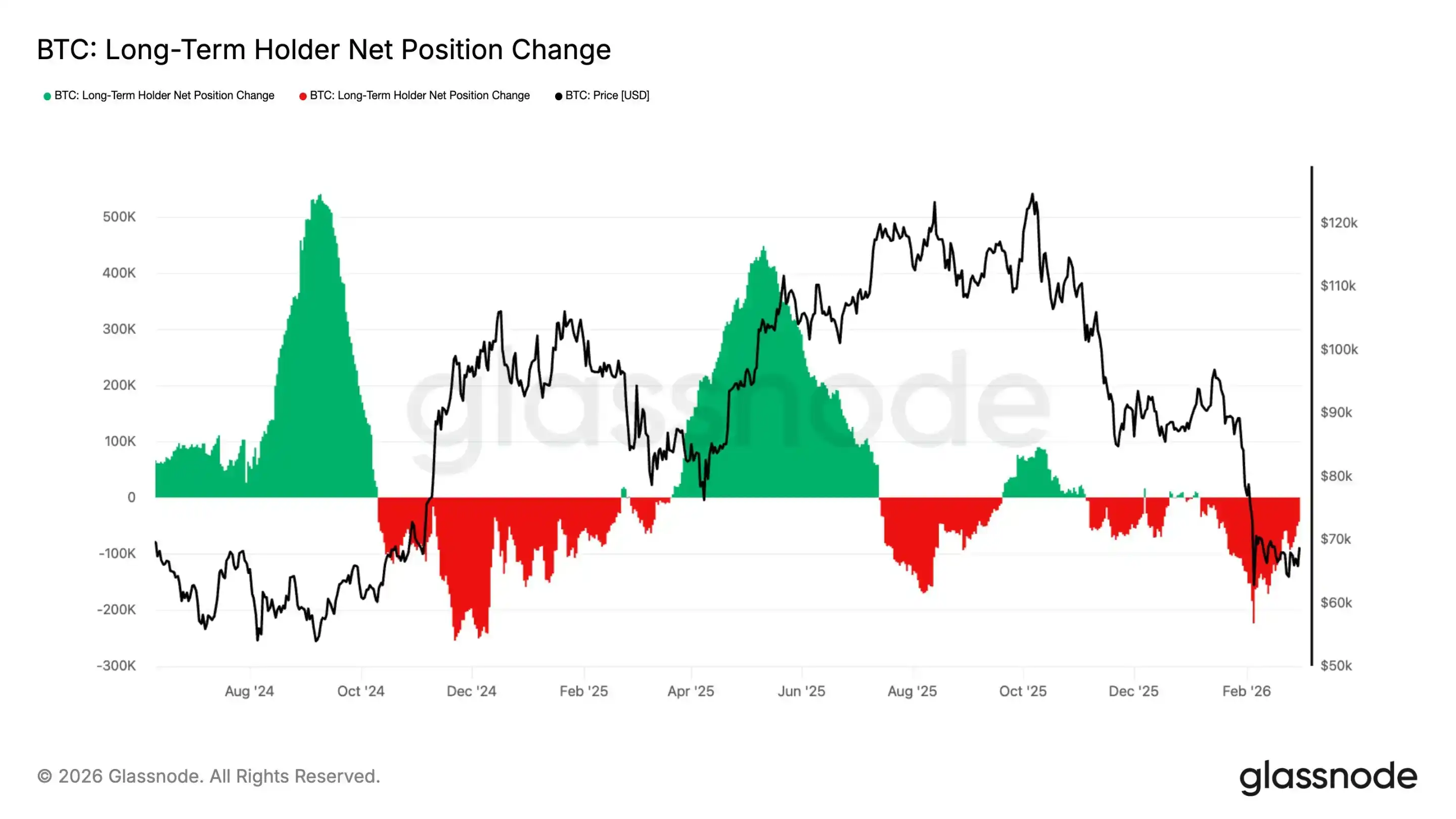
This indicates that as the Bitcoin price stabilizes, the selling pressure from experienced holders is easing. Resistance on the BTC supply side remains, but the intensity of selling is weakening.

Stablecoin Market Cap Remains High, $1.737 Billion Increase in Past 7 Days

Stablecoin data remains one of the indicators for observing market funds.

According to DefiLlama data, its total market capitalization remains high at $310.848 billion. Over the past 7 days, USDT's total market cap increased by 0.03%, while USDC's reached 1.84%.
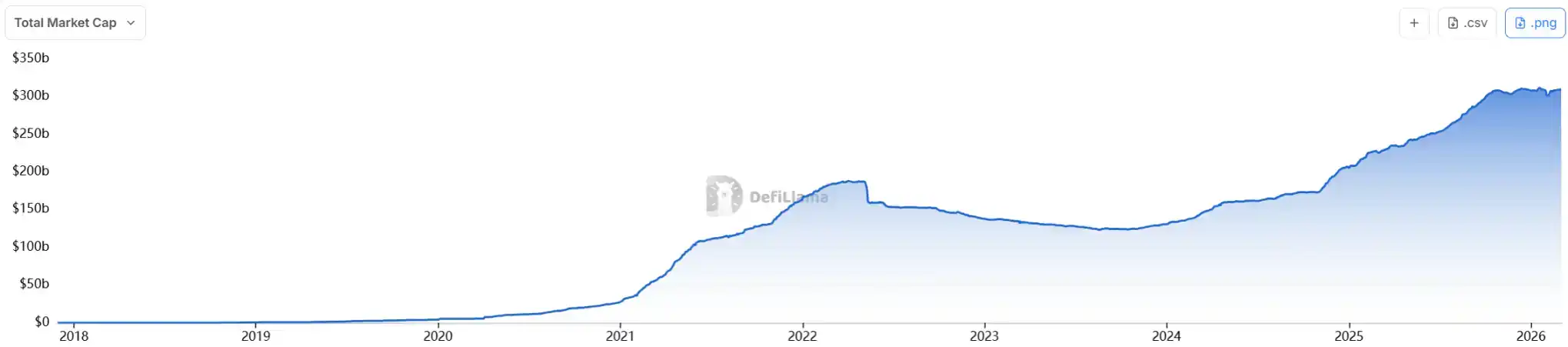
It is worth mentioning that over the past month, USDC's market cap increased by 8.6%, PYUSD by 16.7%, U by 29.04%, and USDG by 12.87%.

The high operation of stablecoins not only provides ample market liquidity but also signals the continuous entry of capital into the crypto ecosystem—trading volumes remain at the trillion-dollar level, acting as a bridge and accumulating potential energy for the next phase of growth for assets like Bitcoin. Although there hasn't been explosive growth, the stable supply itself reflects market maturity and restored confidence.

Michael Saylor continues to increase Bitcoin holdings through his company's unlimited buying strategy, with current holdings exceeding 720,000 BTC and an average cost of about $76,000. He has repeatedly stated publicly: "We are in a stage similar to Apple's early 'valley of despair.' Bitcoin, as digital property and digital credit, will outperform traditional assets."

ARK Invest founder Cathie Wood pointed out in an outlook report in early February 2026 that Bitcoin's downward cycle may be nearing its end. "The key to achieving asset allocation diversification is introducing new assets with low correlation to existing assets, and Bitcoin fits this perfectly. Adding low-correlation assets can improve risk-adjusted returns in the long run. Therefore, Wood believes institutions are indeed taking cryptocurrencies seriously. Previously, they might have hesitated due to the 'four-year cycle' narrative. Whether a four-year cycle exists or not, the market did experience a significant decline and is now approaching what many technical analysts consider a potential low area. Near the bottom, markets typically experience sharp volatility. People often say afterwards: 'If only I had bought at that low.' The V-shaped rebound has been quite significant. Of course, this is not any form of promise, but it seems various factors are gradually aligning."

Tom Lee, Chairman of Ethereum treasury company BitMine, said in an interview with CNBC: "No one wants to see the US卷入 (get involved in) conflict. But it must be pointed out that the market's performance is much more resilient than expected. I don't think anyone can assert that we have bottomed now, but it looks like a bottom is being formed—bad news keeps coming, yet the market can digest it and remain stable. More importantly, I think positioning has been significantly reset. If you look back to last April, a simple signal was the VIX rising above 40. It reached 80 last time, but it might not go that high this time. Another signal is: if another panic-inducing news item emerges, gold continues to fall, but the stock market turns positive that day, it means the market has cleared. I think we are approaching that stage.

Tom Lee believes March is a period of bottom formation. The decline in software, Mag 7, and crypto assets is about 90% complete. They are starting to outperform the market, which is a sign of leadership. Even if global trade disruptions occur, you still need AI, and you still need the Mag 7. The fundamentals of these companies remain strong. Investors need to remain patient and cautious, keeping some cash on hand. But I believe opportunities are emerging.


Связанные с этим вопросы

QWhat key price level did Bitcoin reach recently, and what does the article suggest about whether this is a rebound or a reversal?

ABitcoin recently reached a key level of $74,000. The article presents evidence such as significant ETF inflows, large-scale accumulation ('copycat buying') of over 400,000 BTC in the $60k-$70k range, and reduced selling pressure from long-term holders, suggesting these are signs of a potential market reversal rather than just a short-term rebound.

QAccording to the data, how much BTC was accumulated in the $60,000 to $70,000 price range, and what does this indicate?

AOver 400,000 BTC was accumulated (or 'copycat bought') in the $60,000 to $70,000 price range. This indicates strong investor confidence and significant 'bottom-fishing' behavior, forming a dense cost basis band that could act as a support level and reduce selling pressure.

QWhat significant change occurred with Bitcoin Spot ETF flows starting around February 20th?

AStarting around February 20th, Bitcoin Spot ETF flows shifted from a pattern of frequent large net outflows to one of sustained and significant net inflows, including single-day net inflows of $458 million and $506 million. This reversal indicates renewed institutional and major investor interest.

QWhat is the current trend regarding the net position change of Long-Term Holders (LTHs), and what is its implication for the market?

AThe net position change of Long-Term Holders (LTHs), after months of persistent net selling, is now showing signs of easing. This implies that selling pressure from experienced investors is diminishing, which is a positive sign for market stability and a potential reduction in supply-side resistance.

QWhat does the high and growing stablecoin market capitalization, as cited in the article, signal for the crypto market?

AThe stablecoin market capitalization remaining high at over $310.8 billion, with a 7-day increase of $1.737 billion and significant monthly growth for specific stablecoins like USDC and PYUSD, signals ample market liquidity and sustained capital inflow into the crypto ecosystem. It acts as a 'bridge' and accumulates potential energy for the next phase of growth for assets like Bitcoin, reflecting market maturity and restored confidence.

Похожее

Microsoft CEO: In the AI Era, How Do You Define a Company's Moat?

Microsoft CEO Satya Nadella argues that in the AI era, a company's true competitive edge, or "moat," is not determined by choosing the single most powerful model, but by its ability to build a continuous "learning loop." This system integrates and evolves by connecting human workflows, domain expertise, organizational judgment, and employee experience. He posits that future companies will accumulate two types of capital: Human Capital (employee knowledge, judgment, creativity) and "Token Capital" (a firm's own built and owned AI capabilities). Importantly, AI amplifies rather than devalues human capital. Human direction is essential to guide progress, as computational power alone is aimless. The core opportunity lies in creating a closed-loop system where human and token capital reinforce each other in a compound, self-improving cycle. A company must be able to preserve its unique institutional knowledge—its "company veteran" expertise—even if it switches underlying general-purpose AI models. This requires private evaluation benchmarks, reinforcement learning environments based on internal data, and queryable knowledge bases. Nadella warns against a future where economic value is concentrated by a few dominant models that commoditize entire industries' knowledge. Instead, the priority should be building a broad "frontier ecosystem" where every company, industry, and nation can own its learning loop. This allows organizations to retain control of their intellectual property, amplify employee capabilities, and ensure the economic value created by AI is captured within their own businesses and communities. True corporate sovereignty in the AI age comes from turning organizational knowledge into a compounding system that creates enduring, defensible value.

marsbit23 мин. назад

Microsoft CEO: In the AI Era, How Do You Define a Company's Moat?

marsbit23 мин. назад

ETFs Are Just the Ticket: The True Institutionalization of Bitcoin Is Happening Where You Can't See It

Beyond the Bitcoin ETF spotlight, a deeper institutionalization is underway, leveraging Bitcoin as a foundational financial primitive. Institutions are using Bitcoin for purposes long reserved for assets like U.S. Treasuries and gold: as collateral for loans, insurance reserves, and the backbone of rated bonds. Examples include a Barbados-based insurer capitalizing with $40M in Bitcoin reserves and Ledn's $188M securitization of Bitcoin-backed loans, which received the first-ever investment-grade rating (BBB-) from S&P for a digital asset-backed security. This structure was stress-tested during a 27% price drop in early 2026, triggering automatic liquidations that functioned as designed but revealed the systemic risk of synchronized selling across leveraged positions. Infrastructure is evolving to support this, with platforms like Anchorage Digital's Atlas network enabling secure, institutional-grade settlement and collateral management. Strategies like basis trades and corporate treasuries (exemplified by companies like MicroStrategy issuing billions in equity and debt to fund Bitcoin acquisitions) further integrate Bitcoin into financial mechanics. While ETFs solved "how to own" Bitcoin, these developments answer "what to do with it," embedding the asset into the working machinery of finance—as collateral upon which loans, derivatives, and structured products are built. The real, enduring institutional shift is happening in these largely invisible plumbing and financing systems.

marsbit29 мин. назад

ETFs Are Just the Ticket: The True Institutionalization of Bitcoin Is Happening Where You Can't See It

marsbit29 мин. назад

ZEC Co-Founder Responds to Orchard Vulnerability: No Signs of Theft, Orchard Pool to Be Sealed

ZEC Co-Founder Addresses Orchard Vulnerability: No Signs of Theft, Plans to Sunset Orchard Pool A security vulnerability was recently discovered in Zcash's Orchard shielded pool, raising key concerns. The primary questions are whether the flaw was exploited, if user funds are safe, whether users can verify the total ZEC supply, and if other similar vulnerabilities exist. Analysis suggests the vulnerability was likely not exploited prior to its discovery. It was found proactively by a researcher using specialized tools, not due to an active breach. The development team and mining pools acted quickly to contain the issue. Typical financially-motivated attacks would likely have left visible on-chain evidence, which has not been observed. User funds in Orchard are considered safe and should be recoverable, assuming no prior exploitation. If the flaw was never used, all legitimate funds can be withdrawn. The article outlines risks associated with moving funds to transparent addresses or other pools, but concludes that leaving assets in place is a reasonable option. Currently, users cannot independently verify that the total ZEC supply hasn't been inflated due to this bug. However, the planned Ironwood network upgrade is designed to resolve this. It will permanently close the Orchard pool to new deposits and internal transfers, allowing only withdrawals. This mechanism will cap total withdrawals at the amount of legitimately deposited funds, enabling anyone to cryptographically verify the supply post-upgrade. Multiple teams, including Shielded Labs, have conducted extensive audits focused on counterfeiting vulnerabilities, assisted by advanced AI tools. No additional flaws of this type have been found so far, increasing confidence that no other similar undisclosed vulnerabilities exist. In summary, evidence indicates the Orchard bug was probably not used, user funds are secure, and no other counterfeiting flaws are currently known. The upcoming Ironwood upgrade will restore users' ability to independently verify the total ZEC supply, closing this chapter.

Foresight News34 мин. назад

ZEC Co-Founder Responds to Orchard Vulnerability: No Signs of Theft, Orchard Pool to Be Sealed

Foresight News34 мин. назад

Microsoft Announces Commercial-Grade Quantum Computer to be Completed in Three Years: Will the Boots Land?

Microsoft announces plans to build a commercially viable quantum computer by 2029, a significant acceleration from the previous industry consensus of a decade. The breakthrough is fueled by their new Majorana 2 quantum chip, which boasts a record-breaking average qubit lifetime of 20 seconds—a 1,000-fold reliability improvement over its predecessor. This leap was achieved by leveraging topological qubits, a theoretically more stable technology using Majorana zero modes, and switching the core superconducting material from aluminum to lead. Crucially, Microsoft's "Discovery" agentic AI platform accelerated the R&D process. AI agents autonomously analyzed vast experimental data, optimized manufacturing parameters (like the lead alloy composition), and solved issues like "ghost noise," dramatically speeding up experimentation. While the 20-second coherence time is a landmark, challenges remain: scaling from 12 qubits to the millions needed for practical applications, managing compilation costs, and verifying quantum results. Skeptics call for peer-reviewed data, and questions persist about whether even 20 seconds is sufficient for complex algorithms like breaking RSA encryption. The race is on with other approaches (superconducting, trapped ions), but Microsoft's confidence in its topological roadmap signals a potential shortcut to a scalable quantum future.

marsbit53 мин. назад

Microsoft Announces Commercial-Grade Quantum Computer to be Completed in Three Years: Will the Boots Land?

marsbit53 мин. назад

Торговля

Спот
Фьючерсы

Популярные статьи

Тест по Bitcoin Биткоина

HTX Learn: Изучите Bitcoin halving и Заработаете Токены USDT

3.1k просмотров всегоОпубликовано 2024.04.16Обновлено 2024.04.16

Тест по Bitcoin  Биткоина

Что такое $BITCOIN

ЦИФРОВОЕ ЗОЛОТО ($BITCOIN): Комплексный анализ Введение в ЦИФРОВОЕ ЗОЛОТО ($BITCOIN) ЦИФРОВОЕ ЗОЛОТО ($BITCOIN) — это проект на основе блокчейна, работающий в сети Solana, который стремится объединить характеристики традиционных драгоценных металлов с инновациями децентрализованных технологий. Хотя он носит имя Биткойн, часто называемого “цифровым золотом” из-за его восприятия как средства хранения ценности, ЦИФРОВОЕ ЗОЛОТО является отдельным токеном, предназначенным для создания уникальной экосистемы в ландшафте Web3. Его цель — позиционировать себя как жизнеспособный альтернативный цифровой актив, хотя детали его применения и функциональности все еще развиваются. Что такое ЦИФРОВОЕ ЗОЛОТО ($BITCOIN)? ЦИФРОВОЕ ЗОЛОТО ($BITCOIN) — это токен криптовалюты, специально разработанный для использования в блокчейне Solana. В отличие от Биткойна, который выполняет широко признанную роль хранения ценности, этот токен, похоже, сосредоточен на более широких приложениях и характеристиках. Примечательные аспекты включают: Инфраструктура блокчейна: Токен построен на блокчейне Solana, известном своей способностью обрабатывать высокоскоростные и недорогие транзакции. Динамика предложения: ЦИФРОВОЕ ЗОЛОТО имеет максимальное предложение, ограниченное 100 квадриллионами токенов (100P $BITCOIN), хотя детали о его обращающемся предложении в настоящее время не раскрыты. Утилита: Хотя точные функциональные возможности не описаны, есть указания на то, что токен может быть использован для различных приложений, потенциально связанных с децентрализованными приложениями (dApps) или стратегиями токенизации активов. Кто создатель ЦИФРОВОГО ЗОЛОТА ($BITCOIN)? На данный момент личность создателей и команды разработчиков, стоящих за ЦИФРОВЫМ ЗОЛОТОМ ($BITCOIN), остается неизвестной. Эта ситуация типична для многих инновационных проектов в области блокчейна, особенно тех, которые связаны с децентрализованными финансами и феноменом мем-криптовалют. Хотя такая анонимность может способствовать культуре, ориентированной на сообщество, она усиливает опасения по поводу управления и ответственности. Кто инвесторы ЦИФРОВОГО ЗОЛОТА ($BITCOIN)? Доступная информация указывает на то, что у ЦИФРОВОГО ЗОЛОТА ($BITCOIN) нет известных институциональных спонсоров или значительных венчурных капиталовложений. Проект, похоже, функционирует по модели пирингового взаимодействия, сосредоточенной на поддержке и принятии сообществом, а не на традиционных путях финансирования. Его активность и ликвидность в основном сосредоточены на децентрализованных биржах (DEX), таких как PumpSwap, а не на устоявшихся централизованных торговых платформах, что еще больше подчеркивает его подход, ориентированный на grassroots. Как работает ЦИФРОВОЕ ЗОЛОТО ($BITCOIN) Операционные механизмы ЦИФРОВОГО ЗОЛОТА ($BITCOIN) можно подробно описать на основе его дизайна блокчейна и характеристик сети: Механизм консенсуса: Используя уникальный механизм доказательства истории (PoH) Solana в сочетании с моделью доказательства доли (PoS), проект обеспечивает эффективную валидацию транзакций, что способствует высокой производительности сети. Токеномика: Хотя конкретные дефляционные механизмы не были подробно описаны, большое максимальное предложение токенов подразумевает, что оно может быть предназначено для микротранзакций или нишевых случаев использования, которые еще предстоит определить. Интероперабельность: Существует потенциал для интеграции с более широкой экосистемой Solana, включая различные платформы децентрализованных финансов (DeFi). Однако детали относительно конкретных интеграций остаются неуточненными. Хронология ключевых событий Вот хронология, которая подчеркивает значимые вехи, касающиеся ЦИФРОВОГО ЗОЛОТА ($BITCOIN): 2023: Первоначальное развертывание токена происходит в блокчейне Solana, отмеченное его адресом контракта. 2024: ЦИФРОВОЕ ЗОЛОТО приобретает видимость, когда оно становится доступным для торговли на децентрализованных биржах, таких как PumpSwap, позволяя пользователям обменивать его на SOL. 2025: Проект наблюдает спорадическую торговую активность и потенциальный интерес к инициативам, возглавляемым сообществом, хотя на данный момент не зафиксировано никаких значительных партнерств или технических достижений. Критический анализ Сильные стороны Масштабируемость: Основная инфраструктура Solana поддерживает высокие объемы транзакций, что может повысить полезность $BITCOIN в различных сценариях транзакций. Доступность: Потенциально низкая цена торговли за токен может привлечь розничных инвесторов, способствуя более широкому участию благодаря возможностям дробного владения. Риски Отсутствие прозрачности: Отсутствие публично известных спонсоров, разработчиков или процесса аудита может вызвать скептицизм относительно устойчивости и надежности проекта. Волатильность рынка: Торговая активность сильно зависит от спекулятивного поведения, что может привести к значительной волатильности цен и неопределенности для инвесторов. Заключение ЦИФРОВОЕ ЗОЛОТО ($BITCOIN) является интригующим, но неоднозначным проектом в быстро развивающейся экосистеме Solana. Хотя он пытается использовать нарратив “цифрового золота”, его отход от установленной роли Биткойна как средства хранения ценности подчеркивает необходимость более четкого различения его предполагаемой утилиты и структуры управления. Будущее принятие и усвоение, вероятно, будут зависеть от решения текущей непрозрачности и более четкого определения его операционных и экономических стратегий. Примечание: Этот отчет охватывает синтезированную информацию, доступную на октябрь 2023 года, и с тех пор могут произойти события.

99 просмотров всегоОпубликовано 2025.05.13Обновлено 2025.05.13

Что такое $BITCOIN

Fractal Bitcoin: масштабирование Биткоина с помощью рекурсивной системы

Fractal Bitcoin — масштабное Layer-1-решнение, созданное на базе кода Биткоина, позволяющего достигать бесконечного масштабирования с помощью рекурсивного подхода.

2.3k просмотров всегоОпубликовано 2025.06.30Обновлено 2025.06.30

Fractal Bitcoin: масштабирование Биткоина с помощью рекурсивной системы

Обсуждения

Добро пожаловать в Сообщество HTX. Здесь вы сможете быть в курсе последних новостей о развитии платформы и получить доступ к профессиональной аналитической информации о рынке. Мнения пользователей о цене на BTC (BTC) представлены ниже.

活动图片














