Weekly Editor's Picks (0509-0515)
Weekly Editor's Picks (0509-0515): A Weekly Digest to Filter Noise
This weekly digest curates deep analysis often lost in fast information flows. Key highlights:
* **Macro:** A new "NACHO" (Not A Chance Hormuz Opens) trade emerges on Wall Street, betting on a prolonged closure of the Strait of Hormuz, shifting focus from political rhetoric to fundamental oil market data.
* **Investment & Startups:**
* Justin Sun discusses his long-term investment theses, highlighting future opportunities in embodied AI, drones, spatial computing, and space exploration.
* Anthropic and OpenAI's crackdown on unauthorized stock transfers disrupts the pre-IPO token market, prompting a re-evaluation of its boundaries.
* Bitwise analyzes massive capital inflows into new, compliant blockchains like Arc, Canton, and Tempo, tailored for stablecoins and asset tokenization.
* A skeptical view questions HYPE's potential for further price appreciation, citing high fully diluted valuation, unlocking token supply, and unclear new buyer demographics.
* **AI:** The "Semiconductor Century" report outlines the 2026 AI investment landscape, identifying key players (Nvidia, TSMC, ASML) and catalysts across the semiconductor supply chain, from design to manufacturing.
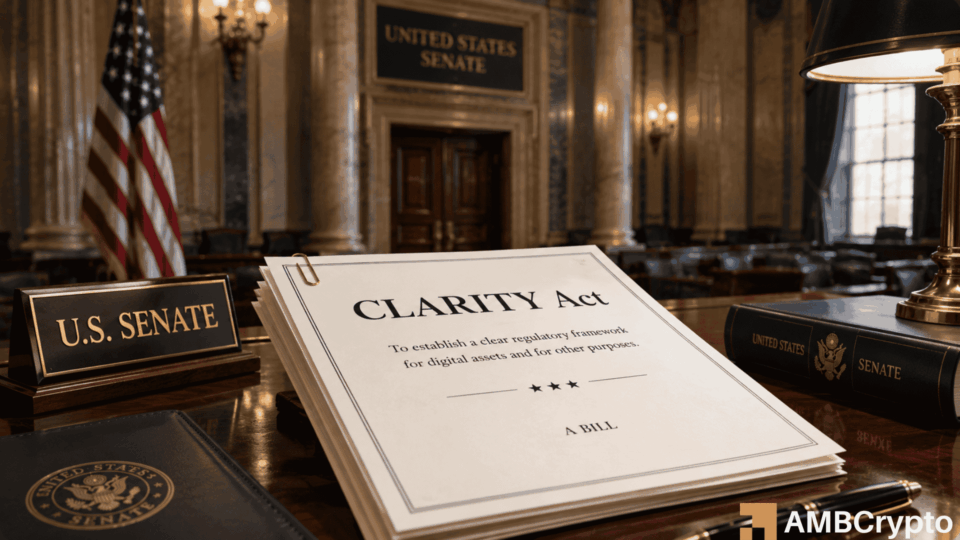
* **Policy & Stablecoins:** The potential CLARITY Act is analyzed for its impact on DeFi. It could trigger massive institutional capital inflows and redirect stablecoin yields, benefiting structured, compliant DeFi protocols like Pendle, Morpho, and Centrifuge.
* **CeFi & DeFi:** New tokens like sato and FLOOD, built on Uniswap v4's "Hook" mechanism, are gaining traction. Meanwhile, following the Kelp DAO exploit, Chainlink's CCIP is gaining market share from LayerZero in the cross-chain sector.
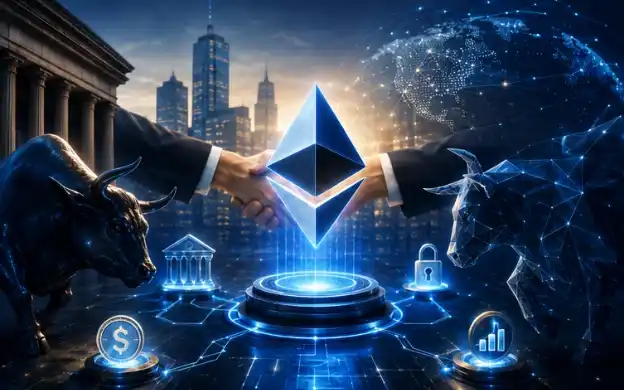
* **Ethereum:** Grayscale suggests Ethereum's staking reward model needs reform to address issues like reduced fee burns from L2s and potentially excessive ETH lock-up, proposing a reward curve with a cap to benefit ETH's long-term value.
* **Weekly Recap:** Summarizes key events including Trump's China visit, new Fed leadership, CLARITY Act progress, notable price movements (ZEC, TON), strong corporate earnings (Circle, Gemini), and institutional Bitcoin accumulation.
marsbit05/16 02:40