Japan To Recognize Foreign Stablecoins As Electronic Payment Instruments Starting June 1

bitcoinistPublished on 2026-05-20Last updated on 2026-05-20

Abstract

Japan's Financial Services Agency (FSA) will officially recognize certain foreign trust-issued stablecoins as "electronic payment instruments" under its Payment Services Act, effective June 1, 2026. This amendment excludes qualifying foreign stablecoins from being classified as securities, allowing domestic licensed operators to handle them. To qualify, foreign issuers must be licensed under laws equivalent to Japan's, cooperate with FSA oversight, manage reserve assets under foreign law with proper audits, maintain anti-crime systems, and ensure the stablecoin and its reserves are in the same currency. Eligibility for reliable redemption at face value will be assessed case-by-case. This move expands Japan's stablecoin regulatory framework established in 2022, part of broader efforts to regulate crypto assets. Recent steps include classifying crypto as financial instruments, proposing a 20% flat tax on crypto income, and issuing joint guidance for crypto use in real estate transactions, emphasizing KYC and anti-money laundering checks.

Japan’s key financial authority has expanded its framework to officially treat foreign trust‐issued stablecoins as electronic payment instruments instead of securities under domestic law.

Foreign Stablecoins Recognized As Payment Instruments

On Tuesday, Japan’s Financial Services Agency (FSA) announced amendments to the Cabinet Office Ordinance to recognize certain trust-type stablecoins issued by foreign trust banks and similar entities as “electronic payment instruments” under the Payment Services Act, local news reported.

The amendment, scheduled to take effect on June 1, 2026, will exclude qualified foreign trust beneficiary rights-based stablecoins from classification as “securities” under the Financial Instruments and Exchange Act (FIEA), allowing them to be handled by domestic operators registered as electronic payment instrument operators.

To achieve this, the Cabinet Office Ordinance established four requirements, including the legal status of stablecoin issuers, the management of underlying assets, measures to prevent criminal use, and currency denomination consistency.

Under the new rules, issuers must be registered or licensed under foreign laws deemed equivalent to Japan’s Payment Services Act or Banking Act and supervised by an authority that can share oversight information with the FSA commissioner upon request. The FSA will verify each issuer’s supervisory cooperation framework during its suitability review, the report noted.

Foreign stablecoin issuers must also manage reserve assets under applicable foreign laws and submit to audits by local professionals equivalent to certified public accountants or audit firms.

In addition, they must maintain systems to detect and respond to criminal misuse, including mechanisms to suspend transactions, and ensure the trust property and reserve assets are denominated in the same currency.

Notably, authorities will assess on a case-by-case basis whether a stablecoin can reliably be redeemed at its issue price to the same degree as Japanese electronic payment instruments. As a result, stablecoins used overseas may be treated differently in Japan depending on their reserve composition and audit arrangements.

Japan Expands Crypto Regulations

Over the past few years, Japanese authorities have been working to restructure the treatment of crypto assets in the country. The latest changes to the Cabinet Order Ordinance have expanded Japan’s legal framework for stablecoins, established through the 2022 amendment to the Payment Services Act.

The government recently amended the FIEA to classify crypto assets as financial instruments and backed a tax reform plan to introduce a separate system for different transactions and a flat 20% tax on crypto income.

Last month, the FSA, alongside the Ministry of Land, Infrastructure, Transport and Tourism, the National Police Agency, and the Ministry of Finance, issued joint guidance outlining compliance requirements for the use of crypto in real estate deals.

As reported by Bitcoinist, the regulators requested that real estate firms conducting crypto transactions strictly enforce Know Your Customer (KYC) procedures and source-of-funds verifications.

The joint guidance outlined reporting obligations for cross-border payments, unlicensed transactions, or suspicious fund flows. Additionally, it warned firms that activities involving the exchange of crypto assets for fiat currency or brokerage services on behalf of clients may constitute crypto asset exchange operations, which carry the risk of legal violations.
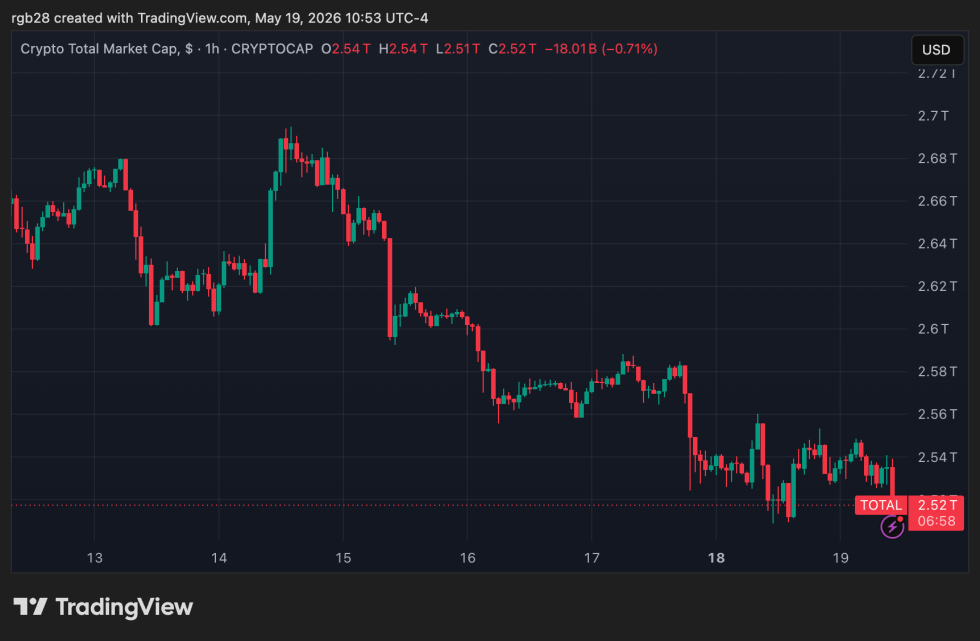
The total crypto market capitalization is at $2.52 trillion in the one-week chart. Source: TOTAL on TradingView


Trending Cryptos

Related Questions

QWhat change has Japan's FSA announced regarding the legal treatment of foreign stablecoins?

AJapan's Financial Services Agency (FSA) has announced amendments to the Cabinet Office Ordinance to recognize certain foreign trust-type stablecoins as 'electronic payment instruments' under the Payment Services Act, rather than classifying them as 'securities' under the Financial Instruments and Exchange Act (FIEA).

QWhen will the new regulations for foreign stablecoins in Japan take effect?

AThe new regulations, which amend the Cabinet Office Ordinance, are scheduled to take effect on June 1, 2026.

QWhat are the key requirements foreign stablecoin issuers must meet to be recognized as electronic payment instruments in Japan?

AThe Cabinet Office Ordinance establishes four key requirements: the issuer must be registered/licensed under foreign laws equivalent to Japan's relevant acts; underlying/reserve assets must be properly managed under foreign law; the issuer must have systems to detect and respond to criminal misuse; and the trust property and reserve assets must be denominated in the same currency.

QHow will Japanese authorities determine if a foreign stablecoin can be reliably redeemed?

AJapanese authorities will assess on a case-by-case basis whether a foreign stablecoin can reliably be redeemed at its issue price to the same degree as Japanese electronic payment instruments. This assessment will depend on factors like the stablecoin's reserve composition and audit arrangements.

QBesides stablecoins, what other recent regulatory actions has Japan taken regarding crypto assets?

AJapan has amended the FIEA to classify crypto assets as financial instruments, backed a tax reform plan introducing a flat 20% tax on crypto income, and issued joint guidance with other ministries outlining compliance requirements for the use of crypto in real estate deals, including strict KYC and source-of-funds verifications.

Related Reads

Primit Season 1 Officially Launches: $100,000 Avalanche On-Chain Perp Trading Incentive Event Now Live

Primit, in collaboration with Avalanche, has officially launched "Season 1: On-Chain Perp Frenzy," a large-scale incentive event for on-chain perpetual trading on the Avalanche network. The campaign features a total prize pool equivalent to 100,000 USDT in AVAX, distributed across four concurrent reward mechanisms. Key components of the event include: * **Daily Random User Rewards ($7,000 pool):** Over 14 days, 20 users daily with at least $200 in trading volume are randomly selected to share a $500 daily pool. * **Twitter Contributor Rewards ($5,200 pool):** Rewards of $300–$500 for high-quality community content about Primit on Twitter/X using #PrimitAvalanche. * **Referral Rebate Mechanism ($50,000 pool):** A proportional share of the pool is distributed based on valid referral volume, with no individual cap. Referred users must register via a code and achieve ≥$500 cumulative volume with ≥5 trades. * **Volume Leaderboard ($37,800 pool):** Top 120 traders by cumulative volume receive rewards ranging from $100 to $4,000. The event runs from July 15 to July 28. Trading volume from AVAX-related pairs or using native gas receives a 1.5x multiplier, incentivizing engagement with Avalanche's core ecosystem. According to the Primit team, the season serves as a product stress test to demonstrate the readiness of on-chain perpetuals for high-frequency, professional trading demand, facilitated by Avalanche's high-performance infrastructure. Relevant links to the official Twitter and event portal are provided.

TheNewsCrypto4m ago

Primit Season 1 Officially Launches: $100,000 Avalanche On-Chain Perp Trading Incentive Event Now Live

TheNewsCrypto4m ago

Trading

Spot

Hot Articles

Discussions

Welcome to the HTX Community. Here, you can stay informed about the latest platform developments and gain access to professional market insights. Users' opinions on the price of S (S) are presented below.

活动图片