# Stablecoins Related Articles

HTX News Center provides the latest articles and in-depth analysis on "Stablecoins", covering market trends, project updates, tech developments, and regulatory policies in the crypto industry.

Fu Peng's First Public Speech in 2026: What Exactly Are Crypto Assets? Why Did I Join the Crypto Asset Industry?

Fu Peng, a renowned macroeconomist and now Chief Economist at New火 Group, delivered his first public speech of 2026 at the Hong Kong Web3 Festival. He explained his perspective on crypto assets and why he joined the industry, framing it within the context of macroeconomic trends and financial evolution. Fu emphasized that crypto assets are transitioning from an early, belief-driven phase to a mature, institutionally integrated asset class. He drew parallels to the 1970s-80s, when technological advances (like computing) revolutionized traditional finance, leading to the rise of FICC (Fixed Income, Currencies, and Commodities). Similarly, current advancements in AI, data, and blockchain are reshaping finance, with crypto assets becoming part of a new "FICC + C" (C for Crypto) framework. He noted that institutional capital, including traditional hedge funds, avoided early crypto due to its speculative nature but are now engaging as regulatory clarity emerges (e.g., stablecoin laws, CFTC classifying crypto as a commodity). Fu predicted that 2025-2026 marks a turning point where crypto becomes a standardized, financially viable asset for diversified portfolios, akin to commodities or derivatives in traditional finance. Fu defined Bitcoin not as "digital gold" in a simplistic sense but as a value-preserving, financially tradable asset. He highlighted that crypto's future lies in regulated, institutional adoption, moving away from retail-dominated trading. His entry into crypto signals this maturation, where traditional finance integrates crypto into mainstream asset management.

marsbit04/23 06:09

Fu Peng's First Public Speech in 2026: What Exactly Are Crypto Assets? Why Did I Join the Crypto Asset Industry?

marsbit04/23 06:09

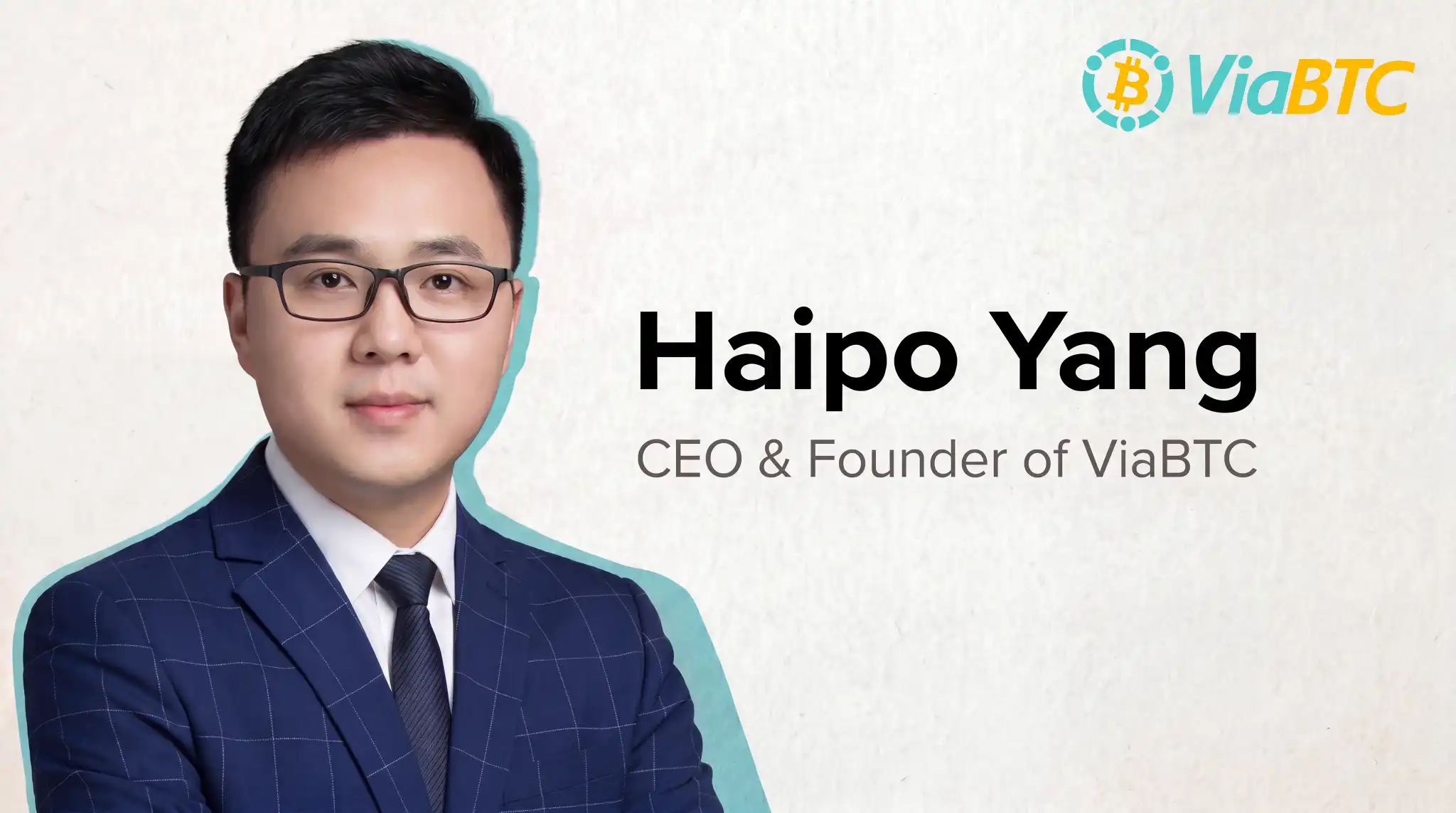
Dialogue with ViaBTC CEO Yang Haipo: Is the Essence of Blockchain a Libertarian Experiment?

"ViaBTC CEO Yang Haipo: Blockchain as a Hardcore Libertarian Experiment" In a deep-dive interview, ViaBTC CEO Yang Haipo reframes the essence of blockchain, arguing it is not merely a new technology or infrastructure but a hardcore libertarian experiment. This experiment, born from the 2008 financial crisis and decades of cypherpunk ideology, tests a fundamental question: to what extent can freedom and self-organization exist without centralized trust? The discussion highlights the experiment's verified outcomes. On one hand, it has proven its core value of censorship resistance, providing critical financial lifelines for entities like WikiLeaks and individuals in hyperinflationary or sanctioned countries via tools like stablecoins. However, Yang points out a key paradox: the most successful product, USDT, is itself a centralized compromise, showing users prioritize a less-controlled pipeline over pure decentralization. On the other hand, the experiment has exposed the severe costs of this freedom—a "dark forest" without safeguards. Events like the collapses of LUNA, Celsius, and FTX, resulting in massive wealth destruction and prison sentences for founders, underscore the system's fragility and the inherent risks of an unregulated environment. Yang observes that despite decentralized protocols, human nature inevitably recreates centralized power structures, speculative frenzies, and narrative-driven cycles (from ICOs to Meme coins), where emotion and belonging often trump technological substance. Looking forward, he believes blockchain's future is significant but niche. Its real value lies in serving specific, real-world needs for financial sovereignty and bypassing traditional controls, not as a universal infrastructure replacing all centralized systems. For the average participant, Yang's crucial advice is to cultivate independent judgment. True freedom is not holding a crypto wallet, but possessing a mind resilient to groupthink and narrative hype in a high-risk, often irrational market.

marsbit04/23 03:00

Dialogue with ViaBTC CEO Yang Haipo: Is the Essence of Blockchain a Libertarian Experiment?

marsbit04/23 03:00

Hong Kong Web3 Carnival: The Watershed Moment for Web3 Entering the Execution Phase

The 2026 Hong Kong Web3 Carnival marked a significant shift from previous industry discussions, signaling that Web3 has moved beyond theoretical validation into a phase of institutional and structural implementation. Hong Kong is not merely building a "Web3 industry cluster" but developing an operating system for the next-generation financial infrastructure. Key developments include the expansion of asset tokenization beyond cryptocurrencies to encompass bonds, real estate, and future income rights. This transition represents a fundamental restructuring of financial logic—shifting from institution-dominated asset control to rule-driven, programmable asset流动性 and distribution. Tokenization enables lower-friction participation and broader access to financial resources. Concurrently, AI is evolving from a tool into an autonomous economic agent. The proposed Decentralized Agentic Economy (DAE) framework suggests AI agents, empowered by blockchain-based identity and programmable money, will independently execute transactions and strategies—redefining market dynamics and reducing intermediation. Regulatory progress has been systematic: Hong Kong has expanded oversight to include exchanges, custody, staking, and derivatives, while gradually approving products like tokenized funds and stablecoins. The "same risk, same regulation" principle, combined with sandbox mechanisms, provides stability and transparency—key advantages in a globally fragmented regulatory landscape. Hong Kong’s approach integrates three core elements: real-world asset (RWA) tokenization, stablecoin settlement networks, and AI-driven economic agents. This systemic build-up positions Hong Kong not just as a participant but as a potential rule-maker in the next-era financial system, where asset flow, rules, and participants are simultaneously transformed.

marsbit04/22 10:50

Hong Kong Web3 Carnival: The Watershed Moment for Web3 Entering the Execution Phase

marsbit04/22 10:50

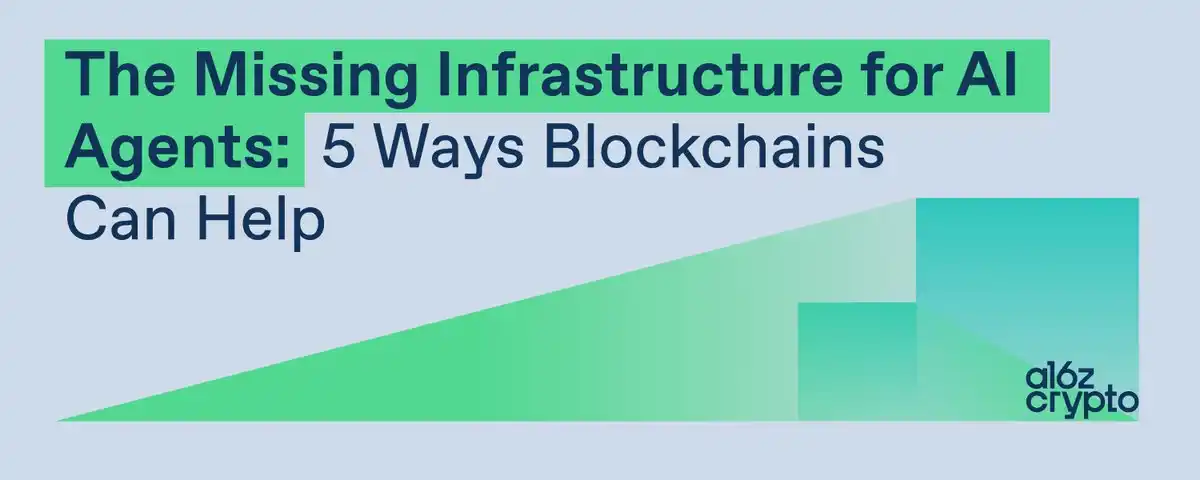
How Blockchain Fills the Identity, Payment, and Trust Gaps for AI Agents?

AI Agents are rapidly evolving into autonomous economic participants, but they face critical gaps in identity, payment, and trust infrastructure. They currently lack standardized ways to prove who they are, what they are authorized to do, and how they should be compensated across different environments. Blockchain technology is emerging as a solution to these challenges by providing a neutral coordination layer. Public ledgers offer auditable credentials, wallets enable portable identities, and stablecoins serve as a programmable settlement layer. A key bottleneck is the absence of a universal identity standard for non-human entities—akin to "Know Your Agent" (KYA)—which would allow Agents to operate with verifiable, cryptographically signed credentials. Without this, Agents remain fragmented and face barriers to interoperability. Additionally, as AI systems take on governance roles, there is a risk that centralized control over models could undermine decentralized governance in practice. Cryptographic guarantees on training data, prompts, and behavior logs are essential to ensure Agents act in users' interests. Stablecoins and crypto-native payment rails are becoming the default for Agent-to-Agent commerce, enabling seamless, low-cost transactions for AI-native services. These systems support permissionless, programmable payments without traditional merchant onboarding. Finally, as AI scales, human oversight becomes impractical. Trust must be built into system architecture through verifiable provenance, on-chain attestations, and decentralized identity systems. The future of Agent economies depends on cryptographically enforced accountability, allowing users to delegate tasks with clearly defined constraints and transparent operation logs.

marsbit04/21 09:19

How Blockchain Fills the Identity, Payment, and Trust Gaps for AI Agents?

marsbit04/21 09:19

Six Years Since DeFi Summer, How Will the Decentralized Financial Revolution Continue?

In 2026, the DeFi sector faces a severe trust crisis following a series of high-profile security breaches, including a $292 million theft from KelpDAO’s rsETH, a $2.85 million exploit at Drift Protocol due to permission vulnerabilities, and a $14.9 million lending failure at Venus Protocol. These incidents triggered a withdrawal of approximately $10 billion from DeFi over a single weekend, highlighting systemic risks beyond smart contract flaws—such as governance, cross-chain complexity, and operational weaknesses. Despite these challenges, on-chain finance continues to grow, with capital shifting toward safer, regulated products. Stablecoins like USDT ($185B) and USDC ($78B) have reached a combined market cap of $263 billion, while tokenized U.S. Treasuries surged to $10.93 billion. Visa’s growing USDC settlement volume, now annualized at $3.5 billion, signals increasing institutional adoption of compliant blockchain-based financial infrastructure. The competition for the future of on-chain finance is intensifying. While native DeFi struggles with trust and capital outflows, regulated products—stablecoins, tokenized assets, and ETFs—are gaining dominance by offering programmable, 24/7 settlement without high DeFi risks. Over 80 crypto projects shut down in Q1 2026, reflecting dwindling patience for speculative ventures. The core challenge for open DeFi is to rebuild trust and demonstrate irreplaceable value—or risk ceding its role as the primary entry point to on-chain finance.

marsbit04/21 09:10

Six Years Since DeFi Summer, How Will the Decentralized Financial Revolution Continue?

marsbit04/21 09:10

Solana Q1 Report: Revenue Plunges 68% Year-on-Year, Developers Decrease by 30%

Solana Q1 2026 Report: Key Metrics Show Significant Decline Amid Market Reset Solana experienced a substantial downturn in Q1 2026, with key performance indicators reflecting a broader market cooling. Total network revenue (REV) fell to $89.9 million, down 68% year-over-year (YoY) and 1.4% quarter-over-quarter (QoQ). This decline was driven by reduced speculative activity, which had previously fueled the network during the 2024/2025 bull market. Key revenue components saw mixed results: base fees dropped 8.7% QoQ, Jito tips (MEV) fell 19.7%, priority fees rose 23%, and vote fees declined 44.5%. The annualized real yield for stakers was just 0.17%, down 67% YoY. Network GDP, generated by top applications, fell 7% QoQ to $451 million. Pump Fun emerged as a standout, generating $103 million (up 3% QoQ), surpassing Solana's L1 revenue. However, daily active addresses averaged 2.4 million, down 4.8% YoY. Stablecoin supply on Solana reached $15.9 billion, down 2.7% QoQ but up 18% YoY. USDC and USDT remained dominant. DEX volumes averaged $3.2 billion daily, with private DEXs now accounting for 60% of all volume. The network's net dilution rate was 4.38%, while the cost to produce $1 of REV was $8.10, up 93% YoY. The number of new tokens created on launchpads grew 42% QoQ to 3 million, with Pump Fun dominating 85% of this market. Despite the downturn, Solana's core strengths remain: its position as a hub for retail trading apps, potential in perpetual markets, and growing use in stablecoin-based fintech applications, particularly in Latin America. However, developer activity declined 32% YoY, slightly worse than Ethereum's 29% drop. The network must now focus on attracting traditional finance, competing in perpetual markets, and sustaining developer ecosystem growth to drive the next expansion cycle.

marsbit04/20 10:42

Solana Q1 Report: Revenue Plunges 68% Year-on-Year, Developers Decrease by 30%

marsbit04/20 10:42

活动图片