The Wolf Is Really Coming? Quantum Computing Threat to Bitcoin Is 'No Longer Theoretical', Analyst: 20-50% of Bitcoin Has 'Security Risks'

华尔街日报Опубликовано 2026-01-23Обновлено 2026-01-23

Введение

The threat of quantum computing to Bitcoin is accelerating from theoretical to practical, with analysts warning that 20-50% of Bitcoin’s supply—amounting to 4 to 10 million BTC—is vulnerable to quantum attacks. Coinbase’s research head David Duong highlighted that 32.7% of Bitcoin (6.51 million BTC) is at risk due to weak cryptographic practices, such as address reuse. Institutional investors are reacting: Jefferies’ Christopher Wood removed Bitcoin entirely from his portfolio, reallocating to gold, citing quantum computing as an existential risk to Bitcoin’s value proposition. Quantum computers could break Bitcoin’s elliptic curve digital signature algorithm (ECDSA), potentially exposing private keys. While current quantum systems are far from the estimated 13 million qubits needed to crack Bitcoin’s encryption, experts disagree on the timeline—some say 5 years, others 20-40 years. The Bitcoin community faces a governance dilemma: whether to preemptively destroy vulnerable coins or risk large-scale theft. Developers are proposing quantum-resistant upgrades, but implementation could take 5-10 years. Despite the concerns, some institutions like Harvard and Morgan Stanley continue to increase Bitcoin exposure, reflecting divergent risk assessments. The market is already pricing in these fears, with Bitcoin underperforming gold significantly.

The threat of quantum computing to Bitcoin is moving from theory to reality. A Coinbase researcher has issued a warning that about 33% of the Bitcoin supply faces quantum risk, while Jefferies' Global Head of Equity Strategy has completely removed Bitcoin from his portfolio, shifting allocation to gold. This change is reshaping institutional investors' attitudes towards Bitcoin.

According to the latest media reports, David Duong, Head of Global Investment Research at Coinbase, warned that approximately 32.7% of the Bitcoin supply, involving about 6.51 million Bitcoins, faces potential quantum computing attack risks.

Jefferies strategist Christopher Wood also announced in an analysis column on January 16th that he was liquidating the entire 10% Bitcoin position in his portfolio model, reallocating to 5% physical gold and 5% gold mining stocks. He explained that the emergence of quantum computing could achieve breakthroughs in the coming years rather than decades, which would shake the foundation of Bitcoin as a 'reliable store of value'.

Quantum computers utilize advanced physics principles, and their computing speed far exceeds that of traditional computers, potentially ultimately cracking the encryption algorithms that protect Bitcoin wallets. According to data from cryptocurrency security research institution Project 11, nearly 70% of vulnerable Bitcoin comes from address reuse, which exposes security information that could be exploited by quantum computers.

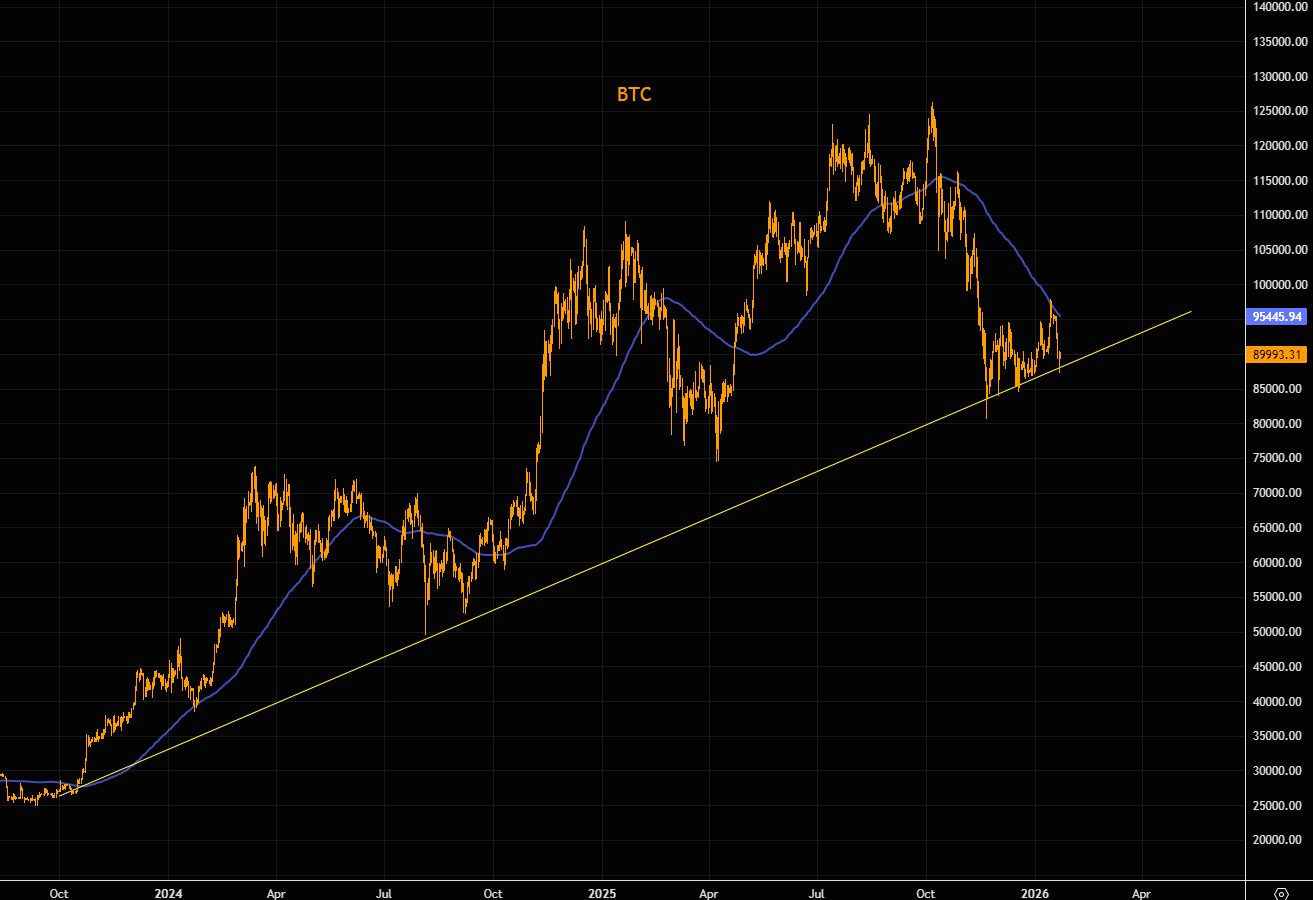
The market has begun to reflect this concern. Bitcoin has fallen 6.5% relative to gold this year, while gold has risen 55% over the same period. The Bitcoin-to-gold ratio fell to 19.26 in January 2026, showing that investors are reassessing Bitcoin's 'digital gold' status. Bitcoin recently encountered a strong pullback near the 100-day moving average, with $85,000 being a key level to watch closely.

The urgency of this threat is triggering a governance dilemma within the Bitcoin community: whether to destroy quantum-vulnerable coins to protect system integrity, or to take no action and risk them being stolen. This choice pits protocol security against property rights protection.

20-50% of Bitcoin Supply at Risk

According to Jefferies analysis, the quantum risk is no longer a theoretical issue. Growing concerns show that quantum computers with cryptography-related capabilities could arrive within years rather than decades, posing an existential threat to Bitcoin's security model and its 'digital gold' narrative.

Estimates show that 20-50% of Bitcoin may be in a vulnerable state. Due to address reuse, approximately 4 million to 10 million Bitcoins are at risk, with exchange and institutional wallets being the most vulnerable targets. Chaincode Labs' 2025 research estimated that about 6.26 million Bitcoins, worth between $650 billion and $750 billion, could be exposed to future quantum attacks.

David Duong pointed out in a LinkedIn analysis on January 5th that upgrading Bitcoin's security is a core challenge. He highlighted two main threats: quantum computers cracking Elliptic Curve Digital Signature Algorithm (ECDSA) keys, and targeting the SHA-256 algorithm that underpins Bitcoin's proof-of-work system. Vulnerable addresses include traditional Pay-to-Public-Key scripts, certain multi-signature wallets, and exposed Taproot setups.

Institutional Investors Lead the Exodus

Christopher Wood stated in his January 16th analysis column that advances in the field of quantum computing would weaken the logic of Bitcoin as a 'reliable store of value', especially for long-term investors like pension funds. He liquidated the entire 10% Bitcoin position in his portfolio model, reallocating to 5% physical gold and 5% gold mining stocks.

Wood was an early institutional supporter of Bitcoin, adding it to his portfolio in December 2020 during the pandemic when countries released massive stimulus measures, and increased his holding to 10% in 2021. He explained that the reason for selling was concern that the advent of quantum computing would shake Bitcoin's foundation, with the technology potentially achieving breakthroughs in the coming years rather than decades.

Quantum computers could theoretically crack Bitcoin's encryption algorithms, reverse-engineering the private keys used to authorize transfers. Wood stated this would destroy the concept of Bitcoin as a store of value, thereby undermining its status as a digital alternative to gold.

Current quantum computers operate with computing power of about 105 qubits. According to research in AVS Quantum Science, a 2022 study by Universal Quantum and the University of Sussex estimated that cracking a Bitcoin private key would require 13 million qubits.

However, industry insiders are divided on the urgency. Blockstream CEO Adam Back believes the threat might still be 20 to 40 years away. MicroStrategy Chairman Michael Saylor believes that quantum computing will enhance rather than threaten Bitcoin, arguing the network will upgrade and fortify its defenses.

University of Calgary quantum computing researcher Pierre-Luc Dallaire-Demers provided a more aggressive estimate, believing the threat could become a reality in about five years. Casa co-founder Jameson Lopp stated that preparing Bitcoin for quantum resistance could take five to ten years.

Bitcoin developers have proposed an upgrade proposal to add quantum-resistant security features. The proposal is still in the draft stage and is being tested. Other blockchain networks are also preparing for the quantum threat through privacy upgrades.

Bitcoin faces a governance dilemma. The community is debating whether to destroy quantum-vulnerable tokens to protect system integrity, or do nothing and bear the risk of theft. This choice creates a conflict between protocol security and property rights protection.

If vulnerable tokens were destroyed, Bitcoin's effective supply would decrease, theoretically potentially supporting the price, but only after going through a highly controversial and precedent-setting, fork-like decision process.

Unlike traditional banks, which can enforce quantum security upgrades through central authority, Bitcoin must coordinate changes within a distributed network. There is no risk committee, no mandatory regulations, and no single entity that can enforce immediate action.

Cardano founder Charles Hoskinson warned that premature adoption of post-quantum cryptography could severely reduce efficiency. The US Defense Advanced Research Projects Agency's (DARPA) quantum blockchain initiative believes a meaningful threat could emerge in the 2030s. However, rapid progress suggests the timeline could accelerate, especially if AI integration compresses the quantum development process.

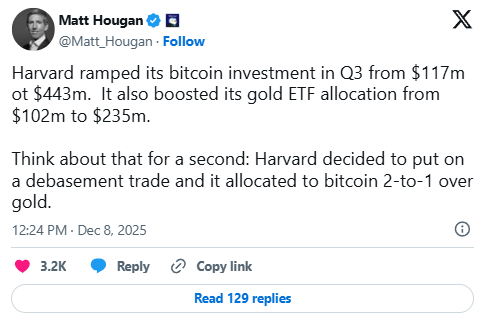
Despite Wood reducing exposure, institutional support has not completely disappeared. Harvard University reportedly increased its Bitcoin allocation by nearly 240%. Morgan Stanley has begun advising its wealth management clients to allocate up to 4% of their portfolio to digital assets. Similarly, Bank of America allows allocations of 1% to 4%. This indicates that support has not vanished but has become more fragmented based on different risk assessments.

Duong pointed out two main threats: quantum computers cracking ECDSA keys, and targeting the SHA-256 algorithm that underpins Bitcoin's proof-of-work system. Vulnerable addresses include traditional Pay-to-Public-Key scripts, certain multi-signature wallets, and exposed Taproot setups.

Address hygiene—avoiding address reuse and moving tokens to quantum-resistant addresses—is considered a key mitigation strategy. However, until Bitcoin's decentralized system can adequately coordinate a quantum-resistant upgrade, the threat remains real.

X platform user batsoupyum wrote: "Financial advisors reading this kind of research will keep client allocations low or zero because quantum computing is an existential threat. Until this issue is resolved, it will be an albatross around Bitcoin's neck."

The quantum computing issue has shifted from theory to having a real impact on portfolios. Bitcoin's underperformance reflects not only market cycles but also the gradual weighting of an existential risk, which is shaping how institutions allocate capital and forcing the network to confront an unprecedented technical challenge.

Связанные с этим вопросы

QWhat percentage of Bitcoin supply is estimated to be at risk from quantum computing attacks according to Coinbase's research head?

AApproximately 32.7% of the Bitcoin supply, or about 6.51 million Bitcoins, is estimated to be at risk.

QWhy did Jefferies' global equity strategist Christopher Wood remove Bitcoin from his portfolio model?

AHe removed the 10% Bitcoin allocation due to concerns that advancements in quantum computing could break Bitcoin's encryption, undermining its status as a 'reliable store of value', and reallocated to 5% physical gold and 5% gold mining stocks.

QWhat is the primary reason that makes many Bitcoin addresses vulnerable to a future quantum attack?

AAddress reuse is the primary reason, as it exposes public key information that a quantum computer could potentially exploit to derive the private key.

QAccording to a 2022 study, how many qubits would a quantum computer need to break a Bitcoin private key?

AAccording to a 2022 study by Universal Quantum and the University of Sussex, it would require a quantum computer with approximately 13 million qubits to break a Bitcoin private key.

QWhat is the proposed solution for Bitcoin to become quantum-resistant, and what is a major challenge in implementing it?

AThe proposed solution is a network upgrade to implement quantum-resistant cryptographic algorithms. A major challenge is the decentralized governance of Bitcoin, which requires coordination for such a change without a central authority to enforce it, making the process complex and potentially contentious.

Похожее

Lowering Expectations for BTC's Next Bull Market

The author, Alex Xu, explains his decision to significantly reduce his Bitcoin holdings (from full to ~30% of his portfolio) during the current bull cycle, citing a lowered long-term outlook for BTC's price appreciation in the next cycle. He outlines six key reasons for this reduced expectation: 1. **Diminished Growth Drivers:** The narrative of exponential user adoption has largely played out with institutional ETF adoption. The next major growth phase—adoption by sovereign national reserves or central banks—seems unlikely in the near future. 2. **Personal Opportunity Cost:** More attractive investment opportunities have emerged in other assets, such as undervalued companies. 3. **Industry-Wide Contraction:** The broader crypto industry is struggling, with most Web3 business models (SocialFi, GameFi, DePIN) failing. This overall萧条 (depression) reduces the fundamental demand and consensus for Bitcoin. 4. **Strain on Major Buyer:** MicroStrategy, a major corporate buyer of BTC, faces rising financing expenses for its debt, which could slow its purchasing rate and create significant marginal pressure on the market. 5. **Increased Competition from Gold:** The emergence of "tokenized gold" has closed the functional gap (portability, divisibility) between physical gold and Bitcoin, offering a strong competitor in the non-sovereign store-of-value space. 6. **Security Budget Concerns:** The block reward halving continues to exacerbate the long-standing issue of funding Bitcoin's network security, with new fee source explorations like Ordinals and L2s largely failing. The author's decision to hold a significant (though reduced) position reflects a cautious, not bearish, outlook. He remains open to increasing his exposure if the fundamental reasons for his skepticism change or if new positive catalysts emerge.

marsbit13 мин. назад

Lowering Expectations for BTC's Next Bull Market

marsbit13 мин. назад

Can Iran 'Control' the Strait of Hormuz?

Iran has announced a comprehensive plan to assert control over the strategic Strait of Hormuz, a critical global oil shipping chokepoint. The proposed measures include requiring all vessels to obtain Iranian permission for passage, imposing fees for security, environmental protection, and navigation management—preferably paid in Iranian rials—and absolutely banning Israeli ships. Vessels from countries deemed hostile by Iran’s top security bodies may also be barred. Analysts suggest Iran’s motives are multifaceted: increasing pressure on the U.S. and Israel by leveraging control over oil transit to influence global prices and inflation; creating a new revenue stream, potentially exceeding $7.7 billion annually, to counter Western sanctions and support postwar reconstruction; and using transit permissions as bargaining chips in future negotiations, notably with the U.S. However, the plan faces significant practical and diplomatic challenges. Enforcing comprehensive interception and fee collection in the busy waterway, patrolled by international military forces, would be difficult. The U.S. has already countering with a blockade of Iranian ports and threats to intercept any ship paying fees, potentially strangling Iran’s oil exports and fee revenue. Broad international opposition, led by European and Gulf states, and legal controversies further complicate implementation. The proposal may ultimately serve more as a negotiating tactic than a feasible policy, with its execution remaining highly uncertain.

marsbit1 ч. назад

Can Iran 'Control' the Strait of Hormuz?

marsbit1 ч. назад

Торговля

Спот
Фьючерсы

Популярные статьи

Тест по Bitcoin Биткоина

HTX Learn: Изучите Bitcoin halving и Заработаете Токены USDT

3.0k просмотров всегоОпубликовано 2024.04.16Обновлено 2024.04.16

Тест по Bitcoin  Биткоина

Что такое $BITCOIN

ЦИФРОВОЕ ЗОЛОТО ($BITCOIN): Комплексный анализ Введение в ЦИФРОВОЕ ЗОЛОТО ($BITCOIN) ЦИФРОВОЕ ЗОЛОТО ($BITCOIN) — это проект на основе блокчейна, работающий в сети Solana, который стремится объединить характеристики традиционных драгоценных металлов с инновациями децентрализованных технологий. Хотя он носит имя Биткойн, часто называемого “цифровым золотом” из-за его восприятия как средства хранения ценности, ЦИФРОВОЕ ЗОЛОТО является отдельным токеном, предназначенным для создания уникальной экосистемы в ландшафте Web3. Его цель — позиционировать себя как жизнеспособный альтернативный цифровой актив, хотя детали его применения и функциональности все еще развиваются. Что такое ЦИФРОВОЕ ЗОЛОТО ($BITCOIN)? ЦИФРОВОЕ ЗОЛОТО ($BITCOIN) — это токен криптовалюты, специально разработанный для использования в блокчейне Solana. В отличие от Биткойна, который выполняет широко признанную роль хранения ценности, этот токен, похоже, сосредоточен на более широких приложениях и характеристиках. Примечательные аспекты включают: Инфраструктура блокчейна: Токен построен на блокчейне Solana, известном своей способностью обрабатывать высокоскоростные и недорогие транзакции. Динамика предложения: ЦИФРОВОЕ ЗОЛОТО имеет максимальное предложение, ограниченное 100 квадриллионами токенов (100P $BITCOIN), хотя детали о его обращающемся предложении в настоящее время не раскрыты. Утилита: Хотя точные функциональные возможности не описаны, есть указания на то, что токен может быть использован для различных приложений, потенциально связанных с децентрализованными приложениями (dApps) или стратегиями токенизации активов. Кто создатель ЦИФРОВОГО ЗОЛОТА ($BITCOIN)? На данный момент личность создателей и команды разработчиков, стоящих за ЦИФРОВЫМ ЗОЛОТОМ ($BITCOIN), остается неизвестной. Эта ситуация типична для многих инновационных проектов в области блокчейна, особенно тех, которые связаны с децентрализованными финансами и феноменом мем-криптовалют. Хотя такая анонимность может способствовать культуре, ориентированной на сообщество, она усиливает опасения по поводу управления и ответственности. Кто инвесторы ЦИФРОВОГО ЗОЛОТА ($BITCOIN)? Доступная информация указывает на то, что у ЦИФРОВОГО ЗОЛОТА ($BITCOIN) нет известных институциональных спонсоров или значительных венчурных капиталовложений. Проект, похоже, функционирует по модели пирингового взаимодействия, сосредоточенной на поддержке и принятии сообществом, а не на традиционных путях финансирования. Его активность и ликвидность в основном сосредоточены на децентрализованных биржах (DEX), таких как PumpSwap, а не на устоявшихся централизованных торговых платформах, что еще больше подчеркивает его подход, ориентированный на grassroots. Как работает ЦИФРОВОЕ ЗОЛОТО ($BITCOIN) Операционные механизмы ЦИФРОВОГО ЗОЛОТА ($BITCOIN) можно подробно описать на основе его дизайна блокчейна и характеристик сети: Механизм консенсуса: Используя уникальный механизм доказательства истории (PoH) Solana в сочетании с моделью доказательства доли (PoS), проект обеспечивает эффективную валидацию транзакций, что способствует высокой производительности сети. Токеномика: Хотя конкретные дефляционные механизмы не были подробно описаны, большое максимальное предложение токенов подразумевает, что оно может быть предназначено для микротранзакций или нишевых случаев использования, которые еще предстоит определить. Интероперабельность: Существует потенциал для интеграции с более широкой экосистемой Solana, включая различные платформы децентрализованных финансов (DeFi). Однако детали относительно конкретных интеграций остаются неуточненными. Хронология ключевых событий Вот хронология, которая подчеркивает значимые вехи, касающиеся ЦИФРОВОГО ЗОЛОТА ($BITCOIN): 2023: Первоначальное развертывание токена происходит в блокчейне Solana, отмеченное его адресом контракта. 2024: ЦИФРОВОЕ ЗОЛОТО приобретает видимость, когда оно становится доступным для торговли на децентрализованных биржах, таких как PumpSwap, позволяя пользователям обменивать его на SOL. 2025: Проект наблюдает спорадическую торговую активность и потенциальный интерес к инициативам, возглавляемым сообществом, хотя на данный момент не зафиксировано никаких значительных партнерств или технических достижений. Критический анализ Сильные стороны Масштабируемость: Основная инфраструктура Solana поддерживает высокие объемы транзакций, что может повысить полезность $BITCOIN в различных сценариях транзакций. Доступность: Потенциально низкая цена торговли за токен может привлечь розничных инвесторов, способствуя более широкому участию благодаря возможностям дробного владения. Риски Отсутствие прозрачности: Отсутствие публично известных спонсоров, разработчиков или процесса аудита может вызвать скептицизм относительно устойчивости и надежности проекта. Волатильность рынка: Торговая активность сильно зависит от спекулятивного поведения, что может привести к значительной волатильности цен и неопределенности для инвесторов. Заключение ЦИФРОВОЕ ЗОЛОТО ($BITCOIN) является интригующим, но неоднозначным проектом в быстро развивающейся экосистеме Solana. Хотя он пытается использовать нарратив “цифрового золота”, его отход от установленной роли Биткойна как средства хранения ценности подчеркивает необходимость более четкого различения его предполагаемой утилиты и структуры управления. Будущее принятие и усвоение, вероятно, будут зависеть от решения текущей непрозрачности и более четкого определения его операционных и экономических стратегий. Примечание: Этот отчет охватывает синтезированную информацию, доступную на октябрь 2023 года, и с тех пор могут произойти события.

99 просмотров всегоОпубликовано 2025.05.13Обновлено 2025.05.13

Что такое $BITCOIN

Fractal Bitcoin: масштабирование Биткоина с помощью рекурсивной системы

Fractal Bitcoin — масштабное Layer-1-решнение, созданное на базе кода Биткоина, позволяющего достигать бесконечного масштабирования с помощью рекурсивного подхода.

2.2k просмотров всегоОпубликовано 2025.06.30Обновлено 2025.06.30

Fractal Bitcoin: масштабирование Биткоина с помощью рекурсивной системы

Обсуждения

Добро пожаловать в Сообщество HTX. Здесь вы сможете быть в курсе последних новостей о развитии платформы и получить доступ к профессиональной аналитической информации о рынке. Мнения пользователей о цене на BTC (BTC) представлены ниже.

活动图片