Fear & Greed Index Hits New Low of 10! Bitcoin Breaks Below $86K! Are All Blockchains Dead Except Tron, SOL, and BNB?

marsbitОпубликовано 2025-12-16Обновлено 2025-12-16

Введение

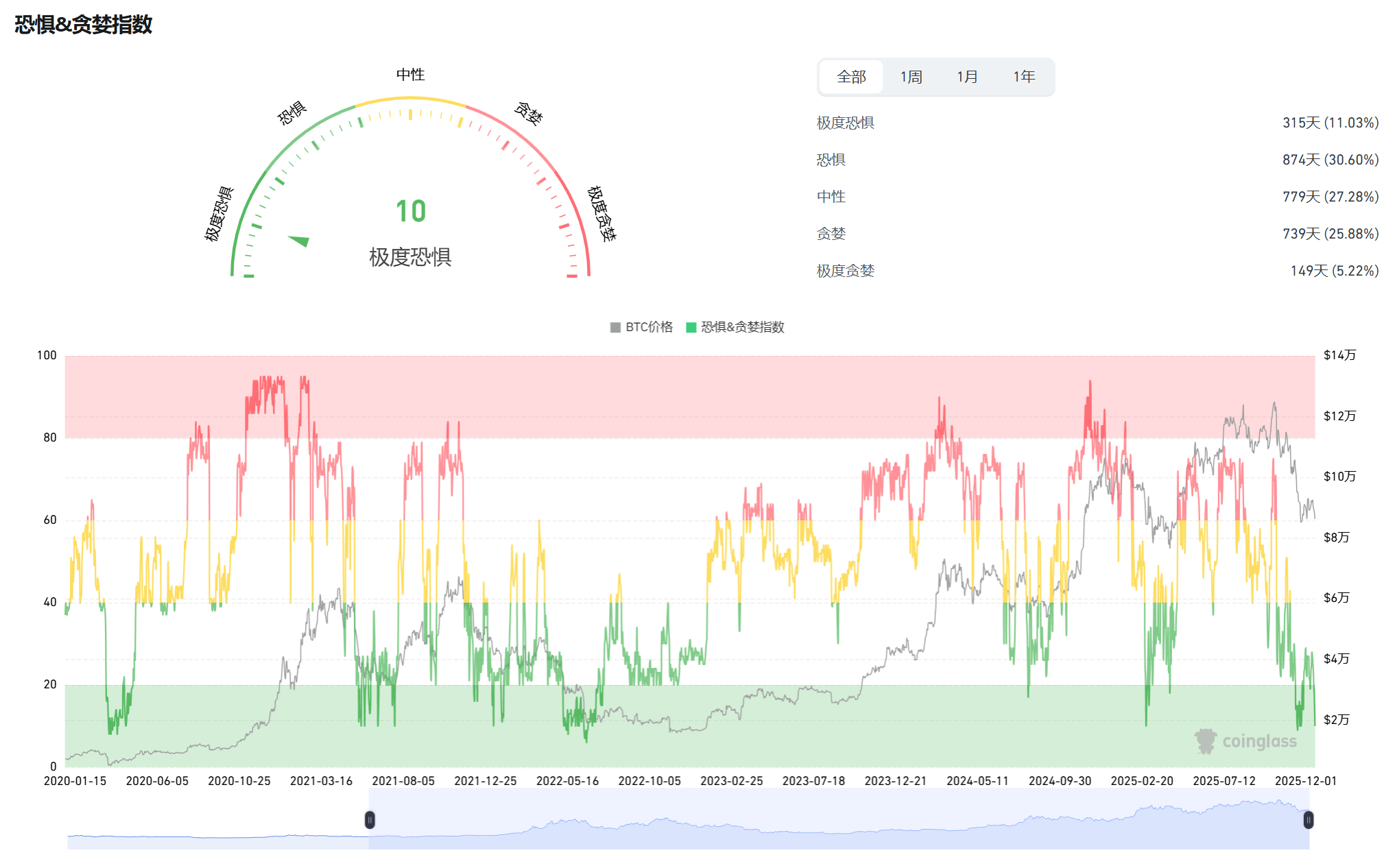
The Crypto Fear & Greed Index has plummeted to a shocking 10, indicating "extreme fear" in the market—the lowest level since the COVID-19 crash of March 2020. Bitcoin fell to around $85,100, while Ethereum dropped to $2,880. On-chain data reveals a stark divergence among blockchains. Tron leads with $1.24 million in 24-hour fees, followed by Solana ($589,088) and BNB Chain ($435,075). Ethereum ranked fourth with just $418,425. Many once-popular chains like Celestia, Sui, and Algorand generated less than $50 in fees, raising serious concerns about their utility and sustainability. The panic stems from macro liquidity tightening—due to delayed Fed rate cuts and Bank of Japan hikes—and cracks in crypto’s core narratives. Bitcoin ETFs have seen net outflows of over $2.3 billion since November, and long-term holders are selling aggressively. Ethereum’s staking model faces scrutiny: with 27.89% of ETH staked, yields rely heavily on token inflation rather than organic fee revenue, creating economic vulnerability. Historically, such extreme fear has often marked market bottoms. While retail and mid-sized whales panic-sell, large entities continue accumulating Bitcoin. The current sell-off may present a long-term opportunity, echoing past cycles where despair preceded major rallies.

Today, the Crypto Fear & Greed Index has plummeted to a shocking value of 10, officially marking market sentiment as entering the "Extreme Fear" zone.

This is the lowest level since the global market crash triggered by the COVID-19 pandemic in March 2020, even surpassing the panic levels of the Terra/Luna collapse in 2022.

In this morning's sharp decline, Bitcoin briefly touched a low of $85,100, while Ethereum also fell to a low of $2,880.

Market participant sentiment has nearly frozen solid; this panic is not only reflected in prices but is deeply etched into every byte of on-chain data.

The Harsh Truth of On-Chain Fees: The "Survival Stress Test" for Blockchains

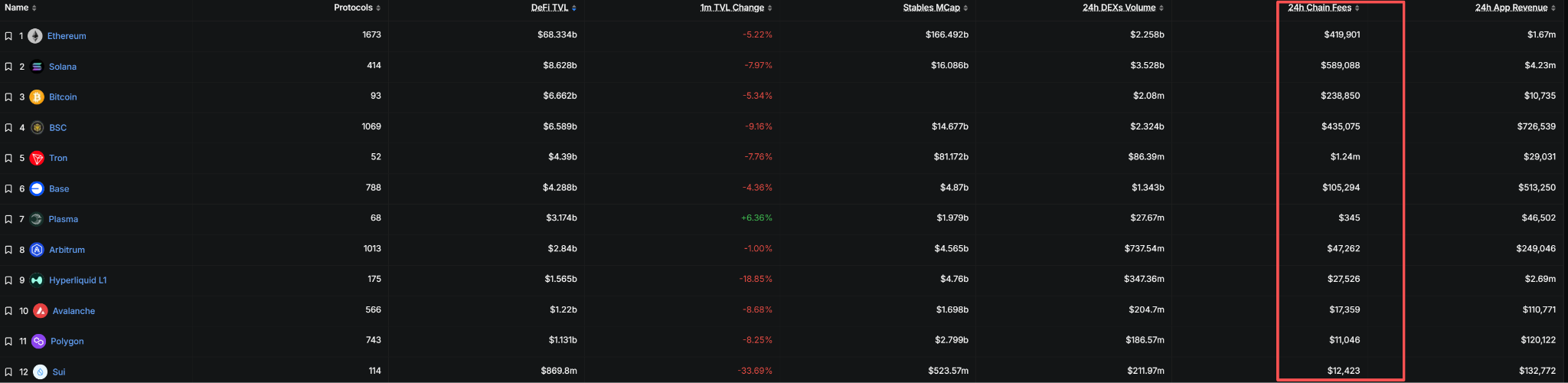
The ranking of fees generated across all blockchains in the past 24 hours presents an extremely polarized picture:

Tron leads with $1.24 million, SOL follows closely with $589,088, the BNB Chain ranks third with $435,075, while Ethereum trails in fourth place with only $418,425.

This data far exceeds general expectations, with several so-called star blockchains like SUI and Plasma generating less than 1/10th of Tron's fees.


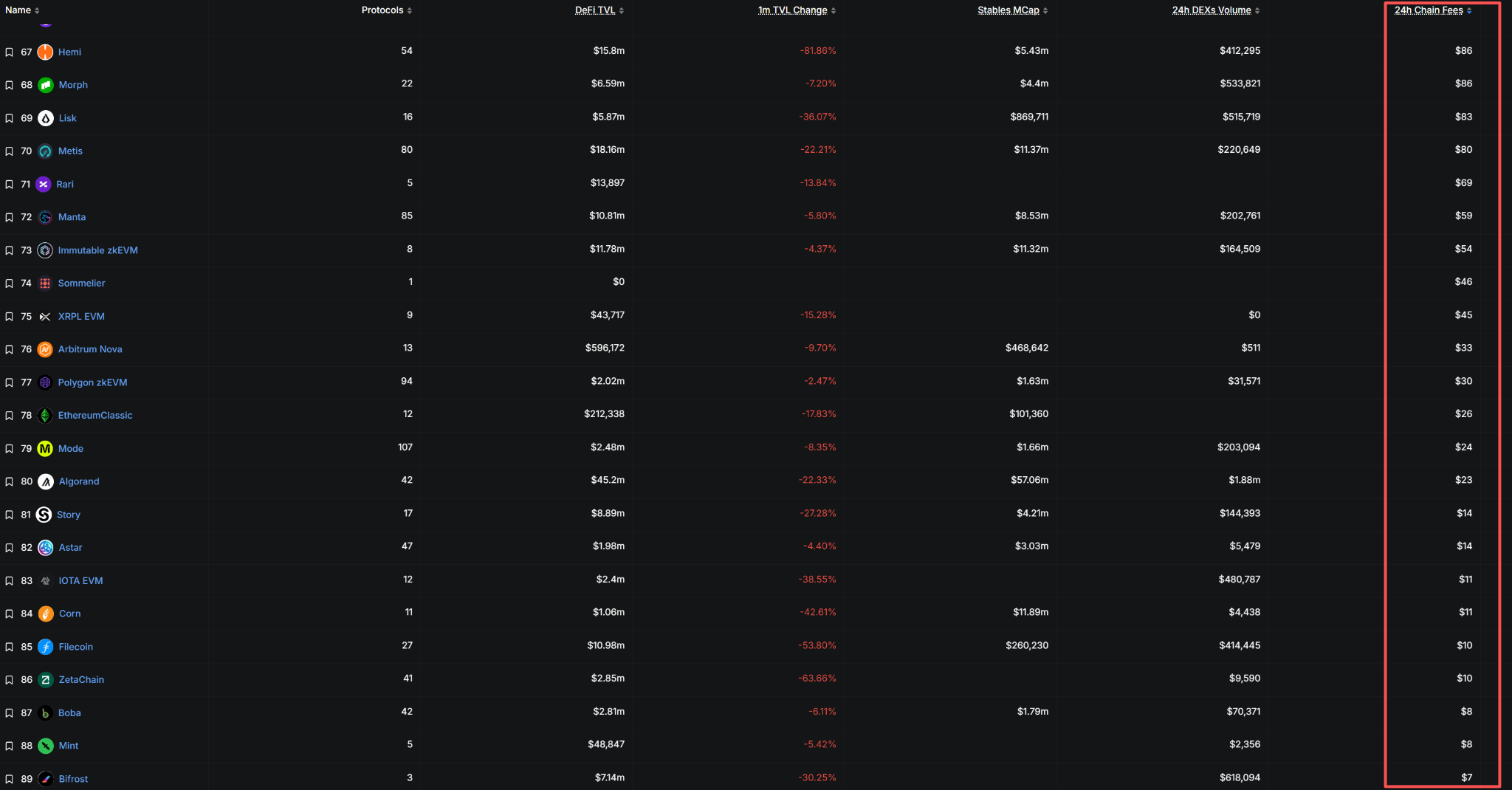
However, the truly alarming situation is the survival state of the long-tail blockchains.

Blockchains that were once popular, such as Celestia, Hemi, Morph, Manta, Immutable zkEVM, EthereumClassic, Algorand, Story, and Filecoin, generated less than $50 in fees in the past 24 hours—less than a roadside stall.

This data undoubtedly indicates that the actual usage of these blockchains is nearing zero.

Fees are the direct "tax" of a blockchain's economy and a core metric for measuring network value.

When a blockchain's daily fees are less than $50, its network security, degree of decentralization, and long-term sustainability are all called into serious question.


The Macro Backdrop of Market Panic: Liquidity Crisis and Narrative Breakdown

This market panic is not due to a single factor but is the result of a combination of tightening global liquidity and the breakdown of internal crypto narratives.

On one hand, global USD liquidity is facing severe challenges. The Fed's maintained hawkish stance, delaying rate cut expectations, has led to a heavy blow to global risk assets.

The Bank of Japan's rate hike has further intensified global liquidity contraction. Historical data shows that BoJ hiking cycles often coincide with global liquidity tightening; the two rounds of hikes in March 2024 and January 2025 both caused Bitcoin to retreat by over 30%.

On the other hand, two core internal narratives of the crypto market are being severely tested.

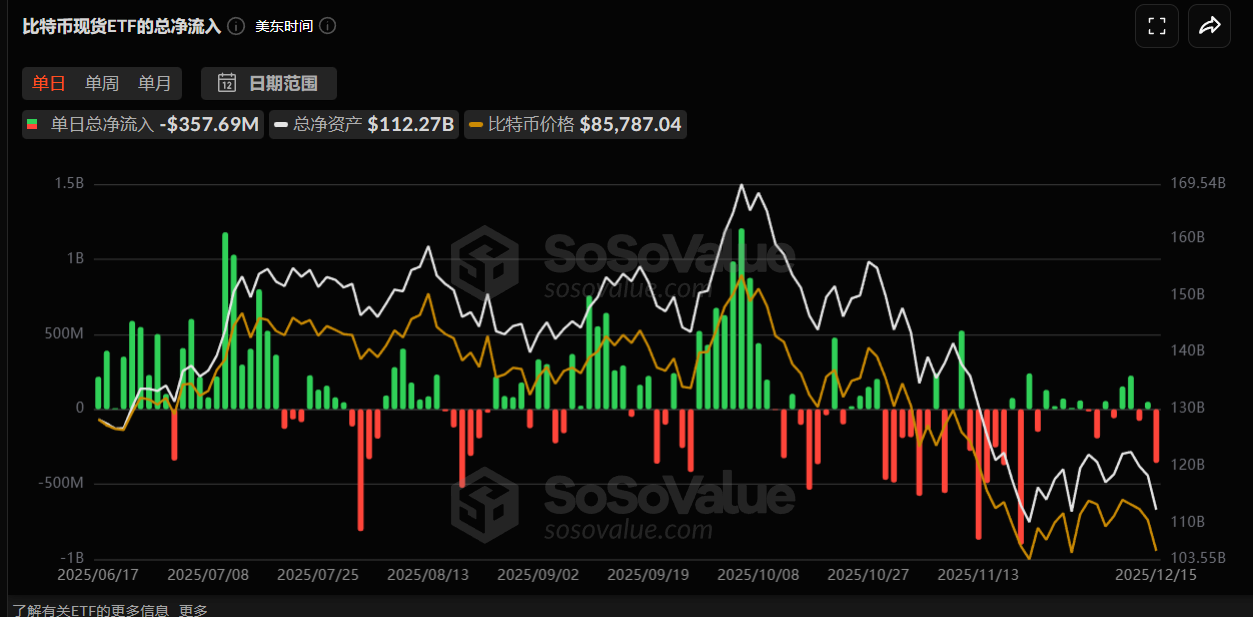
Bitcoin spot ETFs have turned from an "engine" into a "pump," with net outflows exceeding $2.3 billion since November alone.

More worryingly, long-term holders have been selling Bitcoin on a large scale, a rare occurrence, selling approximately 815,000 BTC just in early November. When the two major narratives of "institutional adoption" and "long-term holding" show cracks simultaneously, market confidence collapses like an avalanche.

On-chain data shows the market just experienced "the largest realized loss day in the past six months," meaning a massive amount of assets were sold below their purchase price, and investors are纷纷 "cutting losses" and exiting.


The Economic Paradox of Ethereum Staking: Who is Paying for the Whales' Profits?

Against the bear market backdrop, Ethereum's economic model deserves particular scrutiny.

Ethereum's problem gets to the core: Big players staking Ethereum are taking so much money from the protocol every day; who is paying for that?

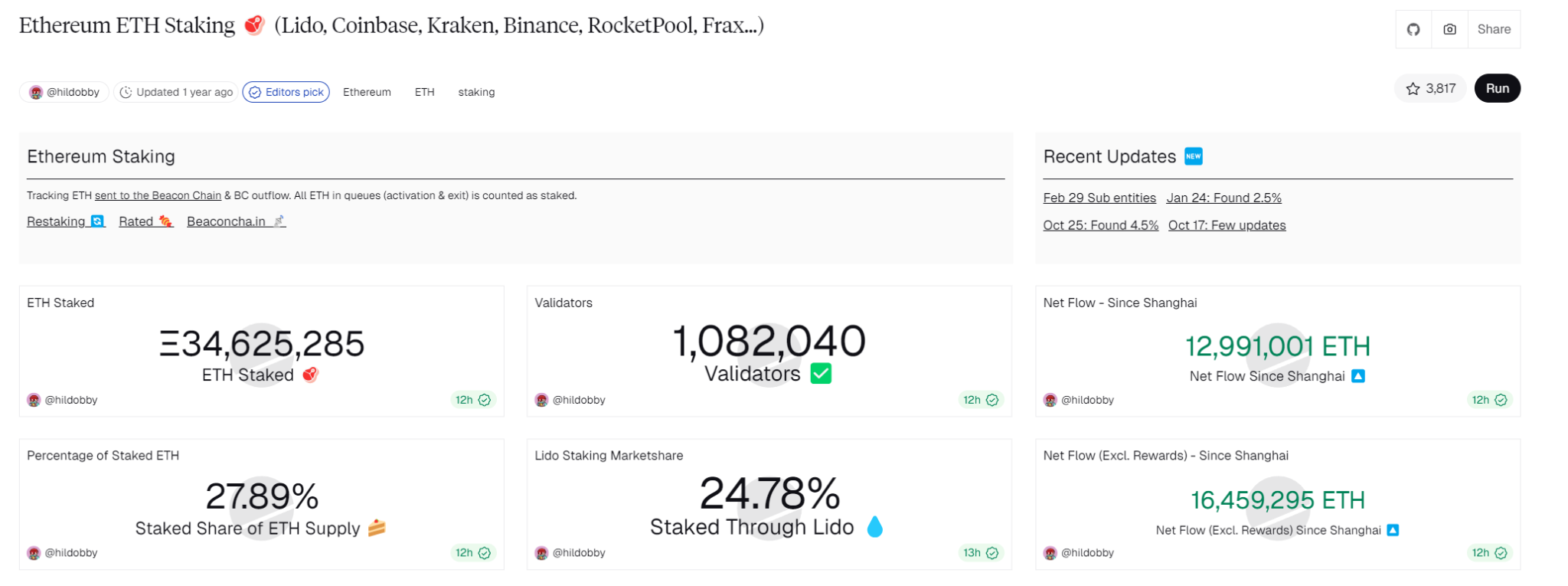
In reality, the Ethereum Beacon Chain staking annual yield is approximately 3.5%. These returns primarily come from two parts: block rewards (paid by the protocol issuing new tokens, effectively diluting the value for all token holders) and transaction fees (paid by users engaged in on-chain activity).

During a bull market, high Gas fees can be absorbed by active users through DeFi, NFT, and other applications;

but in a bear market, on-chain activity plummets, and staking rewards rely more on token issuance—this essentially means later participants are "transfusing" early stakers through inflation.


The current total amount staked on the Ethereum Beacon Chain accounts for 27.89% of the circulating supply. These stakers earn stable returns from the protocol daily. However, with fee revenue at only $418,000 (less than a third of Tron's), whether the Ethereum network can sustainably support such massive staking rewards is indeed worth pondering.

More seriously, when the Ethereum price falls, stakers may face a situation where "rewards are insufficient to cover the currency's depreciation," potentially triggering a negative feedback loop of unstaking and selling.

This does share similarities with Ponzi structures in traditional finance: any system reliant on new funds to maintain old returns exposes its fragility during liquidity contractions.


A Philosophical Question: After the Crypto "Red Pill" Takes Effect

"When people say Bitcoin is a Ponzi scheme, it's also the first time they realize the essence of any form of property rights in the real world is a Ponzi." This view touches the essence of the problem.

All value systems are built on consensus, whether fiat currency, gold, or cryptocurrency.

When people say the crypto space is a casino, it might be the first time they truly recognize the nature of the global financial system.

In traditional financial markets, central banks can print money indefinitely, governments can change rules arbitrarily, and insider trading and market manipulation are commonplace. Compared to these traditional financial markets hidden behind opaque rules, the crypto space at least presents the brutality of finance in an extremely transparent, real-time manner to all participants.

In today's market, the Bitcoin Fear & Greed Index is only 11, and on-chain data shows most blockchains are nearly "brain dead." Investors are not disappointed with crypto itself but are unable to accept the real world seen after swallowing the "red pill."

The cryptocurrency market is like a mirror, reflecting the nature of the global financial system: all asset prices are ultimately driven by liquidity, not intrinsic value. When the Fed "turns off the tap," everything from stocks and crypto to gold faces selling pressure.


Historical Perspective: Value Return After Extreme Fear

Looking back at cryptocurrency history, every period of extreme market fear has ultimately proven to be an excellent opportunity for long-term investment.

During the COVID-19 crash in March 2020, the Fear & Greed Index plummeted to 10-15, but Bitcoin subsequently embarked on a bull market that lasted over a year.

In June 2022, following the Terra/Luna collapse and macro-economic tightening, the index remained in "Extreme Fear" territory (8-15) for weeks. Although prices fell across the board, sustained panic actually marked the market bottom. Currently, although market sentiment is extremely pessimistic, on-chain data reveals another picture: behind the panic "surrender," a great "asset transfer" is quietly taking place. Medium-sized whales and panicked retail investors are selling, while large strategic entities and steadfast retail investors are actively accumulating.

Data shows that the largest strategic entities (holding >10,000 BTC) continued to accumulate throughout November, with a net increase of 10,700 BTC. Even Bitcoin's most famous evangelist, Michael Saylor's company, announced buying another $50 million worth of Bitcoin amidst the market panic.

Periods of extreme fear are the perfect time to "be greedy when others are fearful." Historically, choosing to sell when the Fear Index drops to single digits has often been the wrong move.

Связанные с этим вопросы

QWhat does a Crypto Fear & Greed Index reading of 10 indicate about the current market sentiment?

AA reading of 10 indicates that the market sentiment has officially fallen into the 'Extreme Fear' zone, marking the lowest level of investor confidence since the global market crash triggered by the COVID-19 pandemic in March 2020.

QAccording to the article, which three blockchains lead in 24-hour fee generation, and what does this indicate?

ATron leads with $1.24 million, followed by Solana with $589,088, and BNB Chain with $435,075. This indicates a highly differentiated landscape where these few chains capture the vast majority of actual usage and economic activity, while many others are struggling.

QWhat two core internal narratives in the cryptocurrency market are being severely tested, according to the analysis?

AThe two core narratives being tested are: 1) Bitcoin spot ETFs, which have turned from an 'engine' of growth into a 'pump' draining liquidity, with a net outflow of over $2.3 billion since November. 2) The 'long-term holding' narrative, as long-term holders have been selling on a large scale, with approximately 815,000 BTC sold in early November.

QWhat economic paradox does the article highlight regarding Ethereum's staking model, especially in a bear market?

AThe paradox is that large stakeholders staking ETH earn yields (approx. 3.5% APY) that are paid through block rewards (new token issuance, diluting all holders) and transaction fees. In a bear market with reduced on-chain activity, the rewards rely more on inflation, meaning later participants are effectively 'transferring blood' to early stakers through dilution, creating a potentially unsustainable model.

QWhat historical pattern does the article suggest often follows periods when the Fear & Greed Index reaches extreme lows like 10?

AHistorically, periods of extreme fear, such as the index dropping to 10-15, have often proven to be excellent long-term investment opportunities. For example, the crash in March 2020 was followed by a bull market that lasted over a year, and the panic in June 2022 marked a market bottom.

Похожее

How Many Tokens Away Is Yang Zhilin from the 'Moon Chasing the Light'?

The article explores the intense competition between two leading Chinese AI companies, DeepSeek and Kimi (Moon Dark Side), and the mounting pressure on Yang Zhilin, the founder of Kimi. While DeepSeek re-emerged after 15 months of silence with its powerful V4 model—boasting 1.6 trillion parameters and low-cost, long-context capabilities—Kimi has been focusing on long-context processing and multi-agent systems with its K2.6 model. Yang faces a threefold challenge: technological rivalry, commercialization pressure, and investor expectations. Despite Kimi’s high valuation (reaching $18 billion), its revenue heavily relies on a single product with low paid conversion rates, while DeepSeek’s strategic silence and open-source influence have strengthened its market position and valuation prospects, now targeting over $20 billion. Both companies reflect broader trends in China’s AI ecosystem: Kimi aims for global influence through open-source contributions and agent-based advancements, while DeepSeek prioritizes foundational innovation and hardware independence, notably shifting to Huawei’s chips. Their competition is seen as vital for China’s AI progress, with the gap between top Chinese and U.S. models narrowing to just 2.7% on the Elo rating scale. Ultimately, the article argues that this rivalry, though anxiety-inducing for leaders like Zhilin, is essential for driving innovation and solidifying China’s role in the global AI landscape.

marsbit6 ч. назад

How Many Tokens Away Is Yang Zhilin from the 'Moon Chasing the Light'?

marsbit6 ч. назад

Торговля

Спот
Фьючерсы

Популярные статьи

Тест по Bitcoin Биткоина

HTX Learn: Изучите Bitcoin halving и Заработаете Токены USDT

3.0k просмотров всегоОпубликовано 2024.04.16Обновлено 2024.04.16

Тест по Bitcoin  Биткоина

Что такое $BITCOIN

ЦИФРОВОЕ ЗОЛОТО ($BITCOIN): Комплексный анализ Введение в ЦИФРОВОЕ ЗОЛОТО ($BITCOIN) ЦИФРОВОЕ ЗОЛОТО ($BITCOIN) — это проект на основе блокчейна, работающий в сети Solana, который стремится объединить характеристики традиционных драгоценных металлов с инновациями децентрализованных технологий. Хотя он носит имя Биткойн, часто называемого “цифровым золотом” из-за его восприятия как средства хранения ценности, ЦИФРОВОЕ ЗОЛОТО является отдельным токеном, предназначенным для создания уникальной экосистемы в ландшафте Web3. Его цель — позиционировать себя как жизнеспособный альтернативный цифровой актив, хотя детали его применения и функциональности все еще развиваются. Что такое ЦИФРОВОЕ ЗОЛОТО ($BITCOIN)? ЦИФРОВОЕ ЗОЛОТО ($BITCOIN) — это токен криптовалюты, специально разработанный для использования в блокчейне Solana. В отличие от Биткойна, который выполняет широко признанную роль хранения ценности, этот токен, похоже, сосредоточен на более широких приложениях и характеристиках. Примечательные аспекты включают: Инфраструктура блокчейна: Токен построен на блокчейне Solana, известном своей способностью обрабатывать высокоскоростные и недорогие транзакции. Динамика предложения: ЦИФРОВОЕ ЗОЛОТО имеет максимальное предложение, ограниченное 100 квадриллионами токенов (100P $BITCOIN), хотя детали о его обращающемся предложении в настоящее время не раскрыты. Утилита: Хотя точные функциональные возможности не описаны, есть указания на то, что токен может быть использован для различных приложений, потенциально связанных с децентрализованными приложениями (dApps) или стратегиями токенизации активов. Кто создатель ЦИФРОВОГО ЗОЛОТА ($BITCOIN)? На данный момент личность создателей и команды разработчиков, стоящих за ЦИФРОВЫМ ЗОЛОТОМ ($BITCOIN), остается неизвестной. Эта ситуация типична для многих инновационных проектов в области блокчейна, особенно тех, которые связаны с децентрализованными финансами и феноменом мем-криптовалют. Хотя такая анонимность может способствовать культуре, ориентированной на сообщество, она усиливает опасения по поводу управления и ответственности. Кто инвесторы ЦИФРОВОГО ЗОЛОТА ($BITCOIN)? Доступная информация указывает на то, что у ЦИФРОВОГО ЗОЛОТА ($BITCOIN) нет известных институциональных спонсоров или значительных венчурных капиталовложений. Проект, похоже, функционирует по модели пирингового взаимодействия, сосредоточенной на поддержке и принятии сообществом, а не на традиционных путях финансирования. Его активность и ликвидность в основном сосредоточены на децентрализованных биржах (DEX), таких как PumpSwap, а не на устоявшихся централизованных торговых платформах, что еще больше подчеркивает его подход, ориентированный на grassroots. Как работает ЦИФРОВОЕ ЗОЛОТО ($BITCOIN) Операционные механизмы ЦИФРОВОГО ЗОЛОТА ($BITCOIN) можно подробно описать на основе его дизайна блокчейна и характеристик сети: Механизм консенсуса: Используя уникальный механизм доказательства истории (PoH) Solana в сочетании с моделью доказательства доли (PoS), проект обеспечивает эффективную валидацию транзакций, что способствует высокой производительности сети. Токеномика: Хотя конкретные дефляционные механизмы не были подробно описаны, большое максимальное предложение токенов подразумевает, что оно может быть предназначено для микротранзакций или нишевых случаев использования, которые еще предстоит определить. Интероперабельность: Существует потенциал для интеграции с более широкой экосистемой Solana, включая различные платформы децентрализованных финансов (DeFi). Однако детали относительно конкретных интеграций остаются неуточненными. Хронология ключевых событий Вот хронология, которая подчеркивает значимые вехи, касающиеся ЦИФРОВОГО ЗОЛОТА ($BITCOIN): 2023: Первоначальное развертывание токена происходит в блокчейне Solana, отмеченное его адресом контракта. 2024: ЦИФРОВОЕ ЗОЛОТО приобретает видимость, когда оно становится доступным для торговли на децентрализованных биржах, таких как PumpSwap, позволяя пользователям обменивать его на SOL. 2025: Проект наблюдает спорадическую торговую активность и потенциальный интерес к инициативам, возглавляемым сообществом, хотя на данный момент не зафиксировано никаких значительных партнерств или технических достижений. Критический анализ Сильные стороны Масштабируемость: Основная инфраструктура Solana поддерживает высокие объемы транзакций, что может повысить полезность $BITCOIN в различных сценариях транзакций. Доступность: Потенциально низкая цена торговли за токен может привлечь розничных инвесторов, способствуя более широкому участию благодаря возможностям дробного владения. Риски Отсутствие прозрачности: Отсутствие публично известных спонсоров, разработчиков или процесса аудита может вызвать скептицизм относительно устойчивости и надежности проекта. Волатильность рынка: Торговая активность сильно зависит от спекулятивного поведения, что может привести к значительной волатильности цен и неопределенности для инвесторов. Заключение ЦИФРОВОЕ ЗОЛОТО ($BITCOIN) является интригующим, но неоднозначным проектом в быстро развивающейся экосистеме Solana. Хотя он пытается использовать нарратив “цифрового золота”, его отход от установленной роли Биткойна как средства хранения ценности подчеркивает необходимость более четкого различения его предполагаемой утилиты и структуры управления. Будущее принятие и усвоение, вероятно, будут зависеть от решения текущей непрозрачности и более четкого определения его операционных и экономических стратегий. Примечание: Этот отчет охватывает синтезированную информацию, доступную на октябрь 2023 года, и с тех пор могут произойти события.

99 просмотров всегоОпубликовано 2025.05.13Обновлено 2025.05.13

Что такое $BITCOIN

Fractal Bitcoin: масштабирование Биткоина с помощью рекурсивной системы

Fractal Bitcoin — масштабное Layer-1-решнение, созданное на базе кода Биткоина, позволяющего достигать бесконечного масштабирования с помощью рекурсивного подхода.

2.2k просмотров всегоОпубликовано 2025.06.30Обновлено 2025.06.30

Fractal Bitcoin: масштабирование Биткоина с помощью рекурсивной системы

Обсуждения

Добро пожаловать в Сообщество HTX. Здесь вы сможете быть в курсе последних новостей о развитии платформы и получить доступ к профессиональной аналитической информации о рынке. Мнения пользователей о цене на BTC (BTC) представлены ниже.

活动图片