Справочный обменный курс предназначен только для справки и не является фиксированным. Окончательный курс определяется на основе фактической цены исполнения.
Текущая статистика TRX
Реальлная цена TRON (TRX) сейчас составляет $0.30 USD и текущая рыночная капитализация составляет $29.27B USD.
Получайте обновления по TRX/USD в реальном времени на HTX. Оставайтесь в курсе последних данных и тенденций рынка, чтобы принимать разумные торговые решения. HTX – ваш надежный источник точной информации о ценах на криптовалюты.
Основные данные по TRON
Объем за 24ч (USD)--
Изменение цены сегодня-0,57%
Оборотное предложение (TRX)95.03B
Динамика цены TRX
Отслеживайте движение цены TRON, просматривая графики за периоды в 1 день, 30 дней, 60 дней, 90 дней, 1 год и за весь период с момента листинга на HTX.Просматривайте еще больше данных о ценах TRON
Время
Изменение
Изменение в %
Самая высокая цена
Самая низкая цена
Рыночная информация по TRX
Получайте последнюю информацию о цене TRON на HTX: ценовые максимумы и минимумы за 24 часа, исторический максимум (ATH), и ежедневный процент изменения цены.
24ч Мин$0
24ч Макс$0
Исторический максимум$0.44
Рыночная капитализация$29.27B
Объем за 24ч (USD)--
Объем в обращении95.03B
Что такое TRX?
TRON (TRX) — децентрализованная операционная система на основе блокчейна, разработанная Tron Foundation и запущенная в 2017 году. Первоначально токены TRX были токенами на основе ERC-20, развернутыми на Ethereum, но год спустя они были перенесены в их собственную сеть.
Изначально проект был создан с целью предоставления полных прав собственности создателям цифрового контента. Основная цель — помочь создателям контента (которые получают лишь небольшую часть дохода) и поощрить их большими вознаграждениями за их работу. Каким образом: Предлагая потребителям контента вознаграждать создателей контента напрямую (без посредников, таких как YouTube, Facebook или Apple).
Программное обеспечение TRON поддерживает смарт-контракты, различные виды блокчейн-систем и децентрализованные приложения, известные как dApps. Криптовалютная платформа использует модель транзакций, аналогичную Биткоину (BTC), а именно UTXO. Транзакции происходят в открытом реестре, где пользователи могут отслеживать историю операций.
Таким образом, платформа была запущена для создания децентрализованного Интернета и служит инструментом для разработчиков по созданию dApps, выступая в качестве альтернативы Ethereum. Любой желающий может создавать dApps в сети TRON, предлагать контент и взамен получать цифровые активы в качестве компенсации за свои усилия. Возможность создавать контент и открыто делиться им, не задумываясь о комиссиях за транзакции, является неоспоримым преимуществом TRON.
Для получения более подробной информации, пожалуйста, прочтите: Что такое TRON?
Как купить TRX
Купить TRX на HTX очень просто. Нажмите здесь, чтобы ознакомиться с полным руководством по покупке TRON.
Рынки TRX в реальном времени
Обзор цен TRON в реальном времени на спотовых рынках HTX. Переключайтесь между спотовым и фьючерсным рынками, чтобы мгновенно сравнивать текущие цены и изменения цен за 24 часа.
Polygon Labs is expanding its Open Money Stack — a suite of services connecting bank accounts, crypto wallets and payouts — to the Solana network, following an earlier rollout on Tron. The expansion lets businesses building on Solana accept funding from bank accounts, offer customer wallets and arrange payouts through a single integration.
Polygon Labs CEO Marc Boiron said customer demand and stablecoin activity drove the decision. According to Token Terminal data, Solana recorded about $5.76 trillion in stablecoin transfers between Jan. 1 and Oct. 27, while Tron recorded $6.94 trillion over the same period. Solana Foundation chief product officer Vibhu Norby said connecting Solana to bank accounts, wallets and global payout networks lets businesses deliver stablecoin payments to more customers and markets.
Polygon's Trails service has supported transfers between Solana and Ethereum-compatible networks since August; the latest expansion adds bank, card and cash funding, customer accounts, embedded wallets and payouts. Boiron said businesses report that customers and payment activity are already spread across networks, and they don't want to force a chain choice or stitch together separate providers for each one. The broader stack was already available for eligible uses on Polygon, Ethereum and other EVM networks.
Kira, which provides US dollar accounts and stablecoin-based cross-border payment services, is among the first customers using the Solana integration. The move follows Polygon's completed acquisition of Coinme, which gave its US payments business access to 37 money transmitter licenses and 11 state exemptions covering 48 states.
Utexo, a Dubai-based blockchain startup, is preparing to bring Tether's USDT back to Bitcoin after a three-year hiatus, using the RGB protocol to keep transaction data off-chain. The public launch is set for Nov. 28, with Lightning Network support planned for Q1 2027, promising private transfers and fast payments. USDT originally launched on Bitcoin in 2014 via Omni but Tether halted issuance in August 2023 due to declining usage. Utexo CEO Viktor Ihnatiuk argues speed and privacy are the key differentiators this time: RGB validates transactions off-chain while anchoring cryptographic commitments to Bitcoin, and Lightning enables near-instant transfers. Rather than competing with Tron on retail volume or Ethereum on DeFi, Utexo targets businesses seeking confidential transactions and Bitcoin-native settlement, with selective disclosure for compliance. Getting existing USDT onto Bitcoin requires locking USDT0 on Arbitrum before minting an equivalent on Bitcoin, introducing bridge-related trust assumptions. Utexo has named UniSat as a launch partner and is working with dozens of OTC partners, targeting $1 billion USDT on Bitcoin within 12 months. Ihnatiuk says Bitcoin was built for payments, not DeFi, and greater adoption could boost miner fee revenue.
TRON's deflationary token suite has reached a major milestone, with total ecosystem funds committed to buyback-and-burn programs now exceeding $120 million. The value-accrual model, driven by real protocol revenues, now spans four core tokens: JST, SUN, BTT, and WIN.
JST, the cornerstone of TRON DeFi, leads the sector, having completed five buyback-and-burn rounds totaling 1.881 billion JST repurchased—over 19% of supply—with more than $100 million committed, funded primarily by protocol revenue. SUN has completed 52 consecutive burn rounds, removing 685 million SUN (3.44% of supply). BTT and WIN completed their inaugural burns: 21.62 trillion BTT (~$7.6 million, 2.18% of supply) and 67.357 billion WIN (~$3.59 million, 6.74% of supply), extending deflation from application-layer DeFi into foundational network protocols.
Alongside burns, TRON is pursuing brand-level upgrades. JUST consolidated its products under a single JUST DAO portal, backed by over $12.1 billion in TVL, with JST's buyback model now integrating GasFree revenue alongside JustLend and USDD cash flows. BitTorrent unveiled a new roadmap entering Web3 and AI, launching the BTTInferGrid network to provide decentralized AI compute and data infrastructure, with BTT as the unified economic medium.
Market response has been strong: JST gained over 318% since launching its buyback initiative, while WIN and BTT rose over 160% and 38% respectively in three months, outperforming Bitcoin's 26% gain. SUN.io's SunSwap held nearly $645 million in TVL with Q3 trading volume approaching $15 billion. Together, these efforts mark a shift from isolated burns to ecosystem-wide synergy, positioning TRON for sustainable, long-term value creation.
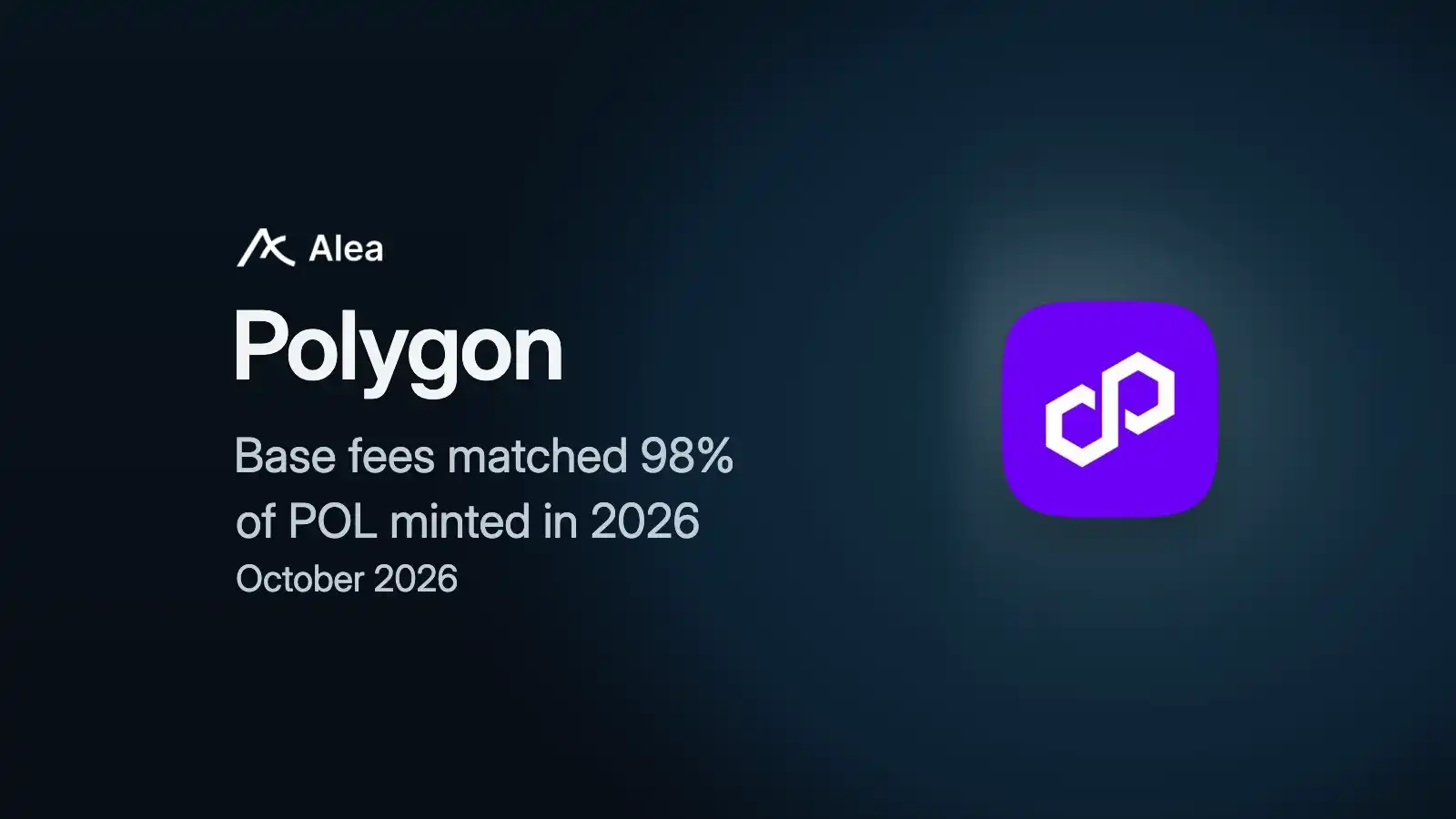
Polygon is undergoing a key tokenomics transition from a single scaling solution to a payment settlement base. Its acquisition of Coinme brought money transmitter licenses covering 48 U.S. states, and combined with its high-frequency on-chain stablecoin payment network, Polygon's base fee revenue has exceeded current token inflation minting for several months. In 2025, base network fees paid by users equaled only 5% of newly minted POL that year; from January to September 2026, that ratio climbed to 86%, and in five separate months burned base fees fully surpassed new minting. By September 2026, Polygon was the busiest stablecoin settlement network, processing 17.6 million stablecoin transfers daily—one-third of the nine major chains' total. Median transfer fees rose fivefold over 18 months while transfer counts surged 7.5x, showing strong payment demand. POL trades at less than half of TRX's valuation multiple: 41.2x trailing 12-month on-chain fees versus TRX's 87.5x. The base fee burn reserve is now nearly equal to newly minted POL, and stakers receive half of the validator priority fee pool via PIP-85. Stablecoin transfers drove 72% of gas consumption in the first nine months of 2026, with average transfer size of $175 versus $1,254 on Solana and $3,850 on Ethereum. POL's valuation multiple has compressed to around 30x, with a market cap of about $949 million against $31.6 million in annualized fees, suggesting the market is lagging in repricing Polygon's payment fundamentals.
TRON DAO has announced the integration of the TRON network with Backpack Wallet, bringing TRON's blockchain ecosystem directly to Backpack users. Through the integration, users can send, receive, bridge, and manage TRON-based digital assets — including USDT (TRC-20) — via Backpack's mobile app and browser extension while maintaining full self-custody. Users can also bridge assets between TRON and other supported blockchains, explore DeFi applications and dApps across the TRON ecosystem such as Sun.io, and manage TRON assets alongside holdings from other networks in a single multichain wallet.
The integration follows the recent listing of TRX for spot trading and perpetual contracts on Backpack Exchange, expanding market access to TRON's native utility token for users in eligible jurisdictions. Together, these developments establish a foundation for deeper ecosystem connectivity across Backpack's wallet and exchange products.
The collaboration reinforces TRON's commitment to expanding global access to blockchain infrastructure, stablecoin payments, and decentralized finance. Founded in September 2017, TRON launched its MainNet in May 2018 and now hosts the largest circulating supply of USDT, exceeding $94 billion. As of November 2026, TRON has recorded over 412 million total user accounts, more than 16 billion total transactions, and over $27 billion in total value locked, positioning it as a global settlement layer for stablecoin transactions.