Central Bank Names Bitcoin the Most Loss-Making Asset in November When Invested in Rubles

RBK-cryptoОпубликовано 2025-12-10Обновлено 2025-12-10

Введение

The Central Bank of Russia, in its latest "Financial Market Risks Review," identified Bitcoin as the worst-performing asset in November for ruble-denominated investments. The regulator included Bitcoin in its comparative table of asset returns, as it has done routinely. The list includes instruments from the Russian market, as well as gold, US government bonds, and other assets. In contrast to previous months, Russian stocks demonstrated the highest total returns in November. Although Bitcoin reached a new all-time high exceeding $126,000 on October 6th, this peak was not achieved against several currencies, including the euro, Swiss franc, and the Russian ruble. Against the ruble, the price remained below its December 2024 peak. According to the regulator's calculations, Bitcoin showed the worst returns in ruble terms for November (-19.9%), since the start of 2025 (-25.7%), and over the past 12 months (-31.9%). Notably, in reports prior to and including September 2025, Bitcoin was consistently among the top performers. However, since the beginning of 2022, Bitcoin remains the second-best performing asset after gold, having gained over 100% and significantly outperforming other assets. The report also provided data on Russian crypto investment activity. The volume of open positions held by individuals in cryptocurrency futures on the Moscow Exchange reached 3.5 billion rubles by the end of November. The majority of investors hold small positions, but the largest share of t...

The Bank of Russia, in a new issue of the "Financial Market Risks Review," deemed Bitcoin the most loss-making asset in November when invested in rubles. The regulator has once again traditionally included Bitcoin in the comparative table of asset returns. The list includes instruments from the Russian market, as well as gold, US government bonds, and other assets.

Unlike previous months, Russian stocks demonstrated the highest total return in November.

On October 6, Bitcoin reached a new all-time high, exceeding $126,000; however, this did not occur in several currencies, including the euro, Swiss franc, and the Russian ruble. Against the ruble, the rate is still below the peak of December 2024 — approximately ₽7.3 million compared to ₽11.1 million a year ago.

According to the regulator's calculations, in ruble terms, Bitcoin showed the worst return among all instruments for November (–19.9%), since the beginning of 2025 (–25.7%), and over the past 12 months (–31.9%). Notably, in previous reports up to and including September 2025, Bitcoin, on the contrary, was among the leaders in almost every period.

At the same time, since the beginning of 2022, Bitcoin remains the second most profitable asset after gold, having gained over 100% and significantly outperforming other assets. Earlier, for several consecutive months in similar Central Bank reports, Bitcoin held the first place in this category.

According to the report, the volume of open positions of individuals in cryptocurrency futures on the Moscow Exchange at the end of November reached 3.5 billion rubles. Most investors hold small positions, up to ₽500,000, but the main share of the volume is formed by large participants with portfolios from ₽100 million.

Furthermore, about 2.1 thousand people invested 352 million rubles in crypto CFAs, and another 258 investors directed 41 million rubles into copy trading strategies linked to crypto assets. More than 500 people participate in over-the-counter derivative instruments on crypto themes (forwards, options, swaps), with a total investment volume of 3.6 billion rubles.

Earlier, in the Bank of Russia's report on financial stability for the second and third quarters of 2025, it was stated that the volume of transactions by Russians on foreign cryptocurrency exchanges fell by 18% in the second and third quarters of 2025 compared to the previous two quarters.

According to the regulator's estimate, the average monthly amount of the presumed balances of Russians' funds on crypto exchanges during the reporting period decreased by 20% in ruble terms, to 933 billion rubles. And the volume of traffic from Russia to the websites of crypto platforms fell by 28%, to 83.4 million visits.

Trump Memecoin to Be Used in Mobile Game About Billionaires

Bitcoin Reaches Highest Level Since Mid-November. What About Other Cryptocurrencies

$100,000 Bitcoin by Year-End. What Are the Chances

Связанные с этим вопросы

QAccording to the Bank of Russia, which asset was the worst-performing in November 2025 when measured in rubles?

ABitcoin was the worst-performing asset in November 2025 when measured in rubles, with a return of -19.9%.

QWhat was the total return of Bitcoin in ruble terms from the beginning of 2025 until the report?

AFrom the beginning of 2025, Bitcoin showed a return of -25.7% in ruble terms.

QDespite its recent performance, how has Bitcoin performed since the start of 2022 compared to other assets?

ASince the start of 2022, Bitcoin has been the second best-performing asset after gold, gaining over 100% and significantly outperforming other assets.

QWhat was the volume of open positions held by individuals in cryptocurrency futures on the Moscow Exchange at the end of November?

AThe volume of open positions held by individuals in cryptocurrency futures on the Moscow Exchange reached 3.5 billion rubles at the end of November.

QHow did the estimated average monthly balance of Russians' funds on crypto exchanges change in the reporting period, according to the regulator?

AThe estimated average monthly balance of Russians' funds on crypto exchanges decreased by 20% in ruble terms to 933 billion rubles in the reporting period.

Похожее

Interview with Circle's Chief Economist: USDC's Entry into Hyperliquid Benefits Circle and HYPE, Stablecoins Are Becoming Marginal Buyers of U.S. Treasuries

In an interview with Circle's Chief Economist Gordon Liao, the conversation covers the strategic significance of USDC replacing USDH as the reference asset on the decentralized perpetual exchange Hyperliquid. This shift, facilitated by Coinbase as the reserve manager and Circle providing technical infrastructure, aims to capture net interest income for the platform, with 90% of reserve earnings directed back to Hyperliquid for HYPE token buybacks. Liao discusses how stablecoins like USDC, with their substantial on-chain settlement volumes (e.g., $21 trillion in Q1 2026), are emerging as marginal buyers of U.S. Treasuries, concentrating on short-term debt and effectively reducing the weighted duration of the market, which may provide underlying support for long-term rates. The dialogue also explores the evolving nature of stablecoins as both a medium of exchange and a vehicle for capital and collateral liquidity. Additionally, the panel touches on the CLARITY Act's legislative progress, noting compromises around "activity-based rewards" and remaining hurdles like ethics concerns. On AI, there's debate over value capture, with predictions that distribution and application layers, rather than foundational model companies like OpenAI, will accrue most value. Regarding the bond market, Liao attributes the rise in 30-year yields primarily to an increased term premium (around 80 bps) driven by supply-demand dynamics, including fiscal expansion and changing investor demand, rather than expectations of Fed rate hikes.

marsbit8 мин. назад

Interview with Circle's Chief Economist: USDC's Entry into Hyperliquid Benefits Circle and HYPE, Stablecoins Are Becoming Marginal Buyers of U.S. Treasuries

marsbit8 мин. назад

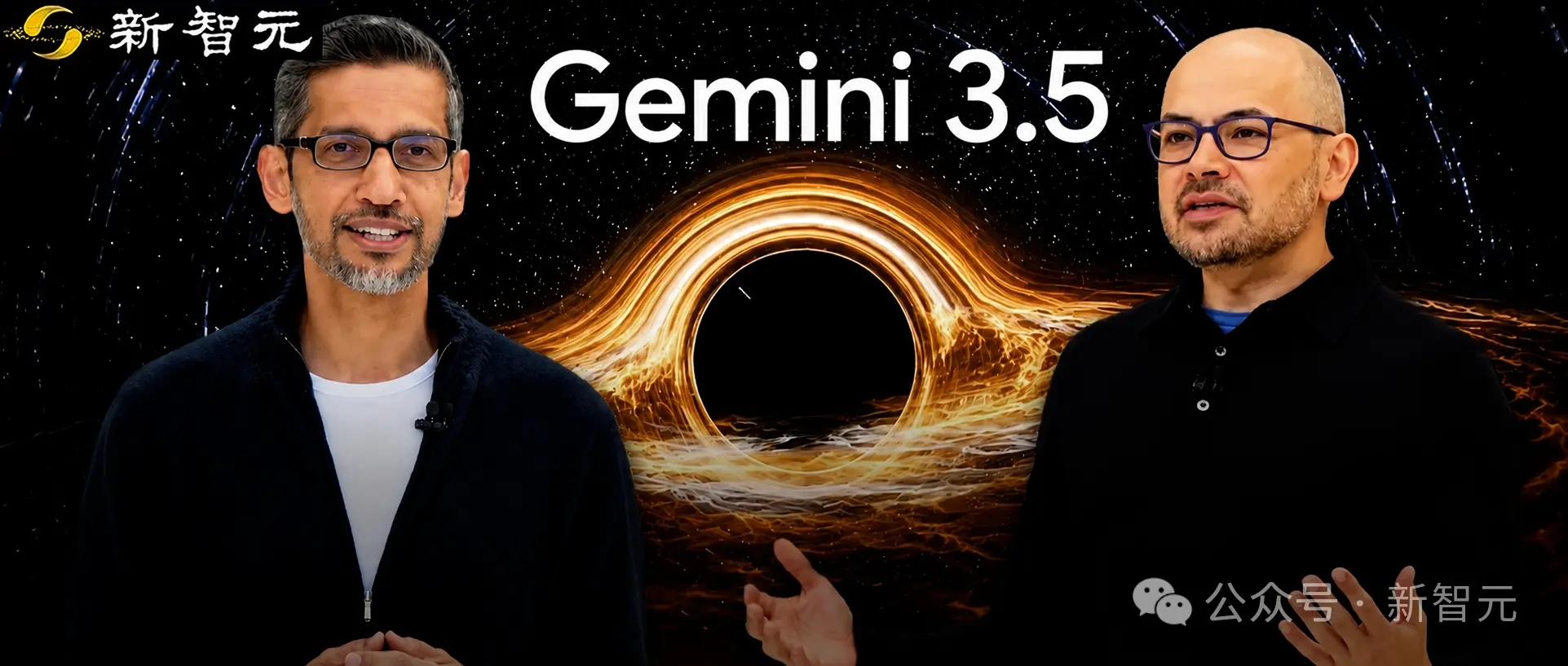
Gemini 3.5 is Here! Tonight, Google Overtakes Google

Gemini 3.5 Launches: Google Renders Itself Obsolete at I/O 2026 At Google I/O 2026, the company unveiled a transformative suite of AI advancements headlined by three major releases. First, **Gemini Omni**, a true "omnimodal" model, can generate high-quality, coherent videos from any combination of text, image, audio, or video inputs, maintaining character consistency and physical logic across iterative edits. Second, the new flagship **Gemini 3.5 Flash** was introduced, decisively outperforming the previous Gemini 3.1 Pro on key benchmarks for coding, agent tasks, and multimodal reasoning. It is also significantly faster than competitors. This model powers the upgraded **Antigravity 2.0**, an independent Agent development platform that demonstrated the ability to orchestrate 93 sub-agents to build a functional operating system from scratch in just 12 hours. Third, **Gemini Spark** debuted as a personal, always-on AI agent. Running 24/7 in the cloud and integrated with Google Workspace, it can autonomously execute complex multi-step tasks like drafting emails, managing schedules, and planning events by accessing apps like Gmail, Docs, and Sheets. These releases collectively mark a significant leap, moving AI beyond simple generation towards autonomous understanding, decision-making, and task execution, signaling rapid progress on the path toward more advanced AI systems.

链捕手48 мин. назад

Gemini 3.5 is Here! Tonight, Google Overtakes Google

链捕手48 мин. назад

Cryptocurrency Asset Recovery: A Lucrative, Low-Profile Business

Summary: The article explores the growing business of cryptocurrency asset recovery, highlighting it as a quiet but profitable niche. While many assume recovery involves dramatic hacking or theft cases, the most common issues are everyday operational errors: sending crypto to the wrong blockchain network, forgetting transaction memos/Tags, hardware wallet failures, incorrect seed phrase backups, and frozen centralized exchange accounts. As cryptocurrency adoption expands to less technical users, the volume of such costly mistakes increases. This creates a genuine, recurring demand for professional recovery services. The article notes a paradox: while the technology emphasizes user-controlled assets, the complexity often necessitates expert intermediaries, similar to traditional financial services. However, the field is fraught with risks, including middlemen and secondary scammers who prey on desperate users. Truly professional teams avoid promising guaranteed results, instead focusing on diagnosing the specific problem—whether it's a technical wallet issue, an exchange compliance matter, or an unsolvable private key loss. The author concludes by noting the professionalization of this market and announces a partnership with a specialized recovery team, offering readers a preliminary assessment for issues like wrong-chain deposits, lost access, or frozen accounts, while emphasizing ethical practices and realistic expectations.

marsbit55 мин. назад

Cryptocurrency Asset Recovery: A Lucrative, Low-Profile Business

marsbit55 мин. назад

Cryptocurrency Asset Recovery: A Lucrative, Under-the-Radar Business

Cryptocurrency Asset Recovery: A Lucrative, Low-Key Business The article discusses the burgeoning business of cryptocurrency asset recovery, driven by common yet often crippling user errors rather than sensational hacking incidents. Key problem areas include selecting the wrong blockchain for a deposit, omitting required memos/tags when sending to exchanges, physical wallet device failures, errors in backing up or modifying seed phrases, and issues with frozen accounts or withdrawals on centralized exchanges. As cryptocurrency adoption grows among mainstream users—including retail investors and businesses—these operational mistakes increase. The decentralized nature of crypto places full responsibility for asset security on users, who may lack the technical expertise to navigate complex chains, wallets, and protocols. Even centralized exchanges, while offering some support, often present users with cumbersome, non-intuitive processes for resolving issues. This creates a persistent and growing demand for professional recovery services. However, the field is rife with risks, including middlemen without real expertise and outright scammers who promise guaranteed recovery, request sensitive information like private keys, or charge advance "fees." Legitimate service providers typically avoid absolute guarantees, as recovery feasibility depends heavily on the specific technical or administrative circumstances of each case. The business is evolving from an informal market into a professional one requiring a combination of technical analysis, exchange/platform communication, and legal/compliance knowledge. The article concludes by noting the author's partnership with a professional recovery team, offering preliminary assessments for issues like incorrect deposits, wallet access problems, or exchange account freezes, with an emphasis on realistic evaluation over promises.

链捕手1 ч. назад

Cryptocurrency Asset Recovery: A Lucrative, Under-the-Radar Business

链捕手1 ч. назад

YC Partner: How to Build a Self-Evolving AI-Native Company

YC Partner Tom Blomfield argues that the future lies in building AI-native companies designed as self-evolving systems, not just applying AI to traditional, hierarchical "Roman legion" structures. The core idea is to extract and codify all organizational knowledge—scattered across emails, Slack, documents, and human minds—into a central, AI-readable "company brain." This enables the creation of recursive AI loops that sense changes (from emails, support tickets, data), make decisions, execute via tools, and learn from feedback, all with minimal human intervention. YC exemplifies this with an agent that monitors failed queries, autonomously diagnoses the issue (e.g., needing a new database or index), writes code, submits it for review, and deploys fixes—optimizing the company while founders sleep. This shift redefines organizational structure: the bottleneck becomes token usage and context quality, not headcount. Middle management for coordination is largely obsolete. The critical human roles are individual contributors (ICs) and those handling high-risk, real-world judgments at the system's edge. Key steps include recording all organizational activity for AI, creating self-improving artifacts (like an AI-generated, living handbook), and treating internal software as temporary and disposable, while preserving valuable business context and data. The fundamental question for founders is whether to build their company as this new type of intelligent, self-optimizing system from the start.

marsbit1 ч. назад

YC Partner: How to Build a Self-Evolving AI-Native Company

marsbit1 ч. назад

Торговля

Спот
Фьючерсы

Популярные статьи

Тест по Bitcoin Биткоина

HTX Learn: Изучите Bitcoin halving и Заработаете Токены USDT

3.0k просмотров всегоОпубликовано 2024.04.16Обновлено 2024.04.16

Тест по Bitcoin  Биткоина

Что такое $BITCOIN

ЦИФРОВОЕ ЗОЛОТО ($BITCOIN): Комплексный анализ Введение в ЦИФРОВОЕ ЗОЛОТО ($BITCOIN) ЦИФРОВОЕ ЗОЛОТО ($BITCOIN) — это проект на основе блокчейна, работающий в сети Solana, который стремится объединить характеристики традиционных драгоценных металлов с инновациями децентрализованных технологий. Хотя он носит имя Биткойн, часто называемого “цифровым золотом” из-за его восприятия как средства хранения ценности, ЦИФРОВОЕ ЗОЛОТО является отдельным токеном, предназначенным для создания уникальной экосистемы в ландшафте Web3. Его цель — позиционировать себя как жизнеспособный альтернативный цифровой актив, хотя детали его применения и функциональности все еще развиваются. Что такое ЦИФРОВОЕ ЗОЛОТО ($BITCOIN)? ЦИФРОВОЕ ЗОЛОТО ($BITCOIN) — это токен криптовалюты, специально разработанный для использования в блокчейне Solana. В отличие от Биткойна, который выполняет широко признанную роль хранения ценности, этот токен, похоже, сосредоточен на более широких приложениях и характеристиках. Примечательные аспекты включают: Инфраструктура блокчейна: Токен построен на блокчейне Solana, известном своей способностью обрабатывать высокоскоростные и недорогие транзакции. Динамика предложения: ЦИФРОВОЕ ЗОЛОТО имеет максимальное предложение, ограниченное 100 квадриллионами токенов (100P $BITCOIN), хотя детали о его обращающемся предложении в настоящее время не раскрыты. Утилита: Хотя точные функциональные возможности не описаны, есть указания на то, что токен может быть использован для различных приложений, потенциально связанных с децентрализованными приложениями (dApps) или стратегиями токенизации активов. Кто создатель ЦИФРОВОГО ЗОЛОТА ($BITCOIN)? На данный момент личность создателей и команды разработчиков, стоящих за ЦИФРОВЫМ ЗОЛОТОМ ($BITCOIN), остается неизвестной. Эта ситуация типична для многих инновационных проектов в области блокчейна, особенно тех, которые связаны с децентрализованными финансами и феноменом мем-криптовалют. Хотя такая анонимность может способствовать культуре, ориентированной на сообщество, она усиливает опасения по поводу управления и ответственности. Кто инвесторы ЦИФРОВОГО ЗОЛОТА ($BITCOIN)? Доступная информация указывает на то, что у ЦИФРОВОГО ЗОЛОТА ($BITCOIN) нет известных институциональных спонсоров или значительных венчурных капиталовложений. Проект, похоже, функционирует по модели пирингового взаимодействия, сосредоточенной на поддержке и принятии сообществом, а не на традиционных путях финансирования. Его активность и ликвидность в основном сосредоточены на децентрализованных биржах (DEX), таких как PumpSwap, а не на устоявшихся централизованных торговых платформах, что еще больше подчеркивает его подход, ориентированный на grassroots. Как работает ЦИФРОВОЕ ЗОЛОТО ($BITCOIN) Операционные механизмы ЦИФРОВОГО ЗОЛОТА ($BITCOIN) можно подробно описать на основе его дизайна блокчейна и характеристик сети: Механизм консенсуса: Используя уникальный механизм доказательства истории (PoH) Solana в сочетании с моделью доказательства доли (PoS), проект обеспечивает эффективную валидацию транзакций, что способствует высокой производительности сети. Токеномика: Хотя конкретные дефляционные механизмы не были подробно описаны, большое максимальное предложение токенов подразумевает, что оно может быть предназначено для микротранзакций или нишевых случаев использования, которые еще предстоит определить. Интероперабельность: Существует потенциал для интеграции с более широкой экосистемой Solana, включая различные платформы децентрализованных финансов (DeFi). Однако детали относительно конкретных интеграций остаются неуточненными. Хронология ключевых событий Вот хронология, которая подчеркивает значимые вехи, касающиеся ЦИФРОВОГО ЗОЛОТА ($BITCOIN): 2023: Первоначальное развертывание токена происходит в блокчейне Solana, отмеченное его адресом контракта. 2024: ЦИФРОВОЕ ЗОЛОТО приобретает видимость, когда оно становится доступным для торговли на децентрализованных биржах, таких как PumpSwap, позволяя пользователям обменивать его на SOL. 2025: Проект наблюдает спорадическую торговую активность и потенциальный интерес к инициативам, возглавляемым сообществом, хотя на данный момент не зафиксировано никаких значительных партнерств или технических достижений. Критический анализ Сильные стороны Масштабируемость: Основная инфраструктура Solana поддерживает высокие объемы транзакций, что может повысить полезность $BITCOIN в различных сценариях транзакций. Доступность: Потенциально низкая цена торговли за токен может привлечь розничных инвесторов, способствуя более широкому участию благодаря возможностям дробного владения. Риски Отсутствие прозрачности: Отсутствие публично известных спонсоров, разработчиков или процесса аудита может вызвать скептицизм относительно устойчивости и надежности проекта. Волатильность рынка: Торговая активность сильно зависит от спекулятивного поведения, что может привести к значительной волатильности цен и неопределенности для инвесторов. Заключение ЦИФРОВОЕ ЗОЛОТО ($BITCOIN) является интригующим, но неоднозначным проектом в быстро развивающейся экосистеме Solana. Хотя он пытается использовать нарратив “цифрового золота”, его отход от установленной роли Биткойна как средства хранения ценности подчеркивает необходимость более четкого различения его предполагаемой утилиты и структуры управления. Будущее принятие и усвоение, вероятно, будут зависеть от решения текущей непрозрачности и более четкого определения его операционных и экономических стратегий. Примечание: Этот отчет охватывает синтезированную информацию, доступную на октябрь 2023 года, и с тех пор могут произойти события.

99 просмотров всегоОпубликовано 2025.05.13Обновлено 2025.05.13

Что такое $BITCOIN

Fractal Bitcoin: масштабирование Биткоина с помощью рекурсивной системы

Fractal Bitcoin — масштабное Layer-1-решнение, созданное на базе кода Биткоина, позволяющего достигать бесконечного масштабирования с помощью рекурсивного подхода.

2.3k просмотров всегоОпубликовано 2025.06.30Обновлено 2025.06.30

Fractal Bitcoin: масштабирование Биткоина с помощью рекурсивной системы

Обсуждения

Добро пожаловать в Сообщество HTX. Здесь вы сможете быть в курсе последних новостей о развитии платформы и получить доступ к профессиональной аналитической информации о рынке. Мнения пользователей о цене на BTC (BTC) представлены ниже.

活动图片