New Ethereum Proposal Envisions Zero Issuance If ETH Staking Volume Reaches $112 Billion

cryptonews.ruОпубликовано 2026-08-05Обновлено 2026-08-05

Введение

Researchers and developers have proposed a change to Ethereum's staking economics that would gradually burn validator rewards as the total amount of staked ETH increases. The burning mechanism would reach 100% when roughly 60.25 million ETH (about 50% of the total supply) is staked, effectively bringing net new issuance to zero. This aims to enhance ETH's long-term scarcity and valuation while preventing further dilution for existing holders. Currently, about 41 million ETH is staked. The proposal, signed by six researchers including Ethereum Foundation's Justin Drake, argues that perpetual staking rewards create an incentive for unlimited staking growth, which could eventually centralize stake with large providers and exchanges, making the network less secure. It was published shortly before the deadline for consideration in Ethereum's next upgrade, "Hegotá," scheduled for late 2026. The plan has sparked division. Critics like Mike Silagadze, founder of ether.fi, argue the short review process and the proposal's substance could harm DeFi, push out solo stakers, and potentially unlock over $10 billion in ETH back into circulation. Supporters believe it is necessary for sustainability. Given the significant economic implications, lack of broad consensus, and proximity to the upgrade deadline, the proposal is more likely to be deferred to a later network fork than included in Hegotá.

Ethereum researchers and developers have proposed gradually burning validator rewards as staking grows.

The burning will reach 100% when approximately 60.25 million $ETH (about half of the total supply) is staked, which will zero out net issuance and potentially enhance $ETH's long-term scarcity and valuation, limiting further dilution for existing holders.

Staking is a method for securing Ethereum. Holders lock up $ETH and run software that validates transactions, and the network pays them for it by creating new $ETH. These participants are validators, and the newly created $ETH is the reward. Burning means permanently destroying the coins, not paying them out.

Every 6.4 minutes, at the end of what Ethereum calls an epoch, a portion of each validator's reward is deducted and destroyed, not redirected elsewhere, with this share increasing linearly to 100% as staking approaches the saturation point.

Validators will still get paid for the same work, and they will keep all transaction fees and tips earned from block creation. Only the newly created $ETH is burned. The deduction from validator rewards will occur gradually, phased in over 18 months, with about 6 months before that for the upgrade to propagate, meaning roughly two years for adaptation.
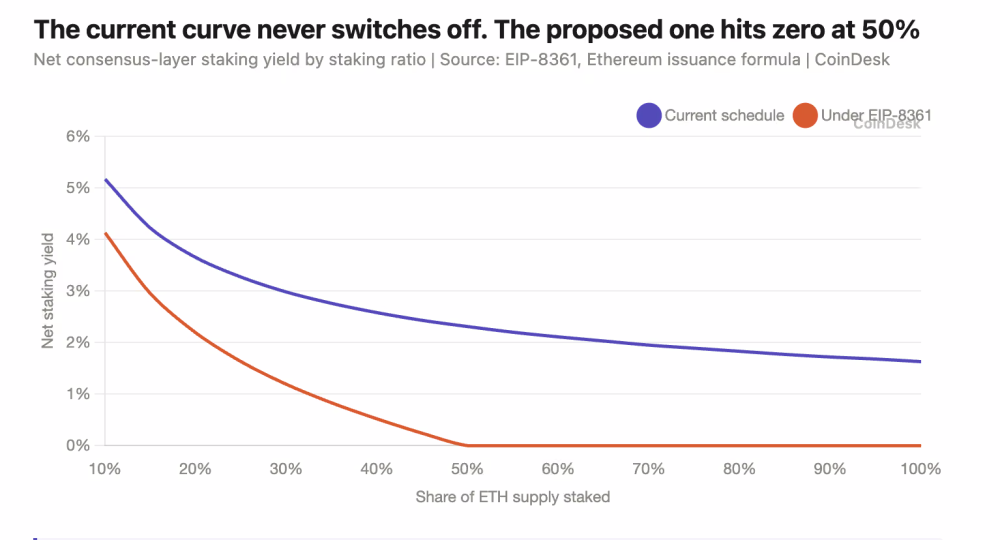
Figure 1. The current curve never ends. The proposed curve reaches zero at the 50% mark. Source: Shaurya Malwa.

The proposal was signed by 6 researchers, including Justin Drake of the Ethereum Foundation. It was published just days before the deadline for considering minor changes to Hegotá, the next Ethereum Network upgrade.

According to the authors, the problem is that staking never stops being profitable. Even if every $ETH were staked, the yield would still be around 1.5%, so there is always a reason to add more.

Jérôme de Tychey, one of the proposal's authors, predicts that over 70 million $ETH will be staked by January 2028 if nothing changes. The proposal states that beyond a certain level, additional staking will begin to make Ethereum less secure, as $ETH ultimately ends up with exchanges and staking service providers rather than its owners, while small individual stakers get pushed out.

Today, about 41 million $ETH, or about 34% of the total supply, is staked. According to tracking data, another 2.5 million are in the queue for activation, waiting 6 weeks or more, and no one is in line to exit.
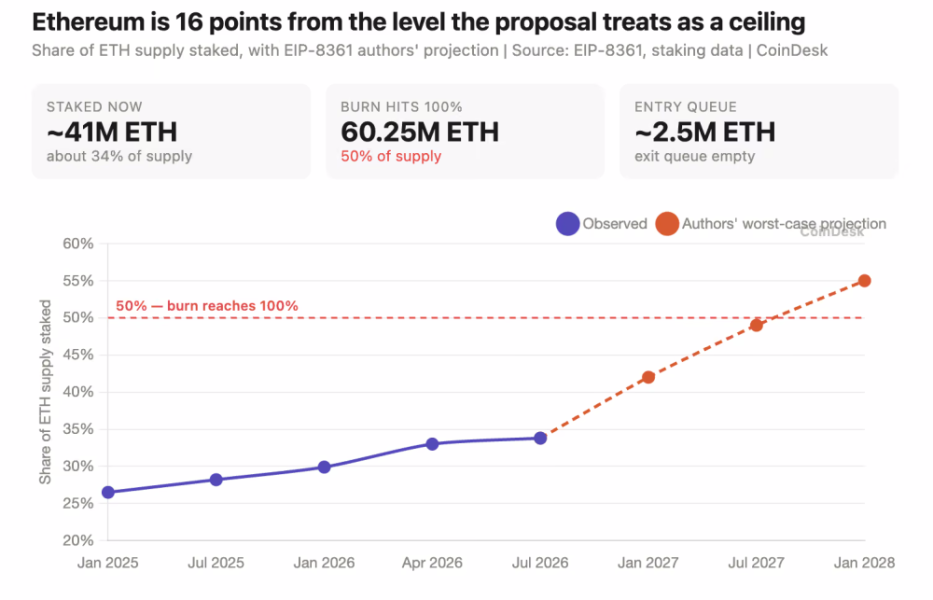
Figure 2. Ethereum is 16 percentage points away from the level considered a ceiling in the proposal. Source: Shaurya Malwa.

Ethereum limits the rate at which validators can join and leave, so both directions form a straight line. The limit exists to prevent a large block from entering or exiting quickly enough to destabilize the network. The entry queue consists of $ETH waiting to start staking, the exit queue consists of $ETH waiting to stop. Currently, about 57,600 $ETH can be activated per day.

The proposal has divided Ethereum developers and market participants.

Aave Labs CEO Stani Kulechov stated in his blog that driving staking rewards toward zero would largely render $ETH borrowing strategies unviable. As data shows, most $ETH borrowed on Aave is used to purchase more $ETH for staking, which is only beneficial while staking yield exceeds the borrowing cost.

Mike Silagadze, founder of the liquid staking protocol ether.fi, objects both to the process itself and its substance.

"The EIP draft was published with a 48-hour notice for comments," he wrote on X, calling it "a major change to network economics with far-reaching consequences for all of DeFi." He added that this change "obviously will push out solo stakers who are not subsidized by EF or others," and leave staking to "large centralized entities with zero cost of capital," and that "7 out of the top 10 DeFi protocols" would face capital outflows.

Silagadze was more forthright about the proposal's impact on prices. "People who lock $ETH in staking are not selling it," he wrote, arguing the proposal "will stop new $ETH from being staked" and could return over $10 billion worth of $ETH to circulation.

The more important question is whether this proposal will make it into the Hegotá upgrade, scheduled for Q3-Q4 2026, which will focus on structural optimization, censorship resistance, and state size reduction.

The fundamental change to Ethereum's monetary policy—gradually reducing and eventually zeroing out consensus-layer staking rewards after 50% of the supply is staked—comes just days before the Hegotá inclusion deadline of August 6. It is accompanied by only a rough implementation draft of about 300 lines and a lack of consensus among validators and stakers whose income will be reduced.

This combination of factors makes it much more likely to be skipped for Hegotá and moved to a later fork than implemented. The authors themselves note that each month of delay allows the staking ratio to grow by about 1.5 percentage points.

end-content

Трендовые криптовалюты

Связанные с этим вопросы

QWhat is the main purpose of the new Ethereum proposal mentioned in the article?

AThe main purpose is to gradually burn validator rewards as the amount of staked ETH increases, with the burning reaching 100% (effectively zeroing out net issuance) when approximately 60.25 million ETH (about 50% of the total supply) is staked. This aims to enhance long-term scarcity, potentially strengthen ETH's valuation, and limit dilution for existing holders.

QAt what specific staking threshold does the proposal aim for net issuance to reach zero?

AThe proposal aims for net issuance to reach zero when approximately 60.25 million ETH is staked, which represents about 50% of Ethereum's total supply.

QAccording to the article, what is a major concern raised by opponents like Mike Silagadze regarding the proposal's impact?

AMike Silagadze argues that the proposal would squeeze out solo stakers who aren't subsidized and leave staking dominated by 'large centralized entities with zero cost of capital.' He also claims it could halt new ETH from being staked and potentially return over $10 billion worth of ETH to circulation, impacting prices.

QHow does the article describe the potential impact of this proposal on borrowing strategies involving ETH, as stated by Aave Labs CEO?

AAave Labs CEO Stani Kulechov stated that driving staking rewards towards zero would make ETH borrowing strategies largely non-viable. This is because a significant portion of ETH borrowed on Aave is used to buy more ETH for staking, which is only profitable when staking yield exceeds the borrowing cost.

QWhat is the timeline mentioned for implementing this proposal, and what is a key factor making its inclusion in the upcoming Hegotá upgrade uncertain?

AThe proposal was published just days before the August 6th deadline for inclusion in the Hegotá upgrade, scheduled for Q3/Q4 2026. Key factors making its inclusion uncertain are: it was introduced with very short notice (48 hours for comments), it only has a rough ~300-line implementation draft, and there is a lack of consensus among validators and stakers whose incomes would be reduced. The authors note that the staking ratio grows about 1.5 percentage points per month, increasing urgency with any delay.

Похожее

Кук из ФРС заявила, что поддержит повышение ставок, если дезинфляция остановится

Член Совета управляющих Федеральной резервной системы США Лиза Кук заявила, что готова поддержать повышение процентных ставок, если инфляция в США не продолжит замедление. Выступая перед экономическими представителями Анкориджа, она подчеркнула, что, хотя некоторые дефляционные силы действуют, она «готова действовать», если процесс снижения инфляции остановится. Кук отметила, что инфляция остается слишком высокой, и риски для цели по инфляции в настоящее время перевешивают риски для сферы занятости. ФРС нацелена на долгосрочную инфляцию в 2%. По данным Trading Economics, годовая инфляция в июне 2026 года снизилась до 3,5%, что стало первым снижением за пять месяцев. Однако Кук призвала не придавать чрезмерного значения одному показателю, указав, что индекс цен на личное потребление (PCE) вырос на 3,7% за 12 месяцев до июня, что почти вдвое превышает целевой показатель. Она предупредила, что пять лет инфляции выше целевого уровня повышают риск укоренения высокой инфляции в поведении при установлении цен и зарплат, что сделает ее более устойчивой и сложной для сдерживания. «Если я не увижу признаков продолжения дезинфляции в ближайшее время, я готова действовать», — резюмировала Кук. Такие меры могут оказать давление на криптовалюты и другие высокорисковые инвестиции.

cointelegraph10 мин. назад

Кук из ФРС заявила, что поддержит повышение ставок, если дезинфляция остановится

cointelegraph10 мин. назад

Инвесторы начинают «менять игровой стол»

Китайские венчурные инвесторы начали активно переходить на работу в технологические компании, меняя «карточный стол». На фоне перегрева сектора hard tech (искусственный интеллект, робототехника, аэрокосмос) и взрывного роста финансирования конкуренция между фондами ужесточилась, а неопределённость с выходом из инвестиций и новое регулирование усиливают давление. Вместо того чтобы бороться за проекты в переполненных топовых сделках, многие опытные инвестиционные профессионалы, включая партнёров и управляющих директоров, целенаправленно выбирают переход в компании на позиции вице-президентов, руководителей по финансированию или даже сооснователей. Это движение стало осознанным выбором, а не вынужденным шагом. Компании-лидеры в AI и робототехнике, такие как Ziyuan Robot, Moon’s Dark Side, Minimax, активно нанимают таких специалистов для управления быстрыми и крупными раундами финансирования. Со стороны инвесторов это возможность получить более стабильную карьеру, прямой доступ к индустрии и привлекательные пакеты вознаграждения. Хотя переход требует адаптации от оценки к практическому исполнению, он отражает расширение карьерных границ в венчурной экосистеме.

marsbit13 мин. назад

Инвесторы начинают «менять игровой стол»

marsbit13 мин. назад

Сообщество Ethereum разделилось! Кому может угрожать EIP-8363?

В сообществе Ethereum разгорелись споры вокруг предложения EIP-8363, или «постепенного выпуска и сжигания» (Tapered Issuance Burn). Инициатива, представленная исследователями, включая Jérôme de Tychey и Джастина Дрейка, направлена на введение «снижающегося» вознаграждения за стейкинг. Когда общий объем заблокированного ETH приблизится к 50% от предложения (около 60.25 млн ETH), чистые вознаграждения на уровне консенсуса для валидаторов будут постепенно снижаться до нуля. Это не жесткий лимит, а рыночный механизм, призванный снизить инфляционное давление на не участвующий в стейкинге ETH и укрепить его как нейтральный актив. В настоящее время предложение находится на стадии черновика. Его авторы утверждают, что текущая модель постоянно стимулирует рост стейкинга, что может привести к централизации у крупных провайдеров. Противники, включая основателя Aave Стани Кулечова и соучредителя Obol Ойсина Кайна, считают, что резкое снижение доходности нанесет ущерб индивидуальным валидаторам, децентрализации, прогнозируемости доходов для институциональных инвесторов и экосистемам ликвидного стейкинга (LST) и DeFi. Критики также опасаются, что низкая доходность вытеснит малых операторов, оставив на рынке только крупные капиталоемкие институты. Влияние на конечных держателей ETH может быть положительным за счет снижения инфляции, но общее влияние на цену останется неопределенным из-за потенциального спада спроса. Предложение включает 18-месячный переходный период для смягчения последствий.

marsbit44 мин. назад

Сообщество Ethereum разделилось! Кому может угрожать EIP-8363?

marsbit44 мин. назад

Токен ElizaOS обвалился на 19%, достигнув рекордно низкого уровня после заявления основателя о его «смерти»

Токен ElizaOS упал на 19% до исторического минимума после заявления основателя Shaw Walters о том, что токен «мертв», а Eliza Foundation прекращает деятельность. На момент публикации токен торговался на уровне $0.000285 с рыночной капитализацией $2,1 млн, что является резким разворотом для актива, чья капитализация в январе 2025 года достигала $2,5 млрд. Уолтерс объяснил решение частным урегулированием иска с группой держателей токенов, по которому оставшиеся средства казны проекта были переданы истцам. Он назвал иск «нелепым», но отметил отсутствие ресурсов для дальнейшей борьбы в суде. Основатель заявил, что больше не владеет токеном и не будет его поддерживать, включая выкупы или манипуляции с предложением. Разработка открытого фреймворка для AI-агентов ElizaOS продолжится, но без привязки к какому-либо токену. Проект был запущен в октябре 2024 года как ai16z, но сменил название после возражений от венчурной компании Andreessen Horowitz (a16z).

cointelegraph51 мин. назад

Токен ElizaOS обвалился на 19%, достигнув рекордно низкого уровня после заявления основателя о его «смерти»

cointelegraph51 мин. назад

Торговля

Спот

Популярные статьи

Manyu: восходящая мем-звезда на Ethereum, готовая открыть новую эру культуры Shiba

Manyu - это мемтокен на Ethereum, который приносит децентрализованную культурную и развлекательную ценность через вирусное влияние в соцсетях и вовлечённость сообщества.

2.0k просмотров всегоОпубликовано 2025.11.27Обновлено 2025.11.27

Manyu: восходящая мем-звезда на Ethereum, готовая открыть новую эру культуры Shiba

Неделя обучения по популярным токенам 14: Glamsterdam — самое ожидаемое обновление Ethereum в 2026 году

Ordinals/Runes по-прежнему стимулируют доходы от комиссий за блоки и активность разработчиков, рассматриваются как отправная точка «нативной эмиссии активов» в сети.

1.6k просмотров всегоОпубликовано 2026.04.29Обновлено 2026.04.29

Неделя обучения по популярным токенам 14: Glamsterdam — самое ожидаемое обновление Ethereum в 2026 году

Обсуждения

Добро пожаловать в Сообщество HTX. Здесь вы сможете быть в курсе последних новостей о развитии платформы и получить доступ к профессиональной аналитической информации о рынке. Мнения пользователей о цене на ETH (ETH) представлены ниже.

活动图片