Le XRP recule face à son rival XLM : Pourquoi les traders de détail abandonnent l'un pour l'autre

bitcoinistОпубликовано 2026-06-03Обновлено 2026-06-03

Введение

La rivalité entre XRP et Stellar (XLM) s'intensifie, notamment en Corée du Sud où les traders de détail abandonnent massivement le XRP au profit du XLM. Sur la plus grande plateforme locale, Upbit, le volume d'échange du XLM (252,3 millions de dollars) a largement dépassé celui du XRP (125,7 millions de dollars) sur 24 heures, une première. Cet engouement est alimenté par l'intérêt croissant pour le rôle de Stellar dans la finance tokenisée, renforcé par des projets récents liés au DTCC. Conséquence : le XLM a grimpé de plus de 55% en une semaine, tandis que le XRP est en difficulté, tombant sous les 1,3 dollar malgré sa popularité historique en Asie. Parallèlement, certains analystes anticipent un possible rallye bull pour le XRP, arguant qu'il pourrait suivre la trajectoire haussière du XLM, avec des objectifs de prix très ambitieux à long terme.

La rivalité entre XRP et Stellar (XLM) dure depuis des années, les investisseurs comparant souvent ces deux cryptomonnaies axées sur les paiements en raison de leurs origines communes et de leurs cas d'utilisation similaires. Bien que XRP ait longtemps maintenu une plus grande présence sur le marché, XLM semble prendre le dessus dans certaines régions. Un nouveau rapport montre que les traders de détail en Corée du Sud abandonnent désormais le XRP au profit du XLM, alimentant une flambée de la valeur de marché de Stellar tandis que le prix du XRP continue de baisser.

Le XLM dépasse le XRP en volume d'échange en Corée du Sud

Le token natif de Stellar, XLM, a devancé XRP lors d'un changement majeur sur la plus grande plateforme d'échange de crypto de Corée du Sud, Upbit. Ce développement intervient alors que les traders de détail affluent vers le XLM, poussant son activité de négociation au-dessus de celle de l'un des actifs numériques les plus populaires du pays.

Les données partagées par l'analyste de marché Xaif Crypto montrent que le XLM a enregistré environ 252,3 millions de dollars de volume d'échange sur 24 heures sur Upbit. En comparaison, le XRP a affiché environ 125,7 millions de dollars sur la même période, soit moins de la moitié du volume observé pour le XLM. Cet écart stupéfiant marque la première fois que le XLM dépasse le XRP en volume d'échange, se plaçant désormais en tête sur Upbit.
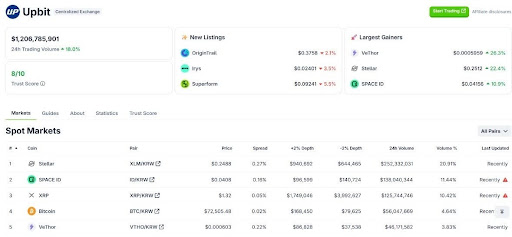
Source : CoinCodex

Cette dernière flambée survient après un regain d'intérêt pour le rôle de Stellar dans la finance tokenisée en Corée du Sud. Les traders ont réagi positivement aux récents plans reliant le réseau blockchain à des efforts de tokenisation impliquant le Depository Trust & Clearing Corporation (DTCC) américain, l'une des plus grandes entreprises d'infrastructure de marché financier au monde.

Les nouvelles du DTCC ont alimenté une nouvelle demande pour le XLM parmi les investisseurs sud-coréens, qui préféraient habituellement échanger du XRP. Il est à noter que le XLM a également enregistré de fortes hausses de prix parallèlement à l'augmentation de l'activité de négociation. Les rapports montrent que le token a grimpé de plus de 55% pour atteindre 11 dollars au cours de la semaine dernière, alors que l'élan continuait de se construire sur le marché. Le XRP, quant à lui, a eu du mal à suivre la hausse, tombant même en dessous de 1,3 dollar, malgré sa popularité de longue date parmi les traders sud-coréens.

Ce changement d'intérêt et de demande est notable car le XRP a historiquement été l'une des cryptomonnaies les plus échangées sur les marchés asiatiques comme la Corée du Sud, le Japon et la Thaïlande. Il y a seulement quelques semaines, le XRP menait le volume d'échange sur Upbit en Corée du Sud, devant le Bitcoin et l'Ethereum. Cependant, les derniers chiffres suggèrent que l'attention des traders de détail s'est désormais tournée vers le XLM alors que ces derniers cherchent à suivre l'élan le plus fort du marché.

Un analyste prévoit un rallye haussier pour le XRP après celui du XLM

Dans une analyse séparée, l'analyste crypto CW estime que le XRP pourrait être le prochain grand gagnant après la récente percée de Stellar. Dans un message partagé sur X, l'analyste a déclaré que le rallye haussier pour le XLM a déjà commencé et a suggéré que le XRP se trouve maintenant dans une position similaire avant son propre mouvement à la hausse.

Selon CW, le XRP attend un "signal de départ" et se négocie actuellement autour du même niveau où se trouvait le XLM avant son récent rallye de prix de 57%. L'analyste a soutenu que le XRP pourrait suivre la trajectoire haussière du XLM si l'élan continue de se renforcer.
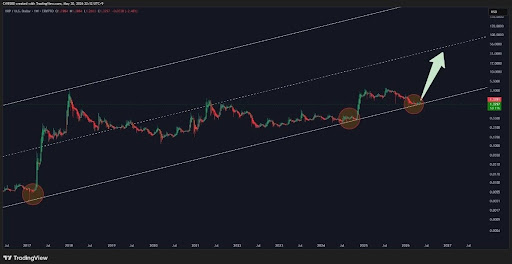
Source : X

Cependant, le graphique de CW projette un mouvement beaucoup plus important pour le XRP, visant de potentiels nouveaux sommets historiques près de 56 dollars. Bien que cette prédiction reste très spéculative et ambitieuse compte tenu du prix actuellement bas de la cryptomonnaie, elle reflète un optimisme croissant parmi certains participants du marché qui pensent que le XRP n'a pas encore réalisé son plus grand mouvement dans le cycle actuel.

Le prix suit la trajectoire baissière du marché | Source : XRPUSDT sur Tradingview.com

Связанные с этим вопросы

QPourquoi les traders de détail en Corée du Sud abandonnent-ils le XRP au profit du XLM ?

ALes traders réagissent positivement à l'annonce récente reliant le réseau Stellar aux efforts de tokenisation impliquant la DTCC (Depository Trust & Clearing Corporation), l'une des plus grandes entreprises d'infrastructure des marchés financiers au monde. Cette nouvelle a stimulé la demande pour le XLM, tandis que le XRP a du mal à suivre la hausse.

QQuelle est la différence de volume de négociation entre le XLM et le XRP sur Upbit en Corée du Sud ?

ASur Upbit, le plus grand échange de crypto-monnaies en Corée du Sud, le XLM a enregistré un volume de négociation sur 24 heures d'environ 252,3 millions de dollars, tandis que le XRP n'a affiché qu'environ 125,7 millions de dollars pour la même période. C'est la première fois que le XLM dépasse le XRP en volume sur cette plateforme.

QSelon l'analyste CW, quelle pourrait être la prochaine étape pour le XRP après la forte hausse du XLM ?

AL'analyste CW estime que le XRP pourrait être le prochain grand gagnant. Il suggère que le XRP se trouve dans une position similaire à celle du XLM avant sa récente hausse de 57%. Sur la base de son analyse graphique, il cible des sommets historiques potentiels près de 56 dollars pour le XRP, bien que cette prédiction soit très spéculative.

QQuel facteur a historiquement fait du XRP une crypto-monnaie très négociée sur les marchés asiatiques ?

ALe XRP a historiquement été l'une des crypto-monnaies les plus négociées sur les marchés asiatiques comme la Corée du Sud, le Japon et la Thaïlande en raison de sa popularité de longue date et de son cas d'utilisation axé sur les paiements. Il y a quelques semaines à peine, il dépassait même le Bitcoin et l'Ethereum en volume sur Upbit.

QComment le prix du XLM a-t-il évolué récemment par rapport au XRP ?

AAu cours de la semaine écoulée, le XLM a connu de fortes hausses de prix, grimpant de plus de 55% pour atteindre environ 11 dollars, alimenté par l'intérêt croissant pour la finance tokenisée et l'annonce de la DTCC. Pendant ce temps, le XRP a eu du mal à suivre cette dynamique et a même chuté en dessous de 1,3 dollar, malgré sa popularité traditionnelle.

Похожее

Fed's Internal Doves Flock to Hawkish Stance, Warsh's Debut "Between a Rock and a Hard Place"

U.S. Federal Reserve officials who previously advocated for rate cuts, including Governor Christopher Waller, have recently shifted their stance, with many now not ruling out the possibility of future rate hikes. This sets a challenging stage for new Fed Chair Kevin Warsh's first policy meeting. Appointed by President Trump based on his dovish views, Warsh now faces a committee where the debate has pivoted from "when to cut" to "whether to hike," driven by persistent inflation above 3%, a strong labor market, and supply-side pressures from AI infrastructure demands and geopolitical tensions. Key figures illustrate the shift. Governor Waller, once concerned about employment, now says data has pushed him toward considering rate increases. Even moderate voices like Governor Lisa Cook, while expecting inflation to ease, have indicated readiness to hike if it fails to do so. Long-time hawks such as regional Fed presidents Beth Hammack, Lorie Logan, and Neel Kashkari have grown more vocal, arguing that the real policy rate is effectively falling and that action may soon be needed. The upcoming Fed meeting is expected to keep rates steady but will likely remove the "easing bias" from its statement, signaling a neutral stance between cuts and hikes. The quarterly "dot plot" is anticipated to show most officials projecting no cuts this year, with some potentially indicating hikes. Chair Warsh, a critic of the Fed's reliance on forward guidance like the dot plot, must navigate communicating this pivot using tools he has questioned, all while steering policy in a direction counter to the preferences of the president who appointed him. The consensus suggests the Fed's next move could well be a rate increase.

marsbit16 мин. назад

Fed's Internal Doves Flock to Hawkish Stance, Warsh's Debut "Between a Rock and a Hard Place"

marsbit16 мин. назад

The Trillion-Yuan Market Cap 'Yi Zhong Tian': Who is the True Value King?

The article analyzes the three leading Chinese optical module companies, collectively nicknamed "Yi Zhong Tian": Xinyisheng, Zhongji Innolight, and TFC Optical Communication. It evaluates their "cost-performance" not by current stock price, but through three lenses: PEG ratio (growth vs. valuation), earnings quality, and premium/discount for certainty. Xinyisheng shows the most attractive PEG ratio and high profitability, but its valuation reflects discounts for risks like high customer concentration and reliance on overseas markets. Zhongji Innolight, the most expensive, commands a premium for its market leadership, dominant share in key products like 800G/1.6T modules, and higher earnings certainty, though it faces geopolitical risks. TFC Optical, as an upstream component supplier ("water seller"), has the highest gross margin and bets on the long-term CPO/NPO architecture trend, but trades at a high valuation with more stable, less explosive growth. The core argument is that while these companies dominate module assembly, the true profit pool and technological moat lie upstream in laser and switch chips, currently controlled by U.S. firms like Lumentum and Coherent. The long-term "cost-performance" for these Chinese leaders hinges on whether the domestic industry, exemplified by companies like Yuanjie Technology, can successfully move up the value chain into high-power laser chips. Otherwise, their high growth may remain confined to the lower-margin assembly segment.

marsbit26 мин. назад

The Trillion-Yuan Market Cap 'Yi Zhong Tian': Who is the True Value King?

marsbit26 мин. назад

Has the Crypto Market Bottomed? Here's What Institutions Think

The crypto market is in a period of significant debate, with leading institutions offering differing views on whether a bottom has been reached. Three prominent firms have published detailed analyses: * **Galaxy Digital** argues Bitcoin has **not yet bottomed**. Their analysis of 13 historical indicators across six dimensions (valuation, profit-taking, miner pressure, etc.) shows only four are fully met. They project a potential bottom range between $30k and $54k. * **NYDIG** states a bottom is **possible but not likely**. While metrics are close to historic bear market extremes, they note the absence of a classic panic-selling event. They also suggest increased institutional adoption may have structurally altered the market cycle, potentially leading to a shallower downturn. * **Standard Chartered Bank** asserts the **bottom has already occurred** at around $59k. They cite two key factors: potential US-Iran diplomatic progress and the anticipated SpaceX IPO, which they believe absorbed capital and caused ETF selling pressure that is now subsiding. They forecast a year-end price target of $100k. Despite the surface-level disagreement, the reports share critical common ground more valuable for long-term investors: 1. All three believe the market bottom will form **within this year**. 2. All agree the current price is **closer to the bottom than to previous highs**. 3. All maintain a **bullish long-term outlook** for Bitcoin and a new cycle. The core takeaway is that while the exact bottom price ($40k, $50k, or $60k) is debated, the consensus is that a bottom is imminent. For long-term holders, the primary focus should not be pinpointing the absolute low, but on the future potential for prices to reach $100k, $200k, or higher. The fundamental thesis for Bitcoin—sovereign debt accumulation, inflation, declining trust in centralized institutions, global digitization, and improved accessibility—remains intact and is arguably strengthening. The overall landscape is viewed as more favorable than in previous crypto winters.

marsbit36 мин. назад

Has the Crypto Market Bottomed? Here's What Institutions Think

marsbit36 мин. назад

The 'Chip' Challenge and Breakthroughs in China's Optical Industry Chain

China's Photonics Industry: Bottlenecks and Breakthroughs In the global AI race, computing chips dominate the narrative, but the underlying bottleneck increasingly defining the scale of AI clusters is light—or more specifically, optical connectivity. Optical modules, which translate electrical signals to light and vice versa, are crucial for connecting thousands of GPUs in AI data centers, preventing data congestion and ensuring efficient model training. High-speed modules (800G, 1.6T) are now standard, with performance hinging on advanced DSP (Digital Signal Processor) chips. This is where a critical dependency lies. Two US giants—Marvell and Broadcom—collectively dominate over 90% of the high-end DSP chip market. Chinese optical module leaders like Zhongji Innolight and Eoptolink rely on these chips to manufacture modules for overseas AI customers, primarily in North America. While this creates a supply chain vulnerability, complete decoupling is difficult. Marvell derives over half its revenue from Greater China, and the US firms depend on Chinese partners for chip packaging and optical components. The risk from laser chips (e.g., from Lumentum), another key component, is considered more manageable due to multiple global suppliers and faster progress in domestic alternatives from companies like YOFC and Accelink. To mitigate risks, China's industry is pursuing a multi-pronged strategy: diversifying supply chains and locking in long-term orders; fostering a domestic market ecosystem to adopt homegrown DSPs from firms like Huawei HiSilicon and CETC; accelerating R&D in high-speed DSPs and advanced packaging; and investing in next-gen technologies like silicon photonics and Co-Packaged Optics (CPO) to reduce reliance on discrete DSPs. The ultimate solution lies not in short-term博弈 but in persistent advancement of domestic high-end chip R&D and manufacturing. While challenges remain in performance, certification, and ecosystem building, China's vast domestic market and manufacturing base provide a crucial buffer, buying time for the industry to achieve greater technological independence.

marsbit50 мин. назад

The 'Chip' Challenge and Breakthroughs in China's Optical Industry Chain

marsbit50 мин. назад

Торговля

Спот
Фьючерсы

Популярные статьи

Что такое XRP 2.0

XRP 2.0: Новая грань в мире криптовалют Введение в XRP 2.0 В постоянно развивающейся сфере криптовалют появляются новые проекты, стремящиеся к вниманию и внедрению. Один из таких многообещающих проектов - это XRP 2.0, новая криптовалюта, созданная для использования передовых технологий блокчейна и надежных методов шифрования. Хотя название вызывает ассоциации с XRP от Ripple, важно отметить, что XRP 2.0 функционирует независимо, сосредоточив внимание на повышении безопасности сделок, конфиденциальности и масштабируемости. Поскольку цифровая финансовая среда все больше принимает децентрализованные решения, XRP 2.0 намерена внести значимый вклад в web3 и общее расширение криптопроектов. Что такое XRP 2.0? XRP 2.0 в своей основе - это проект криптовалюты, цель которого - создать безопасную и децентрализованную экосистему цифровой валюты. Его базовая технология интегрирует сложные принципы блокчейна с современными методами шифрования. Основная цель XRP 2.0 - утвердиться как надежная и эффективная платформа, позволяющая быстро осуществлять транзакции с приоритетом на улучшенную защиту конфиденциальности для своих пользователей. Проект рекламируется как решение многих недостатков, с которыми сталкиваются существующие криптовалюты, предлагая систему, способную обрабатывать более высокий объем транзакций с улучшенной скоростью и конфиденциальностью. Эта универсальность позиционирует XRP 2.0 как значимого конкурента на рынке, переполненном различными цифровыми валютами. Кто создатель XRP 2.0? Идентичность создателя XRP 2.0 была обозначена как «Уилбур». Однако исчерпывающие данные о Уилбуре или связанном с ним проекте остаются неясными. Анонимность многих создателей криптовалют не является редким явлением в этой отрасли и часто применяется для сохранения определенной степени конфиденциальности и безопасности. Кто инвесторы XRP 2.0? <pна данный момент конкретная информация о инвестиционных фондах или организациях, поддерживающих xrp 2.0, не доступна публично. в секторе криптовалют поддержка репутабельными инвесторами может существенно повлиять на кредитоспособность и успех проекта, однако прозрачность в отношении финансовых спонсоров 2.0 еще была установлена. Как работает XRP 2.0? XRP 2.0 выделяется использованием сочетания технологий блокчейна и продвинутых алгоритмов шифрования, что обеспечивает безопасные и децентрализованные транзакции. Его инновационная структура включает уникальные функции, разработанные для повышения вовлеченности пользователей и расширения функциональности за пределами традиционных транзакций с криптовалютами. Среди этих функций XRP 2.0 интегрирует возможности с искусственным интеллектом, такие как текст в изображение и текст в речь. Эти дополнения разработаны для улучшения интерактивной работы пользователей, способствуя более широкому применению в различных секторах. Соединяя технологические достижения с дизайном, ориентированным на пользователя, XRP 2.0 стремится привлечь внимание разнообразных индивидуумов и предприятий, стремящихся интегрировать решения с криптовалютой в свои бизнес-процессы. Хронология XRP 2.0 Для понимания XRP 2.0 необходимо рассмотреть ключевые события, которые определили его путь до сих пор: 23 июля 2023 года: XRP 2.0 представлен как новый проект криптовалюты, стремящийся революционизировать возможности безопасных и децентрализованных транзакций в области блокчейна. 8 сентября 2023 года: Запуск другого проекта, XRP20, который представляет собой токен ERC-20 на блокчейне Ethereum и не имеет отношения к XRP 2.0. 13 ноября 2023 года: XRP Ledger подвергается значительному обновлению с выпуском программного обеспечения серверов rippled версии 2.0.0. Важно отметить, что это развитие не связано с проектом криптовалюты XRP 2.0. Ключевые моменты о XRP 2.0 Чтобы выделить суть XRP 2.0, возникают несколько критически важных факторов: Уникальные особенности: Включение таких функций, как основанные на ИИ текст в изображение и текст в речь, дополнительно разнообразит потенциальные приложения XRP 2.0. Технология блокчейна: Структура использует современные механизмы блокчейна и протоколы шифрования, обеспечивая безопасную и децентрализованную среду для транзакций. Масштабируемость и конфиденциальность: XRP 2.0 придает приоритет повышенным мерам защиты конфиденциальности в процессах транзакций и масштабируемости, необходимой для привлечения растущей базы пользователей. Нет связи с Ripple: Важно отметить, что, несмотря на свое название, XRP 2.0 не имеет никаких отношений или сотрудничества с XRP от Ripple, что отличает его операционные рамки и цели в экосистеме криптовалют. Заключение XRP 2.0 представляет собой амбициозное начинание в сфере криптовалют, стремясь предложить сочетание безопасности, конфиденциальности и эффективности в цифровых транзакциях. Интегрируя сложные технологии и удобные функции, проект стремится расширить горизонты того, что может достичь криптовалюта в современной цифровой экономике. Хотя анонимность его создателя и отсутствие раскрытых инвесторов могут вызвать вопросы у некоторых, акцент XRP 2.0 на передовых функциональных возможностях и децентрализации увеличивает его привлекательность на фоне все более переполненного крипто-рынка. Поскольку мир криптовалют продолжает развиваться, XRP 2.0 может еще стать ключевым игроком в расширении безопасных и масштабируемых блокчейн-решений.

200 просмотров всегоОпубликовано 2024.04.05Обновлено 2024.12.03

Что такое XRP 2.0

Неделя обучения по популярным токенам 13: запуск основной сети HIP-4 ожидается в середине 2026 года на фоне смещения фокуса рынка к масштабируемому внедрению ключевых криптоактивов, включая XRP

HIP-4 представит децентрализованные рынки прогнозов без разрешений, бинарные (исходные) контракты и опционы 0DTE.

1.3k просмотров всегоОпубликовано 2026.04.22Обновлено 2026.04.22

Неделя обучения по популярным токенам 13: запуск основной сети HIP-4 ожидается в середине 2026 года на фоне смещения фокуса рынка к масштабируемому внедрению ключевых криптоактивов, включая XRP

Обсуждения

Добро пожаловать в Сообщество HTX. Здесь вы сможете быть в курсе последних новостей о развитии платформы и получить доступ к профессиональной аналитической информации о рынке. Мнения пользователей о цене на XRP (XRP) представлены ниже.

活动图片