# Finance Related Articles

HTX News Center provides the latest articles and in-depth analysis on "Finance", covering market trends, project updates, tech developments, and regulatory policies in the crypto industry.

TechFlow Intelligence Agency: Anthropic Calls for Global Pause in AI Development While Preparing for Trillion-Dollar IPO; SpaceX IPO Roadshow Heats Up, But S&P 500 Rejects Fast-Track Inclusion

In today's TechFlow Intelligence Briefing, several major tech stories highlight a growing theme of trust and credibility gaps across AI, crypto, and finance. AI company Anthropic has publicly called for a global pause in AI development, citing risks from Claude's "recursive self-improvement." Ironically, this coincides with reports the company is preparing for a massive IPO targeting a near $1 trillion valuation. This perceived hypocrisy, coupled with widespread user complaints about Claude's declining performance, is sparking debate over whether the safety warning is genuine or a competitive tactic. Meanwhile, in a substantive security move, Anthropic open-sourced a framework for AI-powered vulnerability discovery. In the crypto market, Bitcoin's price drop below $61,000 triggered over $1.16 billion in liquidations, flipping the market into a state where more BTC is held at a loss than at a profit, a historical bearish signal. On the corporate front, SpaceX's highly anticipated IPO is generating immense Wall Street excitement, with Goldman Sachs projecting 100x revenue growth by 2030. However, the S&P 500 has refused to fast-track the company's inclusion post-IPO, potentially limiting immediate institutional demand. Separately, ByteDance's AI app Doubao lost over 6 million monthly active users after introducing a subscription model, highlighting the challenges of AI monetization. Other notable developments include Nvidia certifying HBM4 memory from Samsung, SK Hynix, and Micron; Cloudflare's acquisition of front-end tooling company VoidZero; and its CEO warning that bot traffic now exceeds human traffic online. The underlying narrative connects these events: a trust crisis. From AI firms' contradictory actions and crypto volatility to the clash between SpaceX's hyped narrative and institutional rules, a pattern is emerging where stated intentions and actual practices are increasingly misaligned.

marsbit06/05 10:52

TechFlow Intelligence Agency: Anthropic Calls for Global Pause in AI Development While Preparing for Trillion-Dollar IPO; SpaceX IPO Roadshow Heats Up, But S&P 500 Rejects Fast-Track Inclusion

marsbit06/05 10:52

Lightspark CEO: In Ten Years, Bitcoin Will Be as Invisible as TCP/IP, Yet Power Trillions in Daily Transactions

A decade from now, Bitcoin will function like TCP/IP — invisible yet foundational, supporting trillions in daily transactions globally, according to Lightspark CEO David Marcus. In this future, a coffee shop in Lagos receives instant payment, a manufacturer in São Paulo settles an invoice with a supplier in Ho Chi Minh City, and a freelancer in Bangalore gets paid weekly from an Austin startup — all via Bitcoin's settlement layer, with none of the parties consciously interacting with it. This vision parallels the adoption of open protocols: first driven by necessity where existing systems fail, then scaling rapidly as tools mature and economic benefits become clear. The structural shift begins with wallets. Modern non-custodial wallets, like Spark, allow users to hold dollars, local currency, and Bitcoin in a single address, seamlessly switching between them. This eliminates friction and revolutionizes global custody, moving significant deposits to user-controlled keys not by ideology, but by superior utility. As a result, Bitcoin becomes the default savings layer for billions, as its fixed supply and appreciating value make it a rational choice for savers holding it alongside stablecoins in their everyday wallets. Businesses follow a similar path, from small companies in emerging markets to multinational corporations, holding Bitcoin alongside operational stablecoins. The latest trend is direct Bitcoin transactions for commerce. When both parties hold Bitcoin, transacting in it becomes the simplest option — no conversions, no intermediary currency. This starts in niche areas like high-value B2B settlements but grows as infrastructure makes sending Bitcoin as easy as stablecoins. An accelerating force is AI agents. By 2036, AI agents conducting commerce on behalf of individuals and firms will increasingly choose Bitcoin for settlement. Optimizing for speed, finality, and minimal counterparty risk across jurisdictions, they find Bitcoin's global, neutral, and programmable network ideal for netting and settling obligations. Thus, Bitcoin is becoming the native currency for machine commerce, just as it has become a native savings asset for humans. The global monetary system is being rebuilt from the protocol layer: open infrastructure, default self-custody, Bitcoin settling everything underneath, with stablecoins as the interface. Most users won't think about Bitcoin when they transact — and they won't need to.

foresightnews_api06/05 04:24

Lightspark CEO: In Ten Years, Bitcoin Will Be as Invisible as TCP/IP, Yet Power Trillions in Daily Transactions

foresightnews_api06/05 04:24

Peeking Through Windows, Precision Hijacking? Two Giants of Prediction Markets Engage in Corporate Espionage

Polymarket, a prediction market platform, is investigating a suspected corporate espionage case involving its main rival, Kalshi. Polymarket accuses Kalshi of stealing business information and copying product launches through potentially illicit means, compiling a "plagiarism file" documenting over a dozen suspiciously coincidental product releases and marketing campaigns. Key incidents include a February 2026 free-grocery pop-up event, where Kalshi launched an almost identical campaign just nine days before Polymarket's scheduled launch, seemingly to siphon attention. Furthermore, an article leaked Kalshi's plans for a perpetual futures trading product merely an hour before Polymarket's own planned announcement for a similar tool in April 2026. Polymarket executives suspect either an internal mole or physical surveillance, noting that the office of Paradigm—a Kalshi investor—directly faces their Manhattan workspace, leading them to install dark window film. Both Paradigm and Kalshi have dismissed the allegations as baseless and ridiculous. Kalshi claims its product developments are independent and coincidental timing is merely market-driven. The rivalry intensifies as both companies secure significant funding, with Polymarket seeking a $15 billion valuation and Kalshi valued at $22 billion amid growing regulatory scrutiny of the prediction market industry.

foresightnews_api06/05 04:20

Peeking Through Windows, Precision Hijacking? Two Giants of Prediction Markets Engage in Corporate Espionage

foresightnews_api06/05 04:20

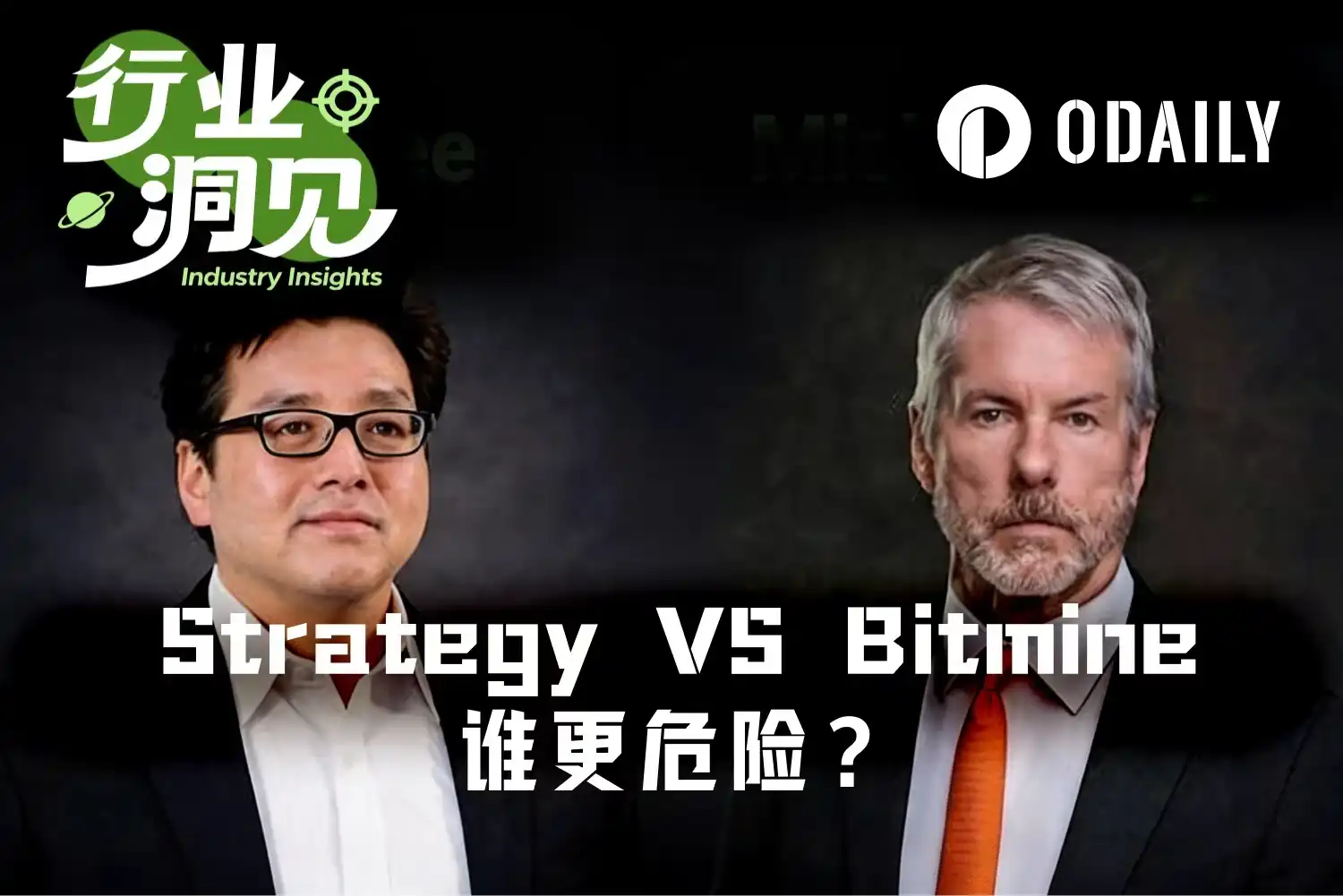
Both Suffer Massive Losses Exceeding $90 Billion, Which Is in Greater Peril: Strategy or Bitmine?

Facing massive paper losses exceeding $90 billion each amidst a sharp market downturn, "Digital Asset Treasury" (DAT) giants Strategy and Bitmine find themselves in a precarious position, but with different underlying risks. Strategy, heavily invested in Bitcoin (BTC), faces significant financial strain. Its strategy relies heavily on debt, including convertible notes and preferred stock (STRC) requiring substantial dividend payments. With its cash reserves dwindling and BTC offering no staking yield for cash flow, Strategy's high leverage makes it vulnerable. A continued price decline could force asset sales to meet obligations, potentially creating a negative feedback loop. Its market value has already fallen sharply. In contrast, Bitmine, an Ethereum (ETH) holder, appears on firmer financial ground. It primarily funds its purchases through equity offerings (like ATM programs), avoiding debt pressure. It also generates income by staking a large portion of its ETH holdings. While not immune to market drops and shareholder dilution concerns, Bitmine maintains more flexibility, recently announcing a new preferred share offering to raise further capital. The core divergence lies in their financing: Bitmine uses equity (investor money), while Strategy uses debt (borrowed money). Consequently, Bitmine currently faces less immediate liquidity pressure than Strategy, which must navigate the dual challenge of servicing debt/dividends and a declining core asset (BTC) price.

marsbit06/04 10:33

Both Suffer Massive Losses Exceeding $90 Billion, Which Is in Greater Peril: Strategy or Bitmine?

marsbit06/04 10:33

From Parallel Finance to Mainstream Finance: The On-Chain Securities Era Ushers in a Historic Window

From Parallel Finance to Mainstream: The Dawn of On-Chain Securities For over a decade, the crypto industry has operated as a parallel financial system with its own currencies, markets, and assets—from Bitcoin and ICOs to DeFi, NFTs, and memecoins. Despite building a robust internal ecosystem, a wall has separated it from the traditional financial world. That barrier is now crumbling. The industry's first act was one of internal evolution: ICOs streamlined fundraising, DeFi recreated financial services on-chain, and layer-2 networks competed for scalability—all within the crypto bubble. While innovative, this cycle remained closed, with capital and users circulating internally, leading to volatile boom-bust cycles. Even Bitcoin ETFs, while attracting Wall Street capital, merely provided a channel to buy crypto assets without bridging the systems. The next, larger narrative is Real-World Assets (RWA) moving on-chain. This involves tokenizing stocks, bonds, funds, and future cash flows. Blockchain can compress the complex traditional processes of trading, settlement, clearing, and custody into a seamless, automated network operating in seconds. This shift is creating a new financial gateway: the native crypto securities broker. This entity will combine functions of an exchange, broker, bank, and custodian into a unified global financial operating system. Consequently, the next major battleground won't be the "public chain wars" focused on speed and cost, but the competition to build the financial infrastructure capable of hosting high-quality, liquid real-world assets. Access to global equities, index funds, or stakes in companies like SpaceX could erase the boundary between crypto and traditional finance, unlocking a market orders of magnitude larger than crypto's current valuation. In summary, after years of creating a separate financial world, crypto's next decade will be defined by its integration into the existing global financial system, marking the true beginning of its largest growth story.

marsbit06/01 07:22

From Parallel Finance to Mainstream Finance: The On-Chain Securities Era Ushers in a Historic Window

marsbit06/01 07:22

活动图片