Artículos Relacionados con DAO

El Centro de Noticias de HTX ofrece los artículos más recientes y un análisis profundo sobre "DAO", cubriendo tendencias del mercado, actualizaciones de proyectos, desarrollos tecnológicos y políticas regulatorias en la industria de cripto.

a16z: From Companies to DAOs, DUNA May Become the Next Generation Organizational Form

This article, "From Companies to DAOs: How DUNA Could Become the Next Organizational Form," traces the 500-year evolution of business collaboration. It begins with medieval structures like the *commenda* and Florentine *compagnia*, which exposed partners to personal risk. The modern corporation, exemplified by the Dutch East India Company (VOC), was a revolutionary leap, enabling large-scale, capital-intensive ventures by offering limited liability and reducing coordination costs. However, corporations introduced new challenges like principal-agent problems and bureaucratic overhead. The piece argues that software and internet-native protocols are now reducing these traditional overheads. Decentralized Autonomous Organizations (DAOs) emerged as a new model for coordination without centralized management. Yet, DAOs face a significant legal vacuum: they lack legal recognition, leaving members exposed to unlimited personal liability, and their tokens are vulnerable to being classified as securities under unclear regulations (e.g., the Howey Test). This has forced projects into suboptimal workarounds like offshore foundations. The article identifies the Decentralized Unincorporated Nonprofit Association (DUNA) as a potential solution. Recently legalized in states like Wyoming, the DUNA provides a legal wrapper for decentralized networks. It grants key protections—legal personality, limited liability, and perpetual existence—to a group without imposing a traditional hierarchical management structure. This allows token-holder communities to govern, hold assets, and contract as a single legal entity, aligning with their decentralized nature. While DUNA doesn't solve all governance challenges or magically resolve securities law questions, it represents a crucial step. It fills the legal recognition gap, offering a native legal form for internet-scale, decentralized collaboration and extending the separation of personal risk from organizational venture into a new domain.

marsbitHace 23 hora(s)

a16z: From Companies to DAOs, DUNA May Become the Next Generation Organizational Form

marsbitHace 23 hora(s)

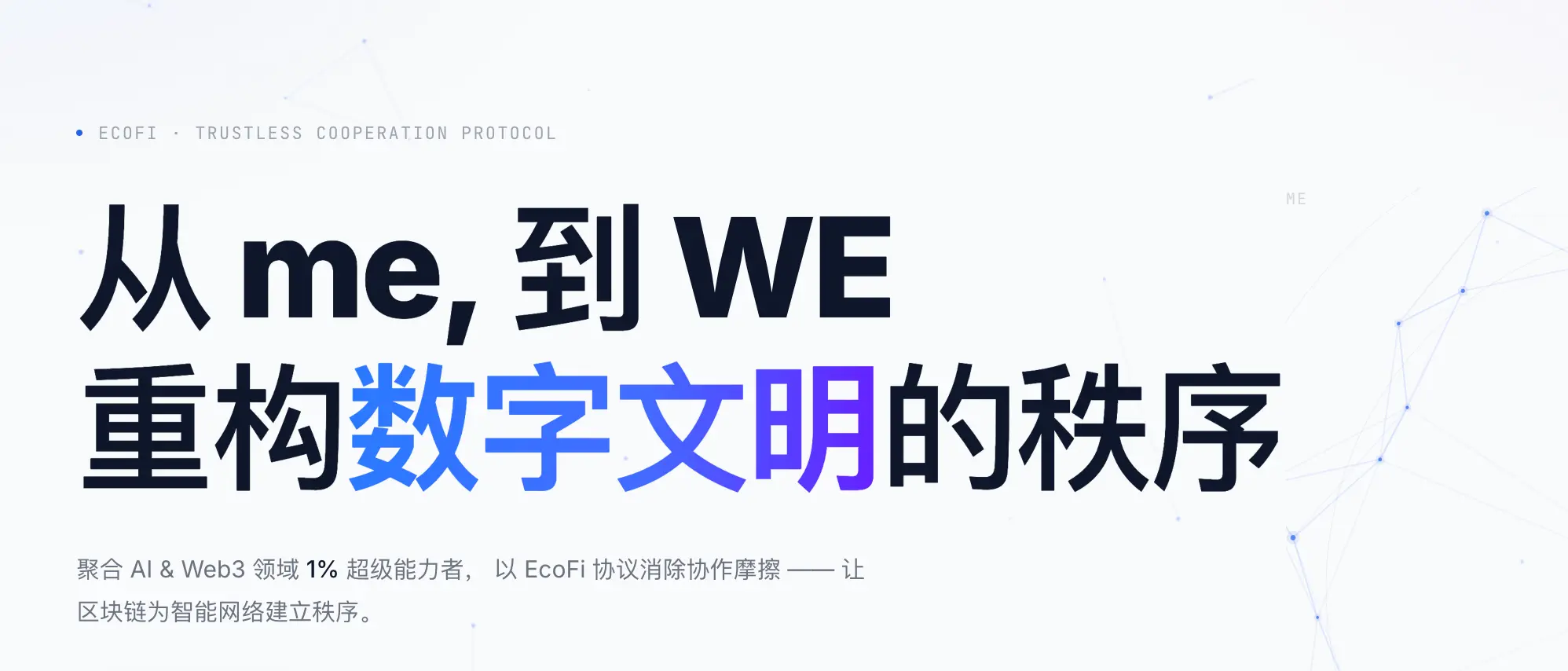
The Evolution of Order in the AI & Web3 Era: The Competitive Dimensions and Exploratory Path of m&W

The article explores the evolution of order in the AI & Web3 era, framing the competition around establishing new foundations for human-AI collaboration. It argues that as AI Agents become core economic participants, the existing Web3 infrastructure—focused on assets, identity, and decentralized governance—is insufficient. The core challenge shifts to building trust, assessing complex contributions, and creating fair value distribution among diverse human and AI actors. The analysis positions the m&WDAO project within this landscape by comparing it to existing paradigms: Colony (human-centric DAO governance), SingularityNET (AI service exchange), Gitcoin Passport (Sybil-resistant identity), and Farcaster/Lens (open social graphs). m&W's distinct path, termed EcoFi (Ecological Finance/Order), aims to integrate these layers. Its three-phase evolution is outlined: 1) **m&W 1.0: Credit Anchoring** - filtering high-quality "Builder" nodes and converting their contributions into non-transferable SBTs (Soulbound Tokens) as a bedrock of trust. 2) **m&W 2.0: Collaborative Economy** - deploying the EcoFi protocol to enable verified, complex task collaboration with a hybrid AI/human judgment system for valuation and dispute resolution, creating a closed-loop value system. 3) **m&W 3.0: Intelligent Order** - where human-originated SBT credit enables trusted AI Agent "digital twins" to participate in a mature human-AI co-creation economy. The conclusion asserts that while other projects solve discrete problems (proving identity, governing contributions, exchanging AI capabilities), m&W's ultimate mission is to address the foundational question of a new socio-economic order for the coming era of human-AI collaborative networks.

链捕手07/20 03:17

The Evolution of Order in the AI & Web3 Era: The Competitive Dimensions and Exploratory Path of m&W

链捕手07/20 03:17

Who Is Shaping Ethereum's Future: The Takeover by Token-Holding Companies Could Be the Best Thing for ETH in Years

**Title: Who is Building Ethereum's Future? Corporate ETH Holders Take Over Funding, Possibly the Best Thing for ETH in Years.** **Summary:** The Ethereum Foundation is scaling back due to fiscal concerns, but publicly traded companies holding large amounts of ETH, like Bitmine and SharpLink, are stepping in to fund protocol development. These firms collectively hold nearly 5% of ETH's circulating supply and are using their staking yields to pay for R&D. Unlike MicroStrategy, which merely accumulates Bitcoin, these ETH treasury companies are reinvesting profits directly into the protocol's development—potentially allowing all ETH holders to benefit from this free "spillover." Key drivers for this shift include these companies' stalled business model. Their "flywheel" of issuing stock to buy more ETH broke as their stock prices fell below the net value of their crypto holdings (mNAV < 1). With their ETH holdings also deeply underwater, simply waiting for price appreciation failed. By funding Ethereum's roadmap—through new non-profits like ETH Labs and Ethereum Institutional—they aim to increase the utility and value of the underlying asset that dominates their balance sheets. This creates a new alignment of interests: these companies are highly incentivized to see Ethereum succeed and are less likely to sell en masse. However, risks remain. The exact funding amounts are undisclosed, and these treasury firms themselves are vulnerable if ETH prices fall further, which could halt their contributions. **Additional Context:** The article also contrasts Jito's new "token-centric" proposal (JIP-38), which credibly directs platform fees to token buybacks, with Venice's less concrete promises, highlighting the importance of where revenue legally lands and who controls the mechanisms. Other notable industry updates include the rise of TradFi perpetuals on Hyperliquid, new Bitcoin staking via Stacks, and various DeFi product launches.

marsbit07/17 07:48

Who Is Shaping Ethereum's Future: The Takeover by Token-Holding Companies Could Be the Best Thing for ETH in Years

marsbit07/17 07:48

活动图片