Ditulis oleh: David Christopher
Dikompilasi oleh: Saoirse, Foresight News
x402 mengalami perkembangan bisnis yang pesat pada bulan Juni.
Volume transaksi protokol meningkat tajam, bertahan stabil pada level sekitar dua kali lipat volume transaksi bulan Mei. Sebuah skenario penerapan yang jelas muncul: sebagian besar aktivitas transaksi terkonsentrasi pada satu penyedia layanan tunggal — proyek perutean inferensi BlockRun. Adopsi berkelanjutan di sisi perusahaan: Amazon menyelesaikan integrasi protokol ini, dan Cloudflare juga secara resmi meluncurkan gateway monetisasi konten. Serangkaian peningkatan teknis telah meningkatkan stabilitas dan kemampuan lacak transaksi x402 yang memasuki musim panas ini, dan karakteristik inilah yang sangat dibutuhkan untuk menghadapi ujian nyata yang akan dibawa Cloudflare.
Selanjutnya kami merangkum perkembangan terbaru, arah yang telah terbukti layak, serta hipotesis yang masih perlu dibuktikan.
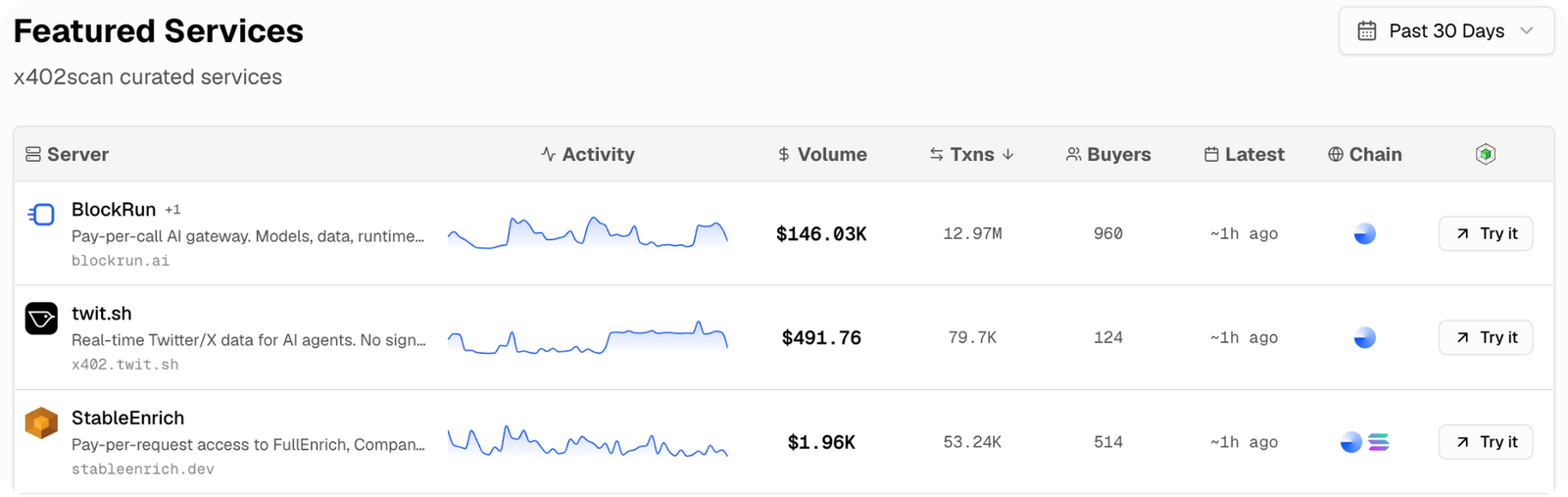
Daftar pilihan layanan teratas di platform x402scan (statistik 30 hari terakhir), menampilkan metrik kinerja seperti aktivitas, jumlah transaksi, volume transaksi, jumlah pembeli, dan rantai blok tempat berada untuk penyedia layanan AI data/gateway yang dikenakan biaya per panggilan seperti BlockRun, twit.sh, StableEnrich
Lebih Banyak Penyedia Layanan Terhubung ke Ekosistem
Jika Anda sedang menggunakan x402, bagian ini layak mendapat perhatian khusus.
Pada bulan Juni, Apify mengumumkan integrasi dengan x402. Pengembang dapat menggunakan stablecoin USDC di rantai Base untuk memanggil pustaka alat otomatisasi web dan web scraping mereka (Base saat ini masih menjadi jaringan utama tempat protokol ini berjalan). Pengguna sekarang dapat menggunakan stablecoin untuk mengambil data dari platform Twitter (X), Reddit, TikTok, dan Facebook, meskipun kualitas fungsi berbagai skrip otomatisasi (yang oleh Apify disebut sebagai Actor) di dalam platform ini bervariasi.
Setelahnya, mesin pencari AI Exa memperluas dukungan pembayaran x402 ke rantai Solana, memungkinkan pengguna membayar untuk layanan pencarian web dan konten di rantai publik ini. Sangat cocok untuk penelitian informasi mendalam, terutama untuk due diligence proyek baru.
Platform asisten AI pribadi Seal meluncurkan modul fitur Hacks: kemampuan agen cerdas kustom yang dapat mengemas dan mengintegrasikan beberapa permintaan API menjadi satu tugas otomatis. Produk ini dibangun di atas pasar perdagangan x402, yang merupakan skenario penerapan yang sangat saya harapkan dalam artikel saya sebelumnya "Daftar Visi Perkembangan x402 Saya". Senang melihat produk diluncurkan secara resmi, dan saya berencana untuk mencobanya sendiri.
Selain itu, tim Merit Systems terus meluncurkan aliran data dan informasi baru, yang dapat dipanggil oleh aplikasi percakapan mereka yang dilengkapi protokol x402, Poncho.
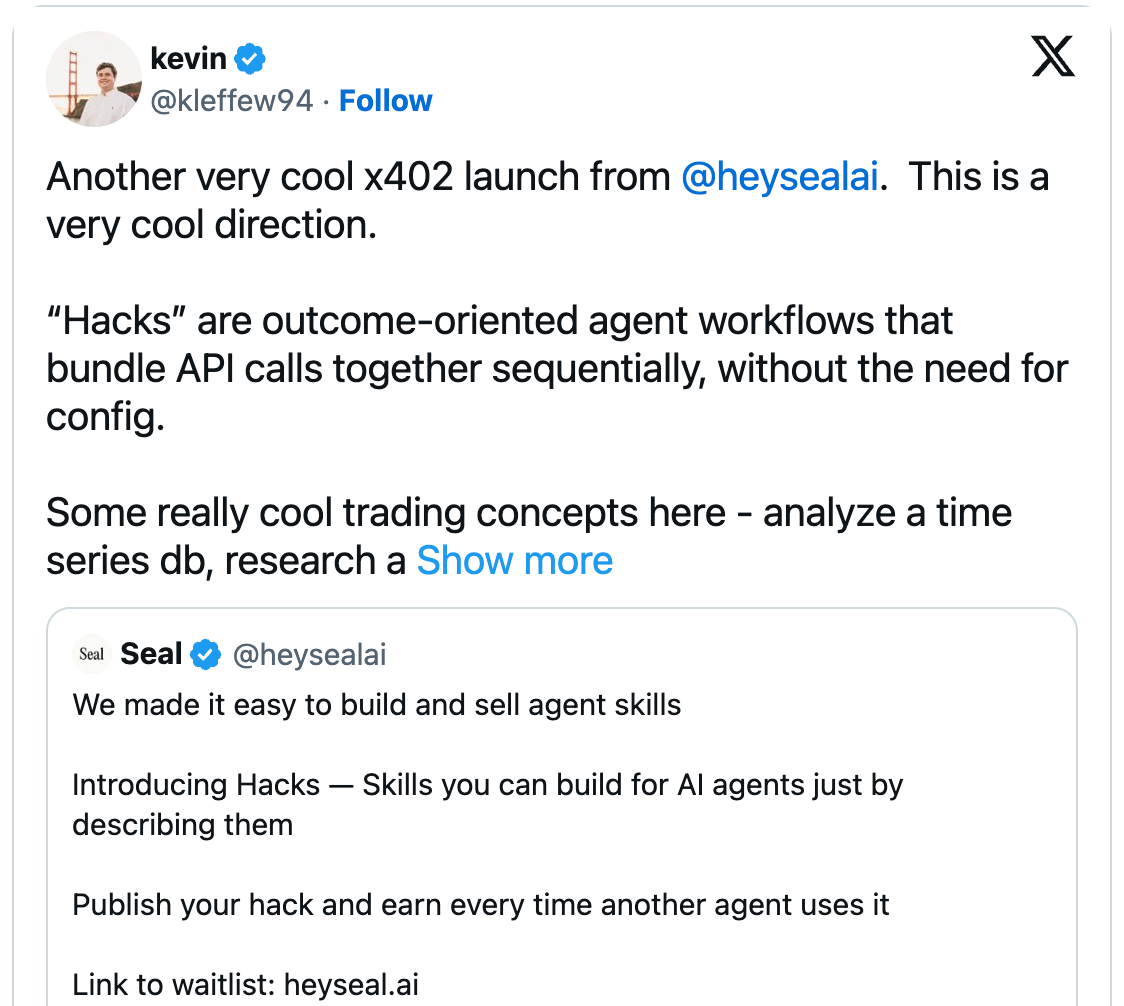
Kevin Leffew, penulis bersama whitepaper x402, membagikan dan mengomentari fitur Hacks yang diluncurkan Seal berdasarkan x402: pengguna hanya perlu mendeskripsikan dengan teks untuk membuat keterampilan otomatisasi agen AI dan menjualnya ke luar, menghasilkan pendapatan per panggilan. Kevin percaya arah ini memiliki prospek yang luas.
Peningkatan Signifikan pada Utilitas Infrastruktur Pembayaran Dasar
Pada tingkat protokol, ada dua pembaruan penting yang sangat krusial:
- Kode Pengenal Pengembang (Builder Codes): Transaksi pembayaran x402 sekarang dapat menandai aplikasi, klien, atau perantara layanan yang memulai pembayaran tersebut. Berdasarkan fungsi ini, sistem bagi hasil dan komisi distribusi dapat dibangun, membuka jalan bagi ekosistem berbagai pasar perdagangan.
- Penyelesaian Batch (Batch Settlement): Tidak perlu menyelesaikan setiap permintaan kecil secara terpisah di rantai. Pembeli hanya perlu mengisi akun mereka terlebih dahulu, mengotorisasi beberapa perilaku pembelian berurutan, dan dana akan dikumpulkan secara terpadu oleh penyedia layanan nanti. Untuk skenario pembayaran mikro frekuensi tinggi seperti inferensi AI dan pencarian informasi, jika diselesaikan per transaksi, biaya dan penundaan tidak layak. Penyelesaian batch membuat model pembayaran mikro frekuensi tinggi menjadi kenyataan.
Selain itu, x402 menambahkan dukungan kompatibilitas untuk lebih banyak bahasa pemrograman dan beberapa rantai blok, pada dasarnya menurunkan ambang batas integrasi bagi berbagai penyedia layanan.
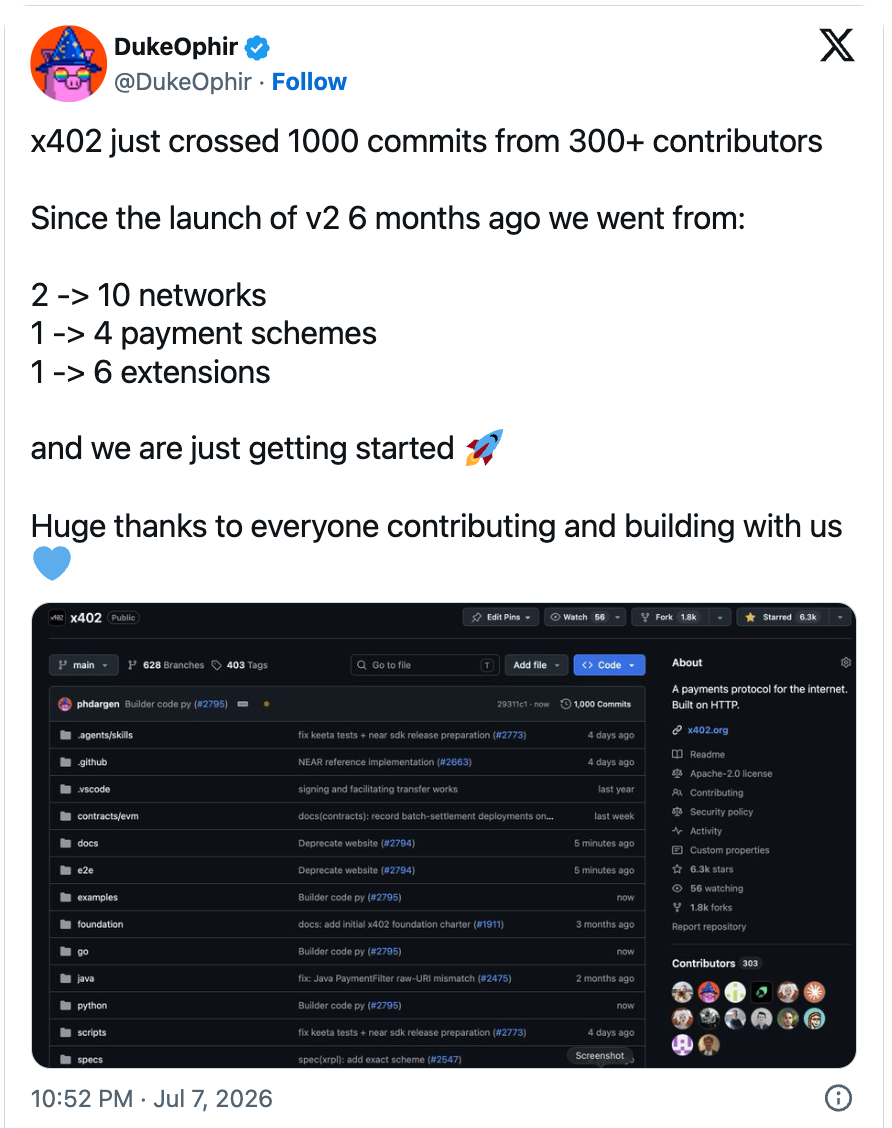
DukeOphir, anggota inti dan pemelihara sebenarnya ekosistem x402, mengumumkan kemajuan pengembangan proyek, jumlah commit kode melampaui 1000, pengembang lebih dari 300 orang, dan berbagai pendukung teknis berkembang pesat dalam setengah tahun sejak peluncuran v2.
Raksasa Internet Arus Utama Memberikan Keuntungan Saluran
Perkembangan dengan dampak terbesar, justru bukan berasal dari industri kripto asli.
AWS meluncurkan skema penagihan lalu lintas AI di simpul tepi. Saat pengguna meminta sumber daya yang dilindungi, simpul tepi AWS dapat mengembalikan harga dan ketentuan pembayaran, memverifikasi kredensial pembayaran, dan kemudian membuka izin akses ke sumber daya. Situs konten atau antarmuka API apa pun yang dihosting di AWS sekarang dapat memperlakukan agen AI sebagai pelanggan berbayar.
Dan sorotan utama datang dari Cloudflare. Pada 1 Juli, gateway monetisasi kontennya secara resmi membuka daftar tunggu. Dengan gateway ini, pelanggan dapat mengenakan biaya untuk semua sumber daya yang dihosting di Cloudflare: konten web, kumpulan data, berbagai API, dan layanan alat semuanya dapat dimasukkan ke dalam cakupan penagihan. Transaksi diselesaikan menggunakan stablecoin melalui x402, dan verifikasi pembayaran dilakukan di simpul tepi.
Monetisasi konten, tepatnya adalah skenario aplikasi inti yang awalnya membuat orang-orang luar optimis tentang x402. Model bisnis internet saat ini sudah tidak seimbang: berbagai bot perayap mendominasi sebagian besar lalu lintas kunjungan. Bot hanya mengambil konten, tidak menghasilkan klik iklan, dan pengelola situs web terus menanggung biaya bandwidth tanpa kompensasi pendapatan. Cloudflare menangani sekitar 20% lalu lintas situs web global, oleh karena itu gateway ini akan menjadi ujian nyata skala besar pertama bagi model di mana bot membayar untuk merayap konten internet.
Pertanyaan terbesar saat ini adalah ekspansi kinerja. CEO Cloudflare secara terbuka mendukung x402 sebagai solusi dalam podcast, tetapi juga menyoroti hambatan inti: kapasitas throughput rantai blok yang ada sementara tidak dapat menangani skala transaksi yang dibutuhkan. Bahkan jika hanya memonetisasi sebagian kecil dari lalu lintas Cloudflare, diperlukan kemampuan pemrosesan jutaan transaksi per detik, jauh melampaui kinerja semua rantai publik yang pernah dia uji. Jurang kinerja ini harus diisi terlebih dahulu.

Sumber: Wawancara Bankless dengan Matthew Prince, Pendiri Bersama & CEO Cloudflare
Lintasan Aplikasi Mana yang Akan Menang?
Saat ini x402 telah muncul beberapa lintasan penerapan.
Perutean inferensi AI tampaknya memimpin dalam skala. BlockRun telah memvalidasi kebutuhan pasar: pengguna ingin mengakses berbagai layanan inferensi secara terpadu, tanpa perlu membuka dan mengelola beberapa akun berlangganan secara terpisah. Lintasan data berkualitas berbayar mengikuti di belakangnya, pengembang bersedia membayar untuk data input berkualitas tinggi, dan data berkualitas tinggi dapat secara signifikan meningkatkan keluaran model besar.
Kedua lintasan ini memiliki kebutuhan yang nyata dan berkelanjutan, tetapi hanya dengan keduanya, masih sulit membuat x402 menjadi komponen dasar yang tak tergantikan untuk internet generasi berikutnya. Sebaliknya, lintasan monetisasi konten memiliki potensi ini. Jika berbagai agen AI perlu membayar untuk konten web yang mereka ambil, skenario ini akan mendorong x402 dari alat yang berguna menuju adopsi massal. Praktik penerapan gateway Cloudflare akan menguji apakah jalur ini dapat berjalan.