# Finance Related Articles

HTX News Center provides the latest articles and in-depth analysis on "Finance", covering market trends, project updates, tech developments, and regulatory policies in the crypto industry.

Hot Interactive Projects Collection | Catena Labs Waitlist Application; DogeOS Launches Points System (May 22nd)

Hot Interactive Compilation: Catena Labs Waitlist Application; DogeOS Launches Loyalty System (May 22) Original | Odaily Planet Daily(@OdailyChina) Author | Asher(@Asher_0210) 1. Catena Labs: AI Financial Infrastructure Catena Labs, an AI financial infrastructure founded by Circle co-founder Sean Neville, aims to build an "AI-native bank" framework enabling AI Agents to conduct payments, transfers, and asset management. It has applied for a New York trust bank charter with the OCC. On May 20th, it announced a $30 million Series A round co-led by Acrew Capital and a16z crypto. Interactive Tutorial: Visit the official website to apply for the waitlist by providing basic personal information. 2. DogeOS: Dogecoin Ecosystem Application Layer DogeOS is building an application development layer on the Dogecoin blockchain to support consumer apps like games and AI, aiming to enhance Dogecoin's ecosystem and DeFi services. On May 6th, it announced a $6.9 million funding round led by Polychain Capital. Interactive Tutorial: Connect your wallet on the official site, link your X and Discord accounts, join communities, and complete tasks to earn points in the new loyalty system. 3. Nof1: AI Research Lab for Financial Markets Nof1 is an AI research lab focused on financial markets, planning to launch a consumer-facing AI agent platform for market coding. On May 15th, it announced a $15 million funding round co-led by SUI Group and Karatage. Interactive Tutorial: Visit the official website and submit your information to join the waitlist.

Odaily星球日报05/22 03:11

Hot Interactive Projects Collection | Catena Labs Waitlist Application; DogeOS Launches Points System (May 22nd)

Odaily星球日报05/22 03:11

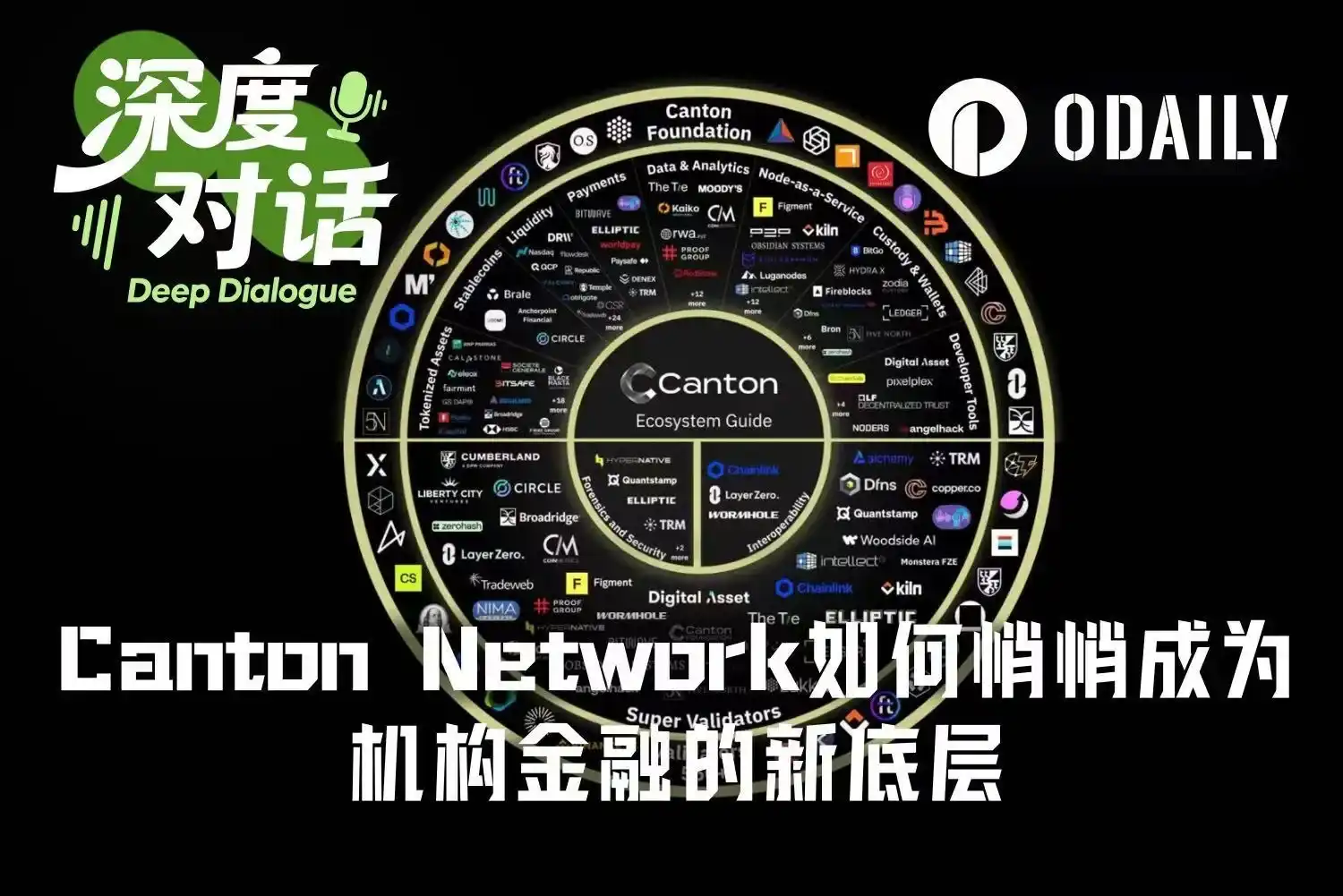
Putting Markets On-Chain: Canton Network Quietly Becomes the New Backbone of Institutional Finance

**Title: Letting the Market Itself Go On-Chain: Canton Network Quietly Becomes the New Backbone for Institutional Finance** **Summary:** The Canton Network, a blockchain platform designed for institutional finance, is gaining significant traction. A key sign of its maturity was Visa's recent entry as a super-validator, a proposal approved in just three days—highlighting prior, extensive collaboration between traditional finance and crypto. Unlike public chains like Ethereum that prioritize transparency and asset onboarding, Canton focuses on enabling confidential, compliant business operations for regulated institutions. Its core design features built-in **data visibility control**, meaning transaction details are only shared between direct counterparties. This privacy is fundamental, allowing competing institutions (like banks Goldman Sachs, JPMorgan, and BNP Paribas, all validators) to interact on the same network without exposing sensitive positions or strategies. Developed by Wall Street veterans at Digital Asset, Canton has taken a slow, deliberate approach to onboard real financial activity. It now handles over **$9 trillion monthly** in transaction volume, primarily from real-world institutional use cases like **tokenized repo agreements**, Treasury settlements, and collateral mobility. Major live applications include **JPM Coin** for institutional payments and **DTCC's tokenized U.S. Treasuries** project. Canton's native token, **CC**, is framed as a "network utility asset" with zero pre-mine or VC allocations. Its value is intended to be driven by the volume of real financial activity on the network. Looking ahead, Canton aims to become the invisible foundational layer for global finance—enabling atomic settlement (where payment and asset delivery occur simultaneously), 24/7 capital flows, and the native issuance and settlement of various asset classes, from corporate bonds to potentially equities. The main challenges are no longer technical but involve navigating fragmented global regulations and integrating with legacy financial systems.

marsbit05/21 14:20

Putting Markets On-Chain: Canton Network Quietly Becomes the New Backbone of Institutional Finance

marsbit05/21 14:20

The World Cup is Approaching: Sports Entering the Era of 'Fragmented Finance'

With the approaching World Cup, sports are entering an era of "fragmented finance." This shift is exemplified by FIFA's new rule requiring debutant players to wear a special "World Cup debut patch." Post-tournament, these patches will be authenticated, cut, and embedded into collectible cards, potentially transforming into high-value assets. The global sports trading card market, valued at over $11.5 billion, represents a sophisticated alternative asset class with deep secondary markets and distinct bull/bear cycles. While football has a massive fanbase, its card market has historically lacked the liquidity and unified narrative of the NBA's system. The NBA's success stems from its centralized, star-driven storytelling—from draft nights to championships—which perfectly fuels financialization. The World Cup patch initiative is FIFA's attempt to create similar "financial raw material" for football. The NBA card market, evolving over 70 years, has matured into a financial ecosystem. After a 1990s crash due to overproduction, the industry rebounded by embracing scarcity: limited editions, autographs, game-worn memorabilia (patches), and serial numbering. Today, it features professional grading (e.g., PSA, BGS), auction platforms, live "break" streams, and dedicated marketplaces, mirroring aspects of cryptocurrency markets with their volatility, speculation, and community-driven trading. The core driver is narrative. A card's value is tied to a specific historic moment or player potential—like Stephen Curry's 1/1 card commemorating his Olympic game-winning shot selling for $518,500. This trade in "ownership of history" or "future greatness" parallels prediction markets, both monetizing collective emotion. Unlike many NFT projects that struggle to generate sustained narratives, sports are a perpetual emotion-generating machine. Leagues like the NBA and UFC constantly produce real-world drama—rivalries, comebacks, and triumphs—that fuels ongoing interest and investment. For younger audiences consuming sports via highlights and social media clips, trading cards become a direct financial instrument for engaging with these narratives. Thus, traditional sports leagues are leading the charge in assetization, leveraging their unique advantages: real events, global fan consensus, and endless storytelling. They are becoming platforms for issuing financial assets, turning fragments of history—a patch, a signature, a moment—into tradable commodities.

Odaily星球日报05/19 10:42

The World Cup is Approaching: Sports Entering the Era of 'Fragmented Finance'

Odaily星球日报05/19 10:42

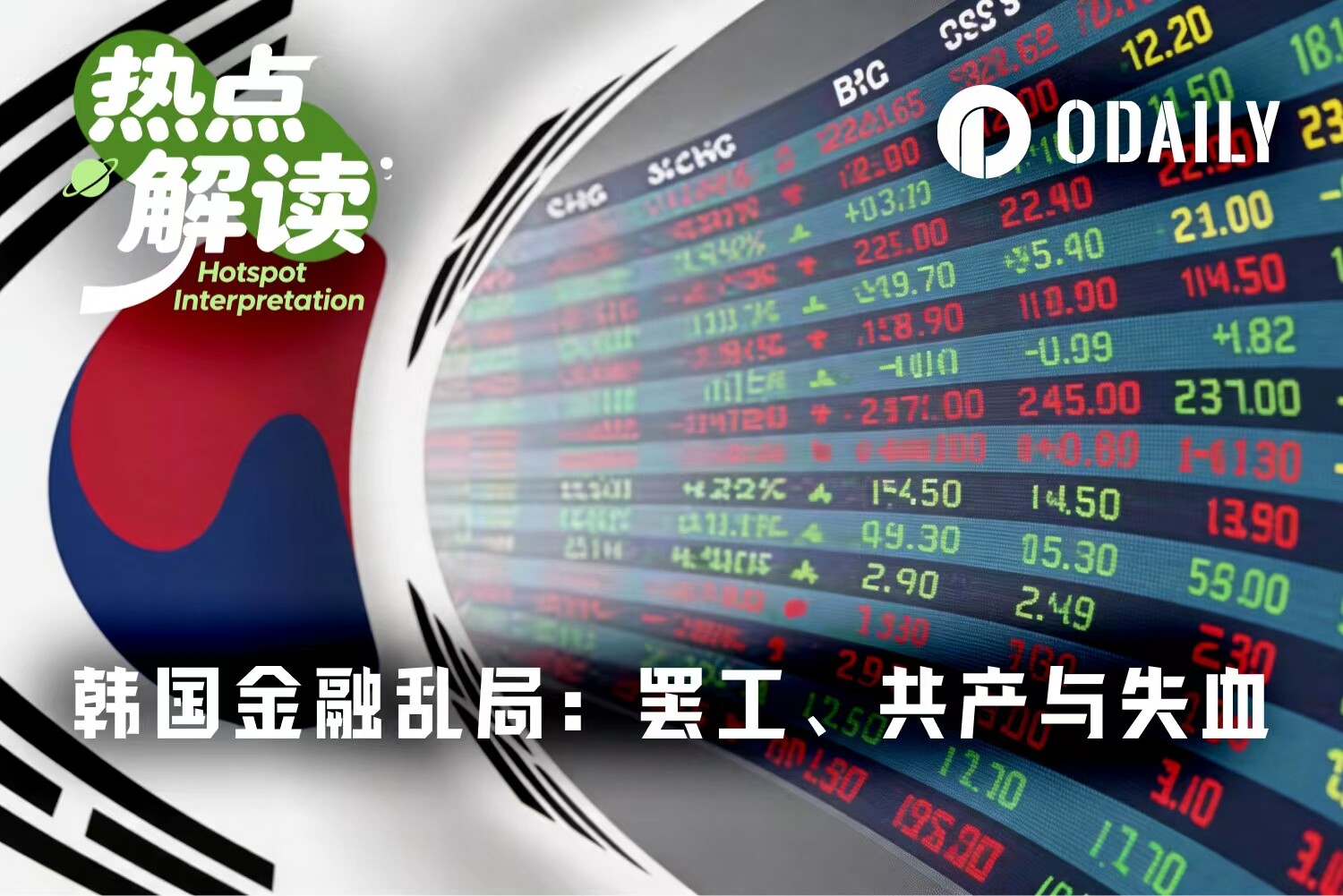
South Korea's Financial Turmoil: Samsung Strike, AI Communism, and Crypto Market Bleeding Out

The South Korean financial market is facing a turbulent period marked by a triple threat: labor unrest at Samsung Electronics, controversial government proposals for redistributing AI profits, and a severe downturn in the cryptocurrency sector. The stability of the "Korean stock market bellwether," Samsung Electronics, is under threat as its largest union plans to strike on May 21st despite a partial court injunction. The government warns a prolonged strike could cause catastrophic losses, highlighting the high stakes for Korea's critical semiconductor industry. Simultaneously, a proposal by a presidential policy chief to redistribute "AI citizen dividends" from excess corporate taxes triggered significant foreign capital outflow and market volatility last week. While clarified as not a direct tax on company profits, the discussion underscores intense debates over wealth distribution in the AI era, where profits are concentrated in a few chip giants like Samsung and SK Hynix. In stark contrast to the booming AI-driven stock market, Korea's cryptocurrency sector is experiencing a dramatic collapse. Major exchanges Upbit and Bithumb reported steep declines in revenue and profits for Q1 2026. The overall crypto market valuation has nearly halved since early 2025, with trading volumes plummeting 74%. This is exacerbated by tightening regulations, including impending crypto taxes, strict anti-money laundering rules, and frozen assets from defunct exchanges affecting nearly 200,000 users. While regulators are tightening risk controls on financial institutions, the situation presents a new era of financial instability for Korea, caught between AI-fueled growth, social equity debates, and a crumbling crypto market.

Odaily星球日报05/18 12:25

South Korea's Financial Turmoil: Samsung Strike, AI Communism, and Crypto Market Bleeding Out

Odaily星球日报05/18 12:25

Blockchain Capital Partner: Most People Have a Narrow Understanding of the On-Chain Economy

Author Spencer Bogart, a partner at Blockchain Capital, argues that most people have a narrow view of the on-chain economy, seeing it primarily as a faster, cheaper version of existing financial systems. While this represents a significant opportunity, he believes it's only a small part of the story. Bogart compares the current state of crypto to the early internet, where email was the obvious "faster mail" application. The truly transformative categories—like search, social media, and cloud computing—were entirely new and unimaginable beforehand. Similarly, the most profound innovations in crypto will not be incremental improvements but entirely new categories enabled by the core properties of public blockchains: atomic execution, shared global state, programmable custody, and composability. He cites the "flash loan" as a prime example of a "new verb"—a financial action structurally impossible before programmable assets and atomic settlement. It allows for uncollateralized, trustless borrowing of any size, provided repayment occurs within the same transaction, enabling novel strategies like arbitrage and collateral swaps. Bogart admits the difficulty in precisely predicting these future innovations, as human imagination tends to extrapolate from the past. He posits that the most exciting applications in ten years will be things that don't exist today and have no precedent—products only possible in a global, composable, always-on environment with programmable assets. While the exploration of this vast design space will involve many failures, the potential for transformative, category-defining breakthroughs is what makes the next decade so promising.

链捕手05/18 02:26

Blockchain Capital Partner: Most People Have a Narrow Understanding of the On-Chain Economy

链捕手05/18 02:26

活动图片