# Finance Related Articles

HTX News Center provides the latest articles and in-depth analysis on "Finance", covering market trends, project updates, tech developments, and regulatory policies in the crypto industry.

Samsung Securities Bets on Upbit: South Korean Financial Capital Fully Embraces Crypto

On May 28th, Samsung Securities announced its investment of approximately 306.3 billion KRW (about $203 million) to acquire a 2% stake in Dunamu, the operator of Upbit, South Korea's largest cryptocurrency exchange. This move signifies a strategic shift as South Korea's traditional financial capital begins to formally embrace the crypto industry, potentially heralding a deeper integration between the two sectors. South Korea has long been a vibrant crypto market, with Upbit dominating local trading volumes. However, a regulatory policy known as "separation of finance and virtual assets" had previously limited traditional financial institutions' direct involvement. Recent signals from regulators about potentially relaxing these rules have opened the door for deeper engagement. Samsung Securities' investment is seen as a strategic move to secure a foothold in the next generation of digital finance ahead of this expected liberalization. The investment reflects a broader anxiety among traditional Korean financial institutions about evolving financial landscapes. As financial activities increasingly migrate on-chain and younger users gravitate towards crypto and digital assets, platforms like Upbit are evolving from simple trading venues into core nodes for future financial networks—encompassing roles like new-age brokerages, asset issuance platforms, and payment gateways. By investing in Dunamu, Samsung Securities is not only gaining exposure to a profitable entity but also securing access to Upbit's vast user base, liquidity, and its position as a key entry point into Korea's Web3 ecosystem. This trend mirrors developments in the United States, where traditional finance has increasingly adopted crypto through instruments like Bitcoin ETFs and digital asset custody services. Analysts predict that South Korea may follow a similar path: witnessing broader traditional finance entry into virtual assets, further "financialization" of crypto exchanges, and potentially emerging as a significant on-chain financial hub in Asia, leveraging its strong retail investor base and active trading culture. In essence, Samsung Securities' stake in Upbit is less a simple financial investment and more a strategic acquisition of a seat at the table in South Korea's evolving digital financial order. It underscores a growing consensus that the future of finance may not be a battle between traditional systems and crypto, but rather the comprehensive on-chain integration of traditional finance.

marsbit05/29 01:29

Samsung Securities Bets on Upbit: South Korean Financial Capital Fully Embraces Crypto

marsbit05/29 01:29

CEO's Unexpected Passing: Will ONDO's 'Tokenization Narrative' Change?

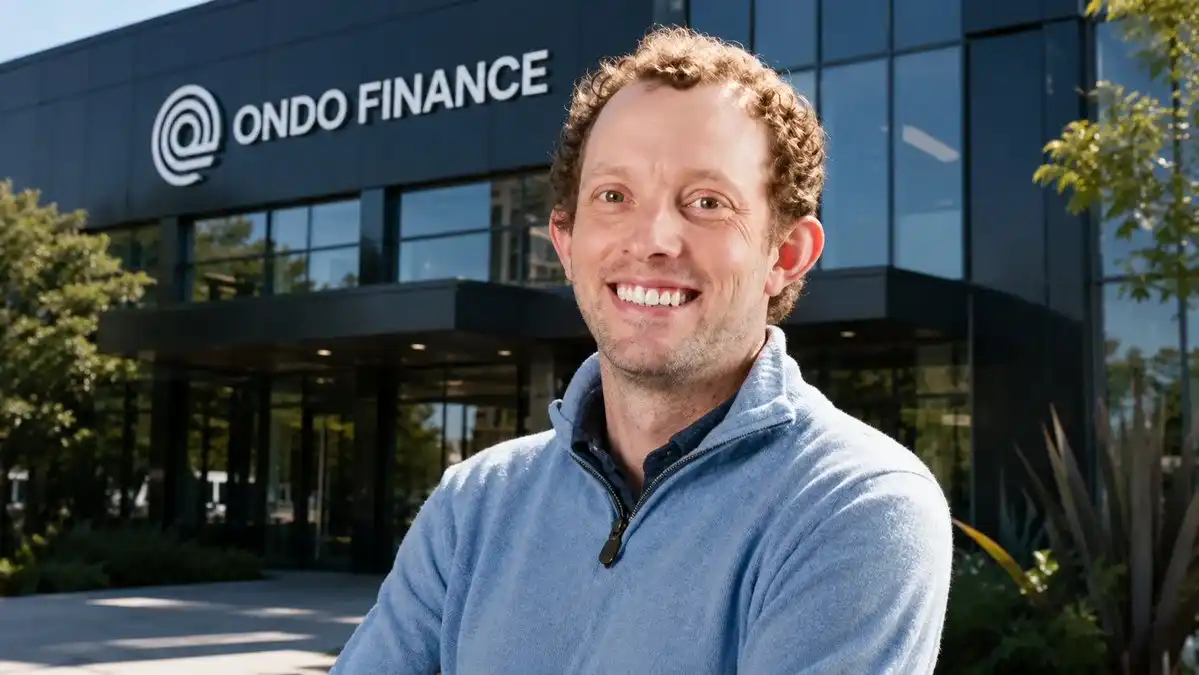
Ondo Finance, a leading project in the RWA (Real World Assets) and tokenization space, faces a significant challenge following the unexpected passing of its founder and CEO, Nathan Allman. Known for his traditional finance background and pivotal role in shaping Ondo's strategy, Allman was central to its evolution from a DeFi structured yield platform to a key player tokenizing assets like US treasuries, stocks, and ETFs. The company announced that President Ian De Bode, a former McKinsey partner with deep experience in digital assets and corporate strategy, will assume the CEO role. The leadership transition presents a critical test for Ondo. While Allman's vision and execution were instrumental in establishing its "tokenization narrative," the project's medium to long-term trajectory will depend on the existing team's ability to maintain business continuity. Analysts note short-term concerns regarding vision continuity, institutional partnerships, and market sentiment for the ONDO token. However, Ondo has built a substantial product suite (OUSG, USDY, Ondo Global Markets) and a management team with strong traditional finance credentials. De Bode's background in strategy and execution may align well with the next phase of RWA growth, which focuses heavily on compliance, scaling, and institutional adoption. Ultimately, the event shifts focus to whether Ondo is a founder-driven story or a sustainable financial infrastructure. Its future as a "first tokenization asset" will be determined by the new leadership's success in delivering product growth, asset scaling, and real-world demand, rather than narrative alone.

marsbit05/26 12:35

CEO's Unexpected Passing: Will ONDO's 'Tokenization Narrative' Change?

marsbit05/26 12:35

The Standard-Bearer of a Trillion-Dollar Industry Falls on the Eve of Victory

Ondo Finance CEO Nathan Allman, a key figure in the RWA (Real World Assets) sector, has passed away unexpectedly. The company announced on May 26, 2026, that longtime president Ian De Bode will succeed him as CEO. Allman, a former Goldman Sachs digital assets executive, founded Ondo Finance in 2021. The company became a leader in tokenizing securities, starting with U.S. Treasury funds (OUSG/USDY) and expanding to a platform for tokenized U.S. stocks and ETFs (Ondo Global Markets). Its total value locked (TVL) surpassed $4 billion, capturing about 58% of the tokenized stock market. A major focus for Allman was navigating regulatory challenges. He personally led engagements with the SEC, which later closed a confidential investigation into Ondo without charges. Recently, Ondo achieved significant milestones: obtaining an SEC no-action letter for tokenized securities on Ethereum, partnering with DTCC in its tokenization initiative alongside BlackRock and Goldman Sachs, and completing a pilot for near-instant cross-border redemption of tokenized Treasuries with J.P. Morgan, Mastercard, and Ripple. The company emphasized that De Bode, a former McKinsey digital assets lead who has overseen strategy and operations for over two years, has the full support of the management team to continue Allman's vision. The ONDO token saw a relatively muted market reaction, dropping approximately 6% following the news.

marsbit05/26 04:15

The Standard-Bearer of a Trillion-Dollar Industry Falls on the Eve of Victory

marsbit05/26 04:15

The Five Value Logics Behind Enterprises Selling Bitcoin

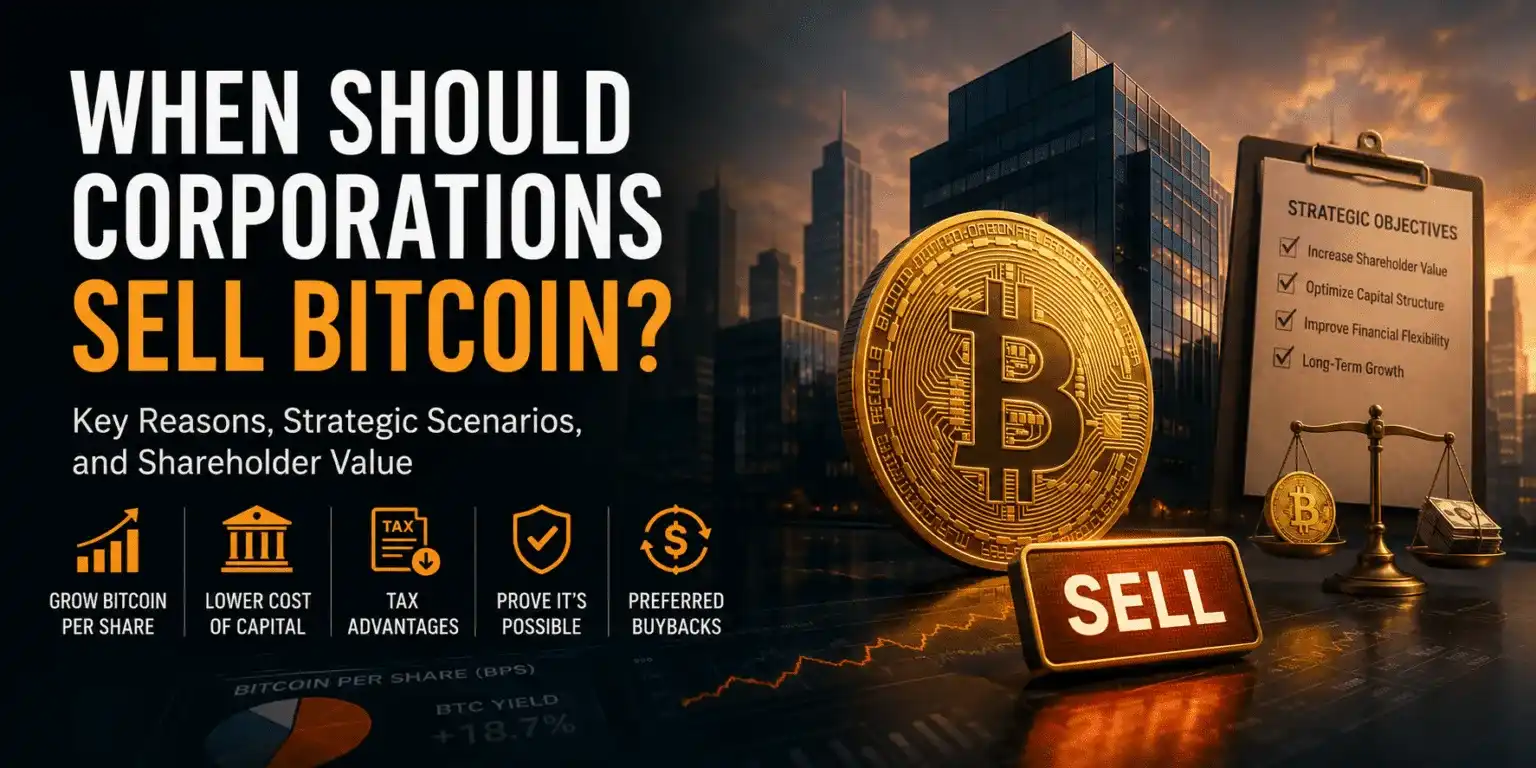
"Five Value Logics Behind Corporate Bitcoin Sell-offs" Recent news of Strategy company considering selling part of its bitcoin holdings to meet operational goals sparked market discussions, challenging its previous "never sell" stance. While long-term holding aligns with crypto investment philosophy, selling bitcoin can be a rational corporate decision aimed at maximizing shareholder value, unlike personal sales for life improvements. For instance, in Q1 2026, miners sold 25,376 BTC to fund a pivot into AI, deeming it a higher-return investment. For treasury-holding firms like Strategy, selling bitcoin can create value through five key logics: 1. **Increasing Bitcoin Per Share:** The core metric is bitcoin per share. If a company's stock trades below its bitcoin asset value, selling BTC to buy back shares can increase this ratio, as the reduction in shares outstanding outweighs the BTC sold. Similarly, using BTC proceeds to cover fixed costs like dividends during stock undervaluation minimizes the dilution of bitcoin per share. 2. **Optimizing Capital Structure & Lowering Financing Costs:** Credit ratings significantly influence financing costs. Rating agencies like S&P value cash reserves. By selling bitcoin to boost cash, companies can meet capital market expectations, secure better ratings, and issue debt at lower costs. Reducing debt through BTC sales also improves the appeal of preferred stock. Lower interest rates compound over time, boosting profits. 3. **Legitimate Tax Planning:** The US currently has no wash-sale rules for bitcoin. Companies can sell to realize a book loss, immediately repurchase at a lower cost basis, and use the loss to offset taxes—a strategy Strategy used in 2022's bear market. This can be combined with stock buybacks or debt repayment for multiple benefits. 4. **Dispelling Market FUD (Fear, Uncertainty, Doubt):** Negative narratives claim large corporate BTC sales could crash the market or invalidate the treasury model. A controlled sale (e.g., 50,000 BTC) without causing major market or stock price volatility could debunk such myths, helping the market accept bitcoin as a corporate asset. This reason is the most subjective of the five. 5. **Buying Back Preferred Stock at a Discount:** This lesser-known strategy involves repurchasing a company's own floating-rate preferred stock when it trades significantly below its par value. For example, if a $100-par security like STRC trades at $82, selling bitcoin to buy it back yields an $18 per-share, tax-free profit. Price drops may occur due to leveraged trading cascades, unrelated to BTC's price. Repurchasing avoids future increased dividend costs. In conclusion, corporate bitcoin sales should not be automatically viewed as bearish. In many scenarios, they protect the interests of the company and its shareholders. Bitcoin's monetary properties offer flexible capital allocation; using the asset rationally unlocks its maximum value.

marsbit05/22 10:15
The Five Value Logics Behind Enterprises Selling Bitcoin

marsbit05/22 10:15

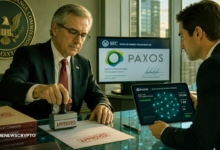
Financial Changes under the New SEC Rules: Opportunities and Regulatory Red Lines Behind "Tokenized Stocks"

The article discusses the emergence of "Tokenized Stocks" following the U.S. SEC's proposed "innovation exemption" framework, which could allow some assets to be traded on blockchain. It clarifies key misconceptions for investors, particularly those in China. Firstly, it emphasizes that most "tokenized stocks" currently offered by third-party crypto platforms are synthetic assets, not actual equity. Purchasers do not gain shareholder rights like dividends or voting; instead, they hold a derivative contract dependent on the issuing platform's credit and its ability to track the underlying stock's price. The article examines the risks of 24/7 trading, a major selling point. It notes the absence of circuit breakers, which could lead to sudden, unrecoverable losses during off-hours market shocks. It also warns of liquidity traps and high volatility due to the market's currently small size. It reveals that the primary drivers are institutional players like BlackRock and JPMorgan, who are focused on using blockchain for efficiency gains in areas like treasury settlements (T+0), not retail speculation. For Chinese readers, it strongly cautions that platforms offering "easy" access to U.S. stocks via tokens with RMB likely violate strict domestic regulations on cross-border securities and virtual currencies, offering no legal protection. The conclusion offers practical advice: use legal channels like QDII for long-term investment, be wary of high-return promises, monitor evolving regulations like the U.S. CLARITY Act, and prioritize compliance and risk management over chasing innovation. The SEC's move is framed as a strategic experiment in financial tech leadership, but for individual investors, understanding the risks and regulatory boundaries is paramount.

链捕手05/22 05:42

Financial Changes under the New SEC Rules: Opportunities and Regulatory Red Lines Behind "Tokenized Stocks"

链捕手05/22 05:42

活动图片