Сооснователь Ethereum Виталик Бутерин заявил, что сеть эффективно «решила» блокчейн-трилемму: децентрализацию, консенсус и высокую пропускную способность, утверждая, что недостающие компоненты теперь работают в основной сети или находятся в пределах досягаемости по мере того, как виртуальные машины Ethereum с нулевым разглашением (ZK-EVM) приближаются к производственному использованию.
В публикации от 3 января в X Бутерин охарактеризовал момент двумя техническими разработками: PeerDAS, который, по его словам, уже работает в основной сети Ethereum, и ZK-EVM, которые он описал как находящиеся на «альфа-стадии» с «производственным качеством производительности», в то время как «оставшаяся работа — это безопасность».
«Это не мелкие улучшения; они превращают Ethereum в принципиально новый и более мощный вид децентрализованной сети», — написал Бутерин. «Чтобы понять почему, давайте посмотрим на два основных типа p2p-сетей, существующих на данный момент».
Бутерин провел contrast между ранними одноранговыми системами, которые могли масштабировать пропускную способность, но не имели соглашения об общем состоянии, и блокчейнами, которые достигли надежного консенсуса, но заплатили за это ограниченной пропускной способностью. Он указал на BitTorrent как на модель децентрализованного распределения без консенсуса и на Bitcoin как на модель децентрализации и консенсуса, которая поддерживает низкую пропускную способность, потому что «это не «распределение» в смысле разделения работы, это репликация».
Ethereum решит блокчейн-трилемму
По словам Бутерина, утверждение заключается в том, что Ethereum вступает в третью категорию. «Теперь, Ethereum с PeerDAS (2025) и ZK-EVM (ожидается, что небольшие части сети начнут использовать его в 2026), мы получаем: децентрализацию, консенсус и высокую пропускную способность», — сказал он. «Трилемма решена — не на бумаге, а работающим кодом, одна половина которого (сэмплирование доступности данных) уже сегодня в основной сети, а другая половина (ZK-EVM) сегодня имеет производственное качество по производительности — осталось обеспечить безопасность».
Бутерин представил это как кульминацию многолетнего плана развития, а не как внезапный прорыв. Он описал это как «10-летнее путешествие», оглянувшись на ранние исследования сэмплирования доступности данных и отметив, что работы над ZK-EVM начались около 2020 года. Суть его аргументации заключается в том, что сэмплирование доступности данных меняет то, что децентрализованная сеть может безопасно публиковать и проверять в больших масштабах, в то время как ZK-EVM меняют то, как узлы могут проверять выполнение, смещая валидацию в сторону проверки на основе доказательств по мере созревания технологии.
Глядя вперед, Бутерин изложил приблизительные временные рамки того, как, по его ожиданиям, это видение будет реализовываться в течение следующих четырех лет. В 2026 году он ожидает «большого увеличения лимита газа, не зависящего от ZKEVM», связанного с BALs и ePBS, наряду с тем, что он описал как первые возможности запустить узел ZK-EVM.
С 2026 по 2028 год он anticipates последовательность изменений, пересмотра цен на газ, корректировок структуры состояния, перемещения payload выполнения в blob'ы и других шагов, направленных на обеспечение безопасности более высоких лимитов газа. В период с 2027 по 2030 год он ожидает «дальнейшего значительного увеличения лимита газа», при этом ZK-EVM станут «основным способом проверки блоков в сети».
Он также отметил то, что он назвал «третьим элементом» головоломки: распределенное построение блоков. Долгосрочная цель, написал он, — это мир, в котором «полный блок никогда не формируется в одном единственном месте», хотя он подчеркнул, что это «не будет необходимо в течение долгого времени». Ближайшая задача — распределение «значительных полномочий в построении блоков», либо с помощью внутрипротокольных механизмов — он предложил расширить FOCIL как основной канал транзакций — либо с помощью внепротокольных систем, таких как распределенные маркетплейсы сборщиков (builders).
Для Бутерина распределенное построение блоков — это не просто инженерное предпочтение, но вопрос рисков и справедливости: он argued, что это уменьшит вероятность «централизованного вмешательства в включение транзакций в реальном времени», одновременно создавая «лучшие условия для географической справедливости».
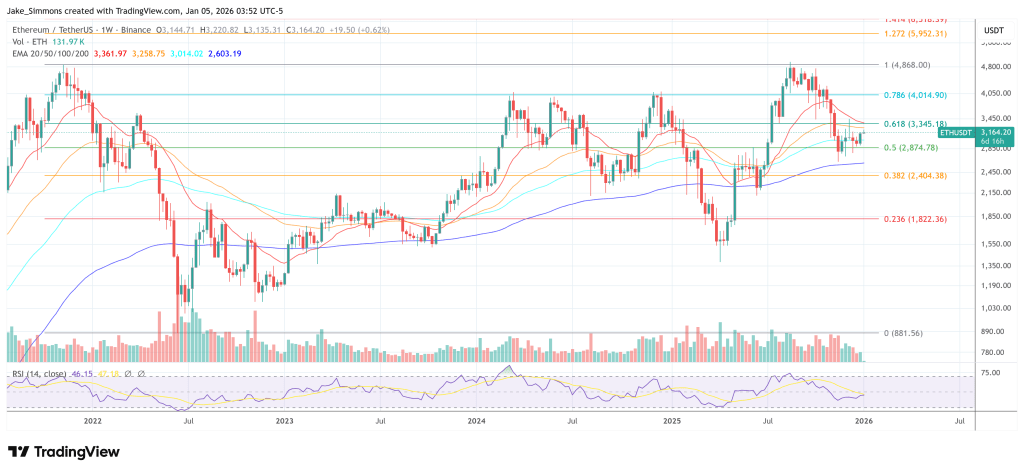
На момент подготовки статьи ETH торговался на уровне $3164.