# Сопутствующие статьи по теме SpaceX

Новостной центр HTX предлагает последние статьи и углубленный анализ по "SpaceX", охватывающие рыночные тренды, новости проектов, развитие технологий и политику регулирования в криптоиндустрии.

Zhou Hang: How Much Is SpaceX Really Worth?

**Zhou Hang: How Much is SpaceX Really Worth?** SpaceX, arguably one of the greatest industrial companies of the past 50 years, is reportedly targeting a staggering $1.75 trillion valuation in its potential IPO. However, the author argues this figure is inflated by approximately $1.25 trillion when assessed through standard financial metrics. The analysis begins by acknowledging SpaceX's undeniable success: drastically reducing launch costs, achieving near-monopoly in commercial launches, and building the strategic Starlink network. Its achievement surpasses even Tesla's, given it disrupted a state-monopolized industry. Despite this greatness, a $1.75 trillion valuation places SpaceX above the combined market cap of Boeing, Lockheed Martin, Northrop Grumman, RTX, and General Dynamics. Projecting optimistic 2030 revenues of $50-80 billion and applying generous tech-sector multiples yields a "reasonable" valuation range of $500 billion to $1.2 trillion. The $1.25 trillion gap is attributed to three non-financial premiums: 1. **Long-term vision premium** for future Starship-enabled markets (e.g., space-based computing). 2. **Sovereign asset/strategic premium**, as SpaceX is deeply integrated into U.S. national security. 3. **Retail narrative/Musk cult premium**, driven by a heroic story and personal following. Post-IPO, three scenarios are outlined: valuation solidifying (25% probability), sideways volatility as narrative outpaces reality (50%), or a re-rating down to $800B-$1.2T if execution falters or Musk-related risks emerge (25%). The probability-weighted expected value is $1.3-1.5 trillion, suggesting negative expected returns for those buying at the IPO price. The conclusion advises investors to separate the company's excellence from its stock price. Buying at the IPO likely prices in excessive optimism. A more prudent strategy would be to wait for key milestones (e.g., Starship V3 stability) or a significant price correction before investing, or to treat an early purchase as a long-term, high-conviction hold with limited position size, not a short-term bet.

链捕手06/02 02:12

Zhou Hang: How Much Is SpaceX Really Worth?

链捕手06/02 02:12

SpaceX's $1.75 Trillion IPO: A Quick Guide to 17 Related Stocks

**Title: SpaceX's $1.75 Trillion IPO: Analysis of 17 Related Stocks** SpaceX is set to IPO on Nasdaq with a $1.75 trillion valuation. The real value driver is Starlink, contributing 61% of Q1 revenue with high margins. Its valuation heavily depends on future execution, including user growth despite falling ARPU. Key stocks have already surged pre-IPO. Tesla (TSLA, +10%) is a primary beneficiary due to deep integration with SpaceX in chip design and AI. Rocket Lab (RKLB, +89%) is seen as a "mini-SpaceX," but faces risk from potential Neutron rocket delays. AST SpaceMobile (ASTS) competes in the same satellite-to-phone market as Starlink. Firefly (FLY, +70%) is a strong government contractor in lunar services. Partners like EchoStar (SATS), Planet Labs (PL), and T-Mobile (TMUS) will see revaluation. Suppliers like Qualcomm (QCOM, +57%) are critical ecosystem "picks and shovels." Investment vehicles like DXYZ (+80%) hold significant SpaceX stakes but trade at high premiums, which may collapse post-IPO. Redwire (RDW) is highlighted as an under-the-radar "pick and shovel" play in space components, with growth in defense contracts and microgravity pharmaceuticals. The article warns that much of the positive news is already priced in, and a post-IPO sell-off is possible. Large IPOs often underperform initially. Key risks include Starship delays, ARPU decline, and unforeseen black swan events affecting Elon Musk or space operations. Investors are advised to focus on companies with solid fundamentals and manage overall sector exposure carefully.

marsbit05/28 09:12

SpaceX's $1.75 Trillion IPO: A Quick Guide to 17 Related Stocks

marsbit05/28 09:12

Conversation with VanEck CEO: Memory Chip Stocks Are a Bubble, Bitcoin Will Stay but Token Ecosystems Will Disappear

In this podcast, VanEck CEO Jan van Eck discusses his investment outlook centered on three key long-term ("10-year macro") themes: AI-driven compute demand, India's economic rise, and excessive government debt in developed nations. Regarding AI and semiconductors, van Eck believes Nvidia has transformed into a foundational "host" for AI infrastructure, possessing deep moats in software, scale, and power efficiency, making it a core holding. However, he views the recent surge in memory chip stocks as a bubble driven by temporary supply-demand imbalances and pricing power, lacking Nvidia's competitive durability. On asset management, he emphasizes that while ETFs are scale-driven tools, the decisions on which ETFs to own and how to allocate remain highly active. He expresses greatest concern over fixed-income market illiquidity and the risk of a loss of confidence in government debt sustainability. Van Eck is bullish on gold's long-term role as a global monetary alternative and highlights the dramatic policy-driven growth in nuclear energy investment. He is strongly positive on India due to its demographic trends and pro-business reforms. Discussing crypto, he labels 2026 the "year of the corporate-controlled chain," where traditional finance adopts blockchain's best features (like 24/7 operation and programmability) but retains control. He predicts a permanent "crypto winter" for many projects, with only Bitcoin, stablecoins, and the core blockchain concept surviving long-term. He sees the U.S. stablecoin bill as marginally impactful, enabling tech firms to compete with, but not replace, banks. Finally, he views the upcoming SpaceX IPO as a significant, positive liquidity event for markets and advises investors to maintain a long-term, macro perspective when making asset allocation decisions.

marsbit05/28 09:01

Conversation with VanEck CEO: Memory Chip Stocks Are a Bubble, Bitcoin Will Stay but Token Ecosystems Will Disappear

marsbit05/28 09:01

Elon Musk's 'Granny Drain'

Title: Musk "Milking the Old Folks" Author: Nancy, PANews As the memory sector surges with Micron and SK Hynix each surpassing a trillion-dollar market cap, Elon Musk is accelerating his own myth of becoming the world's first trillionaire. SpaceX, with its astronomical valuation, is speeding toward the capital markets. This potentially wealth-history-rewriting super IPO is pushing Musk toward that unprecedented personal fortune and delivering hundredfold or even thousandfold returns to early backers like Google, Valor Equity Partners, Founders Fund, and others. However, to sustain this most expensive space narrative in human history, new buyers are ultimately needed. As massive pension funds are set to be "forced to buy," the retirement savings of Americans are becoming the fuel for Musk's space dreams. Wall Street has begun paving a fast track for such super IPOs. Major indices like Nasdaq and S&P have recently eased rules, allowing mega-companies like SpaceX to be incorporated into key benchmarks like the Nasdaq 100 much faster post-listing. This matters because a vast portion of the U.S. retirement system—trillions in 401(k)s and pension funds—relies on passive index investing. Once a company enters a major index, all funds tracking it are compelled to buy its shares automatically, regardless of valuation, profitability, or risk. This has sparked significant backlash. Teacher unions and major public pension funds (collectively managing trillions) have warned the SEC and written to Musk, opposing SpaceX's extreme governance structure where Musk holds 85% voting control. They argue workers' lifelong savings could be tied to a company resembling a Musk family office more than a transparent public entity. In essence, after early investors reap immense rewards, the potential "bag-holding" cost is being transferred onto passive investors—the ordinary American retirees—through the mechanism of index inclusion.

marsbit05/28 07:07

Elon Musk's 'Granny Drain'

marsbit05/28 07:07

From Mining Pool to Mars: Why Is Wang Chun in the SpaceX Cockpit?

Title: From Mining Pool to Mars: Why Wang Chun is in the SpaceX Cockpit? When SpaceX announced that Wang Chun, co-founder of F2Pool, would command the first commercial crewed interplanetary mission, many were shocked. Why would a Bitcoin mining pool founder be on a Mars mission roster? However, understanding Wang Chun's journey over the past decade and the deepening ties between the crypto industry and SpaceX reveals this is not accidental, but an inevitable result of a new era taking shape. Today's Mars plan is no longer just a space engineering project; it is evolving into a civilization-upgrading experiment driven by global tech capital, AI, computing power, energy, and the crypto economy. Wang Chun stands precisely at the intersection of these forces. Part 1: From F2Pool to SpaceX – Wang Chun's Leap F2Pool, founded when Bitcoin was still niche, is one of the earliest large-scale mining pools and once held a significant share of global Bitcoin hash rate. Wang Chun belongs to the first generation of Chinese Bitcoin advocates and infrastructure builders—idealists and engineers who believed in a new value network independent of traditional finance. Miners like him built the hardware, energy, and computing power foundational to decentralized networks. This aligns with the long-term, high-engineering, future-oriented vision required for space civilization. Elon Musk’s space endeavors value such long-term builders over mere capital players, which explains Wang Chun's entry into the SpaceX ecosystem. Part 2: Why Crypto and SpaceX Are Growing Closer The core of global tech competition is shifting from internet applications to next-generation infrastructure. Both crypto and SpaceX are part of this. SpaceX's goal is to drastically reduce space access costs. If successful, it could enable orbital servers, space-based energy, global satellite internet, and Martian bases. These new frontiers will require new payment systems, value networks, and global financial architectures. Cryptocurrencies, inherently global and trustless, are poised to become key to off-planet economies. Moreover, crypto and SpaceX share a high-risk, long-termist ethos—believing in ambitious, world-changing goals despite early skepticism. Part 3: Human Spaceflight Enters the Commercial Era Space exploration, long dominated by state actors, is now being transformed by commercial entities like SpaceX. Wang Chun's involvement signifies that future deep-space participants may include not just career astronauts, but also entrepreneurs, engineers, and AI researchers. This mirrors the Age of Exploration, where commercial capital eventually drove global expansion. Wang Chun has emphasized that Mars colonization must not be delayed for future generations, countering a potential over-focus on nearer-term, commercial lunar projects. His presence symbolizes how new capital, technical communities, and idealists from the crypto world are now entering the interstellar age. In summary, the true significance is not an individual's journey to Mars, but the shift in the driving force of human civilization expansion from state machinery to tech companies, AI systems, and global technology capital. Wang Chun's path—from mining pool to Mars, from the Bitcoin network to starships—may be a preview of technological civilization's evolution in the coming decades.

marsbit05/26 14:46

From Mining Pool to Mars: Why Is Wang Chun in the SpaceX Cockpit?

marsbit05/26 14:46

Raised $1.3 Billion in Seven Weeks, Yet SpaceX's Weighting Halved: The Dilution Trap of the NASA ETF

A new ETF named NASA, launched just seven weeks ago, has rapidly become the world's largest space-themed fund, amassing $1.3 billion in assets. Its primary draw is its unique position as a "pure" space ETF holding SpaceX stock through a special purpose vehicle (SPV). However, its exposure to SpaceX has been drastically diluted from 10.3% to 4.6% due to a massive, rapid inflow of investor cash. New money is forced into buying other public space stocks like Rocket Lab, meaning investors seeking SpaceX exposure end up with a portfolio of other companies. Further complications arise from the SPV's valuation mechanism, which only updates during specific manager trades, potentially lagging behind SpaceX's market price. This SPV will also face a six-month lock-up post-IPO, preventing investors from selling that portion if SpaceX shares drop after listing. The article highlights a valuation bubble in the broader space sector, with stocks like Planet Labs surging nearly 1000% in a year, driven more by the "SpaceX IPO narrative" than underlying fundamentals. Meanwhile, SpaceX's own financials show significant losses in 2024, and its record-breaking IPO valuation bundles its space business with other Musk assets like xAI, creating a complex investment proposition. The core warning is that the NASA ETF essentially uses SpaceX as bait but delivers a different product. The real beneficiaries may be the ETF issuers collecting high fees, while investors face dilution and hidden risks ahead of SpaceX's historic IPO on June 12th.

marsbit05/25 08:34

Raised $1.3 Billion in Seven Weeks, Yet SpaceX's Weighting Halved: The Dilution Trap of the NASA ETF

marsbit05/25 08:34

An AI Read SpaceX's Prospectus and Wrote This Investment Memo in 12 Minutes

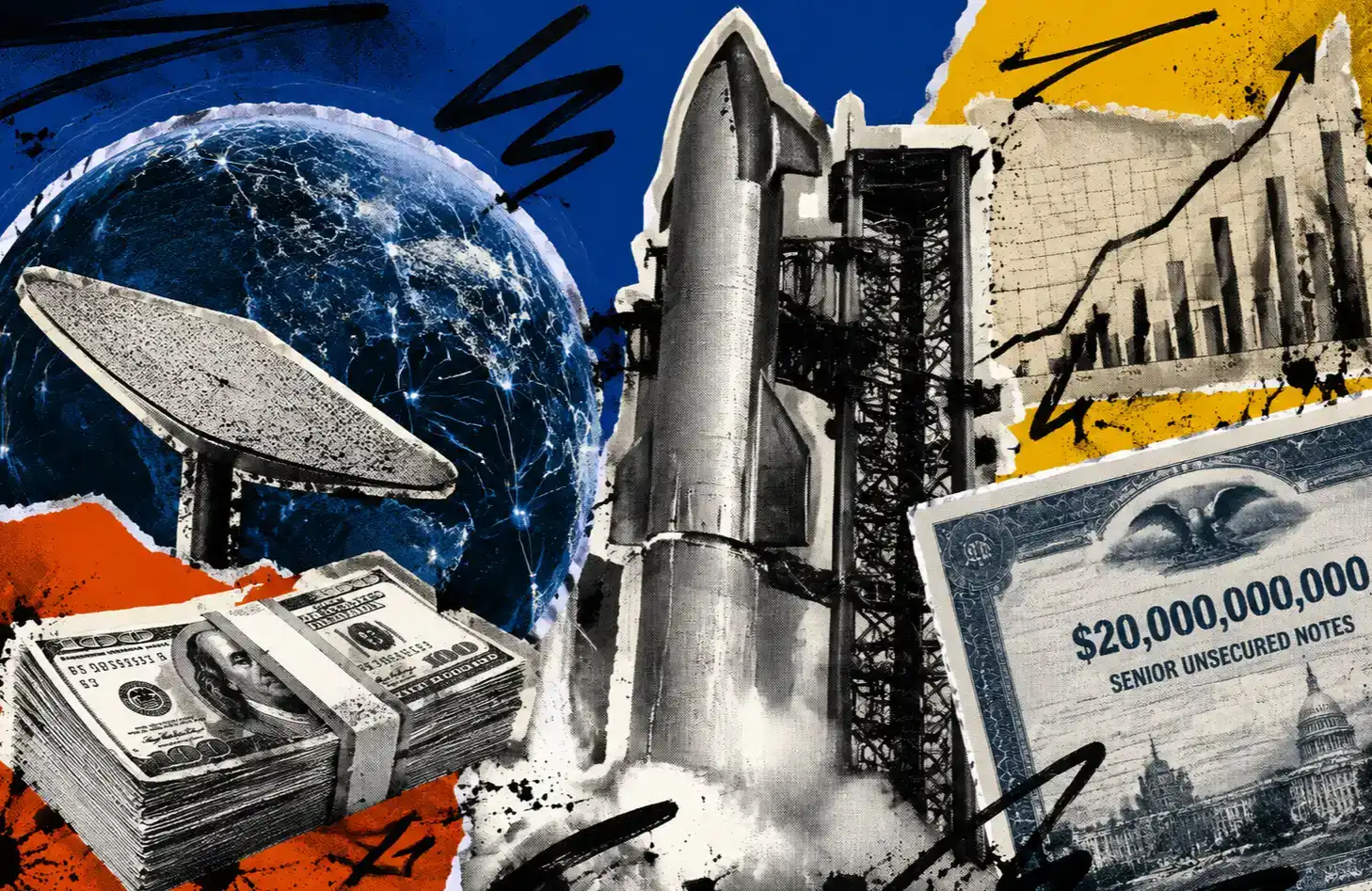
An AI agent autonomously analyzed SpaceX's 226MB S-1 filing, purchased real-time market data on-chain for $1.87, and generated a comprehensive investment memo in 12 minutes. The memo concludes a "Hold" recommendation. Bull Thesis: SpaceX holds a near-monopoly in commercial launch (80% of global orbital mass since 2023), operates the profitable Starlink business (10.3M subscribers, $7.2B adj. EBITDA), and is vertically integrated from rockets to AI via the xAI acquisition. Starlink alone is a standout, high-margin business. Bear Thesis: The AI division is a massive cash burn ($6.4B operating loss on $3.2B revenue in 2025). True debt obligations approach ~$42B, not the headline $29B, due to bridge loans and X-related debt. Significant contingent liabilities exist, including a potential $10B fee from a Cursor option agreement. The company faces concentrated counterparty risk (e.g., a $45B Anthropic contract), slowing revenue growth, and complex governance as a controlled company with four share classes. Valuation anchors Starlink's standalone value at ~$84B (applying Iridium's 7.4x sales multiple), suggesting the current ~$500B+ IPO target prices in immense future execution risk for Starship and AI. Key risks include Starship delays, accelerating AI losses, and underwriter conflicts (the IPO's lead banks are also lenders on the $20B bridge loan it aims to refinance). Investment triggers: upgrade to "Overweight" if priced ≤$350B and Starship meets milestones; downgrade to "Pass" if priced >$510B or key risks materialize.

marsbit05/25 04:23

An AI Read SpaceX's Prospectus and Wrote This Investment Memo in 12 Minutes

marsbit05/25 04:23

活动图片