Автор: Shayon Sengupta
Компиляция: Deep Tide TechFlow
Введение Deep Tide: Партнер Multicoin Capital Шайон Сенгупта выдвинул революционную точку зрения: в будущем не только агенты будут работать на людей, но, что более важно, люди будут работать на агентов. Он прогнозирует, что в ближайшие 24 месяца появится первая «компания с нулевым числом сотрудников» (Zero-Employee Company) — управляемые токенами агенты привлекут более 10 миллиардов долларов для решения нерешенных проблем и распределят более 100 миллионов долларов среди людей, работающих на них.
В краткосрочной перспективе агентам потребуется больше людей, чем людям агентов, что приведет к появлению новых типов рынков труда.
Криптографические инструменты предоставляют идеальную основу для координации: глобальные платежные рельсы, беспермисионные рынки труда, инфраструктура выпуска и торговли активами.
Полный текст ниже:
В 1997 году Deep Blue от IBM победил тогдашнего чемпиона мира Гарри Каспарова, и вскоре стало ясно, что шахматные движки превзойдут человека. Интересно, что хорошо подготовленный человек в сотрудничестве с компьютером — такая схема обычно называется «кентавр» (centaur) — мог превзойти самые мощные движки того времени.
Опытная человеческая интуиция могла направлять поиск движка, ориентироваться в сложной миттельшпиле и распознавать нюансы, упущенные стандартными движками. В сочетании с грубыми вычислениями компьютера этот дуэт часто принимал более практичные решения, чем компьютер в одиночку.
Когда я размышляю о влиянии систем ИИ на рынок труда и экономику в ближайшие годы, я ожидаю появления аналогичной модели. Агентские системы выпустят бесчисленные интеллектуальные единицы на решение нерешенных мировых проблем, но без активного руководства и поддержки людей они не смогут этого сделать. Люди будут направлять пространство поиска и помогать задавать правильные вопросы, заставляя ИИ работать над ответами.
Сегодня рабочая гипотеза заключается в том, что агенты будут действовать от имени людей. Хотя это практично и неизбежно, более интересное экономическое раскрытие произойдет, когда люди будут работать на агентов. В ближайшие 24 месяца я ожидаю появления первой компании с нулевым числом сотрудников (Zero-Employee Company) — концепции, которую мой партнер Кайл предложил в своем разделе «Передовые идеи на 2025 год». Конкретно я ожидаю следующего:
- Агент, управляемый токенами, привлечет более 10 миллиардов долларов для решения нерешенной проблемы (например, лечения редких заболеваний или производства нановолокон для оборонных применений).
- Агент распределит более 100 миллионов долларов выплат среди людей (этих людей, работающих в реальном мире на агента для достижения его целей).
- Появится новая двойная классовая структура токенов, разделяющая владение на основе капитала и труда (чтобы финансовые стимулы не были единственным вкладом в общее управление).
Поскольку агенты еще далеки от того, чтобы быть одновременно суверенными и способными справляться с долгосрочным планированием и исполнением, в краткосрочной перспективе агентам потребуется больше людей, чем людям агентов. Это создаст новые типы рынков труда, обеспечивающие экономическую координацию между агентскими системами и людьми.
Знаменитая фрата Марка Андреессена «Распространение компьютеров и интернета разделит работу на две категории: те, кто говорят компьютерам, что делать, и те, кому компьютеры говорят, что делать» сегодня актуальна как никогда. Я ожидаю, что в быстро развивающейся иерархии агент/человек люди будут играть две разные роли — исполнители труда, выполняющие небольшие задания по принципу баунти от имени агента, и децентрализованное правление, предоставляющее стратегические указания для служения Полярной звезде агента.
Эта статья исследует, как агенты и люди будут совместно творить, и как криптографические инструменты предоставят идеальную основу для такой координации, через изучение трех направляющих вопросов:
- Для чего полезны агенты? Как мы должны классифицировать агентов по объему целей и как меняется спектр необходимого человеческого вклада в этих классификациях?
- Как люди будут взаимодействовать с агентами? Как человеческий вклад — тактическое руководство, контекстное суждение или идеологическое соответствие — интегрируется в рабочие процессы этих агентов (и наоборот)?
- Что произойдет, когда человеческий вклад со временем уменьшится? По мере улучшения способностей агентов они становятся самодостаточными, то есть способными самостоятельно рассуждать и действовать. Какую роль будут играть люди в этой парадигме?
Отношения между системами генеративного вывода и людьми, которые извлекают из них пользу, со временем drastically изменятся. Я изучаю эти отношения, смотря вперед от текущего состояния возможностей агентов и выводя назад от конечной цели компании с нулевым числом сотрудников.
Для чего полезны сегодняшние агенты?
Системы генеративного ИИ первого поколения — LLM на основе чат-ботов эпохи 2022-2024 годов, такие как ChatGPT, Gemini, Claude, Perplexity и др. — в основном являются инструментами, предназначенными для улучшения человеческих рабочих процессов. Пользователи взаимодействуют с этими системами через пары ввод/вывод промптов, анализируют ответы, а затем по своему усмотрению решают, как внедрить результат в мир.
Следующее поколение систем генеративного ИИ, или «агенты», представляет собой новую модель. Такие агенты, как Claude 3.5.1 с функцией «использования компьютера» и Operator от OpenAI (т.е. агент, который может использовать ваш компьютер), способны напрямую взаимодействовать с интернетом от имени пользователя и могут самостоятельно принимать решения. Ключевое отличие здесь в том, что суждение — и в конечном итоге действие — осуществляется системой ИИ, а не человеком. ИИ берет на себя ответственность, ранее сохранявшуюся за людьми.
Этот сдвиг создает проблему: отсутствие детерминизма. В отличие от традиционных программных систем или промышленной автоматизации, которые работают предсказуемо в определенных параметрах, агенты полагаются на вероятностные рассуждения. Это делает их поведение менее последовательным в одинаковых сценариях и вносит элемент неопределенности — что не идеально для критических ситуаций.
Другими словами, существование детерминированных и недетерминированных агентов естественным образом делит агентов на два способа классификации: те, которые лучше всего подходят для расширения существующего ВВП, и те, которые лучше подходят для создания нового ВВП.
- Для агентов, которые лучше всего подходят для расширения существующего ВВП, по определению, работа уже известна. Автоматизация поддержки клиентов, обработка соответствия требованиям фрахта или проверка GitHub PR — все это примеры четко определенных ограниченных проблем, где агенты могут напрямую сопоставлять ответы с набором ожидаемых результатов. В этих областях отсутствие детерминизма обычно является плохим, поскольку существует известный ответ; творчество не требуется.
- Для агентов, которые лучше всего подходят для создания нового ВВП, работа заключается в навигации по высокой неопределенности и неизвестным наборам проблем для достижения долгосрочных целей. Здесь результаты менее прямые, поскольку у агентов по своей сути нет набора ожидаемых результатов для сопоставления. Примеры здесь включают открытие лекарств от редких заболеваний, прорывы в материаловедении или проведение совершенно новых физических экспериментов для лучшего понимания природы Вселенной. В этих областях отсутствие детерминизма может быть полезным, поскольку оно является формой генерации творчества.
Агенты, ориентированные на приложения для существующего ВВП, уже释放价值 (release value). Команды, такие как Tasker, Lindy и Anon, создают инфраструктуру для этой возможности. Однако со временем, по мере созревания возможностей и эволюции моделей управления, команды переключат внимание на создание агентов, способных решать проблемы на переднем крае человеческих знаний и экономических возможностей.
Следующая партия агентов потребует экспоненциально больше ресурсов именно потому, что их результаты неопределенны и неограниченны — это те, кого я ожидаю увидеть в самых впечатляющих компаниях с нулевым числом сотрудников.
Как люди будут взаимодействовать с Агентами (Интеллектуальными агентами)?
Сегодняшним Агентам все еще не хватает способности выполнять определенные задачи, такие как те, которые требуют физического взаимодействия с реальным миром (например, управление бульдозером), или задачи, требующие «участия человека в цикле» (human-in-the-loop) (например, отправка банковского перевода).
Например, Агент, которому поручено найти и разработать месторождения лития, может преуспеть в обработке сейсмических данных, спутниковых снимков и геологических записей для поиска потенциальных участков, но столкнется со стеной при попытке получить сами данные и изображения, разрешить неоднозначности в интерпретации или получить разрешения и нанять рабочих для выполнения фактического процесса добычи.
Эти ограничения требуют, чтобы люди выступали в роли «Включателей» (Enablers), расширяя возможности Агента, предоставляя необходимые точки соприкосновения с реальным миром, тактические вмешательства и стратегические указания для выполнения вышеуказанных задач. По мере развития отношений между человеком и Агентом мы можем различить различные роли, которые люди играют в агентских системах:
Во-первых, трудовые вкладчики (Labor contributors), которые действуют от имени Агента в реальном мире. Эти вкладчики помогают Агенту перемещать физические объекты, представлять Агента в ситуациях, требующих человеческого присутствия, выполнять работу, требующую координации рук и ног, или предоставлять доступ к экспериментальным лабораториям, логистическим сетям и т.д.
Во-вторых, Правление (Board of directors), отвечающее за предоставление стратегических указаний, оптимизирующих локальную целевую функцию, управляющую повседневными решениями Агента, обеспечивая при этом соответствие этих решений целевым показателям «Полярной звезды» (North star), определяющим цель Агента.
Помимо этих двух, я также предвижу, что люди будут играть роль вкладчиков капитала (Capital contributors), предоставляя ресурсы агентской системе, позволяя ей достигать своих целей. Первоначально этот капитал, естественно, будет поступать от людей, а со временем и от других Агентов.
По мере созревания Агентов и увеличения числа трудовых и руководящих вкладчиков, криптографические инструменты (Crypto rails) предоставляют идеальный субстрат для координации человека и Агента — особенно в мире, где один Агент командует людьми, говорящими на разных языках, получающими разную валюту и проживающими в разных юрисдикциях по всему миру. Агенты будут безжалостно стремиться к эффективности затрат и использованию рынка труда для достижения своей поставленной миссии. Криптографические инструменты необходимы, чтобы предоставить Агентам средства координации этих трудовых и руководящих вкладчиков.
Недавнее появление управляемых криптографией ИИ-Агентов, таких как Freysa, Zerebro и ai16z, представляет собой простые эксперименты в области формирования капитала — о чем мы много писали, рассматривая это как ключевое раскрытие криптопримитивов и рынков капитала в различных контекстах. Эти «игрушки» проложат путь возникающему режиму координации ресурсов, который, как я ожидаю, будет развиваться по следующим шагам:
- Шаг 1: Люди совместно привлекают капитал через токены (Первичное предложение Агента, Initial Agent Offering?), устанавливают широкие целевые функции и ограничители, информирующие о предполагаемых намерениях агентской системы, а затем передают контроль над привлеченным капиталом этой системе (например, для разработки новых молекул для точной онкологии);
- Шаг 2: Агент обдумывает шаги по распределению этого капитала (как сузить пространство поиска фолдинга белков и как бюджетировать вычислительные workloads, производство, клинические испытания и т.д.), и определяет через индивидуальные задания (Bounties) действия, которые должны быть выполнены трудовыми вкладчиками-людьми от его имени (например, ввод всех соответствующих наборов молекул, подписание SLA на вычислительные услуги с AWS и проведение экспериментов в «мокрых» лабораториях);
- Шаг 3: Когда Агент сталкивается с препятствиями или разногласиями, он при необходимости обращается за стратегическими указаниями к «Правлению» (учитывая новые статьи, изменяя методы исследования), позволяя им направлять поведение Агента на граничных участках;
- Шаг 4: В конечном итоге, Агент прогрессирует до стадии, когда он может определять человеческие действия со все возрастающей точностью и требует минимального ввода в том, как распределять ресурсы. На этом этапе люди используются только для идеологического выравнивания системы и предотвращения отклонения ее поведения от первоначальной целевой функции.
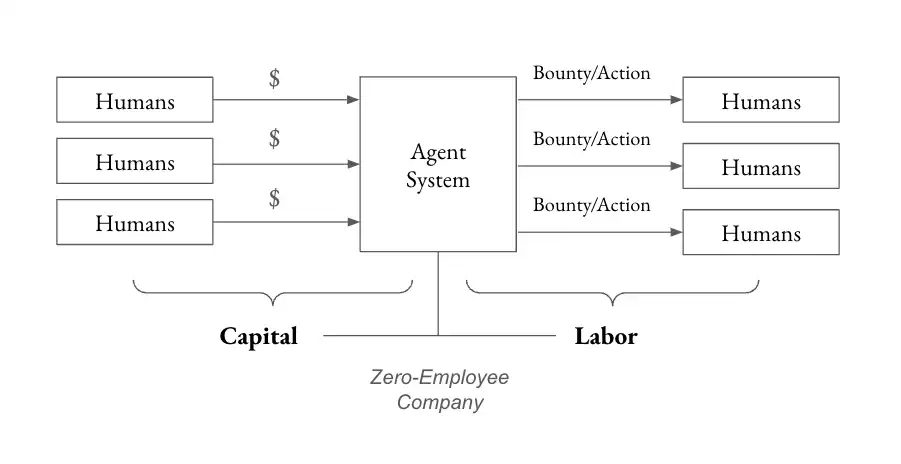
В этом примере криптопримитивы (Crypto primitives) и рынки капитала предоставляют Агенту три ключевых элемента инфраструктуры для получения ресурсов и расширения возможностей:
Во-первых, глобальные платежные рельсы;
Во-вторых, беспермисионные рынки труда для стимулирования трудовых и руководящих вкладчиков;
В-третьих, инфраструктура выпуска и торговли активами, которая необходима для формирования капитала, а также для последующего владения и управления.
Что произойдет, когда человеческий вклад уменьшится?
В начале 2000-х годов шахматные движки добились огромного прогресса. Благодаря передовым эвристикам, нейронным сетям и растущим вычислительным мощностям они стали почти безупречными. Современные движки, такие как Stockfish, Lc0 и варианты AlphaZero, уже далеко превзошли человеческие возможности, человеческий вклад редко добавляет ценность, а в большинстве случаев люди вносят ошибки, которые сам двиток не допустил бы.
Аналогичная траектория может повториться и в агентских системах. По мере того как мы совершенствуем этих Агентов путем итеративного взаимодействия с человеческими соавторами, можно представить, что в долгосрочной перспективе Агенты станут настолько компетентными и согласованными со своими целями, что ценность любого стратегического человеческого вклада будет стремиться к нулю.
В таком мире, где Агенты могут постоянно обрабатывать сложные проблемы без необходимости человеческого вмешательства, роль человека рискует быть пониженной до «пассивного наблюдателя». Это ключевой страх сторонников теории гибели от ИИ (AI doomers) (однако, пока неясно, возможно ли такое развитие событий на самом деле).
Мы стоим на пороге сверхразума (Superintelligence), и оптимисты среди нас больше надеются, что агентские системы останутся продолжением человеческих намерений, а не эволюционируют в сущности с собственными целями или будут работать автономно без надзора. На практике это означает, что человеческая личность (Personhood) и суждение (власть и влияние) должны оставаться в центре этих систем. Людям необходимо иметь сильные права собственности и управления этими системами, чтобы гарантировать сохранение надзора и привязку этих систем к коллективным человеческим ценностям.
Подготовка «лопат» для нашего агентского будущего
Технологические прорывы приводят к нелинейному росту экономического прогресса, а окружающие системы часто рушатся, прежде чем мир успевает приспособиться. Возможности агентских систем стремительно растут, а криптопримитивы и рынки капитала уже стали столь необходимым субстратом координации, как для продвижения построения этих систем, так и для установки ограничителей по мере их интеграции в общество.
Чтобы позволить людям предоставлять тактическую поддержку и активное руководство агентским системам, мы ожидаем появления следующих возможностей для «продавцов лопат» (Picks-and-shovels):
- Подтверждение агентства (Proof-of-agenthood) + Подтверждение личности (Proof-of-personhood): У Агентов отсутствует концепция идентичности или права собственности. Будучи агентами людей, они полагаются на человеческие правовые и социальные структуры для получения полномочий. Чтобы преодолеть этот разрыв, нам нужны надежные системы идентификации для Агентов и людей. Реестр цифровых сертификатов позволит Агентам建立 репутацию (establish reputation), накапливать учетные данные и прозрачно взаимодействовать с людьми и другими Агентами. Точно так же примитивы подтверждения личности, такие как Humancode и Humanity Protocol, обеспечивают надежные гарантии человеческой идентичности для защиты от злоумышленников в этих системах.
- Рынки труда и примитивы верификации вне цепи (off-chain): Агентам необходимо знать, выполнены ли назначенные ими задачи в соответствии с их целями. Инструменты, позволяющие агентским системам создавать баунти, проверять выполнение и распределять вознаграждение, являются краеугольным камнем любой значимой экономической деятельности, опосредованной Агентом.
- Системы формирования капитала и управления: Агентам нужен капитал для решения проблем и система сдержек и противовесов, чтобы确保 их поведение соответствует определенной целевой функции. Новые структуры для привлечения капитала агентскими системами, а также новые формы владения и контроля,融合 financial interests and labor contributions, станут богатым пространством для исследований в ближайшие месяцы.
Мы активно ищем и инвестируем в эти ключевые уровни стека collaboration человека и Агента. Если вы работаете в этой области, свяжитесь с нами.