From $399 to $599: Your PS5 Is Paying Taxes for AI and War

marsbitОпубликовано 2026-03-31Обновлено 2026-03-31

Введение

Sony announced a global price increase for all PS5 models, effective April 2, marking the second hike in a year. The digital edition rose from $399 at launch in 2020 to $599, while the disc version and PS5 Pro saw increases of $100 and $150, respectively. This breaks the industry tradition of consoles becoming cheaper over time. Sony cited "global economic pressures," with analysts pointing to surging memory chip costs as a primary driver. High demand from AI data centers has constrained DRAM and NAND supply, raising prices. Sony likely exhausted fixed-price supplier agreements and now passes costs to consumers. Additionally, missile attacks by Iran on major aluminum plants in the UAE and Bahrain disrupted 6% of global aluminum supply, spiking prices. These facilities supplied materials for aerospace and defense, including PS5 components like heat sinks and structural parts. Earlier U.S. tariff hikes also contributed to a previous $50 price increase. The $200 total price jump reflects broader geopolitical and economic shifts—trade policies, AI-driven resource competition, and military conflicts—rather than product improvements. Consumers are indirectly funding these global tensions through everyday electronics purchases.

Author: David, Shenchao TechFlow

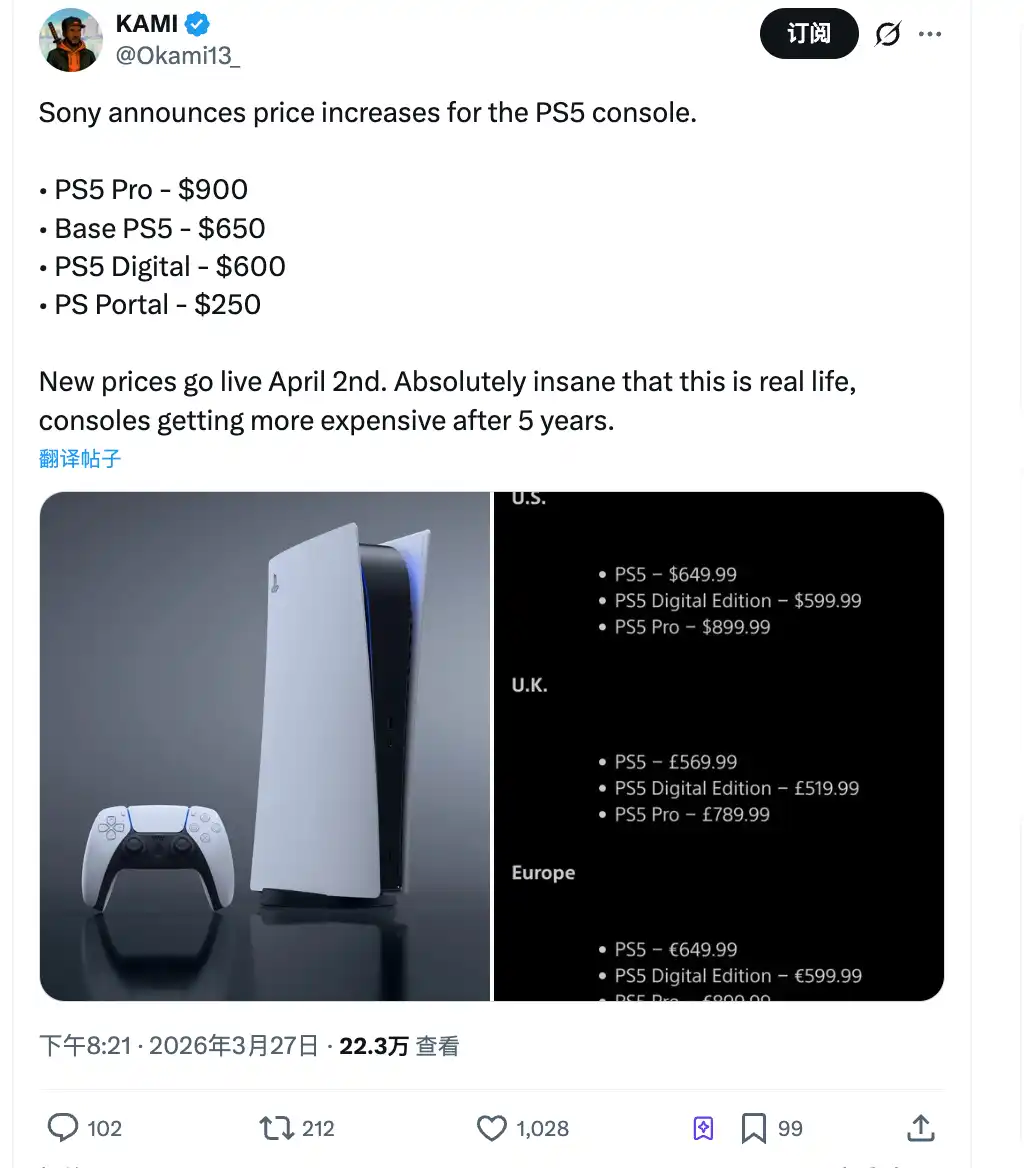
On March 27, Sony announced a price increase for all PS5 models, effective April 2.

In the US market, the PS5 Disc Edition rose from $549 to $649, the Digital Edition from $499 to $599, and the PS5 Pro jumped directly from $749 to $899.

This is the second increase within a year. The last one was in August last year, with only a $50 hike in the US, a market Sony deliberately shielded. This time, it's at least $100, with the PS5 Pro up by $150, and it's global—no market is exempt.

The pressure to raise prices has become too great for Sony to absorb alone.

Gamers know there's an ironclad rule in the console industry: consoles only get cheaper over time. Component costs decline, and manufacturers recoup early R&D through later profit improvements.

The PS5 is the first console in history to break this rule. Launched in 2020 at $399 for the Digital Edition. Six years later, the same machine costs $599.

Sony's official explanation is six words: "global economic pressures."
The AI Tax

Sony didn't elaborate much. But multiple analysts point to the same thing: memory chips.

The PS5 contains memory and a custom SSD, both requiring DRAM and NAND flash memory chips. These two components began rising significantly in mid-2025, for reasons entirely unrelated to the gaming industry: the construction of global AI data centers is snatching away memory production capacity, squeezing the share available for consumer electronics.

Your game console and AI use memory from the same production lines. AI can afford to pay more; you can't.

Piers Harding-Rolls, Research Director at Ampere Analysis, told CNBC that Sony had likely signed price protection agreements with suppliers, locking in procurement costs for a period. But after these agreements expired, memory prices showed no signs of easing, forcing Sony to pass the cost on to consumers.

According to Fox Business, Sony also admitted during its February earnings call that it was dealing with rising memory costs and planned to offset hardware losses with revenue from software and network services.

Translating for Sony: Hardware is no longer profitable, maybe even losing money. Sony intends to make up for it by selling games and subscriptions.

This is the first cut. The extra money you pay isn't for a better console; it's because AI took your memory.

Missile Strikes, Aluminum Prices Soar

The memory price hike was painful enough. Then came the missiles.

On March 28, the day after Sony's price announcement, Iran's Revolutionary Guard Corps launched several missiles at the UAE and Bahrain. Their target wasn't military bases; it was aluminum plants.

Emirates Global Aluminium (EGA) is the largest aluminum producer in the Middle East. According to its website, 1 out of every 25 tons of aluminum produced globally comes from this factory. Aluminium Bahrain (Alba) has an annual capacity of 1.62 million tons. Combined, they account for 6% of global aluminum production capacity.

According to EGA's website, the company's products are sold to over 400 customers in more than 60 countries, spanning various industries.

Hours after the missiles landed, aluminum prices jumped on the London Metal Exchange. According to the Securities Times, overseas aluminum spot premiums surged to a 19-year high. Alba subsequently declared force majeure, suspending deliveries to some customers.

Citibank analysts predict that if supply continues to deteriorate, aluminum prices could rise from the current ~$3,300 to $4,000 per ton.
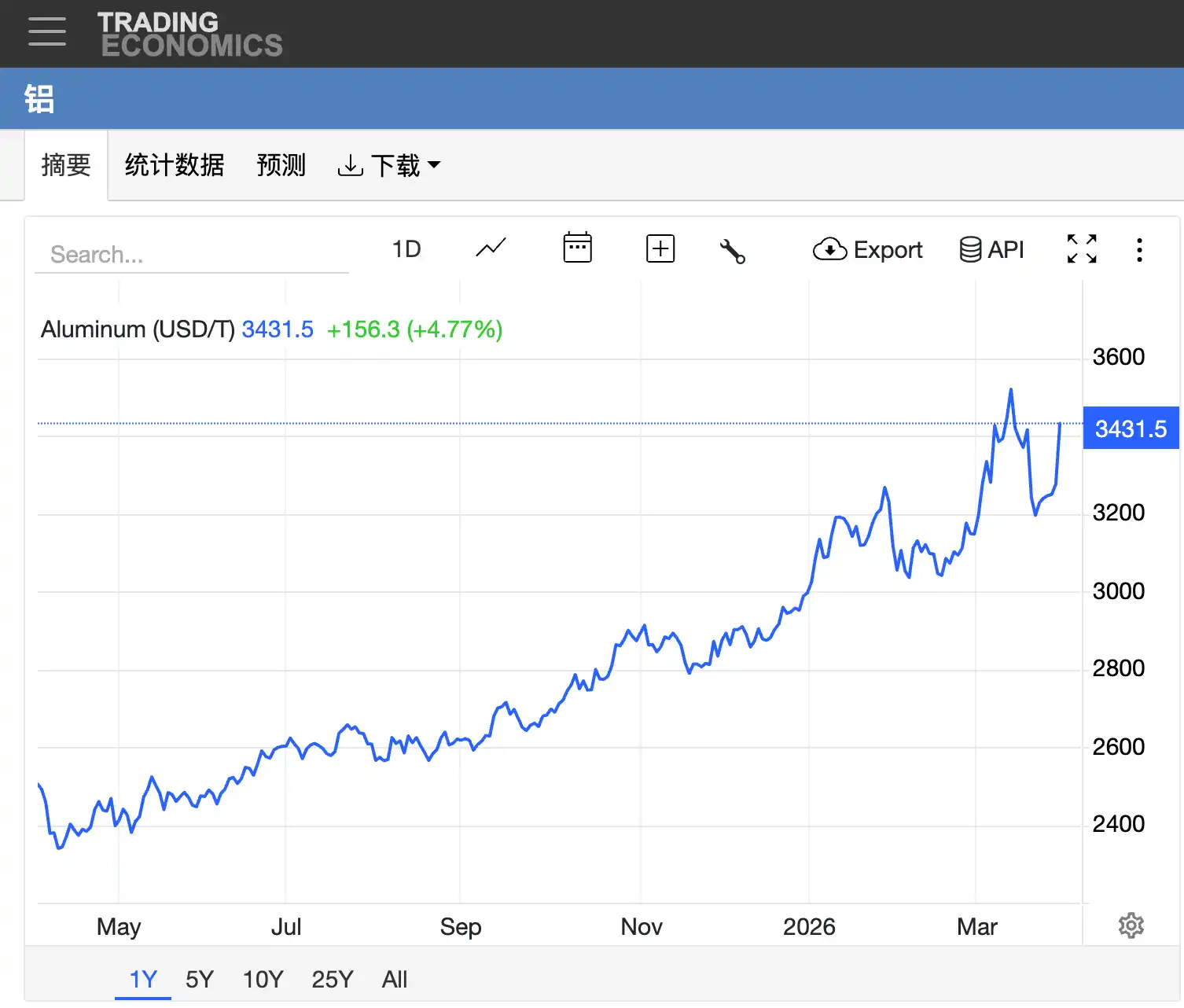
The PS5's heat sink module, structural components, and electromagnetic shielding layers all require aluminum alloy. Memory dealt the first blow; aluminum delivered the second.

And the bombing of these two plants was no accident.

The Revolutionary Guard stated in a declaration that these factories were "linked to the U.S. military and aerospace industry." In May last year, RTX, the American aerospace giant that makes Patriot missiles and F-35 radars, had just signed a memorandum of understanding with EGA to develop a production line for extracting gallium, a core material for military radars, at the Abu Dhabi plant.

According to an RTX press release, Paolo Dal Cin, Senior Vice President of Operations & Supply Chain, said at the signing ceremony that the agreement was to ensure the supply of critical minerals for the aerospace and defense industries.

Iran was targeting the supply chain of the U.S. military-industrial complex.

But bombing a military base means the loss is borne by a nation's defense department. Bombing an aluminum plant means the bill is split by the whole world, from airplanes to cars to phones to your PS5.

The Revolutionary Guard's statement also included a line: future retaliations will no longer be limited to tit-for-tat military responses but will aim for "more deadly blows" to the enemy's economic system.

According to Sina Finance, last month Saudi Arabia's largest chemical company, SABIC, already declared force majeure on its styrene and methanol production.

From aluminum to chemical raw materials, "force majeure" is spreading across the Middle East.

Paying for a Changing World

Hidden within the $200 price increase of the PS5 is actually a third cut, though that one landed last year.

In August 2025, Sony first raised US prices by $50. That move came against the backdrop of the U.S. imposing additional tariffs on global trading partners, increasing the import cost of electronics. The PS5 is designed in Japan, with components produced and assembled across multiple Asian countries—every step was skimmed by tariffs.

Tariffs, AI snatching capacity, missiles bombing aluminum plants.

Three bills, from three completely different sources. One from Washington, one from Silicon Valley, one from the Middle East. $399 to $599—each part of the increase has nothing to do with the console itself getting better.

You just want to buy a game console. But your price tag is分担 (sharing the cost) for U.S. trade policy,分担 for the AI arms race, and分担 for war in the Middle East.

And the PS5 might be the most honest one.

Sony issued an announcement, clearly stating the price hike. But aluminum isn't only used for game consoles, and memory isn't only in PS5s. Your phone, your laptop, the electric scooter you ride—all use the same aluminum and the same chips.

Traditionally, how was war paid for? Government taxes, or printing money. The U.S. issued war bonds during WWII; Truman raised taxes during the Korean War. You knew you were paying, and you knew where the money was going.

The next time these products quietly get more expensive, there might not be an announcement.

In 2020, you paid $399 for a PS5—you paid for a game console. In 2026, you pay $599 for the same PS5. The extra $200 isn't paying for better performance.

In the end, we all pay for what has happened in the world over the past six years.

Трендовые криптовалюты

Связанные с этим вопросы

QWhy did Sony increase the price of the PS5, according to the article?

ASony increased the price of the PS5 due to rising costs of memory chips (DRAM and NAND) driven by AI data center demand, increased aluminum prices following missile strikes on Middle Eastern aluminum plants, and the impact of US tariffs on global trade.

QWhat specific global events contributed to the increased cost of aluminum used in the PS5?

AThe price of aluminum increased after Iran's Revolutionary Guard fired missiles at major aluminum plants in the UAE (Emirates Global Aluminium) and Bahrain (Alba), which together account for 6% of global aluminum production. These plants are also linked to the US military-industrial supply chain.

QHow did the demand for AI infrastructure impact the price of the PS5?

AThe massive construction of AI data centers created high demand for memory chips (DRAM and NAND), which are also used in the PS5. This competition for memory production capacity increased prices, and Sony passed these higher costs on to consumers.

QWhat was unique about the PS5's pricing strategy in the context of console history?

AThe PS5 is the first console in history to break the industry rule that consoles become cheaper over time. Instead, its price increased from $399 at launch in 2020 to $599 in 2026 for the same digital edition model.

QWhat does the article suggest consumers are ultimately paying for with the $200 price increase on the PS5?

AThe article suggests that the $200 increase is not for improved console performance but rather represents a hidden tax where consumers are paying for US trade policies, the AI industry's resource competition, and the economic impact of conflict in the Middle East.

Похожее

На 10 миллиардов долларов: Qualcomm покупает компанию легендарного инженера Jim Keller

По сообщениям, компания Qualcomm ведет переговоры о приобретении стартапа Tenstorrent, занимающегося разработкой ИИ-чипов, за 8-10 миллиардов долларов. Эта сделка может стать крупнейшим приобретением в области ИИ-чипов за последние годы. Tenstorrent, возглавляемый легендарным проектировщиком Джимом Келлером, известен своими разработками в области ускорителей ИИ и процессоров на архитектуре RISC-V. Для Qualcomm, чьи доходы сильно зависят от рынка смартфонов, эта покупка стала бы стратегическим шагом для диверсификации бизнеса, особенно в таких сферах, как центры обработки данных и облачные вычисления. Ключевым преимуществом Tenstorrent является его «анти-Nvidia» подход: компания использует более доступные компоненты, такие как GDDR6 и SRAM, вместо дорогой памяти HBM, а также стандартный Ethernet для соединения ускорителей. Это позволяет создавать высокопроизводительные вычислительные платформы по значительно более низкой цене. Кроме того, технология высокопроизводительных RISC-V CPU от Tenstorrent может предложить Qualcomm альтернативу архитектуре Arm, снизив зависимость от лицензионных соглашений. Разработки стартапа для автомобильного рынка (например, проект Alexandria) также хорошо сочетаются со стратегией Qualcomm в области автомобильных решений. Однако сделка вызывает вопросы из-за высокой оценки стартапа, рисков интеграции технологий и необходимости сохранения ключевой команды Tenstorrent. Аналитики предполагают, что оплата может быть частично привязана к будущим коммерческим успехам компании.

marsbit28 мин. назад

На 10 миллиардов долларов: Qualcomm покупает компанию легендарного инженера Jim Keller

marsbit28 мин. назад

CARDS: Суровая реальность за 535 миллионов долларов FDV: чистый доход лишь 43 миллиона, маржа прибыли сократилась вдвое

**Ключевые моменты статьи о Collector Crypt (CARDS)** Проект Collector Crypt (CC), с FDV 535 млн долларов, показывает тревожную финансовую картину: * Общая выручка платформы составляет 635 млн долларов, но **90.6% этой суммы (5.76 млрд) мгновенно возвращается пользователям** через автовыкуп карт. Чистый доход CC — лишь **43 млн долларов** (коэффициент удержания 6.7%). * Деятельность крайне сконцентрирована: несколько десятков кошельков генерируют основную часть объема, а ежедневно активны только около 420 игроков. * Вторичный рынок (eBay и P2P-торговля на платформе) практически отсутствует (менее 500 тыс. долларов), а доля eBay в обороте неуклонно снижается шесть кварталов подряд. * Чистая прибыльность платформы снизилась с 11.2% до 5.8% по мере роста объемов и смещения активности к более дорогим, но менее маржинальным наборам карт. * Захват стоимости токеном CARDS минимален: общий объем сжигания и выкупа составил лишь **1.4 млн долларов** (3.4% от чистого дохода). При этом операционные кошельки проекта вывели 45.7 млн USDC. * Текущая оценка в 535 млн долларов (FDV) выглядит завышенной — это **7.3x к чистому доходу** от бизнеса с падающей маржой. 72% предложения токенов принадлежит инсайдерам и залочены до ноября 2027 года. Вывод: CC нашла продукт для узкой аудитории "высокоскоростных" игроков, но не создала ожидаемый рынок для коллекционеров, а ценность её токена слабо связана с финансовыми результатами платформы.

marsbit32 мин. назад

CARDS: Суровая реальность за 535 миллионов долларов FDV: чистый доход лишь 43 миллиона, маржа прибыли сократилась вдвое

marsbit32 мин. назад

Активность кошелька, связанного с Артуром Хейсом, и киты накапливают десятки миллионов в ETH

По данным трекера Lookonchain, кошелек, связанный с Артуром Хейсом, купил дополнительные 1400 ETH на сумму около 2,51 млн долларов. Ранее этот же кошелек, возможно, получил 3000 ETH от Flowdesk. Активность китов, таких как эта, привлекает внимание, поскольку крупные покупки могут оказывать поддержку рынку в периоды слабых настроений. Однако важно отметить, что данные трекеров указывают на активность кошельков, а не обязательно на личные действия конкретных лиц, если нет прямого подтверждения. Активность китов рассматривается как потенциально позитивный сигнал, но она должна подтверждаться улучшением технической картины и более широким спросом, а не быть единичными сделками. В настоящее время трейдеры следят за тем, поможет ли этот спрос со стороны крупных игроков Ethereum удержать ключевые уровни поддержки и станет ли он частью более устойчивого восстановления. Следующим важным сигналом будут повторные выводы средств с централизованных бирж, указывающие на долгосрочное накопление.

bitcoinist56 мин. назад

Активность кошелька, связанного с Артуром Хейсом, и киты накапливают десятки миллионов в ETH

bitcoinist56 мин. назад

SpaceX, OpenAI, Anthropic один за другим выходят на IPO: реально ли рынок все это переварит?

SpaceX, OpenAI и Anthropic объявили о планах выхода на IPO, суммарно привлекая более 200 млрд долларов, что эквивалентно четырем годам всех американских IPO. Это вызывает вопрос: выдержит ли рынок такую нагрузку? SpaceX уже успешно разместилась в июне 2026 года, привлекла 75 млрд долларов при огромном спросе и оценке в 2,1 трлн. Теперь внимание переключается на OpenAI и Anthropic. Anthropic, планирующая выход осенью 2026 года, демонстрирует взрывной рост выручки и ожидает первую квартальную операционную прибыль, что может стать позитивным сигналом для рынка. OpenAI, с целевой оценкой около 1 трлн долларов, сталкивается с сомнениями из-за высоких убытков и неопределенных сроков IPO. Мнения на Уолл-стрит разделились. Одни указывают на огромную ликвидность и неудовлетворенный спрос на прямые инвестиции в ИИ. Другие опасаются «перекачки» ликвидности и перераспределения рисков от инвесторов к публичному рынку. Некоторые участники, осознавая риски, продолжают инвестировать из-за профессионального давления. Ключевые факторы этого бума включают в себя способность рынка оценивать далекие перспективы (например, колонизацию Марса или AGI), сильный контроль основателей и активное вовлечение розничных инвесторов. Рынок, вероятно, сможет поглотить каждое размещение по отдельности, особенно учитывая их разнесенные сроки. Однако реальная проверка для триллионных оценок наступит осенью, когда финансовые показатели OpenAI и Anthropic будут раскрыты. Главный вопрос останется неизменным: приносят ли предприятия реальную прибыль или экономию от внедрения ИИ? Ответ на него определит, основаны ли эти астрономические оценки на прочном фундаменте или остаются спекулятивной историей о будущем.

marsbit1 ч. назад

SpaceX, OpenAI, Anthropic один за другим выходят на IPO: реально ли рынок все это переварит?

marsbit1 ч. назад

Обзор Ethereum за первый квартал 2026: активность в сети достигла рекорда, токенизированные активы лидируют в отрасли

Токен Терминал представляет обзор состояния сети Ethereum в первом квартале 2026 года. Отмечается парадоксальная ситуация: ключевые показатели активности сети достигли рекордных уровней, в то время как стоимостные показатели снизились. **Основные данные Q1 2026:** * Активные пользователи (месячные): 13.2 млн (+53.5% к кварталу, +85.9% к году). * Количество транзакций: 200.4 млн (+38% к кварталу). * Общая стоимость заблокированных активов (TVL): $316.2 млрд (включает 71% от TVL топ-5 блокчейнов). * Рыночная капитализация токенизированных активов: $203.4 млрд, где доминируют стейблкоины ($178.9 млрд). Ethereum лидирует в сегментах токенизированных фондов (73% рынка) и товаров (84% рынка). * При этом доход от комиссий в сети первого уровня упал на 47.9% из-за обновления Blob, которое увеличило пропускную способность и снизило стоимость транзакций. Эксперты Etherealize проводят аналогии с ранним интернетом. Снижение комиссий за счёт масштабирования — это стратегический шаг для стимулирования массового спроса, подобный отказу от краткосрочной прибыли ради долгосрочного роста. Ethereum укрепляет позиции нейтрального базового слоя для мировой финансовой инфраструктуры, что подтверждается растущим числом институциональных проектов от BlackRock, JPMorgan, Fidelity и консорциума европейских банков.

marsbit1 ч. назад

Обзор Ethereum за первый квартал 2026: активность в сети достигла рекорда, токенизированные активы лидируют в отрасли

marsbit1 ч. назад

Торговля

Спот
Фьючерсы

Популярные статьи

Неделя обучения по популярным токенам (2): 2026 может стать годом приложений реального времени, сектор AI продолжает оставаться в тренде

2025 год — год институциональных инвесторов, в будущем он будет доминировать в приложениях реального времени.

1.8k просмотров всегоОпубликовано 2025.12.16Обновлено 2025.12.16

Неделя обучения по популярным токенам (2): 2026 может стать годом приложений реального времени, сектор AI продолжает оставаться в тренде

Обсуждения

Добро пожаловать в Сообщество HTX. Здесь вы сможете быть в курсе последних новостей о развитии платформы и получить доступ к профессиональной аналитической информации о рынке. Мнения пользователей о цене на AI (AI) представлены ниже.

活动图片