war

WAR (WAR) падение

История падения WAR

За последний год было зафиксировано суточное падение WAR на 5% 58 раз, на 10% 33 раз и на 20% 7 раз.

График цены WAR в реальном времени (WAR/USD)

Последнее обновление:

  • 1 ч.
  • 24 ч.
  • 1 нед.
  • 1 мес.
  • 1 год
  • Все
Нет данных

История падения WAR за сутки (>5%)

Отслеживайте движения цены WAR и основные моменты падения на HTX, с помощью последних 10 записей.Просматривайте еще больше данных о ценах WAR

ДатаКриптовалютаСлучай №ЦенаИзм. за 24ч
2026/07/26WAR (WAR)58$0,00047-23,7%
2026/07/21WAR (WAR)57$0,000618-8,71%
2026/07/18WAR (WAR)56$0,000635-16,34%
2026/07/17WAR (WAR)55$0,000758-12,37%
2026/07/12WAR (WAR)54$0,000521-5,27%
2026/07/09WAR (WAR)53$0,000516-10,88%
2026/07/06WAR (WAR)52$0,000583-6,87%
2026/07/01WAR (WAR)51$0,00052-17,98%
2026/06/22WAR (WAR)50$0,000492-13,84%
2026/06/19WAR (WAR)49$0,000484-7,81%

История падения WAR за сутки (>10%)

Отслеживайте движения цены WAR и основные моменты падения на HTX, с помощью последних 10 записей.Просматривайте еще больше данных о ценах WAR

ДатаКриптовалютаСлучай №ЦенаИзм. за 24ч
2026/07/26WAR (WAR)33$0,00047-23,7%
2026/07/18WAR (WAR)32$0,000635-16,34%
2026/07/17WAR (WAR)31$0,000758-12,37%
2026/07/09WAR (WAR)30$0,000516-10,88%
2026/07/01WAR (WAR)29$0,00052-17,98%
2026/06/22WAR (WAR)28$0,000492-13,84%
2026/06/16WAR (WAR)27$0,000597-14,1%
2026/06/15WAR (WAR)26$0,000676-13,11%
2026/06/13WAR (WAR)25$0,00075-12,59%
2026/06/05WAR (WAR)24$0,000845-15,92%

История падения WAR за сутки (>20%)

Отслеживайте движения цены WAR и основные моменты падения на HTX, с помощью последних 10 записей.Просматривайте еще больше данных о ценах WAR

ДатаКриптовалютаСлучай №ЦенаИзм. за 24ч
2026/07/26WAR (WAR)7$0,00047-23,7%
2026/05/09WAR (WAR)6$0,001691-26%
2026/05/04WAR (WAR)5$0,002616-20%
2026/04/17WAR (WAR)4$0,002973-22,52%
2026/03/25WAR (WAR)3$0,005884-27,86%
2026/03/24WAR (WAR)2$0,008113-33,22%
2026/03/16WAR (WAR)1$0,01992-40,55%

Статьи

Not AI, Not War: Should the US Stock Market Be Most Concerned About Japan?

The article warns that global markets may be underestimating a systemic risk from Japan, centered on the potential for its Government Pension Investment Fund (GPIF) to repatriate capital. With JPY at multi-decade lows and improving domestic investment appeal, political pressure is growing for GPIF—managing $1.8 trillion—to shift more assets home. Such a move, involving reallocating part of its ~$930 billion in overseas holdings, could boost demand for JPY and Japanese government bonds while pressuring US Treasuries (raising yields), weakening the USD, and weighing on risk assets like US stocks. A concurrent unwinding of yen carry trades could amplify the pressure. While markets currently price in little immediate risk, technical signals like the narrow USD/JPY cross-currency basis warrant attention. Conversely, the shift could benefit Japanese equities, which trade at a discount and are driven by corporate governance reforms rather than AI hype, though persistent JPY weakness remains a headwind for foreign investors.

Not AI, Not War: Should the US Stock Market Be Most Concerned About Japan? - 链捕手

Not AI, Not War: What the US Stock Market Should Worry About Is Japan?

Global markets may be underestimating a systemic risk from Japan. As the yen hits multi-decade lows and domestic asset appeal rises, the world's largest pension fund, the Government Pension Investment Fund (GPIF), faces policy pressure to repatriate substantial assets. Such a shift could pressure U.S. stocks, bonds, and the dollar. GPIF manages roughly $1.8 trillion, with about half invested overseas. Even a modest reallocation to Japan could boost yen demand and Japanese government bond buying, potentially raising U.S. yields and weakening the dollar. Unwinding of yen carry trades could further pressure risk assets. This potential move is driven by improving fundamentals in Japan: rising inflation, economic recovery, and narrowing yield gaps with the U.S. The yen's depreciation to levels not seen since 1986 also enhances domestic investment appeal. While markets currently price in limited risk, key indicators like the dollar-yen cross-currency basis swap are showing subtle shifts. A surge in hedging demand for yen appreciation could tighten liquidity and impact U.S. equities. Conversely, GPIF repatriation could benefit Japanese equities, which trade at a discount to U.S. markets and are driven by corporate governance reforms. However, persistent yen weakness remains a major hurdle for foreign investors' returns.

Not AI, Not War: What the US Stock Market Should Worry About Is Japan? - marsbit

An Undercurrent of Bitcoin Civil War: BIP-110 Raises Fork Concerns

**A Summary of the Bitcoin Governance Crisis: The BIP-110 Showdown and Forking Risks** Bitcoin is facing internal division alongside a market downturn. The core of the conflict is BIP-110, the "Reduced Data Carriage Soft Fork" proposal introduced in December 2025. It aims to restrict non-financial data (like inscriptions) in future transactions, citing concerns over node costs and Bitcoin's original purpose. The controversy lies in its activation mechanism. BIP-110 requires 55% miner support within a difficulty period. However, its voting signal has remained below 1% since monitoring began. If this threshold isn't met by the August 7, 2026 deadline (block height 961,632), compatible nodes (primarily running Bitcoin Knots) are programmed to *enforce* the new rules, rejecting non-compliant blocks. Critics warn this minority-enforced activation could split the chain. Major figures like Michael Saylor, Adam Back, and Jameson Lopp strongly oppose BIP-110. Saylor argues it sets a dangerous precedent for defining "valid" transactions and could stifle future innovations. Opponents view the enforcement strategy as a risky governance overreach, contrasting it with past upgrades that achieved over 90% consensus. BIP-110 was partly a reaction to Bitcoin Core's v30 update in October 2025, which significantly increased the default data relay limit. Core developers called this a policy change, not a consensus rule, but it prompted the creation of the Bitcoin Knots branch and, subsequently, BIP-110. Compounding the pressure, Paul Sztorc plans a separate hard fork around the same time to launch a new chain (eCash) featuring his Drivechain scaling proposal. While independent, these dual forking events create operational and market uncertainty. The market, already in a corrective phase, must now price in this governance tail risk. Analysts predict the original chain, backed by the vast majority of miners and exchanges, would likely retain primary value and liquidity if a split occurs. However, the process would be disruptive, causing short-term chaos with replay attacks, exchange confusion, and widened spreads. August 2026 presents a critical test of Bitcoin's ability to resolve deep governance disputes without fracturing.

An Undercurrent of Bitcoin Civil War: BIP-110 Raises Fork Concerns - Foresight News

Bitcoin price wedged into ‘most divided’ FOMC as Iran war spikes oil prices 8%

Bitcoin's price fluctuated near $64,000 amid significant macro pressures. Key factors include a continued selloff in Asian and US stocks, particularly semiconductor and AI sectors, and rising geopolitical tensions from the US-Iran conflict, which spiked oil prices. This raises inflation concerns ahead of a critical Federal Open Market Committee (FOMC) meeting. Market expectations for the Fed's interest rate decision are highly divided, with traders awaiting cues from Fed Chair Kevin Warsh. BTC price action is currently range-bound between key moving averages, with low trading volumes and declining retail interest since late 2025, as capital shifts toward AI stocks.

Bitcoin price wedged into ‘most divided’ FOMC as Iran war spikes oil prices 8% - cointelegraph

The New Cold War is a Tech Stock War

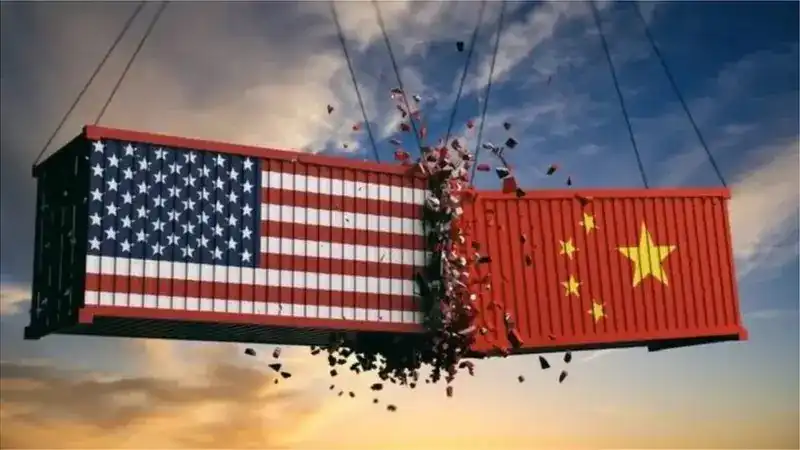
The New Cold War is a Tech Stock War The article argues that the contemporary geopolitical and economic rivalry between the US and China represents a "New Cold War," but one fundamentally fought through technology and financial markets, not physical barriers or conventional trade. Historically, US dominance was secured through financial systems. The Soviet Union, reliant on the rigid "Transferable Ruble," was ultimately undermined by its dependency on the US dollar for oil trade. Later, Japan's semiconductor challenge was countered not just by tariffs (e.g., Plaza Accord, 301 investigations) but by binding it to US Treasury bonds. China presents a more complex, "embedded" challenger. While it holds vast dollar reserves and US debt like Japan, its industrial base is stronger and more diversified than the Soviet Union's. Surviving the initial 2018 trade war phase, the conflict has evolved into a "tech-financial war." The core battlefield is now the stock market. US tech stocks (AI, semiconductors) are treated as sovereign assets, buoyed by bipartisan national will. China is pushing to strengthen its own financial markets to convert industrial strength into financial power and fund its tech ambitions. Companies like ChangXin (semiconductors), Moonshot AI, and DJI compete not just for market share but as financial proxies for their respective systems. The new paradigm is moving from globally efficient monopolies (Apple, Google) towards companies that achieve monopolistic profits within their respective geopolitical spheres. This competition over "pricing power" and financial valuation in segmented markets defines the current era, making the stock market the primary arena for this tech-centric struggle.

The New Cold War is a Tech Stock War - marsbit

Рекомендации

ctr
CitreaCTR
wstusdt
wrapped stUSDTWSTUSDT
apr
aPrioriAPR
ctx
Cryptex FinanceCTX
audio
AudiusAUDIO
comp
CompoundCOMP
mantra
MantraMANTRA
waxl
AxelarWAXL
bill
Billions NetworkBILL
pyth
PYTH (Pyth)PYTH
rune
THORChainRUNE
brev
BrevisBREV
cake
PancakeSwapCAKE
jst
JUSTJST
sun
SUNSUN
zbt
ZerobaseZBT
1inch
1inch1INCH
twt
Trust WalletTWT
dexe
DeXeDEXE
lista
Lista DAOLISTA
avax
AvalancheAVAX
reef
ReefREEF
zkc
BoundlessZKC
re
ReRE
era
CalderaERA
aster
AsterASTER
carv
CarvCARV
btt
BitTorrentBTT
btw
BitwayBTW
cvx
Convex FinanceCVX
blue
BluefinBLUE
f
SynfuturesF
rlc
iExecRLC
ankr
Ankr NetworkANKR
sushi
SushiSUSHI
hana
HANA NetworkHANA
pendle
PendlePENDLE
orbs
Orbs Network ORBS
kaito
KaitoKAITO
order
OrderlyORDER
sd
Stader LabsSD
sfp
SafePalSFP
snx
SynthetixSNX
dia
DIADIA
jup
JupiterJUP
ach
Alchemy PayACH
api3
API3API3
bmt
BubblemapsBMT
genius
GeniusGENIUS
red
RedStoneRED
prove
SuccinctPROVE
soph
SophonSOPH
avail
AvailAVAIL
dao
DAO MakerDAO
lit
LighterLIT
acx
Across ProtocolACX
layer
SolayerLAYER
badger
Badger DAOBADGER
nes
NesaNES
elf
aelfELF
req
Request NetworkREQ
trb
Tellor TributesTRB
opg
OpenGradientOPG
bnt
Bancor Network TokenBNT
opn
OpinionOPN
sxt
Space and TimeSXT
mln
MelonMLN
spk
SparkSPK
ondo
OndoFinanceONDO
waves
WavesWAVES
dbr
deBridgeDBR
night
MidnightNIGHT
me
Magic EdenME
trx
TRONTRX
nft
AINFTNFT
eul
Euler FinanceEUL
hsk
HashKey Platform TokenHSK
joe
TraderJoeJOE
sqd
SubsquidSQD
safe
SafeSAFE
ava
TravalaAVA
es
EclipseES
bard
LombardBARD
gwei
ETHGasGWEI
avl
AvalonAVL
usde
USDEUSDE
usdd
USDDUSDD
plume
Plume NetworkPLUME
synd
SyndicateSYND
xch
Chia NetworkXCH
win
WINkLinkWIN
sent
SentientSENT
theta
ThetaTHETA
solv
Solv ProtocolSOLV
steth
Lido Staked ETHSTETH
fhe
Mind NetworkFHE
inj
InjectiveINJ
towns
TOWNSTOWNS
wan
WanchainWAN
crv
Curve DAO TokenCRV
grt
The GraphGRT
dydx
dYdXDYDX
cbk
CobakCBK
krrx
KyrrexKRRX
rpl
Rocket poolRPL
uni
UniswapUNI
zama
ZAMAZAMA
inx
InfinexINX
ldo
LidoLDO
xdc
XDC NetworkXDC
link
ChainLinkLINK
bone
ShibaSwap BoneBONE
xtz
TezosXTZ
obt
Orbiter FinanceOBT
enso
ensoENSO
well
Moonwell ArtemisWELL
bio
BIO ProtocolBIO
anime
AnimecoinANIME
newt
Newton ProtocolNEWT
nil
NillionNIL
ctc
CreditcoinCTC
rad
RadicleRAD
ssv
SSV NetworkSSV
skr
SeekerSKR
home
Defi.appHOME