‘Crypto Mining Queen’ Lyu Yongshuang: Once Controlled 9% of Global Bitcoin Hashrate, Swindled Out of 60 Million by ‘Middle Eastern Royal Son-in-Law’ in the US

marsbitОпубликовано 2026-06-11Обновлено 2026-06-11

Введение

Summary: "Mining Queen" Lyu Yongshuang (Fiona Lyu), an 80s-born Chinese entrepreneur, once controlled approximately 9% of the global Bitcoin mining hashrate through her company Valarhash and its pools, 1THash and Bytepool. Her fortunes shifted dramatically in 2021 following China's crackdown on crypto mining. Relocating to the US, she fell victim to an elaborate fraud by two American brothers, Zubair and Muzammil Al Zubair. Posing as an "Arab royal" and a hedge fund manager, they used bribery and a fake romantic relationship to trick Lyu into signing a mining facility contract in Ohio. The scam resulted in losses exceeding $9.4 million, including the theft and resale of 1,067 mining rigs. In 2026, the brothers received lengthy prison sentences. Concurrently, Lyu faced legal battles in China, where a court invalidated a mining contract with a listed company, ordering a refund of nearly $2.8 million. These events marked a severe downturn for the once-powerful industry figure.

Original Author: Nicky, Foresight News

Caixin published an article on June 11th titled "Female Crypto Boss Defrauded of 60 Million in the US: How Did the ‘Middle Eastern Royal’ Brothers Set the Trap?". Following the clues in the article, we investigated the remarkable story of this "female crypto boss," Lyu, within the crypto world.

According to Caixin, a domestic female crypto tycoon was the victim of an investment fraud in the United States, suffering losses exceeding $9.4 million (approximately 60 million RMB). This individual is Lyu, the CEO of a computing power technology company in Southwest China. At its peak, the mining pool under her company reportedly accounted for about 9% of the global Bitcoin network hashrate.

The report indicated that two brothers named Zubair, who claimed to have "Middle Eastern royal" backgrounds, carried out the fraud by forging identities. One claimed to be a "Middle Eastern royal son-in-law," asserting control over Middle Eastern family funds, international business connections, and US local government resources. The other impersonated a character from the TV series "Billions," presenting himself as a hedge fund manager. The pair also successfully contacted and influenced Michael Smedley, the Chief of Staff to the Mayor of East Cleveland, Ohio, ultimately inducing Lyu to sign a contract for developing a crypto mining farm.

The Lyu mentioned in the report is an 80s-born female entrepreneur named Lyu Yongshuang (Fiona Lyu). The Chengdu Valarhash Technology Co., Ltd. she founded operates two mining pools: 1THash and Bytepool.

According to Caixin, Lyu Yongshuang was born in Ningbo in the 1980s. Before entering the cryptocurrency industry, her career path had no connection to finance or technology. She initially worked in international trade and later started a custom tour group business. She is an avid enthusiast of outdoor travel, diving, and sailing. In a 2020 interview, she mentioned that from 2008 to 2018, she spent more than half of each year traveling, covering destinations all over the world.

According to a previous report by TokenInsight, she first encountered Bitcoin in 2013 and immediately plunged into this emerging industry. At that time, China's cryptocurrency mining was still in its early stages, and miners needed to venture deep into the mountainous regions of Southwest China in search of cheap hydropower resources. Lyu recalled being among the earliest groups to "find electricity" in Sichuan. "The conditions were tough back then, but the electricity was cheap, the returns were high, and everyone was very excited."

In 2016, she began formally building her own mining farm. Between 2017 and 2018, she transitioned to mining machine distribution. In July 2019, she established Chengdu Valarhash Technology Co., Ltd., serving as CEO, integrating the business into a comprehensive platform encompassing mining pool operation, mining farm construction, mining machine hosting, and hashrate trading. In December of the same year, the company held a product launch event in Chengdu, officially introducing the 1THash and Bytepool mining pool brands and the 1TMine hashrate contract trading platform.

At its peak in the first half of 2020, 1THash ranked 7th globally among Bitcoin mining pools, and Bytepool ranked 11th. Together, the two pools controlled approximately 9% of the global Bitcoin hashrate. This was a staggering figure at the time, meaning that for every 100 Bitcoins generated globally, about 9 went to her pools.

A Sweeping Ban and a Turn of Fate

On May 21, 2021, the Financial Stability and Development Committee of the State Council held its 51st meeting, explicitly proposing to "crack down on Bitcoin mining and trading behavior."

In mid-June, the Sichuan Provincial Development and Reform Commission and the Sichuan Provincial Energy Bureau jointly issued a notice requiring power generation enterprises to conduct self-inspection and self-correction, immediately stopping electricity supply to virtual currency "mining" companies. For miners in Sichuan, this was the most devastating blow. Sichuan was the largest mining hub in China, with wet season hydropower prices as low as 0.2-0.3 RMB per kilowatt-hour, making it one of the cheapest power resources globally.

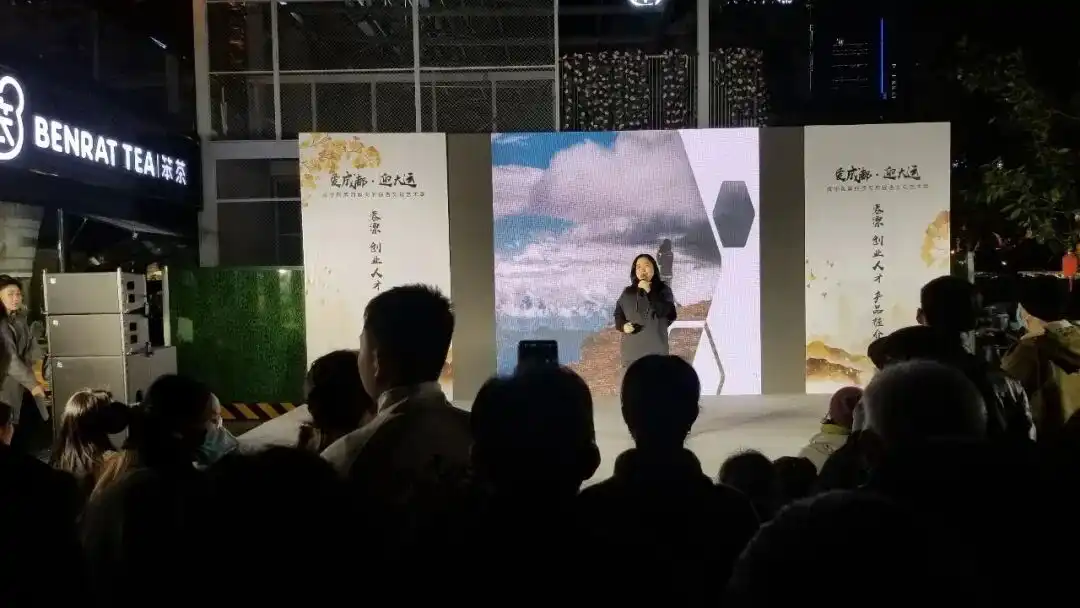
According to Caixin, Lyu Yongshuang later told friends that it was a period of "extreme anxiety." Her company had nine data centers distributed in China, the US, Canada, Russia, Sweden, and other locations, but the major domestic mining farms were the core source of hashrate. "Overnight, thousands of mining machines were forced to shut down, hundreds of shipping containers waited to be transported out, and money was burning every single day."

Image source: Caixin

She ultimately chose the United States as her first stop for venturing overseas. However, when she traveled across the ocean with hundreds of containers of mining machines to find a new foothold in Ohio, USA, what awaited her was an elaborately orchestrated scam.

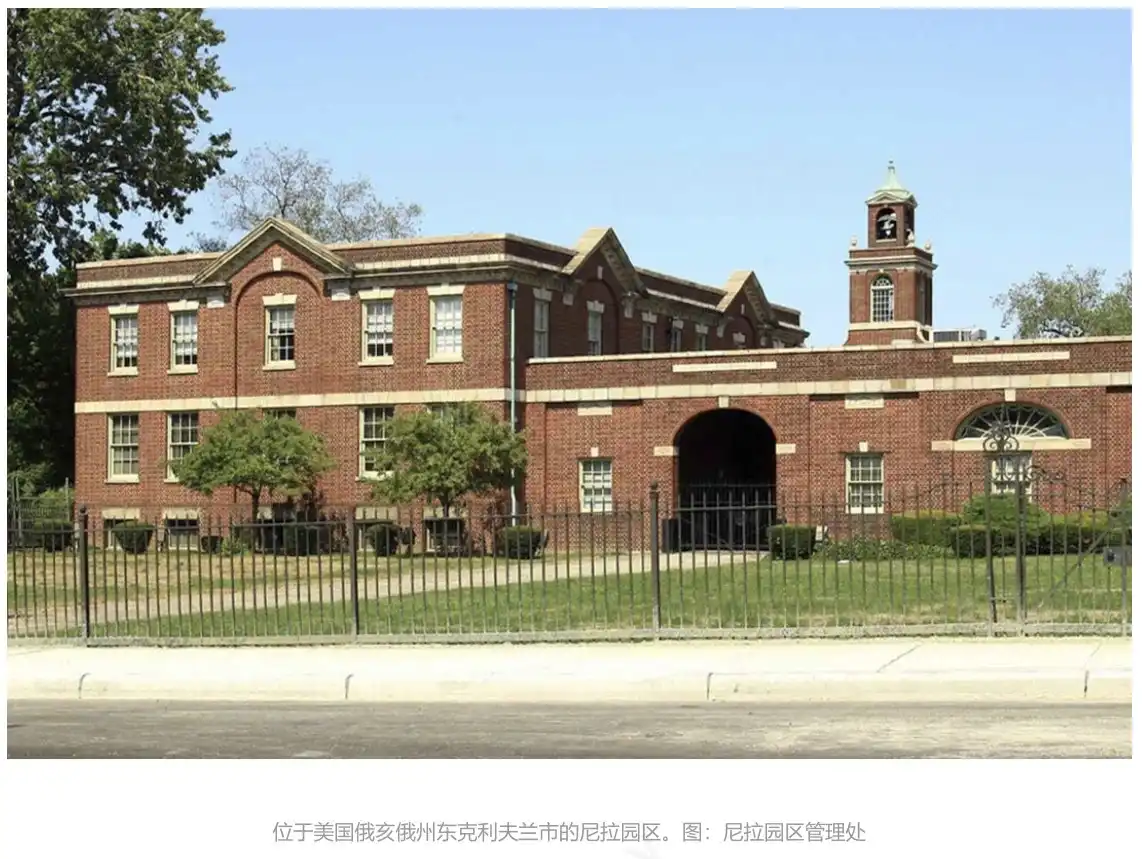
According to Caixin, in July 2021, through an intermediary, she met Zubair Al Zubair, a man who claimed to be an "UAE royal son-in-law" and asserted control over Middle Eastern family funds and US local government resources. Zubair recommended an industrial property located in East Cleveland, Ohio, known as the Nela Park campus, claiming it could provide electricity at a low price of $0.04 per kilowatt-hour.

On August 11, 2021, inside the East Cleveland City Hall in Ohio, a seemingly formal signing ceremony took place. Witnessed by then-Mayor Brandon King and other municipal officials, Lyu Yongshuang signed her name on a cryptocurrency mining farm development contract, filled with hope. She paid $3 million to Zubair's company, "Dubai Bridge," and wired an initial $1 million from a Hong Kong account.

Image source: Caixin

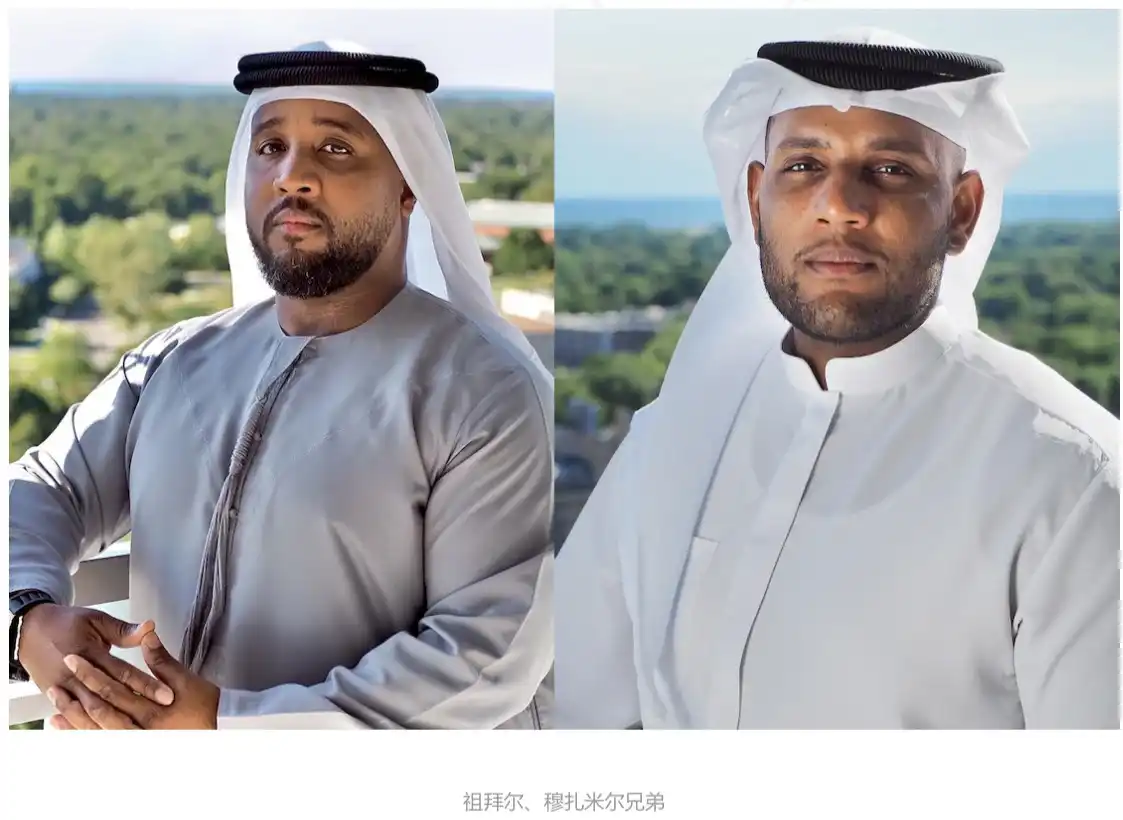
However, this was just the beginning of an elaborately planned fraud. In reality, Zubair and his brother Muzamir were native-born Americans with no relation to any Middle Eastern royalty. The elder brother's claim of being a "son-in-law" was entirely fabricated; the younger brother's so-called "hedge fund manager" title was "self-taught" by watching YouTube videos and the TV series "Billions."

During their subsequent interactions, Zubair and Lyu Yongshuang established a "close personal relationship." In Lyu's view, this relationship was romantic in nature. Prosecutors later pointed out that such personal relationships were part of Zubair's fraud pattern, aimed at reducing the likelihood of victims questioning his claims.

The scam ultimately cost Lyu Yongshuang over $9.4 million (approximately 60 million RMB), including contract payments and later, 1,067 mining machines (sold for $6.17 million) that were defrauded by Zubair's brother and resold to Canada. That signing ceremony in the mayor's office was merely a false endorsement arranged by Zubair through bribing the mayor's chief of staff, Michael Smedley.

In May 2026, the US Department of Justice announced the sentences: Zubair was sentenced to 24 years in prison, Muzamir to 23 years, and Smedley to 8 years. Lyu Yongshuang appeared in the case under the code name "Victim 2."

Another Legal Battle Back Home

Around the same time Lyu Yongshuang was entangled in the US scam, she was also facing another legal dispute back in China, involving a lawsuit with Shanghai Jincai Network Technology Co., Ltd., a subsidiary of the A-share listed company ST Zhongchang (600242.SH).

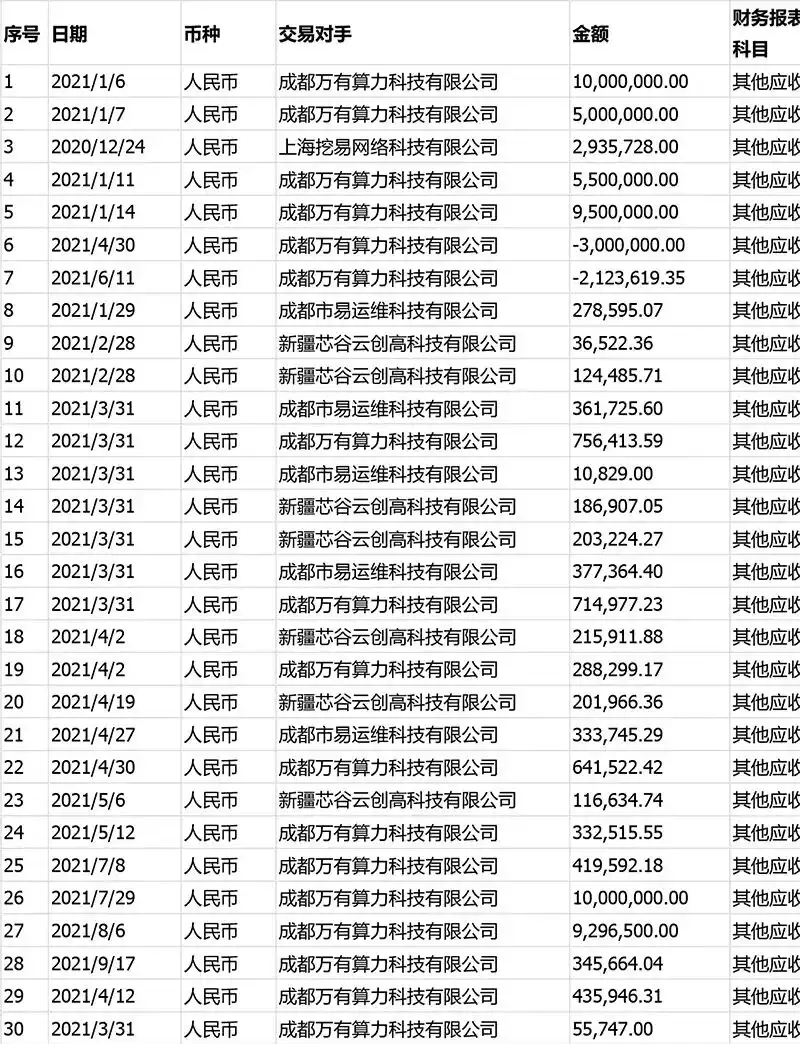
Image source: Shanghai Securities News

According to previous reports by Economic Observer and Jiemian News, the trigger for the incident was ST Zhongchang's then-chairman, Li Qunnan. Between January and September 2021, Li was suspected of misappropriating listed company funds to purchase Bitcoin mining machines and pay related hosting fees, totaling over 53.5472 million RMB. Among these, the company spent 30 million RMB purchasing servers (Bitcoin mining machines) from Chengdu Valarhash. These purchases were disclosed in the 2021 interim report as "company fixed assets used for actual operations," but audits found the related funds did not substantively form assets on the company's books.

Against this backdrop, ST Zhongchang's new management, seeking to recover losses, sued Chengdu Valarhash in the name of Shanghai Jincai in April 2022. They demanded the termination of the "Computing Power Service Contract" signed between the two parties on April 1, 2021, and the return of the contract price of 19.2965 million RMB.

In October 2022, the Chengdu High-Tech Industrial Development Zone People's Court issued a first-instance judgment: the contract was invalid because it involved Bitcoin "mining" activities, and Chengdu Valarhash was ordered to refund 19.2965 million RMB within ten days. The company appealed, but the second-instance ruling upheld the original judgment.

This lawsuit, from filing to final judgment, unfolded almost concurrently with Lyu Yongshuang's ordeal of being defrauded in the US. On one side, 9.4 million USD was lost overseas; on the other, nearly 20 million RMB in contract payments was ordered to be refunded domestically. Under this double blow, the "Crypto Mining Queen" who once controlled 9% of the global Bitcoin hashrate faced the darkest moment of her life.

Связанные с этим вопросы

QWho is the subject of the article, and what was her former title and major business achievement in the cryptocurrency mining industry?

AThe subject of the article is Lu Yongshuang (Fiona Lyu). She was known as the "Mining Queen" and was the CEO of Chengdu Wanyou Hashrate Technology Co., Ltd. (Valarhash). At its peak, her mining pools, 1THash and Bytepool, jointly controlled about 9% of the global Bitcoin hashrate.

QWhat was the major regulatory change in China that significantly impacted Lu Yongshuang's business, and what was her subsequent business decision?

AIn May 2021, the Chinese government explicitly called for a crackdown on Bitcoin mining and trading. This was followed by a formal notice in Sichuan province ordering power companies to stop supplying electricity to crypto mining firms. This forced Lu Yongshuang's domestic mining operations to shut down. In response, she decided to relocate her mining operations overseas, with the United States as her first choice for expansion.

QDescribe the fraud scheme that Lu Yongshuang fell victim to in the United States. Who were the perpetrators and what was their method?

ALu Yongshuang was defrauded by two American brothers, Zubair Al Zubair and Muzamir. They fabricated identities: Zubair posed as a son-in-law of a Middle Eastern royal family with access to funds and government resources, while Muzamir impersonated a hedge fund manager. Through a bribed mayoral aide, they staged a fake contract signing ceremony for a crypto mining facility in Ohio. They swindled Lu out of over $9.4 million, including contract payments and proceeds from the subsequent sale of her mining machines.

QWhat was the outcome of the legal case against the fraudsters in the United States?

AIn May 2026, the U.S. Department of Justice announced the sentences for the perpetrators. Zubair Al Zubair was sentenced to 24 years in prison, his brother Muzamir received a 23-year sentence, and the corrupted mayoral aide, Michael Smedley, was sentenced to 8 years in prison.

QApart from the U.S. fraud case, what other major legal dispute was Lu Yongshuang involved in domestically in China, and what was the ruling?

ASimultaneously, in China, Lu's company, Chengdu Wanyou Hashrate, was sued by Shanghai Jincai Network Technology, a subsidiary of the listed company ST Zhongchang. The lawsuit sought to cancel a service contract and reclaim 19.3 million RMB paid for Bitcoin mining services. The court ruled that the contract was invalid because it involved Bitcoin "mining" activities, which were deemed illegal, and ordered Lu's company to return the 19.3 million RMB. This ruling was upheld on appeal.

Похожее

Raising Interest Rates Is Not a Tech Killer, EPS Is: A Strategy for Discarding the Weak and Retaining the Strong After the AI Theme's Sharp Decline

**Summary: Rising Interest Rates Are Not the Killer of Tech; EPS Is: The "Keep the Strong, Ditch the Weak" Strategy After the AI Theme Plunge** The author argues that the sharp sell-off in tech and AI-related stocks, triggered by a strong US jobs report that heightened Fed rate hike fears, represents a "pullback to pick up passengers" rather than a "car crash." The true end of a tech bull market is not determined by an extra 25 basis point hike, but by industry overcapacity and the disproval of earnings per share (EPS) expectations. Historical analysis shows that during past rate hike cycles, the Nasdaq-100 often outperformed, provided EPS growth remained strong. The current phase is seen as a shift from a "broad narrative-driven rally" to a "focused verification stage" for AI. The investment strategy should be to "keep the strong, ditch the weak." * **Retain exposure** to high-conviction AI infrastructure leaders with clear order visibility, stable margins, strong cash flow, and upward EPS revisions (e.g., AI servers, advanced packaging, optical modules, key cloud suppliers). * **Reduce exposure** to high-beta, narrative-driven stocks with unclear profit paths (e.g., some quantum computing, space, or speculative chip stocks), especially on rebounds. Valuation concerns should focus on whether earnings can catch up to high multiples, not on high P/E alone. Crowded positioning signals a concentration into quality assets, not necessarily a market top. The upcoming Q2 earnings season will be a key validation point. The core principle is to hold stocks with proven EPS, while using macro events (CPI data, central bank meetings) to manage timing and risk.

marsbit1 ч. назад

Raising Interest Rates Is Not a Tech Killer, EPS Is: A Strategy for Discarding the Weak and Retaining the Strong After the AI Theme's Sharp Decline

marsbit1 ч. назад

Торговля

Спот
Фьючерсы

Популярные статьи

Тест по Bitcoin Биткоина

HTX Learn: Изучите Bitcoin halving и Заработаете Токены USDT

3.1k просмотров всегоОпубликовано 2024.04.16Обновлено 2024.04.16

Тест по Bitcoin  Биткоина

Что такое $BITCOIN

ЦИФРОВОЕ ЗОЛОТО ($BITCOIN): Комплексный анализ Введение в ЦИФРОВОЕ ЗОЛОТО ($BITCOIN) ЦИФРОВОЕ ЗОЛОТО ($BITCOIN) — это проект на основе блокчейна, работающий в сети Solana, который стремится объединить характеристики традиционных драгоценных металлов с инновациями децентрализованных технологий. Хотя он носит имя Биткойн, часто называемого “цифровым золотом” из-за его восприятия как средства хранения ценности, ЦИФРОВОЕ ЗОЛОТО является отдельным токеном, предназначенным для создания уникальной экосистемы в ландшафте Web3. Его цель — позиционировать себя как жизнеспособный альтернативный цифровой актив, хотя детали его применения и функциональности все еще развиваются. Что такое ЦИФРОВОЕ ЗОЛОТО ($BITCOIN)? ЦИФРОВОЕ ЗОЛОТО ($BITCOIN) — это токен криптовалюты, специально разработанный для использования в блокчейне Solana. В отличие от Биткойна, который выполняет широко признанную роль хранения ценности, этот токен, похоже, сосредоточен на более широких приложениях и характеристиках. Примечательные аспекты включают: Инфраструктура блокчейна: Токен построен на блокчейне Solana, известном своей способностью обрабатывать высокоскоростные и недорогие транзакции. Динамика предложения: ЦИФРОВОЕ ЗОЛОТО имеет максимальное предложение, ограниченное 100 квадриллионами токенов (100P $BITCOIN), хотя детали о его обращающемся предложении в настоящее время не раскрыты. Утилита: Хотя точные функциональные возможности не описаны, есть указания на то, что токен может быть использован для различных приложений, потенциально связанных с децентрализованными приложениями (dApps) или стратегиями токенизации активов. Кто создатель ЦИФРОВОГО ЗОЛОТА ($BITCOIN)? На данный момент личность создателей и команды разработчиков, стоящих за ЦИФРОВЫМ ЗОЛОТОМ ($BITCOIN), остается неизвестной. Эта ситуация типична для многих инновационных проектов в области блокчейна, особенно тех, которые связаны с децентрализованными финансами и феноменом мем-криптовалют. Хотя такая анонимность может способствовать культуре, ориентированной на сообщество, она усиливает опасения по поводу управления и ответственности. Кто инвесторы ЦИФРОВОГО ЗОЛОТА ($BITCOIN)? Доступная информация указывает на то, что у ЦИФРОВОГО ЗОЛОТА ($BITCOIN) нет известных институциональных спонсоров или значительных венчурных капиталовложений. Проект, похоже, функционирует по модели пирингового взаимодействия, сосредоточенной на поддержке и принятии сообществом, а не на традиционных путях финансирования. Его активность и ликвидность в основном сосредоточены на децентрализованных биржах (DEX), таких как PumpSwap, а не на устоявшихся централизованных торговых платформах, что еще больше подчеркивает его подход, ориентированный на grassroots. Как работает ЦИФРОВОЕ ЗОЛОТО ($BITCOIN) Операционные механизмы ЦИФРОВОГО ЗОЛОТА ($BITCOIN) можно подробно описать на основе его дизайна блокчейна и характеристик сети: Механизм консенсуса: Используя уникальный механизм доказательства истории (PoH) Solana в сочетании с моделью доказательства доли (PoS), проект обеспечивает эффективную валидацию транзакций, что способствует высокой производительности сети. Токеномика: Хотя конкретные дефляционные механизмы не были подробно описаны, большое максимальное предложение токенов подразумевает, что оно может быть предназначено для микротранзакций или нишевых случаев использования, которые еще предстоит определить. Интероперабельность: Существует потенциал для интеграции с более широкой экосистемой Solana, включая различные платформы децентрализованных финансов (DeFi). Однако детали относительно конкретных интеграций остаются неуточненными. Хронология ключевых событий Вот хронология, которая подчеркивает значимые вехи, касающиеся ЦИФРОВОГО ЗОЛОТА ($BITCOIN): 2023: Первоначальное развертывание токена происходит в блокчейне Solana, отмеченное его адресом контракта. 2024: ЦИФРОВОЕ ЗОЛОТО приобретает видимость, когда оно становится доступным для торговли на децентрализованных биржах, таких как PumpSwap, позволяя пользователям обменивать его на SOL. 2025: Проект наблюдает спорадическую торговую активность и потенциальный интерес к инициативам, возглавляемым сообществом, хотя на данный момент не зафиксировано никаких значительных партнерств или технических достижений. Критический анализ Сильные стороны Масштабируемость: Основная инфраструктура Solana поддерживает высокие объемы транзакций, что может повысить полезность $BITCOIN в различных сценариях транзакций. Доступность: Потенциально низкая цена торговли за токен может привлечь розничных инвесторов, способствуя более широкому участию благодаря возможностям дробного владения. Риски Отсутствие прозрачности: Отсутствие публично известных спонсоров, разработчиков или процесса аудита может вызвать скептицизм относительно устойчивости и надежности проекта. Волатильность рынка: Торговая активность сильно зависит от спекулятивного поведения, что может привести к значительной волатильности цен и неопределенности для инвесторов. Заключение ЦИФРОВОЕ ЗОЛОТО ($BITCOIN) является интригующим, но неоднозначным проектом в быстро развивающейся экосистеме Solana. Хотя он пытается использовать нарратив “цифрового золота”, его отход от установленной роли Биткойна как средства хранения ценности подчеркивает необходимость более четкого различения его предполагаемой утилиты и структуры управления. Будущее принятие и усвоение, вероятно, будут зависеть от решения текущей непрозрачности и более четкого определения его операционных и экономических стратегий. Примечание: Этот отчет охватывает синтезированную информацию, доступную на октябрь 2023 года, и с тех пор могут произойти события.

99 просмотров всегоОпубликовано 2025.05.13Обновлено 2025.05.13

Что такое $BITCOIN

Fractal Bitcoin: масштабирование Биткоина с помощью рекурсивной системы

Fractal Bitcoin — масштабное Layer-1-решнение, созданное на базе кода Биткоина, позволяющего достигать бесконечного масштабирования с помощью рекурсивного подхода.

2.3k просмотров всегоОпубликовано 2025.06.30Обновлено 2025.06.30

Fractal Bitcoin: масштабирование Биткоина с помощью рекурсивной системы

Обсуждения

Добро пожаловать в Сообщество HTX. Здесь вы сможете быть в курсе последних новостей о развитии платформы и получить доступ к профессиональной аналитической информации о рынке. Мнения пользователей о цене на BTC (BTC) представлены ниже.

活动图片