Bitcoin Continues to Plunge, Whether MSTR Is Forced to Sell Becomes Focus

marsbitОпубликовано 2026-02-02Обновлено 2026-02-02

Введение

Bitcoin is experiencing a sharp decline, falling below the key $80,000 level and approaching the cost basis of major institutional holders like MicroStrategy. This has intensified concerns about potential forced liquidations among highly leveraged players. Despite the sell-off, MicroStrategy's executive chairman Michael Saylor signaled intentions to continue accumulating Bitcoin, even as the company raised dividends on its preferred shares to attract capital—a move that could strain cash flow if prices fall further. Analysis indicates that institutional entities, including ETFs and MicroStrategy, now hold approximately 10% of Bitcoin’s circulating supply, with an average acquisition cost around $85,360. At current prices, these positions are underwater, with unrealized losses totaling about $7 billion. The market is facing a crisis of narrative, as the once-bullish "institutional adoption" theme has reversed, with ETF outflows persisting and no new catalysts emerging to attract buyers. The high concentration of institutional holdings, largely at a loss, may now become a source of sustained selling pressure.

Written by: Ye Zhen

Source: Wall Street Insights

Bitcoin is undergoing a severe stress test on institutional holdings. As the price falls below key psychological levels, approaching the cost basis of major institutional holders like MicroStrategy, market concerns over liquidity for highly leveraged holders are rapidly intensifying.

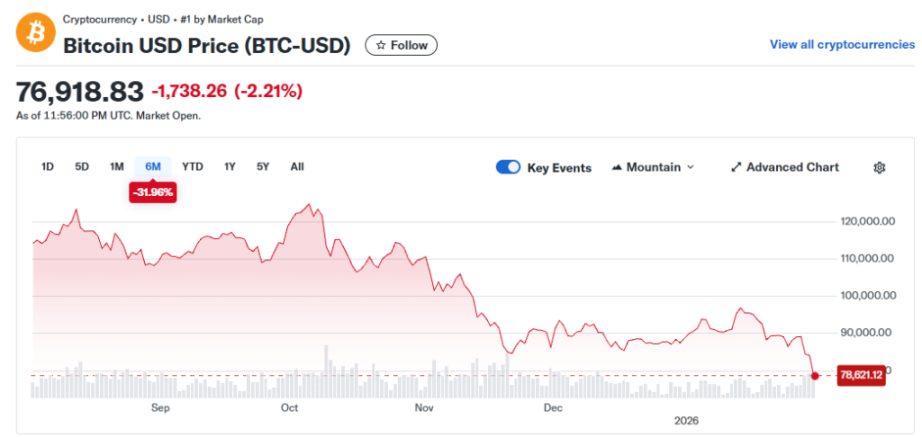
Over the weekend, Bitcoin broke below the $80,000 mark, hitting its lowest level since April 7, 2025. This round of selling occurred against a backdrop of significantly thin market liquidity, further exacerbating Bitcoin's recent cumulative decline of over 30%.

Despite the gloomy market sentiment, MicroStrategy Executive Chairman Michael Saylor still posted a picture with the words "More Orange" on social media platform X on Sunday, hinting at continued accumulation. The company announced a 25 basis point increase in the dividend for its Series A Perpetual Extension Preferred Shares (STRC) to 11.25%, intending to attract capital with high financing costs to maintain its Bitcoin acquisition strategy. However, analysis points out that if the coin price continues to stagnate or falls below its cost basis, the high dividend payments could trigger a severe cash flow squeeze.

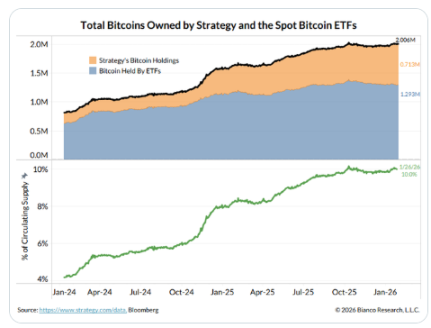
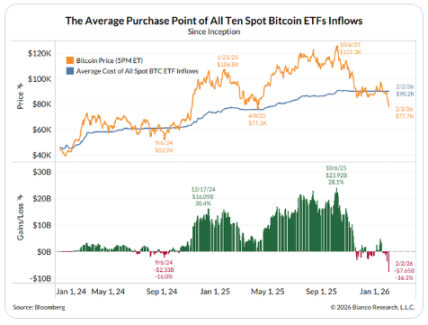
Jim Bianco, Macro Strategist at Bianco Research, analyzed that the Bitcoin market is facing a crisis of narrative exhaustion. The current market structure is highly institutionalized, with ETF investors and MicroStrategy collectively controlling about 10% of the circulating supply, and are currently in an overall floating loss position. This suggests that the once market-supportive narrative of "institutional entry" could reverse into a massive source of selling pressure after being trapped at high levels.

Institutional Holdings' Floating Losses Worsen, ETFs See Net Outflow Wave

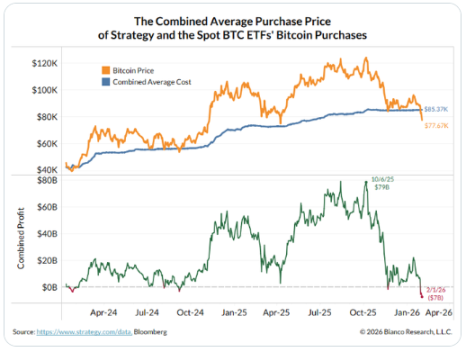
Jim Bianco's analysis shows that Bitcoin is becoming highly "institutionalized," meaning the market can clearly observe the cost basis and profit/loss status of large capital holdings for the first time. Currently, MicroStrategy and the 11 spot Bitcoin ETFs collectively hold about 10% of the Bitcoin circulating supply, with a combined average purchase cost of approximately $85,360. At the current price, these institutional holdings are facing an overall floating loss of about $8,000 per coin, with total unrealized losses reaching approximately $7 billion.

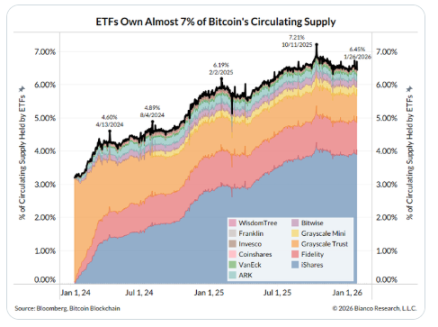
Among them, spot ETFs have become the core force affecting the supply and demand structure. Data shows that the 11 largest spot Bitcoin ETFs hold 1.29 million Bitcoins, accounting for 6.5% of the total circulating supply, with a market value of about $115 billion. However, the average purchase cost for these ETF investors is as high as $90,200, and the current coin price is about $13,000 lower than their cost basis.

This high-level acquisition structure has led to a typical pro-cyclical effect. Bianco points out that these ETFs have seen net outflows for 10 consecutive trading days. Investors are choosing to redeem after buying high and experiencing a pullback. This capital structure is amplifying the market's downward volatility.

MicroStrategy's Safety Margin Narrows, Aggressive Financing Raises Concerns

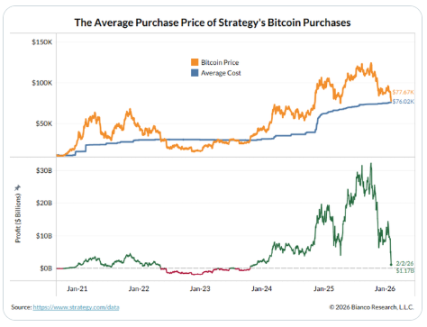
As a benchmark for corporate Bitcoin holdings, MicroStrategy's balance sheet is facing its most severe test in months. The company currently holds 712,647 Bitcoins, with an average cost of approximately $76,037. As Bitcoin trades around $78,000, the company's unrealized gains have significantly narrowed to less than 3%.

Despite the thinning safety margin, MicroStrategy shows no signs of retreating. To fund the next phase of purchases, the company adjusted the yield on its STRC product to 11.25%. This return rate represents a huge premium compared to typical corporate bonds, reflecting the company's extreme thirst for capital and the inherent volatility risk of its Bitcoin-centric model. Data shows that since the STRC product's debut in November, sales of this product alone have funded the acquisition of over 27,000 Bitcoins.

Analysis suggests that MicroStrategy is still profitable, but its margin for error has significantly shrunk. If the price falls further, the company will face an overall floating loss. Maintaining such high-cost dividend payments could cause cash flow strain, especially if the Bitcoin price falls below its $76,000 cost "waterline," making this risk particularly acute.

Old Narrative Fails, Market Urgently Needs New Momentum

From a macro perspective, this plunge has intensified the market's weeks-long disappointment. Jim Bianco believes the real problem Bitcoin faces is the lack of a new narrative. The previously high-hoped "Boomer Adoption" story has been fully priced in, or even disproven.

The current market structure shows that ETFs and MicroStrategy not only bought a lot, bought concentratedly, but are also currently trapped overall. Bianco points out that as long as there is no new, sustainable buying narrative, the trend of capital outflows is likely to continue. In this case, the high level of institutionalized holdings, once seen as a positive, may instead become the market's biggest source of pressure. Bitcoin's current problem is not whether anyone bought in the past, but where the next batch of buyers will come from at the current price level.

Связанные с этим вопросы

QWhat is the main concern regarding MicroStrategy as Bitcoin's value continues to decline sharply?

AThe main concern is whether MicroStrategy will be forced to sell its Bitcoin holdings as the price approaches its cost basis, which could trigger a liquidity crisis due to its high leverage and expensive financing costs.

QAccording to Jim Bianco's analysis, what percentage of Bitcoin's circulating supply is controlled by ETFs and MicroStrategy combined, and what is their average purchase cost?

AETFs and MicroStrategy combined control about 10% of Bitcoin's circulating supply, with an average purchase cost of approximately $85,360 per Bitcoin.

QHow has the recent Bitcoin price drop affected the financial position of MicroStrategy specifically?

AMicroStrategy's unrealized gains have narrowed significantly to less than 3%, as Bitcoin's price fell to around $78,000, close to its average cost of $76,037 per Bitcoin, reducing its financial safety margin.

QWhat narrative does Jim Bianco suggest is currently failing in the Bitcoin market, and why?

ABianco suggests the 'Boomer Adoption' narrative is failing because institutional investors, including ETFs and MicroStrategy, are now holding Bitcoin at a loss, and without new, sustainable buying narratives, outflows may continue, turning institutional holdings into a source of selling pressure.

QWhat action has MicroStrategy taken to fund its Bitcoin purchases, and what risk does this involve?

AMicroStrategy increased the dividend on its Series A Perpetual Delay Preferred Shares (STRC) by 25 basis points to 11.25% to attract capital, but this high-cost financing could lead to severe cash flow pressure if Bitcoin's price remains stagnant or falls below its cost basis.

Похожее

Торговля

Спот
Фьючерсы

Популярные статьи

Тест по Bitcoin Биткоина

HTX Learn: Изучите Bitcoin halving и Заработаете Токены USDT

3.0k просмотров всегоОпубликовано 2024.04.16Обновлено 2024.04.16

Тест по Bitcoin  Биткоина

Что такое $BITCOIN

ЦИФРОВОЕ ЗОЛОТО ($BITCOIN): Комплексный анализ Введение в ЦИФРОВОЕ ЗОЛОТО ($BITCOIN) ЦИФРОВОЕ ЗОЛОТО ($BITCOIN) — это проект на основе блокчейна, работающий в сети Solana, который стремится объединить характеристики традиционных драгоценных металлов с инновациями децентрализованных технологий. Хотя он носит имя Биткойн, часто называемого “цифровым золотом” из-за его восприятия как средства хранения ценности, ЦИФРОВОЕ ЗОЛОТО является отдельным токеном, предназначенным для создания уникальной экосистемы в ландшафте Web3. Его цель — позиционировать себя как жизнеспособный альтернативный цифровой актив, хотя детали его применения и функциональности все еще развиваются. Что такое ЦИФРОВОЕ ЗОЛОТО ($BITCOIN)? ЦИФРОВОЕ ЗОЛОТО ($BITCOIN) — это токен криптовалюты, специально разработанный для использования в блокчейне Solana. В отличие от Биткойна, который выполняет широко признанную роль хранения ценности, этот токен, похоже, сосредоточен на более широких приложениях и характеристиках. Примечательные аспекты включают: Инфраструктура блокчейна: Токен построен на блокчейне Solana, известном своей способностью обрабатывать высокоскоростные и недорогие транзакции. Динамика предложения: ЦИФРОВОЕ ЗОЛОТО имеет максимальное предложение, ограниченное 100 квадриллионами токенов (100P $BITCOIN), хотя детали о его обращающемся предложении в настоящее время не раскрыты. Утилита: Хотя точные функциональные возможности не описаны, есть указания на то, что токен может быть использован для различных приложений, потенциально связанных с децентрализованными приложениями (dApps) или стратегиями токенизации активов. Кто создатель ЦИФРОВОГО ЗОЛОТА ($BITCOIN)? На данный момент личность создателей и команды разработчиков, стоящих за ЦИФРОВЫМ ЗОЛОТОМ ($BITCOIN), остается неизвестной. Эта ситуация типична для многих инновационных проектов в области блокчейна, особенно тех, которые связаны с децентрализованными финансами и феноменом мем-криптовалют. Хотя такая анонимность может способствовать культуре, ориентированной на сообщество, она усиливает опасения по поводу управления и ответственности. Кто инвесторы ЦИФРОВОГО ЗОЛОТА ($BITCOIN)? Доступная информация указывает на то, что у ЦИФРОВОГО ЗОЛОТА ($BITCOIN) нет известных институциональных спонсоров или значительных венчурных капиталовложений. Проект, похоже, функционирует по модели пирингового взаимодействия, сосредоточенной на поддержке и принятии сообществом, а не на традиционных путях финансирования. Его активность и ликвидность в основном сосредоточены на децентрализованных биржах (DEX), таких как PumpSwap, а не на устоявшихся централизованных торговых платформах, что еще больше подчеркивает его подход, ориентированный на grassroots. Как работает ЦИФРОВОЕ ЗОЛОТО ($BITCOIN) Операционные механизмы ЦИФРОВОГО ЗОЛОТА ($BITCOIN) можно подробно описать на основе его дизайна блокчейна и характеристик сети: Механизм консенсуса: Используя уникальный механизм доказательства истории (PoH) Solana в сочетании с моделью доказательства доли (PoS), проект обеспечивает эффективную валидацию транзакций, что способствует высокой производительности сети. Токеномика: Хотя конкретные дефляционные механизмы не были подробно описаны, большое максимальное предложение токенов подразумевает, что оно может быть предназначено для микротранзакций или нишевых случаев использования, которые еще предстоит определить. Интероперабельность: Существует потенциал для интеграции с более широкой экосистемой Solana, включая различные платформы децентрализованных финансов (DeFi). Однако детали относительно конкретных интеграций остаются неуточненными. Хронология ключевых событий Вот хронология, которая подчеркивает значимые вехи, касающиеся ЦИФРОВОГО ЗОЛОТА ($BITCOIN): 2023: Первоначальное развертывание токена происходит в блокчейне Solana, отмеченное его адресом контракта. 2024: ЦИФРОВОЕ ЗОЛОТО приобретает видимость, когда оно становится доступным для торговли на децентрализованных биржах, таких как PumpSwap, позволяя пользователям обменивать его на SOL. 2025: Проект наблюдает спорадическую торговую активность и потенциальный интерес к инициативам, возглавляемым сообществом, хотя на данный момент не зафиксировано никаких значительных партнерств или технических достижений. Критический анализ Сильные стороны Масштабируемость: Основная инфраструктура Solana поддерживает высокие объемы транзакций, что может повысить полезность $BITCOIN в различных сценариях транзакций. Доступность: Потенциально низкая цена торговли за токен может привлечь розничных инвесторов, способствуя более широкому участию благодаря возможностям дробного владения. Риски Отсутствие прозрачности: Отсутствие публично известных спонсоров, разработчиков или процесса аудита может вызвать скептицизм относительно устойчивости и надежности проекта. Волатильность рынка: Торговая активность сильно зависит от спекулятивного поведения, что может привести к значительной волатильности цен и неопределенности для инвесторов. Заключение ЦИФРОВОЕ ЗОЛОТО ($BITCOIN) является интригующим, но неоднозначным проектом в быстро развивающейся экосистеме Solana. Хотя он пытается использовать нарратив “цифрового золота”, его отход от установленной роли Биткойна как средства хранения ценности подчеркивает необходимость более четкого различения его предполагаемой утилиты и структуры управления. Будущее принятие и усвоение, вероятно, будут зависеть от решения текущей непрозрачности и более четкого определения его операционных и экономических стратегий. Примечание: Этот отчет охватывает синтезированную информацию, доступную на октябрь 2023 года, и с тех пор могут произойти события.

99 просмотров всегоОпубликовано 2025.05.13Обновлено 2025.05.13

Что такое $BITCOIN

Fractal Bitcoin: масштабирование Биткоина с помощью рекурсивной системы

Fractal Bitcoin — масштабное Layer-1-решнение, созданное на базе кода Биткоина, позволяющего достигать бесконечного масштабирования с помощью рекурсивного подхода.

2.2k просмотров всегоОпубликовано 2025.06.30Обновлено 2025.06.30

Fractal Bitcoin: масштабирование Биткоина с помощью рекурсивной системы

Обсуждения

Добро пожаловать в Сообщество HTX. Здесь вы сможете быть в курсе последних новостей о развитии платформы и получить доступ к профессиональной аналитической информации о рынке. Мнения пользователей о цене на BTC (BTC) представлены ниже.

活动图片