BIP-110 Controversy Intensifies: Bitcoin May Face Its Most Divisive Hard Fork Battle in Years

Foresight NewsОпубликовано 2026-06-12Обновлено 2026-06-12

Введение

Bitcoin is approaching a critical block height of 961,632, which could activate the controversial BIP-110 proposal. This proposal aims to restrict the amount of non-financial data, such as inscriptions and other large data payloads, within Bitcoin transactions. Supporters, including some node operators and Bitcoin purists, argue that BIP-110 is necessary to preserve Bitcoin's core function as a monetary settlement layer by reducing network congestion and node operational burdens caused by non-essential data. They frame it as a correction to keep the network true to its original purpose. However, critics, including prominent figures like Blockstream's Adam Back and developer Jameson Lopp, warn that the proposal's implementation mechanism is dangerously flawed. They highlight that its low 55% miner signaling threshold, coupled with a contentious enforcement mechanism allowing nodes to unilaterally reject non-compliant blocks, significantly increases the risk of a chain split. Opponents argue this sets a dangerous precedent for transaction censorship, undermines Bitcoin's protocol neutrality, and creates excessive uncertainty for developers and businesses, especially since the rule is proposed as a temporary one-year measure. Market analysts, such as those from Bitfinex, suggest a full-scale network split is unlikely due to a lack of broad economic consensus. Major mining pools remain neutral, and adoption of the new rules is minimal. They view the situation more as a governa...


Written by: Oluwapelumi Adejumo

Compiled by: Saoirse, Foresight News


Core Summary


  • Bitcoin's block height is approaching 961632, at which point the BIP-110 proposal may restrict non-financial data within transactions.
  • Proponents claim this adjustment will allow Bitcoin to refocus on its core function of settlement, alleviating network strain caused by inscriptions and other applications consuming significant on-chain data.
  • Critics warn that the proposal's miner voting threshold is too low and lacks an accompanying enforcement mechanism, potentially leading to a mainnet split and forcing major exchanges and node operators into defensive measures.


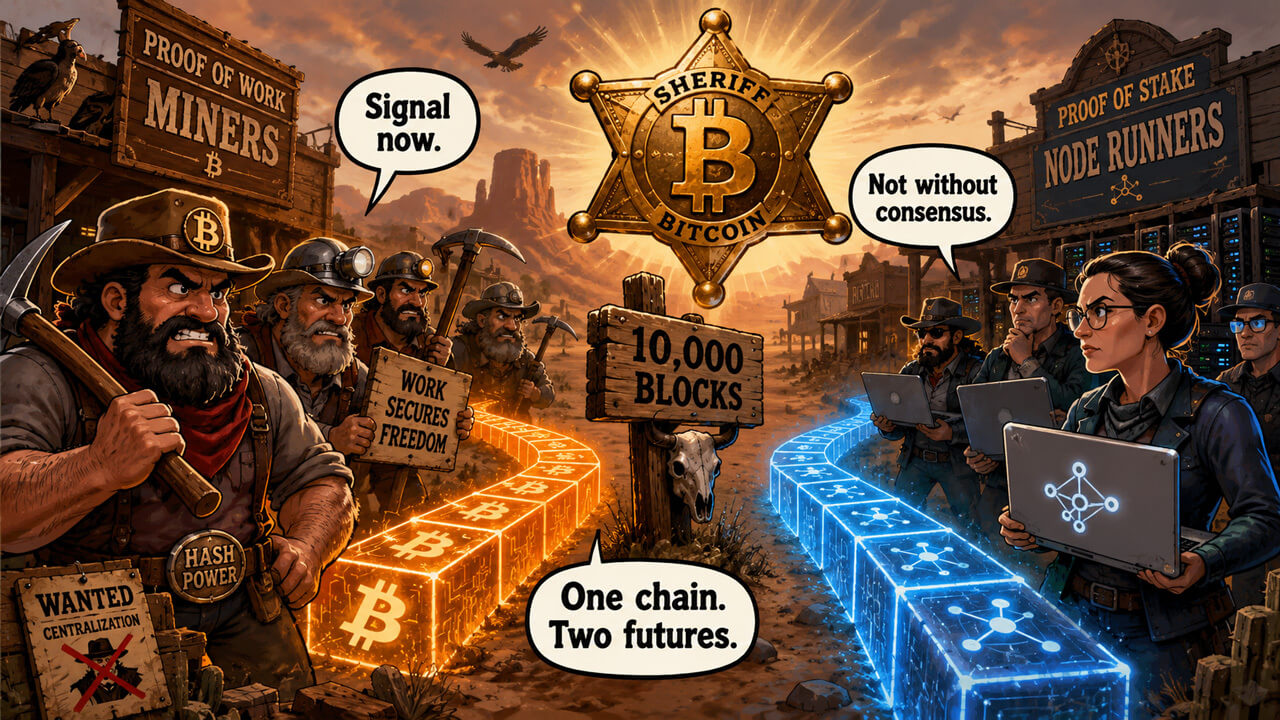
Bitcoin is approaching a critical juncture where a long-standing ideological divide may escalate into the network's most severe governance conflict in years. At the heart of this dispute is Bitcoin Improvement Proposal (BIP) 110, which aims to limit the total amount of non-financial data that can be embedded in Bitcoin transactions. With the network just under 10,000 blocks away from the mandatory activation window at block height 961632, what began as a technical disagreement over network "spam transactions" has transformed into a high-stakes confrontation.


Supporters of BIP-110 view this restriction as crucial for preserving Bitcoin's core value as a monetary settlement layer. Opponents warn that such an aggressive implementation risks fracturing the entire ecosystem, potentially freezing user assets in transit and eroding market trust in the neutrality of the Bitcoin protocol.


Although the proposal currently lacks the widespread miner and institutional backing typically required for major protocol changes, this imminent flashpoint will serve as a significant stress test for Bitcoin's decentralized power structure. The proposal pits network developers and node operators against miners and market makers—the core groups that ultimately determine the economic value trajectory of the entire blockchain.


A Battle Over What Bitcoin Should Carry


BIP-110 plans to temporarily restrict arbitrary data storage on the Bitcoin blockchain by adding a new consensus rule to the transaction structure. In simple terms, nodes running the proposal's code would treat transactions carrying large amounts of data as invalid. The proposal targets applications such as ordinal inscriptions, runes, and other activities that directly inscribe text, images, or token data onto Bitcoin's base layer.


While these applications have attracted new users and increased miner fee revenue, they have also drawn criticism from Bitcoin purists who argue that the blockchain should not be used as a permanent storage medium.


Proponents frame the change as an effort to safeguard Bitcoin's core functionality. They argue that non-financial data excessively consumes block space, burdens node operations, and deviates from Bitcoin's fundamental purpose as sound money. In their view, filtering high-capacity data payloads is not censorship of payments but a restoration of rule-based boundaries to refocus the network on its original purpose.


This perspective has gained support among some node operators and Bitcoin users who have long resisted the inscription craze. To them, the upcoming activation window proves that when users perceive Bitcoin's rules drifting from their original intent, the node operators responsible for validating the chain still have the power to check miners and commercial entities.


Bitcoin analyst Luis Marcano, a supporter of the proposal, suggests that the actual scenario post-BIP-110 activation might not be as dire as critics predict. His view is that nodes running the new rules will reject blocks filled with irrelevant data, and mining power will gradually shift to the blockchain with stronger economic value that adheres to the new rules.


Some supporters take an even harder line, portraying opponents as a small group of social media influencers, token investors, and businesses profiting from on-chain data ventures. They claim that thousands of node operators are already prepared to enforce the new rules, and miners will not tolerate the negative impacts of prolonged network uncertainty.


However, the market does not share this optimistic assessment.


Critics Warn: Implementation Mechanism Significantly Increases Conflict Risk


The sharpest conflict over BIP-110 centers on its implementation design. Previous large-scale protocol upgrades required near-unanimous consensus among the miners securing the network to activate. BIP-110 completely changes this model: it sets a miner signaling threshold of only 55% and pairs it with a highly controversial enforcement fallback mechanism.


Even if miners fail to meet the minimum voting threshold, proponents of the proposal code still plan for nodes to unilaterally reject all blocks that do not comply with the new rules. This aggressive architecture transforms what was a technical disagreement over block space allocation into a fundamental governance crisis.


Blockstream CEO Adam Back has outright rejected the proposal, citing serious technical flaws. He warns that forcing code changes without achieving economic consensus will almost certainly result in a forked chain with very little adoption.


Adam Back also explicitly opposes proponents comparing this proposal to the 2017 Segregated Witness (SegWit) upgrade. He notes that while SegWit was contentious before implementation, it ultimately achieved broad consensus among developers, miners, and various infrastructure providers—a foundation BIP-110 currently completely lacks.


Veteran Bitcoin developer and security lead Jameson Lopp calls the proposal a dangerous overreach disguised as governance over spam transactions.


Beyond the immediate risk of a chain split, Jameson Lopp warns that the code could break some niche wallet functionalities, indirectly rendering user assets inoperable. Furthermore, he argues the restriction is a band-aid solution: determined users will simply find other transaction fields to hide irrelevant data. Ultimately, Bitcoin would bear all the systemic risks of a contentious hard fork without eradicating the behavior the proposal aims to curb.


Yet the most fundamental divide tearing at the industry's fabric remains ideological. Bitcoin's core value proposition rests on absolute neutrality: as long as a sender pays the market rate for fees, the network processes any compliant transaction.


Critics warn that modifying consensus rules to actively punish "unwanted" on-chain behavior sets an extremely dangerous precedent. If the protocol can be changed today to filter inscription data, future factions or national regulators could use the same logic to demand the network block privacy-enhancing coin mixing transactions, gambling payments, or transfers containing politically sensitive information.


Proponents dismiss this "slippery slope" concern, arguing the network has historically distinguished between purely monetary use and abuse of on-chain storage. They emphasize that BIP-110 is a precise tweak, with the code explicitly setting an automatic expiration date of approximately one year.


However, this "temporary adjustment" explanation has done little to placate the opposition.


Bitcoin Core developers like Jameson Lopp argue that a rule change lasting only one year could cause more disruption than a permanent one. Various enterprise wallets, cryptographic libraries, and smart contract protocols would need to build and maintain two sets of infrastructure adapted to different rules.


More critically, Bitcoin as a settlement network relies heavily on stable, predictable rules. A one-year temporary change introduces significant long-term uncertainty. Developers cannot predict whether the restriction will simply expire, be extended, or replaced with stricter control rules.


Market May Downplay BIP-110 Impact Unless Exchanges Forced into Contingency Measures


Despite escalating rhetoric between core developers and node operators, market analysts generally believe the activation point in early August will not trigger a catastrophic network split.


In commentary provided to CryptoSlate, Bitfinex analysts stated that the entire BIP-110 situation looks more like a "governance stress test" than a genuine crisis likely to cause a chain split.


This pragmatic judgment stems from the clear lack of economic consensus: nodes actively running the restrictive rules currently number in the single-digit percentages, all major mining pools are taking a wait-and-see approach, and there are no signs of the broader crypto industry urgently adjusting supporting systems to differentiate between two potential chains.


All indicators suggest the proposal will most likely fail to activate; at worst, it would only spawn a niche forked chain with minimal liquidity and recognition.


The crypto market has established patterns for resolving such disputes. Following the contentious 2017 fork that gave rise to Bitcoin Cash, liquidity, exchange support, and user activity quickly consolidated on the main chain that retained the original economic scale and the BTC ticker.


Furthermore, the maturation of Bitcoin's market structure in recent years provides a buffer against panic from protocol disputes. Unlike past cycles dominated by retail investors, the core forces influencing price action today are sustained spot ETF inflows, professional derivatives positioning, and institutional allocation. In this mature market environment, a route dispute among a subset of developers is unlikely to trigger a long-term fundamental revaluation of the asset.


The real tail risk lies with market infrastructure. If a contingent of nodes adhering to the new rules persistently supports a niche forked chain during the activation window, centralized exchanges and custodians would be forced to initiate defensive contingency plans.


To guard against replay attacks, ensure sufficient fund liquidity, and assess the overall stability of both chains, major trading platforms would likely temporarily suspend Bitcoin on-chain deposits and withdrawals.


While such operations are familiar to crypto industry veterans, many new investors from traditional finance are unaccustomed to operational disruptions caused by decentralized consensus conflicts, which could easily trigger market sentiment swings.


In summary, BIP-110 currently lacks sufficient industry-wide economic backing to shake the position of the existing main chain. However, in the lead-up to block height 961632, the market is destined to experience short-term volatility driven by related news, see a surge in hedging orders in derivatives markets, and witness the entire industry's custodial infrastructure undergo a critical stress test.

Связанные с этим вопросы

QWhat is the core objective of the BIP-110 proposal?

AThe core objective of the BIP-110 proposal is to limit the amount of non-financial data that can be embedded in Bitcoin transactions. It aims to curb applications like Ordinals inscriptions and Runes that store large amounts of arbitrary data (e.g., text, images) on-chain, in order to reduce network congestion and refocus Bitcoin on its primary role as a monetary settlement layer.

QWhat are the main criticisms against the activation mechanism of BIP-110?

AThe main criticisms against BIP-110's activation mechanism are its low miner signaling threshold (55%) and its controversial enforcement fallback. Critics warn that even if miners don't meet the threshold, node operators supporting the proposal plan to unilaterally reject non-compliant blocks. This design is seen as a radical shift from requiring broad consensus, significantly increasing the risk of a chain split and a governance crisis.

QWhy do critics argue that BIP-110 could set a dangerous precedent for Bitcoin?

ACritics argue that BIP-110 sets a dangerous precedent because it would establish that the Bitcoin network's consensus rules can be changed to actively filter out 'unwanted' on-chain activities. They warn that this could later be used as a basis to censor other types of transactions, such as privacy-enhancing coin mixes, gambling payments, or politically sensitive transfers, undermining Bitcoin's core principle of neutrality.

QAccording to market analysts like those at Bitfinex, why is BIP-110 unlikely to cause a major chain split?

AMarket analysts believe BIP-110 is unlikely to cause a major chain split because it lacks broad economic consensus. Key indicators include only single-digit percentages of nodes running the new rules, major mining pools remaining neutral, and no widespread industry preparation to support a forked chain. The most likely outcome is activation failure or the creation of a minor, low-liquidity fork, similar to past governance disputes.

QWhat potential operational disruption is highlighted as a key risk if the BIP-110 conflict escalates?

AA key operational risk if the conflict escalates is that centralized exchanges and custody providers may be forced to temporarily suspend Bitcoin deposits and withdrawals as a defensive measure. This would be necessary to protect user funds from replay attacks, ensure sufficient liquidity, and assess the stability of potentially competing chains. Such disruptions could cause market volatility, especially among new institutional investors unfamiliar with consensus conflicts.

Похожее

Popular Interaction Collection | Interstate Launches Points Event; Flip Early Waitlist Application (June 12)

**Interstate Launches Points Event, Flip Opens Early Waitlist Applications** *Originally published by Odaily Planet Daily, author Asher.* **Interstate**, an infrastructure platform integrating on-chain transactions for assets like Meme tokens, prediction markets, and xStocks, has launched a points event. Each trade on the platform now rewards users with points. The project has completed a $1.5 million seed round from investors including MH Ventures, Alchemy Ventures, and Marshland Capital. Users can visit the official website to connect their wallets and start earning points through trading tasks (note: the site may experience high traffic). **Flip**, an AI-powered financial assistant, has opened applications for its early waitlist. The platform allows users to manage finances via chat, helping with spending tracking, bill management, investment portfolio monitoring (including stocks and crypto), and more. Flip recently raised $1.4 million in a pre-seed round led by The House Fund and participated in a16z's Speedrun accelerator. Interested users can join the waitlist via the official website. **ArcNova**, an AI-native infrastructure platform for short-form video and entertainment, continues to offer tasks for earning points. Users can sign in daily, complete social and app tasks, and refer friends to accumulate points. The project announced a $15 million funding round in May, backed by Adaverse Ventures, Animoca Brands, and others. The task portal is accessible through the ArcNova website. These updates highlight ongoing opportunities for user engagement and potential rewards across emerging crypto and AI projects.

Odaily星球日报24 мин. назад

Popular Interaction Collection | Interstate Launches Points Event; Flip Early Waitlist Application (June 12)

Odaily星球日报24 мин. назад

MoneyGram: Why Did We Launch Our Own Stablecoin?

MoneyGram, a global leader in cross-border remittances for over 80 years, has launched its own stablecoin, MGUSD. The initiative aims to evolve from single-transaction services to becoming a more integral part of users' financial lives. By allowing customers to hold a stable US dollar balance within the MoneyGram app, MGUSD enables not only remittances but also everyday spending, currency exchange, cash access, and future financial services. Targeting the billions globally who face challenges like currency volatility or lack of bank accounts, MGUSD leverages Stellar blockchain technology with a self-custody wallet architecture. This gives users control over their assets while providing a secure, compliant experience through a trusted brand. The approach focuses on solving existing customer pain points within MoneyGram's established network, rather than competing for broad crypto market liquidity. A key advantage is MoneyGram's hybrid model, combining digital services with the world's largest physical network for crypto-to-cash conversions. The stablecoin also modernizes the company's internal infrastructure, streamlining treasury management and partner settlements, with annual forex volume via stablecoins already reaching $2 billion. The project was delivered in about a year, driven by a reorganization into agile, cross-functional teams that operate with startup-like speed while leveraging decades of institutional expertise. Partners include Stablecoin (issuance), Crossmint (wallet APIs), Fireblocks (enterprise treasury), m0 (smart contracts), and the Stellar network. MoneyGram emphasizes that enhancing direct consumer offerings strengthens its partner ecosystem. The future direction is clear: to provide users worldwide with stable value storage, better financial tools, and greater control over their funds through a trusted, existing network.

Foresight News1 ч. назад

MoneyGram: Why Did We Launch Our Own Stablecoin?

Foresight News1 ч. назад

Торговля

Спот
Фьючерсы

Популярные статьи

Тест по Bitcoin Биткоина

HTX Learn: Изучите Bitcoin halving и Заработаете Токены USDT

3.1k просмотров всегоОпубликовано 2024.04.16Обновлено 2024.04.16

Тест по Bitcoin  Биткоина

Что такое $BITCOIN

ЦИФРОВОЕ ЗОЛОТО ($BITCOIN): Комплексный анализ Введение в ЦИФРОВОЕ ЗОЛОТО ($BITCOIN) ЦИФРОВОЕ ЗОЛОТО ($BITCOIN) — это проект на основе блокчейна, работающий в сети Solana, который стремится объединить характеристики традиционных драгоценных металлов с инновациями децентрализованных технологий. Хотя он носит имя Биткойн, часто называемого “цифровым золотом” из-за его восприятия как средства хранения ценности, ЦИФРОВОЕ ЗОЛОТО является отдельным токеном, предназначенным для создания уникальной экосистемы в ландшафте Web3. Его цель — позиционировать себя как жизнеспособный альтернативный цифровой актив, хотя детали его применения и функциональности все еще развиваются. Что такое ЦИФРОВОЕ ЗОЛОТО ($BITCOIN)? ЦИФРОВОЕ ЗОЛОТО ($BITCOIN) — это токен криптовалюты, специально разработанный для использования в блокчейне Solana. В отличие от Биткойна, который выполняет широко признанную роль хранения ценности, этот токен, похоже, сосредоточен на более широких приложениях и характеристиках. Примечательные аспекты включают: Инфраструктура блокчейна: Токен построен на блокчейне Solana, известном своей способностью обрабатывать высокоскоростные и недорогие транзакции. Динамика предложения: ЦИФРОВОЕ ЗОЛОТО имеет максимальное предложение, ограниченное 100 квадриллионами токенов (100P $BITCOIN), хотя детали о его обращающемся предложении в настоящее время не раскрыты. Утилита: Хотя точные функциональные возможности не описаны, есть указания на то, что токен может быть использован для различных приложений, потенциально связанных с децентрализованными приложениями (dApps) или стратегиями токенизации активов. Кто создатель ЦИФРОВОГО ЗОЛОТА ($BITCOIN)? На данный момент личность создателей и команды разработчиков, стоящих за ЦИФРОВЫМ ЗОЛОТОМ ($BITCOIN), остается неизвестной. Эта ситуация типична для многих инновационных проектов в области блокчейна, особенно тех, которые связаны с децентрализованными финансами и феноменом мем-криптовалют. Хотя такая анонимность может способствовать культуре, ориентированной на сообщество, она усиливает опасения по поводу управления и ответственности. Кто инвесторы ЦИФРОВОГО ЗОЛОТА ($BITCOIN)? Доступная информация указывает на то, что у ЦИФРОВОГО ЗОЛОТА ($BITCOIN) нет известных институциональных спонсоров или значительных венчурных капиталовложений. Проект, похоже, функционирует по модели пирингового взаимодействия, сосредоточенной на поддержке и принятии сообществом, а не на традиционных путях финансирования. Его активность и ликвидность в основном сосредоточены на децентрализованных биржах (DEX), таких как PumpSwap, а не на устоявшихся централизованных торговых платформах, что еще больше подчеркивает его подход, ориентированный на grassroots. Как работает ЦИФРОВОЕ ЗОЛОТО ($BITCOIN) Операционные механизмы ЦИФРОВОГО ЗОЛОТА ($BITCOIN) можно подробно описать на основе его дизайна блокчейна и характеристик сети: Механизм консенсуса: Используя уникальный механизм доказательства истории (PoH) Solana в сочетании с моделью доказательства доли (PoS), проект обеспечивает эффективную валидацию транзакций, что способствует высокой производительности сети. Токеномика: Хотя конкретные дефляционные механизмы не были подробно описаны, большое максимальное предложение токенов подразумевает, что оно может быть предназначено для микротранзакций или нишевых случаев использования, которые еще предстоит определить. Интероперабельность: Существует потенциал для интеграции с более широкой экосистемой Solana, включая различные платформы децентрализованных финансов (DeFi). Однако детали относительно конкретных интеграций остаются неуточненными. Хронология ключевых событий Вот хронология, которая подчеркивает значимые вехи, касающиеся ЦИФРОВОГО ЗОЛОТА ($BITCOIN): 2023: Первоначальное развертывание токена происходит в блокчейне Solana, отмеченное его адресом контракта. 2024: ЦИФРОВОЕ ЗОЛОТО приобретает видимость, когда оно становится доступным для торговли на децентрализованных биржах, таких как PumpSwap, позволяя пользователям обменивать его на SOL. 2025: Проект наблюдает спорадическую торговую активность и потенциальный интерес к инициативам, возглавляемым сообществом, хотя на данный момент не зафиксировано никаких значительных партнерств или технических достижений. Критический анализ Сильные стороны Масштабируемость: Основная инфраструктура Solana поддерживает высокие объемы транзакций, что может повысить полезность $BITCOIN в различных сценариях транзакций. Доступность: Потенциально низкая цена торговли за токен может привлечь розничных инвесторов, способствуя более широкому участию благодаря возможностям дробного владения. Риски Отсутствие прозрачности: Отсутствие публично известных спонсоров, разработчиков или процесса аудита может вызвать скептицизм относительно устойчивости и надежности проекта. Волатильность рынка: Торговая активность сильно зависит от спекулятивного поведения, что может привести к значительной волатильности цен и неопределенности для инвесторов. Заключение ЦИФРОВОЕ ЗОЛОТО ($BITCOIN) является интригующим, но неоднозначным проектом в быстро развивающейся экосистеме Solana. Хотя он пытается использовать нарратив “цифрового золота”, его отход от установленной роли Биткойна как средства хранения ценности подчеркивает необходимость более четкого различения его предполагаемой утилиты и структуры управления. Будущее принятие и усвоение, вероятно, будут зависеть от решения текущей непрозрачности и более четкого определения его операционных и экономических стратегий. Примечание: Этот отчет охватывает синтезированную информацию, доступную на октябрь 2023 года, и с тех пор могут произойти события.

99 просмотров всегоОпубликовано 2025.05.13Обновлено 2025.05.13

Что такое $BITCOIN

Fractal Bitcoin: масштабирование Биткоина с помощью рекурсивной системы

Fractal Bitcoin — масштабное Layer-1-решнение, созданное на базе кода Биткоина, позволяющего достигать бесконечного масштабирования с помощью рекурсивного подхода.

2.3k просмотров всегоОпубликовано 2025.06.30Обновлено 2025.06.30

Fractal Bitcoin: масштабирование Биткоина с помощью рекурсивной системы

Обсуждения

Добро пожаловать в Сообщество HTX. Здесь вы сможете быть в курсе последних новостей о развитии платформы и получить доступ к профессиональной аналитической информации о рынке. Мнения пользователей о цене на BTC (BTC) представлены ниже.

活动图片