# AI Agents Related Articles

HTX News Center provides the latest articles and in-depth analysis on "AI Agents", covering market trends, project updates, tech developments, and regulatory policies in the crypto industry.

After the Developer Count Halved: Crypto Is Not Dead, It's Just Ceding Talent to AI

Following a significant decline in the total number of open-source crypto developers, from a peak of 45K in 2022 to approximately 23K by 2026, this article argues the industry is undergoing a "talent deleveraging" rather than a collapse. The exodus primarily consists of newcomers who entered during the bull market, while the core of experienced developers (2+ years) has grown to a record high, contributing around 70% of code. These established builders are concentrating in ecosystems with real users and revenue, like Bitcoin and Solana. The article posits that crypto has cultivated a unique skill set in building trustless, autonomous systems with near-zero tolerance for error—a capability now finding high demand in the AI era. As AI scales, it faces structural gaps in decentralized compute aggregation, multi-agent coordination/incentive alignment, and autonomous payment infrastructure. Crypto builders are transitioning their expertise to address these exact problems. Examples include CoreWeave (mining to AI compute), Hyperbolic (decentralized compute verification), EigenLayer (extending restaking mechanisms to AI agent governance), and the x402 protocol (enabling AI agent micro-payments via stablecoins). The role of the crypto builder is evolving from writing smart contracts to designing the rule-based, trust-minimized frameworks necessary for AI-native systems. Venture capital is increasingly funding this convergence, viewing it as a structural opportunity rather than a narrative shift. The core talent and systemic design principles from crypto are not disappearing but being re-priced and applied to the foundational challenges of scalable AI.

链捕手05/18 13:37

After the Developer Count Halved: Crypto Is Not Dead, It's Just Ceding Talent to AI

链捕手05/18 13:37

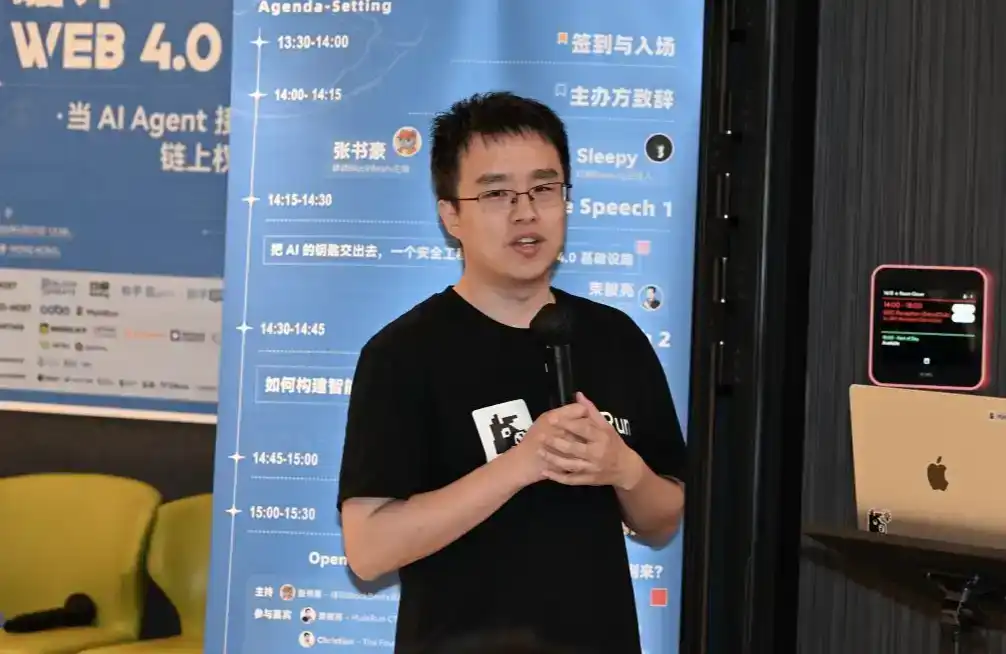
MuleRun CTO: The Moat of Agents Lies in Data Density and User Memory

In a speech titled "Handing AI's Keys to the On-Chain Controllers," MuleRun CTO Shu Junliang discussed the evolution and security of AI Agents in finance and Web3. He outlined six dimensions for a complete AI assistant: dialogue, data input, agent capability, execution environment, user memory, and continuous learning. MuleRun's product integrates these through features like multi-platform IM bots, real-time multi-asset data, smart model routing, cloud sandboxes, persistent user profiles, and a shared knowledge network. Shu emphasized that while AI Agents are advancing from assisting to autonomously executing decisions—potentially enabling individuals to operate like small funds—safety remains paramount. He detailed MuleRun's security measures, including local key handling, isolated sandboxes, full audit trails, and strict permission controls. However, he acknowledged persistent risks like data exposure, model hallucinations, prompt injection, and the "black box" nature of AI decisions, advising manual confirmation for financial operations. He identified key trends: the shift from human-led to Agent-led on-chain interactions requiring infrastructure redesign; the erosion of information advantages replaced by competition in execution speed and strategy; and the balancing effect of Agents, which democratize access but ultimately advantage those with superior judgment. Shu concluded that an Agent's true moat lies in data density and accumulated user memory, not easily replicable technology, and that while Agents will reshape finance and Web3, human oversight over critical decisions must remain.

marsbit05/14 08:50

MuleRun CTO: The Moat of Agents Lies in Data Density and User Memory

marsbit05/14 08:50

AI Agents Can Be Verified, But Who Protects Their Privacy?

As AI Agents evolve from automated tools into active participants in on-chain economies, a critical challenge emerges: establishing trust while preserving privacy. While standards like ERC-8004 aim to provide verifiable identity and reputation for agents, their public nature could expose sensitive operational strategies, user preferences, and business relationships in fields like DeFi, governance, and prediction markets. The proposed ACTA (Anonymous Credentials for Trustless Agents) framework addresses this by adding a privacy layer. It allows agents to cryptographically prove they meet certain criteria (e.g., having passed an audit or possessing sufficient reputation) without revealing the underlying sensitive data, using zero-knowledge proofs. This shifts trust from "public identity" to "policy-based proof." This shift is crucial because agents act dynamically on behalf of users, making their behavior a potential proxy for user intent. ACTA would enable verification of an agent's legitimacy or authorization without creating a permanent, public map of all its activities and relationships. ACTA remains a research direction with open challenges, including scalability, decentralization of credential issuers, and implementation costs. However, it highlights a fundamental need: a robust Agent economy requires not just mechanisms for verification, but also for protecting the privacy of agents, their users, and the protocols they interact with.

marsbit05/14 01:27

AI Agents Can Be Verified, But Who Protects Their Privacy?

marsbit05/14 01:27

Tiger Research: AI Agents Will Now Need Identity Verification

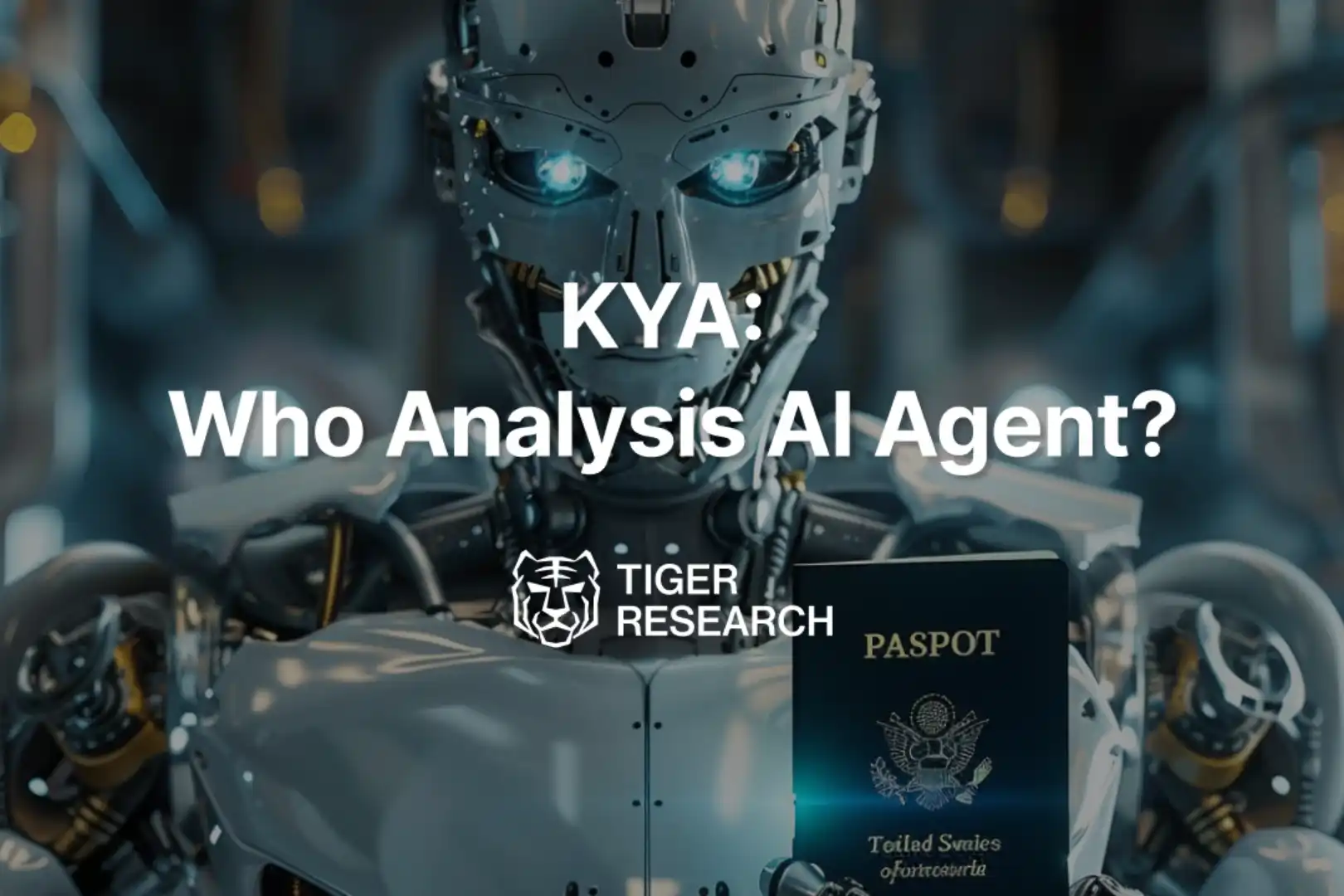
Tiger Research: AI Agents Now Need "ID Verification" AI agents are increasingly capable of autonomously executing contracts, making payments, and conducting trades. However, a critical issue remains unresolved: how to verify the identity of the agent on the other side of a transaction. This article examines the emerging competition to establish a KYA (Know Your Agent) standard and the current state of regulatory progress. **Core Points:** 1. As AI agents operate independently in A2A (agent-to-agent) scenarios, the focus shifts from KYC (Know Your Customer) to KYA for identity verification. 2. KYA is not universally required; it's essential primarily when independently deployed agents interact with open ecosystems like DEXs, engage in A2A payments, or pay merchants, not within centralized platforms. 3. A standards battle is underway, with four key players approaching KYA from different angles: * **ERC-8004:** A blockchain-native approach, creating agent IDs as NFTs with on-chain registries for identity, reputation, and validation. * **Visa TAP:** Leverages Visa's payment network to issue verified "Agent Intent" credentials, bundling agent identity into its payment rails. * **Trulioo:** Adapts the SSL certificate model to issue dynamic "Digital Agent Passports," verifying both developer (KYB) and user (KYC) credentials. * **Sumsub:** Focuses on real-time risk detection and re-verification of the human behind an agent during suspicious transactions, rather than pre-issuing certificates. 4. Regulatory momentum is building. The EU AI Act, the U.S. NIST, and Singapore's national AI governance framework are prioritizing agent identity management. The rollout of KYA standards is likely to follow a pattern similar to the FATF Travel Rule, becoming a watershed moment for the industry. The market is unlikely to have a single winner. Different approaches will dominate specific niches: ERC-8004 for on-chain autonomous transactions, Visa TAP for payment-bound commerce, Trulioo for regulated finance, and Sumsub for fraud-prone scenarios. The key differentiator will be which players successfully integrate their identity infrastructure earliest as adoption scales.

marsbit05/09 06:56

Tiger Research: AI Agents Will Now Need Identity Verification

marsbit05/09 06:56

a16z Weekly Chart: Tech Giants Rely on 'Side Hustle' Investments for Income, Great AI Products Can Sell Out in a Day

a16z Weekly Charts: Four Counterintuitive Signals in Tech 1. **Super Platforms' "Other Income"**: Amazon and Google recorded exceptionally high "other income" in Q1, largely from unrealized gains in their private investment portfolios (e.g., Amazon's Anthropic stake). This contributed to over one-third of their net profit, far above the historical 5-10%. The broader trend shows tech capital expenditure is now the primary driver of US GDP growth, accounting for 55% of all business investment. 2. **AI-Generated eBook Proliferation**: Since ChatGPT's launch, monthly eBook releases on Amazon have tripled to over 300,000, flooding the platform with AI-generated content. However, research indicates this has also increased the volume of "decent" books, providing a net gain in consumer surplus by 2025. AI tools have particularly boosted productivity for established authors. 3. **Call Center Jobs Defy AI Replacement**: Contrary to predictions, call center employment in the Philippines has grown steadily from 1.15 million in 2016 to 1.9 million in 2025, with further growth projected. In the US, customer service job postings are outperforming the overall market. The key reason: the full cost of voice AI agents remains roughly equal to human agents (~$92 vs. ~$90 per day). Cases like Klarna show initial replacement can lead to quality issues and re-hiring. 4. **Rapid Adoption of AI Mobile Apps**: AI app downloads, revenue, and user time spent on mobile nearly doubled year-over-year in Q1. The market is highly dynamic, with new products like Codex quickly surpassing incumbents like Claude Code in daily installs. In the B2B space, enterprises are using multiple AI vendors, with less than 20% relying on a single supplier, indicating no winner-takes-all dynamic yet.

marsbit05/09 04:38

a16z Weekly Chart: Tech Giants Rely on 'Side Hustle' Investments for Income, Great AI Products Can Sell Out in a Day

marsbit05/09 04:38

活动图片