# Market Related Articles

HTX News Center provides the latest articles and in-depth analysis on "Market", covering market trends, project updates, tech developments, and regulatory policies in the crypto industry.

What will happen to cryptocurrencies this week. Bitcoin's nearest price targets

Bitcoin ($BTC) has risen by 3.5% since the beginning of August, surpassing $65k and reaching a two-week high on August 10. It is currently trading around $64.8k. Experts outlined key factors and price targets for the coming week. Geopolitical and economic developments are providing support. Potential easing of tensions in the Middle East, particularly regarding the Strait of Hormuz, could reduce oil price and inflation risks, benefiting risk assets like Bitcoin. Additionally, weaker-than-expected U.S. jobs data for July has strengthened expectations for a more dovish Federal Reserve policy, further aiding risk sentiment. This week's focus will be on U.S. inflation data (CPI), where a slowdown could boost Bitcoin, while higher readings might pressure it. However, selling pressure from mining companies continues. High mining costs have forced firms like MARA to sell not only newly mined coins but also dip into their reserves. MARA sold over 23,000 BTC in H1 2026. Furthermore, mining companies are repurposing facilities into AI data centers, creating competition for capital between crypto and the AI sector. Technically, Bitcoin's short-term trend remains upward. Key support is seen around $64k-$64.2k, with potential to rise towards $67.5k and the psychological $70k level. Analysts suggest much negative news is already priced in, and any positive catalyst could push prices higher. However, due to the overall macroeconomic backdrop, a sustained break above the 200-day moving average and the $70k-$72k resistance zone is not widely expected in the near term.

cryptonews.ru1h ago

What will happen to cryptocurrencies this week. Bitcoin's nearest price targets

cryptonews.ru1h ago

Glassnode: Bitcoin Recovery Continues, But This Key Signal is Missing!

Glassnode reports that Bitcoin's recovery continues but lacks a key signal. While the price has stabilized around $65,000 after rebounding from June lows near $58,000, the firm characterizes the market outlook as a "transitional recovery." Despite stable prices below $66,000 and a return to neutral momentum, overall exchange trading volume remains low. Analysts note this divergence suggests a gradual demand increase rather than widespread speculative frenzy. In derivatives markets, perp futures buying activity has surged, yet open interest and funding rates remain moderate, indicating controlled leverage. Options market skew has narrowed, showing reduced demand for downside protection. A key positive signal is robust institutional demand, with regulated Bitcoin investment products seeing significant net inflows. Blockchain data also shows an increase in "hot capital" and a rising ratio of short-term to long-term holder supply, signaling price-sensitive capital is re-entering the market. However, key on-chain metrics have not recovered. Active addresses, blockchain transaction volume, and fee revenue remain near lower statistical bounds, indicating low organic network demand and a lack of urgency among investors. Overall network profitability has seen only minor improvement, with realized losses still exceeding profits. Glassnode concludes that while institutional inflows, spot/futures demand, and reduced defensive positioning are positive, low spot liquidity and weak on-chain activity indicate the recovery hasn't yet broadened into a full bull phase. A sustained break above $66,000 is seen as a critical level to watch for confirming a stronger upward trend.

cryptonews.ru2h ago

Glassnode: Bitcoin Recovery Continues, But This Key Signal is Missing!

cryptonews.ru2h ago

Stock Price Doubles Within the Year, Plummets 20% After Resumption, Baolai Medical's 'Chip Backdoor Listing' Script Ends

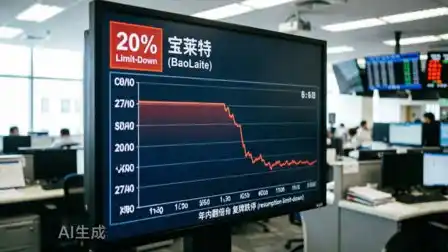
On August 10, 2026, BPL (300246.SZ) resumed trading after a nearly week-long suspension and immediately fell by a 20% limit-down. This plunge was triggered by the termination of a planned controlling stake transfer, dashing earlier market speculation. In January 2026, Zhejiang Quwei Zhihe Partnership entered as a significant shareholder, sparking hopes. Investors speculated that its backer, Weigu Information—a specialized "little giant" company in high-reliability solid-state storage chips—might be seeking a backdoor listing through BPL. This "cross-industry restructuring" expectation fueled a strong rally, with BPL's stock price more than doubling in 2026 prior to the halt. However, the deal was called off on August 7, directly causing the sharp sell-off. Underlying BPL's vulnerability is its fundamentally weak business. The company, a medical device firm, is mired in losses, having reported three consecutive years of net losses totaling over 200 million yuan. Its core hemodialysis business is squeezed by government procurement price cuts, while growth in its patient monitor segment has stalled. Furthermore, BPL faces imminent debt pressure with convertible bonds worth approximately 218 million yuan due in September 2026, and its current stock price is far below the conversion price. The failed control transfer may represent a delayed release of negative news, but BPL's core challenges remain: reversing operational losses and addressing its urgent liquidity crisis.

marsbit8h ago

Stock Price Doubles Within the Year, Plummets 20% After Resumption, Baolai Medical's 'Chip Backdoor Listing' Script Ends

marsbit8h ago

RIP: Atlas, Which Lived Only 292 Days

On August 9, 2026, OpenAI discontinued its standalone AI browser, Atlas, just 292 days after its launch on October 21, 2025. Initially positioned as a challenger to Chrome and the broader AI browser ecosystem, Atlas aimed to fundamentally redesign how users interact with browsers by deeply integrating ChatGPT. Its features included an AI-powered address bar, a sidebar for webpage analysis, Browser Memories for context retention, and an Agent Mode to automate multi-step tasks like shopping and research. Despite building on Chromium with a custom OWL (OpenAI Web Layer) framework, OpenAI struggled with the immense complexity of maintaining a full-fledged browser. The team spent significant time addressing basic functionalities—password managers, extensions, input methods—that mainstream browsers already handled seamlessly. Atlas's core AI agent capabilities also faced issues with reliability, speed, and security vulnerabilities like prompt injection. Furthermore, Atlas was limited to Apple Silicon Macs, failing to release promised Windows, iOS, and Android versions. This, coupled with the high switching cost for users entrenched in Chrome or Edge's ecosystems, hindered its adoption. By mid-2026, updates slowed, and OpenAI announced its shutdown, opting to integrate Atlas's AI explorations into the ChatGPT desktop app and browser extensions instead. The article contrasts two AI browser development paths: standalone products like Atlas, Perplexity's Comet, and Dia, which redesign the browser around AI but face user migration barriers; and the approach of incumbents like Chrome and Edge, which add AI features atop existing, widely-used platforms. The key question remains whether users need a completely new "AI browser" or simply AI capabilities within their current browser. While Atlas's experiment ended, the broader trend of AI integration into browsing continues.

marsbit9h ago

RIP: Atlas, Which Lived Only 292 Days

marsbit9h ago

活动图片