0.7nm Process Chip Emerges, Moore's Law Lives On

marsbit發佈於 2026-06-26更新於 2026-06-26

文章摘要

IBM has unveiled the world's first sub-1-nanometer (0.7nm) chip technology, integrating nearly 100 billion transistors into an area the size of a fingernail. This breakthrough doubles the transistor density of current 2nm chips and promises a 50% performance gain or a 70% improvement in power efficiency. The achievement is powered by IBM's "NanoStack" architecture, a pioneering 3D design featuring vertically stacked nanosheet transistors. This evolution from FinFET and Gate-All-Around (GAA) technologies offers superior electrostatic control. IBM has demonstrated the technology's viability with functional CMOS inverters and a 40% area reduction in SRAM, crucial for AI chip data bandwidth. Addressing the critical power consumption challenges in AI computing, this advancement extends the roadmap for chip miniaturization. While IBM does not manufacture chips itself, it licenses its process technology to partners. The company projects that NanoStack-based chips could enter production within the next five years, potentially sustaining Moore's Law for another decade.

Is Moore's Law saved?

IBM unveiled the world's first 0.7 nanometer chip process node, integrating nearly 100 billion transistors on a chip the size of a fingernail, achieving a density double that of 2nm chips.

Previously, TSMC's most advanced process was 2nm, which had been difficult to advance beyond for years.

NVIDIA CEO Jensen Huang had repeatedly declared Moore's Law dead, but now there is finally a turning point.
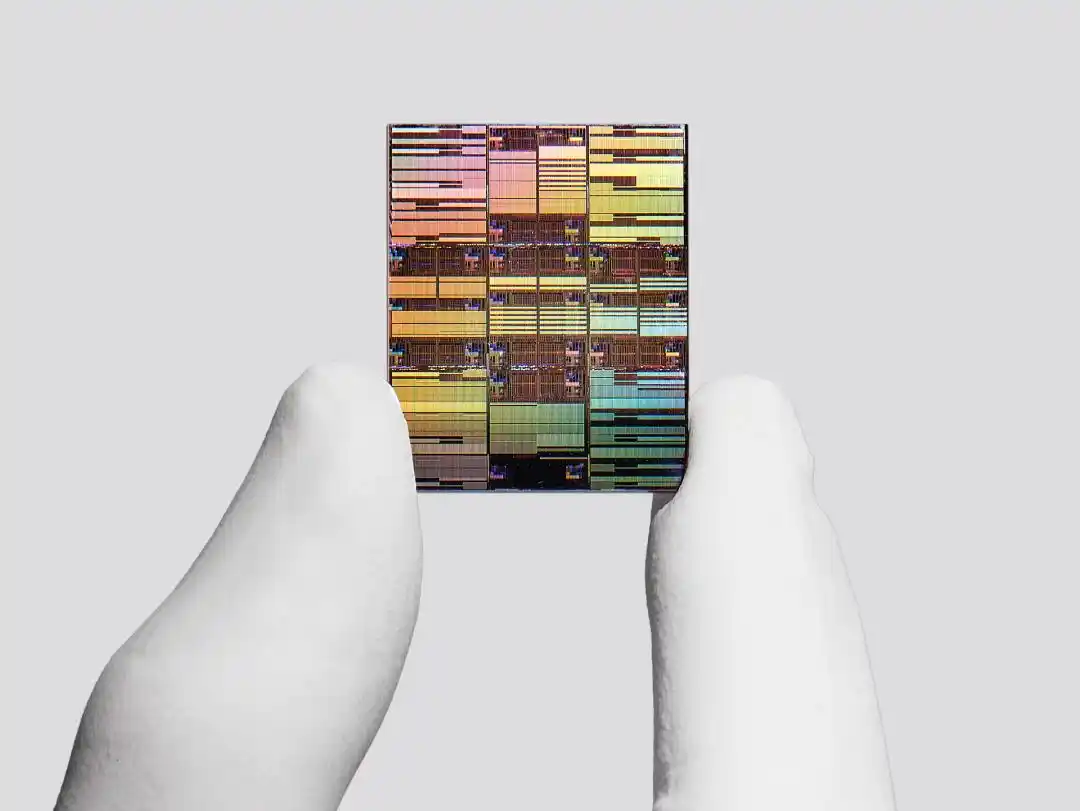
0.7 nanometers, or 7 angstroms, marks the first time human-made transistors have broken through the 1 nanometer threshold, approaching the scale of individual atoms (0.1-0.5 nanometers).

Compared to the 2nm process, it can deliver either a 50% performance improvement or a 70% increase in power efficiency; one or the other.

NanoStack Architecture Arrives

The core of this breakthrough is IBM's "NanoStack" architecture, the industry's first 3D vertically stacked transistor design based on nanosheets.

To understand NanoStack, one must first review the path chip architecture has taken in recent years.

In the 7nm and 10nm era, the mainstream solution was FinFET (Fin Field-Effect Transistor) with the gate wrapping around the channel on three sides to control current. Below 5nm, FinFET's leakage issues became increasingly severe and unsustainable.

In 2017, IBM introduced the Gate-All-Around (GAA) nanosheet technology, where the gate completely surrounds the horizontally stacked nanosheet channel on all four sides, significantly enhancing electrostatic control. This became the technical foundation for its 2nm chip and was subsequently adopted by mainstream manufacturers like TSMC and Samsung.

At the end of 2021, IBM and Samsung jointly announced the VTFET (Vertical-Transport Field-Effect Transistor), which changed the current flow direction from horizontal to vertical. Simulation data showed it could either double performance or reduce power consumption by 85% compared to a similarly sized FinFET solution.

This NanoStack is a further extension of the above roadmap.

Its method is:

Take two wafers with nanosheet transistors, invert one and place it on top of the other, bonding them via an ultrathin dielectric bonding layer to form a vertically interconnected 3D structure. Each layer can use different material combinations, allowing n-type and p-type transistors to be independently optimized without interference.
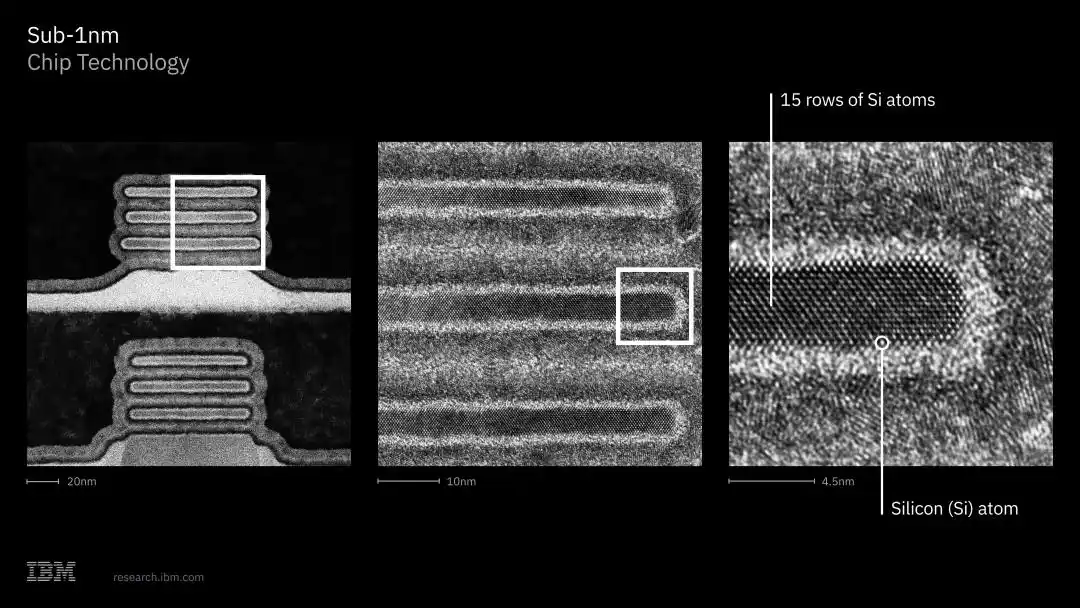
IBM has already completed validation in the lab, demonstrating CMOS integration, dual-channel engineering capabilities, and a fully functional CMOS inverter with switching performance meeting expectations, confirming that this technology can be manufactured and support real computation.

At the VLSI 2026 symposium, IBM further showcased NanoStack's performance on SRAM: a 40% area reduction. SRAM is a core component of on-chip cache, which has long been extremely difficult to scale down. This progress is particularly crucial for the high-bandwidth data pathways required by AI chips.

"Nobody Wants to Pay the Electricity Bill"

Huiming Bu, vice president of chip research at IBM Research, stated: Everyone wants higher performance, but nobody wants to pay the electricity bill.

This is the reality facing the current AI computing power race. The energy consumption of AI chips has evolved from a technical issue to an infrastructure problem, with some data center projects experiencing construction delays due to insufficient power supply.

The 70% power efficiency improvement offered by the 0.7nm technology directly addresses this demand.

However, IBM itself no longer manufactures or sells chips. It develops manufacturing process technologies at its research center in Albany, New York, and then licenses them to chip manufacturers.

Past licensees have included Samsung and the newly formed Japanese semiconductor company Rapidus. Huiming Bu declined to disclose potential customers for the 0.7nm technology.

Regarding competing solutions, the Belgian research institute Imec is advancing another 3D architecture scheme, building transistor structures through layer-by-layer stacking, which has attracted attention from several chip manufacturers.

For mass production, IBM's given timeline is: NanoStack technology could achieve mass production within the next five years at the earliest.

IBM's semiconductor roadmap predicts that with the NanoStack architecture, chip scaling can continue for at least another decade.

References:

[1]https://newsroom.ibm.com/2026-06-25-ibm-debuts-worlds-first-sub-1-nanometer-chip-technology

This article is from the WeChat public account "QbitAI", author: Meng Chen

熱門幣種推薦

相關問答

QWhat is the name of the new architecture that enabled IBM's 0.7nm chip breakthrough?

AThe new architecture is called 'NanoStack'. It is the industry's first three-dimensional, vertically stacked transistor design based on nanosheets.

QAccording to the article, what is a key challenge that the improved energy efficiency of the 0.7nm process aims to solve?

AIt aims to address the growing AI compute power consumption, which is evolving from a technical issue into an infrastructure problem. This is because some data center projects face construction delays due to insufficient power supply, and users want higher performance without significantly higher electricity bills.

QHow does IBM's 0.7nm chip compare to a 2nm chip in terms of performance or energy efficiency?

ACompared to a 2nm process, the 0.7nm technology offers a choice: it can provide either a 50% performance improvement or a 70% increase in energy efficiency.

QWhat significant milestone does the 0.7nm (7 Angstrom) transistor represent in semiconductor manufacturing?

AIt represents the first time a human-made transistor has broken the 1-nanometer threshold, bringing its scale close to that of individual atoms (0.1-0.5 nanometers).

QWhat is IBM's estimated timeline for the NanoStack technology to reach mass production?

AIBM's timeline suggests that the NanoStack technology could enter mass production as early as within the next five years.

你可能也喜歡

Arthur Hayes 重新将 Cardano 与 XRP 的实用性辩论置于聚光灯下

TL;DR - Arthur Hayes质疑Cardano和XRP是否具备足够的实际效用,以支撑其社区的信心。 - 这一批评虽具挑衅性,但触及了核心问题:加密网络越来越需要可衡量的使用量,而不仅仅是持有者的忠诚度。 - 两个生态都有反驳的理由:Ripple在支付领域的推进,Cardano的治理和质押基础设施。 摘要: BitMEX联合创始人Arthur Hayes近期将Cardano和XRP重新推入“效用辩论”的焦点。他质疑这两种资产是否过度依赖社区财富效应和忠诚度,而缺乏足够的实际交易需求证据。Hayes的风格直率,但其提出的问题值得深思:在2026年,主流山寨币的价值应有多少来自网络实际使用,有多少仍可仅靠信念支撑? Cardano和XRP拥有高度忠诚的社区,但批评者认为这种忠诚可能掩盖了使用量的不足。XRP的效用路径主要集中在支付、流动性和机构结算,Ripple多年来也致力于跨境金融产品,但批评者指出其代币的实际交易需求仍不够清晰和可衡量。Cardano则强调其质押机制、研究驱动的发展、去中心化治理以及Voltaire治理时代,支持者视其为严谨,批评者则认为其进展缓慢。 当前加密市场已变得更加严格,投资者越来越关注活跃用户、费用产生、开发者活动、稳定币流动性、DeFi深度或支付量等可衡量的使用指标。Hayes的批评提醒我们,忠诚度虽能提供流动性和持久力,但长期来看,网络需要将忠诚转化为可见的、可重复的效用。对于XRP,可能需要更明确的支付需求证据;对于Cardano,则需要更多应用使用、治理参与和链上经济活动。 无论是否同意Hayes的观点,他提出的问题迫使社区思考如何弥合叙事与实证之间的差距。Cardano和XRP的支持者可以反驳其语气,但仍需面对根本挑战:展示数据、证明使用量,并以超越现有用户的方式证明其价值。

bitcoinist35 分鐘前

Arthur Hayes 重新将 Cardano 与 XRP 的实用性辩论置于聚光灯下

bitcoinist35 分鐘前

尽管活跃地址跌至45天低点,卡尔达诺巨鲸仍在持续积累ADA

尽管卡尔达诺(Cardano)网络的每日活跃地址数降至45天低点,但持有超过10万ADA的大户(鲸鱼)钱包数量增长了1.2%。这表明在零售用户活动低迷时期,机构或大户投资者正在持续积累ADA。 这一数据分歧是核心故事:鲸鱼可能在采取更长线的视角,而日常网络使用暂时冷却。这对市场结构而言可能是一个建设性信号,但并不等同于短期价格立即上涨的动力。 关键需要注意的是,这种积累现象不应被解读为价格即将反转的保证,而应视为一个长期趋势信号。加密货币市场擅长将单一数据点迅速放大为市场叙事,但更审慎的看法是:这是一个值得关注的信号,而非确定性预言。 对于交易者而言,此类故事的影响会扩散至相关交易领域,例如影响山寨币情绪、机构仓位布局,以及对资产供需支撑的判断。在流动性较薄的市场中,这些二阶效应可能与原始新闻本身同样重要。 下一步应关注此模式是否会得到后续资金流、链上指标、持仓量等数据的持续确认,以判断这是否会成为一个更持续的市场主题,抑或只是短期的仓位调整。当前市场正处于资金可能流出、轮动至更安全的加密资产或暂存稳定币寻求机会的复杂阶段,此信息为解读市场情绪增添了又一参考片段。

bitcoinist35 分鐘前

尽管活跃地址跌至45天低点,卡尔达诺巨鲸仍在持续积累ADA

bitcoinist35 分鐘前

BNB链在52亿美元代币化股票交易推进中超越Solana

**BNB链在代币化股票交易量上超越Solana** **关键数据:** * BNB链累计代币化股票交易量达到52亿美元(主要由Ondo Finance贡献,占51.2亿美元),超过了Solana的45亿美元。 * **重要提示**:需区分BNB链的“代币化股票累计交易量”与Solana的“代币化股票累计转移量”这两个不同指标。 **核心内容:** BNB链在代币化股票这一新兴赛道上的交易活动已超过Solana。这一数据来源于Ondo Global Markets仪表板和DefiLlama的RWA指数。该变化反映了市场风险偏好的潜在转移,是观察当前资本流向和市场结构的信号之一,而非决定性的市场结论。 **对交易者的意义:** 代币化股票等现实世界资产产品已成为链上的重要叙事,关乎结算、准入和市场基础设施。BNB链在交易量指标上的领先显示了当前交易活动的聚集点。这类动态往往会波及相关交易领域,例如影响山寨币情绪、塑造机构头寸等,在市场流动性较薄时,其二次效应尤为重要。 **需要留意的关键点:** 加密货币市场极易将单一数据点快速放大为普遍叙事。正确的解读应更审慎:这是一个**信号**,而非**保证**。交易量数据的变化本身并不直接等同于长期持有者信心丧失或网络出现问题,其价值在于帮助理解市场参与者的头寸、信心和动机。 **后续关注点:** 下一步需观察后续数据流、链上指标、未平仓合约等是否能持续验证这一趋势。若持续,则可能成为一个更稳固的市场主题;若迅速消退,则可能只是短期头寸调整。在当前市场环境下,需结合更广泛的流动性、宏观条件和衍生品状况来综合解读这一信号。

bitcoinist1 小時前

BNB链在52亿美元代币化股票交易推进中超越Solana

bitcoinist1 小時前

交易

現貨

熱門文章

如何購買CHIP

歡迎來到HTX.com!在這裡,購買USD.AI (CHIP)變得簡單而便捷。跟隨我們的逐步指南,放心開始您的加密貨幣之旅。第一步:創建您的HTX帳戶使用您的 Email、手機號碼在HTX註冊一個免費帳戶。體驗無憂的註冊過程並解鎖所有平台功能。立即註冊第二步:前往買幣頁面,選擇您的支付方式信用卡/金融卡購買:使用您的Visa或Mastercard即時購買USD.AI (CHIP)。餘額購買:使用您HTX帳戶餘額中的資金進行無縫交易。第三方購買:探索諸如Google Pay或Apple Pay等流行支付方式以增加便利性。C2C購買:在HTX平台上直接與其他用戶交易。HTX 場外交易 (OTC) 購買:為大量交易者提供個性化服務和競爭性匯率。第三步:存儲您的USD.AI (CHIP)購買USD.AI (CHIP)後,將其存儲在您的HTX帳戶中。您也可以透過區塊鏈轉帳將其發送到其他地址或者用於交易其他加密貨幣。第四步:交易USD.AI (CHIP)在HTX的現貨市場輕鬆交易USD.AI (CHIP)。前往您的帳戶,選擇交易對,執行交易,並即時監控。HTX為初學者和經驗豐富的交易者提供了友好的用戶體驗。

608 人學過發佈於 2026.04.21更新於 2026.06.02

如何購買CHIP

相關討論

歡迎來到 HTX 社群。在這裡,您可以了解最新的平台發展動態並獲得專業的市場意見。 以下是用戶對 CHIP (CHIP)幣價的意見。

活动图片