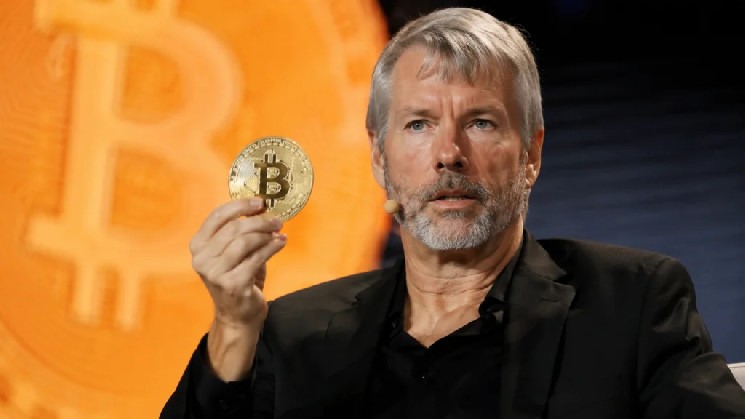
Original Title: Tom Lee's Core Investment Logic for 2026: 'Companies Selling Scarce Assets Are Crushing the Market'
Original Author: Chris Lee
Tom Lee, one of Wall Street's most accurate bulls and founder of Fundstrat and manager of the Granny Shots fund, recently stated that the single most crucial investment keyword for the 2026 market is 'scarcity.' He bluntly said, 'Companies selling scarce assets are crushing the market.' This seemingly simple statement contains a complete stock-picking logic, macro judgment, and profound bets on Federal Reserve policy and geopolitics.
I. Core Definition and Logic of Scarce Assets
The 'scarce assets' defined by Tom Lee are not traditional scarce goods like gold or collectibles, but **products or services where supply is severely constrained while demand is exploding.** This structural supply-demand mismatch grants sellers extremely strong pricing power, thereby driving excess returns.
He specifically highlights three key scarcity areas:
1. AI Computing Power: Companies like NVIDIA, AMD, and Intel. Training and running AI large models require massive amounts of GPUs and accelerator chips, but capacity expansion for TSMC's advanced nodes, CoWoS packaging, etc., faces physical limits. According to reports, the AI chip supply chain tightness will last at least until the end of 2026.
2. AI Memory (HBM High-Bandwidth Memory): Manufacturers like Micron and SanDisk. In AI servers, HBM is a bottleneck as critical as GPUs, with complex manufacturing processes and slow yield improvements; capacity is already fully booked by giants like NVIDIA.
3. Energy Infrastructure: Companies like GE Vernova (GEV). Data center power demand is exploding; by 2030, North American data center electricity consumption is projected to account for 9-10% of total power generation (only 3-4% in 2025). Delivery cycles for large equipment like gas turbines and transformers are as long as 2-3 years, with extremely slow capacity expansion.
Logical Chain: The demand brought by the AI revolution is explosive, while physical, process-related, and time constraints on the supply side cannot match it quickly. This imbalance is not a short-term phenomenon but a structural opportunity that will persist through 2026. Precisely because of this, these companies have high gross margins, strong pricing power, and their performance and stock prices far exceed market averages. This is also the core strategy of the Granny Shots fund - focusing on 'companies selling scarce things.' The fund's AUM has surpassed $4 billion, with capital voting with its feet.
II. Macro Background and Practical Trading Framework
Tom Lee emphasizes that the market is currently in a 'fog of war' with persistent geopolitical risks. However, he observes that oil prices may have peaked and provides a clear trading framework: when oil prices fall, buy assets negatively correlated with oil prices, including the S&P 500, Ethereum, and the Mag7 (Magnificent 7).
The logic is: Falling oil prices → easing inflationary pressures → increased expectations for Fed rate cuts → benefiting growth stocks and risk assets. While conflicts may push oil prices higher, a peak and subsequent decline in oil prices can instead become a positive signal to buy growth stocks. This provides investors with a practical guide for contrarian action in an uncertain environment.
III. Strong Earnings and Full-Year Market Outlook
This quarter's earnings season has been exceptionally bright: among companies that have reported, 87% exceeded expectations, by a significant margin of 19%. Tom Lee points out this is 'emerging market-level' earnings growth happening in the US, with the core driver being the productivity revolution brought by AI.
Market Path Judgment:
The S&P 500 has reached the 7,300 point target predicted at the start of the year, but **now is not the time to sell**.
A 'bear market-like' correction may occur mid-year, potentially driven by the market testing a new Fed chair or extended geopolitical conflicts.
Following the correction, a rebound is expected, with the full-year target revised up to at least 7,700 points, maintaining an overall bullish view.
He specifically reminds: The Mag7, cryptocurrency, and software sectors have already experienced one bear market-like episode. Investors shouldn't chase highs at 7,300 points, nor panic during a correction—the correction is precisely a good opportunity to add to positions in scarce assets.
IV. Theme Prioritization and Real-World Implications
Tom Lee ranks investment themes as follows:
1. Global Labor Scarcity + AI (Top Priority): An aging population pushes up labor costs, forcing companies to replace human labor with AI and automation—a structural trend lasting a decade.
2. Cybersecurity + Energy Security (Second Priority): Geopolitical tensions are prompting countries to increase investment in related infrastructure.
3. Seasonal Factors.
Last week's performance of Granny Shots stocks also validated this framework: top gainers like Qantas, Google, Caterpillar, Tesla, and AMD all fit the scarcity logic; some short-term pullbacks (e.g., GE Vernova, Sofi) were mostly due to guidance falling short of the market's exceedingly high expectations—normal volatility that doesn't change the long-term trend.
Conclusion: The Investment Code for 2026 is 'Scarcity'
Tom Lee's complete logical chain is clear and powerful: AI-driven structural demand + supply constraints = pricing power and excess returns for scarce assets. Amid macro uncertainty, peaking oil prices are a signal for growth stocks, a mid-year correction is an opportunity to add positions, and the full-year S&P 500 may challenge 7,700 points.
For investors, the real takeaway is not simply chasing rallies, but shifting mindset: from 'what's rising' to 'why it's rising.' Only by seizing companies with constrained supply and exploding demand can one achieve sustained excess returns in 2026. Scarcity is not a concept; it's the tangible, hard constraint of supply and demand—this is precisely the most important investment framework Tom Lee leaves for the market.