Bitcoin Now Less Volatile Than Tesla, Nvidia — Schwab Data

bitcoinist发布于2026-03-27更新于2026-03-27

文章摘要

Morgan Stanley is nearing the launch of the first spot Bitcoin ETF from a major U.S. bank, reflecting Bitcoin's growing integration into mainstream finance. According to Charles Schwab data, Bitcoin's volatility has significantly decreased, dropping to 42% in 2025—below that of Tesla (63%) and Nvidia (50%). Over a three-year period, Bitcoin's maximum drawdown was 50%, compared to 54% for Tesla and 37% for Nvidia. While still volatile, Bitcoin now exhibits price swings closer to major equities rather than the highly speculative asset it once was. Despite this maturation, it remains riskier than traditional safe-havens like gold and more stable than Ethereum within crypto markets.

Morgan Stanley is inching closer to launching the first spot Bitcoin ETF issued by a major US bank, a move that underscores just how far the cryptocurrency has traveled from its wild early days.

The bank recently received an official NYSE listing notice for its fund, MSBT — a step that analysts say typically signals a debut is near.

Wall Street’s Deepening Embrace

That development arrives alongside fresh data from Charles Schwab showing Bitcoin’s price swings have dropped sharply over the past four years.

According to the firm’s analysis, Bitcoin’s historical volatility hit 42% in 2025 — roughly half what it recorded in 2021. For context, Tesla’s historical volatility came in at 63% that same year.
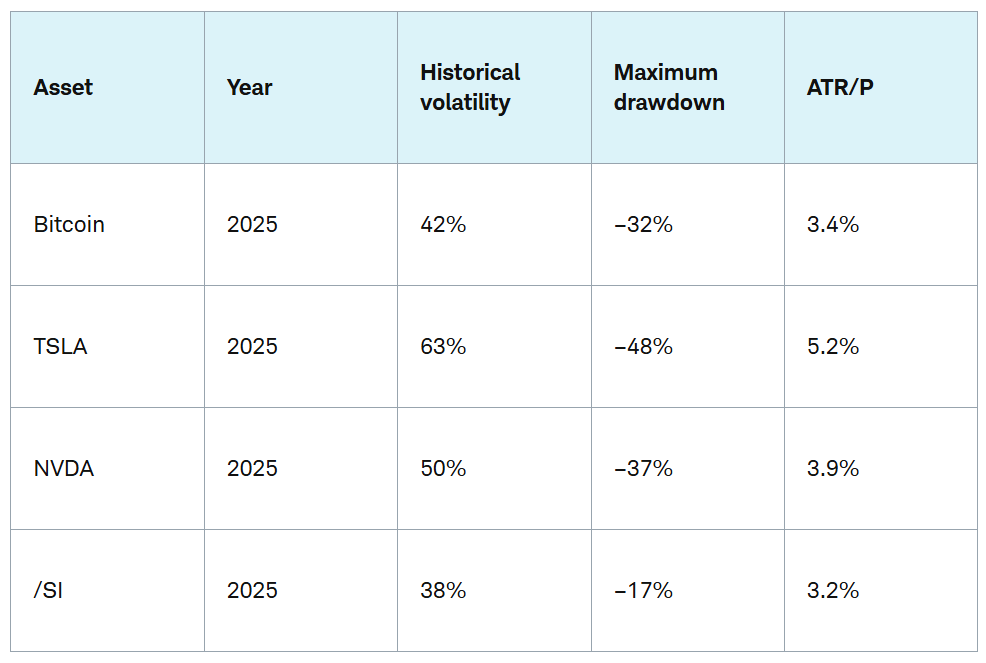
The table shows Bitcoin’s volatility fell below Nvidia (50) and Tesla (63) in 2025, and came close to silver futures at 38, which still saw notable swings. Source: Charles Schwab 

Nvidia’s was 50%. Both exceeded Bitcoin’s. Measures of daily price movement told a similar story, with Bitcoin tracking closer to major equities than the volatile fringe asset it once resembled.

Schwab concluded the shift reflects Bitcoin’s deeper integration into mainstream finance, now trading on major exchanges worldwide through regulated products and ETF wrappers. The report described Bitcoin’s volatility as having “calmed down” as it matured.
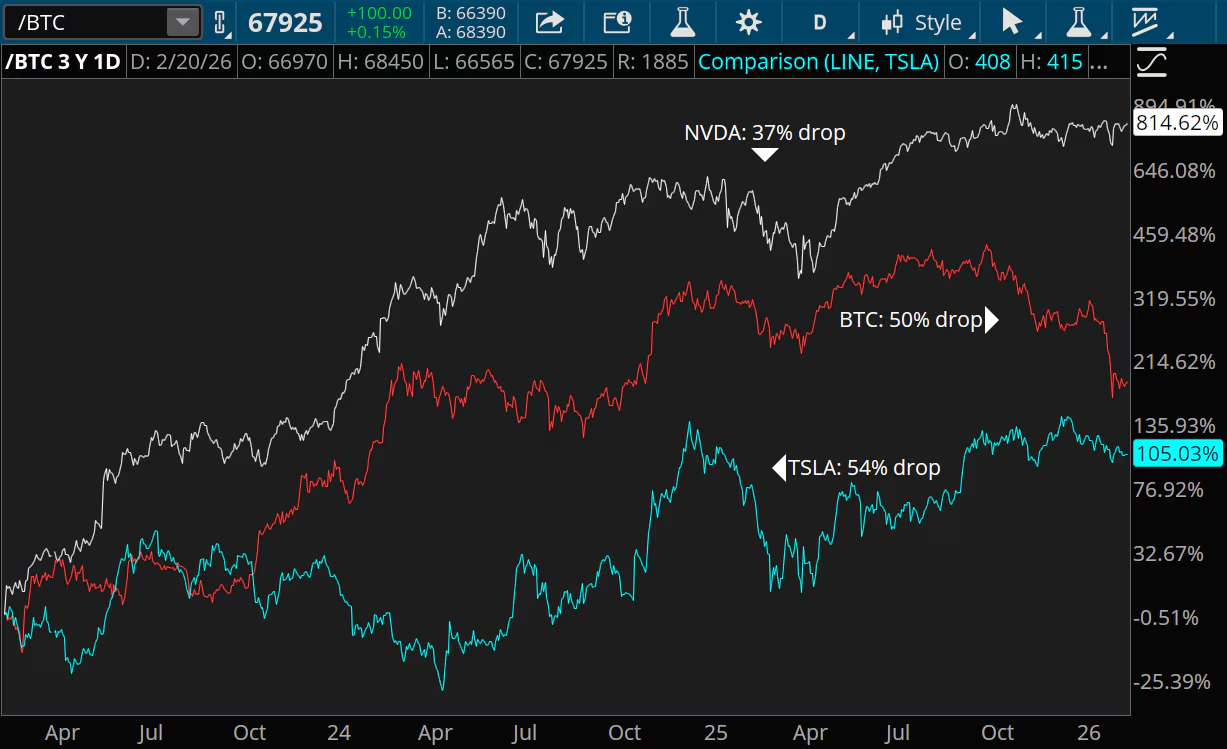
The three-year view (Feb 2023–Feb 2026) shows Bitcoin’s largest drawdown hit 50%, compared with 54% for Tesla and 37% for Nvidia. Source: Charles Schwab 

Still, calm is relative. Bitcoin dropped as much as 30% in 2025, with losses carrying into early 2026. Over a three-year stretch, the asset fell 50% from peak to trough.

Those numbers are significant by almost any measure — but not unique. Tesla’s worst drawdown over the same period hit 54%. Nvidia fell 37% at its low point. The data suggests high-growth technology stocks can swing just as hard, or harder, than Bitcoin on a bad run.

Bitcoin is now trading at $69,534. Chart: TradingView

The Long View Tells A Different Story

Zoom out further and Bitcoin’s profile grows more extreme. During the 2022 market downturn, Bitcoin fell 77% from its peak. Tesla dropped 74%. Nvidia lost 66%. The losses were steep across the board, but Bitcoin’s were steeper.

Schwab also put Bitcoin up against commodities. Silver futures often moved more erratically on a day-to-day basis, despite recording smaller overall declines.

Gold, by contrast, posted steadier gains at lower volatility — a clear reminder that Bitcoin, whatever its trajectory, still operates in a different risk class from traditional safe-haven assets.

Within crypto markets, Bitcoin’s relative stability has grown more noticeable. Ethereum continues to trade with higher volatility and deeper drawdowns, and the gap between the two assets has widened since 2021.

A Benchmark Shift In The Making

The Schwab report lands as Bitcoin increasingly gets measured against blue-chip equities rather than speculative assets. Whether that framing sticks may depend on how the asset behaves through the next major market stress test — a question the data cannot yet answer.

Featured image from Unsplash, chart from TradingView

相关问答

QAccording to the Schwab data, how did Bitcoin's historical volatility in 2025 compare to that of Tesla and Nvidia?

ABitcoin's historical volatility in 2025 was 42%, which was lower than both Tesla's (63%) and Nvidia's (50%).

QWhat major step did Morgan Stanley take that indicates it is close to launching a spot Bitcoin ETF?

AMorgan Stanley received an official NYSE listing notice for its fund, MSBT, which analysts say is a step that typically signals a debut is near.

QWhat was Bitcoin's largest drawdown over the three-year period from February 2023 to February 2026, and how did it compare to Tesla and Nvidia?

ABitcoin's largest drawdown was 50%, which was less severe than Tesla's 54% but more severe than Nvidia's 37% drawdown.

QHow did Bitcoin's performance during the 2022 market downturn compare to that of Tesla and Nvidia in terms of peak-to-trough decline?

ADuring the 2022 downturn, Bitcoin fell 77% from its peak, which was a steeper decline than both Tesla (74%) and Nvidia (66%).

QWhat does the Schwab report conclude is the reason for the shift in Bitcoin's volatility profile?

AThe report concluded that the shift reflects Bitcoin's deeper integration into mainstream finance, as it now trades on major exchanges worldwide through regulated products and ETF wrappers, causing its volatility to have 'calmed down' as it matured.

你可能也喜欢

坚守一级市场的VC,手里还有多少钱?

原标题:坚守一级市场的VC,手里还有多少钱? 多位加密货币行业投资人就一级市场现状展开讨论,核心分歧在于资金究竟集中在早期还是后期阶段,但共识是:市场并不缺钱,缺的是值得投资的高质量项目。 Crucible Capital合伙人Meltem Demirors指出,加密货币行业真正能带来“VC级回报”的赛道有限,目前优秀创始人和项目供给不足,导致从种子轮到A轮的门槛显著提高。 Blockworks联合创始人Mippo补充称,早期资金其实过剩,但后期增长资金明显不足。 然而,Varys Capital的Tom Dunleavy与Pantera Capital的Mason Nystrom就资金分布产生激烈争论。Dunleavy引用数据称,2026年80%以上资金流向了后期轮次,A轮及之后的可用资金约60-70亿美元,集中在5-6家大型机构;早期资金仅10-20亿美元,分散于数十家小基金。Nystrom则反驳称,真正能投B轮的基金极少,大多数项目进入传统VC体系后已不算纯加密货币项目,且早期融资的“可获得性”远高于后期。 双方虽未达成一致,但揭示出同一现实:表面资金充足,实则结构收紧——早期资金分散但竞争激烈,中后期资金集中却门槛极高。市场正从依赖叙事和流量转向更看重实际业务进展和长期增长能力。对VC意味着必须更谨慎出手,对创业者则需具备跨越长周期和高门槛的实力。

Odaily星球日报29分钟前

坚守一级市场的VC,手里还有多少钱?

Odaily星球日报29分钟前

交易

现货
合约

热门文章

加密市场宏观研报:《GENIUS Act》法案取得重大进展,BTC突破历史新高,后市全新展望

2025年5月22日,比特币价格正式突破11万美元大关,创下历史新高。在政策面、宏观经济、资金面与投资者结构共同作用下,一场结构性牛市浪潮正在展开。而此轮上涨背后的核心驱动,是美国《GENIUS稳定币法案》的实质性进展以及多项利好的叠加。本文将从政策端突破、宏观环境转向、链上与ETF资金结构、交易行为演化,以及重点受益赛道五大维度,全面解析此轮BTC再创新高的深层逻辑,并前瞻下半年市场的潜在趋势。

1.3k人学过发布于 2025.05.22更新于 2025.05.22

加密市场宏观研报:《GENIUS Act》法案取得重大进展,BTC突破历史新高,后市全新展望

相关讨论

欢迎来到HTX社区。在这里,您可以了解最新的平台发展动态并获得专业的市场意见。以下是用户对BTC(BTC)币价的意见。

活动图片