Bitcoin price recovers – But ONE hurdle keeps BTC bulls on edge

ambcrypto发布于2026-07-10更新于2026-07-10

文章摘要

Bitcoin is showing signs of demand recovery after weeks of selling pressure, with the 30-day cumulative demand rebounding sharply. However, the recovery is uneven: futures market demand has recovered to neutral levels, while spot market demand remains weak, indicating long-term investors are still hesitant. This divergence suggests traders are positioning for price increases before significant capital enters the spot market. Downside fears in the options market have eased compared to previous sell-offs, indicating expectations are shifting from a sharp capitulation to a slower bottoming process. Despite this calmer sentiment, the recovery faces headwinds from long-term holders distributing coins and taking profits. Data shows supply is rotating from experienced holders to newer participants, and until this selling pressure subsides and spot accumulation strengthens, Bitcoin's recovery is likely to remain gradual rather than accelerating into a sustained bullish trend.

Bitcoin [BTC] is beginning to regain demand. This comes after weeks of persistent selling pressure weakened participation across both spot and derivatives markets.

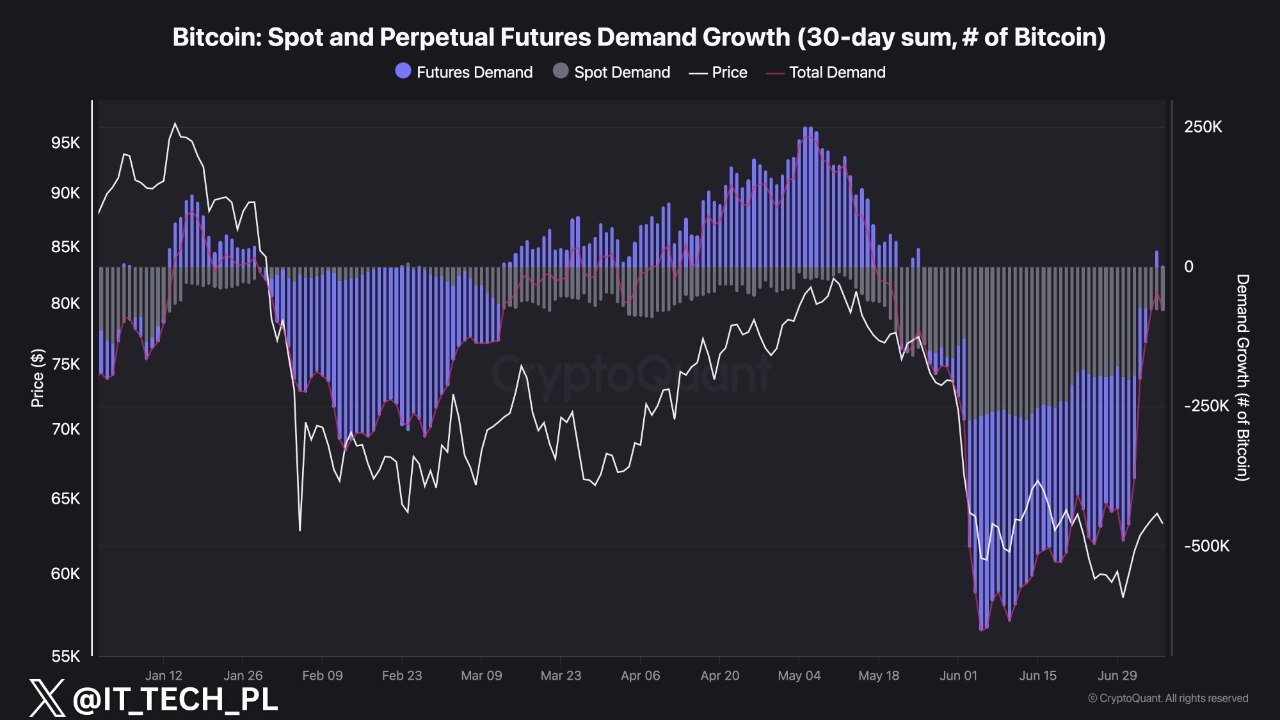
Over the past week, the 30-day cumulative demand rebounded sharply from nearly -500,000 BTC to around -75,000 BTC. This shift signaled that risk appetite is gradually returning.
Source: CryptoQuant

Notably, futures demand recovered from roughly -295,000 BTC to slightly above neutral. Despite that, spot demand remained weak near -78,000 BTC, showing long-term investors are still waiting for stronger confirmation. Moreover, that divergence suggests traders are positioning for higher prices before meaningful capital enters the spot market.

Although sentiment has clearly improved, Bitcoin’s recovery will remain vulnerable until spot accumulation strengthens, reinforcing derivatives-driven momentum with broader investor conviction.

Downside fears begin to ease

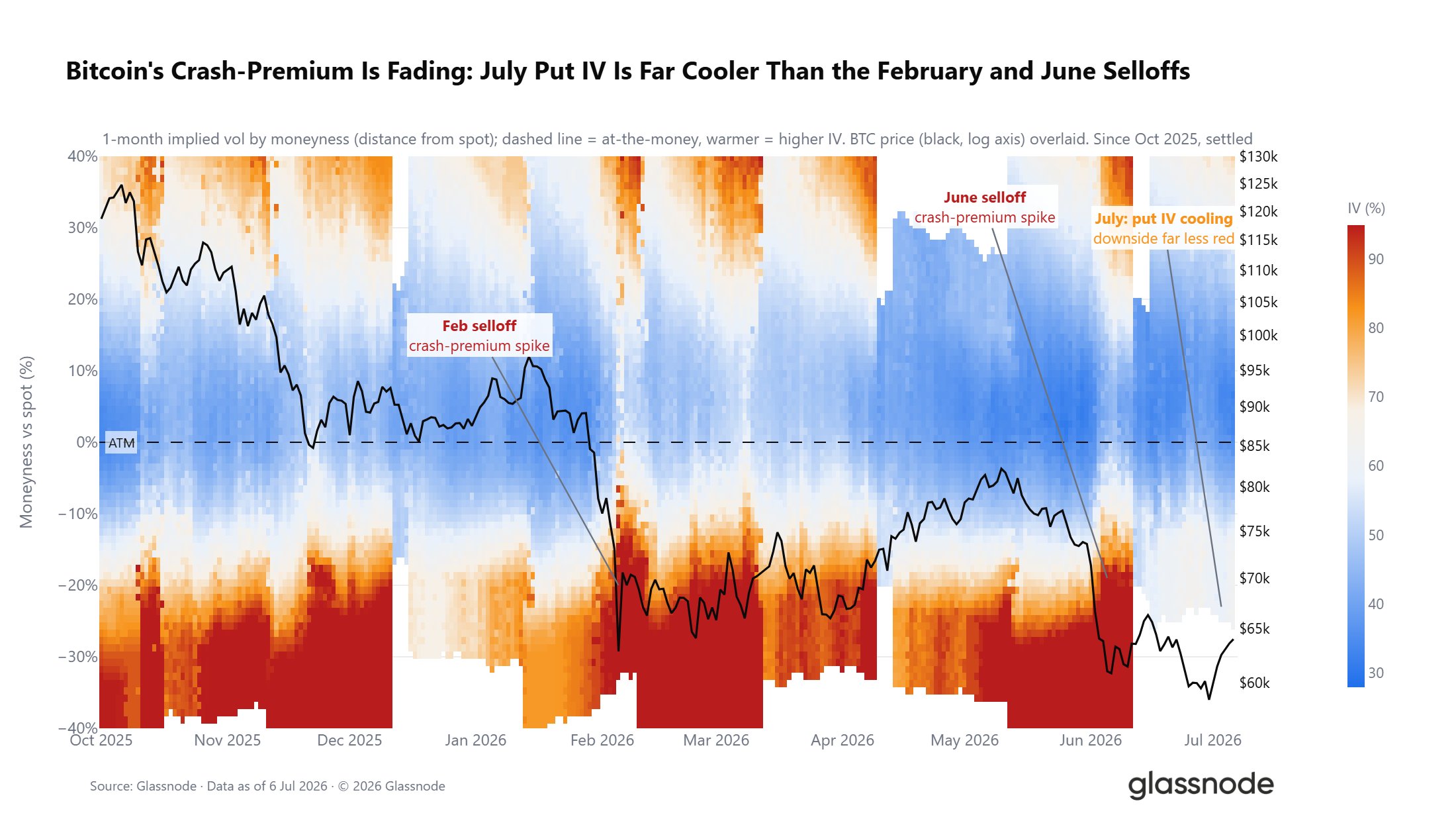
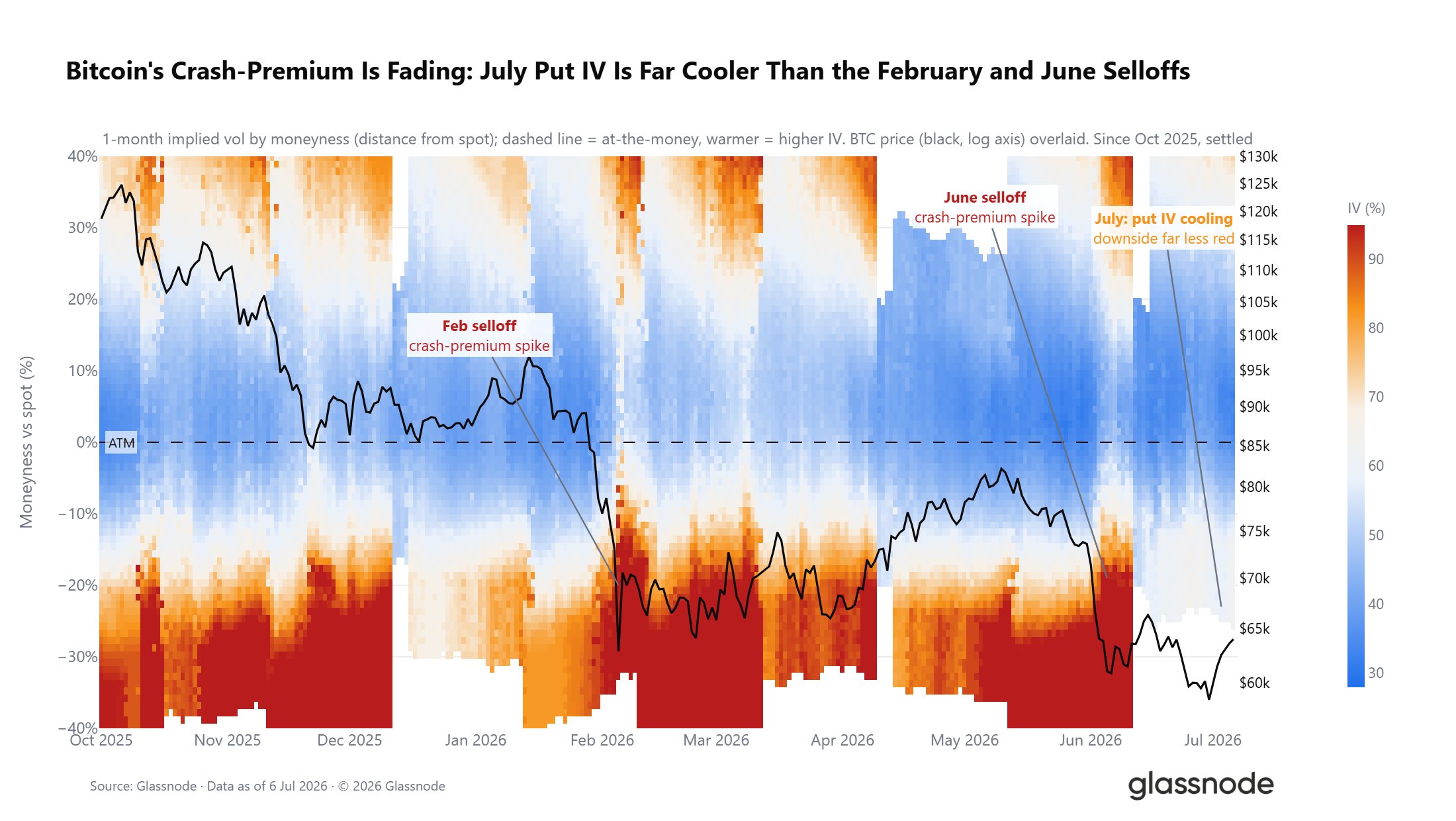
Bitcoin’s options market nuances cautious spot participation, although investors are no longer pricing downside risk as aggressively compared to the previous sell-offs.

During the February and June selloffs, put implied volatility surged as traders rushed to hedge against deeper losses. July presents a different picture. In contrast, in July, as Bitcoin traded between $60,000 and $65,000, downside premiums have cooled noticeably.

Such a divergence indicates that expectations are shifting from another capitulation toward a slower bottoming process.
Source: Glassnode

This shift reflects a market that has already experienced significant declines over several months. As a result, reducing the urgency for costly downside protection. Even so, investors should be cautious since calmer options pricing does not necessarily translate to renewed conviction.

Additionally, ETF participation remains inconsistent while spot accumulation has fallen behind derivative demand. Therefore, until fresh capital flows back into spot markets, improved sentiment could face challenges in generating widespread buying needed for a durable recovery.

Distribution remains a market headwind

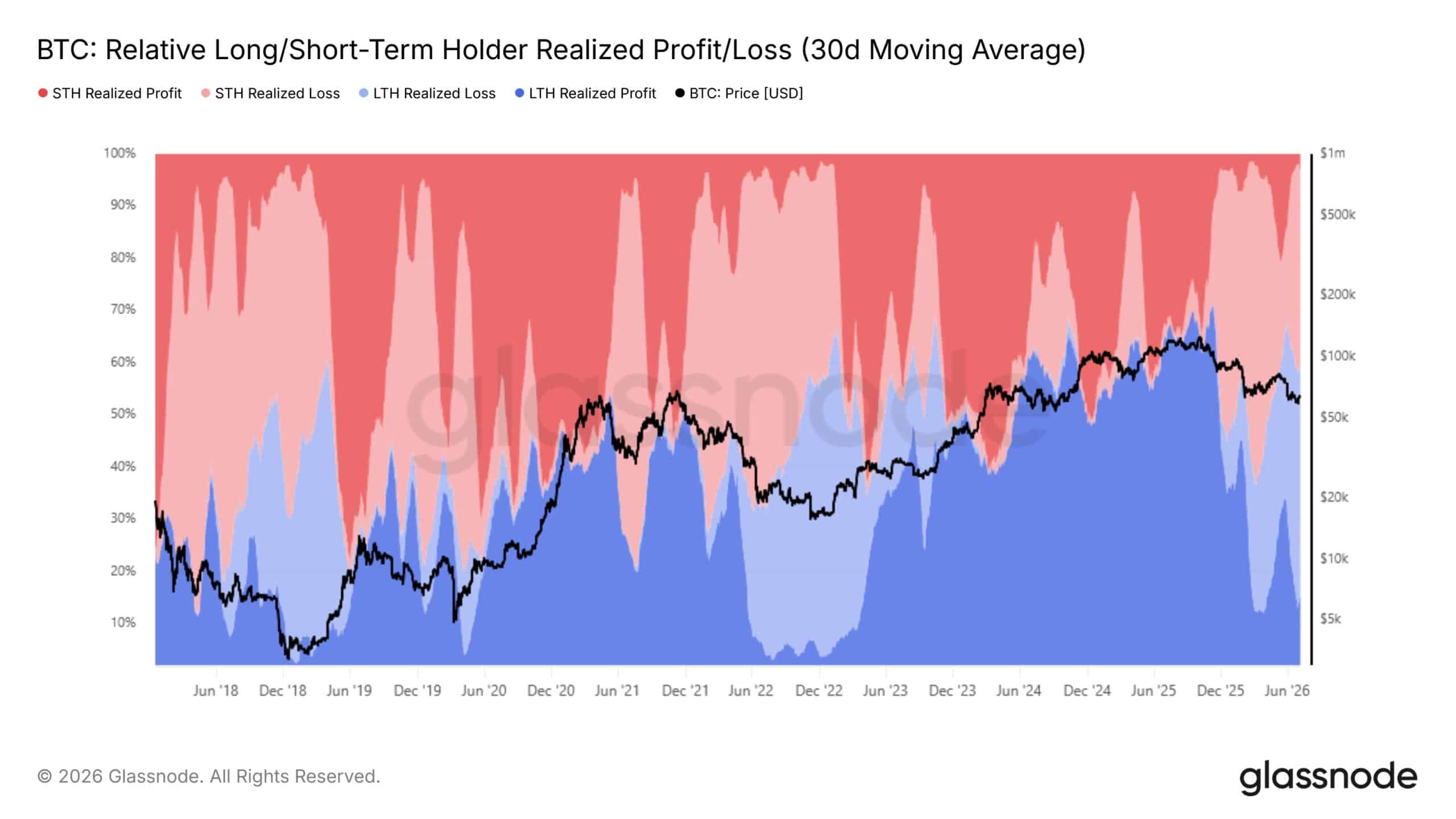
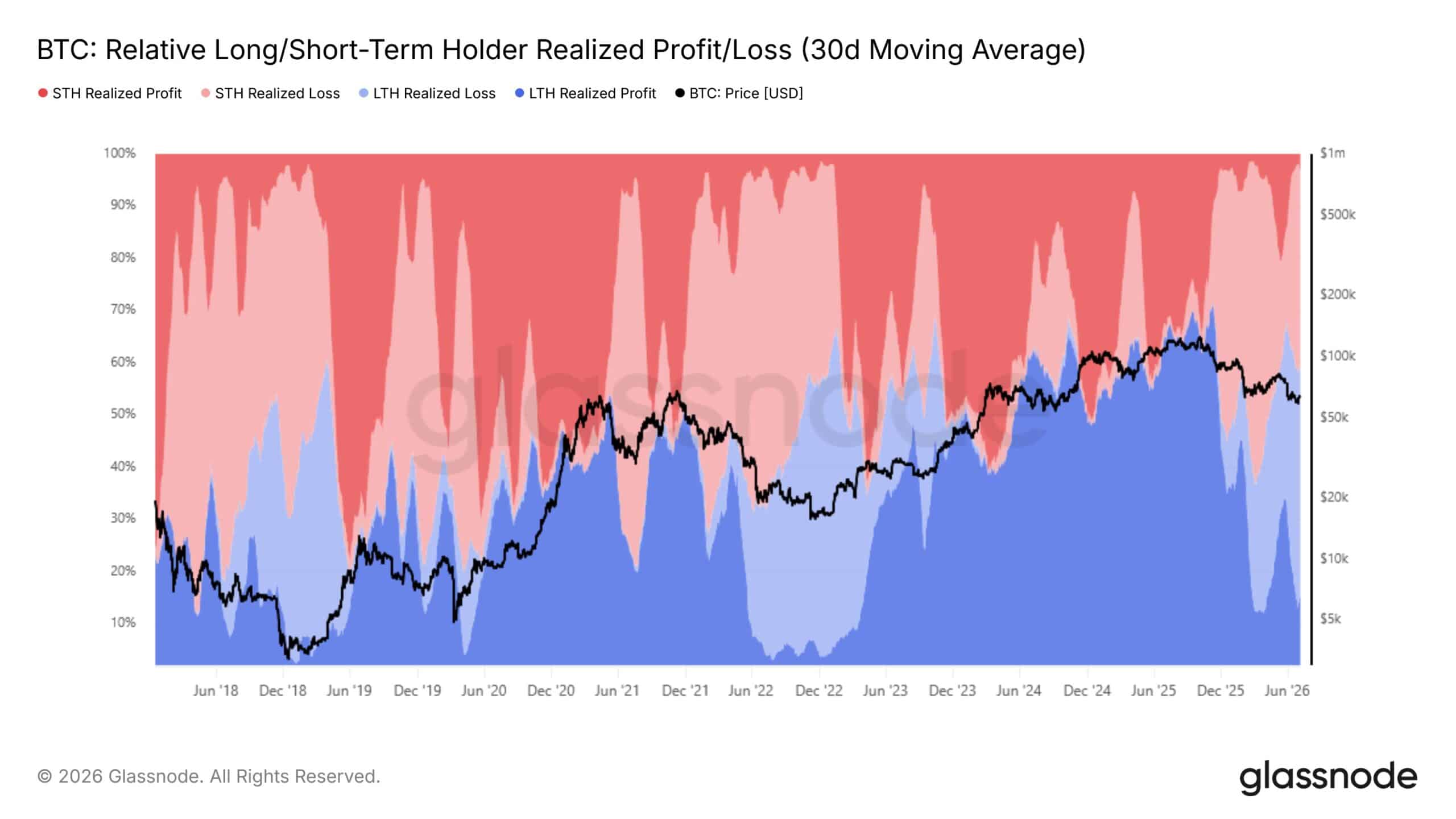
Even as downside fears continue easing, Bitcoin’s recovery is still meeting resistance from holders taking profits accumulated during the previous cycle. Long-term holder realized losses remain elevated on the 30-day Moving Average, although they have moderated from the extreme spikes recorded during the 2022 bear market.
Source: Glassnode

Meanwhile, realized profit and loss data shows short-term holders continue accounting for a larger share of market activity, reflecting uncertainty among newer investors as prices stabilize.

That combination suggests supply is gradually rotating from experienced holders to fresh participants rather than disappearing altogether. Furthermore, an increase in demand for bitcoin is absorbing most of the distribution of supply.

However, until long-term holder selling slows further, Bitcoin’s recovery is likely to remain gradual instead of accelerating into a sustained bullish trend.


Final Summary

  • Bitcoin recovery remains incomplete as spot demand continues trailing derivatives activity.
  • BTC still faces long-term holder selling despite easing downside fears and improving market sentiment.


热门币种推荐

相关问答

QAccording to the article, what is the key factor limiting the robustness of Bitcoin's price recovery?

AThe key limiting factor is the weakness in spot market demand and accumulation. While futures/derivatives demand has recovered, spot demand remains weak, indicating long-term investors are waiting for stronger confirmation. The recovery remains vulnerable until spot accumulation strengthens.

QWhat does the change in Bitcoin's options market in July indicate compared to the selloffs in February and June?

AThe change indicates that downside fears are easing. During the February and June selloffs, put implied volatility surged as traders aggressively hedged against losses. In July, with Bitcoin trading between $60k and $65k, downside premiums have cooled noticeably, suggesting expectations are shifting from another capitulation to a slower bottoming process.

QWhat source of supply is creating a headwind for Bitcoin's price recovery?

AThe headwind comes from long-term holders who are distributing (selling) coins, likely taking profits accumulated during the previous cycle. This selling pressure, along with ongoing uncertainty among newer short-term holders, prevents the recovery from accelerating into a sustained bullish trend.

QWhat specific metric showed a sharp rebound from nearly -500,000 BTC to around -75,000 BTC, signaling returning risk appetite?

AThe 30-day cumulative demand metric showed this sharp rebound. This shift signaled that risk appetite is gradually returning to the Bitcoin market.

QWhy might improved market sentiment alone be insufficient for a durable Bitcoin recovery, according to the article?

AImproved sentiment alone might be insufficient because ETF participation remains inconsistent and, crucially, spot accumulation (actual buying of Bitcoin) has fallen behind derivative demand. Without fresh capital flowing back into the spot markets, the improved sentiment may not generate the widespread buying needed for a durable recovery.

你可能也喜欢

谁在 Web 2.5 中获取价值?

本文探讨了在传统金融与加密金融融合的“Web 2.5”时代,价值如何积累以及被谁获取。核心观点认为,加密货币的真正潜力并非取代传统银行系统,而是作为高效、隐形的底层结算基础设施,与传统金融的合规性、用户界面和信任体系相结合。 文章指出,过去加密货币推广的障碍在于要求用户完全放弃熟悉的银行账户和支付系统。而“Web 2.5”模式则避免了这种摩擦,将区块链技术隐藏于后台,专注于更快、更便宜地在现有账户体系内转移资金。此时,最大的价值并非由底层区块链本身或终端金融机构获取,而是积累在连接两者的“中间层”或“翻译层”。 这个中间层负责将传统金融指令(如ISO 20022)转换为链上交易并进行原子结算。文中以Chainlink与多家大型银行合作的Pangea项目、美国存托信托与结算公司(DTCC)的应用链、SWIFT正在构建的共享账本,以及国际清算银行(BIS)的Agorá项目为例,说明传统机构与加密协议正在激烈争夺这一关键层的主导权。 这一协调层之所以价值巨大,源于其可能形成的强大网络效应和两个核心盈利点:**许可权**(决定交易是否及如何进行)和**浮存金收益**(资金在结算过程中暂存产生的利息)。历史类比如Visa和SWIFT,它们作为连接网络,其市值和影响力甚至超过了其所服务的多数金融机构。 最终,文章预测Web 2.5模式将使区块链技术本身趋于商品化和隐形,而真正的商业价值和权力将归属于那个成功连接新旧世界、决定万亿美元资金流动规则的中间协调层。

链捕手5小时前

谁在 Web 2.5 中获取价值?

链捕手5小时前

交易

现货

热门文章

如何购买EDGE

欢迎来到HTX.com!我们已经让购买edgeX(EDGE)变得简单而便捷。跟随我们的逐步指南,放心开始您的加密货币之旅。第一步:创建您的HTX账户使用您的电子邮件、手机号码注册一个免费账户在HTX上。体验无忧的注册过程并解锁所有平台功能。立即注册第二步:前往买币页面,选择您的支付方式信用卡/借记卡购买:使用您的Visa或Mastercard即时购买edgeX(EDGE)。余额购买:使用您HTX账户余额中的资金进行无缝交易。第三方购买:探索诸如Google Pay或Apple Pay等流行支付方法以增加便利性。C2C购买:在HTX平台上直接与其他用户交易。HTX场外交易台(OTC)购买:为大量交易者提供个性化服务和竞争性汇率。第三步:存储您的edgeX(EDGE)购买完您的edgeX(EDGE)后,将其存储在您的HTX账户钱包中。您也可以通过区块链转账将其发送到其他地方或者用于交易其他加密货币。第四步:交易edgeX(EDGE)在HTX的现货市场轻松交易edgeX(EDGE)。访问您的账户,选择您的交易对,执行您的交易,并实时监控。HTX为初学者和经验丰富的交易者提供了友好的用户体验。

1.2k人学过发布于 2026.03.31更新于 2026.06.02

如何购买EDGE

相关讨论

欢迎来到HTX社区。在这里,您可以了解最新的平台发展动态并获得专业的市场意见。以下是用户对EDGE(EDGE)币价的意见。

活动图片