Автор: Чарли
Редакция: Лаффи, Foresight News
Долгое время динамика всего рынка криптовалют вращалась вокруг биткойна. Сейчас эта эпоха подходит к концу.
Криптоэкономика теперь разделилась на два лагеря: эндогенные активы и экзогенные активы.
Эндогенные — это хорошо знакомые традиционные криптокатегории: стоимость таких токенов и проектов полностью зависит от общих взлётов и падений рынка криптоактивов. Экзогенные же активы лишь номинально относятся к криптосфере, их ценовая динамика всё больше становится независимой от крипторынка.
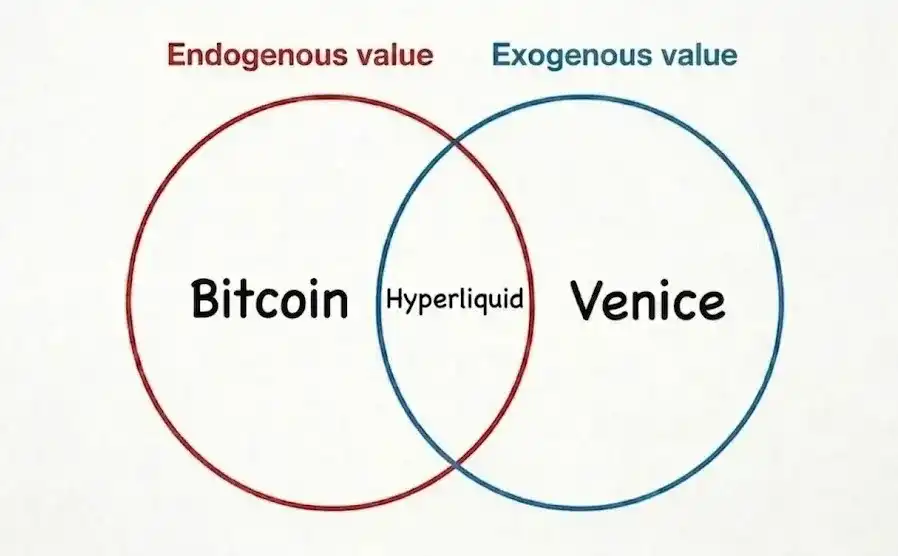
Ценность биткойна проистекает из его собственных свойств и, в свою очередь, отражается в его цене. Рост цены ещё больше укрепляет рыночное восприятие этих ценностных свойств. На пике бычьего рынка биткойн превозносили как «межпланетную валюту», самый редкий цифровой ликвидный актив в руках человечества; на дне медвежьего рынка его низводили до цифрового коллекционного предмета без какого-либо денежного потока.
Hyperliquid находится между двумя лагерями. Большая часть его бизнеса по-прежнему зависит от конъюнктуры крипторынка, но и спрос, и предложение постоянно расширяются. Многие финансовые инфраструктурные решения на блокчейне попадают в эту категорию, а базовые активы постепенно смещаются в сторону токенизированных реальных активов.
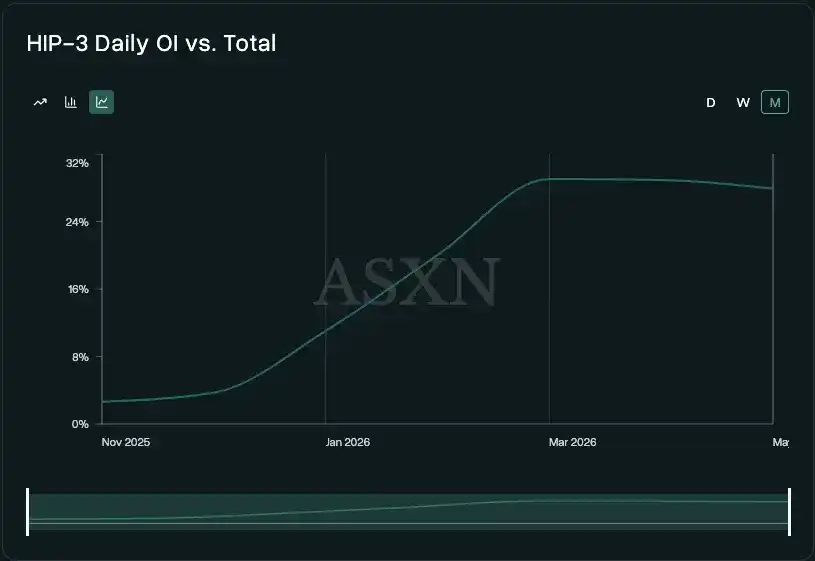
Объём открытых позиций по контракту HIP-3 приблизительно отражает активность внекриптовалютных сделок. В настоящее время контракты HIP-3 составляют около 30% от общего объёма открытых позиций на Hyperliquid, тогда как в ноябре 2025 года этот показатель составлял лишь 4%. Предстоящий запуск рынка предсказаний HIP-4 даст дополнительный импульс росту, одновременно привлекая новых пользователей и торговые инструменты.
Такие проекты, как Venice, полностью относятся к экзогенному лагерю, их логика развития полностью оторвана от крипторынка. Хотя часть пользовательской базы совпадает, их бизнес-модель больше похожа на потребительский ИИ, а не на нативные криптопродукты, такие как Uniswap. Основной бизнес Uniswap по-прежнему — это торговля пользователями различными эндогенными активами, и её результаты естественным образом колеблются вместе с ценами на активы; Venice же упаковывает услуги приватного мультимодального вывода и использует модель оплаты «по требованию + подписка».
Единственная связь Venice с криптопространством — это использование токена в качестве носителя стоимости, а также тот факт, что некоторые из её поставщиков вычислительных мощностей сами имеют криптографический бэкграунд. Руководитель проекта Эрик Вурхис, давно работающий в криптоиндустрии, считает, что при правильном использовании токен может стать отличным маркетинговым инструментом.
Figure из числа публичных компаний — ещё один наглядный пример. Эта финтех-кредитная компания разработала собственный блокчейн, сократив время утверждения кредитов под залог недвижимости до менее 5 минут. Для неё блокчейн — просто вспомогательная технология, а основная ценность заключается в самом кредитном бизнесе.
Масштабный подъём экзогенных направлений, как на рынке токенов, так и среди публичных компаний, имеет глубокое значение. В прошлом, поскольку подавляющее большинство бизнес-моделей были глубоко привязаны к ценам на криптоактивы, чисто фундаментальные инвестиции снизу вверх было трудно реализовать. Криптоиндустрия не раз переживала всплески нарративов, делающих акцент на блокчейне, а не на биткойне, но предыдущие волны в конечном итоге всегда возвращались к динамике биткойна. Причина в том, что эти направления так и не смогли сформировать стабильный спрос и генерировать устойчивую выручку; даже при наличии доходов они не передавались стоимости токена. Как только цена токена переставала расти, проект терял опору.
Текущая ситуация кардинально отличается от предыдущих. Теперь мы ясно видим платящую аудиторию и логику платежей, спрос на большинстве направлений поддаётся количественной оценке и больше не является просто спекуляцией на эмоциях; одновременно механизмы токена как носителя стоимости также продолжают совершенствоваться. Доход Venice поступает от реальных платежей пользователей за услуги AI-инференса, и даже если весь крипторынок пойдёт вниз, её бизнес не пострадает заметно, поскольку он изначально не зависит от роста или падения цен на монеты. Текущий цикл обладает двумя ключевыми преимуществами, которых не было у предыдущих волн: устойчивый реальный пользовательский спрос и то, что инвесторы начинают инвестировать, основываясь на фундаментальных показателях, а не просто на рыночных нарративах.
То же самое относится и к сектору стейблкоинов на частном рынке. В марте 2026 года Mastercard объявила о намерении приобрести BVNK за сумму до 1,8 миллиарда долларов, тогда как оценка этой компании при завершении раунда B финансирования 15 месяцев назад составляла всего 750 миллионов долларов. Другая компания, связанная со стейблкоинами, Bridge, была приобретена Stripe в феврале 2025 года за 1,1 миллиарда долларов; согласно годовому отчёту Stripe, текущие темпы роста бизнеса Bridge составляют четырёхкратный размер. Развитие этих компаний полностью отвязано от бычьих и медвежьих циклов криптоиндустрии.
Это не означает пессимизма в отношении эндогенных активов. Как золото и даже небольшие золотодобывающие компании всегда имеют свою ценность в инвестиционном портфеле, биткойн и ряд эндогенных криптоактивов также имеют право на существование. Но логика движущих факторов результатов и рыночная корреляция двух типов активов уже стали принципиально разными, и данные это подтверждают.
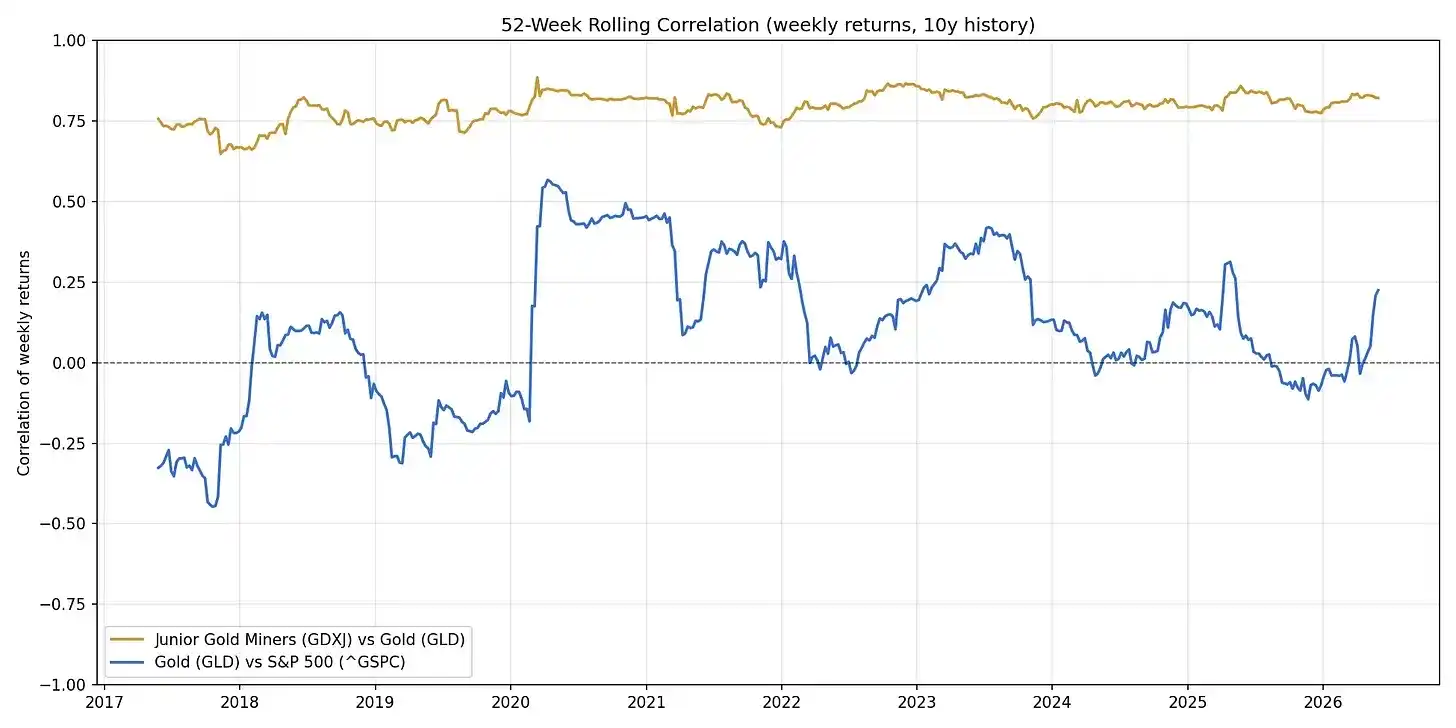
Эту аналогию можно конкретизировать: коэффициент корреляции между акциями небольших золотодобывающих компаний и ценой на золото традиционно держится около 0,75. Именно такова нынешняя ситуация на традиционном крипторынке — множество криптоактивов подобны небольшим золотым рудникам, биткойн соответствует золоту, и весь сектор представляет собой инвестиции с кредитным плечом относительно биткойна. Синяя кривая на графике представляет другой тип отношений: золото и индекс S&P 500 могут испытывать слабую взаимосвязь под влиянием макроэкономики, но у каждого есть собственная логика движения. Именно так должно развиваться будущее экзогенных активов. В долгосрочной перспективе эти активы постепенно выйдут из тренда «следования за взлётами и падениями биткойна».
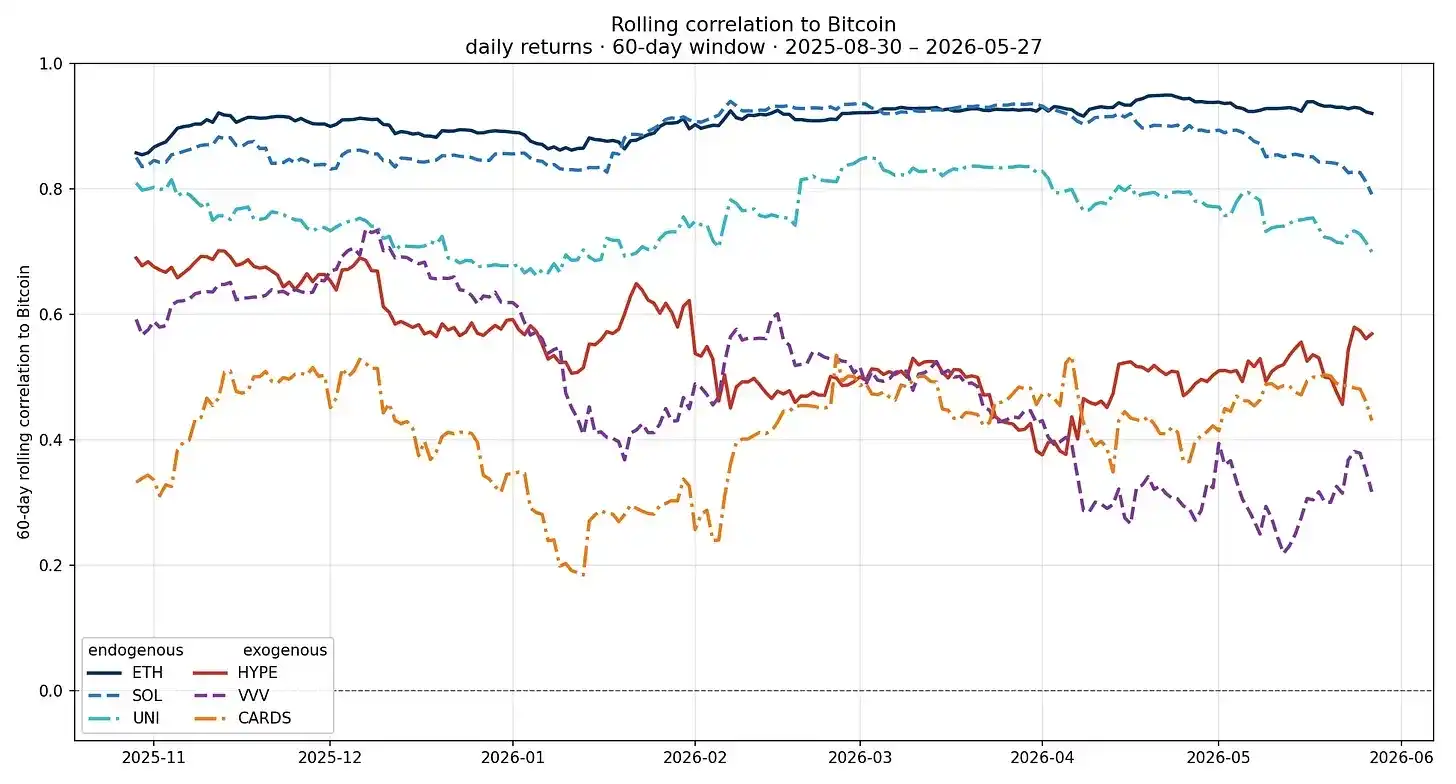
Следует отметить, что многие экзогенные активы сами выпускают токены, это явление как подтверждает указанную тенденцию, так и является особым случаем.
В настоящее время подавляющее большинство эндогенных активов по-прежнему сильно коррелирует с динамикой биткойна; корреляция некоторых экзогенных активов снизилась, но из-за короткого периода развития они пока не обладают сильной релевантностью. Отраслевая закономерность всегда такова: сначала меняются фундаментальные показатели, а затем — рыночные взаимосвязи.
Это изменение также кардинально меняет логику отраслевого анализа. Исследование экзогенных активов требует такой же фундаментальной проверки, как и анализ традиционных компаний: изучение платящей пользовательской базы, расчёт юнит-экономики, оценка конкурентных преимуществ отрасли. Цена биткойна больше не является первым ориентиром; анализ таких проектов больше похож на работу инвестора в финтех, с дополнительным особым элементом — хранением активов.
Вот текущие экзогенные направления, обладающие потенциалом развития:
- Биржи и брокерские услуги на блокчейне
- Решения для клиринга и погашения токенизированных нишевых активов
- Направления глубокой интеграции «крипто + ИИ» (приватный инференс, распределённое обучение открытых моделей, подобное Psyche от Nous Research, и т.д.)
- Новые цифровые банки (стоит обратить внимание на ориентированные на конфиденциальность Payy, Raycash; также обладают потенциалом Aztec и Zama, предоставляющие программируемую инфраструктуру конфиденциальности для них)
- Сектор кредитования (Morpho стал основным выбором для институционального рынка РЕПО; небольшие проекты, такие как Valinor, 3jane, углубляются в нишу частного кредитования)
- Эмитенты стейблкоинов, поставщики услуг токенизации реальных активов
- Платежные каналы (в сфере универсальных платежей эталонами являются Stripe и Tempo; в сфере платежей для агентов лидирует Coinbase)
- Непрофильные крипто-потребительские продукты (представленные Venice, Collector Crypt; такие проекты наделяют токен ценностью реального бизнеса, стимулируя распространение продукта и обеспечивая маркетинговый эффект)
- Экономика агентов (ключевые возможности лежат в уровне доступа — агенты, поставщики услуг и совместная экосистема создателей, где заменяемость низка. Cloudflare лидирует в этой области, но пока неясно, будет ли он взимать плату за трафик или предоставлять только базовые сервисные функции)
На текущем этапе инвестиции в доли соответствующих компаний по-прежнему являются самым надёжным способом позиционирования в указанных направлениях, качественные токен-активы являются редким исключением. Только при постоянной оптимизации механизмов передачи стоимости токенам их роль будет возрастать, и для этого требуются совместные усилия регуляторов и всей отрасли. В настоящее время уже есть прогресс: на регуляторном уровне продвигается «Закон CLARITY»; на отраслевом уровне такие организации, как Blockworks, также способствуют прозрачности рыночной информации. Механизмам токенов предстоит долгий путь оптимизации.
Но все эти детали не меняют основной тенденции: движущие силы крипторынка смещаются от единственного фактора к множеству факторов. Фокус отраслевых исследований также смещается с чтения графиков биткойна на углублённое изучение фундаментальных показателей компаний. В ближайшие десять лет не стоит удивляться, почему «крипторынок» больше не растёт и не падает синхронно, потому что структура отрасли уже полностью обновилась.