# Сопутствующие статьи по теме RWA

Новостной центр HTX предлагает последние статьи и углубленный анализ по "RWA", охватывающие рыночные тренды, новости проектов, развитие технологий и политику регулирования в криптоиндустрии.

The Stock Tokenization Revolution: A Panoramic Report on Market Dynamics, Product Architecture, and Regulatory Moats

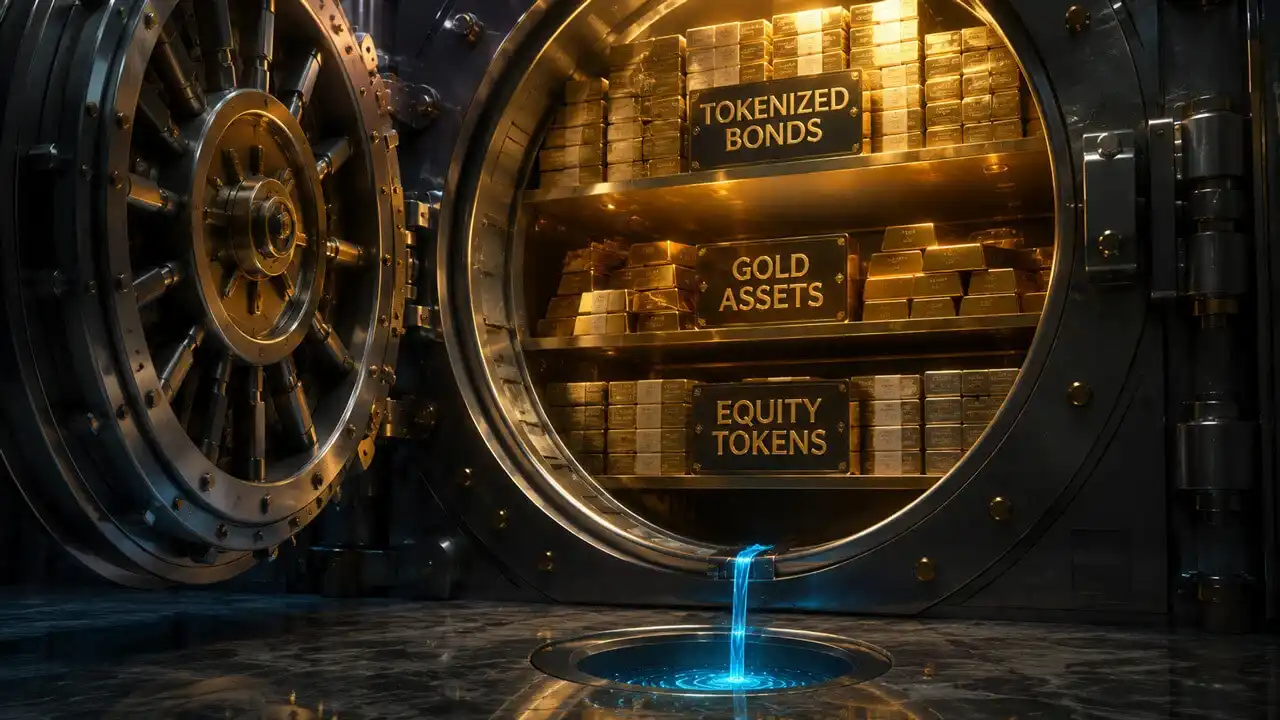
Tokenized stocks are emerging as a breakthrough sector in the real-world asset (RWA) market, with a total value exceeding $800 million—a 30x increase since the start of the year—and monthly trading volume reaching $1.8 billion. The core value proposition is enabling global, 24/7 access to U.S. equities with near-instant settlement, bypassing geographic restrictions and delays inherent in traditional finance. Three primary architectures are competing for dominance: 1. Instant execution (e.g., Ondo, CyberAlpha): maximizes capital efficiency. 2. Inventory model (e.g., xStocks, Backed): uses Swiss debt structures for superior DeFi composability. 3. Direct ownership (e.g., Securitize): offers full legal rights but limited on-chain flexibility. The market is dominated by two players: Ondo (53% share) leverages liquidity engineering, while Backed/xStocks (23%) uses regulatory arbitrage via Swiss law. Regulatory licensing—not technology—is the key moat, with complex cross-jurisdictional compliance (U.S., EU, offshore) forming the highest barrier to entry. The sector faces a trilemma between liquidity/speed, regulatory safety, and DeFi composability, and is diverging into two paths: incremental integration with traditional systems (e.g., DTCC) and revolutionary on-chain issuance for full disintermediation. The convergence of the $150 trillion global equity market with blockchain infrastructure is already underway.

marsbit03/10 13:24

The Stock Tokenization Revolution: A Panoramic Report on Market Dynamics, Product Architecture, and Regulatory Moats

marsbit03/10 13:24

The Limits of Finance, The Channel Value of Global Markets

This article explores the evolving relationship between traditional finance and decentralized finance (DeFi), focusing on the growing institutional interest in on-chain vaults and real-world assets (RWA). While major asset managers like BlackRock and Apollo are investing heavily in DeFi tokens, the sector faces challenges, including liquidity crises and structural limitations. A central theme is the absence of a native DeFi risk-free interest rate. Despite multiple attempts—from algorithmic stablecoins to liquidity staking tokens—DeFi has largely adopted USDT and USDC for their scale, effectively making U.S. Treasury bonds the de facto benchmark. However, this dependency creates vulnerability, as DeFi cannot interact bidirectionally with traditional finance. The article argues that the next phase of DeFi will revolve around vaults—on-chain repositories that aggregate assets and yield. These vaults, managed by "curators," aim to offer fixed-rate products and credit systems but currently lack mechanisms for asset price inflation and clear risk management. The piece concludes that while vaults and curators are gaining traction, the true innovation lies in creating efficient "channels" or broker-like systems that enhance global capital flow. These could eventually replace centralized exchanges as the primary liquidity hubs, enabling a more integrated and efficient financial system without relying on traditional tokenomics.

marsbit03/10 13:23

The Limits of Finance, The Channel Value of Global Markets

marsbit03/10 13:23

NYSE Parent Company's $25 Billion Investment in OKX Marks a 'Watershed Moment' for Tokenized Stocks

NYSE parent company ICE makes a $25 billion strategic investment in crypto exchange OKX, valuing OKX at $25 billion. The deal grants ICE a board seat and focuses on two key collaborations: OKX will provide real-time crypto pricing data to ICE for launching US-regulated crypto futures, and the two will enable OKX users to trade tokenized NYSE-listed stocks and derivatives by late 2026. This partnership signals a major convergence between traditional finance and crypto, accelerating the move of real-world asset (RWA) tokenization from concept to large-scale, compliant adoption. For ICE, it gains access to crypto data and OKX's global user base of over 120 million accounts. For OKX, it provides crucial regulatory legitimacy and a bridge into traditional markets. The planned launch of tokenized stock trading could revolutionize markets by enabling 24/7 trading, enhancing asset composability in DeFi, and potentially improving market efficiency. However, alongside competitors like Nasdaq exploring similar offerings, it faces challenges including regulatory clarity, market infrastructure compatibility, and managing combined traditional and crypto risks. This investment is viewed as a watershed moment, marking a shift from opposition to integration between Wall Street and crypto, and potentially heralding a new era of unified, global financial markets.

marsbit03/10 01:22

NYSE Parent Company's $25 Billion Investment in OKX Marks a 'Watershed Moment' for Tokenized Stocks

marsbit03/10 01:22

From Hardware-Software Integration to a Trillion-Scale Ecosystem: A Look into the 'China Core' of National-Level Blockchain Infrastructure

Amid the global evolution of fintech and Web3, China is forging a distinct path centered on national-level digital infrastructure, focusing on real-world asset (RWA) tokenization and large-scale blockchain adoption in the real economy. On March 5, 2026, at China’s National People’s Congress, Dong Jin, a deputy and director of the Beijing Academy of Blockchain and Edge Computing, announced a major breakthrough: the world’s first software-hardware integrated blockchain operating system and a dedicated 96-core blockchain acceleration chip. This "China Core" delivers a 50x performance improvement, overcoming computational bottlenecks in ultra-large-scale blockchain networks. It has already been deployed across 16 central government departments and 27 state-owned enterprises, supporting over 300,000 cross-border trade companies and processing trillions of yuan in trade volume, with hundreds of billions of invoices recorded on-chain. The chip uses ASIC-level design to offload cryptographic operations (like digital signatures and hashing) from general-purpose CPUs, drastically improving efficiency. This enables high-throughput, low-latency transaction processing—critical for applications like cross-department data sharing with privacy preservation, supply chain finance with real-time credit transfer, and automated cross-border trade settlements. The system supports high-concurrency scenarios such as invoice tracking and customs clearance, enabling real-time verification and smart contract execution. This infrastructure shift enhances transparency, reduces fraud, and facilitates automated financial services like instant lending. China’s blockchain strategy, now hardware-accelerated and deployed at national scale, marks a move toward a trusted, high-performance digital economy base—setting the stage for massive RWA digitization and new opportunities in data-driven finance.

marsbit03/09 04:17

From Hardware-Software Integration to a Trillion-Scale Ecosystem: A Look into the 'China Core' of National-Level Blockchain Infrastructure

marsbit03/09 04:17

活动图片