Автор: Foresight Ventures
TL;DR (Коротко о главном)
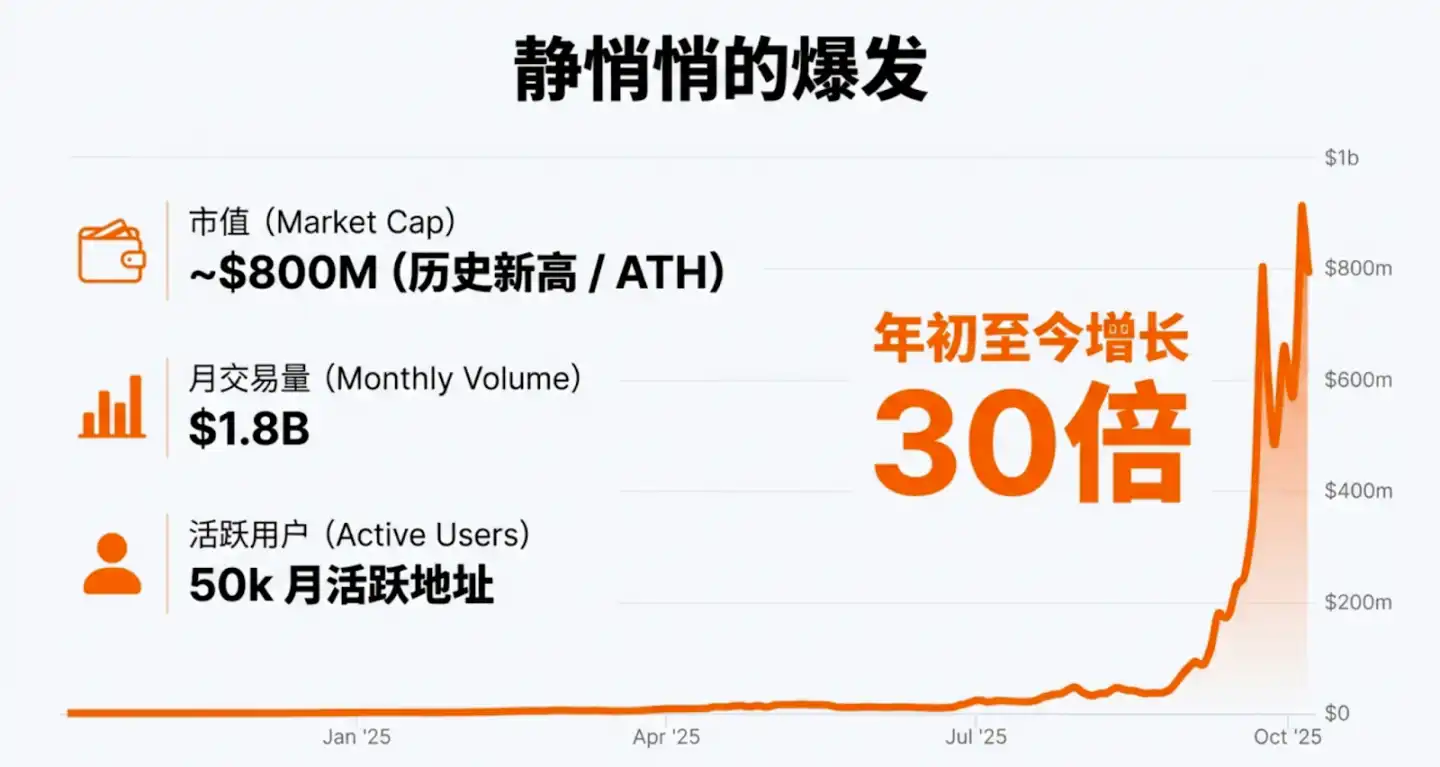
- Токенизированные акции — это прорывное направление в текущем цикле реальных мировых активов (RWA) — рынок достиг нового исторического максимума в $800 млн, с начала года вырос в 30 раз, месячный объем торгов составляет $1,8 млрд.
- Ключевое ценностное предложение: обход географических ограничений традиционных брокеров и задержек расчетов, обеспечение круглосуточного глобального доступа к американским акциям с поддержкой почти мгновенных расчетов.
- Три архитектуры борются за доминирование:
- Модель мгновенного исполнения (Ondo, CyberAlpha) — лидер по эффективности использования капитала.
- Инвентарная модель (xStocks, Backed) — превосходит по композиционности в DeFi благодаря долговой структуре по швейцарскому праву.
- Модель прямого владения (Securitize) — наиболее полные юридические права, но с ограничениями на передачу и ограниченной ончейн-композиционностью.
- Фактически рынок сформировал дуополию: Ondo лидирует с 53% доли благодаря инженерии ликвидности; Backed/xStocks имеют 23% доли благодаря стратегии регуляторного арбитража.
- Технология больше не является рвом — регуляция стала им. Создание трансграничной системы лицензий в США, ЕС и офшорных юрисдикциях — это на данный момент самый сложный для копирования конкурентный барьер.
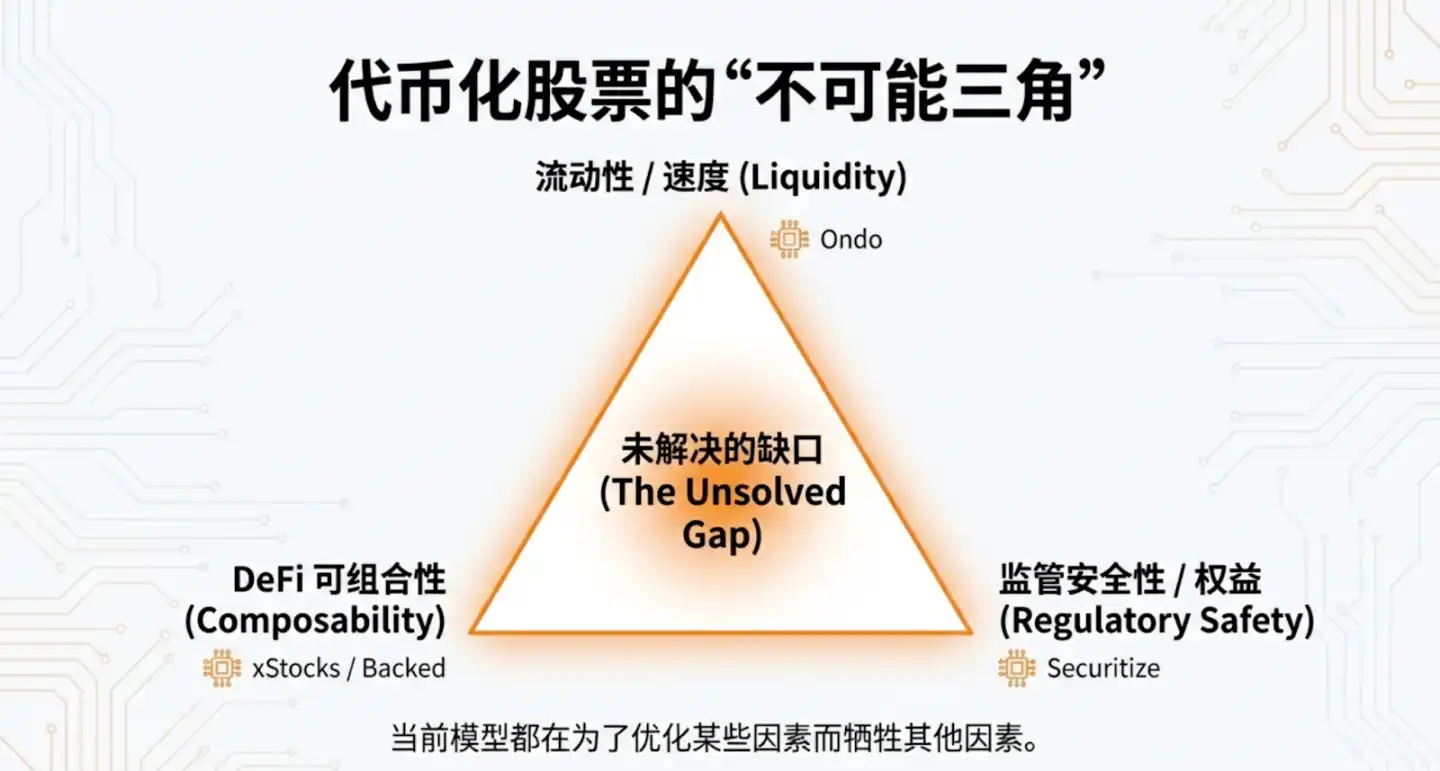
- Платформы сталкиваются с фундаментальной трилеммой: можно одновременно оптимизировать только два из трех параметров — ликвидность/скорость, регуляторная безопасность/права акционеров, композиционность DeFi.
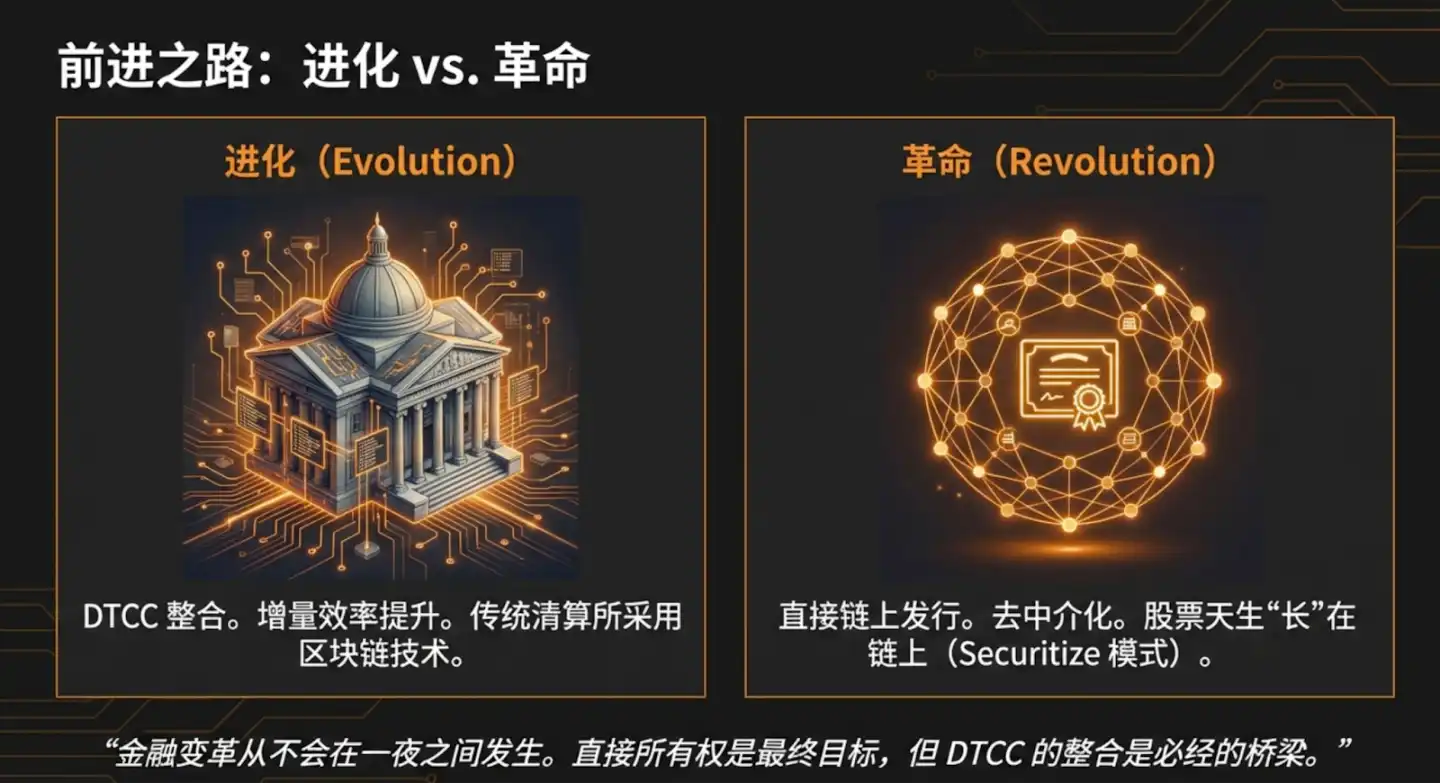
- Отрасль разделяется на два пути: эволюционный (интеграция с DTCC, повышение эффективности) и революционный (прямой выпуск на блокчейне, полная дезинтермедиация).
- Вывод: слияние глобального рынка акций объемом $150 трлн с блокчейн-инфраструктурой — это уже не просто тезис, это реальность.
1. Анализ текущего состояния рынка: Разбор «тихого взрыва»
Сфера реальных мировых активов (RWA) переживает структурные изменения, и токенизированные акции стали прорывным направлением этого цикла. Общая рыночная капитализация экосистемы RWA превысила $800 млн, с начала года рост составил 30 раз. Слияние традиционных активов акционерного капитала с блокчейн-инфраструктурой знаменует фундаментальный сдвиг в дизайне рынков капитала. Этот «тихий бум» — не просто миграция активов, а модернизация глобальной ликвидности — замена фрагментированных традиционных систем единым, программируемым финансовым слоем.
Следующие ключевые данные подтверждают этот переход от экспериментального к институциональному уровню:
- Достижение рыночной капитализации: По состоянию на декабрь 2025 года, капитализация этого направления достигла исторического максимума около $800 млн.
- Скорость ликвидности: Месячный объем торгов взлетел до $1,8 млрд, демонстрируя активный вторичный рынок.
- Плотность adoption: Сеть в настоящее время поддерживает 50 000 ежемесячно активных адресов и 130 000 всего адресов-держателей.
Основой этого роста является то, что блокчейн устраняет settlement friction (трение расчетов) и барьеры доступа, долгое время мучившие традиционные финансы (TradFi).
Поскольку потребность рынков капитала в эффективности расчетов становится все более насущной, то, как токенизация решает давние проблемы TradFi с помощью технологий, становится ядром отраслевой стратегической игры.
2. Стратегические драйверы ценности: Решение болевых точек традиционных финансов
Традиционные рынки акций долгое время страдали от физических границ унаследованных систем: географические изоляторы, ограниченное время торгов и длительные settlement cycles (циклы расчетов). Сбой системы расчетов T+2 во время инцидента с Robinhood/GME в 2021 году, когда брокеры были вынуждены ограничить торговлю из-за дефицита маржи, стал хрестоматийным примером «слабости эффективности» TradFi.
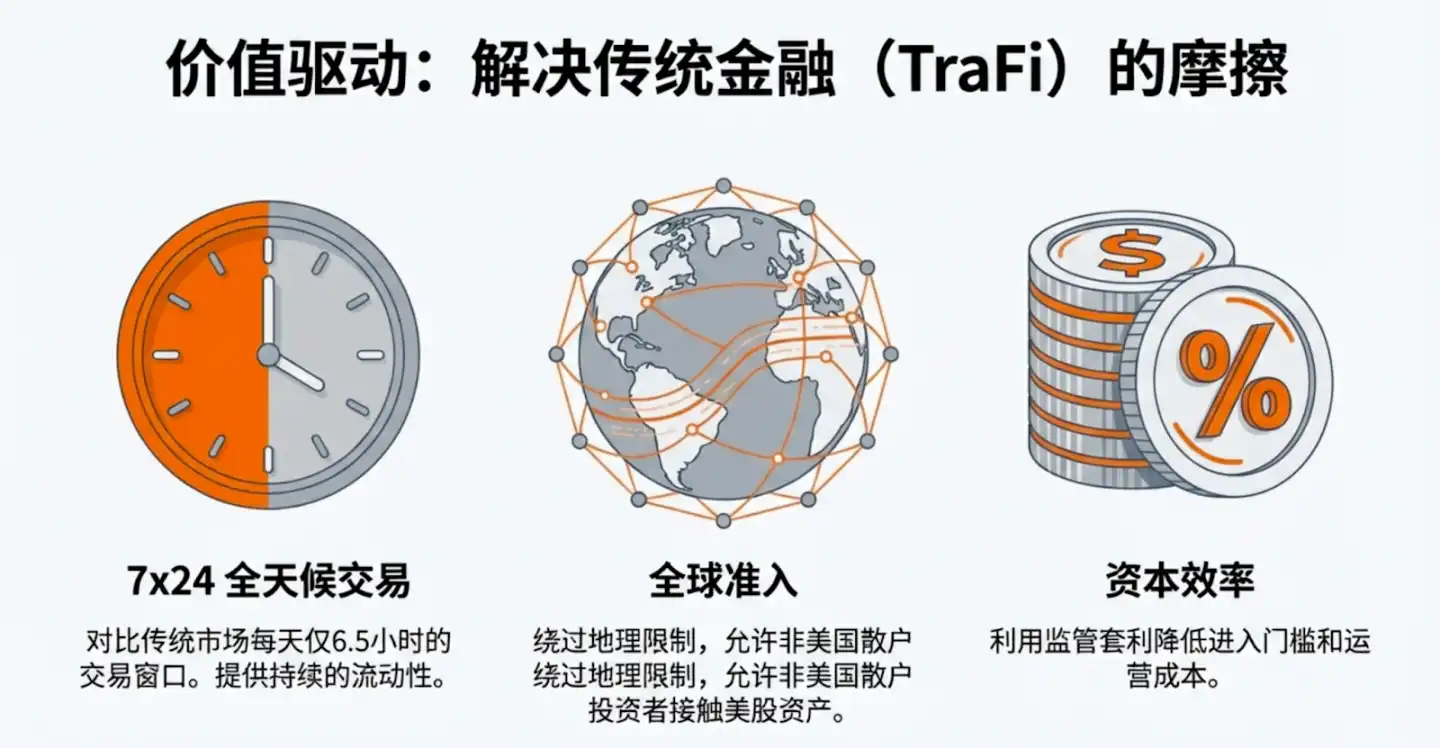
Токенизация предлагает стратегическую премию через «тройную угрозу эффективности» (Efficiency Triple-Threat):
- Торговля 7x24: Традиционные рынки работают всего 6,5 часов в день, токенизация устраняет риск «гэпа на открытии», позволяя инвесторам реагировать в реальном времени на глобальные макрособытия.
- Глобальная доступность: Полностью ломает географические и брокерские барьеры, предоставляя неамериканским розничным инвесторам беспрепятственный доступ к востребованным американским акциям, реализуя «капитал без границ».
- Эффективность капитала: Цифровая инфраструктура обеспечивает расчеты T+0, снижая占用 залога (occupancy of collateral) и операционные издержки, вызванные задержками расчетов.
Токенизация — это не просто оптимизация, а обход административных узких мест традиционного securities business через предоставление глобального, круглосуточного слоя ликвидности. В эпоху «дефицита эффективности капитала» право定价 (право устанавливать цены) будет у тех платформ, которые смогут обеспечить мгновенные расчеты и транснациональное распределение.
Однако пути реализации этой ценности не единственны, и различные продуктовые архитектуры определяют долгосрочный 护城河 (ров) и риски платформ.
3. Сравнительный анализ архитектур токенизации: Три ключевые модели
Выбор продуктовой архитектуры является стратегической точкой опоры, определяющей масштабируемость, композиционность DeFi и характеристики системного риска.
Выбор продуктовой архитектуры — это самое важное стратегическое решение платформы, определяющее масштабируемость, композиционность DeFi и профиль системного риска.
Трехмодельная структура
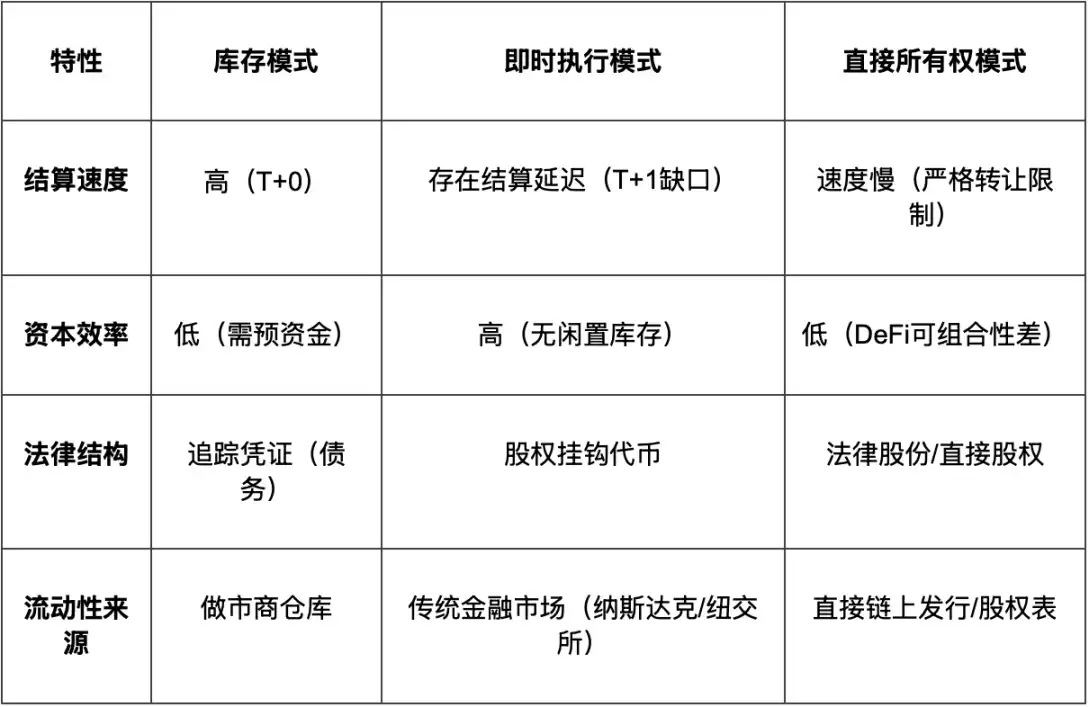
- Инвентарная модель (например, xStocks, Backed): Схема «предфинансированной ликвидности». Эмитент или маркет-мейкер заранее покупает акции и чеканит токены, депонируя их на склад для последующей продажи.
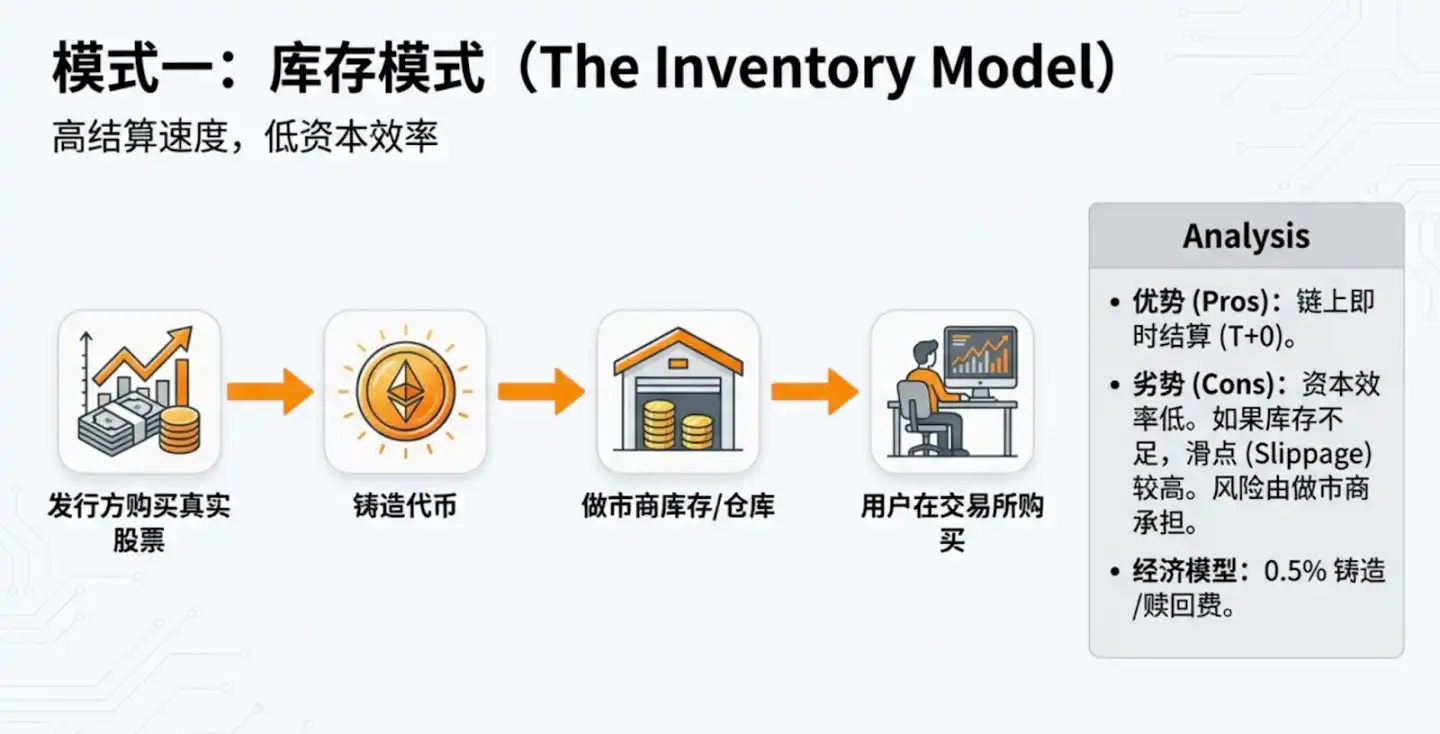
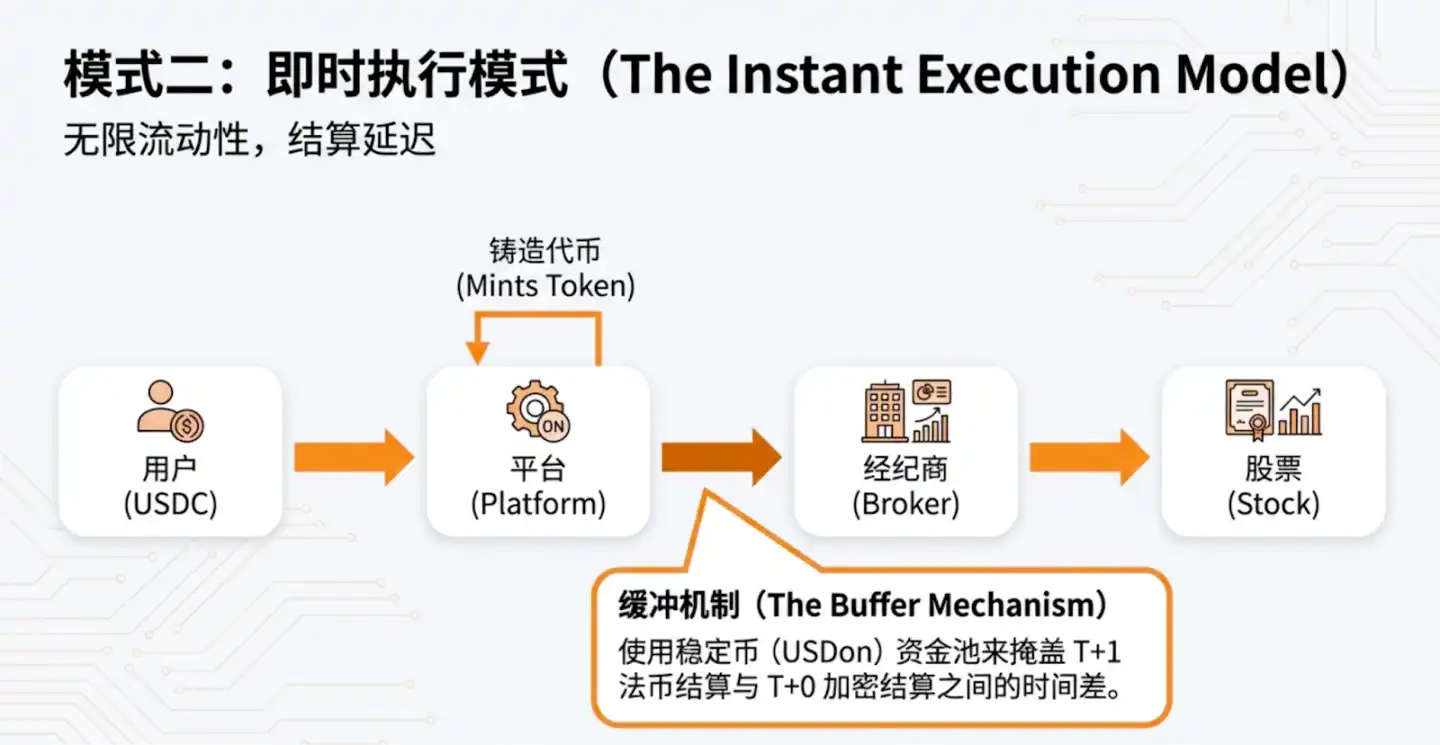
- Модель мгновенного исполнения (например, Ondo, CyberAlpha): Схема «мгновенной ликвидности». Покупка акций и чеканка токена запускаются только после подтверждения пользовательского ордера.
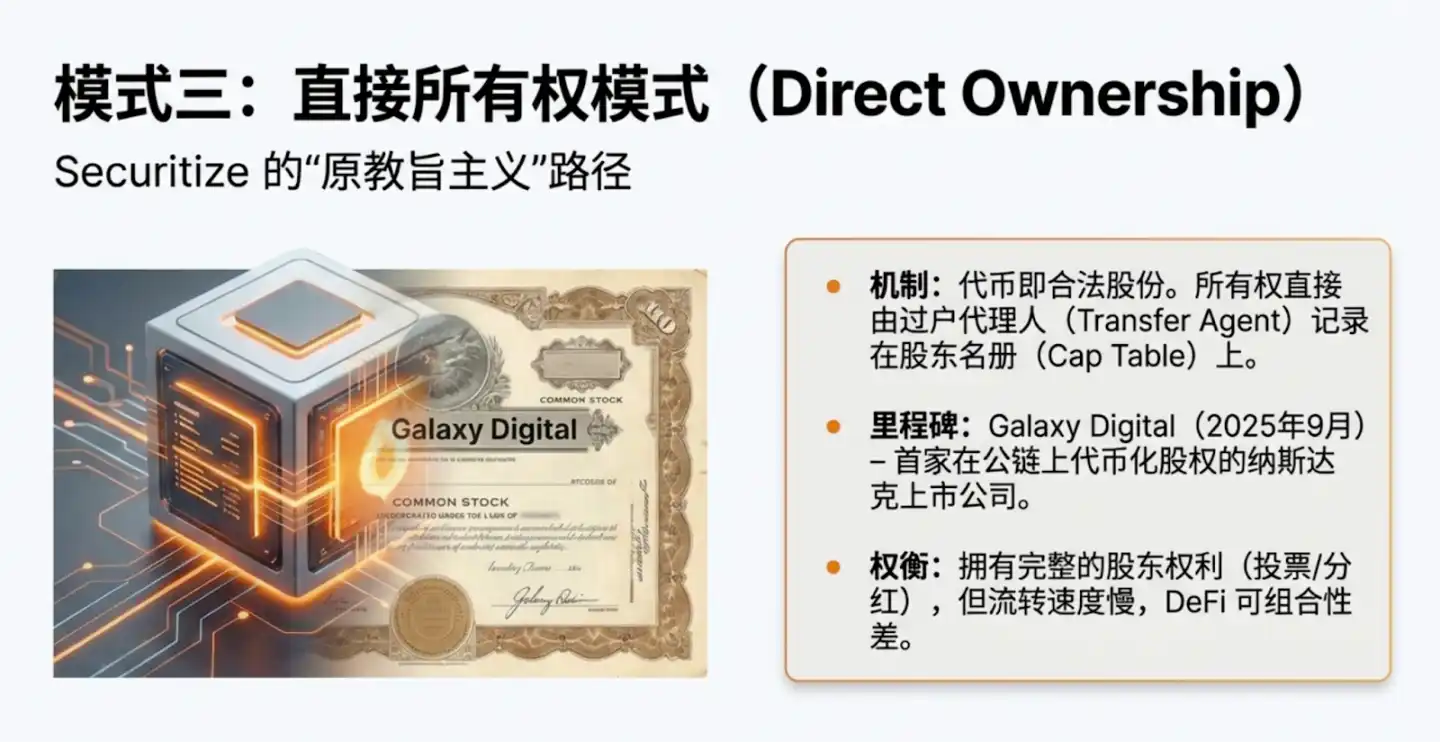
- Модель прямого владения (например, Securitize, Galaxy Digital): «Пуристская» схема, токен является акцией в юридическом смысле. Право собственности напрямую записывается трансфер-агентом в реестр акционеров компании, предоставляя инвесторам полные права акционера, включая право голоса и дивиденды, но связана со строгими ограничениями на передачу.
Сравнение компромиссов архитектур
По мере роста объемов торгов до более высоких уровней, технические проблемы сместятся в сторону эффективного устранения разрыва между традиционными и цифровыми циклами расчетов.
4. Конкурентный ландшафт: Лидеры рынка и претенденты
Текущий конкурентный ландшафт демонстрирует явную «дуополию» и «стратегическую дивергенцию».
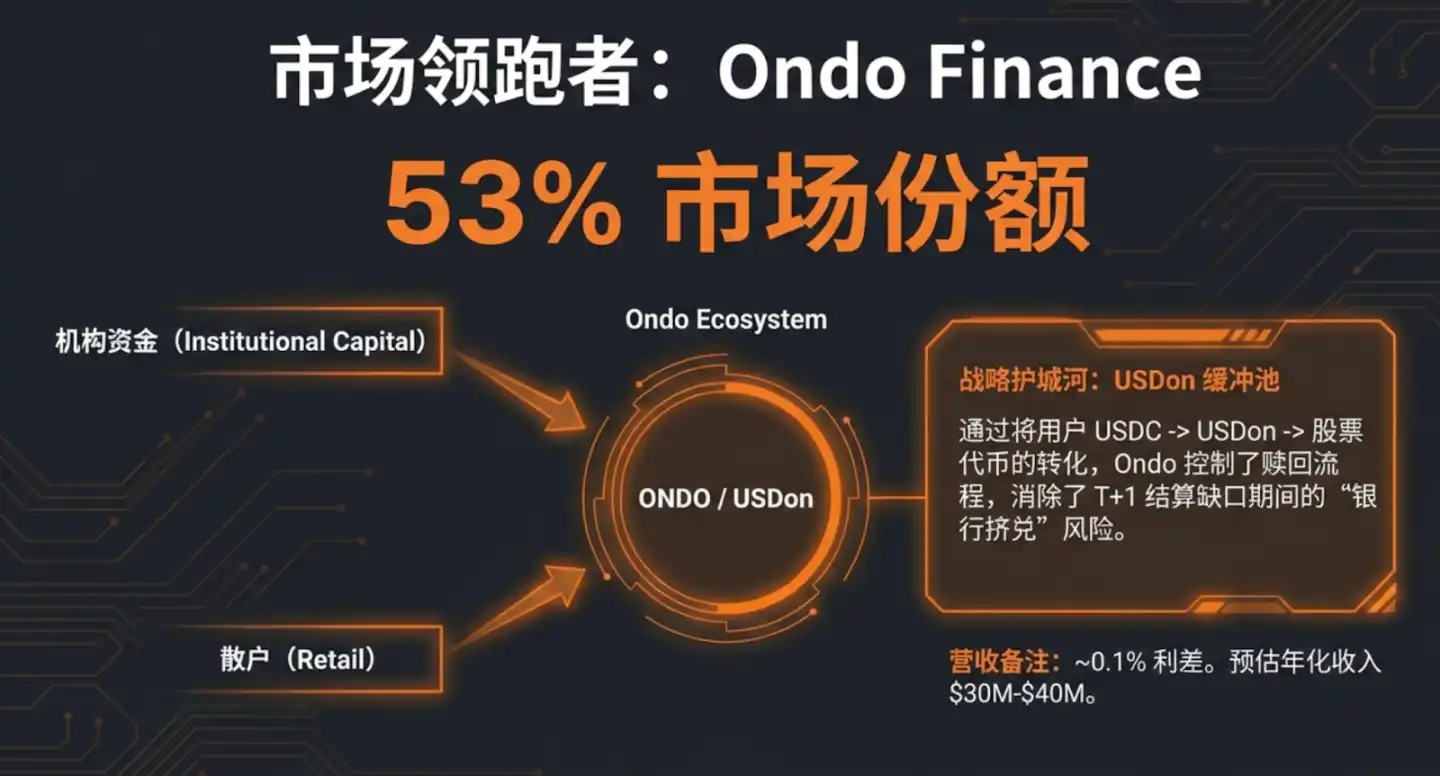
- Ondo Finance (53% доли): Абсолютный лидер. Его двигатель дохода основан на спреде около 0.1% с транзакции, прогнозируемая годовая выручка составляет $30-40 млн. Его ключевой 护城河 (ров) — это чрезвычайно развитый буферный пул USDon и широкая сеть партнерств с лицензированными учреждениями.
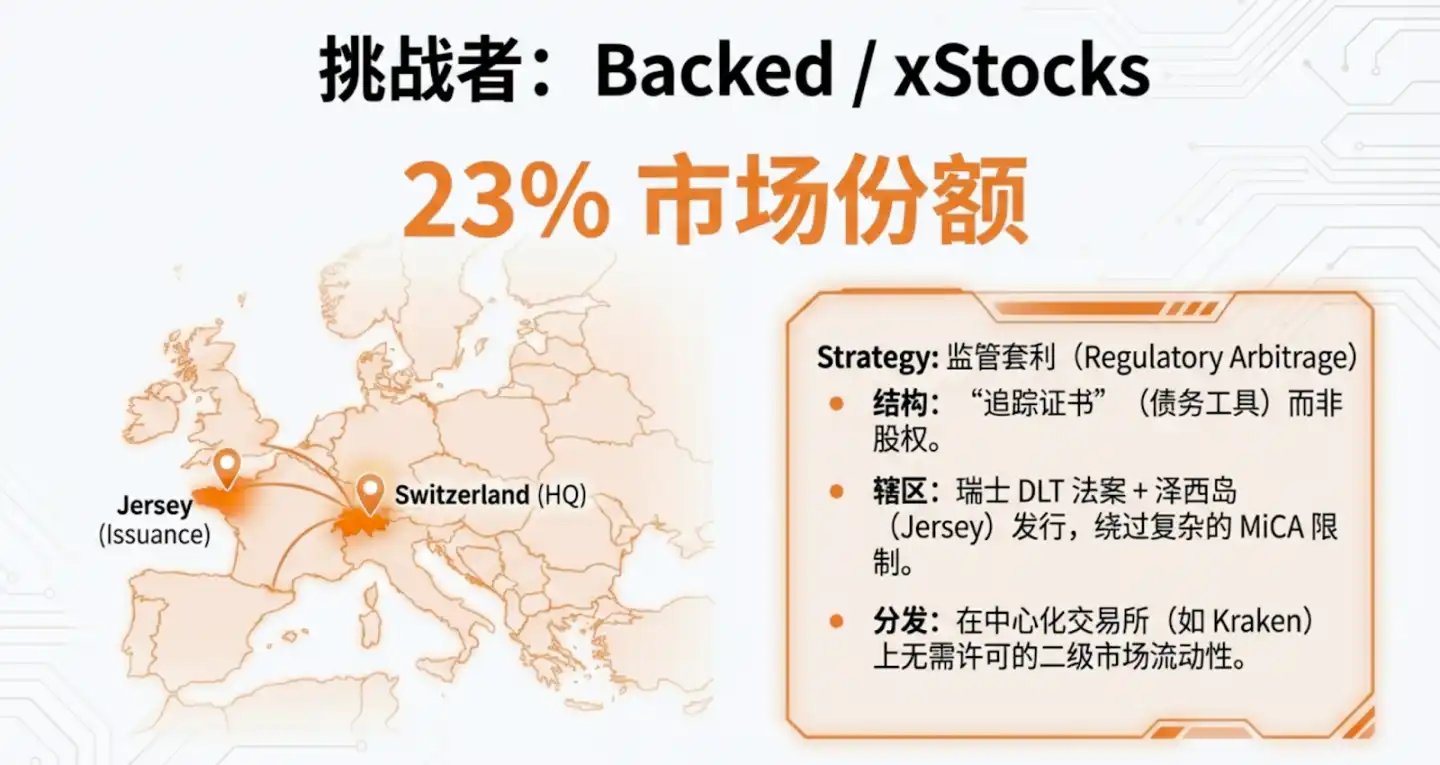
- Backed / xStocks (23% доли): Прорыв за счет «юридического альфа». Благодаря швейцарскому DLT-закону, продукт структурирован как tracking security (долговое обязательство), что ловко обходит ограничения MiCA на обращение прямых токенов акций, обеспечивая свободное обращение и композиционность в экосистеме DeFi.
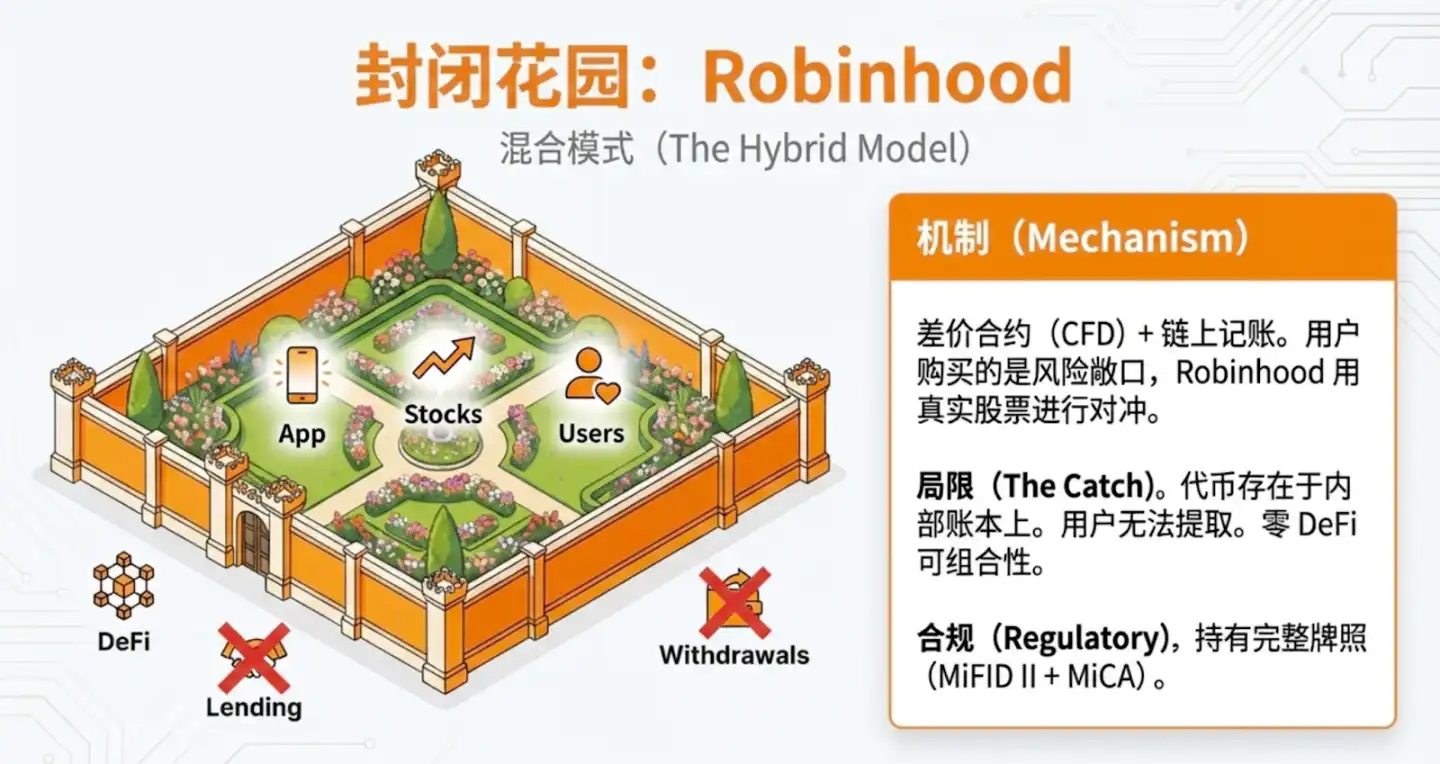
- Robinhood (Закрытый сад): Обладая самым сильным набором лицензий MiFID II и MiCA, но из-за отсутствия withdrawable tokens (возможности вывода токенов) создает изолированную экосистему, упуская open premium (премию открытости) DeFi.
Уровень «So What?» (И что?): Конкуренция сместилась от «количества пользователей» к игре в «регуляторный арбитраж» и «эффективность капитала». Backed, жертвуя прямыми правами через долговую структуру,换取 (обменивает) это на бесконечную интероперабельность в DeFi — это точный стратегический trade-off.
5. Глобальная регуляторная матрица: Построение регуляторного рва
В сфере RWA «сбор лицензий» — это более непреодолимый ров, чем сама технология.
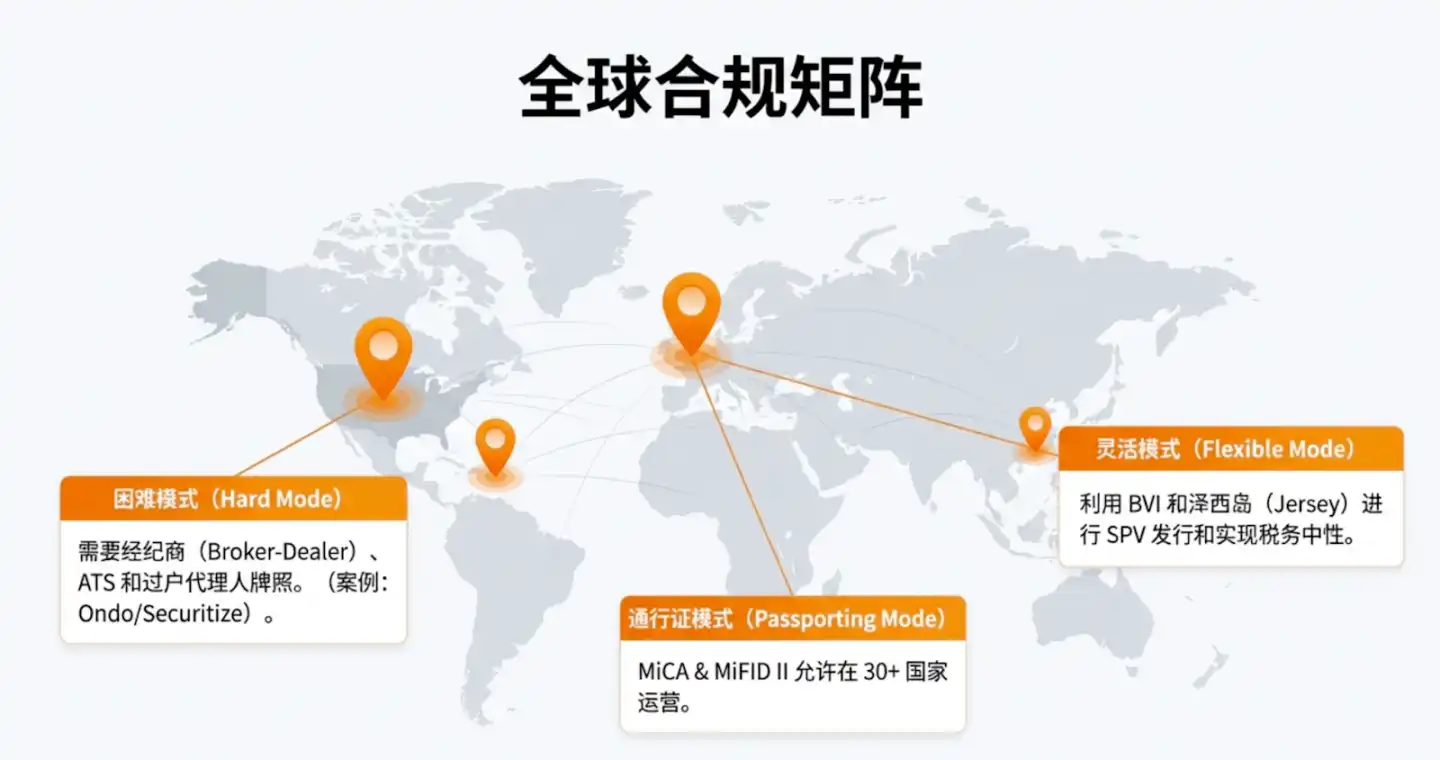
- Американская модель (Сложный уровень): Краеугольный камень успеха — это комбинация «трезубца» из лицензий Broker-Dealer, ATS и Transfer Agent. Ondo, приобретя Oasis Pro, получила этот полный набор возможностей, получив контроль над полным циклом от внесения средств до matching на вторичном рынке.
- Европейская модель (Паспортизация): Используя «паспортный режим» MiCA и MiFID II, компании, получившие лицензию в Лихтенштейне (например, Ondo получила одобрение FMA) или на Кипре (например, xStocks получила одобрение CySEC), могут работать в 30 странах.
- Специальные пилоты: Securitize через пилотную DLT-лицензию испанского регулятора CNMV получила разрешение на работу в качестве системы торгового клиринга, напрямую бросая вызов традиционной роли CSD (Центрального депозитария ценных бумаг).
Уровень «So What?» (И что?): Регуляторная архитектура Ondo — это «мастер-класс по финансовой инженерии»: создание эмитента на БВО для налоговой нейтральности, доступ к базовым активам через американское лицензированное лицо, использование Ankura Trust для предоставления ежедневных proof-of-reserves (подтверждений резервов) для банкротство-удаленного хранения, и, наконец, глобальное compliant распределение через **BX Digital (Швейцария)**.
6. Стратегические перспективы: Решение «невозможной трилеммы» токенизированных акций
Отрасль при масштабировании должна балансировать три элемента:
- Ликвидность / Скорость: Представлена Ondo, оптимизируется через буферные механизмы.
- Регуляторная безопасность / Прямые права: Представлена Securitize, стремится к прямому владению базовым активом в соответствии с требованиями SEC.
- Композиционность DeFi: Представлена Backed, достигается через долговую структуру для ончейн-обращения активов.
В настоящее время рынок разделяется на два пути:
- Эволюционный путь: Интеграция с DTCC как ядро, предоставление инкрементального прироста эффективности T+0 существующим финансовым институтам.
- Революционный путь: Нативные выпуски на блокчейне по образцу Securitize/Galaxy Digital, направленные на полную дезинтермедиацию.
7. Итоги и ключевые инсайты
Миграция глобального рынка акций объемом $150 трлн на блокчейн стала необратимой.
- Институциональная зрелость: 30-кратный рост и веха Galaxy Digital знаменуют, что отрасль прошла концептуальную стадию и вступила в глубокую воду лицензионной конкуренции.
- Преимущество модели: Модель мгновенного исполнения (Instant Execution) благодаря极高的资本效率 (чрезвычайно высокой эффективности капитала) уже получила преимущество в текущей войне за ликвидность.
- Лицензия как барьер: Платформы, способные одновременно управлять доступом к американским базовым активам (лицензии ATS/BD) и возможностями глобального (ЕС MiCA / офшоры BVI) compliant распределения, построят непреодолимый долгосрочный 护城河 (ров).
«Финансовые изменения никогда не происходят в одночасье. Прямое владение — это конечная цель, но интеграция и оптимизация DTCC — это необходимый мост в будущее.»