# Сопутствующие статьи по теме RWA

Новостной центр HTX предлагает последние статьи и углубленный анализ по "RWA", охватывающие рыночные тренды, новости проектов, развитие технологий и политику регулирования в криптоиндустрии.

This Time It's Really Different—Detailed Analysis of the Eight Departments' 'Notice on Further Preventing and Disposing of Virtual Currency and Related Risks'

Summary of the "Notice on Further Preventing and Disposing of Risks Related to Virtual Currency" Jointly Issued by Eight Departments On February 6, 2026, eight Chinese regulatory bodies, including the People's Bank of China and the Ministry of Public Security, jointly issued a significant notice (referred to as the "2.6 Notice") targeting risks associated with virtual currencies. This notice marks a pivotal shift in China's regulatory approach, as it explicitly revokes previous key documents, including the 2021 notice (commonly known as the "924 Notice"), which is unprecedented in the history of virtual currency regulation in China. Key changes and implications include: 1. **Broader Regulatory Scope:** Unlike the previous 924 Notice, which focused on "trading and speculation risks," the 2.6 Notice addresses "virtual currency and related risks" more broadly. 2. **New Stance on Stablecoins:** A major breakthrough is the explicit statement that stablecoins pegged to fiat currency are "de facto performing some functions of legal tender." This raises significant concerns, particularly for OTC (over-the-counter) trading platforms, as it could potentially be interpreted as engaging in illegal foreign exchange activities, which carries severe penalties including confiscation of illegal gains and fines up to five times the amount involved. 3. **Strict Prohibition on RWA:** The notice firmly prohibits any Real World Asset (RWA) tokenization activities within China. Domestic entities are completely barred from such activities. Furthermore, foreign companies and individuals are prohibited from providing RWA services to domestic entities. However, a potential avenue is suggested for domestic financial institutions to engage in RWA services *overseas*, subject to specific requirements and supervision under the principle of "same business, same risks, same rules." 4. **Enhanced Enforcement Mechanisms:** The notice outlines a robust, multi-layered enforcement framework ("8+3" – eight central departments plus local internet, procuratorate, and judicial authorities). It emphasizes coordinated central-local efforts, strengthened risk monitoring using advanced technology and data sharing, and a stringent crackdown on illegal activities. This includes a continued ban on virtual currency "mining," severe penalties for crimes like fraud, money laundering, illegal operations, pyramid schemes, and illegal fundraising involving virtual currencies, and mandates for judicial handling of crimes. 5. **Extraterritorial Application:** The notice asserts jurisdiction over domestic entities operating related businesses overseas. They are prohibited from issuing virtual currencies, even outside China. Domestic financial institutions' overseas subsidiaries must comply with specific requirements if providing RWA services abroad. 6. **Legal Responsibility:** A new section explicitly outlining legal liabilities has been added, underscoring the seriousness of the regulatory stance. In summary, the "2.6 Notice" represents a significant hardening of China's position on virtual currencies. It expands regulatory scope, introduces harsh new interpretations (especially concerning stablecoins and OTC trading), completely forbids RWA domestically, and establishes a powerful, technology-driven enforcement regime to prevent and处置 (dispose of) associated risks, potentially reshaping the industry landscape.

比推02/07 01:02

This Time It's Really Different—Detailed Analysis of the Eight Departments' 'Notice on Further Preventing and Disposing of Virtual Currency and Related Risks'

比推02/07 01:02

Full Text | Multiple Ministries and Commissions Issue Notice on Further Preventing and Disposing Risks Related to Virtual Currency, etc.

The People's Bank of China, along with seven other ministries and regulatory bodies, issued a comprehensive notice (Yin Fa [2026] No. 42) on February 6th, 2026, to further prevent and address risks associated with virtual currencies and Real World Asset (RWA) tokenization. This new policy, which replaces a 2021 notice, takes immediate action to curb speculative activities that disrupt financial order and endanger public property. The notice explicitly states that virtual currencies like Bitcoin and Ethereum are not legal tender and cannot be used as currency in China. All related business activities, including exchanges, trading, and financing, are deemed illegal financial activities and are strictly prohibited. The issuance of RMB-pegged stablecoins by any entity, domestic or foreign, is also expressly forbidden without official approval. For RWA tokenization—converting asset ownership into digital tokens—all domestic activities and the provision of related services are prohibited as illegal financial operations unless specifically approved and conducted through designated financial infrastructure. The policy establishes a multi-departmental coordination mechanism for risk monitoring and enforcement. Key measures include: * Prohibiting financial institutions from providing any services for virtual currency or unauthorized RWA businesses. * Banning internet companies from offering online venues, marketing, or technical support for these activities. * Forbidding the use of terms like "virtual currency" or "RWA" in business registrations and advertisements. * Continuing the crackdown on cryptocurrency "mining" activities. The notice also imposes strict regulations on overseas activities. Domestic entities are prohibited from issuing virtual currencies abroad. RWA tokenization activities overseas that involve Chinese assets or debt must be strictly supervised under the principle of "same business, same risk, same rules," requiring prior approval from relevant authorities. Finally, the policy emphasizes severe legal consequences. Violations will be punished, and criminal offenses will be prosecuted. Investments in these areas are deemed to violate public order, making related civil legal actions invalid, with investors bearing their own losses. Widespread public education on the risks and illegality of these activities is also mandated.

marsbit02/06 13:49

Full Text | Multiple Ministries and Commissions Issue Notice on Further Preventing and Disposing Risks Related to Virtual Currency, etc.

marsbit02/06 13:49

RWA Weekly: Hong Kong Monetary Authority Aims to Issue First Batch of Stablecoin Licenses by March, CME and Google Pilot Tokenized Cash

RWA Weekly Digest: Key developments from Jan 31 - Feb 1, 2026 The on-chain RWA market cap grew significantly to $24.4 billion, with the number of holders surging to 833.9k, indicating a shift towards user base expansion. In contrast, the stablecoin market cap slightly declined to $3.05 trillion, but monthly transfer volume soared to $9.82 trillion, highlighting a trend of high turnover without new capital injection. Regulatory developments continued globally. The U.S. White House meeting failed to reach an agreement on stablecoin yields. Hong Kong's HKMA is evaluating 36 stablecoin license applications, aiming to issue the first batch by March. Brazil advanced a bill to ban algorithmic stablecoins. Traditional financial institutions accelerated their integration into the ecosystem. CME Group is exploring the launch of "CME Coin" and piloting a tokenized cash solution with Google. Fidelity's stablecoin FIDD officially launched. Spanish bank BBVA joined the EU's Qivalis project for a regulated euro stablecoin. Y Combinator will allow its Spring 2026 cohort startups to receive funding in USDC. Key infrastructure and product updates include: MetaMask integrated with Ondo Finance, enabling direct trading of tokenized U.S. stocks and ETFs. Ondo also launched a "Global Listing" service for tokenizing stocks on their IPO day. Manta Network partnered with Pruv Finance to introduce tokenized sports infrastructure RWAs. SBI Holdings and Startale Group developed the Strium blockchain focused on on-chain securities. S&P Global Ratings projected the euro stablecoin market could grow 1,600x to €1.1 trillion by 2030, driven by asset tokenization demand under the EU's MiCA regulation. Analysis highlighted that the success of RWA depends on robust risk quantification, structured design, and regulatory compliance. The trend of on-chain perpetual stock contracts was identified as a key channel for absorbing traditional finance liquidity into crypto, though it faces a race against potential future regulation. Tether's significant gold acquisitions, over 70 tons last year, were noted as backing for its XAUt token, making it a major force in the gold market.

marsbit02/06 07:59

RWA Weekly: Hong Kong Monetary Authority Aims to Issue First Batch of Stablecoin Licenses by March, CME and Google Pilot Tokenized Cash

marsbit02/06 07:59

After the Tide Recedes, How Many Truly Resilient Crypto Projects Remain?

Title: After the Tide Recedes: How Many Truly Resilient Crypto Projects Remain? In a prolonged crypto market downturn, projects demonstrating pragmatic and realistic visions are proving most resilient. This analysis highlights three key examples: 1. **Hyperliquid** addresses immediate trading friction by offering a decentralized exchange (DEX) for perpetual contracts, combining CEX-like features (high leverage, fast execution) with on-chain transparency. Its sustained activity post-airdrop reflects genuine user adoption. 2. **Canton Network** targets institutional finance needs by providing a blockchain infrastructure with "selective privacy" for regulatory compliance and business confidentiality. Backed by partnerships like DTCC (handling ~$3.7 quadrillion annually), it enables seamless integration with traditional finance. 3. **Kite AI** builds infrastructure for a future AI-driven economy, developing tools like "Agent Passport" for identity verification and the x402 protocol for autonomous payments. While not yet widely deployed, its vision aligns with the anticipated rise of AI agents as economic entities. Key evaluation criteria for project viability include: - Solving a real, existing problem (not manufactured demand); - Structurally sound solutions (technically, legally, economically); - Team execution capability (resources, expertise, track record). Projects failing these tests may see short-term gains but likely collapse in downturns. The current market stresses practicality over hype, emphasizing that realism is the only sustainable path forward.

比推02/05 20:16

After the Tide Recedes, How Many Truly Resilient Crypto Projects Remain?

比推02/05 20:16

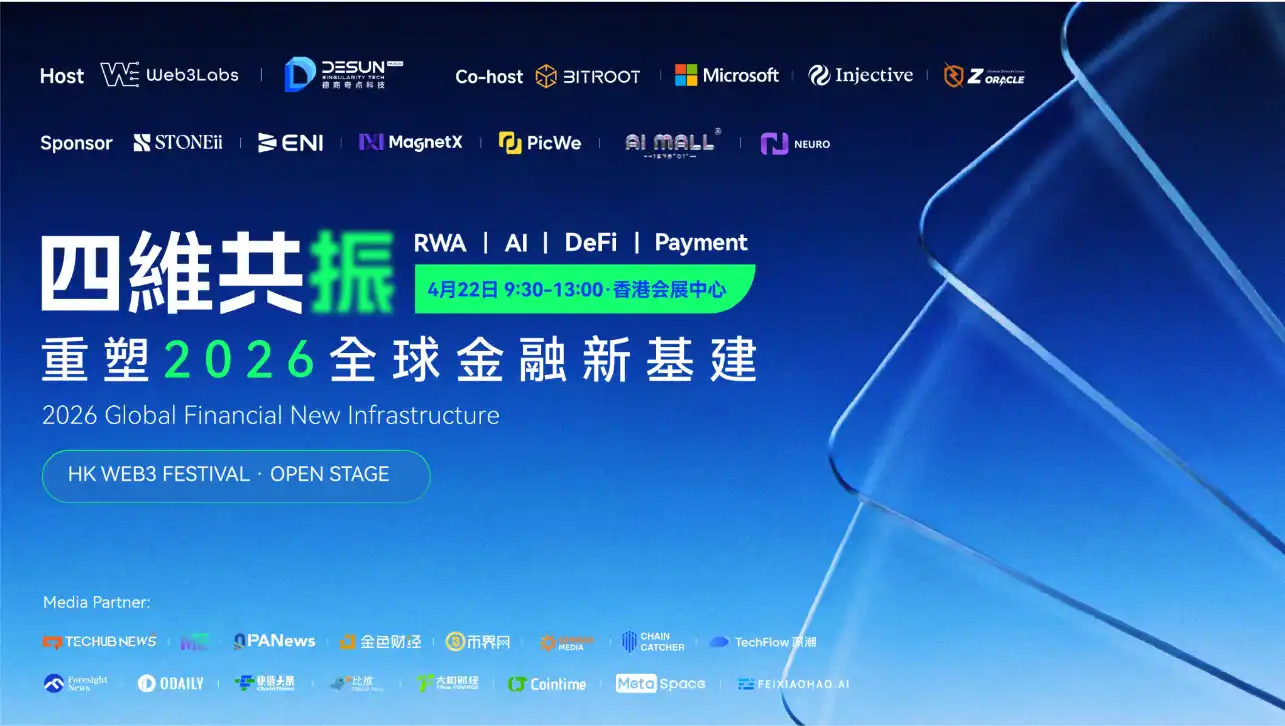
活动图片