# Сопутствующие статьи по теме DeFi

Новостной центр HTX предлагает последние статьи и углубленный анализ по "DeFi", охватывающие рыночные тренды, новости проектов, развитие технологий и политику регулирования в криптоиндустрии.

Franklin Templeton's Latest Research: How to Understand RWA Tokenization

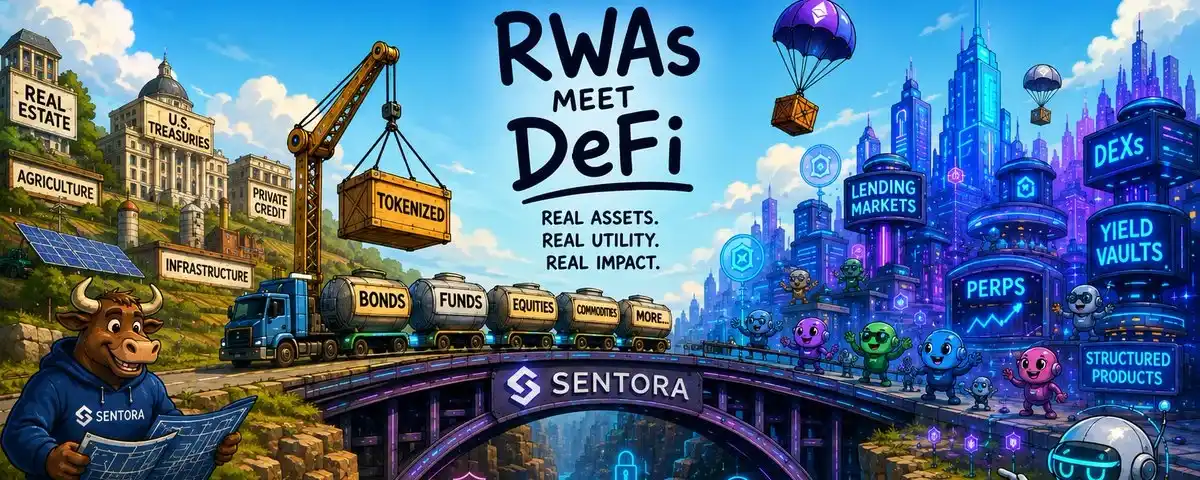
Franklin Templeton's research explores the rapid growth and structural evolution of real-world asset (RWA) tokenization, which has expanded from $5 billion in 2023 to over $25 billion by early 2026. This surge is driven by clearer regulations and greater trust in blockchain technology. RWA tokenization covers assets like stocks, bonds, commodities, and real estate, distinguishing them from native cryptocurrencies. The market saw a turning point as tokenization expanded from government bonds to equities, with early movers like Robinhood, Kraken, and Ondo launching tokenized stock offerings. Traditional institutions, including DTCC, NYSE, and Nasdaq, have since announced significant tokenization initiatives, signaling a major shift in securities processing. The article identifies three tokenization models: 1. **Digital Native Tokens**: Direct ownership of the underlying asset with on-chain settlement (e.g., Franklin Templeton’s money market fund). 2. **Synthetic Asset Tokens**: Indirect economic exposure via special purpose vehicles, allowing broader DeFi utility but limited investor rights. 3. **Digital Mirror Tokens**: Tokenized receipts of off-chain assets, with legacy settlement systems and restricted transferability. Synthetic tokens are permissionless, requiring only KYT checks, while digital native and mirror tokens require full KYC/AML compliance. Each model offers distinct advantages in transparency, utility, and efficiency compared to traditional systems. Tokenization is driving convergence between crypto and traditional finance, with wallets emerging as a universal financial interface.

marsbit2 дня назад 11:35

Franklin Templeton's Latest Research: How to Understand RWA Tokenization

marsbit2 дня назад 11:35

Five-Year Exemption Window: SEC Officially Eases Restrictions on Crypto Asset Securities Trading Interfaces

The U.S. SEC’s Division of Trading and Markets has issued a staff statement providing a five-year exemption from broker-dealer registration for certain crypto asset securities trading interfaces, effective until April 13, 2031. The guidance clarifies that front-end interfaces—such as DeFi platforms, browser extensions, and self-custody wallet integrations—are not considered brokers if they solely act as neutral tools that translate user trading parameters into executable on-chain instructions and provide market data (e.g., gas fees, execution routes), without engaging in order execution, custody, or transaction facilitation. To qualify, these “Covered user interfaces” must adhere to 12 strict conditions centered on neutrality, transparency, and user control. Key requirements include: - Strict neutrality: no promotion of specific securities or execution paths; only objective, verifiable data display. - No payment for order flow or third-party compensation; only fixed, uniform fees permitted. - Full disclosure of conflicts, operational policies, and clear statements that the interface is not SEC-registered. The statement explicitly prohibits interfaces from negotiating terms, offering investment advice, handling user assets, or routing orders. This move aims to separate technical front-ends from financial intermediation, pushing the industry toward compliant, non-custodial, and transparent operations while addressing risks like MEV through enhanced user awareness.

marsbit2 дня назад 07:25

Five-Year Exemption Window: SEC Officially Eases Restrictions on Crypto Asset Securities Trading Interfaces

marsbit2 дня назад 07:25

A Brief History of Web3 Airdrops: A Review of Twelve Iconic 'Rug Pull' Projects

**Summary: A History of Web3 Airdrop "Rug Pulls" – 12 Iconic Cases** The era of Web3 airdrops has shifted from a golden age of mutual benefit between early users and projects to a landscape dominated by systematic exploitation. This article reviews 12 infamous "anti-airdrop" projects that eroded user trust: 1. **Hop Protocol (HOP):** Pioneered a "community witch-hunt" model, encouraging users to report Sybil addresses to claim their rewards, fostering a toxic environment of mutual harm. 2. **Blast:** Introduced the exploitative "points system," locking user funds for meager returns that often underperformed risk-free yields, turning airdrop hunting into a rigged casino. 3. **LayerZero (ZRO):** After 18 months of user-funded gas fees, it implemented a harsh "guilty until proven innocent" Sybil filter, forcing users to "self-confess" or face zero rewards, destroying multi-chain interaction narratives. 4. **zkSync (ZK):** Prioritized "funds held at a specific time" over long-term activity, betraying early contributors who spent significant gas and rewarding insiders, crushing L2 airdrop expectations. 5. **Infinex:** Lured users with NFT and point systems, only to announce a high FDV, a mandatory 1-year lockup, and chaotic rules at its public sale, betraying its community. 6. **Linea:** Perfected user exploitation with endless, grueling Galxe Odyssey tasks and KYC requirements, reducing airdrop hunting to a low-wage, full-time job. 7. **Grass:** Exploited users' physical resources (bandwidth/IP) for DePIN data, rewarding them with tokens worth less than the electricity and proxy costs incurred. 8. **Monad:** Allocated a mere ~3.3% of its airdrop to the community after extensive testnet participation, favoring KOLs and insiders and dampening enthusiasm for new L1s. 9. **Babylon:** Forced Ethereum-style staking onto Bitcoin, causing users massive losses from failed transactions due to high fees and network congestion, damaging trust in L2s. 10. **Backpack:** Encouraged massive trading volume for points, then applied strict KYC and Sybil rules last minute, resulting in massive losses for users and cementing a negative stereotype for projects with Chinese founders. 11. **EdgeX:** Perpetual DEX users lost significant fees for minimal rewards, while "insider" addresses received enormous allocations, exposing blatant corruption and killing the Perp DEX airdrop narrative. 12. **Genius:** The final straw: users were forced to choose between immediately claiming only 30% of their airdrop, locking tokens for a year for 100%, or a 100% burn for a gas fee refund, shattering trust in "elite-backed" narratives. **Conclusion** marks the painful end of the airdrop era. This collective "rug pull" was a co-created disaster of speculation and greed. The collapse, while brutal, forces a return to fundamentals: sustainable products with real product-market fit are paramount. This is not just the end of airdrops but a potential rebirth for Web3, weeding out exploitative projects and rewarding those that build genuine community value.

marsbit2 дня назад 03:14

A Brief History of Web3 Airdrops: A Review of Twelve Iconic 'Rug Pull' Projects

marsbit2 дня назад 03:14

Brother Sun "Rights Protection" Stands Up Against the Trump Family, WLFI Is the Real Scythe in the Crypto Circle

The article details the controversy surrounding World Liberty Financial (WLFI), a cryptocurrency project linked to the Trump family. It reports that WLFI allegedly used the DeFi lending protocol Dolomite, whose co-founder is also a WLFI advisor, as a disguised channel to sell tokens by collateralizing around 5 billion WLFI tokens to borrow approximately $75 million in stablecoins. Despite WLFI's claims that the loans were for ecosystem development and posed no liquidation risk, critics argue it was a way for insiders to cash out, shifting risk to retail investors. The piece highlights WLFI's significant price decline—over 66% since its September 2025 launch—and suggests the Trump family and insiders are the main source of selling pressure, as they control nearly 74% of the token supply. It also revisits WLFI’s prior move to blacklist 272 addresses, including those of investor Justin Sun, under the pretext of preventing large-scale sell-offs, which now appears to be an effort to reduce competition for their own sales. Sun publicly accused WLFI of exploiting users, freezing assets, and treating the crypto community as a "personal ATM." WLFI countered by threatening legal action. The author notes that while Sun’s criticism may gain sympathy, a legal battle in the U.S. against the well-connected Trump family would be risky for him. Finally, the article concludes that WLFI exemplifies how powerful elites can exploit crypto’s regulatory gray areas for profit, and urges the community to reject such projects driven more by political privilege than genuine decentralized finance ideals.

Odaily星球日报04/13 12:17

Brother Sun "Rights Protection" Stands Up Against the Trump Family, WLFI Is the Real Scythe in the Crypto Circle

Odaily星球日报04/13 12:17

活动图片