Similar Trends? Just an Illusion: Why Bitcoin Today Is Fundamentally Different from 2022

marsbitОпубликовано 2026-01-20Обновлено 2026-01-20

Введение

This article argues that comparing current Bitcoin price action to 2022 is a superficial and misleading analogy, as the underlying conditions are fundamentally different across three key areas. First, the macroeconomic backdrop is the complete inverse. 2022 was defined by high inflation, aggressive interest rate hikes, and tightening liquidity environment, forcing capital into risk-off mode. In contrast, the current environment features declining CPI, an impending rate-cutting cycle, and central banks re-injecting liquidity, creating a strong risk-on appetite for assets like Bitcoin. Charts are presented showing Bitcoin's negative correlation with CPI and its positive correlation with US liquidity indices. Second, the technical market structure differs significantly. The 2021-2022 period formed a bearish weekly "M-top" pattern, characteristic of a major cycle top. The recent pullback is framed as a potential "bear trap" within a larger bull market, with the $80,850-$62,000 zone acting as a major area of consolidation that offers a favorable risk-reward ratio for buyers. Third, and most crucially, the investor base has structurally changed. The 2020-2022 market was retail-driven and highly speculative. Post-2023, the approval of Bitcoin ETFs has ushered in an "era of institutionalization," creating a new class of structural, long-term holders. This has locked up supply, drastically reduced volatility from historical highs of 80-150% to a current 30-60%, and provided a stabl...

Original Author: Garrett

Original Compilation: Saoirse, Foresight News

Recently, some analysts have been comparing the current price trend of Bitcoin with that of 2022.

Admittedly, the short-term price movements may appear somewhat similar. However, from a long-term perspective, this comparison is entirely absurd.

Whether in terms of long-term price patterns, macroeconomic context, investor composition, or supply/demand and holding structures, the underlying logic of the two periods is fundamentally different.

In the analysis and trading of financial markets, the biggest mistake is to focus solely on short-term, superficial statistical similarities while ignoring long-term, macro, and fundamental driving factors.

Completely Opposite Macroeconomic Backgrounds

In March 2022, the United States was mired in high inflation and an interest rate hiking cycle, driven by factors including:

  • Excess liquidity during the COVID-19 pandemic;
  • The ripple effects of the Ukraine crisis, which further significantly pushed up inflation.

At that time, risk-free interest rates were continuously rising, liquidity was being systematically withdrawn, and financial conditions were constantly tightening.

In such an environment, the primary goal of capital was risk aversion. The Bitcoin trend we observed was essentially a distribution pattern at high levels during a tightening cycle.
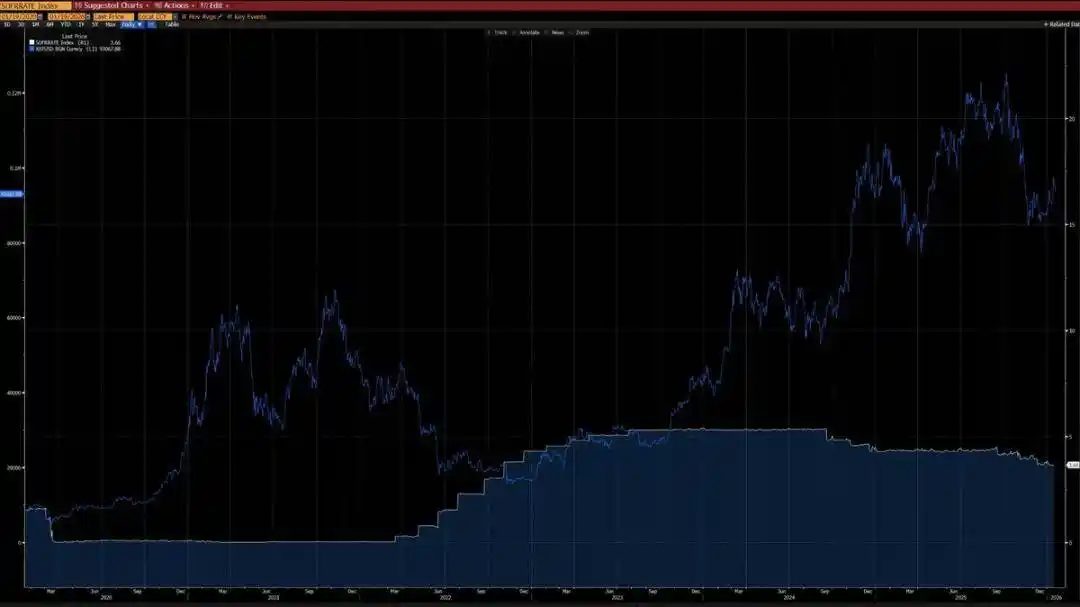
The current macroeconomic environment is precisely the opposite:

  • The situation of the Ukraine conflict is continuing to ease (partly due to U.S. efforts to reduce inflation and lower interest rates);
  • Both the Consumer Price Index (CPI) and U.S. risk-free interest rates are showing a downward trend;
  • More importantly, the AI technology revolution has significantly increased the likelihood of the economy entering a long-term deflationary cycle. Therefore, from a larger cycle perspective, interest rates have entered a rate-cutting phase;
  • Central banks are reinjecting liquidity into the financial system;
  • This means that capital currently exhibits "risk-on" characteristics.

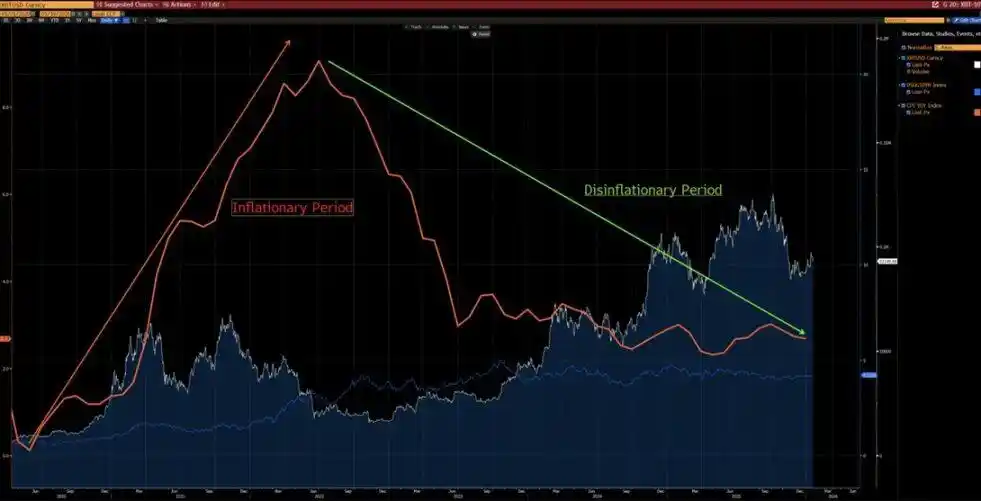
As can be seen from the chart below, since 2020, Bitcoin has shown a clear negative correlation with the year-on-year change in CPI—Bitcoin tends to fall during rising inflation cycles and rise during slowing inflation cycles.

Against the backdrop of the AI-driven technology revolution, long-term deflation is highly probable—a view also shared by Elon Musk, further corroborating our argument.
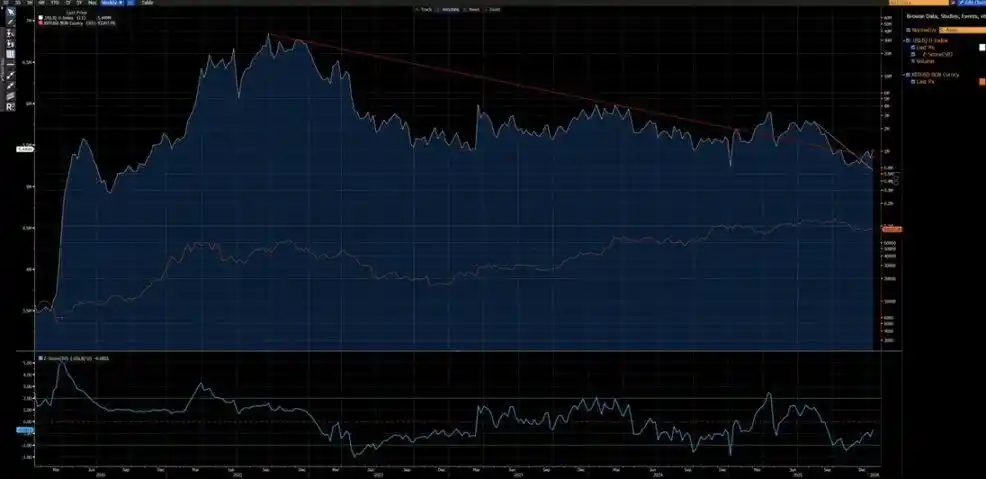
Another chart below also reveals that since 2020, Bitcoin has had an extremely strong correlation with the U.S. Liquidity Index (with the exception of data deviations in 2024 due to ETF inflows). Currently, the U.S. Liquidity Index has broken through both the short-term (white line) and long-term (red line) downtrend lines—a new uptrend is emerging.

Distinctly Different Technical Structures

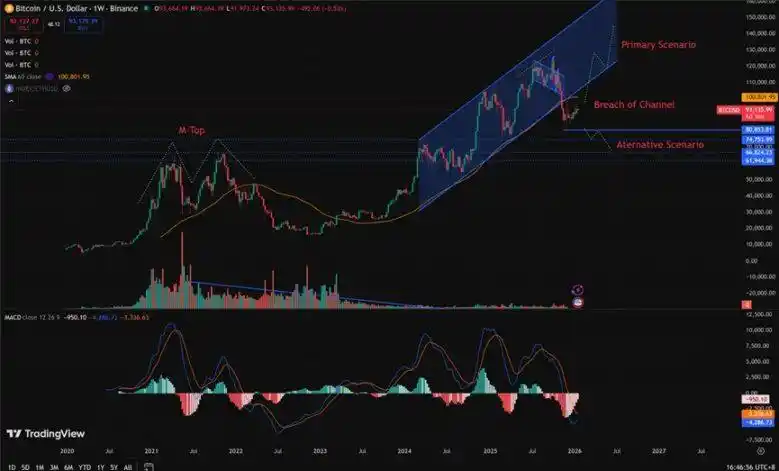
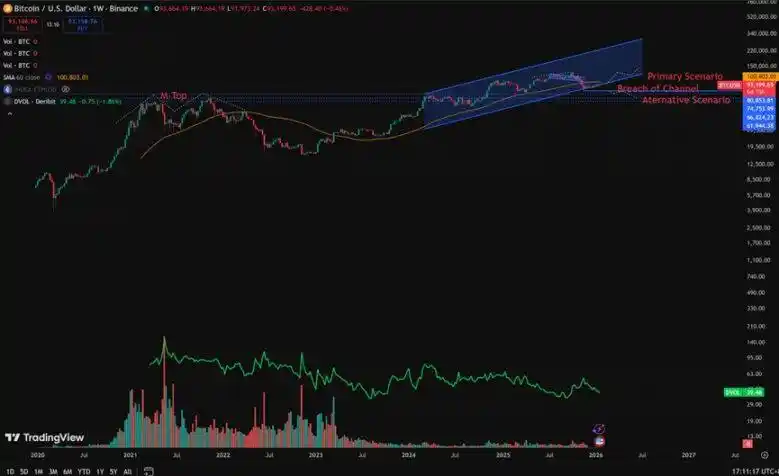
  • 2021-2022: A weekly "M-top" structure, a pattern typically associated with long-cycle market tops, which tends to suppress price movements for an extended period.
  • 2025 (affecting early 2026 trends): A weekly break below the rising channel. From a probabilistic perspective, this is more likely a "bear trap" before a rebound back into the channel.

Of course, we cannot completely rule out the possibility that the current trend evolves into a continuation of the 2022-style bear market. However, it must be noted that the $80,850-$62,000 range has previously experienced large-scale consolidation and筹码 exchange.

This prior process of筹码 accumulation provides a far superior risk-reward ratio for bullish positions—upside potential significantly outweighs downside risk.

What Conditions Are Needed to Repeat a 2022-Style Bear Market?

To repeat a bear market like 2022, the following hard conditions must be met:

  • A new round of inflation shock, or a major geopolitical crisis on a scale equivalent to 2022;
  • Central banks restarting interest rate hikes, or resuming balance sheet quantitative tightening (QT) policies;
  • A decisive and sustained break below the $80,850 level for Bitcoin's price.

Until all these conditions are met, declaring a structural bear market is premature and constitutes a speculative judgment rather than a conclusion based on rational analysis.

Markedly Different Investor Structures

  • 2020-2022: The market was dominated by retail investors, with limited institutional participation, especially from long-term allocation institutions.
  • Since 2023: The launch of Bitcoin ETFs introduced "structural long-term holders," effectively locking up part of the Bitcoin supply, significantly reducing trading activity, and markedly lowering volatility.

2023 marked a structural inflection point for Bitcoin as an asset, both from a macroeconomic and quantitative analysis standpoint.

Bitcoin's volatility range has also undergone a fundamental shift:

  • Historical volatility: 80%-150%
  • Current volatility: 30%-60%

This change signifies a fundamental shift in Bitcoin's asset attributes.

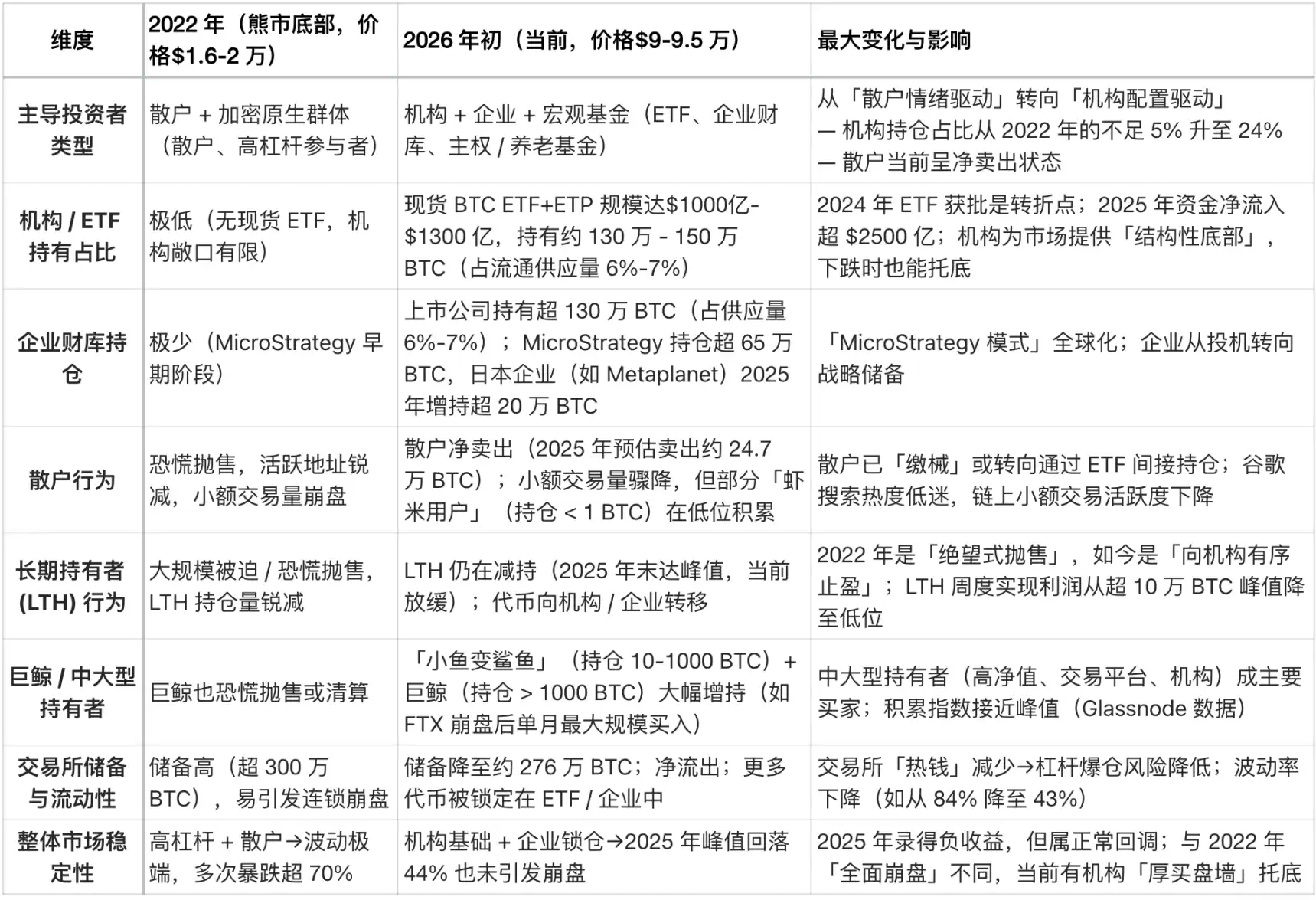
Core Structural Differences (Current vs. 2022)

The biggest difference in Bitcoin's investor structure between early 2026 and 2022 is the shift from a "retail-dominated, high-leverage speculation" market to an "institution-dominated, structural long-term holding" market.

In 2022, Bitcoin experienced a typical "crypto-native bear market," triggered by retail panic selling and cascading leverage liquidations.

Today, Bitcoin has entered a much more mature "institutional era," characterized by:

  • Stable underlying demand
  • Part of the supply being locked long-term
  • Volatility reaching institutional-grade levels

Below is a core comparison by Grok based on on-chain data (e.g., Glassnode, Chainalysis) and institutional reports (e.g., Grayscale Investments, Bitwise, State Street) from mid-January 2026 (when Bitcoin was in the $90,000 - $95,000 range):
Связанные с этим вопросы

QWhat are the key differences in macroeconomic conditions between 2022 and the current period (2026) according to the article?

AIn 2022, the US faced high inflation and a rate-hiking cycle driven by pandemic-era excess liquidity and the Ukraine crisis, leading to tightening financial conditions and risk-off capital. Currently, the CPI and risk-free rates are declining, the AI revolution suggests long-term deflation, central banks are injecting liquidity, and capital is risk-on.

QHow does the technical structure of Bitcoin's price action differ between 2021-2022 and 2025-2026?

AIn 2021-2022, Bitcoin formed a weekly 'M-top' pattern, typical of long-term market tops. In 2025-2026, it broke below an ascending channel on weekly charts, which is more likely a bear trap before a rebound into the channel.

QWhat conditions would need to be met for a bear market similar to 2022 to occur again?

AA new inflationary shock or major geopolitical crisis on par with 2022, central banks restarting rate hikes or quantitative tightening (QT), and a decisive and sustained break below the $80,850 level for Bitcoin.

QHow has Bitcoin's investor structure changed from 2020-2022 to the present (2026)?

AFrom 2020-2022, the market was retail-driven with limited institutional participation. Since 2023, Bitcoin ETFs have introduced structural long-term holders, locking up supply, reducing trading activity, and lowering volatility to 30%-60% from historical 80%-150%.

QWhat is the core structural difference between the current market and the 2022 market, as per the article?

AThe core difference is the shift from a 'retail-driven, highly leveraged speculation' market in 2022 to an 'institution-driven, structural long-term holding' market now, characterized by stable underlying demand, partially locked supply, and institutional-grade volatility.

Похожее

Торговля

Спот
Фьючерсы

Популярные статьи

Тест по Bitcoin Биткоина

HTX Learn: Изучите Bitcoin halving и Заработаете Токены USDT

3.0k просмотров всегоОпубликовано 2024.04.16Обновлено 2024.04.16

Тест по Bitcoin  Биткоина

Что такое $BITCOIN

ЦИФРОВОЕ ЗОЛОТО ($BITCOIN): Комплексный анализ Введение в ЦИФРОВОЕ ЗОЛОТО ($BITCOIN) ЦИФРОВОЕ ЗОЛОТО ($BITCOIN) — это проект на основе блокчейна, работающий в сети Solana, который стремится объединить характеристики традиционных драгоценных металлов с инновациями децентрализованных технологий. Хотя он носит имя Биткойн, часто называемого “цифровым золотом” из-за его восприятия как средства хранения ценности, ЦИФРОВОЕ ЗОЛОТО является отдельным токеном, предназначенным для создания уникальной экосистемы в ландшафте Web3. Его цель — позиционировать себя как жизнеспособный альтернативный цифровой актив, хотя детали его применения и функциональности все еще развиваются. Что такое ЦИФРОВОЕ ЗОЛОТО ($BITCOIN)? ЦИФРОВОЕ ЗОЛОТО ($BITCOIN) — это токен криптовалюты, специально разработанный для использования в блокчейне Solana. В отличие от Биткойна, который выполняет широко признанную роль хранения ценности, этот токен, похоже, сосредоточен на более широких приложениях и характеристиках. Примечательные аспекты включают: Инфраструктура блокчейна: Токен построен на блокчейне Solana, известном своей способностью обрабатывать высокоскоростные и недорогие транзакции. Динамика предложения: ЦИФРОВОЕ ЗОЛОТО имеет максимальное предложение, ограниченное 100 квадриллионами токенов (100P $BITCOIN), хотя детали о его обращающемся предложении в настоящее время не раскрыты. Утилита: Хотя точные функциональные возможности не описаны, есть указания на то, что токен может быть использован для различных приложений, потенциально связанных с децентрализованными приложениями (dApps) или стратегиями токенизации активов. Кто создатель ЦИФРОВОГО ЗОЛОТА ($BITCOIN)? На данный момент личность создателей и команды разработчиков, стоящих за ЦИФРОВЫМ ЗОЛОТОМ ($BITCOIN), остается неизвестной. Эта ситуация типична для многих инновационных проектов в области блокчейна, особенно тех, которые связаны с децентрализованными финансами и феноменом мем-криптовалют. Хотя такая анонимность может способствовать культуре, ориентированной на сообщество, она усиливает опасения по поводу управления и ответственности. Кто инвесторы ЦИФРОВОГО ЗОЛОТА ($BITCOIN)? Доступная информация указывает на то, что у ЦИФРОВОГО ЗОЛОТА ($BITCOIN) нет известных институциональных спонсоров или значительных венчурных капиталовложений. Проект, похоже, функционирует по модели пирингового взаимодействия, сосредоточенной на поддержке и принятии сообществом, а не на традиционных путях финансирования. Его активность и ликвидность в основном сосредоточены на децентрализованных биржах (DEX), таких как PumpSwap, а не на устоявшихся централизованных торговых платформах, что еще больше подчеркивает его подход, ориентированный на grassroots. Как работает ЦИФРОВОЕ ЗОЛОТО ($BITCOIN) Операционные механизмы ЦИФРОВОГО ЗОЛОТА ($BITCOIN) можно подробно описать на основе его дизайна блокчейна и характеристик сети: Механизм консенсуса: Используя уникальный механизм доказательства истории (PoH) Solana в сочетании с моделью доказательства доли (PoS), проект обеспечивает эффективную валидацию транзакций, что способствует высокой производительности сети. Токеномика: Хотя конкретные дефляционные механизмы не были подробно описаны, большое максимальное предложение токенов подразумевает, что оно может быть предназначено для микротранзакций или нишевых случаев использования, которые еще предстоит определить. Интероперабельность: Существует потенциал для интеграции с более широкой экосистемой Solana, включая различные платформы децентрализованных финансов (DeFi). Однако детали относительно конкретных интеграций остаются неуточненными. Хронология ключевых событий Вот хронология, которая подчеркивает значимые вехи, касающиеся ЦИФРОВОГО ЗОЛОТА ($BITCOIN): 2023: Первоначальное развертывание токена происходит в блокчейне Solana, отмеченное его адресом контракта. 2024: ЦИФРОВОЕ ЗОЛОТО приобретает видимость, когда оно становится доступным для торговли на децентрализованных биржах, таких как PumpSwap, позволяя пользователям обменивать его на SOL. 2025: Проект наблюдает спорадическую торговую активность и потенциальный интерес к инициативам, возглавляемым сообществом, хотя на данный момент не зафиксировано никаких значительных партнерств или технических достижений. Критический анализ Сильные стороны Масштабируемость: Основная инфраструктура Solana поддерживает высокие объемы транзакций, что может повысить полезность $BITCOIN в различных сценариях транзакций. Доступность: Потенциально низкая цена торговли за токен может привлечь розничных инвесторов, способствуя более широкому участию благодаря возможностям дробного владения. Риски Отсутствие прозрачности: Отсутствие публично известных спонсоров, разработчиков или процесса аудита может вызвать скептицизм относительно устойчивости и надежности проекта. Волатильность рынка: Торговая активность сильно зависит от спекулятивного поведения, что может привести к значительной волатильности цен и неопределенности для инвесторов. Заключение ЦИФРОВОЕ ЗОЛОТО ($BITCOIN) является интригующим, но неоднозначным проектом в быстро развивающейся экосистеме Solana. Хотя он пытается использовать нарратив “цифрового золота”, его отход от установленной роли Биткойна как средства хранения ценности подчеркивает необходимость более четкого различения его предполагаемой утилиты и структуры управления. Будущее принятие и усвоение, вероятно, будут зависеть от решения текущей непрозрачности и более четкого определения его операционных и экономических стратегий. Примечание: Этот отчет охватывает синтезированную информацию, доступную на октябрь 2023 года, и с тех пор могут произойти события.

99 просмотров всегоОпубликовано 2025.05.13Обновлено 2025.05.13

Что такое $BITCOIN

Fractal Bitcoin: масштабирование Биткоина с помощью рекурсивной системы

Fractal Bitcoin — масштабное Layer-1-решнение, созданное на базе кода Биткоина, позволяющего достигать бесконечного масштабирования с помощью рекурсивного подхода.

2.2k просмотров всегоОпубликовано 2025.06.30Обновлено 2025.06.30

Fractal Bitcoin: масштабирование Биткоина с помощью рекурсивной системы

Обсуждения

Добро пожаловать в Сообщество HTX. Здесь вы сможете быть в курсе последних новостей о развитии платформы и получить доступ к профессиональной аналитической информации о рынке. Мнения пользователей о цене на BTC (BTC) представлены ниже.

活动图片















