Автор: KarenZ, Foresight News
Оригинальное название: Убытки в миллиарды: отчет Strategy сигнализирует об опасности! Что говорят руководители?
Текущий рынок криптовалют погружен в сильную коррекцию. По мере того как цена биткоина отступает до 60 000 долларов, настроения на рынке быстро сдвигаются в сторону крайней паники.
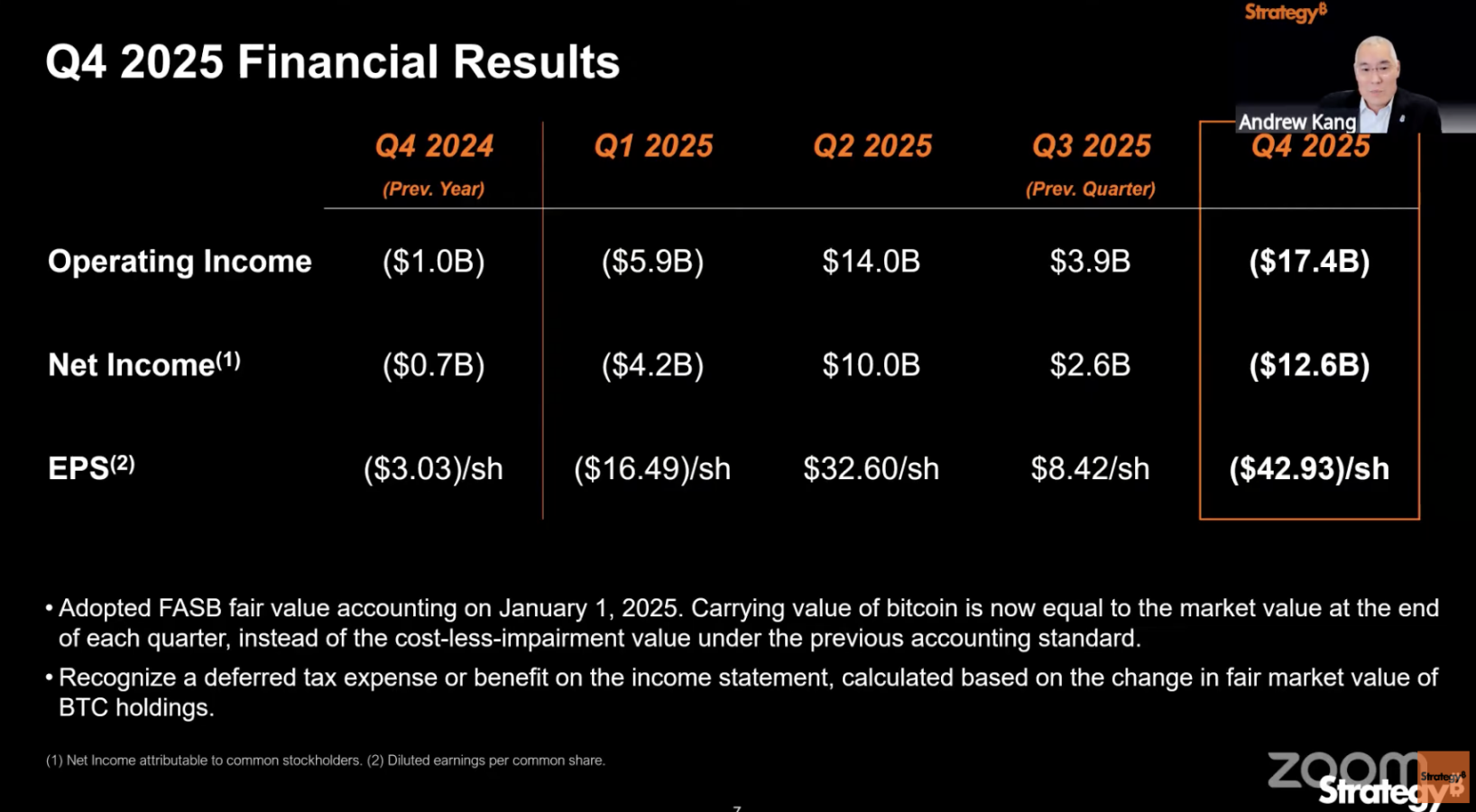
Именно в этот неспокойный момент отчет за четвертый квартал 2025 года от Strategy (ранее MicroStrategy), крупнейшего в мире корпоративного держателя биткоинов, стал дополнительным ударом по и без того подавленному рынку: чистый убыток за квартал достиг ошеломляющих 12,4 миллиарда долларов.
В день публикации отчета акции Strategy упали примерно на 17%. На данный момент их стоимость снизилась почти на 80% по сравнению с историческим максимумом, достигнутым в ноябре 2024 года.
От звездной компании, которая когда-то взлетела благодаря «стратегии биткоин-казначейства», до нынешнего состояния с огромными убытками и многократным обвалом акций — ситуация Strategy является самым真实ным отражением) текущей волатильности на рынке криптовалют. С одной стороны — огромные бумажные убытки, с другой — почти одержимое накопление монет. Эта компания своими противоречивыми данными разыгрывает азартную игру, ставя на кон свое будущее.
Ключевые данные: Безумное накопление на фоне гигантских убытков
Ключевое противоречие отчета Strategy за Q4 2025 года заключается в резком контрасте между рекордно высокими бумажными убытками и исторически максимальными запасами биткоинов.
1. Огромные бумажные убытки по стандарту справедливой стоимости: Операционный убыток Strategy в четвертом квартале 2025 года достиг ошеломляющих 17,4 миллиарда долларов, чистый убыток составил 12,4 миллиарда долларов. Это в основном связано с новым стандартом учета по справедливой стоимости, принятым компанией с 1 января 2025 года. Согласно этому стандарту, компания должна переоценивать все свои запасы биткоинов по рыночным ценам на конец каждого квартала, а колебания цены монеты напрямую отражаются в отчете о прибылях и убытках. Постоянная коррекция цены биткоина привела к тому, что сокращение рыночной стоимости запасов напрямую превратилось в бумажные убытки, став самым наглядным «медвежьим» сигналом в отчете.
2. Одержимость покупкой биткоинов вопреки тренду: Несмотря на рыночную волатильность, Strategy продолжает скупать активы бешеными темпами, в январе 2026 года была совершена крупная покупка 41 002 монет. По состоянию на 1 февраля 2026 года Strategy владеет 713 502 биткоинами, что составляет примерно 3.4% от общего количества биткоинов, уверенно удерживая первое место среди глобальных корпоративных держателей биткоинов.
3. Супер-машина по привлечению финансирования: В 2025 финансовом году Strategy привлекла в общей сложности более 25,3 миллиарда долларов капитала, что составило около 8% от общего объема финансирования за счет акционерного капитала в США за тот год.
4. Специальный резерв для смягчения рисков: По состоянию на 1 февраля 2026 года Strategy имеет долларовый резерв в размере 2,25 миллиарда долларов, специально предназначенный для покрытия дивидендов по привилегированным акциям и выплат процентов по долгу в течение следующих 2,5 лет, что试图缓解) (пытается смягчить) рыночные опасения относительно давления на ее денежные потоки.
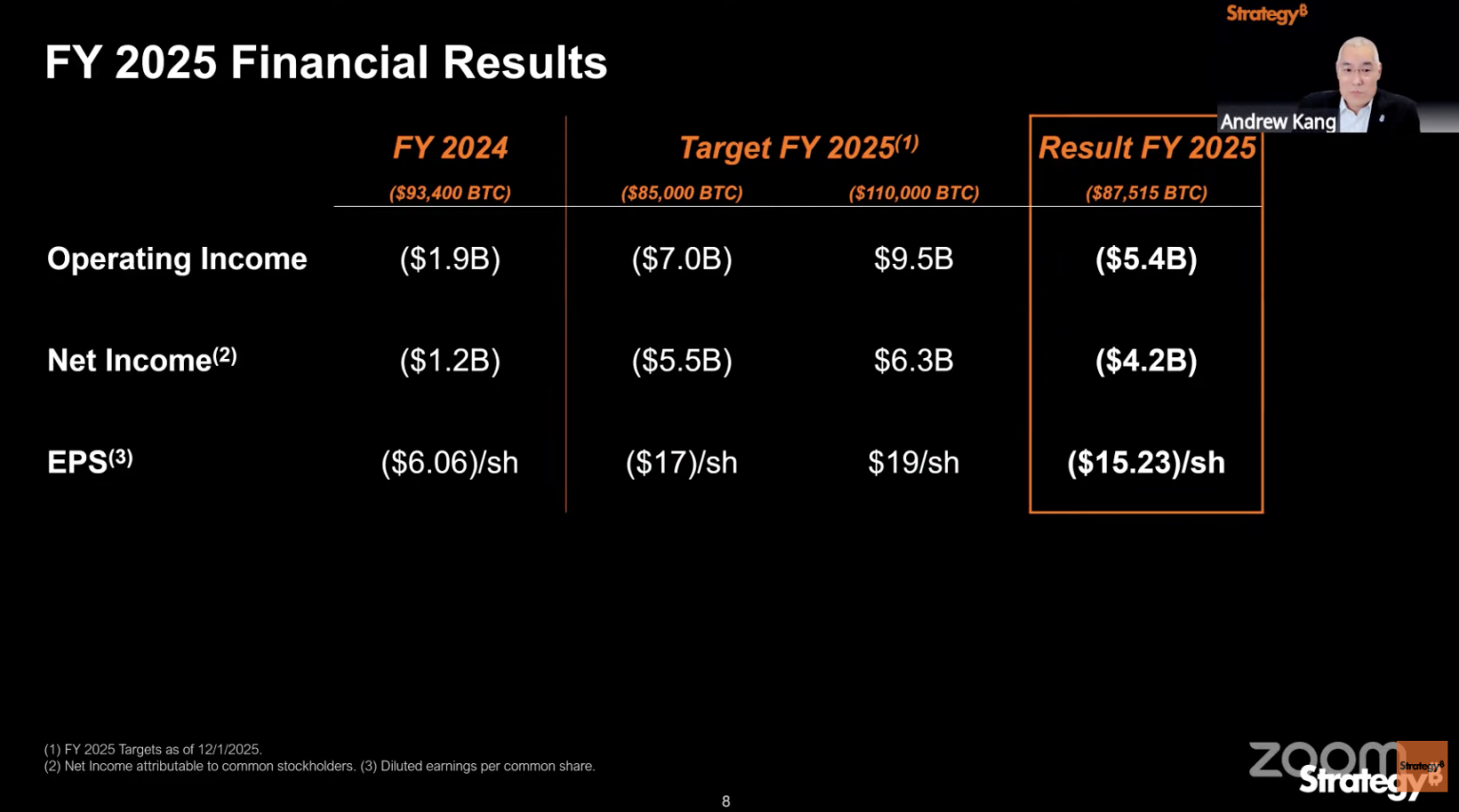
С точки зрения себестоимости владения, первоначальная общая стоимость биткоинов, принадлежащих Strategy, достигла 54,26 миллиарда долларов, средняя стоимость одной монеты составляет 76 052 доллара. При текущей цене биткоина около 65 000 долларов, расчетный бумажный убыток компании по запасам биткоинов превышает 7,8 миллиарда долларов.
Маргинализированный «основной бизнес» и увеличенное «плечо»
Крайне иронично, что традиционный основной бизнес Strategy — корпоративное аналитическое программное обеспечение — в отчете стал почти забытым примечанием. Масштаб и вклад этого бизнеса несопоставимы с объемом биткоин-стратегии.
В четвертом квартале 2025 года бизнес программного обеспечения компании сохранил положительный рост, но показатели были относительно скромными: общая выручка составила 123 миллиона долларов, увеличившись всего на 1,9% в годовом исчислении; выручка от подписных услуг — 51,8 миллиона долларов, рост на 62,1% в годовом исчислении; общая валовая прибыль за квартал — 81,3 миллиона долларов, а рентабельность по валовой прибыли сохранилась на относительно высоком уровне в 66,1%.
Из данных видно, что хотя бизнес программного обеспечения обладает стабильной прибыльностью и высокой рентабельностью, его объем выручки измеряется лишь сотнями миллионов. По сравнению с миллиардными масштабами привлечения капитала компании, миллиардными затратами на запасы биткоинов и квартальными убытками в миллиарды,边际贡献) (предельный вклад) этого основного бизнеса практически ничтожен.
Для нынешней Strategy ключевые ресурсы и стратегический фокус компании уже полностью сместились в сторону биткоина. Strategy с помощью сложных финансовых инструментов, таких как акции, облигации, привилегированные акции, предоставляет инвесторам доступ к биткоину с плечом. Сама она彻底沦为) (полностью превратилась в) «тень биткоина», ее развитие глубоко связано с ценой биткоина: вместе процветают, вместе терпят убытки.
Что произойдет при погашении конвертируемых облигаций?
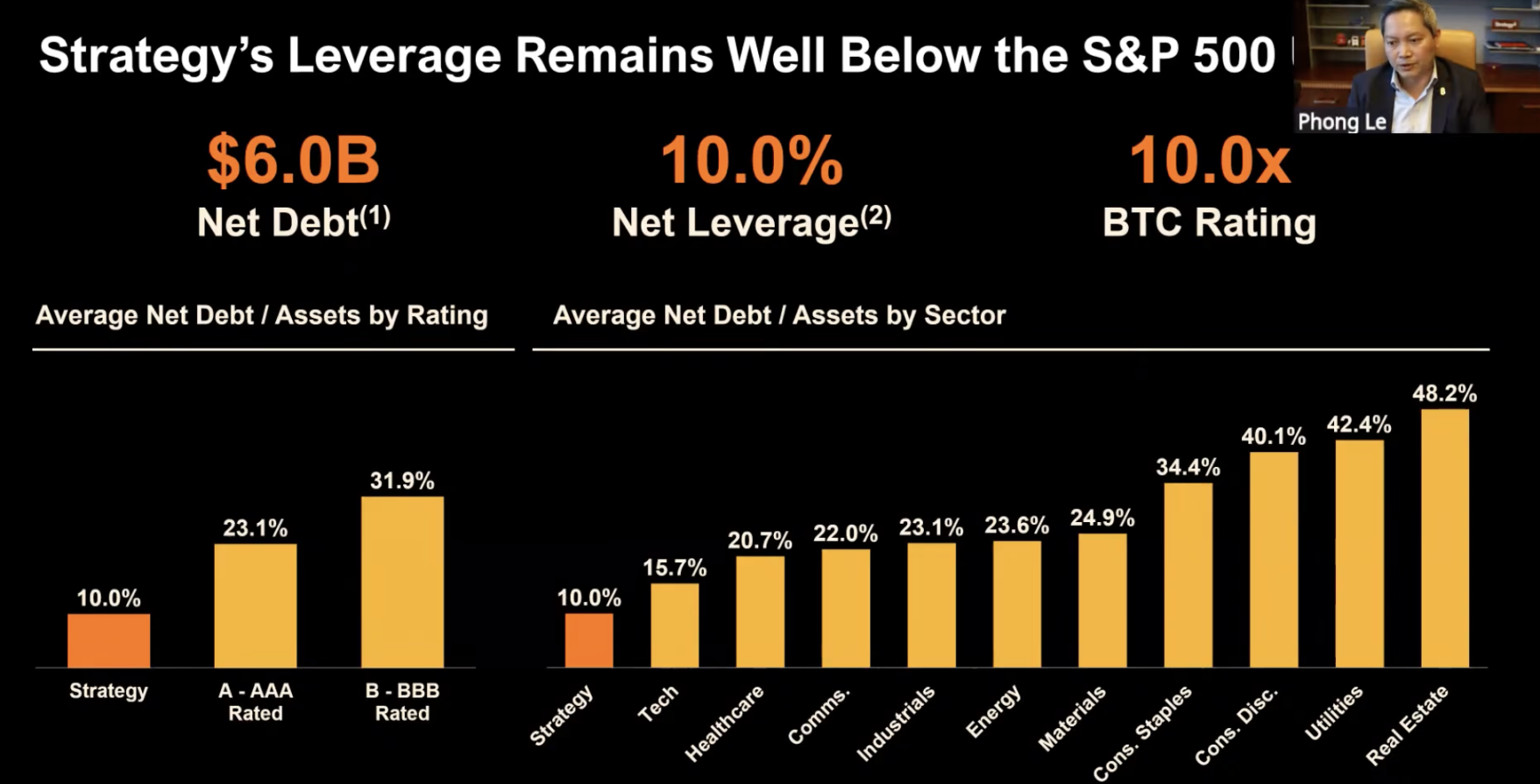
В ходе последней телеконференции по отчетности Фонг Ле (Phong Le) заявил: «У Strategy в настоящее время чистый долг в размере 6 миллиардов долларов, текущий уровень杠杆率) (левериджа) составляет около 13% — это половина показателя компаний инвестиционного уровня и треть показателя компаний с высокодоходными облигациями. В крайнем случае, если цена биткоина упадет на 90%, до 8000 долларов, то наши резервы в биткоинах сравняются с нашим чистым долгом. В такой ситуации мы не сможем использовать резервы биткоинов для погашения конвертируемых облигаций и рассмотрим возможность реструктуризации, дополнительной эмиссии акций или выпуска дополнительного долга.»
Кроме того, Фонг Ле выразил希望, что компания постепенно достигнет полной капитализации (equitization). Если к тому времени это не удастся, будут寻找其他方式) (искаться другие способы) реструктуризации долга, направленные на устойчивое снижение杠杆) (левериджа), избежание продажи монет и продолжение стратегии накопления биткоинов.
Когда «маховик» дает сбой
Модель «биткоин-маховика» Strategy построена на极其脆弱的) (крайне хрупком) предположении: цена биткоина будет долгосрочно螺旋上升) (расти по спирали), и рынок капитала всегда будет готов предоставлять ей премиальное финансирование, образуя позитивный循环) (цикл), который推动) (двигает) рост акций компании и объема запасов синхронно.
Однако, когда цена биткоина опускается ниже его средней себестоимости владения (76 000 долларов), риски и парадоксы, с которыми сталкивается Strategy, также暴露) (обнажаются).
STRC с высокими дивидендами: высокая доходность对应) (соответствует) высокому риску
Выпущенные Strategy бессрочные привилегированные акции STRC в настоящее время имеют дивидендную доходность 11,25%, и эта ставка持续上调) (постоянно повышалась) с июля 2025 года.
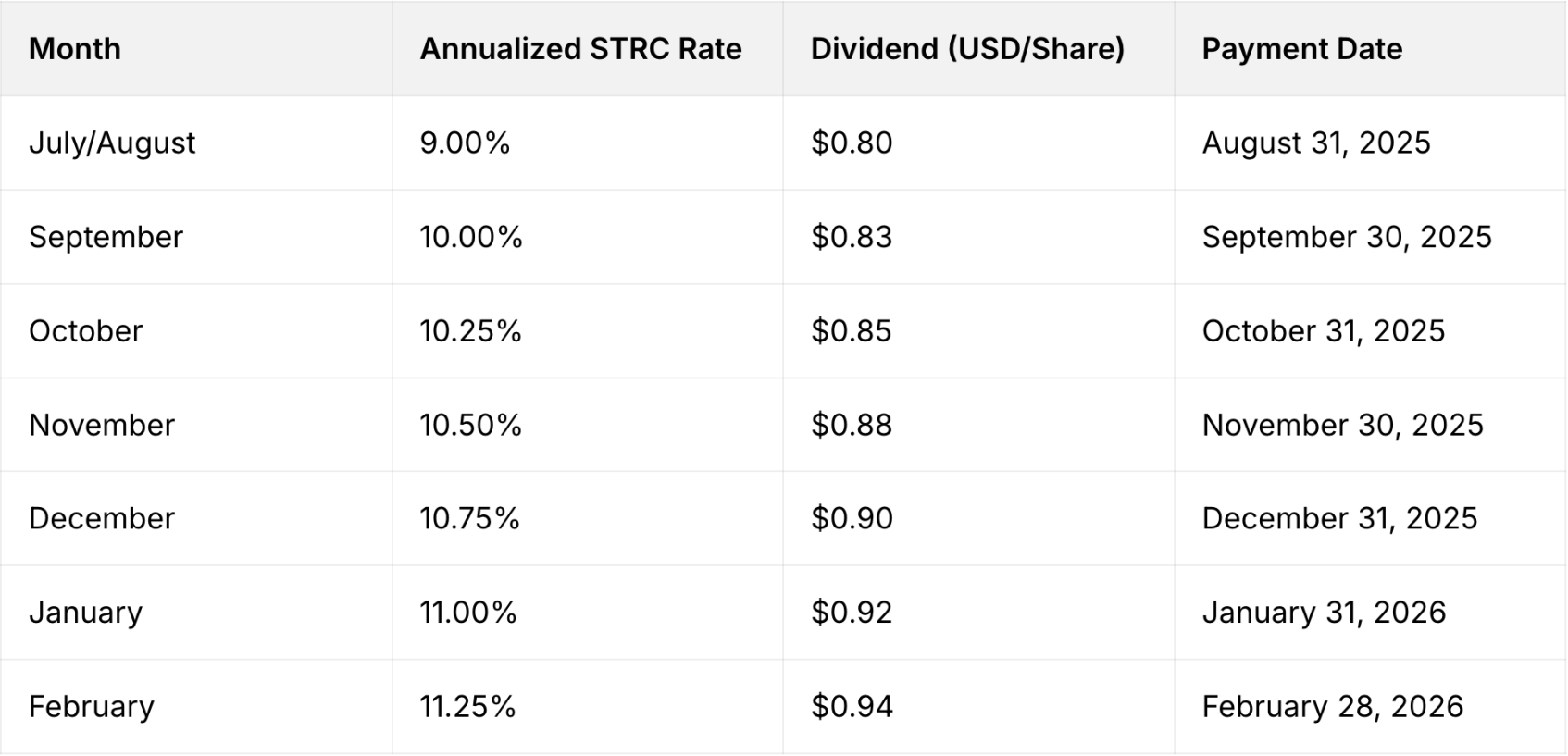
Strategy разработала этот переменный механизм, чтобы尽量稳定) (максимально стабилизировать) цену STRC около номинала в 100 долларов, снизить волатильность и позиционировать его как替代品) (альтернативу) «краткосрочным высокодоходным кредитам» или «сберегательным счетам с высоким процентом».
В текущих условиях низких процентных ставок номинальная доходность в 11,25% действительно очень привлекательна, особенно для инвесторов, ищущих высокий фиксированный доход. Но базовая логика рынка капитала никогда не менялась: высокая доходность必然伴随) (неизбежно сопровождается) высоким риском. За высокими дивидендами STRC скрывается огромная неопределенность, глубоко связанная с биткоин-стратегией Strategy.
Ключевая стратегия Strategy — это «杠杆 биткоина + финансирование扩张) (экспансии)». Ее платежеспособность高度依赖) (сильно зависит от): долгосрочного роста цены биткоина, постоянного привлечения финансирования за счет выпуска обыкновенных акций MSTR, других привилегированных акций или долга для покупки большего количества BTC.
Если медвежий рынок биткоина затянется, mNAV将持续低迷) (будет оставаться низким) или даже торговаться с折扣) (дисконтом), сложности с привлечением акционерного финансирования усугубятся, резервы могут быстро истощиться. Хотя компания создала резерв в 2,25 миллиарда долларов в качестве缓冲, это всего лишь страховка на 2,5 года для этой азартной игры.
Текущий рынок уже отражает部分担忧) (часть担忧ний): цена STRC ниже номинала в 100 долларов, в настоящее время составляет 93,67 доллара.
mNAV сжат до 1,07: Будет ли канал финансирования畅通) (проходим)?
Ключевым двигателем, позволяющим Strategy无限增发) (бесконечно выпускать) акции для покупки монет, является показатель mNAV, который используется для оценки стоимости ее акций относительно ее биткоин-резервов. Когда mNAV > 1, это означает, что рынок дает Strategy оценку выше стоимости ее биткоинов (т.е. торговля с премией), и инвесторы готовы платить дополнительную премию за ее «стратегию杠杆 биткоина) (левериджа на биткоине)».
В настоящее время mNAV Strategy сжат до 1,07. Как только он упадет ниже 1, канал финансирования может быть вынужденно关闭) (закрыт). В этот момент Strategy может потерять способность поддерживать курс и пополнять запасы, полностью превратившись в заложника колебаний цены биткоина.
В отличие от того, что подчеркивалось на последнем собрании, генеральный директор Strategy Фонг Ле в ноябре 2025 года в интервью «What Bitcoin Done» заявил, что если mNAV компании упадет ниже 1, и варианты финансирования иссякнут, продажа биткоинов будет «математически» оправданной. Однако он уточнил, что это будет крайней мерой, а не изменением политики.
负反馈循环) (Петля отрицательной обратной связи)?
Для Strategy самое страшное — не текущие огромные убытки, а可能触发) (возможный запуск) петли отрицательной обратной связи, что является сценарием, которого больше всего боятся все игроки加密市场) (крипторынка):
Цена биткоина падает → Собственный капитал компании сокращается → mNAV падает ниже 1, премия исчезает → Невозможность привлечь новые средства через финансирование → Неспособность支付) (выплачивать) высокие проценты и дивиденды → Вынужденная продажа биткоинов для привлечения средств → Давление продаж на биткоин увеличивается, цена падает дальше → Собственный капитал сокращается еще больше...
Политические стимулы и технологические承诺: Могут ли они восстановить доверие?
Майкл Сейлор (Michael Saylor) во время телеконференции по отчетности не ограничился краткосрочными негативными факторами квартальных убытков компании. Вместо этого он, основываясь на全面转向) (полном развороте) политики США и ускоренном принятии финансовой отраслью, нарисовал долгосрочную картину преимуществ развития биткоина. Одновременно он обратился к最担忧) (самым беспокоящим) рынок рискам квантовых технологий и планам их внедрения, чтобы重塑信心) (восстановить доверие) рынка к биткоин-стратегии компании.
Майкл Сейлор подчеркнул, что текущее развитие биткоина переживает беспрецедентный период двойных выгод — политических и финансовых. На политики) (политическом фронте) отношение правительства США к цифровым активам претерпело фундаментальное изменение от скепсиса к признанию. Президент и 12 членов кабинета министров четко высказались в поддержку биткоина, а двухпартийный консенсус в отношении регулирования и принятия цифровых активов позволил США войти в ведущие阵营) (ряды) global) (глобального) развития цифровых активов.
На金融层面) (финансовом фронте) отраслевое принятие биткоина переживает взрывной рост: крупные банки纷纷推出) (один за другим запускают) полный спектр услуг по交易) (торговле), кредитованию и хранению биткоинов; финтех-компании持续加码) (продолжают усиливать)布局) (позиции) в биткоине. Двойной вход公开市场) (публичного рынка) и традиционных финансовых учреждений不断强化) (постоянно усиливает) финансовые свойства биткоина, его ликвидность и признание持续提升) (постоянно растут).
Отвечая на弥漫的) (распространенные) на рынке настроения FUD (страх, неопределенность, сомнение), Майкл Сейлор также дал прямой ответ, особенно сосредоточившись на量子计算) (квантовых вычислениях) — ключевой технологической担忧) (проблеме): коммерческая угроза квантовых вычислений для биткоина проявится как минимум через 10 лет, и сообщество биткоина обладает способностью к глобальному консенсусному обновлению,足以应对) (достаточной для应对) будущих технологических вызовов.
Майкл Сейлор further) (далее) заявил, что Strategy主动扛起) (активно возьмет на себя) отраслевую ответственность, запустив全球比特币安全计划) (глобальную программу безопасности биткоина), объединяя global) (глобальные) ресурсы в области кибербезопасности и безопасности криптовалют для исследования и предложения консенсусных решений针对) (против) квантовых вычислений и emerging) (новых) угроз безопасности,推动) (способствуя) здоровому и стабильному развитию всей криптовалютной индустрии.
Краткий итог
Если тенденция к снижению продолжится, операционный убыток в 17,4 миллиарда долларов за квартал и чистый убыток в 12,4 миллиарда долларов, возможно, являются для Strategy лишь началом困境) (трудностей).
Настоящее испытание заключается в том, когда паника на рынке распространится, когда «премия» исчезнет и когда новые средства иссякнут: сможет ли вера победить гравитацию? Для инвесторов нынешняя Strategy, возможно, представляет собой опцион с极高风险) (чрезвычайно высоким риском) и极高赔率) (чрезвычайно высокой выплатой): если ставка выиграет — цена биткоина восстановится, маховик снова заработает, инвесторы получат回报) (возврат); если проиграет — запустится负反馈循环) (петля отрицательной обратной связи), компания окажется в危机) (кризисе), инвесторы понесут惨重损失) (тяжелые потери).
Исход этой азартной игры, поставленной на будущее компании, еще неизвестен, но Strategy уже敲响了警钟) (прозвучала тревога) для всей криптовалютной индустрии — в условиях рыночной эйфории чрезмерно одержимая вера и неконтролируемый杠杆) (леверидж) могут столкнуться с反噬) (ответным ударом) реальности.
Twitter:https://twitter.com/BitpushNewsCN
Группа в TG比推:https://t.me/BitPushCommunity
Подписка比推 в TG: https://t.me/bitpush





















