После достижения пика в $75 000 в середине марта, Биткоин снова оказался в руках продавцов, торгуясь на уровне $67 620,16 на момент публикации. Такая волатильность заставила участников рынка прогнозов предсказывать будущую цену Биткоина.
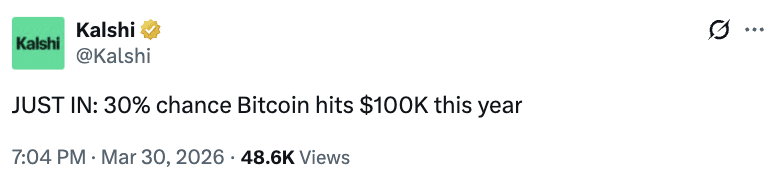
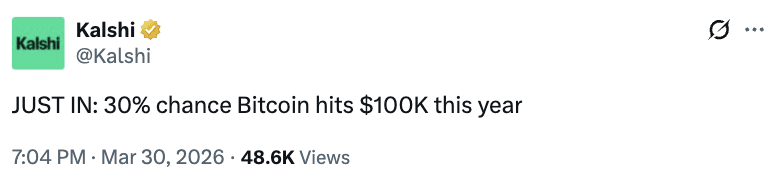
Однако рынок прогнозов также разделен по этому вопросу, как предсказал Kalshi,
Тем временем Polymarket предсказал, что «Биткоин, вероятно, упадет ниже $45 000 в этом году», с вероятностью 52%.
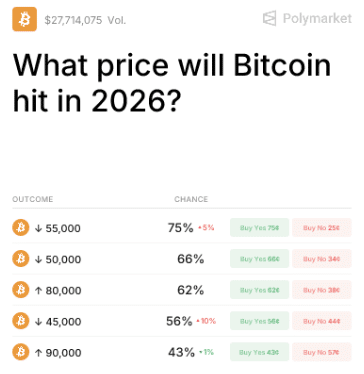
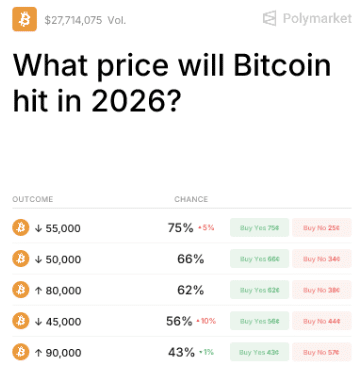
Кроме того, при ближайшем рассмотрении Polymarket показывает 43% вероятность того, что Биткоин превысит $90 000, в то время как почти 75% участников ставок ожидают падения ниже уровня цены в $55 000.
Намек Илона Маска на Биткоин
Это происходит на фоне того, как Илон Маск, в основном известный своими постами о Dogecoin [DOGE], сделал интересный намек на Биткоин [BTC].
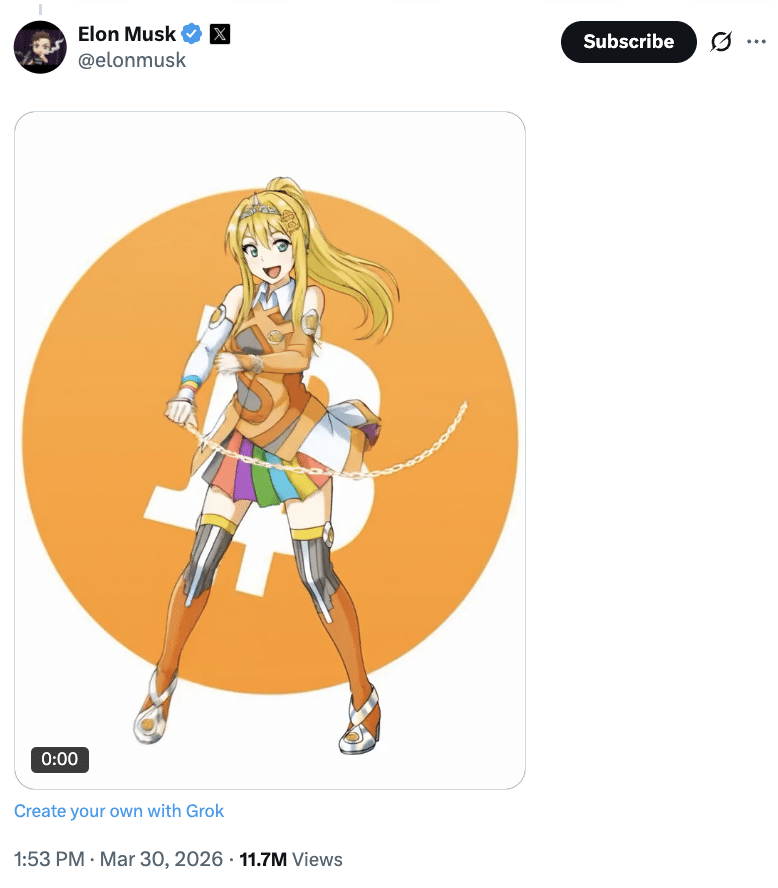
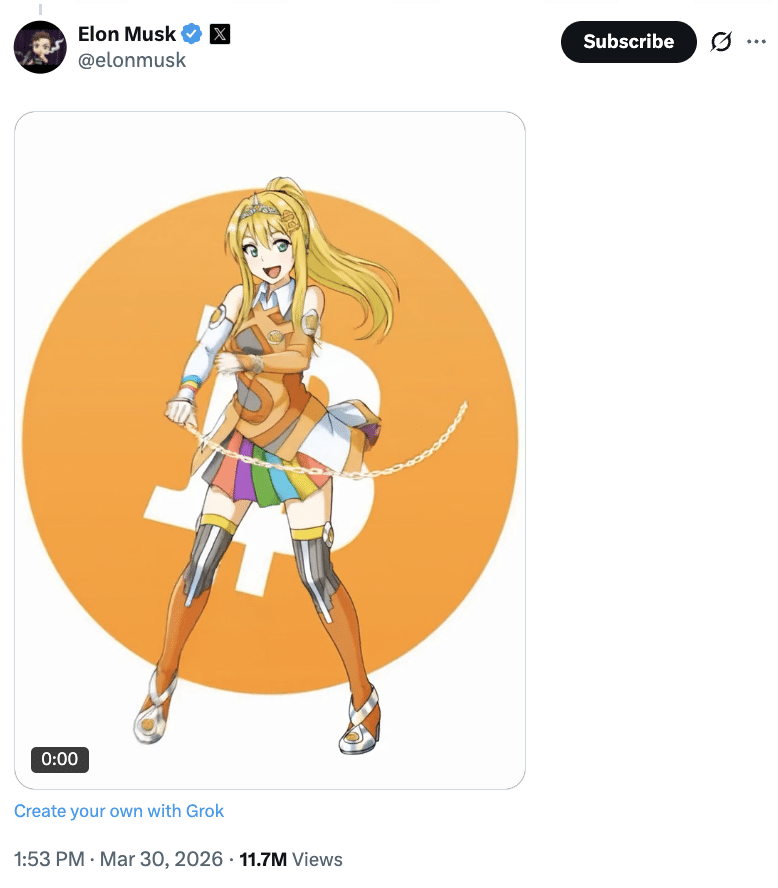
В своем посте в X Маск прикрепил 5-минутный клип с танцующей аниме-девушкой и логотипом Биткоина позади нее. В отличие от Dogecoin, который обычно рос после постов Маска, Биткоин не дрогнул.
Фактически, цена Биткоина торговалась около $67 000 до и после его поста.
При таком количестве разговоров о цене Биткоина, естественно, криптосообщество также казалось разделенным.
Криптосообщество остается разделенным
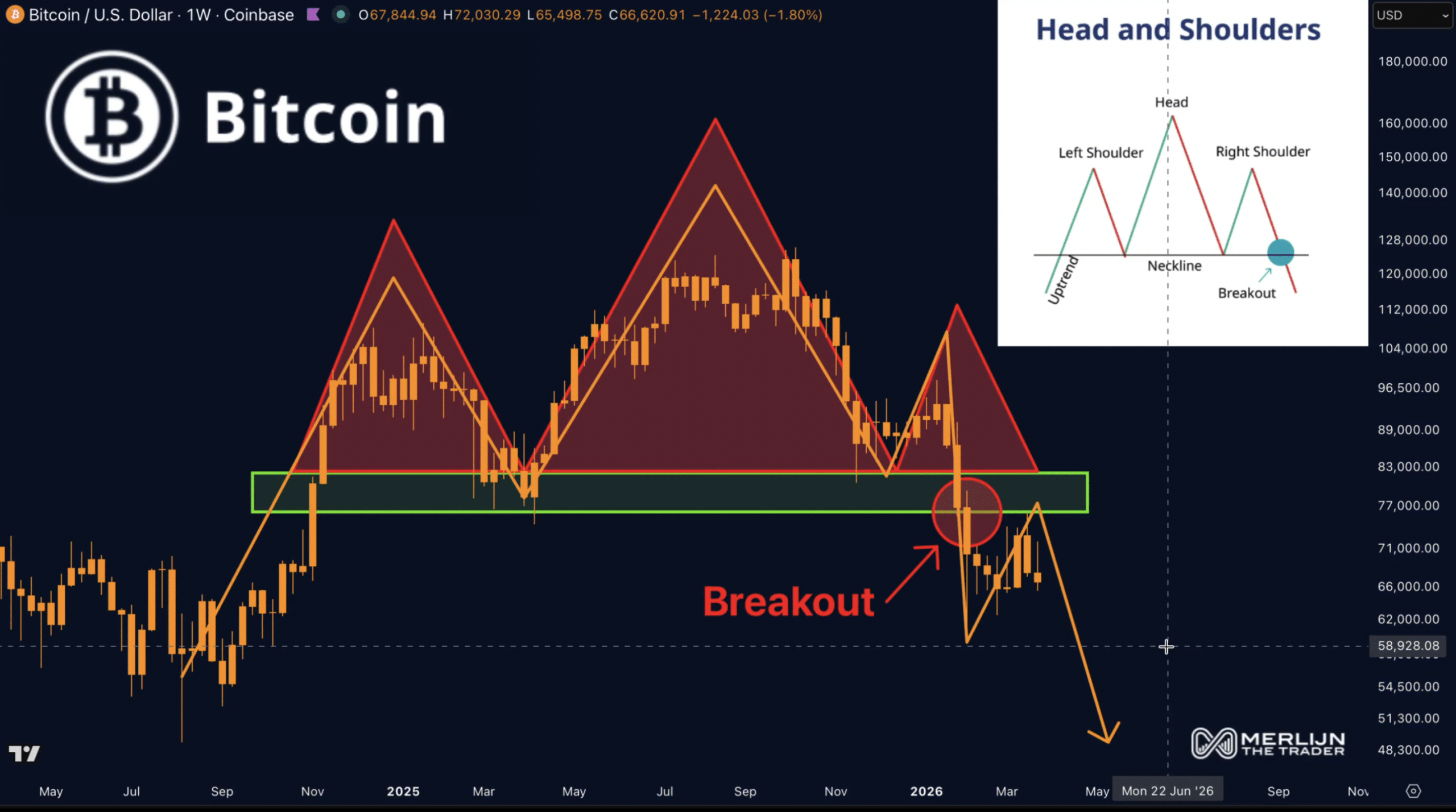
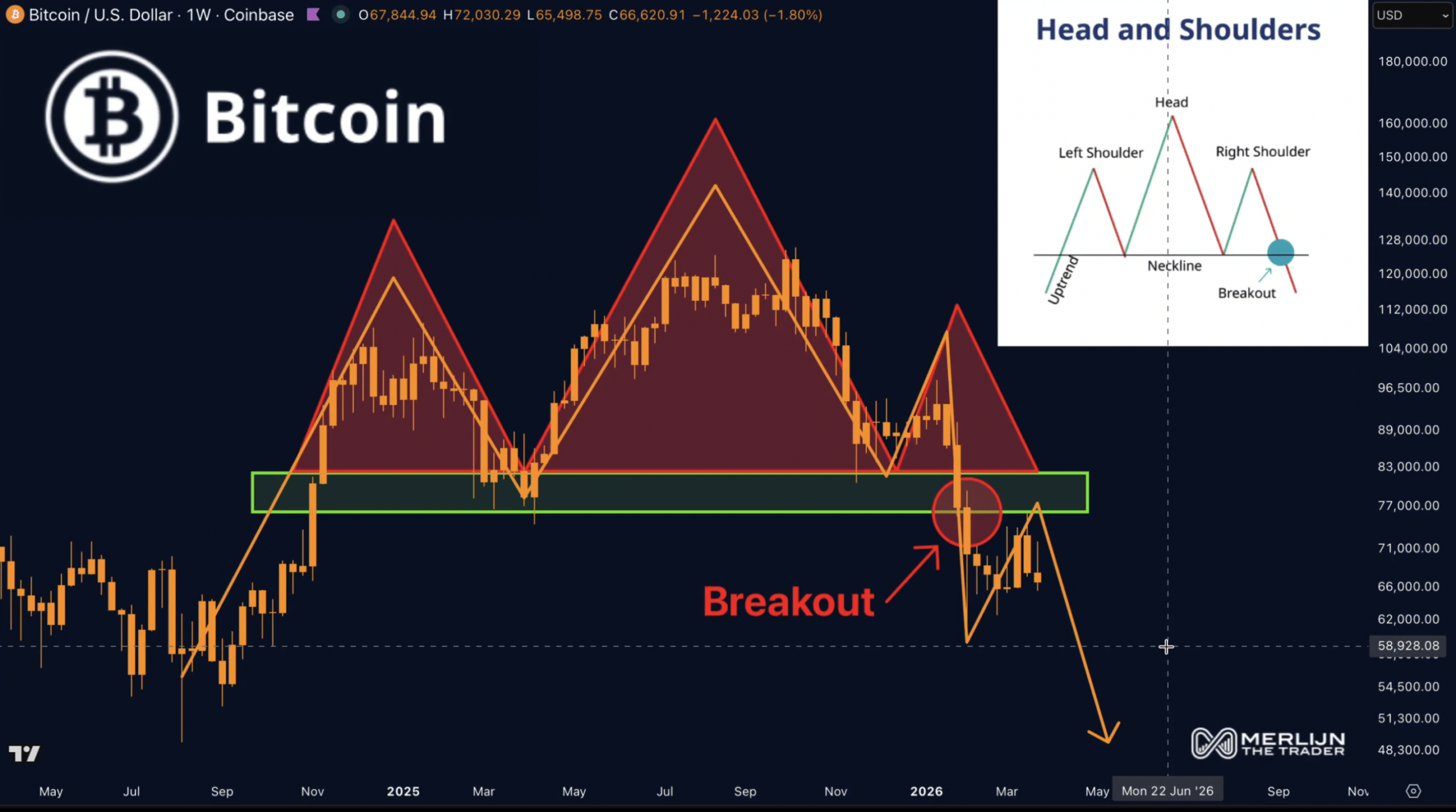
Например, трейдер, использующий модель «Голова и плечи», подтвердил медвежьи настроения, отметив, что BTC, вероятно, двинется к $48 000, при условии, что он остается ниже уровня цены в $77 000.
Однако движение выше уровня $83 000 вернет рынок обратно в руки покупателей.
Добавляя вес ongoing FUD (страх, неуверенность, сомнение), другой аналитик предсказал, что Биткоин, вероятно, упадет до $45 000.
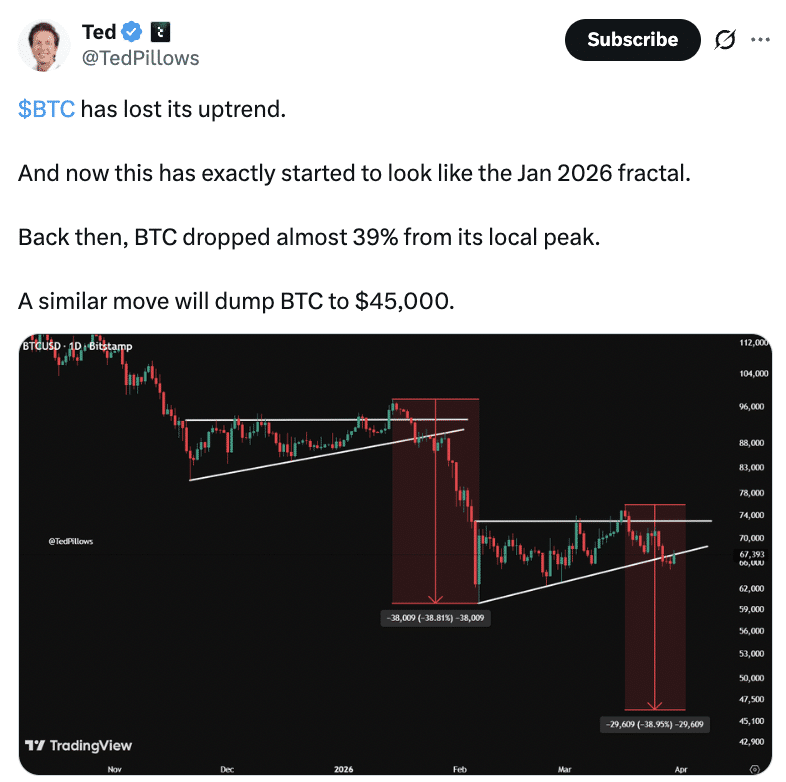
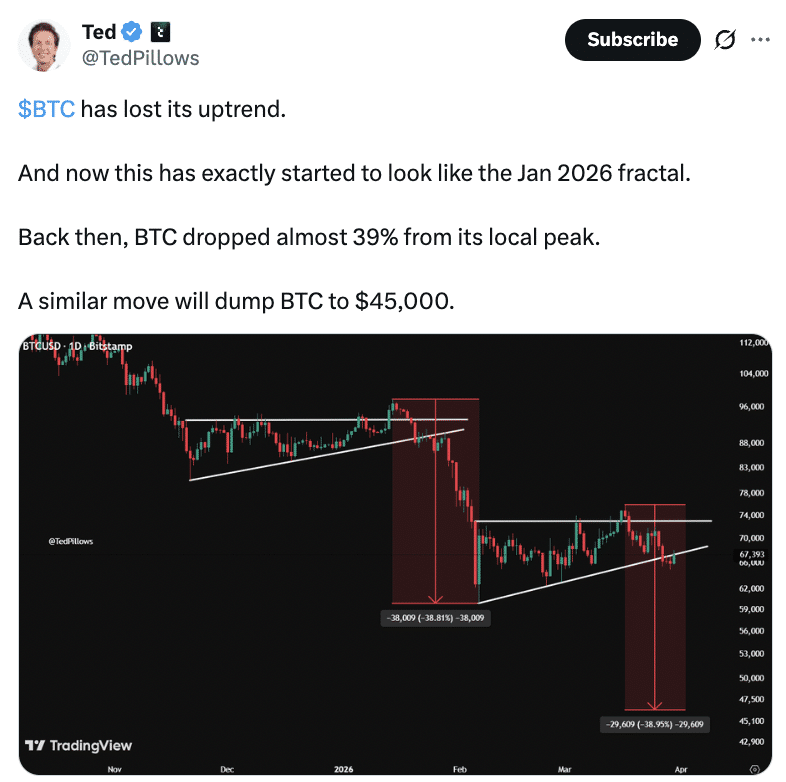
Однако не все разделяли подобные настроения, как другой аналитик, который провел сравнение между Биткоином и ценами на нефть и отметил:
Каждая параболическая фаза Биткоина в истории предварялась дном цен на нефть.
Ончейн-метрики балансируют между быками и медведями
Эта перетягивание каната между быками и медведями further reflected на ценовом графике, где технический индикатор – RSI находился на отметке уровня 50, что suggests, что ни быки, ни медведи не имеют преимущества.
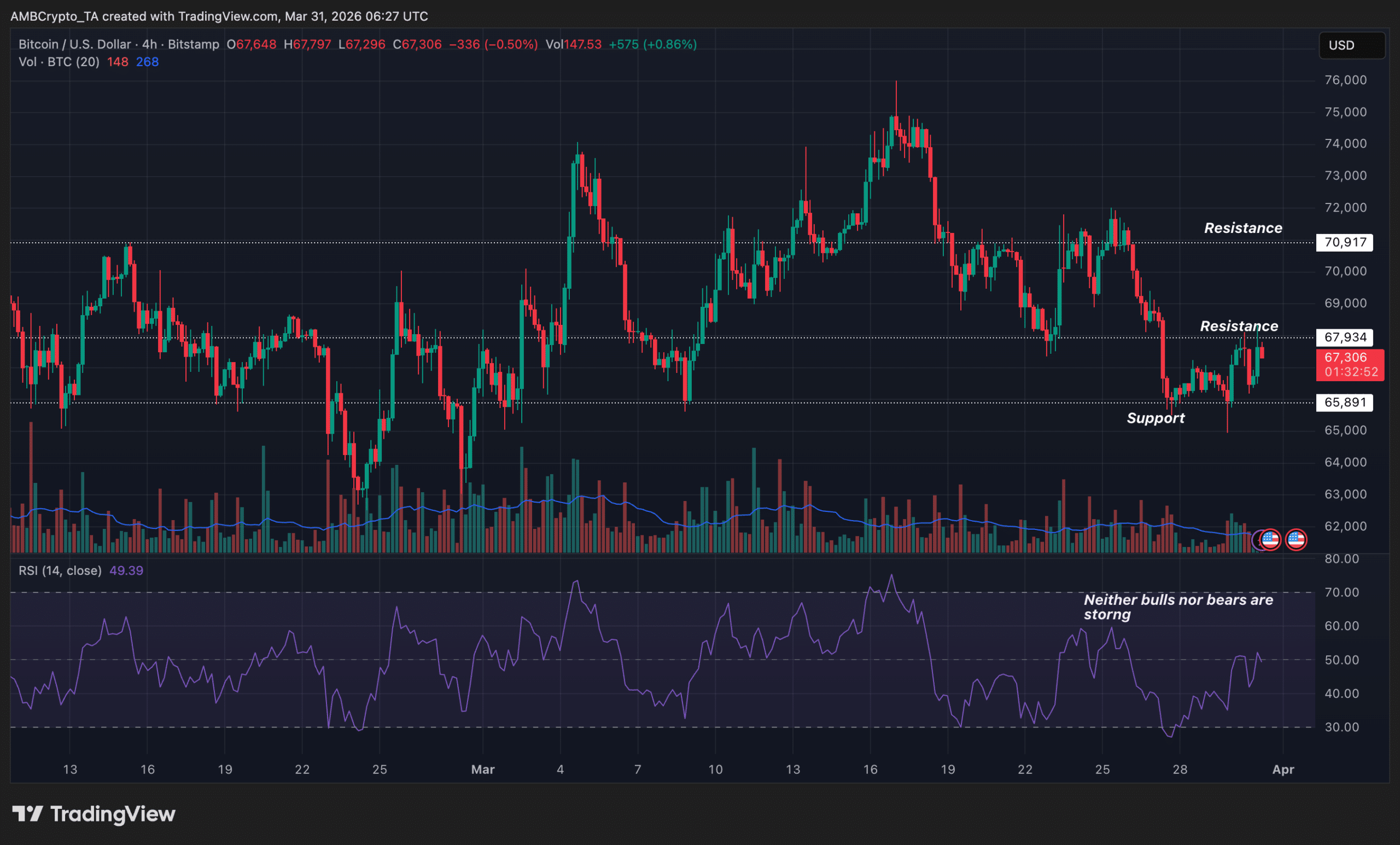
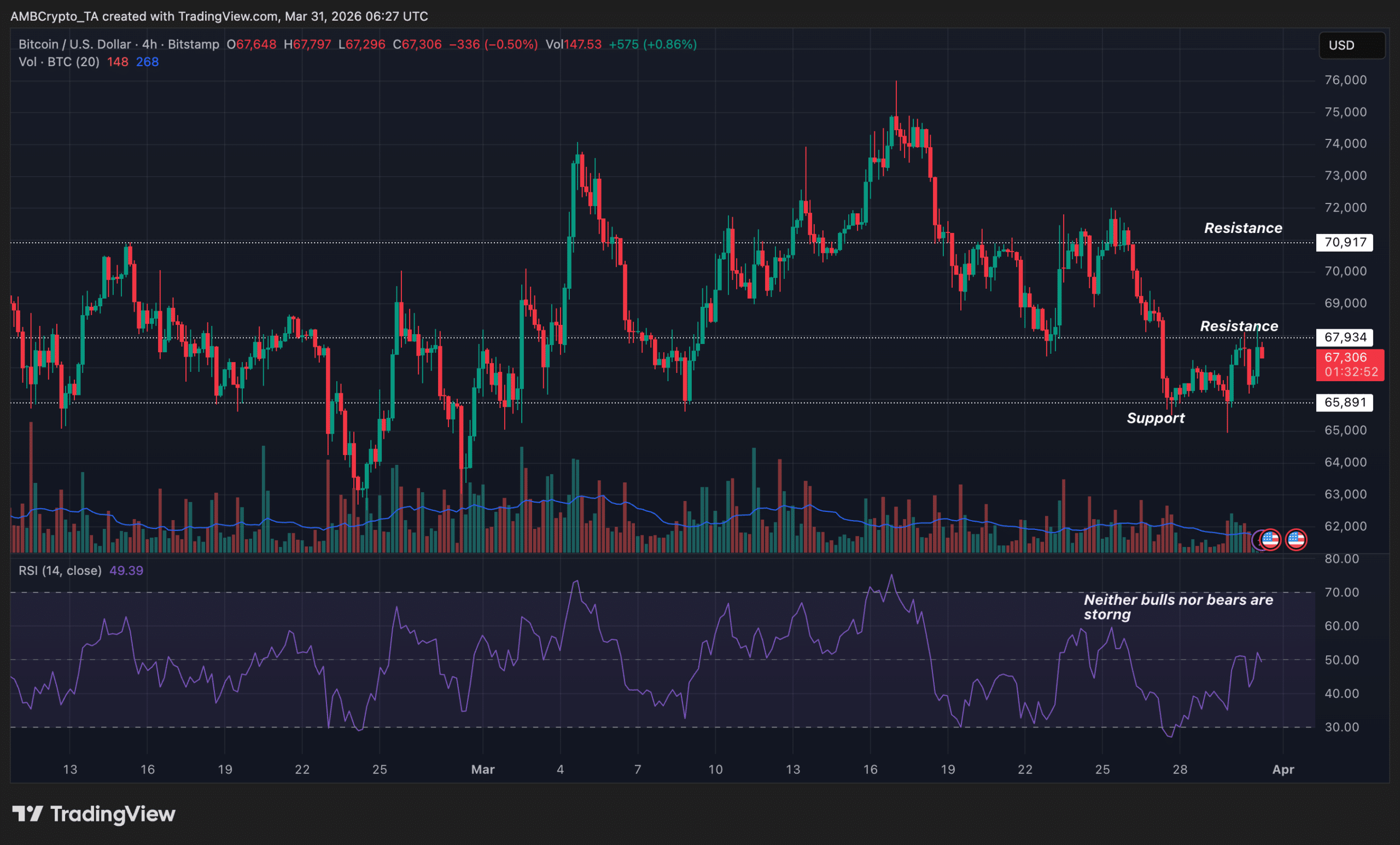
Следовательно, для настоящего бычьего ралли BTC needs to break above уровень сопротивления на $70 917 и двигаться дальше. Однако падение below уровень поддержки на $65 000 потянет цену вниз, в руки продавцов.
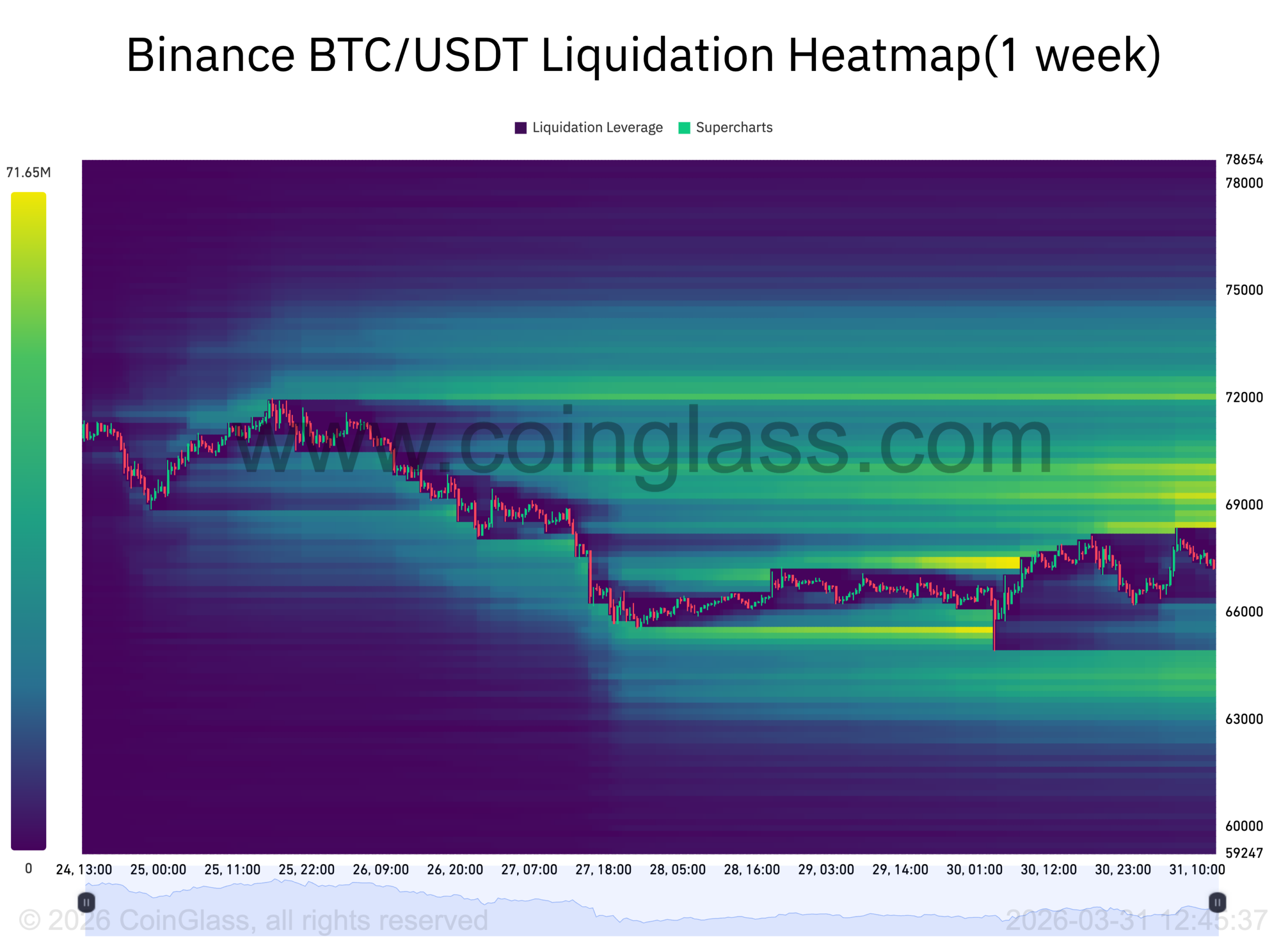
То же самое происходит с heatmap ликвидности, где более длительные временные рамки в 1 месяц и 3 месяца suggest, что цена, вероятно, упадет near магнитную зону $64 000.
Однако более близкие временные рамки в 1 неделю и 24 часа показывают, что сильная магнитная зона lies near отметке $68 000.
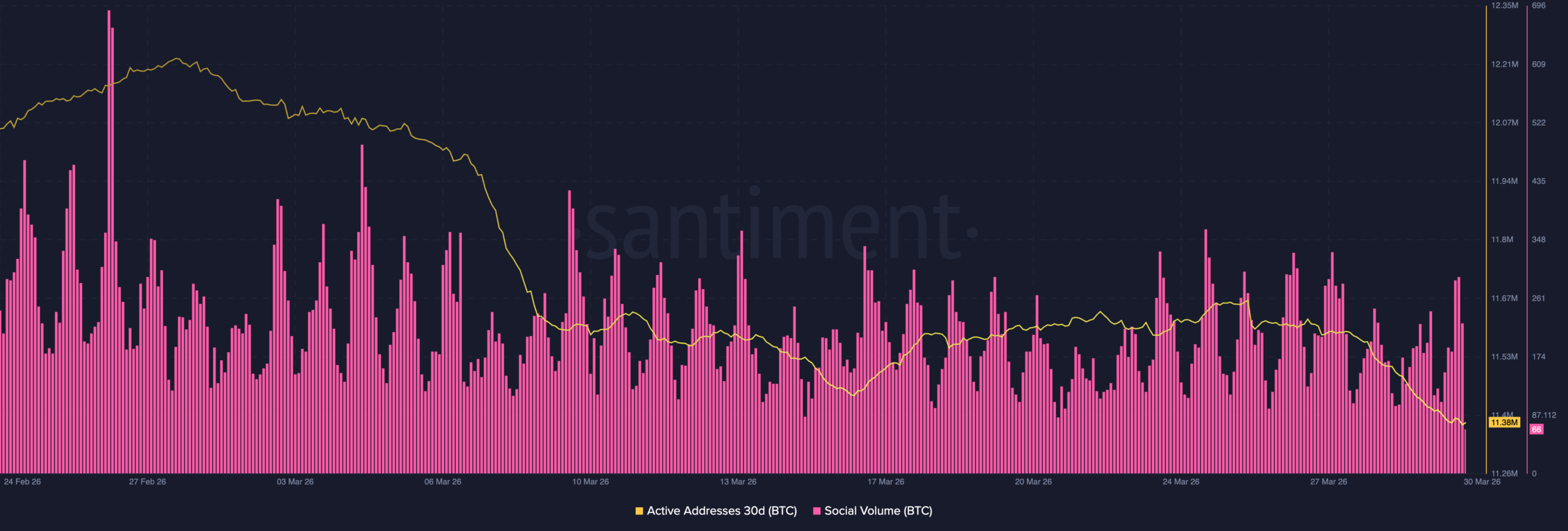
Кроме того, падение 30-дневных активных адресов также suggests, что ончейн-активность и активность пользователей также низки. Тем временем, метрика social volume с множественными spikes отмечает, что люди, возможно, говорят о BTC, но whether это негативно или позитивно – неизвестно.
Биткоин теперь с большей вероятностью упадет ниже $45 000, чем вернется к $100 000 в этом году.
Итоговый вывод
- Технические индикаторы, находящиеся near нейтральной зоны, вызывают большую неопределенность на рынке.
- Ончейн-метрики без strong бычьих признаков suggest, что быки struggle to regain контроль против медведей.
Трендовые криптовалюты













Связанные с этим вопросы
QЧто предсказывают участники Polymarket относительно цены Bitcoin в этом году?
AУчастники Polymarket предсказывают, что Bitcoin с вероятностью 52% упадет ниже $45 000 в этом году, и что это более вероятно, чем достижение отметки в $100 000.
QКакова текущая цена Bitcoin и как она изменилась с пика в марте?
AНа момент публикации статьи Bitcoin торгуется на уровне $67 620.16, что ниже его пикового значения в $75 000, достигнутого в середине марта.
QКакое влияние оказал пост Илона Маска с Bitcoin на его цену?
AВ отличие от Dogecoin, который обычно растет после постов Маска, цена Bitcoin практически не отреагировала и осталась на уровне около $67 000 как до, так и после его публикации.
QКаковы ключевые уровни поддержки и сопротивления для Bitcoin согласно техническому анализу?
AКлючевой уровень сопротивления находится на отметке $70 917. Преодоление этого уровня необходимо для начала бычьего тренда. Уровень поддержки находится на $65 000, и его пробитие может привести к дальнейшему падению цены.
QЧто показывают ончейн-метрики, такие как активность адресов и социальный объем?
A30-дневная активность адресов снизилась, что указывает на низкую активность пользователей в сети. Социальный объем имеет несколько всплесков, что говорит об обсуждениях Bitcoin, но их тональность (положительная или отрицательная) неизвестна.
Похожее





Торговля
Популярные статьи
Тест по Bitcoin Биткоина
HTX Learn: Изучите Bitcoin halving и Заработаете Токены USDT
3.3k просмотров всегоОпубликовано 2024.04.16Обновлено 2024.04.16

Что такое $BITCOIN
ЦИФРОВОЕ ЗОЛОТО ($BITCOIN): Комплексный анализ Введение в ЦИФРОВОЕ ЗОЛОТО ($BITCOIN) ЦИФРОВОЕ ЗОЛОТО ($BITCOIN) — это проект на основе блокчейна, работающий в сети Solana, который стремится объединить характеристики традиционных драгоценных металлов с инновациями децентрализованных технологий. Хотя он носит имя Биткойн, часто называемого “цифровым золотом” из-за его восприятия как средства хранения ценности, ЦИФРОВОЕ ЗОЛОТО является отдельным токеном, предназначенным для создания уникальной экосистемы в ландшафте Web3. Его цель — позиционировать себя как жизнеспособный альтернативный цифровой актив, хотя детали его применения и функциональности все еще развиваются. Что такое ЦИФРОВОЕ ЗОЛОТО ($BITCOIN)? ЦИФРОВОЕ ЗОЛОТО ($BITCOIN) — это токен криптовалюты, специально разработанный для использования в блокчейне Solana. В отличие от Биткойна, который выполняет широко признанную роль хранения ценности, этот токен, похоже, сосредоточен на более широких приложениях и характеристиках. Примечательные аспекты включают: Инфраструктура блокчейна: Токен построен на блокчейне Solana, известном своей способностью обрабатывать высокоскоростные и недорогие транзакции. Динамика предложения: ЦИФРОВОЕ ЗОЛОТО имеет максимальное предложение, ограниченное 100 квадриллионами токенов (100P $BITCOIN), хотя детали о его обращающемся предложении в настоящее время не раскрыты. Утилита: Хотя точные функциональные возможности не описаны, есть указания на то, что токен может быть использован для различных приложений, потенциально связанных с децентрализованными приложениями (dApps) или стратегиями токенизации активов. Кто создатель ЦИФРОВОГО ЗОЛОТА ($BITCOIN)? На данный момент личность создателей и команды разработчиков, стоящих за ЦИФРОВЫМ ЗОЛОТОМ ($BITCOIN), остается неизвестной. Эта ситуация типична для многих инновационных проектов в области блокчейна, особенно тех, которые связаны с децентрализованными финансами и феноменом мем-криптовалют. Хотя такая анонимность может способствовать культуре, ориентированной на сообщество, она усиливает опасения по поводу управления и ответственности. Кто инвесторы ЦИФРОВОГО ЗОЛОТА ($BITCOIN)? Доступная информация указывает на то, что у ЦИФРОВОГО ЗОЛОТА ($BITCOIN) нет известных институциональных спонсоров или значительных венчурных капиталовложений. Проект, похоже, функционирует по модели пирингового взаимодействия, сосредоточенной на поддержке и принятии сообществом, а не на традиционных путях финансирования. Его активность и ликвидность в основном сосредоточены на децентрализованных биржах (DEX), таких как PumpSwap, а не на устоявшихся централизованных торговых платформах, что еще больше подчеркивает его подход, ориентированный на grassroots. Как работает ЦИФРОВОЕ ЗОЛОТО ($BITCOIN) Операционные механизмы ЦИФРОВОГО ЗОЛОТА ($BITCOIN) можно подробно описать на основе его дизайна блокчейна и характеристик сети: Механизм консенсуса: Используя уникальный механизм доказательства истории (PoH) Solana в сочетании с моделью доказательства доли (PoS), проект обеспечивает эффективную валидацию транзакций, что способствует высокой производительности сети. Токеномика: Хотя конкретные дефляционные механизмы не были подробно описаны, большое максимальное предложение токенов подразумевает, что оно может быть предназначено для микротранзакций или нишевых случаев использования, которые еще предстоит определить. Интероперабельность: Существует потенциал для интеграции с более широкой экосистемой Solana, включая различные платформы децентрализованных финансов (DeFi). Однако детали относительно конкретных интеграций остаются неуточненными. Хронология ключевых событий Вот хронология, которая подчеркивает значимые вехи, касающиеся ЦИФРОВОГО ЗОЛОТА ($BITCOIN): 2023: Первоначальное развертывание токена происходит в блокчейне Solana, отмеченное его адресом контракта. 2024: ЦИФРОВОЕ ЗОЛОТО приобретает видимость, когда оно становится доступным для торговли на децентрализованных биржах, таких как PumpSwap, позволяя пользователям обменивать его на SOL. 2025: Проект наблюдает спорадическую торговую активность и потенциальный интерес к инициативам, возглавляемым сообществом, хотя на данный момент не зафиксировано никаких значительных партнерств или технических достижений. Критический анализ Сильные стороны Масштабируемость: Основная инфраструктура Solana поддерживает высокие объемы транзакций, что может повысить полезность $BITCOIN в различных сценариях транзакций. Доступность: Потенциально низкая цена торговли за токен может привлечь розничных инвесторов, способствуя более широкому участию благодаря возможностям дробного владения. Риски Отсутствие прозрачности: Отсутствие публично известных спонсоров, разработчиков или процесса аудита может вызвать скептицизм относительно устойчивости и надежности проекта. Волатильность рынка: Торговая активность сильно зависит от спекулятивного поведения, что может привести к значительной волатильности цен и неопределенности для инвесторов. Заключение ЦИФРОВОЕ ЗОЛОТО ($BITCOIN) является интригующим, но неоднозначным проектом в быстро развивающейся экосистеме Solana. Хотя он пытается использовать нарратив “цифрового золота”, его отход от установленной роли Биткойна как средства хранения ценности подчеркивает необходимость более четкого различения его предполагаемой утилиты и структуры управления. Будущее принятие и усвоение, вероятно, будут зависеть от решения текущей непрозрачности и более четкого определения его операционных и экономических стратегий. Примечание: Этот отчет охватывает синтезированную информацию, доступную на октябрь 2023 года, и с тех пор могут произойти события.
470 просмотров всегоОпубликовано 2025.05.13Обновлено 2025.05.13

Fractal Bitcoin: масштабирование Биткоина с помощью рекурсивной системы
Fractal Bitcoin — масштабное Layer-1-решнение, созданное на базе кода Биткоина, позволяющего достигать бесконечного масштабирования с помощью рекурсивного подхода.
2.5k просмотров всегоОпубликовано 2025.06.30Обновлено 2025.06.30

Обсуждения

Топ вопросы
- Подъем Ethereum on-chain ставит под угрозу доминирование Bitcoin?11/07 02:18
- Почему акции компании по майнингу биткойнов, такие как Hut 8 Mining Corp., продаются?11/07 02:18
- Как сравниваются ончейн-метрики между Ethereum и Bitcoin?11/07 02:18
- Сколько стоимость потерял Bitcoin с максимального уровня?11/07 02:17
- Почему активность Bitcoin на блокчейне упала ниже годового среднего?11/07 02:18
