How Did a Monero Enthusiast Become the 'Gatekeeper' of Bitcoin?

比推Опубликовано 2026-01-14Обновлено 2026-01-14

Введение

On January 8th, Bitcoin Core appointed TheCharlatan as its sixth core maintainer, the first such appointment since 2023. Core maintainers are responsible for merging code into Bitcoin Core and signing official releases, acting as editors who ensure the integrity and security of the software. Unlike early days when a single individual held this power, the role is now distributed among multiple trusted contributors. TheCharlatan, a computer science graduate from the University of Zurich, has been contributing to Bitcoin Core since 2018 and has over a decade of experience in crypto development. He is known for his work on improving Bitcoin Core’s verification logic and modularizing its codebase. His appointment was supported by at least 20 Bitcoin Core developers. Notably, TheCharlatan has also contributed to privacy-focused cryptocurrencies like Monero in the past. On social media, he occasionally shares Bitcoin-maximalist views, emphasizing simplicity and immutability as core principles of digital cash. The article also highlights the growing decentralization of Bitcoin’s development and mentions other key maintainers, including Ava Chow, who played a critical role in preventing a consensus split over the Ordinals debate.

Author: Golem

Original Title: For the First Time in Three Years, Bitcoin's 6th Core Maintainer Emerges


On January 8, the Bitcoin Core team promoted developer TheCharlatan (X: @sedited) to core maintainer, making him the sixth member to hold trusted keys. The other five trusted key holders include: Marco Falke (promoted in 2016), Gloria Zhao (promoted in 2022), Ryan Ofsky (promoted in 2023), Hennadii Stepanov (promoted in 2021), and Ava Chow (promoted in 2021).

This appointment marks the first addition of a trusted key holder since 2023. Over the past decade, only 13 people have been granted this permission, highlighting its importance and the strictness of the selection process.

Bitcoin Core Maintainers: The 'Editors' of Bitcoin Developers

Bitcoin Core is currently the primary development and maintenance team for the Bitcoin mainnet. It is responsible for writing, maintaining, testing, and releasing the software used by most full nodes, along with accompanying tools and documentation. Bitcoin Core is non-profit and operates mainly on external funding.

The Bitcoin Core development team consists of 41 members who contribute the vast majority of the project's code. Among them, only 6 developers are granted the title of "Core Maintainer"—they are the only six people in the world with the authority to merge code into Bitcoin Core and sign the released program files (binaries).

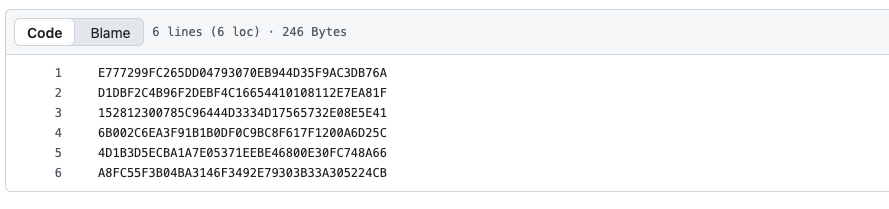
Signatures of the 6 Core Maintainers

To draw an analogy, Bitcoin Core maintainers are like the "editors" of Bitcoin network developers. Anyone can contribute code and submit PRs to the codebase, but only the core maintainers have the authority to merge code into the official repository and sign releases. This is similar to how editors review submissions, deciding whether developers' code will be accepted and published or returned for revisions.

The signatures of Bitcoin Core maintainers ensure security, giving all nodes and users confidence that the release is "official and unaltered." However, Bitcoin Core maintainers do not have the direct power to trigger on-chain rule changes. For example, even if Bitcoin Core maintainers have signed and released program files for a soft fork or hard fork, the actual success of the upgrade depends on adoption and consensus from users and miners, not just the signatures of the maintainers.

When Bitcoin was first created, Satoshi Nakamoto was the sole core maintainer, with exclusive authority to change the core codebase. Later, Satoshi passed this privilege to Gavin Andresen, who then passed it to Wladimir van der Laan. For a long time, the power to maintain/change the Bitcoin network code rested with a single individual. It wasn't until 2022, when Wladimir van der Laan stepped down and became embroiled in litigation with Craig Wright (who claimed to be Satoshi Nakamoto), that this power began to decentralize.

Even so, Bitcoin Core maintainers still play a crucial role. Those who become core maintainers typically enjoy high levels of trust and reputation within the community or have made outstanding contributions to the Bitcoin network.

For example, one core maintainer, Ava Chow, is a transgender female developer. In 2024, when Bitcoin core developer Luke Dashjr proposed restricting Ordinals transactions at the consensus level, it was Ava Chow who rejected the PR on the grounds of "lack of consensus and creating noise," preventing a potential severe split in the Bitcoin network consensus and becoming an unsung hero.

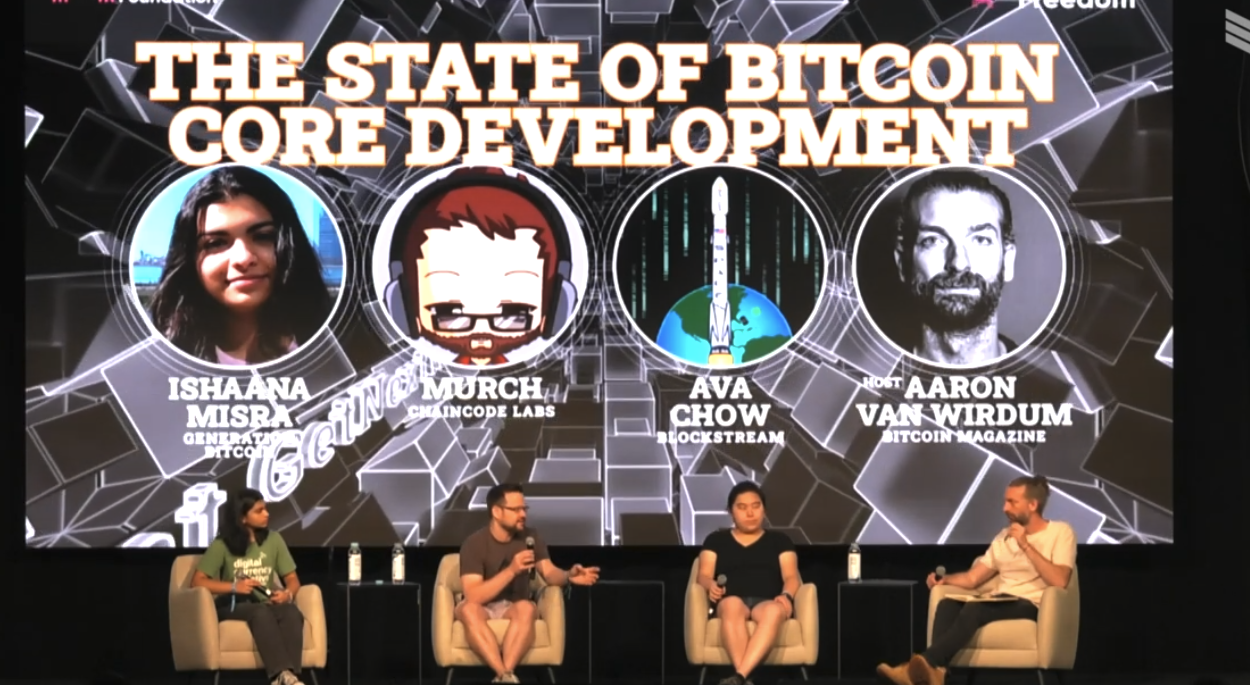
Ava Chow attended Bitcoin 2024

For introductions and contributions of other core maintainers, please refer to a related article (Related Reading: Who Guards Satoshi's Legacy? A Look at the 41-Person Army Behind Bitcoin's Trillion-Dollar Market Cap). Next, we will introduce why TheCharlatan became the sixth core maintainer.

TheCharlatan: A Decade of Crypto Development Experience

TheCharlatan graduated from the University of Zurich with a degree in computer science. He is South African and focuses on reproducibility and the validation logic of Bitcoin Core. In a 2024 blog post, he claimed to have been developing this project for over two years. TheCharlatan's work involves systematically splitting, organizing, and modularizing Bitcoin Core's validation logic, enabling other users to safely reuse it.

TheCharlatan

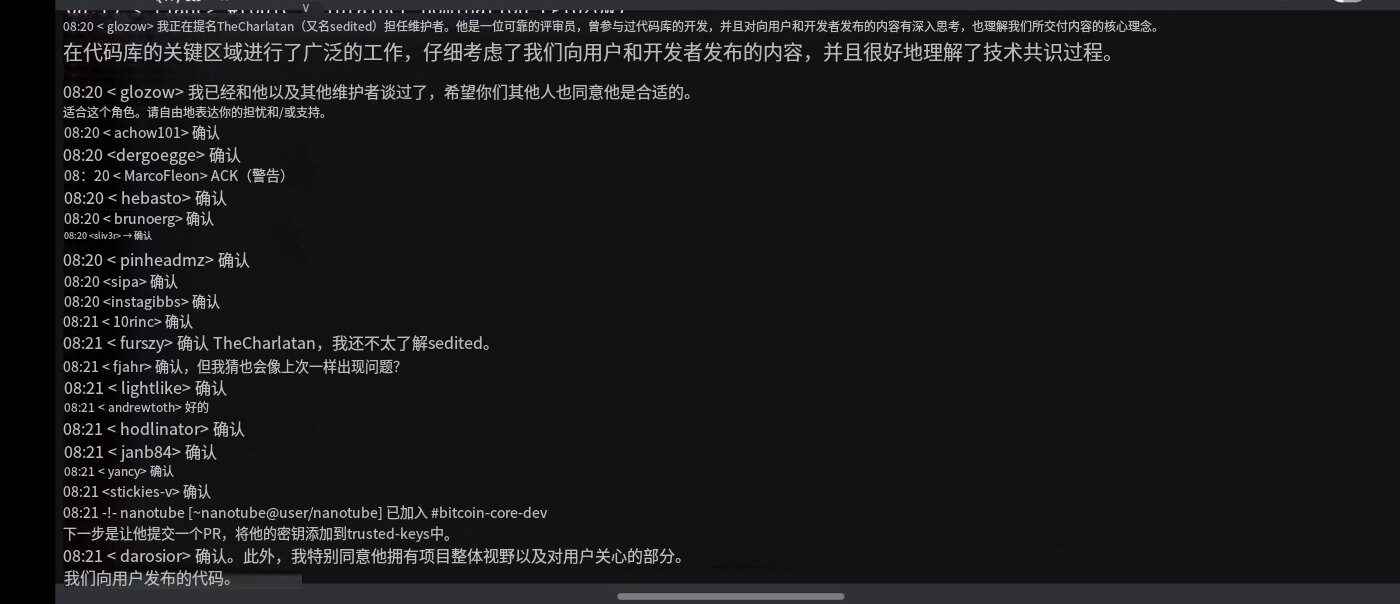
TheCharlatan is widely popular among Bitcoin Core developers. During the process of promoting him to core maintainer, at least 20 members expressed their approval. When nominating him, glozow praised: "He is a reliable reviewer with extensive experience in key areas of the codebase, thoughtful about what we deliver to users and developers, and deeply familiar with the technical consensus process."

Bitcoin Core Developer Group Chat (Translated)

According to his GitHub account, TheCharlatan first engaged in crypto development in 2015, creating a cryptocurrency price display tool. This tool was a simple Linux desktop widget with built-in price alerts that triggered when set thresholds were reached. His crypto development activities became more frequent after 2017, and he began contributing code to Bitcoin Core in 2018. Thus, it can be inferred that TheCharlatan first encountered Bitcoin Core eight years ago, making him a veteran.

It is also worth noting that in 2021-2022, TheCharlatan contributed to a Farcaster project codebase. This project allowed people to exchange Bitcoin and Monero peer-to-peer with anyone running a Farcaster node.

TheCharlatan indeed has a "soft spot" for Monero. In 2020, he researched the potential destruction issues caused by using hardware wallets to transfer Monero and explored time-lock vulnerabilities in Monero.

Of course, true tech geeks can be somewhat elusive. TheCharlatan often retweets technical posts on platform X but rarely expresses his own opinions (in May 2025, he posted that he dislikes NFTs even more). However, since June 2025, he has been repeating a tweet every month with the content: "Cash on the internet. No auto-updates."

I was afraid this might be some kind of secret code among Bitcoin tech geeks or a cultural slogan I wasn't aware of, so I asked AI to explain the meaning of these two sentences. The AI said these two sentences actually express an extreme Bitcoin fundamentalist view:

"True internet-native cash should be as simple, brutal, and immutable as physical cash. Once you start introducing automatic updates, governance votes, and frequent rule changes, it's no longer cash—it becomes another centralized/semi-centralized/manipulable 'digital bank account.'"


Twitter: https://twitter.com/BitpushNewsCN

Bitpush TG Discussion Group: https://t.me/BitPushCommunity

Bitpush TG Subscription: https://t.me/bitpush

Original link: https://www.bitpush.news/articles/7602798

Связанные с этим вопросы

QWho was recently promoted as the 6th core maintainer of Bitcoin Core, and when did this happen?

ATheCharlatan (X: @sedited) was promoted as the 6th core maintainer of Bitcoin Core on January 8th.

QWhat is the primary responsibility of a Bitcoin Core maintainer?

AA Bitcoin Core maintainer has the authority to merge code into the official Bitcoin Core repository and sign the released program files (binaries), ensuring they are official and unaltered.

QHow many developers currently have trusted keys for Bitcoin Core, and why is this role significant?

AThere are currently 6 developers with trusted keys for Bitcoin Core. This role is significant because only these maintainers can merge code and sign official binaries, and over the past decade, only 13 people have been granted this permission, highlighting its importance and strict selection process.

QWhat notable contribution did core maintainer Ava Chow make in 2024?

AIn 2024, Ava Chow rejected a PR from Luke Dashjr that aimed to restrict Ordinals transactions at the consensus level, preventing a potential severe consensus split in the Bitcoin network.

QWhat is TheCharlatan's background and one of his key interests in cryptocurrency development?

ATheCharlatan graduated in Computer Science from the University of Zurich, has over a decade of crypto development experience, and has a particular interest in Monero, having researched issues related to hardware wallet transfers and time-lock vulnerabilities in Monero.

Похожее

Торговля

Спот
Фьючерсы

Популярные статьи

Тест по Bitcoin Биткоина

HTX Learn: Изучите Bitcoin halving и Заработаете Токены USDT

3.0k просмотров всегоОпубликовано 2024.04.16Обновлено 2024.04.16

Тест по Bitcoin  Биткоина

Что такое $BITCOIN

ЦИФРОВОЕ ЗОЛОТО ($BITCOIN): Комплексный анализ Введение в ЦИФРОВОЕ ЗОЛОТО ($BITCOIN) ЦИФРОВОЕ ЗОЛОТО ($BITCOIN) — это проект на основе блокчейна, работающий в сети Solana, который стремится объединить характеристики традиционных драгоценных металлов с инновациями децентрализованных технологий. Хотя он носит имя Биткойн, часто называемого “цифровым золотом” из-за его восприятия как средства хранения ценности, ЦИФРОВОЕ ЗОЛОТО является отдельным токеном, предназначенным для создания уникальной экосистемы в ландшафте Web3. Его цель — позиционировать себя как жизнеспособный альтернативный цифровой актив, хотя детали его применения и функциональности все еще развиваются. Что такое ЦИФРОВОЕ ЗОЛОТО ($BITCOIN)? ЦИФРОВОЕ ЗОЛОТО ($BITCOIN) — это токен криптовалюты, специально разработанный для использования в блокчейне Solana. В отличие от Биткойна, который выполняет широко признанную роль хранения ценности, этот токен, похоже, сосредоточен на более широких приложениях и характеристиках. Примечательные аспекты включают: Инфраструктура блокчейна: Токен построен на блокчейне Solana, известном своей способностью обрабатывать высокоскоростные и недорогие транзакции. Динамика предложения: ЦИФРОВОЕ ЗОЛОТО имеет максимальное предложение, ограниченное 100 квадриллионами токенов (100P $BITCOIN), хотя детали о его обращающемся предложении в настоящее время не раскрыты. Утилита: Хотя точные функциональные возможности не описаны, есть указания на то, что токен может быть использован для различных приложений, потенциально связанных с децентрализованными приложениями (dApps) или стратегиями токенизации активов. Кто создатель ЦИФРОВОГО ЗОЛОТА ($BITCOIN)? На данный момент личность создателей и команды разработчиков, стоящих за ЦИФРОВЫМ ЗОЛОТОМ ($BITCOIN), остается неизвестной. Эта ситуация типична для многих инновационных проектов в области блокчейна, особенно тех, которые связаны с децентрализованными финансами и феноменом мем-криптовалют. Хотя такая анонимность может способствовать культуре, ориентированной на сообщество, она усиливает опасения по поводу управления и ответственности. Кто инвесторы ЦИФРОВОГО ЗОЛОТА ($BITCOIN)? Доступная информация указывает на то, что у ЦИФРОВОГО ЗОЛОТА ($BITCOIN) нет известных институциональных спонсоров или значительных венчурных капиталовложений. Проект, похоже, функционирует по модели пирингового взаимодействия, сосредоточенной на поддержке и принятии сообществом, а не на традиционных путях финансирования. Его активность и ликвидность в основном сосредоточены на децентрализованных биржах (DEX), таких как PumpSwap, а не на устоявшихся централизованных торговых платформах, что еще больше подчеркивает его подход, ориентированный на grassroots. Как работает ЦИФРОВОЕ ЗОЛОТО ($BITCOIN) Операционные механизмы ЦИФРОВОГО ЗОЛОТА ($BITCOIN) можно подробно описать на основе его дизайна блокчейна и характеристик сети: Механизм консенсуса: Используя уникальный механизм доказательства истории (PoH) Solana в сочетании с моделью доказательства доли (PoS), проект обеспечивает эффективную валидацию транзакций, что способствует высокой производительности сети. Токеномика: Хотя конкретные дефляционные механизмы не были подробно описаны, большое максимальное предложение токенов подразумевает, что оно может быть предназначено для микротранзакций или нишевых случаев использования, которые еще предстоит определить. Интероперабельность: Существует потенциал для интеграции с более широкой экосистемой Solana, включая различные платформы децентрализованных финансов (DeFi). Однако детали относительно конкретных интеграций остаются неуточненными. Хронология ключевых событий Вот хронология, которая подчеркивает значимые вехи, касающиеся ЦИФРОВОГО ЗОЛОТА ($BITCOIN): 2023: Первоначальное развертывание токена происходит в блокчейне Solana, отмеченное его адресом контракта. 2024: ЦИФРОВОЕ ЗОЛОТО приобретает видимость, когда оно становится доступным для торговли на децентрализованных биржах, таких как PumpSwap, позволяя пользователям обменивать его на SOL. 2025: Проект наблюдает спорадическую торговую активность и потенциальный интерес к инициативам, возглавляемым сообществом, хотя на данный момент не зафиксировано никаких значительных партнерств или технических достижений. Критический анализ Сильные стороны Масштабируемость: Основная инфраструктура Solana поддерживает высокие объемы транзакций, что может повысить полезность $BITCOIN в различных сценариях транзакций. Доступность: Потенциально низкая цена торговли за токен может привлечь розничных инвесторов, способствуя более широкому участию благодаря возможностям дробного владения. Риски Отсутствие прозрачности: Отсутствие публично известных спонсоров, разработчиков или процесса аудита может вызвать скептицизм относительно устойчивости и надежности проекта. Волатильность рынка: Торговая активность сильно зависит от спекулятивного поведения, что может привести к значительной волатильности цен и неопределенности для инвесторов. Заключение ЦИФРОВОЕ ЗОЛОТО ($BITCOIN) является интригующим, но неоднозначным проектом в быстро развивающейся экосистеме Solana. Хотя он пытается использовать нарратив “цифрового золота”, его отход от установленной роли Биткойна как средства хранения ценности подчеркивает необходимость более четкого различения его предполагаемой утилиты и структуры управления. Будущее принятие и усвоение, вероятно, будут зависеть от решения текущей непрозрачности и более четкого определения его операционных и экономических стратегий. Примечание: Этот отчет охватывает синтезированную информацию, доступную на октябрь 2023 года, и с тех пор могут произойти события.

99 просмотров всегоОпубликовано 2025.05.13Обновлено 2025.05.13

Что такое $BITCOIN

Fractal Bitcoin: масштабирование Биткоина с помощью рекурсивной системы

Fractal Bitcoin — масштабное Layer-1-решнение, созданное на базе кода Биткоина, позволяющего достигать бесконечного масштабирования с помощью рекурсивного подхода.

2.2k просмотров всегоОпубликовано 2025.06.30Обновлено 2025.06.30

Fractal Bitcoin: масштабирование Биткоина с помощью рекурсивной системы

Обсуждения

Добро пожаловать в Сообщество HTX. Здесь вы сможете быть в курсе последних новостей о развитии платформы и получить доступ к профессиональной аналитической информации о рынке. Мнения пользователей о цене на BTC (BTC) представлены ниже.

活动图片