Биткоин остается запертым в хрупком диапазоне, нереализованные убытки растут, долгосрочные держатели продают, спрос остается слабым. Потоки ETF и ликвидность по-прежнему вялые, фьючерсный рынок слаб, а трейдеры опционов закладывают в цены краткосрочную волатильность. Рынок в настоящее время стабилен, но уверенности по-прежнему не хватает.
Резюме
Биткоин остается в структурно хрупком диапазоне, находясь под давлением растущих нереализованных убытков, высоких реализованных убытков и масштабной фиксации прибыли долгосрочными держателями. Тем не менее, спрос удерживает цену выше истинной рыночной средней.
Неспособность рынка отбить ключевые пороги, в частности цену входа краткосрочных держателей (cost basis), отражает сохраняющееся давление продаж со стороны тех, кто купил на недавних максимумах, и опытных держателей. Если появятся признаки истощения продавцов, в краткосрочной перспективе возможен ретест этих уровней.
Внецепные показатели остаются слабыми. Потоки ETF отрицательны, спотовая ликвидность низкая, открытый интерес на фьючерсах свидетельствует о недостатке спекулятивной уверенности, что делает цену более чувствительной к макрокатализаторам.
Опционный рынок демонстрирует оборонительное позиционирование: трейдеры покупают краткосрочную подразумеваемую волатильность (IV) и продолжают проявлять спрос на защиту от падения. Сигналы кривой волатильности указывают на краткосрочную осторожность, но настроения на более длительные сроки более сбалансированы.
Поскольку заседание FOMC является последним крупным катализатором года, ожидается, что подразумеваемая волатильность будет постепенно снижаться во второй половине декабря. Направление рынка зависит от того, улучшится ли ликвидность и остановятся ли продавцы, или же сохранится это временное медвежье давление.
Обзор в цепи (On-Chain Insights)
Биткоин начал неделю, оставаясь ограниченным структурно хрупким диапазоном, верхняя граница которого определяется ценой входа краткосрочных держателей (102,7 тыс. долларов), а нижняя — истинной рыночной средней (81,3 тыс. долларов). На прошлой неделе мы highlighted ослабление условий в цепи, слабый спрос и осторожную ситуацию на рынке деривативов, что в совокупности перекликается с рыночной конъюнктурой начала 2022 года.
Несмотря на то, что цена с трудом удерживается выше истинной рыночной средней, нереализованные убытки продолжают расширяться, реализованные убытки растут, а расходы долгосрочных инвесторов остаются высокими. Ключевым верхним уровнем, который необходимо отбить, является 0,75-й квантиль цены входа (95 тыс. долларов), за которым следует цена входа краткосрочных держателей. До этого, при отсутствии новых макропотрясений, истинная рыночная средняя остается наиболее вероятной зоной формирования дна.
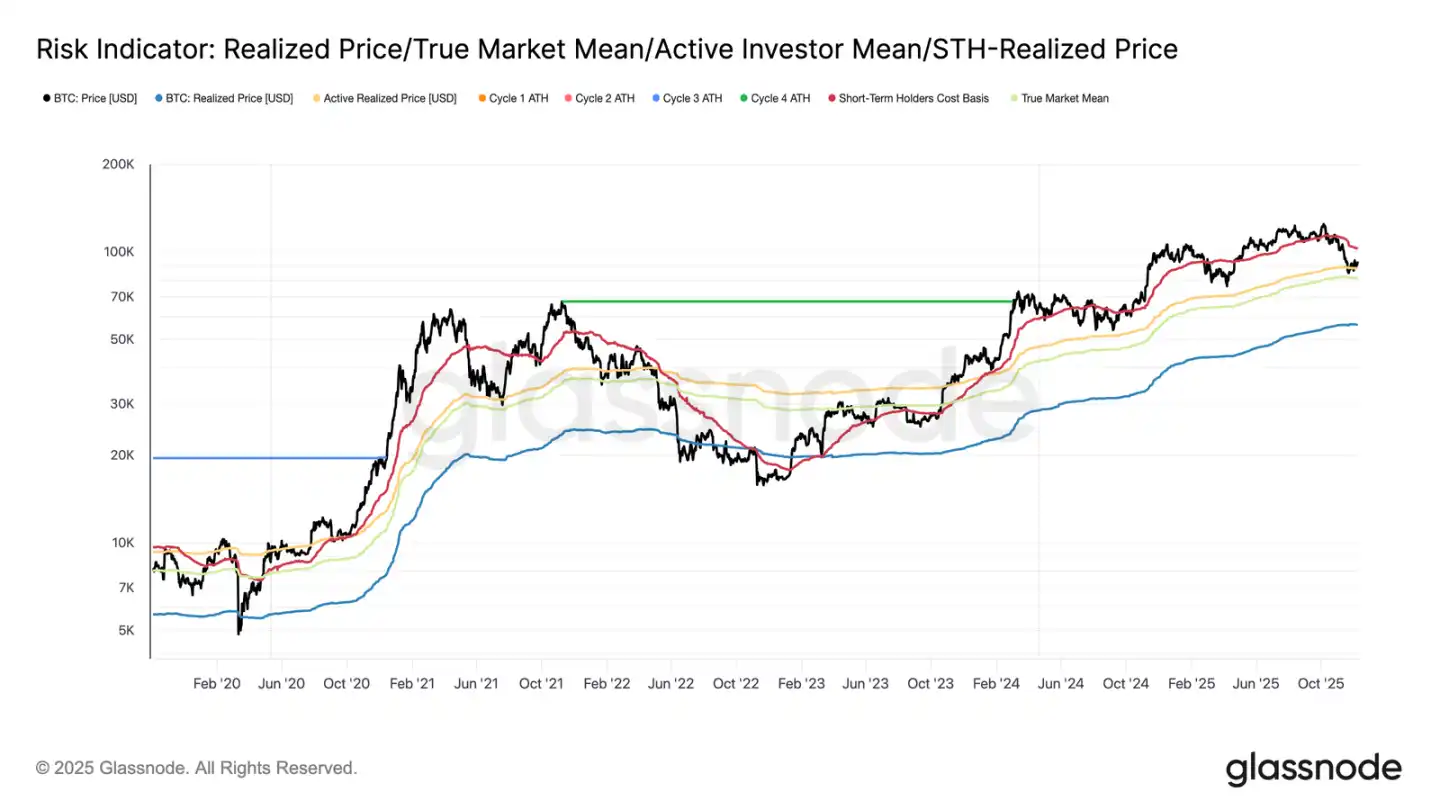
Время играет против быков
Рынок застрял в умеренной медвежьей фазе, что отражает напряженность между умеренным притоком капитала и сохраняющимся давлением продаж со стороны купивших на вершинах. Поскольку рынок колеблется в слабом, но ограниченном диапазоне, время становится негативной силой, затрудняя для инвесторов перенос нереализованных убытков и увеличивая вероятность их фиксации.
Относительные нереализованные убытки (30-дневная простая скользящая средняя) выросли до 4,4%, после почти двух лет нахождения ниже 2%, что знаменует переход рынка от фазы ажиотажа к фазе повышенного давления и неопределенности. Эта нерешительность в настоящее время определяет данный ценовой диапазон; для ее разрешения необходим новый приток ликвидности и спроса для восстановления доверия.
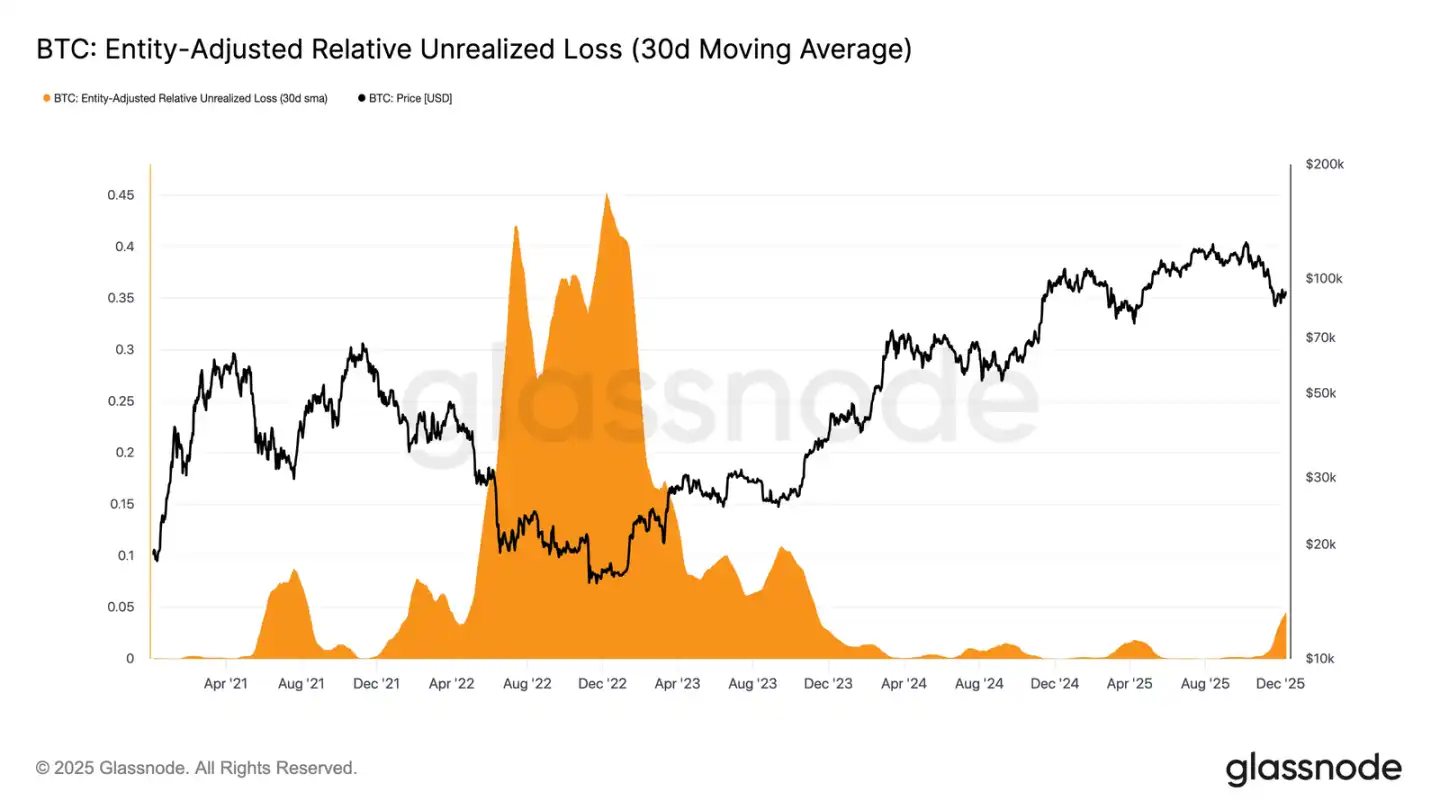
Убытки растут
Это давление, движимое временем, более заметно в поведении при расходовании средств. Несмотря на то, что биткоин отскочил от минимумов 22 ноября около 92,7 тыс. долларов, 30-дневная простая скользящая средняя скорректированных на实体 реализованных убытков продолжает расти, достигая 555 млн долларов в день, что является最高им уровнем со времен краха FTX.
Такие высокие реализованные убытки в период умеренного восстановления цен отражают растущее разочарование тех, кто купил на вершинах, которые предпочли капитулировать при усилении рынка, а не пережидать восстановление.
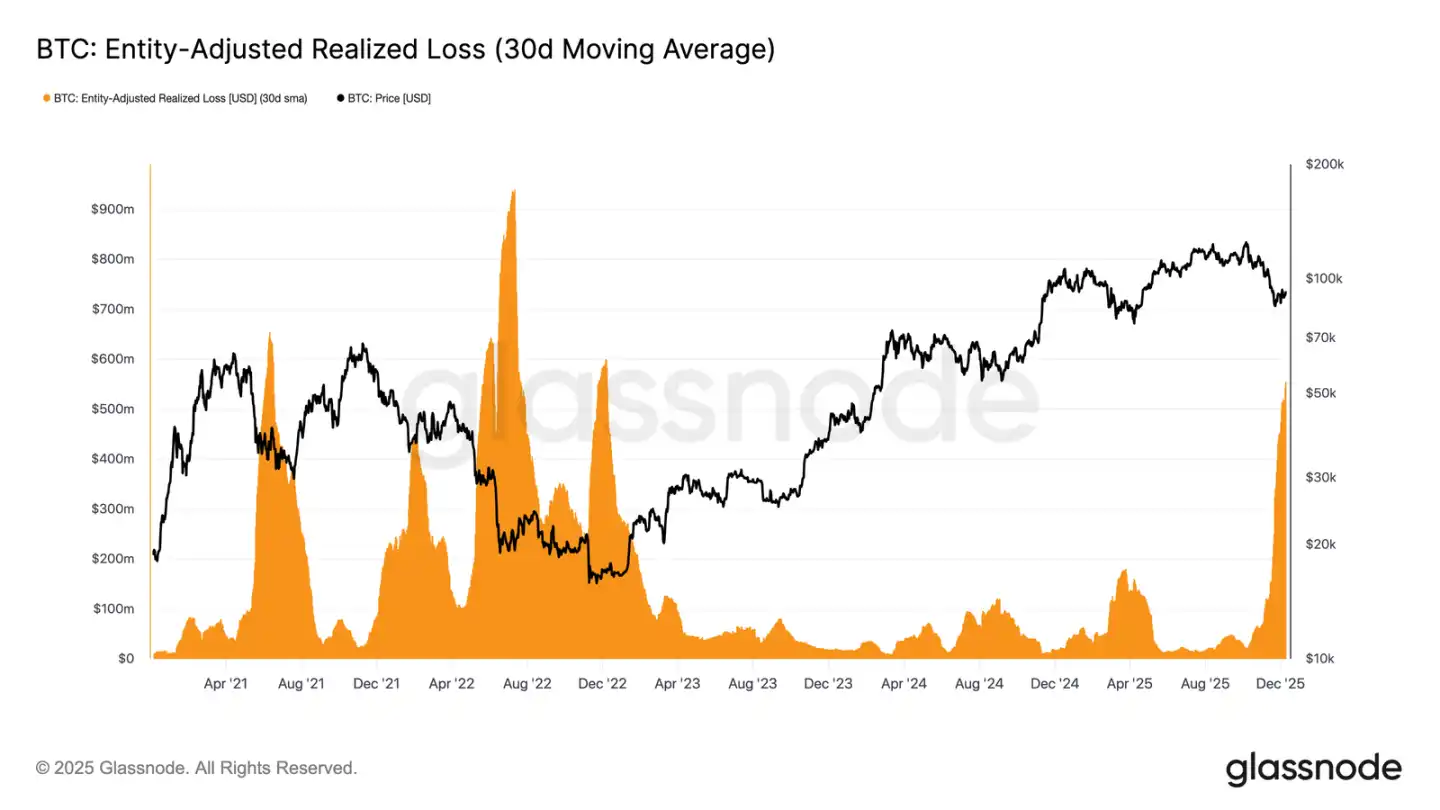
Помехи развороту
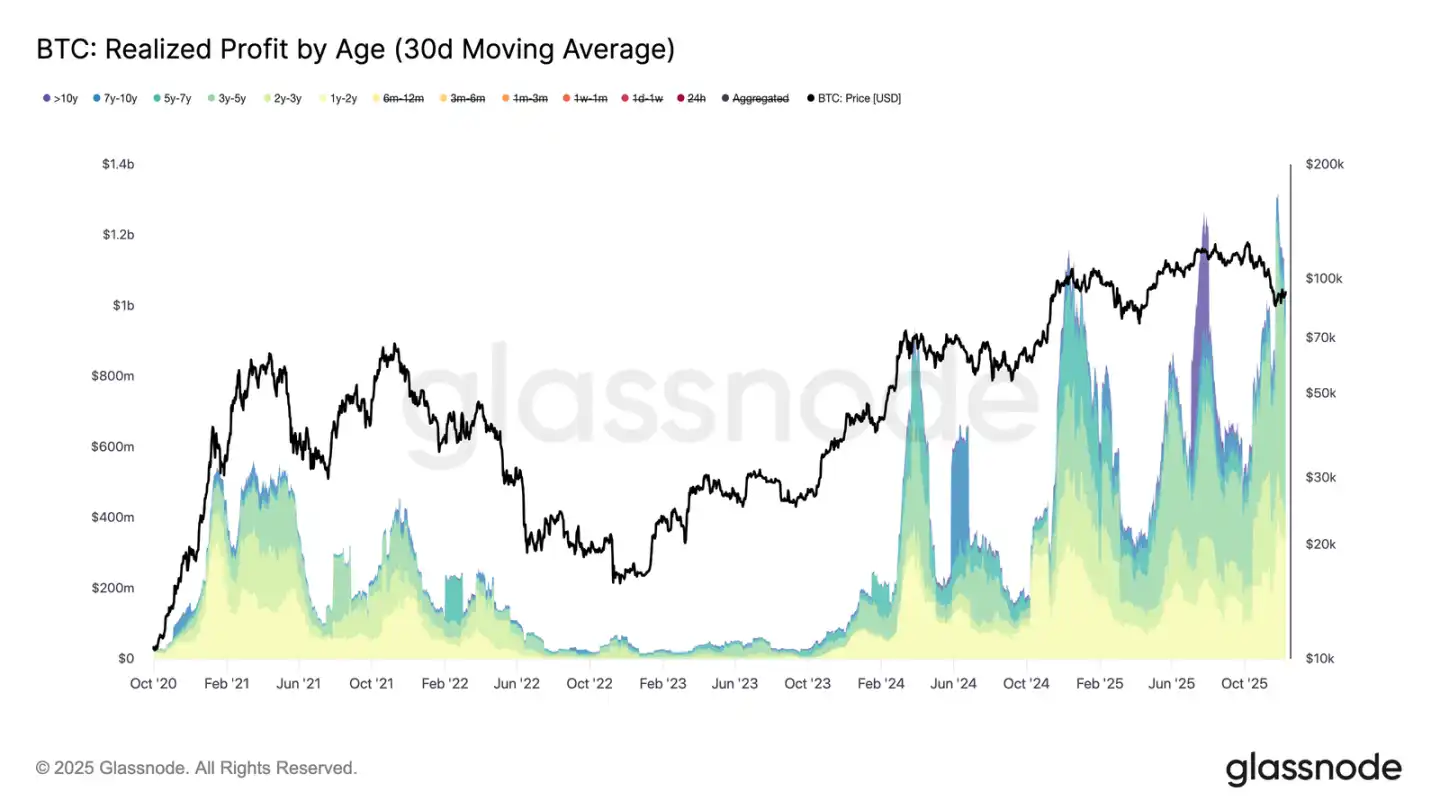
Рост реализованных убытков дополнительно сдерживает восстановление, особенно когда они совпадают с всплеском реализованной прибыли опытных инвесторов. Во время недавнего отскока реализованная прибыль держателей старше 1 года (30-дневная простая скользящая средняя) превышала 1 млрд долларов в день и достигла пика, превысив 1,3 млрд долларов на новых исторических максимумах. Эти две силы — капитуляция купивших на вершинах и масштабная фиксация прибыли долгосрочными держателями — объясняют, почему рынок все еще пытается отбить цену входа краткосрочных держателей.
Однако, несмотря на такое значительное давление продаж, цена стабилизировалась и даже немного выросла выше истинной рыночной средней, что указывает на наличие постоянного и терпеливого спроса, поглощающего продажи. В краткосрочной перспективе, если продавцы начнут истощаться, это скрытое покупательское давление может подтолкнуть к ретесту 0,75-го квантиля (около 95 тыс. долларов) и даже цены входа краткосрочных держателей.
Обзор вне цепи (Off-Chain Insights)
Проблемы ETF
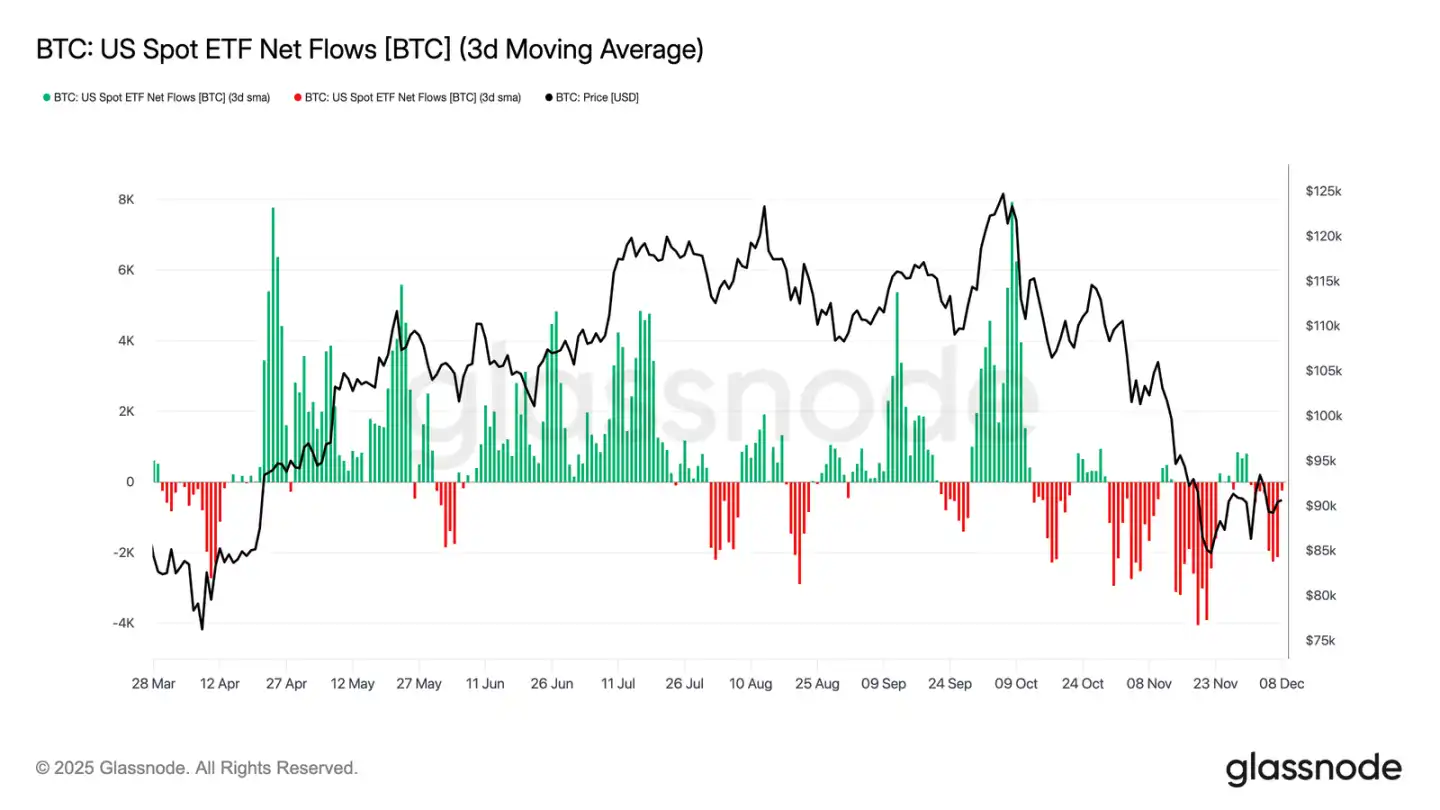
Переходя к спотовому рынку, американские биткоин-ETF пережили еще одну спокойную неделю, с постоянными отрицательными средними чистыми потоками за три дня. Это продолжает тенденцию к охлаждению, начавшуюся в конце ноября, и знаменует собой явный отход от режима сильных inflows, который поддерживал рост цен ранее в этом году. Погашения у нескольких крупных эмитентов оставались стабильными, что подчеркивает более защитную позицию институциональных allocators на фоне нестабильной общей рыночной среды.
В результате, буфер спроса на спотовом рынке стал тоньше, снизив немедленную поддержку со стороны покупателей и сделав цену более уязвимой для макрокатализаторов и волатильных шоков.
Ликвидность остается низкой
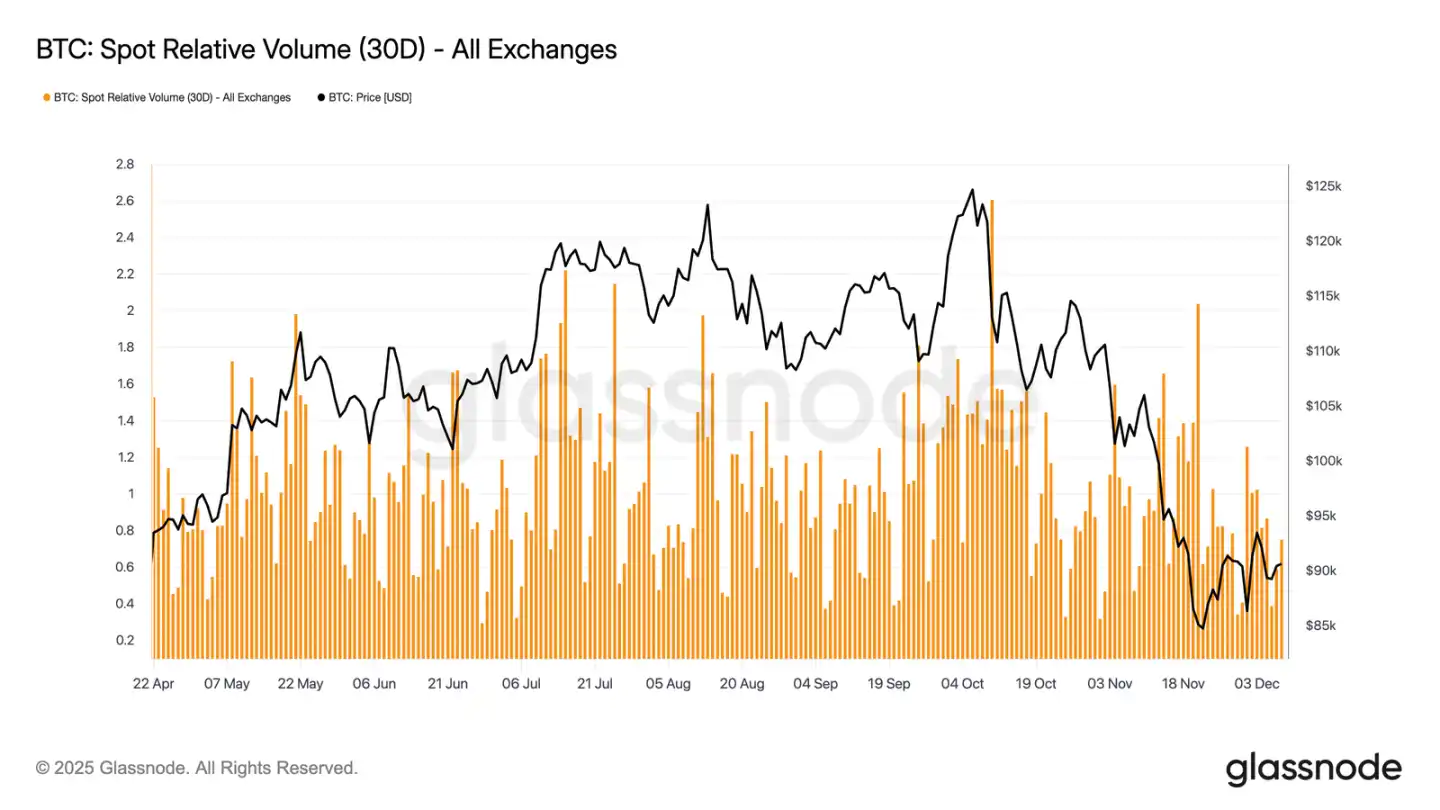
Параллельно со слабыми потоками ETF, относительный объем торгов биткоина на споте продолжает находиться near нижней границы своего 30-дневного диапазона. Торговая активность неуклонно ослабевала с ноября по декабрь, что отражает снижение цен и участия на рынке. Сокращение объемов отражает более оборонительное позиционирование рынка в целом, с меньшим количеством liquidity-driven потоков, доступных для поглощения волатильности или поддержания направленных движений.
Поскольку спотовый рынок затихает, внимание теперь переключается на предстоящее заседание FOMC, которое, в зависимости от его политического тональности, может стать катализатором для реактивации участия на рынке.
Вялость на фьючерсном рынке
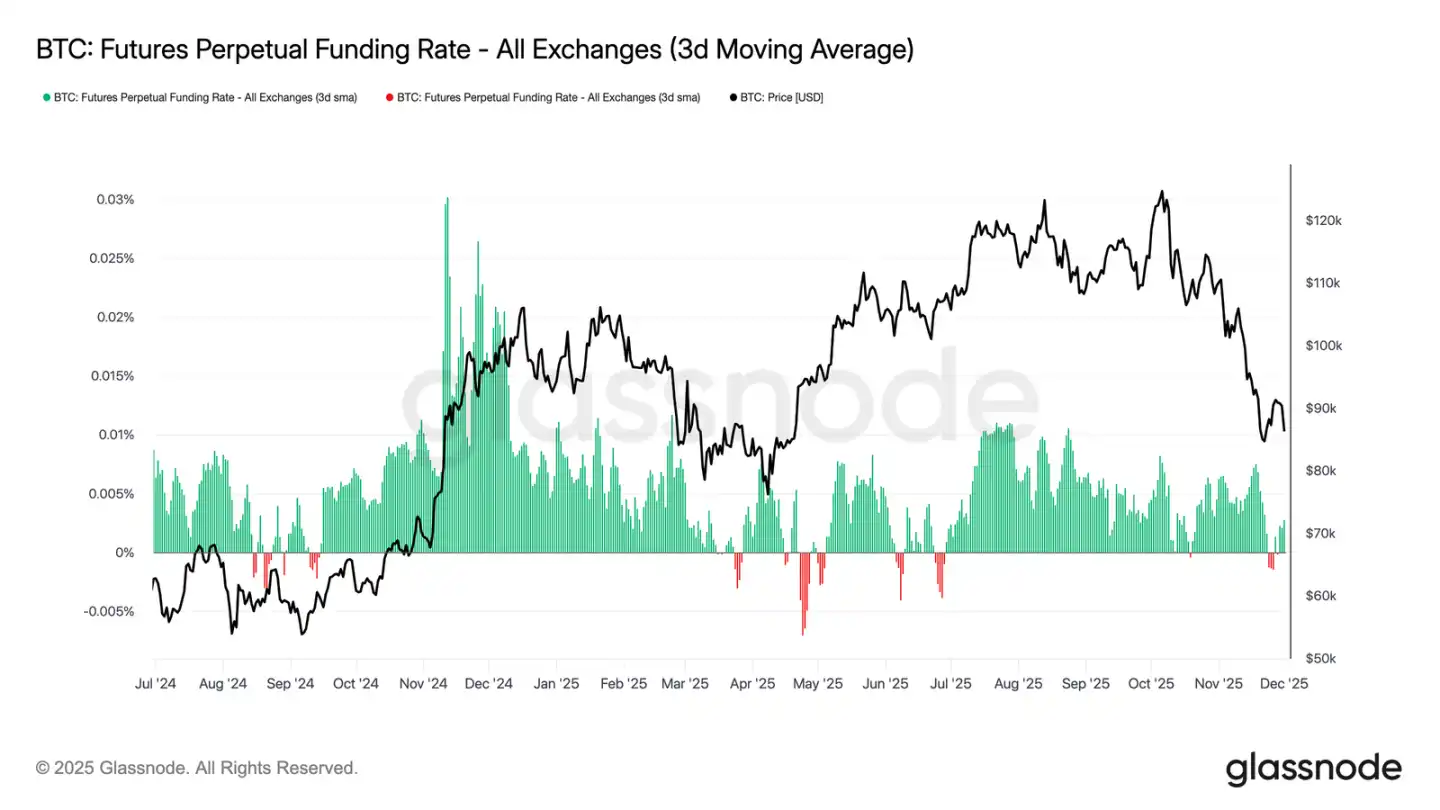
Продолжая тему низкого участия на рынке, фьючерсный рынок также демонстрирует ограниченный интерес к leverage, при этом открытый интерес не восстановился существенно, а funding rates остаются near нейтральным уровням. Эти dynamics подчеркивают среду деривативов, определяемую осторожностью, а не уверенностью.
На рынке perpetual-контрактов funding rates на этой неделе колебались около нуля до слегка отрицательных значений, что подчеркивает continued unwind спекулятивных long-позиций. Трейдеры сохраняют сбалансированную или оборонительную позицию, почти не оказывая направленного давления через leverage.
При вялой активности на рынке деривативов price discovery смещается в сторону спотовых потоков и макрокатализаторов, а не спекулятивного expansion.
Всплеск краткосрочной подразумеваемой волатильности
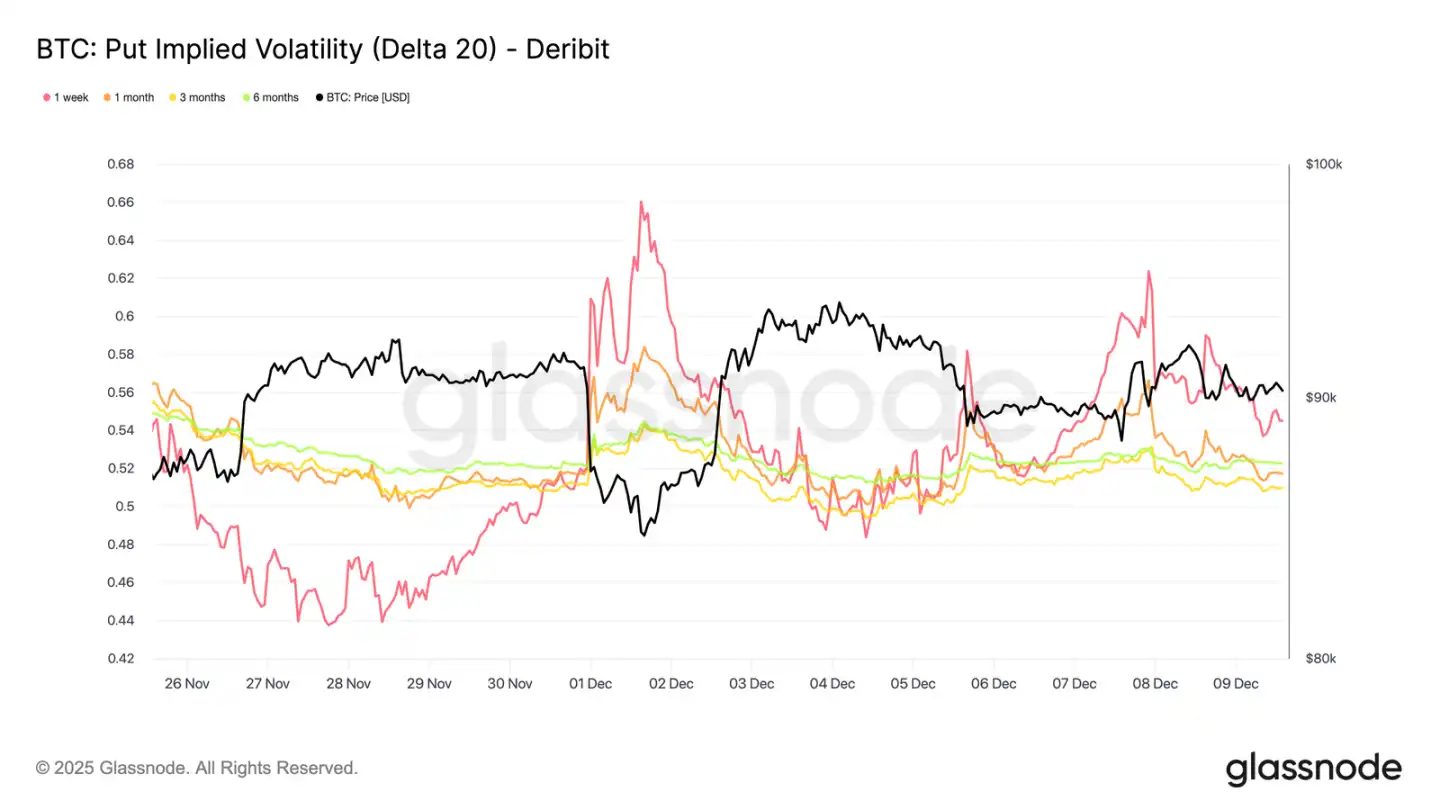
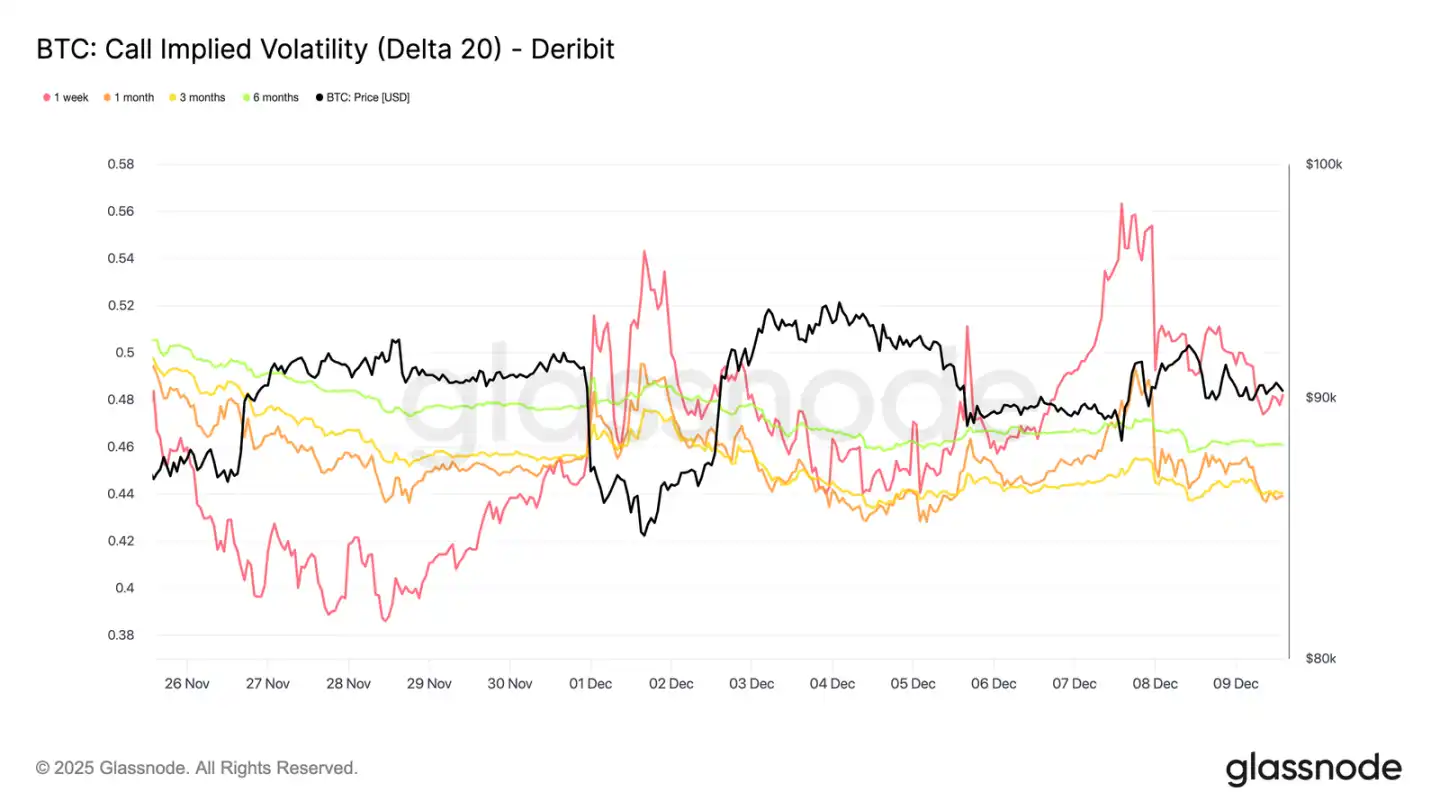
Переходя к опционному рынку, вялая спотовая активность биткоина контрастирует с внезапным ростом краткосрочной подразумеваемой волатильности, поскольку трейдеры готовятся к более крупным ценовым движениям. Интерполированная подразумеваемая волатильность (которая оценивает IV путем фиксации значений Delta, а не reliance на листинговые страйки) более четко reveals структуру ценообразования риска по срокам.
Для 20-Delta call-опционов, IV на срок one week выросла примерно на 10 пунктов волатильности по сравнению с прошлой неделей, в то время как более длительные сроки оставались относительно flat. Та же картина наблюдается и для 20-Delta put-опционов: краткосрочная downside IV растет, а более длительные сроки остаются спокойными.
В целом, трейдеры накапливают волатильность там, где ожидают стресс, предпочитая держать convexity, а не продавать ее перед заседанием FOMC 10 декабря.
Возвращение спроса на защиту от падения
В дополнение к росту краткосрочной волатильности, защита от падения снова получает премию. 25-delta skew, измеряющий относительную стоимость put-опционов по сравнению с call-опционами при одинаковых значениях Delta, на срок one week поднялся до примерно 11%, что указывает на заметно возросший спрос на краткосрочную страховку от падения перед FOMC.
Скос (skew) остается tightly clustered по срокам, в диапазоне от 10,3% до 13,6%. Это сжатие указывает на то, что предпочтение защиты от падения является общим для всей кривой, отражая последовательную склонность к хеджированию рисков, а не изолированное давление только на коротком конце.

Накопление волатильности
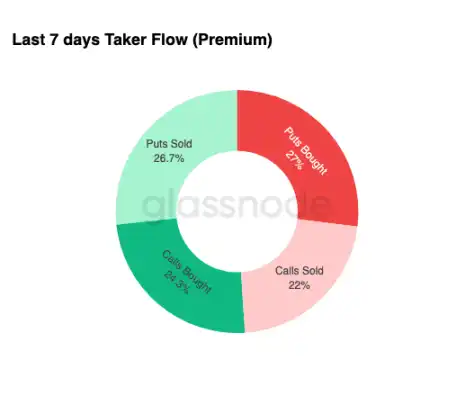
Подводя итоги ситуации на опционном рынке, еженедельные данные о потоках усиливают четкую модель: трейдеры покупают волатильность, а не продают ее. Купленные премии доминируют в общих номинальных потоках, при этом put-опционы slightly лидируют. Это отражает не directional bias, а состояние накопления волатильности. Когда трейдеры покупают опционы на оба направления, это сигнализирует о хеджировании и поиске выпуклости (convexity), а не о спекуляции на основе настроений.
В сочетании с растущей подразумеваемой волатильностью и skew, смещенным в сторону падения, картина потоков suggests, что участники рынка готовятся к волатильному событию с downside bias.
После FOMC
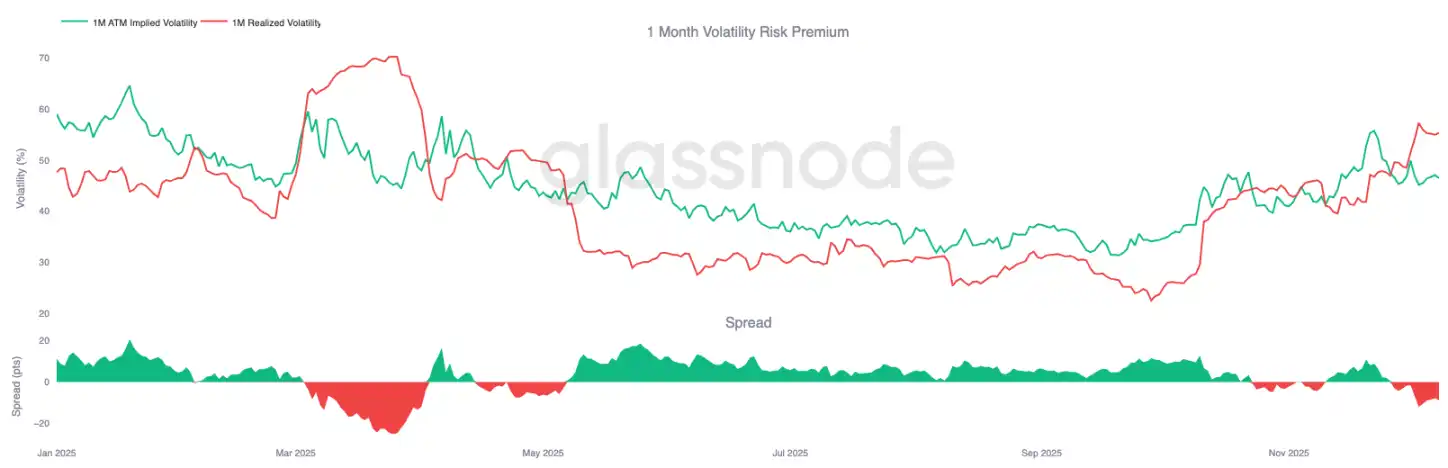
Взгляд вперед: подразумеваемая волатильность уже начала смягчаться, и исторически, после того как последнее крупное макрособытие года проходит, IV имеет тенденцию к дальнейшему сжатию. Поскольку заседание FOMC 10 декабря является последним meaningful катализатором, рынок готовится к переходу в среду с низкой ликвидностью и возвратом к среднему (mean-reversion).
После анонса продавцы обычно возвращаются на рынок, ускоряя衰减 IV до конца года. При отсутствии ястребиного сюрприза (hawkish surprise) или значительного изменения guidance, путь наименьшего сопротивления указывает на более низкую подразумеваемую волатильность и более плоскую volatility surface, сохраняющуюся до конца декабря.
Заключение
Биткоин продолжает торговаться в структурно хрупкой среде, где растущие нереализованные убытки, высокие реализованные убытки и масштабная фиксация прибыли долгосрочными держателями совместно определяют движение цен. Несмотря на сохраняющееся давление продаж, спрос остается достаточно устойчивым, чтобы удерживать цену выше истинной рыночной средней, что указывает на наличие терпеливых покупателей, поглощающих продажи. Если появятся признаки истощения продавцов, краткосрочное продвижение к уровню 95 тыс. долларов и к цене входа краткосрочных держателей остается возможным.
Внецепные условия повторяют этот осторожный тон. Потоки ETF остаются отрицательными, спотовая ликвидность вялая, а на фьючерсном рынке не хватает спекулятивного участия. Опционный рынок усиливает оборонительную позицию: трейдеры накапливают волатильность, покупают краткосрочную защиту от падения и готовятся к ближайшему волатильному событию перед FOMC.
В совокупности, структура рынка suggests, что это слабый, но стабильный диапазон, поддерживаемый терпеливым спросом, но сдерживаемый сохраняющимся давлением продаж. Краткосрочный путь зависит от того, улучшится ли ликвидность и остановятся ли продавцы, в то время как долгосрочная перспектива зависит от способности рынка отбить ключевые пороги цены входа и выйти из этой движимой временем, психологически напряженной фазы.