Автор: CryptoNarratives (Viktor)
Компиляция: Deep Tide TechFlow
Введение от Deep Tide: Этот ежемесячный обзор подробно разбирает ключевые движения на крипторынке в феврале: экстремальный отскок BTC к $60k, паника и быстрое восстановление в день атаки на Иран, игровые механики вокруг конференции ZRO, а также манипулируемые монеты, процветающие на медвежьем рынке. Информации много, материал подходит в качестве основы для понимания текущей структуры рынка.
Полный текст ниже:
Хронология BTC
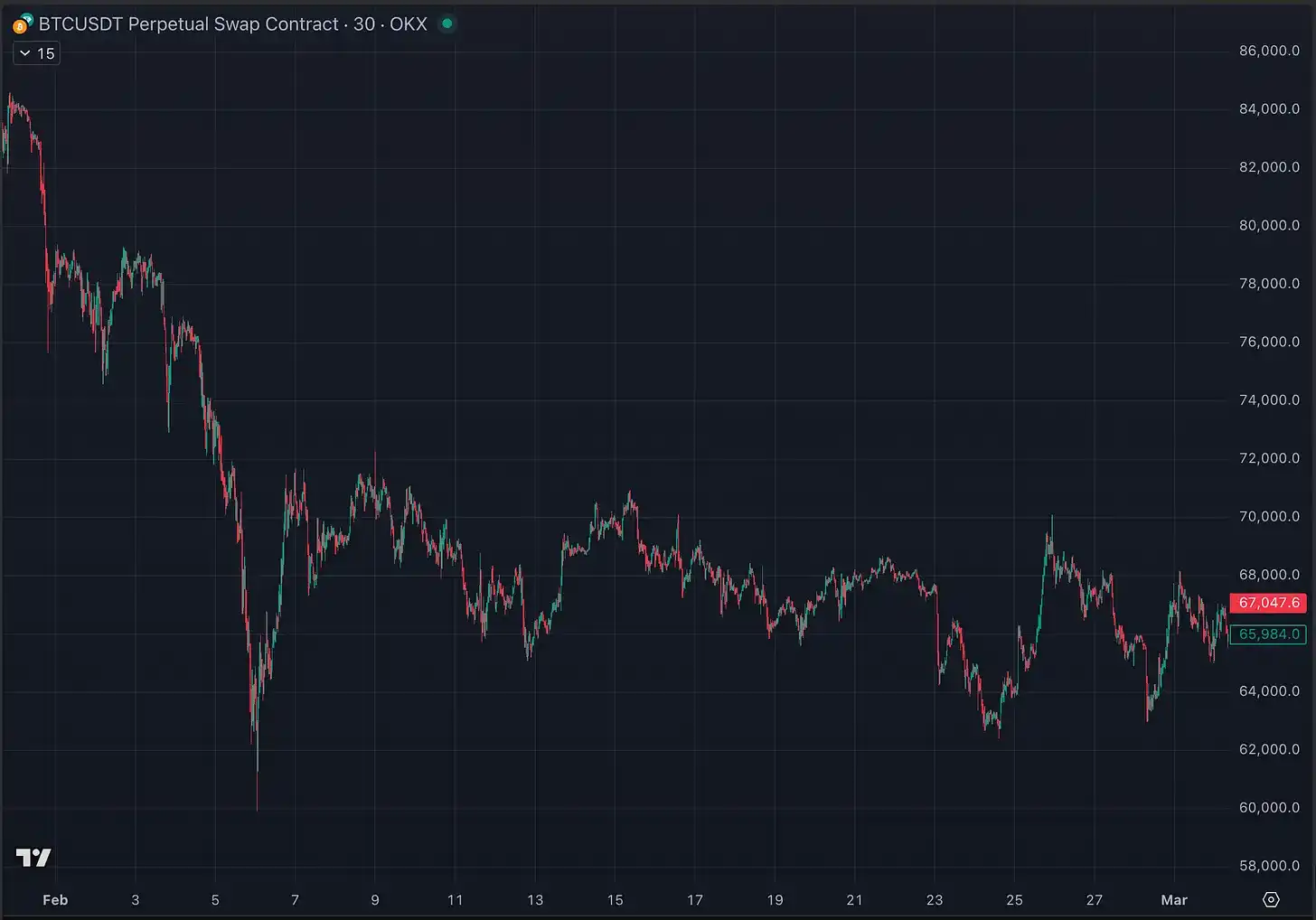
Основная хронология февраля:
Золото достигло пика в конце января и затем значительно скорректировалось, упав с $5600 до $4400. Дно было достигнуто 2 февраля, после чего за два дня цена быстро отскочила до $5100. Серебро также обвалилось с пика, 6 февраля рухнув почти на 50% с $121 до $64.
BTC начал февраль в крайне слабой позиции: максимум января на отметке $98k, открытие февраля на $78k, падение до $70k за 4 дня, а затем 5 февраля однодневное обвальное падение с $70k до $60k.
BTC мощно отскочил от уровня $60k, вернувшись почти к $72k менее чем за день. Это движение задало диапазон колебаний на весь последующий месяц, в основном между $60k и $70k.
После первой недели BTC большую часть месяца консолидировался около $68k, с двумя явными периодами силы: 13-14 февраля и 25 февраля, в каждый из которых наблюдались более сильные движения у альткойнов.
27 февраля BTC упал с $68k до $65k на слухах о предстоящей атаке США на Иран; через день атака正式 состоялась. После подтверждения новости BTC упал дальше, с $65k до $62k, но в течение дня постоянно выкупался, в итоге закрывшись около $68k и завершив на этой цене месяц. В тот же день было объявлено о смерти Хаменеи, что рынок в целом воспринял как бычий сигнал (поскольку это означало, что США вряд ли вложат много ресурсов в этот конфликт).
Конференция ZRO
Почти единственной состоявшейся наративой для альткойнов в феврале стала конференция LayerZero 10 февраля. $ZRO укреплялся с начала года, в основном благодаря ожиданиям этого события. Я изначально предполагал, что это типичный случай для продажи на новостях, но реальность оказалась немного иной.
В тот день утечка видео с анонсом собственного блокчейна вызвала продажи, цена рухнула на ~20% за час, обозначив дно дня. Позже официально было объявлено то же самое — запуск собственного блокчейна "Zero" — но вместе с этим пришел и пакет весомых партнерских анонсов, включая Citadel Securities, Cathie Wood/ARK, DTCC и ICE.
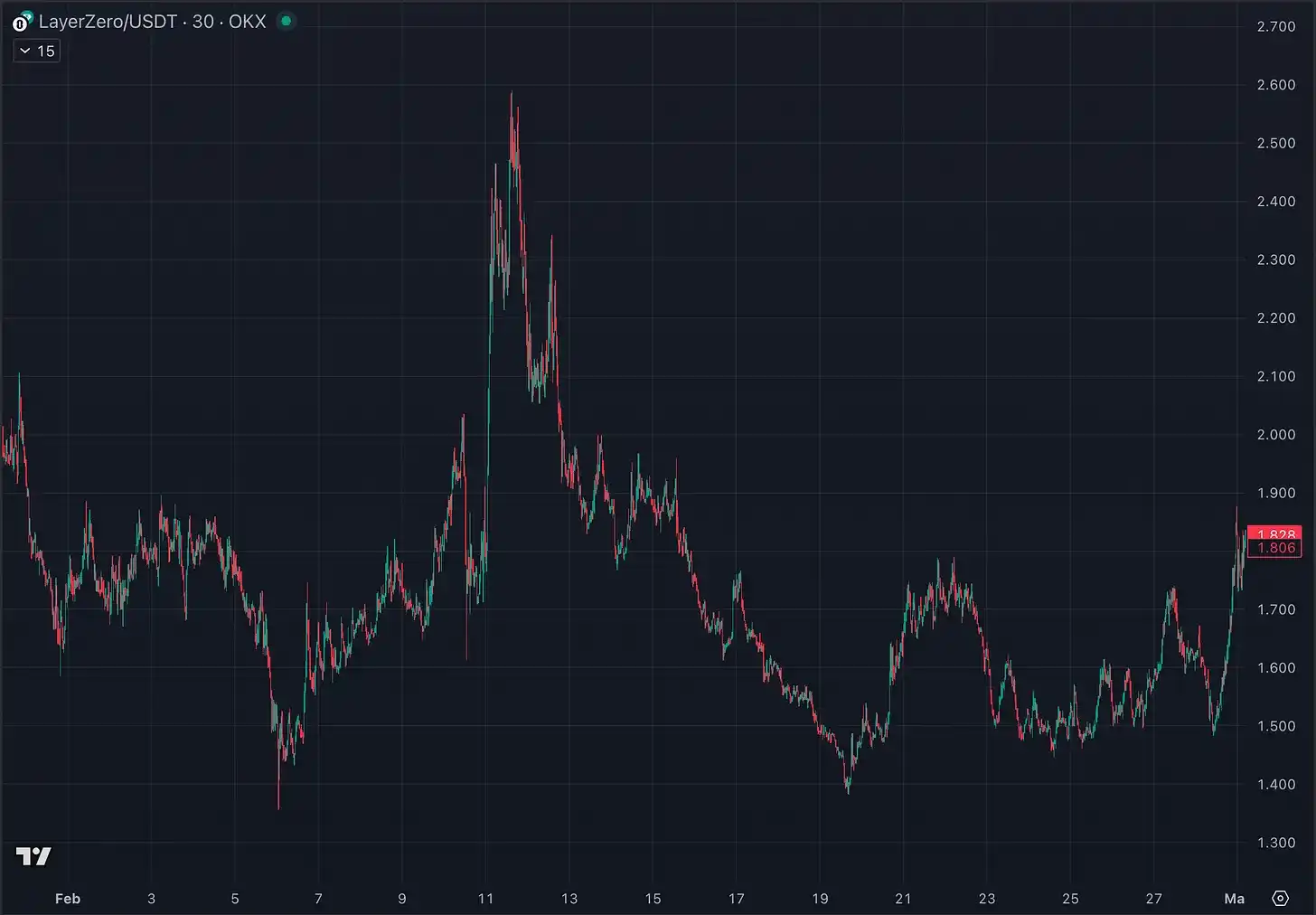
Результатом стал мощный импульсный рост после конференции, $ZRO вырос примерно на 45% за 12 часов, застав врасплох многих "медведей на новостях". Но затем... весь рост был отдан, токен скатился к $1.5, где сейчас, похоже, образовалась сильная поддержка.
Аномальная сила VVV
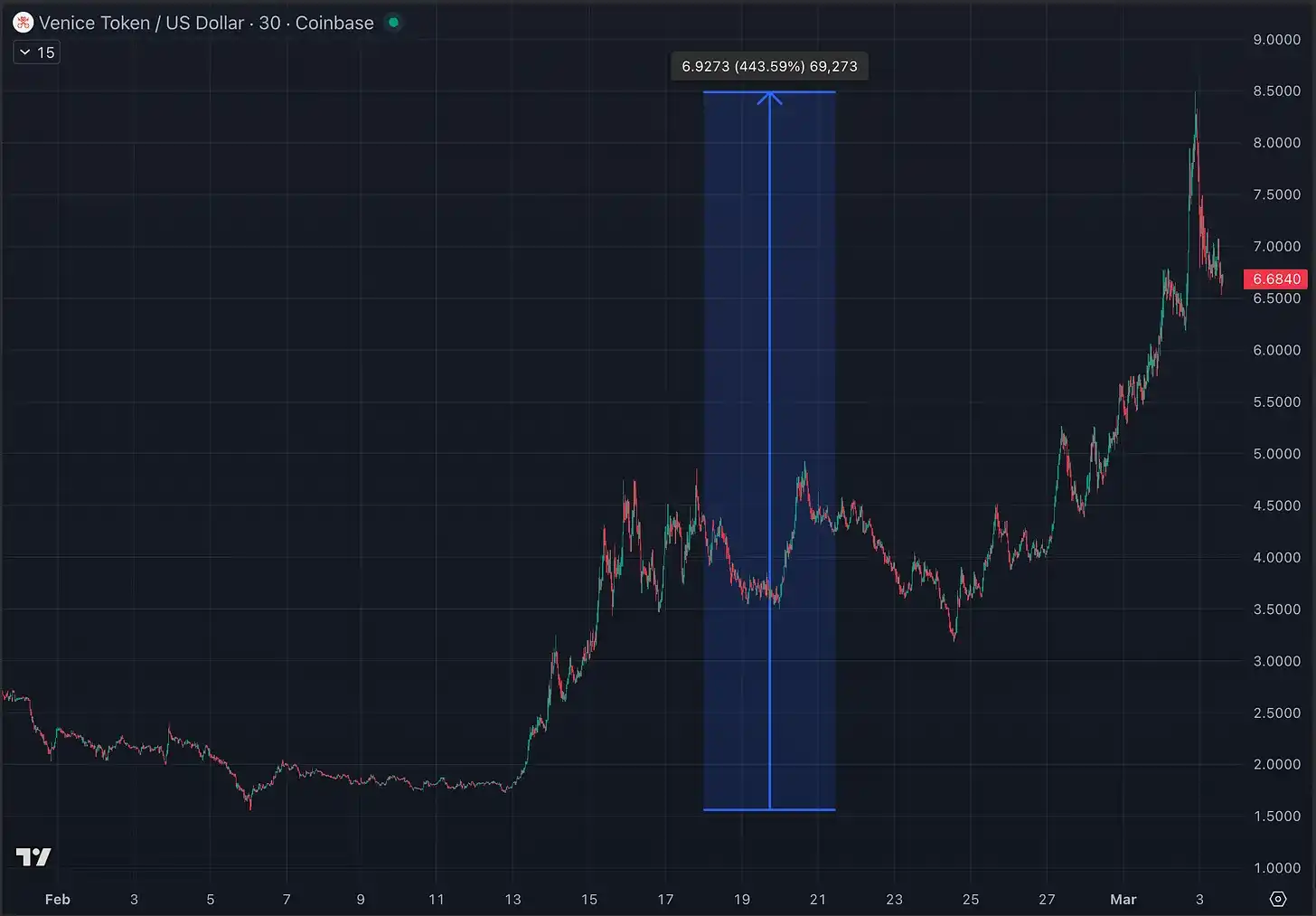
VVV был лучшим "не-скам" токеном февраля, вырос с дна $1.65 до $5.5 к концу месяца (и further выжат до $8 к 2 марта). Один из катализаторов — то, что это легитимный проект на стыке AI, приватности и крипто с низкой капитализацией ниже $100M; также он benefited от ассоциации с OpenClaw, который до вчерашнего дня упоминал Venice как рекомендованного поставщика моделей в своей документации.
(Склонен считать, что его пик был на выжиме до $8.4 в начале марта, но могу ошибаться)
В конце февраля также ненадолго проснулись несколько AI-токенов, $SAHARA выдала однодневный выжим +70%, $GRASS вырос на +70% за 4 дня.
Урожайный месяц для скам-монет: $PIPPIN, $SIREN, $POWER
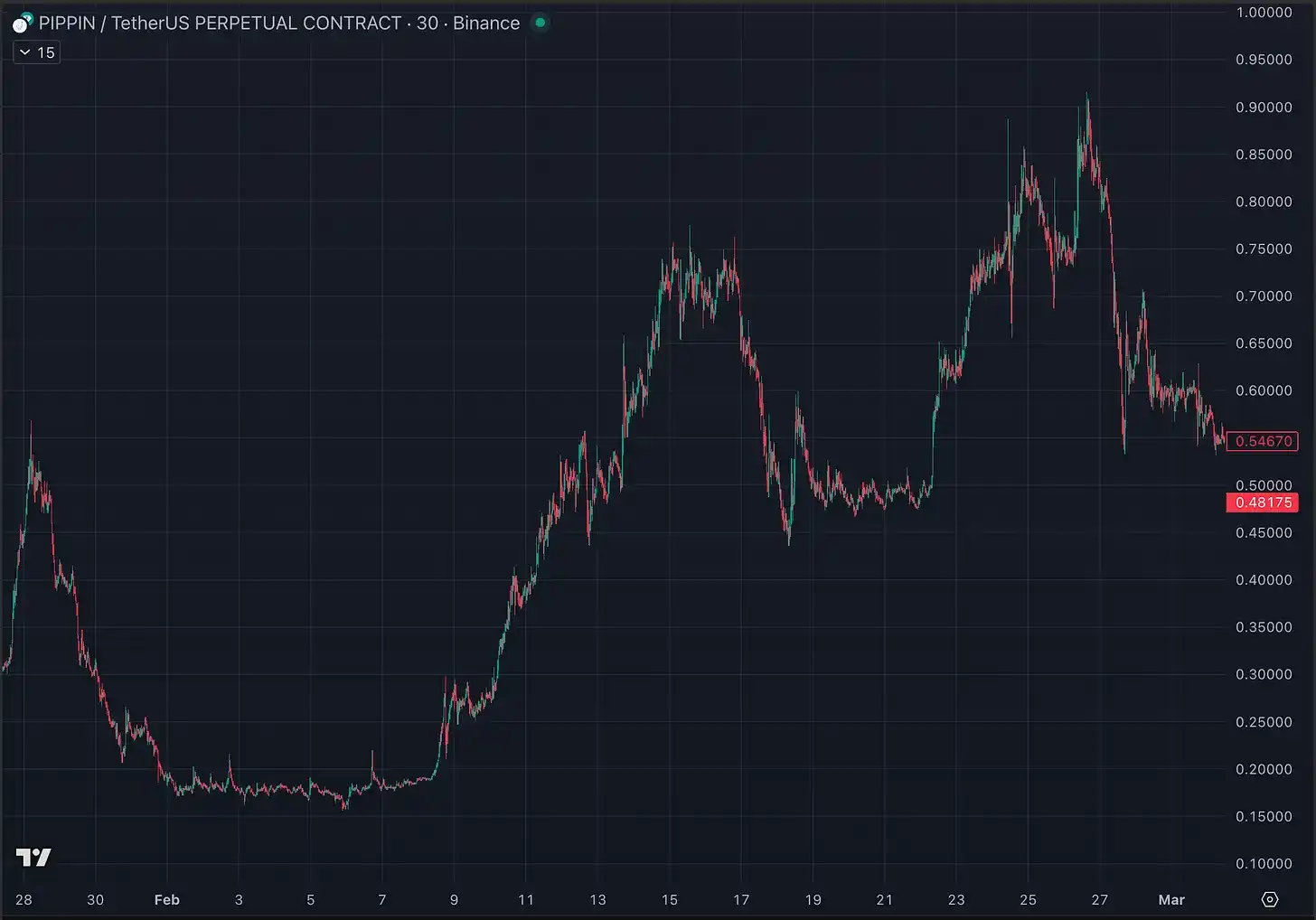
Медвежий рынок, кажется,提供了 отличную почву для скам-монет. В феврале старый AI Meme-токен $PIPPIN вернулся — его supply был полностью заблокирован одним entity, движение типично манипулятивное. В начале месяца $PIPPIN стабильно держался на $180M рыночной капитализации, после уже пережитого падения на 70% за 4 дня, с 8 февраля начал мощный рост, за 7 дней вырос на +315%, обновив ATH на $750M, затем откатился к $500M, снова рванул к новому ATH $900M. Странно, но его funding rate больше не отрицательный, что делает его относительно менее рискованным объектом для шортинга, чем раньше.即便如此, я не удивлюсь, если он пробьет $1 млрд.
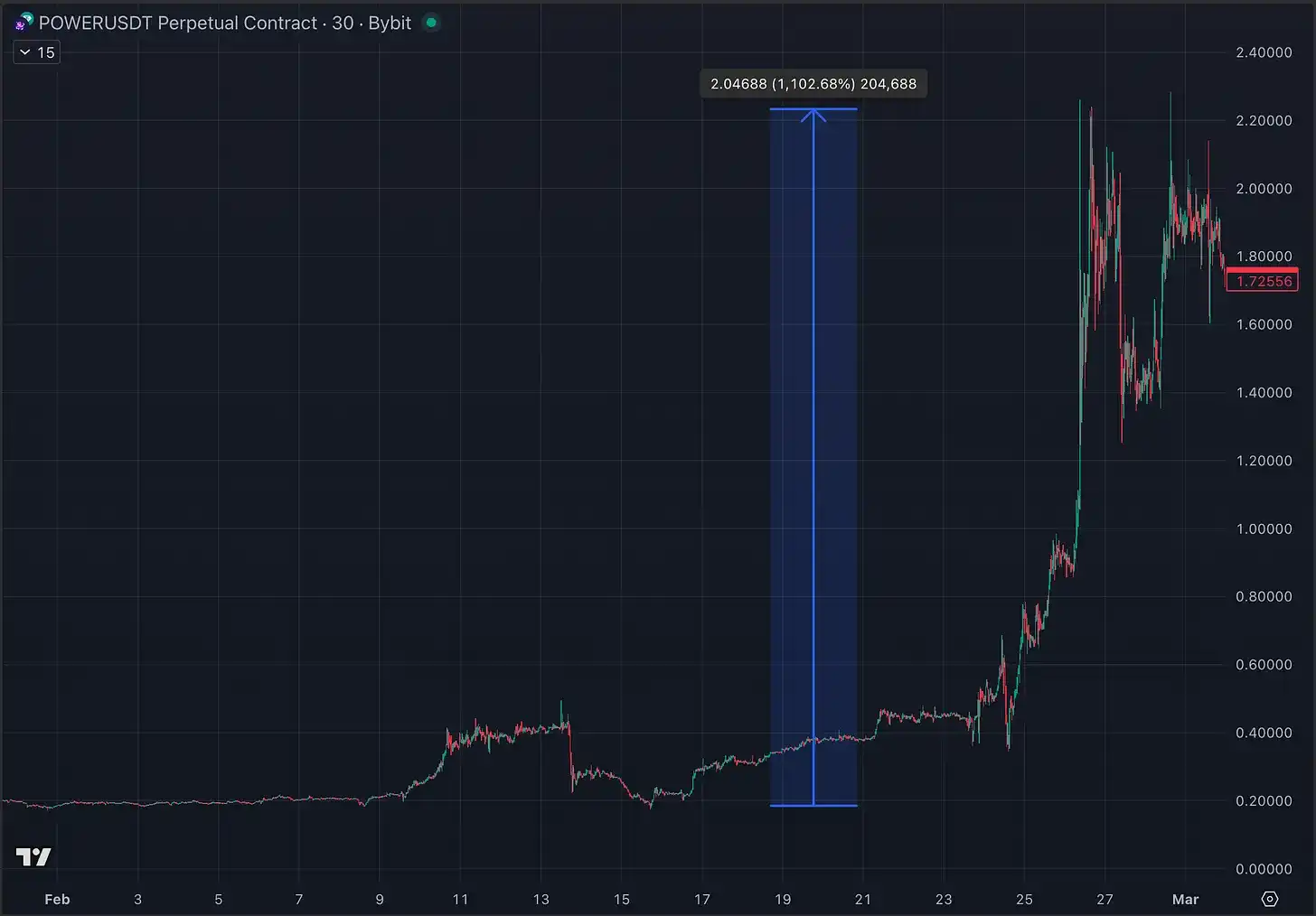
$POWER — один из новых манипулятивных пулов февраля, вырос в 12 раз от дна до пика, выжат до FDV $2.3 млрд, funding rate крайне отрицательный. Будьте очень осторожны, шортя его.
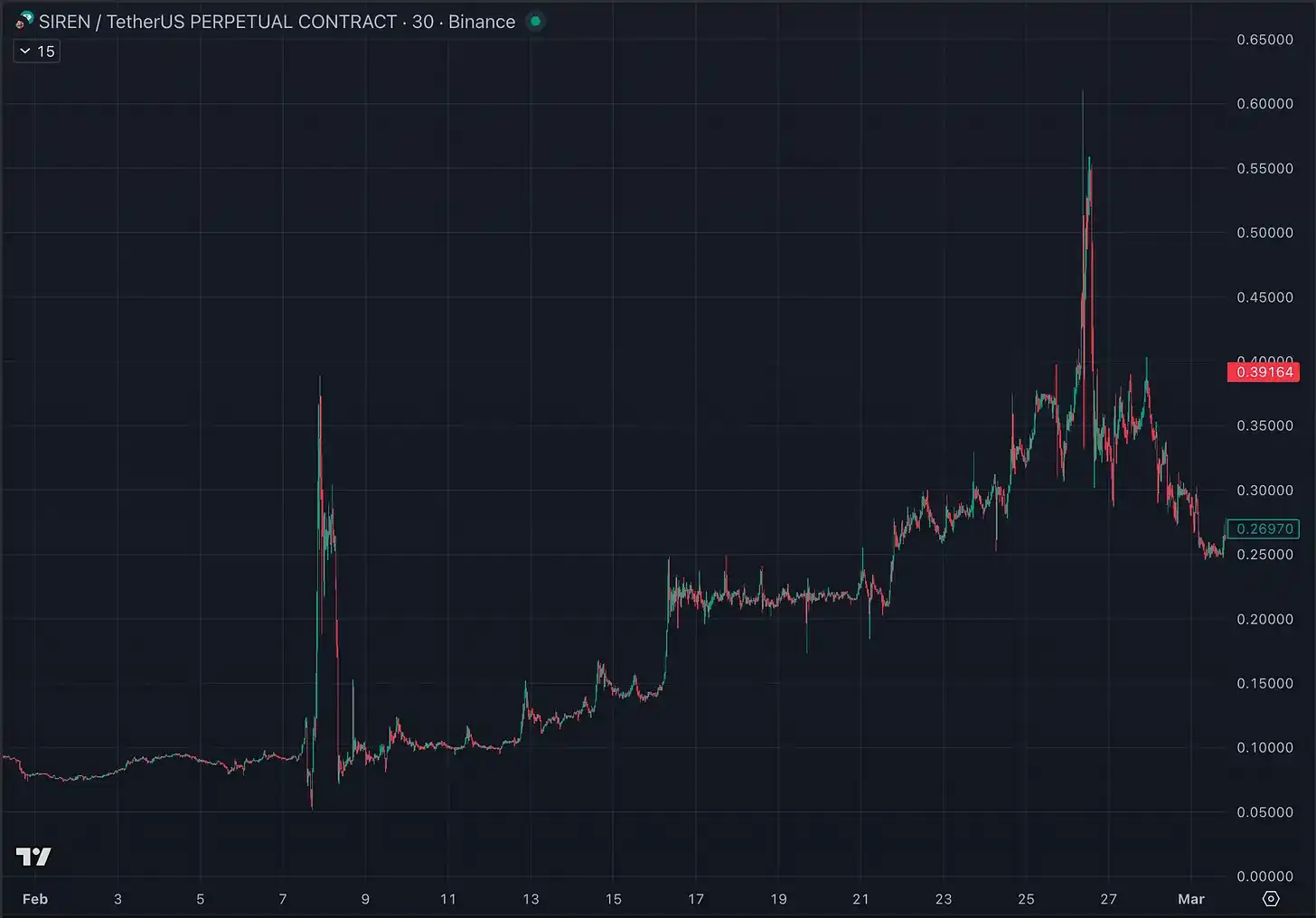
Еще одно примечательное движение — $SIREN, этот BSC scam meme-токен устроил pump-and-dump 8 февраля — с $100M рыночной капитализации до $400M и обратно к $100M — затем медленно полз к новым highs в течение всего остатка февраля, в итоге совершив мощный выжим на $600M рыночной капитализации.
Стоит упомянуть и $BULLA, выросший в 13 раз в конце января, затем 1 февраля рухнул на 95% за день, с FDV $450M до $25M FDV. $ARC также обвалился на 80% после роста с $40M до $130M.
Характеристики медвежьего рынка
Мы в условиях медвежьего рынка: большинство бычьих движений альткойнов — это краткосрочные выжимы, которые быстро отдаются. Вот токены, проявили такое поведение в феврале: ZK ZIL LA NIL SONIC DYM ME MOVE 0G INIT RPL ESP AZTEC BIO AGLD SAHARA. Эти движения обычно происходят в течение одного дня с ростом от +50% до +100%, сопровождаются отрицательным funding rate (усложняя шортинг), а затем ослабевают в течение нескольких дней.
Кроме отскоков после падений, у альткойнов было только два кратких периода силы. Первый — 13-15 февраля, во главе с meme-монетами (USELESS+50%, PEPE+35%) и AI-токенами ($TAO+35%, $VVV+150%, VIRTUAL+25%). Второй случился 25 февраля, был крайне кратким,纯粹是 выжим шортов по "мертвым" крупнокаповым монетам, которые выросли на +25%-30% за день (DOT NEAR UNI APT FIL TIA......).
$HYPE и сектор Perpetual DEX
$HYPE завершил январь strongly, за день вырос с $22 до $34, и эта сила продолжилась в начале февраля. 3 февраля он достиг $38, и был самым сильным токеном в день общерыночного обвала и каскада ликвидаций 5 февраля. Сила была evident — 6 февраля он almost touched $37, как будто общерыночного краха для HYPE не случилось — но это также отметило его топ относительно рынка альткойнов. Следующие 20 дней он slightly underperformал рынок альткойнов, откатившись к $26.
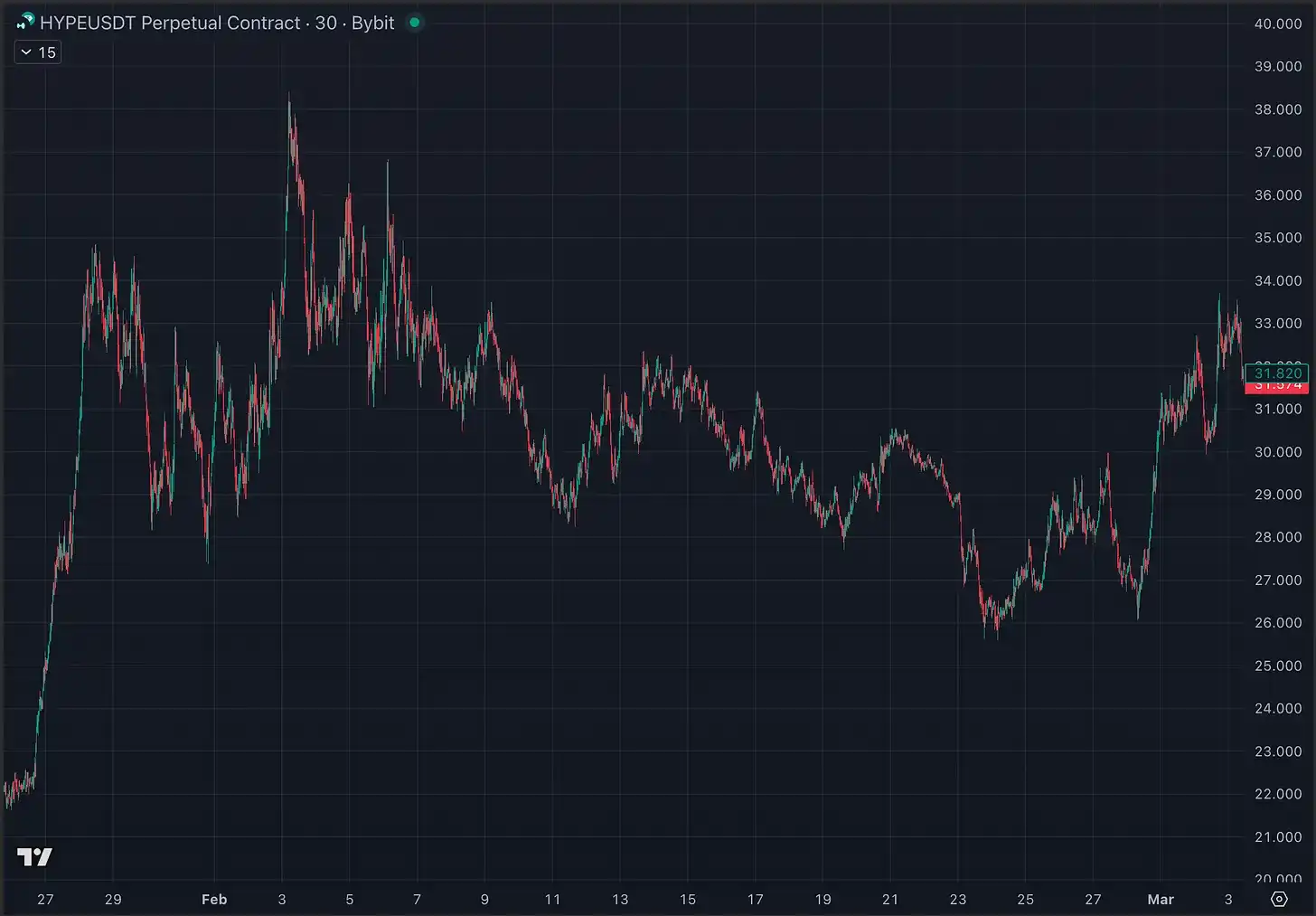
Одной из причин силы $HYPE в начале февраля были крупные покупки от Multicoin в течение нескольких дней, HSI/PURR (DAT HYPE) также продолжали накапливаться.
В секторе Perpetual DEX, $LIT в феврале оставался extremely weak, сейчас支撑 на $1.3, который тестировал уже четыре-пять раз.
$ASTER после падения 5 февраля показал强劲的 отскок, с дна near $0.4 до $0.7, затем strange консолидировался на $0.7 в течение всего остатка февраля. У него есть бычий катализатор: запуск собственного L1/блокчейна в марте.
Uniswap x BlackRock
11 февраля Uniswap announced партнерство с BlackRock для предоставления ликвидности для их продукта BUIDL, и одновременно announced прямые инвестиции BlackRock в токен $UNI (сумма не раскрыта). Реакция рынка была extremely сильной, $UNI вырос на +40% за 10 минут — впечатляюще для токена с FDV超过 $30 млрд. Но затем весь рост был отдан за 10 часов, типичный pump-and-dump на медвежьем рынке.
Aave в феврале пережила период негативного внимания. 20 февраля BGD Labs announced уход из Aave DAO из-за разногласий по стратегии V4, что вызвало падение $AAVE на 8%. В конце месяца известный персонаж экосистемы Aave Marc Zeller опубликовал критическую статью о Aave Labs, охарактеризовав их как essentially экстракторов value, что caused дальнейшее ослабление токена.
Особенно невыгодно для Aave то, что its главный конкурент $MORPHO показал强劲ные результаты в 2026 году, вырос почти на +75% в феврале. Сейчас FDV двух токенов基本上 сравнялись, около $2 млрд.
Другие важные события февраля
18 февраля Base announced переход со стека Optimism на собственный. Это было разрушительным ударом для $OP, который упал на 40% за 4 дня. $ARB также пострадал из-за корреляции, сейчас FDV "всего" $1 млрд, down 96% от ATH ($OP down 97%).
11 февраля $BERA показал extremely сильный выжим шортов, рост +160% за 8 часов, также достиг extreme диспропорции между спотом и фьючерсами (разница 15%). Это странно движущийся токен,大部分时间 сильно underperformит рынку, но occasionally выдает очень сильные случайные выжимы, в прошлом месяце уже был случай роста в 2 раза за 5 дней.
18 февраля $WLFI внезапно вырос на +30% без видимых причин, при этом open interest (OI) вырос почти на $100M — это может означать, что single entity про longs на $100M $WLFI moved цену. Затем цена достигла пика здесь и упала примерно на 20% с highs, после чего не было никаких новостей. Операции этого entity довольно странные, я ожидаю, что $WLFI упадет еще ниже в ближайшие месяцы.
В конце февраля 2026 года, bankruptcy estate Terraform Labs подала иск против Jane Street в федеральный суд Манхэттена, обвиняя их в использовании инсайдерской информации during краха Terra в 2022 году для торговли перед ключевыми событиями ликвидности UST. В течение нескольких дней после новости $LUNC вырос на +35%.
$ZEC все еще переваривает большой рост Q4 2025, в целом underperformит, но occasionally также выдает сильные выжимы, like +45% 13-14 февраля. Я считаю, что он вполне может упасть до $150 или даже $100 в ближайшие месяцы.
$HNT в феврале показал强劲ный рост в 2 раза — это отскок мертвой кошки актива, страдающего от чрезмерной эмиссии, или же этот DePIN-токен наконец упал достаточно дешево, чтобы стать объектом для покупки?
Как и в прошлом месяце, $STABLE продолжал торговаться с заблокированным supply, вырос на +144% с локального дна FDV $1.6 млрд до нового ATH near FDV $4 млрд. DegenSpatan также высказался в его поддержку в статье, и учитывая, что DegenSpartan редко публично высказывался в последнее время, это endorsement довольно бычье.
$BCH — странный токен, он continuously рос относительно BTC (outperform на 40%) в течение 22 дней, затем внезапно развернулся и отдал всю excess прибыль менее чем за неделю. Из-за наративы "квантовой устойчивости" и общего силы с начала 2025 многие стали бычьими на BCH, но сейчас похоже, что некое entity с большим количеством BCH решило распродавать и continuously продает по TWAP.
Robinhood в феврале listed два альткойна: $SNX (19 февраля) и $CC. $CC почти не отреагировал, но $SNX благодаря этому вырос на +42% за несколько дней. Листинг на Upbit по-прежнему extremely сильный катализатор для токенов, $AZTEC (+70%), $ESP (+100%) и $SKR (+40%) все испытали это, и funding rate были extremely отрицательными в течение нескольких часов после листинга. $BIRB также вырос в 2 раза после листинга на Bithumb 3 февраля.
Два примечательных TGE февраля — $AZTEC и $ESP (Espresso). Оба торговались по довольно низким valuation (FDV оба below $500M, несколько месяцев назад такие проекты легко достигали FDV $1 млрд+), что указывает на медленное пере定价 премии альткойнов вниз. Однако $ESP двигался stronger, рост от дна конца февраля до пика составил +280%.
Polymarket announced партнерство с Kaito для запуска attention market, после новости $KAITO вырос на +13% за 3 минуты, весь рост был отдан за час.





















