Did BTC's Santa rally start at $89K? 5 things to know in Bitcoin this week

cointelegraphОпубликовано 2025-12-08Обновлено 2025-12-08

Введение

Bitcoin (BTC) begins the second week of December trading above $90,000, sparking discussions of a potential "Santa rally." Traders are cautious, noting key resistance near $90,000 and the possibility of a further dip toward the low $80,000s. The 50-day EMA around $95,500 is seen as a potential retest zone for shorts, while Fibonacci support at $84,000 is critical for bulls to defend. Market attention is on the Federal Reserve's upcoming FOMC meeting, with expectations of a 0.25% rate cut amid a weakening labor market. Analysts debate whether this could fuel a year-end rally for risk assets, including Bitcoin. Seasonal data suggests Bitcoin may be near a cycle low, similar to the $15,600 bottom in late 2022, with $89,000 potentially representing a comparable opportunity. Despite recent price rebounds, open interest and leverage remain low, indicating reduced speculative activity and possibly signaling a buying opportunity. The overall market apathy contrasts with optimistic seasonal trends, leaving the door open for a potential pre-2026 rally toward $100,000, contingent on macroeconomic conditions and Fed policy outcomes.

Bitcoin (BTC) starts the second week of December above $90,000 as “Santa rally” talk begins.

  • BTC price action focuses on a key resistance area in the low $90,000 region, but traders still see another dip coming.

  • Federal interest-rate decision week hangs over risk assets despite broad consensus that a cut will result.

  • The Fed decision will decide the fate of a Santa rally for stocks, analysis agrees.

  • For Bitcoin, seasonality suggests that this year’s “bear market” bottom timing could echo 2022.

  • Open interest and leverage stay muted in what could be light at the end of the tunnel for the bulls.


Fibonacci level becomes key BTC price floor

Bitcoin price volatility made a comeback into the weekly close — a pattern seen increasingly often this quarter.

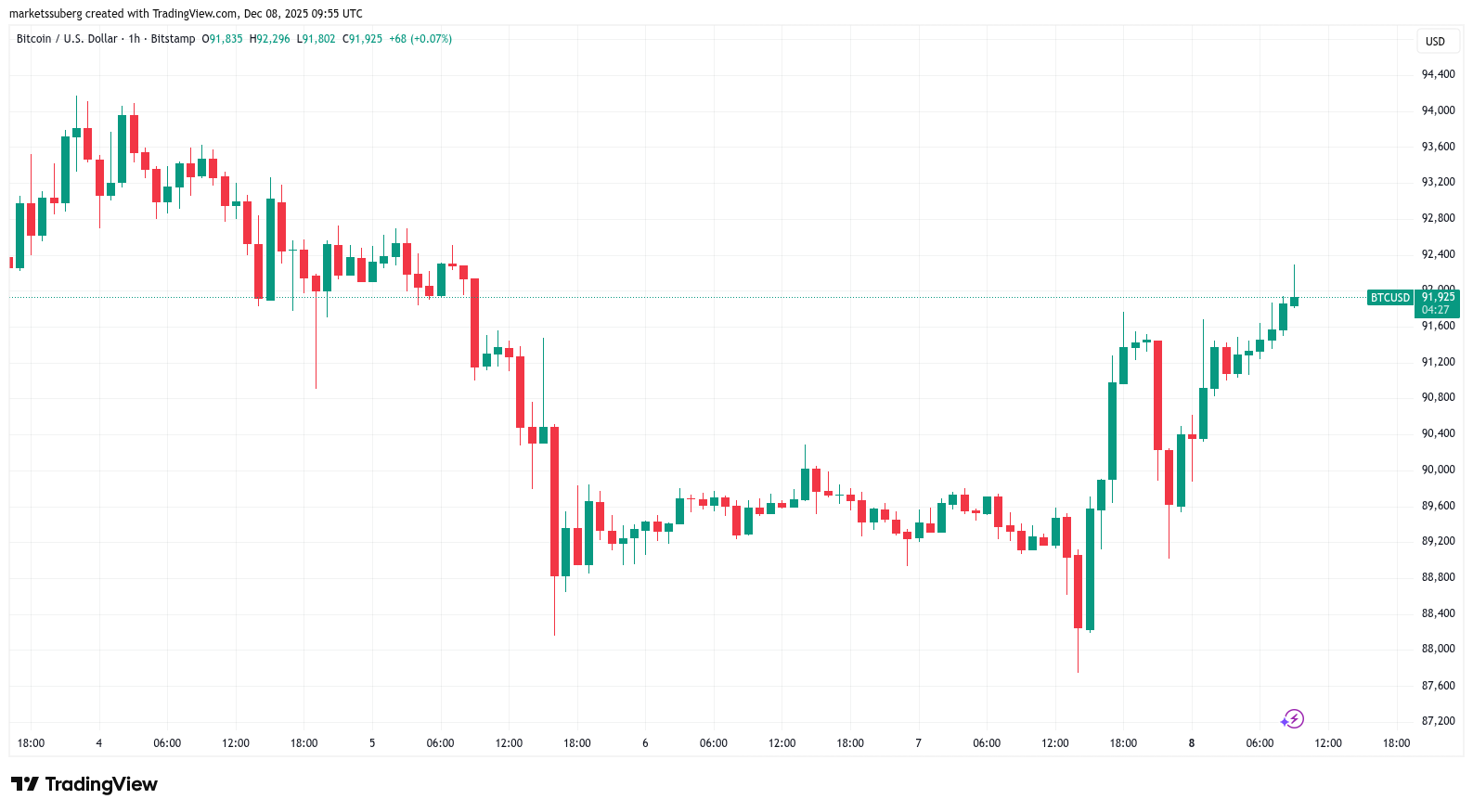
After dipping to near $87,000, BTC/USD managed a weekly close around the $90,000 mark before further erratic moves on lower time frames, data from Cointelegraph Markets Pro and TradingView confirms.

BTC/USD one-hour chart. Source: Cointelegraph/TradingView


Traders thus stayed wary of fakeout moves in both directions.

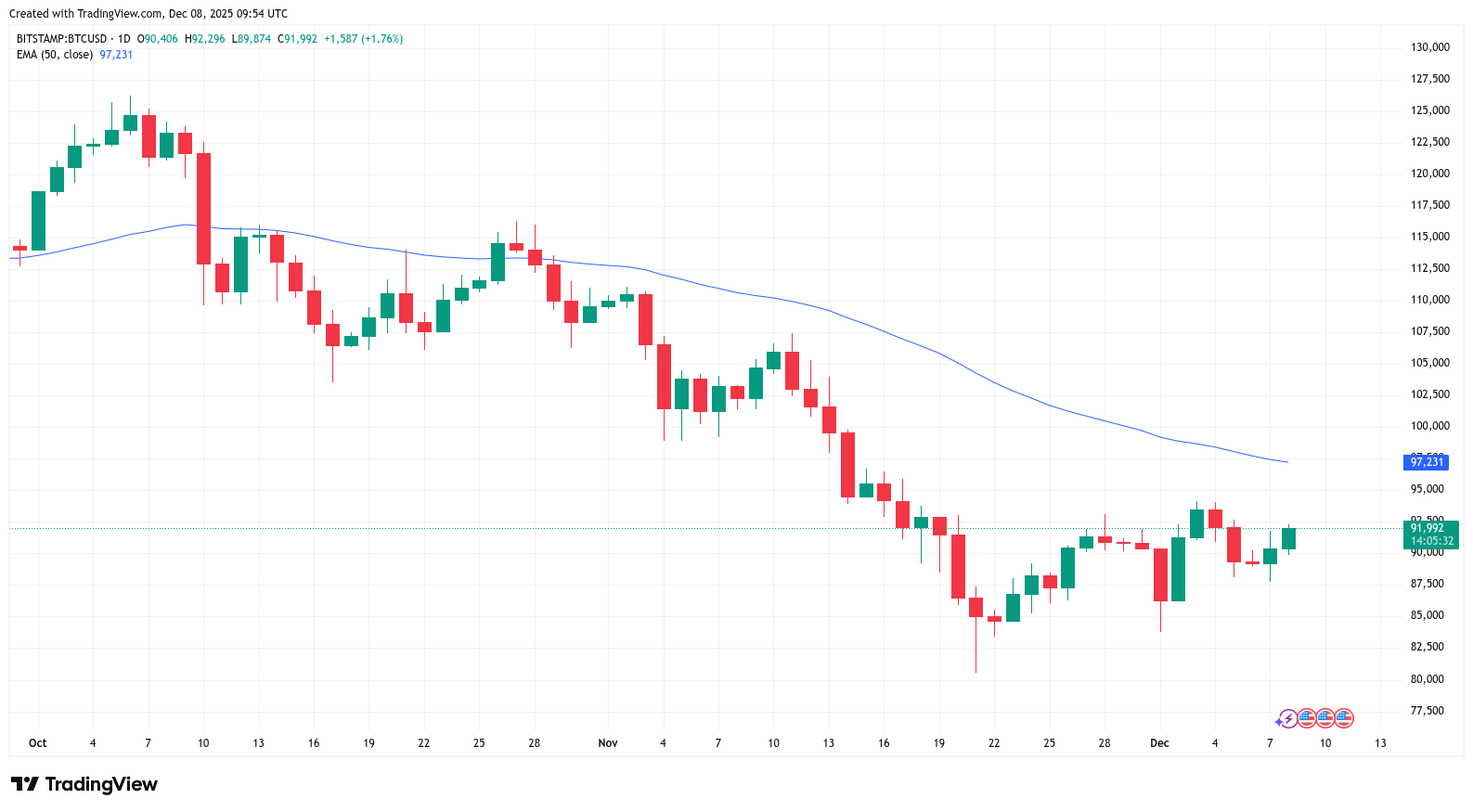
In his latest X thread on BTC, trader CrypNuevo eyed the 50-day exponential moving average (EMA) as a potential retest target.

“For shorts, I'm looking for a 1D50EMA retest and I'm thinking that it'll adjust around $95.5k and be the range highs,” he forecast.

CrypNuevo said that Bitcoin lacked a “clear base” for going long, with the low $80,000 zone still on the table.

“Some liquidations in both directions but slightly more to the upside in the zone between $94.5k-$95.3k. If price gets there first, I'll be looking for short signals to a potential low $80's retest,” he added alongside charts of exchange order-book liquidity data.

BTC/USD one-day chart with 50EMA. Source: Cointelegraph/TradingView


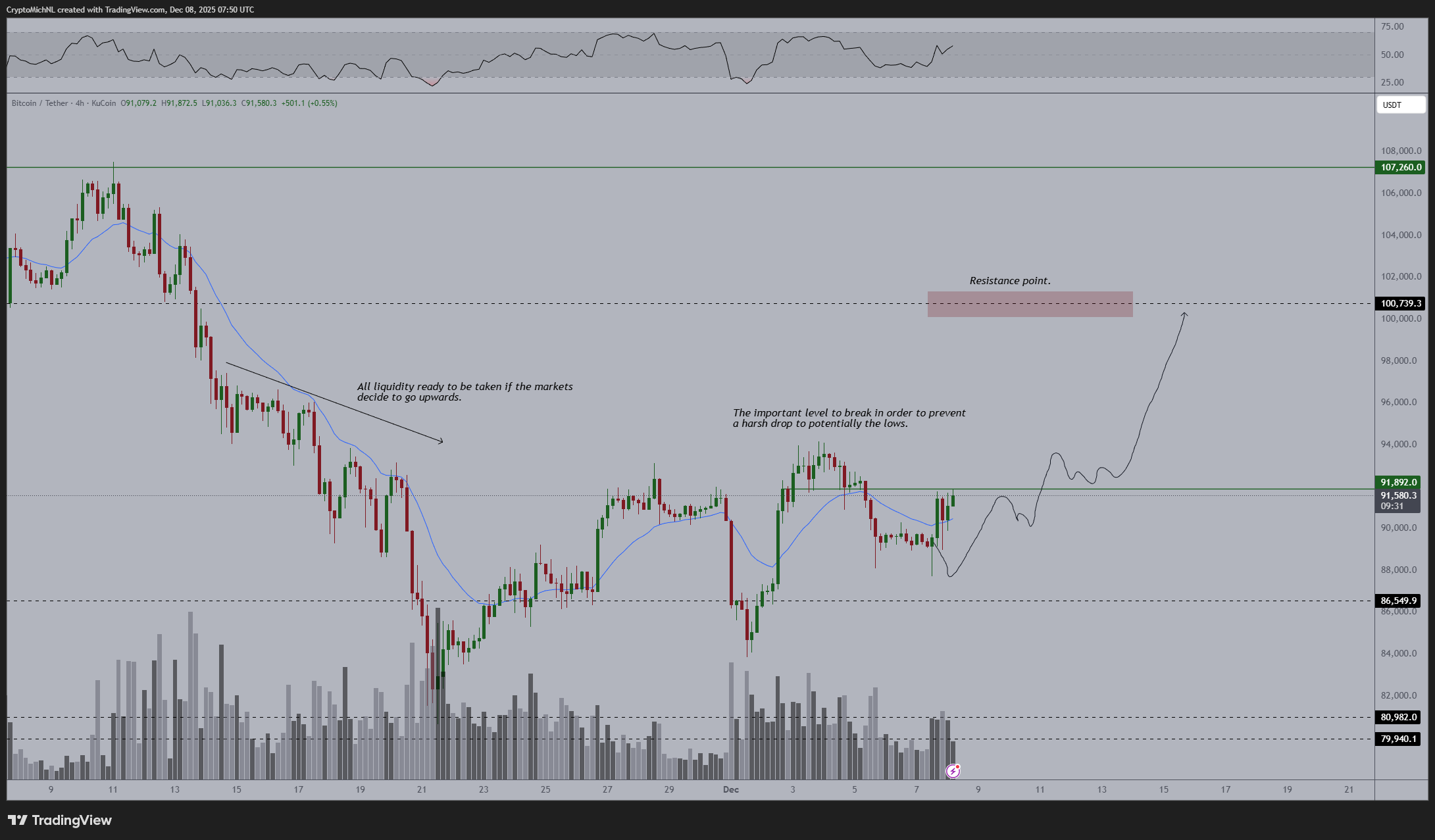
Crypto trader, analyst and entrepreneur Michaël van de Poppe was more hopeful, referring to “intense” pressure among Bitcoin buyers at local lows.

“Given that there's such an intense buying pressure taking place, I would assume we'll be breaking upwards and holding above $92K in the coming days,” he told X followers Monday.

“That would result in a rally towards $100K pre-2026.”
BTC/USDT four-hour chart with RSI, volume data. Source: Michaël van de Poppe/X


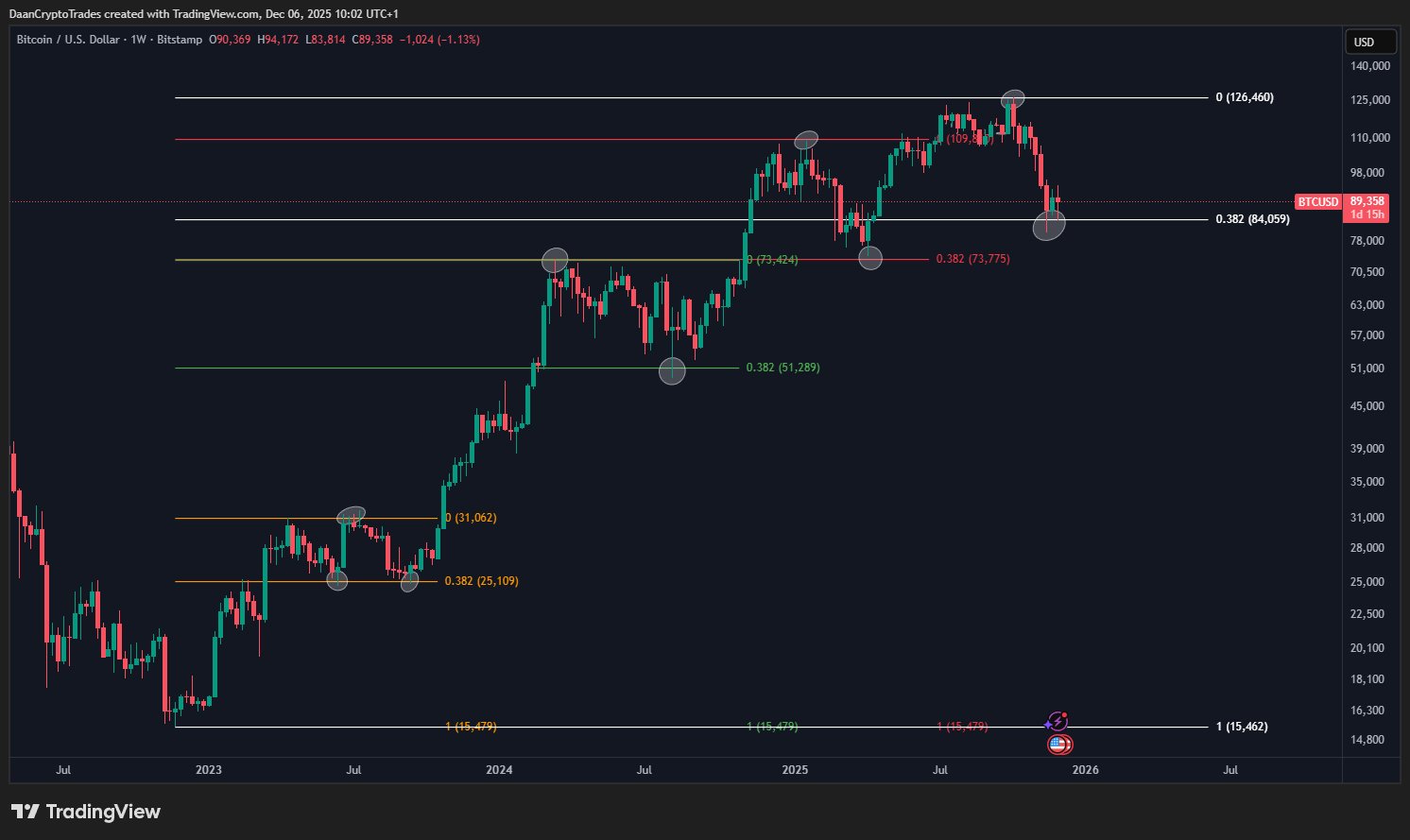
To the downside, trader Daan Crypto Trades used Fibonacci retracement levels to flag bulls’ line in the sand. This stands at $84,000, a level that saw a retest to start December.

“Still holding on to that .382 area from the entire bull market so far,” he wrote in accompanying analysis.

“I think this is a key area for the bulls to defend. It's also pretty much the last major support before testing the April lows again, which would break this high timeframe market structure.”
BTC/USD one-week chart with Fibonacci retracement levels. Source: Daan Crypto Trades/X

FOMC week sees Fed caught short on labor market

Little by way of US macroeconomic data releases this week means that the focus is purely on the Federal Reserve.

On Wednesday, the Federal Open Market Committee (FOMC) will meet to decide interest-rate changes, and markets are betting on a 0.25% cut.

Fed target rate probabilities for Dec. 10 FOMC meeting (screenshot). Source: CME Group FedWatch Tool


Recent jobs data points to deterioration in the labor market — and hence more of a need to lower rates. Analysis sees the Fed pinned between a rock and a hard place as inflation remains a problem that would be exacerbated by a cut.

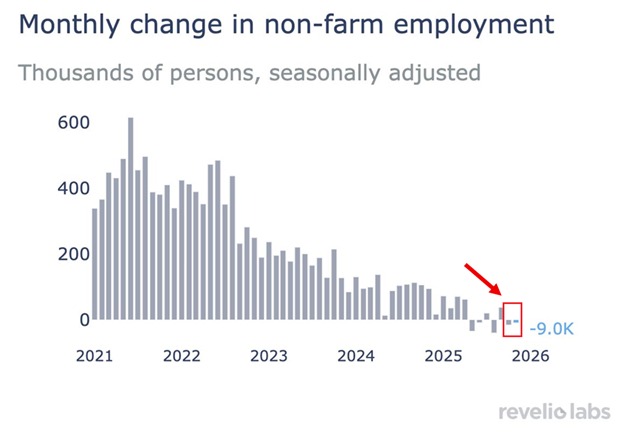
“Nonfarm payrolls have now posted 5 declines over the last 7 months, the worst streak in at least 5 years,” trading resource The Kobeissi Letter wrote in part of a weekend X post on US employment data.

“Deterioration of the job market is accelerating.”
Monthly change in US nonfarm payrolls. Source: The Kobeissi Letter/X


Analytics resource Mosaic Asset Company struck a more optimistic tone, seeing an ideal combination of tailwinds for risk assets.

“With inflation above target, the economy holding up fine, and the S&P 500 near all-time highs, the Fed looks set to cut rates for a third consecutive meeting,” it summarized in the latest edition of its regular newsletter, “The Market Mosaic.”

Mosaic added that it “can’t imagine more bullish conditions to help drive the stock market than rate cuts into loose financial conditions with the economy showing signs of continued growth which supports the earnings outlook.”

On FOMC day, meanwhile, markets will watch Fed Chair Jerome Powell for signals over future policy trajectory as he delivers a speech and takes press questions after the rate announcement.

This weekend, Kobeissi described Powell’s dismissal of “stagflation” risks at the May 2024 FOMC press conference as “the day the Fed lost control.”


Santa rally buzz gets Fed proviso

If stocks are in for a perfect cocktail of bullish catalysts to round out the year, crypto commentators are already discussing the odds of the “Santa rally” spilling over.

As Cointelegraph reported, crypto has vastly underperformed stocks in Q4, with the S&P 500 just inches from new all-time highs.

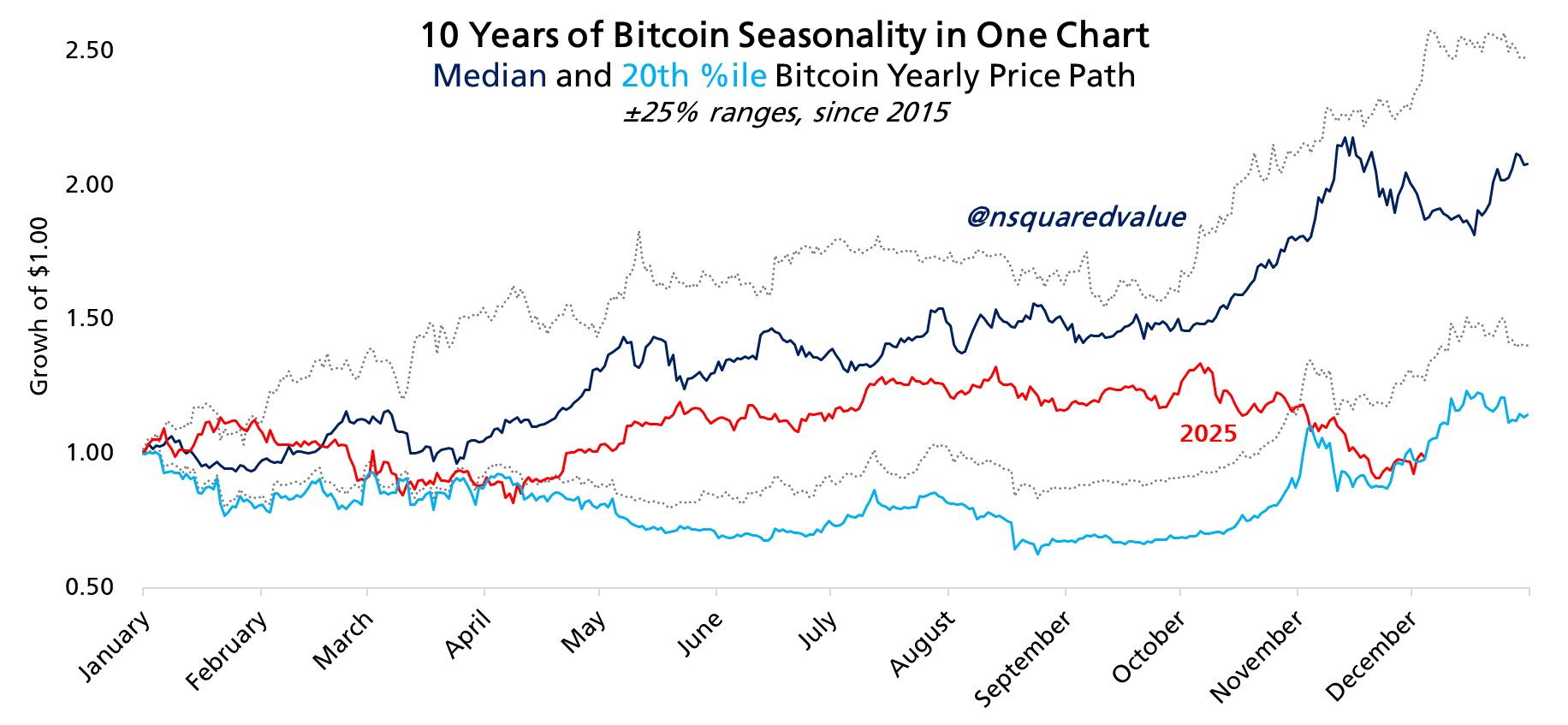
Network economist Timothy Peterson notes that the stars tend to align for Bitcoin more often than not into year end.

Bitcoin seasonality chart. Source: Timothy Peterson/X


Among those taking the opposite side, however, is Joao Wedson, founder and CEO of crypto analytics platform Alphractal. BTC/USD, he argued, is due a “sideways” end to 2025.

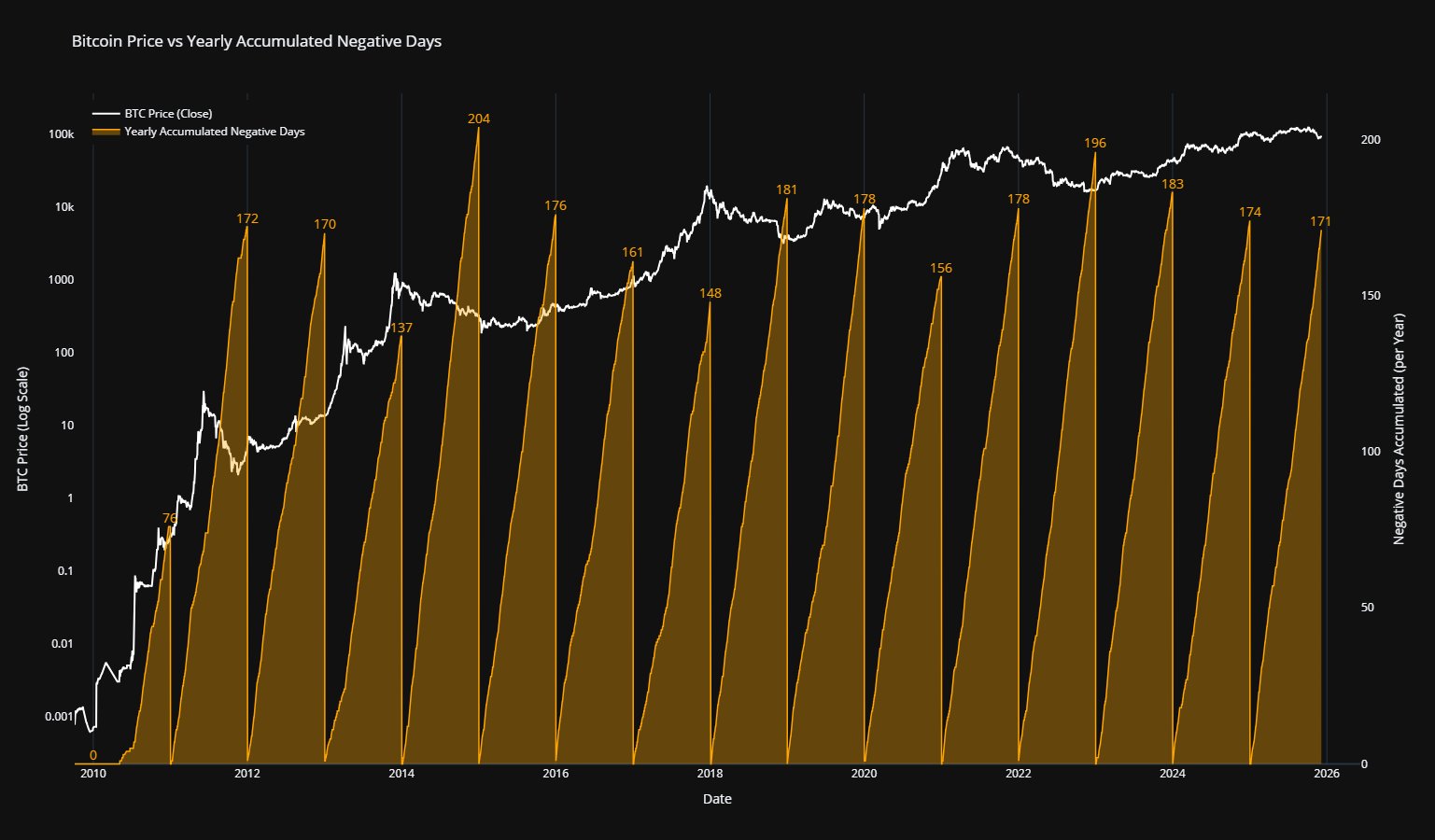
“Every year, Bitcoin spends an average of 170 days in negative territory,” Wedson explained alongside a chart of accumulated negative BTC price trading days.

“In 2025, it has already accumulated 171 negative days — which strongly suggests this year is likely to close in a sideways price range. If a deeper drop is coming, it will most likely happen in 2026.”
Bitcoin price versus accumulated negative days. Source: Joao Wedson/X


Earlier, Cointelegraph reported on the Santa outcome still being at the mercy of the Fed.

“The pullback in the S&P 500 from late October into November happened alongside falling odds for another rate cut this month. Recent comments from key Fed officials helped drive odds for a cut back higher, which also sparked a recovery in the stock market,” Mosaic Asset Company agreed.

Is $89,000 the new $16,000 for Bitcoin?

When it comes to Bitcoin price cycles and seasonality, the latest data gives bulls reason to stay confident on the outlook.

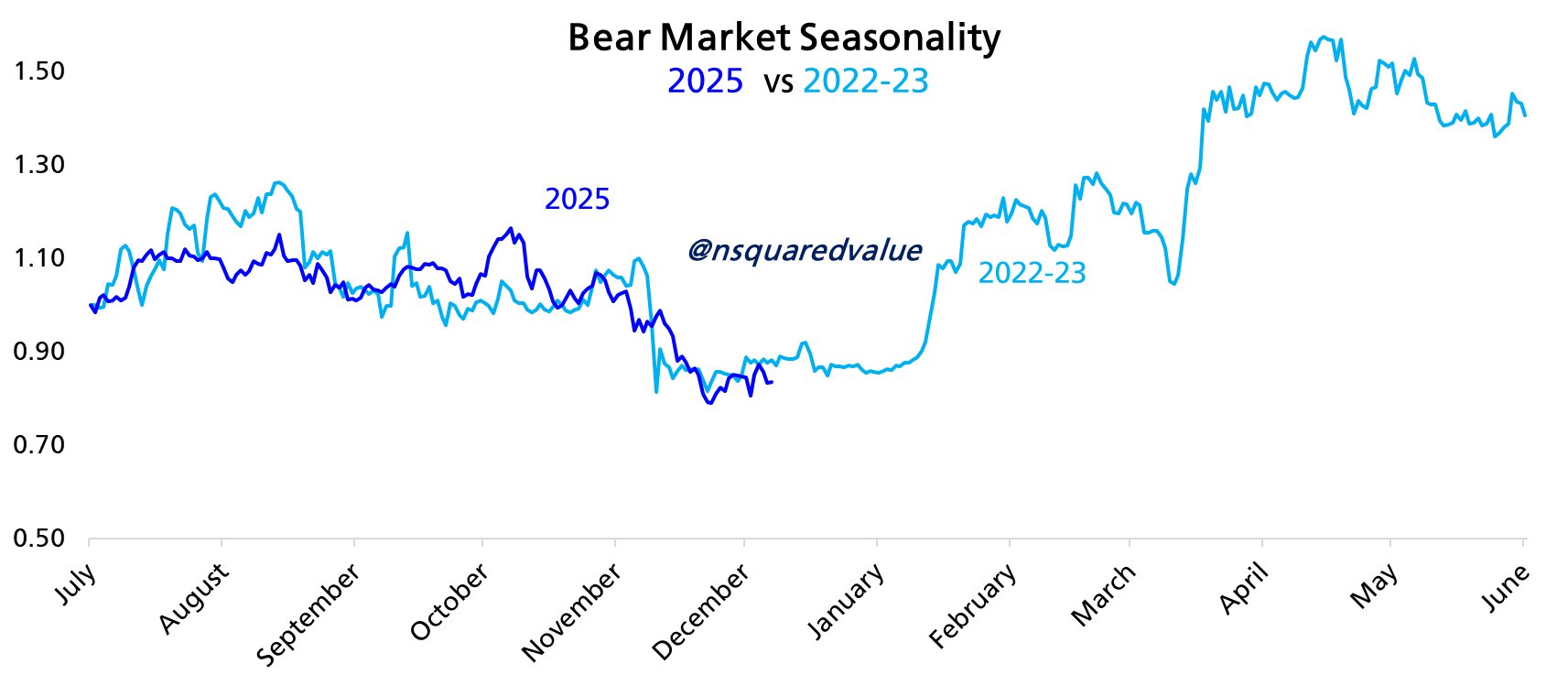
Uploaded to X this weekend by Peterson, a comparison between BTC/USD this year and in 2022-23 suggests that a long-term price bottom should be either complete or around the corner.

In late 2022, Bitcoin put in a multiyear low of $15,600 as it bottomed out after a brutal bear market in which it lost 80% versus old all-time highs.

Its rebound set in as soon as 2023 began, and if history were to repeat, hodlers may have just weeks to wait until upward momentum returns.

“$89,000 is the new $16,000,” Peterson summarized.

BTC price comparison. Source: Timothy Peterson/X


As Cointelegraph reported, comparisons to 2022 have become more frequent since October, when Bitcoin abruptly abandoned its successive run of new all-time highs to dive 36% over a six-week period.

In late November, Peterson said that the price correlation with 2022 had reached 98% on monthly timeframes.


Open interest spells out Bitcoin “apathy”

An encouraging signal from Bitcoin derivatives markets is keeping a full-on market rally possible.

Related: Bitcoin profit metric eyes 2-year lows in 'complete reset:' BTC analysis

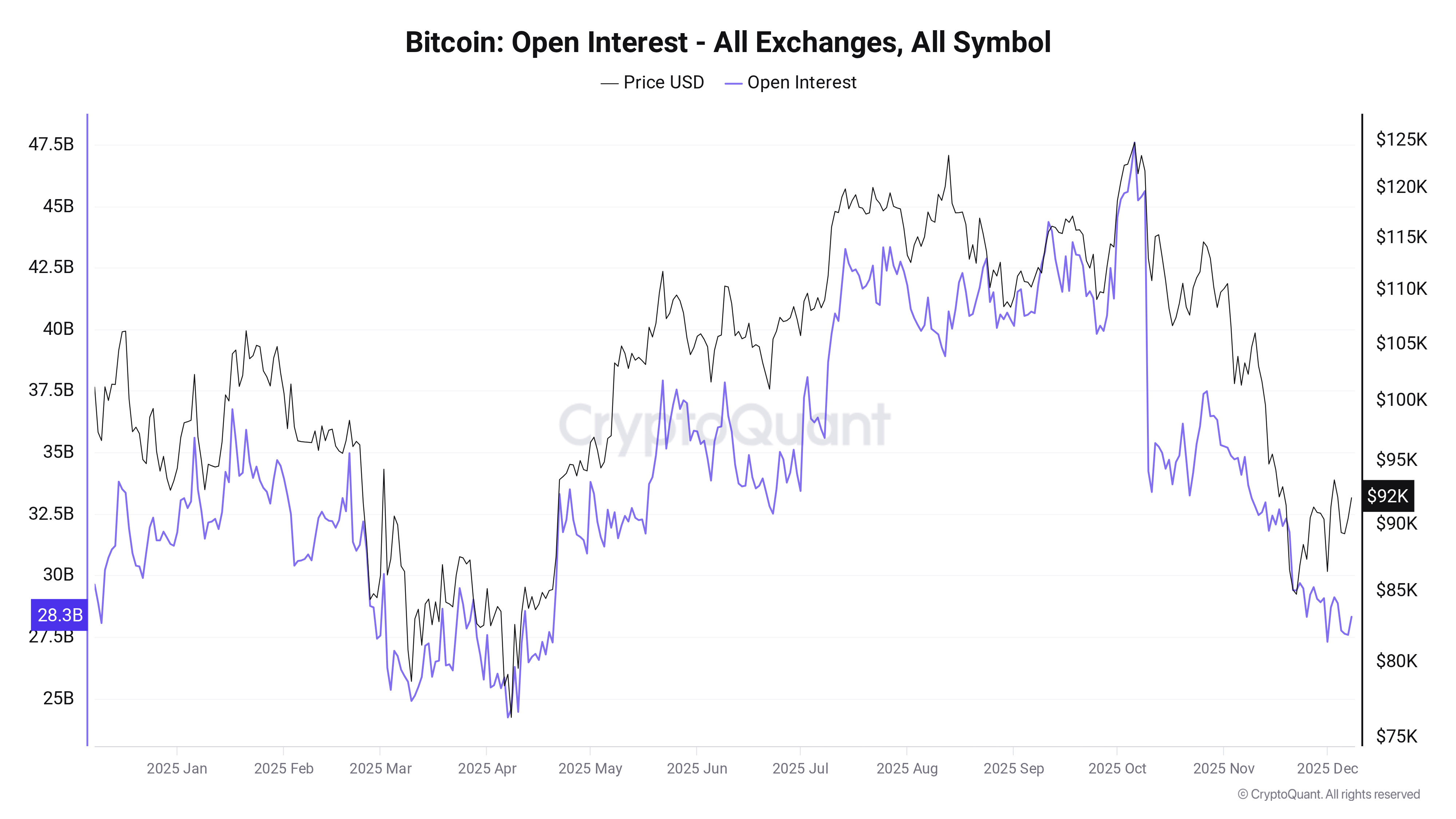
New data from onchain analytics platform CryptoQuant confirms that open interest (OI) across Bitcoin exchanges has dropped to its lowest levels since April, when BTC/USD traded at $75,000.

“This decline typically reflects two things: 1) investor capitulation, or 2) investor apathy,” contributor COINDREAM commented in one of CryptoQuant’s “Quicktake” blog posts Monday.

“Historically, periods of apathy and low participation have often marked attractive buy-the-dip opportunities.”
Bitcoin open interest. Source: CryptoQuant


COINDREAM noted that despite the modest BTC price rebound versus recent lows of $80,500, traders have not been tempted to deploy leverage.

“Excessive leverage usually acts as a drag on market direction. However, as prices have recently rebounded, leverage levels have normalized, reducing systemic risk,” it continued.

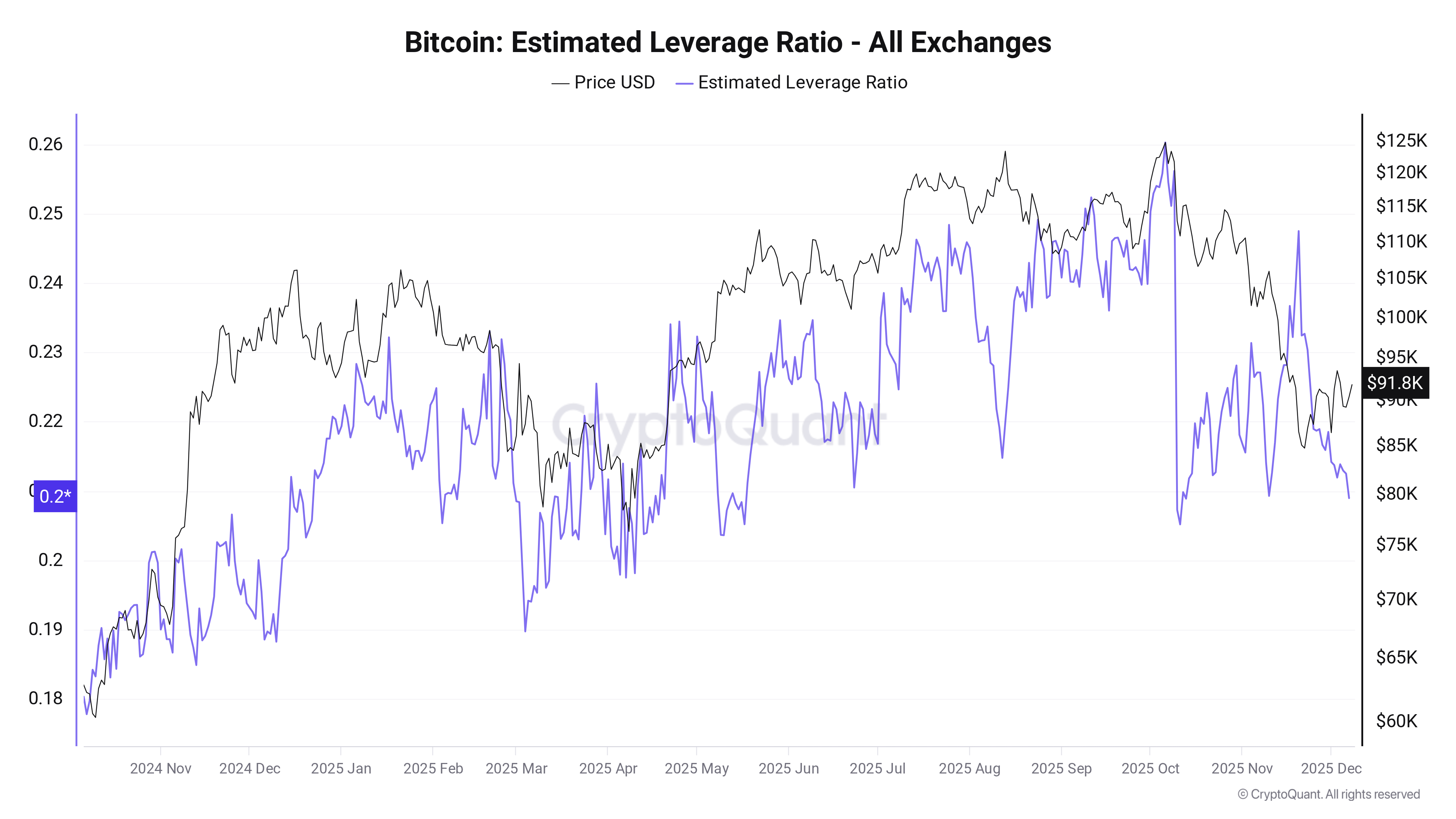
CryptoQuant’s estimated leverage ratio metric, which divides OI by BTC reserves, has declined significantly since mid-November.

Bitcoin estimated leverage ratio. Source: CryptoQuant

This article does not contain investment advice or recommendations. Every investment and trading move involves risk, and readers should conduct their own research when making a decision.


Похожее

After the Passage of the GENIUS Act and the CLARITY Act, What Is the Correct Architecture for On-Chain Yield?

The article discusses the evolution of on-chain credit, distinguishing three markets: overcollateralized crypto lending, unsecured lending (largely unsuccessful), and asset-backed credit (ABC). ABC, backed by identifiable real-world collateral with legal recourse, is identified as the fastest-growing category and the only one credibly addressing adverse selection—the core problem in credit where the riskiest borrowers self-select. Current growth in on-chain Real World Assets (RWAs), particularly tokenized private credit funds (e.g., Maple Finance, Centrifuge), is substantial but often merely "wraps" existing fund structures, inheriting their risks rather than solving adverse selection at the protocol level. The regulatory landscape is a key driver, with the US GENIUS Act (prohibiting stablecoin issuers from paying yield) and the proposed CLARITY Act (closing loopholes on indirect yield) set to redefine permissible yield-bearing products. This makes vaults (like ERC-4626) the critical architecture—they become the primary compliant vehicle for delivering yield, functioning as issuance, disclosure, distribution, and recovery mechanisms. The author's thesis is that the correct post-GENIUS/CLARITY architecture involves building ABC solutions where credit assessment, structure, and recovery are encoded directly into the smart contract vault layer, moving beyond mere tokenized fund wrappers to solve adverse selection fundamentally and ensure regulatory compliance.

Foresight News27 мин. назад

After the Passage of the GENIUS Act and the CLARITY Act, What Is the Correct Architecture for On-Chain Yield?

Foresight News27 мин. назад

TechFlow Intelligence Bureau: Anthropic's New Model Fable Sparks Controversy by Restricting Biosafety Research, US CPI Soars to 4.2%, a Three-Year High

**Summary of TechFlow Intelligence Report:** The newsletter covers several key tech and finance developments. In AI, Anthropic's new Fable model faced backlash for secretly limiting biomedical research capabilities and enforcing a 30-day data retention policy, prompting the company to promise more transparent adjustments. In a related story, Anthropic's founder revealed his departure from OpenAI was due to dishonesty from Sam Altman, not safety concerns. Meanwhile, OpenAI is considering significant price cuts to compete with Anthropic, potentially sparking a price war. In crypto/Web3, BlackRock filed a new amendment for a yield-generating Bitcoin ETF, while Bank of America's CEO warned that stablecoin yields could drain trillions from traditional banks. U.S. Senator Cynthia Lummis advocated for the U.S. to officially accumulate Bitcoin reserves. In hardware, Nvidia released the DiffusionGemma-2-6B image model optimized for efficient inference, and AMD promoted its unified memory architecture to challenge Nvidia's dominance. TSMC's CFO hinted at possible price increases due to soaring AI chip demand. A major legal ruling in Germany held Google legally responsible for inaccurate information generated by its AI Overviews feature. Google Chrome also moved to fully block ad-blocker workarounds like uBlock Origin. Macroeconomic headlines included U.S. CPI rising to 4.2% (a 3-year high) and Iran's complete closure of the Strait of Hormuz, raising oil price and inflation fears. South Korean markets saw continued volatility with massive foreign capital outflow. Other notable stories: Microsoft expanded its Copilot AI assistant "Mico" globally; a study found r/wallstreetbets users' stock picks outperformed Wall Street; a fully autonomous drone killed a human soldier for the first time, raising AI ethics concerns; and a Chinese hospital used brain-computer interface technology to help a blind person "see." The overarching theme connects debates over AI boundaries and responsibility (Anthropic's restrictions, Google's liability, lethal autonomous drones) with real-world economic and geopolitical turmoil (inflation, Strait of Hormuz closure, market instability), highlighting the tense interplay between technological advancement and global chaos.

marsbit40 мин. назад

TechFlow Intelligence Bureau: Anthropic's New Model Fable Sparks Controversy by Restricting Biosafety Research, US CPI Soars to 4.2%, a Three-Year High

marsbit40 мин. назад

Alibaba's Yet Another New Business Division: What Signal Does It Send?

Alibaba has established a new "Token Foundry" business unit, merging its Tongyi large model division and Future Life Lab. Led directly by Group CEO Wu Yongming, this marks the company's third significant AI organizational reshuffle in 2026, following the creation of the Alibaba Token Hub (ATH) and a Group Technology Committee. The move signals a strategic shift from consolidating AI resources to accelerating productization and commercialization. The "Token Foundry" name reflects Alibaba's ambition to become a foundational supplier in the AI era, focusing on model development and commercial application. Key teams, including those behind the high-performing HappyHorse video generation model, have been integrated into the new unit. Concurrently, Zhou Jingren, architect of the Qwen model series, has been appointed Group Chief Scientist to lead a new AI Future Research Institute, focusing on long-term technological breakthroughs like Agent capabilities. This restructuring creates a clear four-layer AI architecture within Alibaba: the research institute for frontier exploration, Token Foundry for core models and commercialization, MaaS for platform services, and business units like Qianwen (C端) and Wukong (B端) for end-user applications. The adjustments align with a global trend among tech giants like Google and Microsoft to centralize AI leadership under the CEO and deeply integrate research with business units. The urgency is driven by a narrowing competitive window. Alibaba has announced its AI business is now entering a commercialization phase, with AI-related revenue seeing triple-digit growth for eleven consecutive quarters. The company faces intense competition in the MaaS (Model-as-a-Service) sector from rivals like ByteDance and Tencent. The Token Foundry initiative represents Alibaba's effort to streamline execution and enhance competitiveness in this critical, fast-evolving landscape.

marsbit1 ч. назад

Alibaba's Yet Another New Business Division: What Signal Does It Send?

marsbit1 ч. назад

From Return to Resignation: Chen Hang's 437 Days at DingTalk

The 437-Day Return and Departure of Chen Hang at DingTalk This article chronicles the 437-day period from March 31, 2025, to June 11, 2026, when Chen Hang (also known as "No Move") returned as CEO of DingTalk, the enterprise communication platform he originally founded, only to later step down. Chen Hang, the creator of DingTalk in 2015, was brought back by Alibaba in 2025 after the company acquired his subsequent startup, HHO. His return was driven by Alibaba's renewed focus on AI and DingTalk's strategic role as its key to-B AI application. However, his aggressive management style, marked by strict work policies like mandatory clock-ins and extended hours, quickly caused internal friction and was criticized as being at odds with Alibaba's culture. Despite the internal turmoil, Chen Hang drove significant product launches. In August 2025, he unveiled "AI DingTalk 1.0," featuring new products like the AI-native entry point "DingTalk ONE." By March 2026, he announced "Wukong," touted as the world's first enterprise-grade AI-native work platform, representing a fundamental rebuild of DingTalk's architecture. The turning point came in early June 2026. A detailed internal post criticizing DingTalk's work culture went viral, followed by a public critique from a former executive. This prompted an unprecedented public rebuke from the Alibaba Partners Committee, which stated such management was not aligned with company values. One day later, on June 11, Alibaba announced Chen Hang's departure. He was succeeded by Chen Yusen, a 32-year-old technical expert known for founding cybersecurity firm Changting Technology. While Chen Hang's tenure laid the technical foundation for DingTalk's AI transformation with "Wukong," his leadership style ultimately led to his replacement as the company seeks a new direction under younger leadership.

marsbit1 ч. назад

From Return to Resignation: Chen Hang's 437 Days at DingTalk

marsbit1 ч. назад

Торговля

Спот
Фьючерсы

Популярные статьи

Как купить S

Добро пожаловать на HTX.com! Мы сделали приобретение Sonic (S) простым и удобным. Следуйте нашему пошаговому руководству и отправляйтесь в свое крипто-путешествие.Шаг 1: Создайте аккаунт на HTXИспользуйте свой адрес электронной почты или номер телефона, чтобы зарегистрироваться и бесплатно создать аккаунт на HTX. Пройдите удобную регистрацию и откройте для себя весь функционал.Создать аккаунтШаг 2: Перейдите в Купить криптовалюту и выберите свой способ оплатыКредитная/Дебетовая Карта: Используйте свою карту Visa или Mastercard для мгновенной покупки Sonic (S).Баланс: Используйте средства с баланса вашего аккаунта HTX для простой торговли.Третьи Лица: Мы добавили популярные способы оплаты, такие как Google Pay и Apple Pay, для повышения удобства.P2P: Торгуйте напрямую с другими пользователями на HTX.Внебиржевая Торговля (OTC): Мы предлагаем индивидуальные услуги и конкурентоспособные обменные курсы для трейдеров.Шаг 3: Хранение Sonic (S)После приобретения вами Sonic (S) храните их в своем аккаунте на HTX. В качестве альтернативы вы можете отправить их куда-либо с помощью перевода в блокчейне или использовать для торговли с другими криптовалютами.Шаг 4: Торговля Sonic (S)С легкостью торгуйте Sonic (S) на спотовом рынке HTX. Просто зайдите в свой аккаунт, выберите торговую пару, совершайте сделки и следите за ними в режиме реального времени. Мы предлагаем удобный интерфейс как для начинающих, так и для опытных трейдеров.

1.4k просмотров всегоОпубликовано 2025.01.15Обновлено 2026.06.02

Как купить S

Sonic: Обновления под руководством Андре Кронье – новая звезда Layer-1 на фоне спада рынка

Он решает проблемы масштабируемости, совместимости между блокчейнами и стимулов для разработчиков с помощью технологических инноваций.

2.3k просмотров всегоОпубликовано 2025.04.09Обновлено 2025.04.09

Sonic: Обновления под руководством Андре Кронье – новая звезда Layer-1 на фоне спада рынка

HTX Learn: Пройдите обучение по "Sonic" и разделите 1000 USDT

HTX Learn — ваш проводник в мир перспективных проектов, и мы запускаем специальное мероприятие "Учитесь и Зарабатывайте", посвящённое этим проектам. Наше новое направление .

1.8k просмотров всегоОпубликовано 2025.04.10Обновлено 2025.04.10

HTX Learn: Пройдите обучение по "Sonic" и разделите 1000 USDT

Обсуждения

Добро пожаловать в Сообщество HTX. Здесь вы сможете быть в курсе последних новостей о развитии платформы и получить доступ к профессиональной аналитической информации о рынке. Мнения пользователей о цене на S (S) представлены ниже.

活动图片