Circle and Bybit deepen USDC partnership as stablecoin nears $80B

cointelegraphОпубликовано 2025-12-08Обновлено 2025-12-08

Введение

Circle, the issuer of the USDC stablecoin, has entered a strategic partnership with cryptocurrency exchange Bybit to expand the liquidity and utility of USDC across its global ecosystem. The collaboration aims to enhance USDC integration in spot and derivatives trading, payment channels, and cross-chain support, while strengthening regulatory compliance, particularly in the EEA under MiCA. This move comes as USDC’s market capitalization has surged 77% since the start of 2025, reaching nearly $80 billion. Bybit emphasized that the partnership reflects its commitment to transparency and user choice, rather than exclusivity, as the stablecoin market continues to grow.

Circle, the publicly-listed issuer of one of the largest US dollar stablecoins globally, has entered into a strategic partnership with cryptocurrency exchange Bybit.

Bybit has entered a strategic partnership with an affiliate of Circle to expand liquidity and usability of its USDC (USDC) stablecoin, according to a joint announcement on Monday.

“The partnership aims to expand USDC access across Bybit’s global ecosystem, strengthen liquidity of the world’s largest regulated stablecoin, and reinforce Bybit’s position as a regulatory-compliant platform committed to transparency and trust,” the companies said.

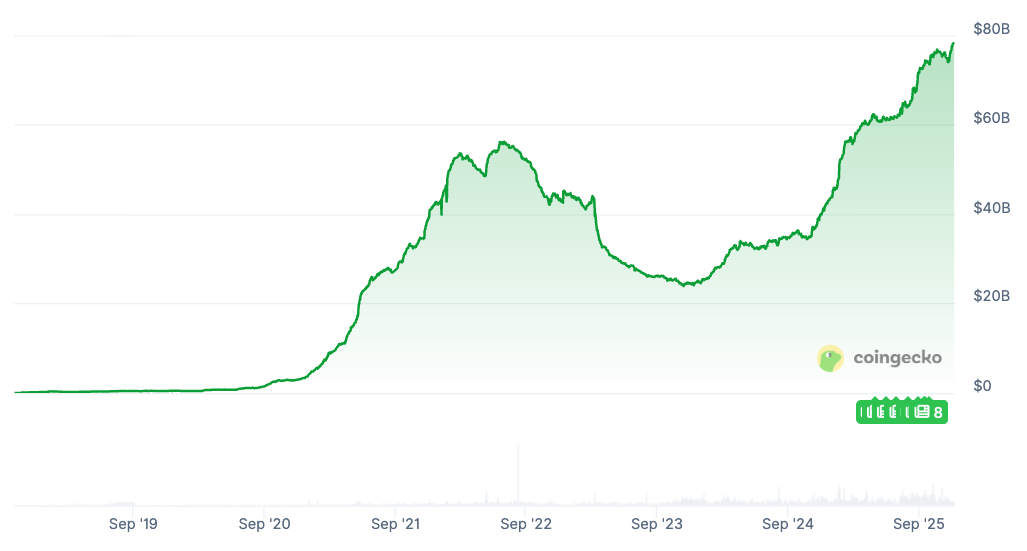
The partnership comes as USDC is gaining momentum, with its market capitalization surging to historic records and nearing $80 billion.

Bybit to deepen USDC integration across spot, derivatives and payment channels

“Bybit’s partnership with Circle allows us to deepen USDC integration across spot, derivatives, and payment channels within a transparent and compliant framework,” a spokesperson for Bybit told Cointelegraph.

The crypto exchange is working closely with Circle to enhance liquidity provisioning, strengthen fiat on-ramps and off-ramps, as well as expand crosschain support, the representative said, adding:

“This collaboration is just the beginning — especially in the EEA region, where Circle has a strong regulatory presence under MiCA. We see meaningful opportunities to expand USDC’s utility and deliver even more reliable settlement options for global users.”

Bybit’s spokesperson mentioned that the exchange started to integrate USDC several years ago, starting with spot and perpetual trading pairs and expanding it to savings products, institutional settlement, conversion tools and fiat payment channels.

Related: Ethena’s synthetic USDe contracts sharply as dollar-backed stablecoins expand

“Today, USDC is already embedded across our ecosystem, and this new strategic partnership strengthens the underlying infrastructure with better liquidity, faster settlement and broader use cases,” Bybit said.

USDC market cap nearing $80 billion

The Bybit–Circle partnership caps a year of strong growth for USDC, with the stablecoin nearly doubling its market cap since the beginning of 2025.

Since Jan. 1, 2025, USDC market capitalization has surged by 77% from around $44 billion to $78 billion as of Dec. 7, according to data from CoinGecko.

The growth aligns with Circle increasingly pushing partnerships in traditional finance, including collaborations with the global exchange organization Deutsche Börse, payment giant Mastercard and more.

USDC market capitalization chart since launch. Source: CoinGecko

By comparison, Tether, the world’s largest stablecoin by market capitalization, has seen its market cap rise about 36% since the start of the year, climbing from roughly $137 billion to $186 billion.

“Bybit supports multiple stablecoins and remains committed to giving users choice. Our collaboration with Circle is not about exclusivity,” a spokesperson for Bybit said, adding: “It reflects our focus on transparency and regulatory clarity as the industry matures.”

Magazine: Animoca’s bet on altcoin upside, analyst eyes $100K Bitcoin: Hodler’s Digest, Nov. 23 – 29

Связанные с этим вопросы

QWhat is the main focus of the strategic partnership between Circle and Bybit?

AThe partnership aims to expand USDC access across Bybit's global ecosystem, strengthen liquidity of the regulated stablecoin, and reinforce Bybit's position as a regulatory-compliant platform.

QHow has USDC's market capitalization changed since the beginning of 2025?

AUSDC's market capitalization has surged by 77% from around $44 billion on January 1, 2025, to $78 billion as of December 7.

QIn which specific areas of Bybit's platform will USDC integration be deepened?

AUSDC integration will be deepened across spot trading, derivatives, payment channels, savings products, institutional settlement, conversion tools, and fiat payment channels.

QHow does Bybit's spokesperson characterize the partnership with Circle regarding exclusivity?

AThe spokesperson stated that the collaboration is not about exclusivity, as Bybit supports multiple stablecoins, but reflects their focus on transparency and regulatory clarity.

QWhat regulatory framework in the EEA region makes Circle's presence particularly significant for this partnership?

ACircle has a strong regulatory presence under the Markets in Crypto-Assets (MiCA) regulation in the European Economic Area (EEA).

Похожее

Is AI Creating a New Class of 'Information Poor'?

AI is generating a new kind of "information poverty." The core issue isn't that AI denies answers to the poor; it's that it provides abundant, cheap, and plausible-sounding answers to everyone. This availability shifts the true scarcity from obtaining answers to possessing the **judgment to evaluate them** and the access to turn them into real-world opportunities. New information poverty thus describes those who have AI tools and outputs, but lack the complementary skills, authorization, and contextual experience to critically assess and act on them. Research reveals a multi-layered divide: access to AI is stratified by income and platform design (e.g., premium vs. free, embedded tools). In workplaces, usage heavily favors higher-paid, more experienced, or formally trained employees, with AI often automating entry-level tasks that were traditional stepping stones. Crucially, the heaviest users are often mid-career professionals whose existing expertise allows them to effectively judge and leverage AI outputs, while novices risk over-relying on them without building judgment. While controlled experiments show AI can significantly boost low-skilled workers' performance, real-world adoption and benefit are constrained by unequal social and organizational structures. Historically, general-purpose technologies first reward those with existing complementary capital. AI, by affecting judgment-based work, may accelerate and deepen this initial inequality gap, even if it narrows over decades. The danger lies in the illusion of competence it creates, potentially stunting the very critical thinking needed in an era where judgment is paramount.

marsbit19 мин. назад

Is AI Creating a New Class of 'Information Poor'?

marsbit19 мин. назад

Jensen Huang 'Saves' South Korean Stock Market: Locks In SK Hynix Memory, Chip Shortage to Continue

On June 5th, South Korea's stock market experienced a sharp decline, with major chipmakers like Samsung and SK Hynix dropping nearly 10%. Amidst the turmoil, NVIDIA CEO Jensen Huang's visit to Seoul played a dramatic role in boosting market sentiment. Following a dinner meeting with SK Group Chairman Chey Tae-won and SK Hynix CEO Kwak Noh-Jung, Huang confirmed that NVIDIA's new Vera CPU will utilize SK Hynix DRAM. The companies announced a multi-year technical partnership to co-develop next-generation memory for NVIDIA's AI infrastructure, covering products from data centers to personal AI and robotics. This collaboration extends beyond memory supply. SK Hynix is integrating NVIDIA's AI and Omniverse platform into its own semiconductor design and manufacturing processes, including computational lithography and creating digital twins of its fabrication plants for autonomous operation. While strengthening ties with SK Hynix, NVIDIA is diversifying its supply chain for the upcoming HBM4 memory, with Samsung, SK Hynix, and Micron all certified as suppliers for its Vera Rubin platform. Despite this, Huang warned that the global chip shortage, driven by relentless demand from AI factory construction, is expected to persist for several years across the entire supply chain. His visit underscores NVIDIA's systematic effort to deepen integration with South Korea's broader tech industry.

marsbit1 ч. назад

Jensen Huang 'Saves' South Korean Stock Market: Locks In SK Hynix Memory, Chip Shortage to Continue

marsbit1 ч. назад

Nasdaq Plunges 4.2% in a Single Day: Does "Black Friday" Burst the U.S. Stock Market Bubble?

The Nasdaq plunged 4.18% on June 5, 2026, its worst single-day drop in over a year, as a much stronger-than-expected US jobs report triggered fears of economic overheating and delayed Federal Reserve interest rate cuts. The selloff, centered on high-valuation tech and AI stocks like Nvidia and Broadcom, spread across major indices. The article examines whether this signals a market top. The strong May non-farm payrolls data, nearly double expectations, pushed bond yields higher, directly hurting rate-sensitive tech stocks. This exposed vulnerabilities in the crowded AI trade, where valuations had soared on narratives of infinite growth, despite emerging signs of slowing order momentum and corporate AI monetization challenges. Prior to the drop, market indicators flashed warning signs: historically high valuations (e.g., Shiller CAPE ratio near 39.5), extreme bullish sentiment, and high levels of leverage. Technical charts showed key support levels being breached. Wall Street is divided on the outlook. Bears, citing risks of "stagflation" and AI bubble comparisons to the dot-com era, warn of a potential significant correction. Bulls view the drop as a healthy correction within a bull market, underpinned by a strong economy and expected corporate earnings growth of around 7% in 2026. The immediate future hinges on upcoming key events: the May CPI inflation data and the mid-June FOMC meeting. Their outcomes will critically shape market expectations for the Fed's rate path. The article concludes that conditions for a major market top are aligning, marking a fragile transition from narrative-driven gains to a phase demanding validation from macroeconomic data and corporate fundamentals. Caution is advised.

marsbit1 ч. назад

Nasdaq Plunges 4.2% in a Single Day: Does "Black Friday" Burst the U.S. Stock Market Bubble?

marsbit1 ч. назад

Nasdaq Plunges 4.2% in a Single Day, Did 'Black Friday' Pop the U.S. Stock Bubble?

The Nasdaq Composite plummeted 4.18% on June 5, its biggest single-day drop since April 2025, triggering widespread debate over whether the U.S. stock market has peaked. The sell-off was sparked by a stronger-than-expected U.S. non-farm payrolls report, which fueled fears of economic overheating and pushed back market expectations for Federal Reserve rate cuts, leading to a sharp rise in Treasury yields. The AI sector, the primary driver of the recent bull market, suffered severe losses, with the Philadelphia Semiconductor Index crashing over 10%. Stocks like Nvidia, Broadcom, and Micron led the decline. Concerns are mounting about the sustainability of AI capital expenditures and high valuations, with signs of order cuts for next-generation chips emerging. Analyses point to several warning signs: historically high market valuations (e.g., elevated Shiller CAPE ratio, Buffett Indicator), extreme bullish sentiment indicators, and significant insider selling. The sell-off also caused a key technical breakdown, with the S&P 500 breaking below its short-term moving average and testing its 200-day moving average. Wall Street is divided on the outlook. Bears warn this could be the start of a bubble deflation or a "stagflation" scenario, while bulls view it as a healthy, overdue correction within a bull market driven by solid corporate earnings growth. A more moderate view suggests the easy liquidity-driven rally is over, and markets are entering a phase of fundamental stock-picking with potential for consolidation. The immediate future hinges on key upcoming events: the May CPI report and the mid-June FOMC meeting. Their outcomes will be critical in determining whether this is a temporary pullback or the beginning of a more significant trend reversal. The consensus is that the era of one-directional market gains may be ending, requiring increased investor caution.

Odaily星球日报1 ч. назад

Nasdaq Plunges 4.2% in a Single Day, Did 'Black Friday' Pop the U.S. Stock Bubble?

Odaily星球日报1 ч. назад

The First Case on AI Agents: What Was Adjudicated?

"The First 'Agent' Ruling: What Was Decided?" On April 30, the Guangzhou Internet Court issued a ruling—China's first behavior preservation order in the intelligent agent (AI agent) field. The defendant, an open-source AI agent software, was ordered to stop downloads, cease actions that bypassed a platform's technical protection measures, and delete related tutorials and data. The core issue: the software used the operating system's "accessibility service" permissions to automate user interactions within other apps without those platforms' authorization. This mirrors a recent US case where Amazon sued Perplexity for similar reasons—bypassing Amazon's API to directly scrape and interact with its pages—and won a preliminary injunction. Both rulings establish a crucial legal boundary for the AI agent era: agents cannot operate unchecked. The article argues the fundamental legal principle emerging is one of **dual authorization**. An AI agent requires both **user consent** AND **platform consent** to operate legitimately within that platform's ecosystem. Bypassing platform rules through system-level permissions, even with user permission, undermines platform responsibilities for content moderation, data security, and user privacy, creating liability issues. The piece uses the evolution of "Doubao Phone" (an AI-integrated smartphone) as a case study. Its initial, aggressive version that bypassed platform controls faced roadblocks. Its upcoming 2.0 version is reportedly pivoting to negotiate API access and authorization deals with major platforms (like Alibaba's ecosystem), seen as a strategic adaptation to the new regulatory reality. A global trend is identified: the era of unregulated, "wild west" growth for AI agents is ending, replaced by a **compliance race**. This raises barriers to entry, as securing platform authorizations becomes a new cost. Open-source status is also not a legal shield if the code facilitates bypassing technical protections. In conclusion, these first rulings target not the largest, but the most **aggressive and representative** cases. By setting precedent with them, regulators are efficiently steering the entire industry towards a new, more regulated operating paradigm defined by dual authorization and platform cooperation.

marsbit1 ч. назад

The First Case on AI Agents: What Was Adjudicated?

marsbit1 ч. назад

Торговля

Спот
Фьючерсы

Популярные статьи

Как купить USDC

Добро пожаловать на HTX.com! Мы сделали приобретение USD Coin (USDC) простым и удобным. Следуйте нашему пошаговому руководству и отправляйтесь в свое крипто-путешествие.Шаг 1: Создайте аккаунт на HTXИспользуйте свой адрес электронной почты или номер телефона, чтобы зарегистрироваться и бесплатно создать аккаунт на HTX. Пройдите удобную регистрацию и откройте для себя весь функционал.Создать аккаунтШаг 2: Перейдите в Купить криптовалюту и выберите свой способ оплатыКредитная/Дебетовая Карта: Используйте свою карту Visa или Mastercard для мгновенной покупки USD Coin (USDC).Баланс: Используйте средства с баланса вашего аккаунта HTX для простой торговли.Третьи Лица: Мы добавили популярные способы оплаты, такие как Google Pay и Apple Pay, для повышения удобства.P2P: Торгуйте напрямую с другими пользователями на HTX.Внебиржевая Торговля (OTC): Мы предлагаем индивидуальные услуги и конкурентоспособные обменные курсы для трейдеров.Шаг 3: Хранение USD Coin (USDC)После приобретения вами USD Coin (USDC) храните их в своем аккаунте на HTX. В качестве альтернативы вы можете отправить их куда-либо с помощью перевода в блокчейне или использовать для торговли с другими криптовалютами.Шаг 4: Торговля USD Coin (USDC)С легкостью торгуйте USD Coin (USDC) на спотовом рынке HTX. Просто зайдите в свой аккаунт, выберите торговую пару, совершайте сделки и следите за ними в режиме реального времени. Мы предлагаем удобный интерфейс как для начинающих, так и для опытных трейдеров.

962 просмотров всегоОпубликовано 2024.04.18Обновлено 2026.06.02

Как купить USDC

Что такое $USDC

Классический USDC: Полный обзор Введение в Классический USDC В быстро развивающемся мире рынка криптовалют стейблкоины стали важной частью, особенно в обеспечении стабильности на фоне волатильности, которая характеризует цифровые активы. Один из таких проектов - Классический USDC, инициатива цифровой валюты, которая нацелена на предоставление стабильного и надежного средства обмена. Поддерживая привязку 1:1 к доллару США, Классический USDC стремится предложить пользователям надежный цифровой актив, пригодный для различных применений в экосистемах web3 и криптовалют. Что такое Классический USDC? Классический USDC по своей сути является стейблкоином, который представляет собой тип криптовалюты, предназначенной для минимизации ценовой волатильности, обычно наблюдаемой на рынке цифровых активов. В частности, Классический USDC стремится близко отражать стоимость доллара США, обеспечивая пользователям возможность использовать эту цифровую валюту для транзакций, сбережений и других финансовых операций без страха перед внезапными колебаниями цен, которые могут беспокоить многие криптовалюты. Основная цель Классического USDC - предоставить надежный и доверенный цифровой аналог доллара США, разработанный для бесшовной интеграции в широкий спектр приложений web3, платформ децентрализованных финансов (DeFi) и других финансовых систем, связанных с криптовалютой. Создавая стабильную цифровую валюту, Классический USDC стремится облегчить повседневную торговлю, сделать технологии блокчейна более удобными для пользователей и способствовать принятию криптовалют для массового использования. Создатель Классического USDC Личность создателя или команды разработчиков Классического USDC остается в значительной степени неизвестной, и отсутствие прозрачности создало определенную степень неопределенности относительно происхождения проекта. В то время как многие криптовалютные инициативы открыто представляют своих основателей и команды разработчиков, Классический USDC не предоставляет четкой информации о своих создателях, что ставит под угрозу доверие потенциальных пользователей или инвесторов, оценивающих надежность и состоятельность проекта. Инвесторы Классического USDC Помимо неопределенности относительно его создателей, Классический USDC также не имеет конкретной информации о своих инвесторах. Финансовая поддержка проекта может часто придавать ему авторитет и стабилизировать его операционную деятельность; однако отсутствие задокументированных инвестиционных фондов или организаций, поддерживающих Классический USDC, вызывает вопросы о его структуре финансирования. Эта неопределенность может потенциально подорвать доверие заинтересованных сторон к проекту. Как работает Классический USDC? Операционные механизмы Классического USDC во многом зависят от его резервной системы, которая является основополагающей для любого стейблкоина. Классический USDC обязуется поддерживать резерв активов, который напрямую соответствует стоимости цифровой валюты в обращении. В частности, за каждые выпущенные токены Классического USDC сохраняется эквивалентная сумма резервных активов, будь то наличные или эквиваленты близкие к наличным. Эта стратегия нацелена на поддержание стоимости Классического USDC, предлагая пользователям уверенность в том, что они могут в любой момент обменять свои токены на доллары США. Эта резервная структура направлена на повышение стабильности и надежности Классического USDC, позиционируя его как безопасную альтернативу на рынке криптовалют. Обеспечивая постоянную корреляцию стоимости Классического USDC с долларом США, проект стремится вызывать доверие среди пользователей, которые могут быть насторожены по поводу более широких рыночных динамик. Хронология Классического USDC История Классического USDC отмечена несколькими ключевыми вехами, отражающими его путешествие и эволюцию в экосистеме криптовалют: 2021: Отмечено начало Классического USDC, введение нового варианта цифровой валюты, разработанного для стабильности. В этом году появились первые записи о деятельности токена, и были установлены его первоначальные уровни цен. 2024: Классический USDC начинает испытывать значительные колебания цен, поскольку крипторынок в целом сталкивается с различными тенденциями и настроениями пользователей. Появляются прогнозы относительно его будущего потенциала, указывающие на сильный интерес со стороны наблюдателей и аналитиков рынка, которые предвидят возможности для роста. Будущие прогнозы Эксперты предполагают, что Классический USDC может достичь более высоких уровней принятия и стабильности в ближайшие годы, с потенциальными дальнейшими разработками, ожидаемыми около 2025 и 2026 года. Однако к этим прогнозам следует подходить с осторожным оптимизмом, поскольку рынок криптовалют по своей природе непредсказуем, и различные внешние факторы могут повлиять на траекторию Классического USDC. Ключевые моменты о Классическом USDC Стабильность: Основное предложение Классического USDC заключается в предоставлении цифровой валюты, параллельной стоимости доллара США, тем самым обеспечивая стабильность на часто волатильном рынке. Резервная система: Обязательство проекта поддерживать резерв активов для обеспечения своей стоимости подчеркивает его надежность и операционную устойчивость. Интеграция в Web3 и крипто: Классический USDC разработан для облегчения интеграции в различные приложения, стремясь улучшить пользовательский опыт и расширить принятие криптовалюты в повседневных транзакциях. Потенциал будущего роста: Несмотря на то что он еще только начинает, Классический USDC имеет перспективные направления для роста по мере увеличения осведомленности и использования стейблкоинов в контексте web3 и криптовалют. Заключение Классический USDC представляет собой заметную инициативу стейблкоина в сфере криптовалют, стремясь предоставить пользователям надежную цифровую валюту, которая воплощает стабильность доллара США. Несмотря на неопределенности относительно его создателей и финансовой поддержки, основополагающие принципы Классического USDC - сосредотачивающиеся на обеспеченных резервами гарантиях - стремятся позиционировать его как надежный вариант для индивидуумов и бизнеса, ориентированных на цифровую экономику. С учетом будущего, аналитики рынка с нетерпением ожидают, как Классический USDC будет эволюционировать в ответ на изменяющуюся динамику рынка криптовалют, потенциально устанавливая себя в качестве значительного игрока в области стейблкоинов.

57 просмотров всегоОпубликовано 2024.05.01Обновлено 2024.12.03

Что такое $USDC

HTX Learn: Изучите "Layer3" и Разделите 6000 USDC

Участники, которые изучат обучающий курс и пройдут тест, получат шанс выиграть потрясающие призы.

3.2k просмотров всегоОпубликовано 2024.12.11Обновлено 2024.12.12

HTX Learn: Изучите "Layer3" и Разделите 6000 USDC

Обсуждения

Добро пожаловать в Сообщество HTX. Здесь вы сможете быть в курсе последних новостей о развитии платформы и получить доступ к профессиональной аналитической информации о рынке. Мнения пользователей о цене на USDC (USDC) представлены ниже.

活动图片