Bitcoin Is Rising To The Quantum Challenge, Galaxy Report Says

bitcoinistОпубликовано 2026-03-20Обновлено 2026-03-20

Введение

A Galaxy Digital report states that while Bitcoin faces a genuine threat from future quantum computers, the network is actively preparing rather than ignoring the risk. The analysis highlights that not all Bitcoin is equally vulnerable—only funds with exposed public keys, such as those in legacy wallets, reused addresses, or certain custodian setups, are at risk. Approximately 7 million BTC could be considered exposed under a broad definition. Bitcoin’s UTXO model provides inherent protection, as public keys are typically revealed only when coins are spent. Developers are already working on solutions, with BIP 360 (Pay-to-Merkle-Root) emerging as a leading proposal to reduce quantum risk via a soft fork. Additional ideas, such as hash-based signatures and mechanisms like Hourglass, aim to protect already-exposed coins and limit potential damage. Although Bitcoin upgrades move slowly, the report emphasizes that incentives are uniquely aligned to address this threat, as no one benefits from quantum vulnerability. The overall message is clear: the quantum risk is serious and concrete work is underway to mitigate it.

Bitcoin’s quantum risk is real, but the network is not sleepwalking into it. That is the core conclusion of a March 19 research note from Galaxy Digital, which argues that while a sufficiently powerful quantum computer could one day threaten exposed Bitcoin wallets, developers are already doing substantial work on mitigation and migration.

Will Owens, a research analyst at Galaxy, frames the current debate as more polarized than the underlying facts justify. On one side are those who argue quantum computing is still decades away. On the other are those warning that the window may be far shorter and that Bitcoin needs to move now. Galaxy’s position sits between those camps: urgency is warranted, but so is perspective.

Bitcoin Is Getting Ready For The Quantum Threat

The report makes one point repeatedly. Not all bitcoin is equally exposed. Funds are only vulnerable when public keys are visible on-chain, which means the biggest long-term risk sits with legacy wallet formats, reused addresses, some exchange or custodian setups, and older outputs including coins believed to be tied to Satoshi Nakamoto. Citing analysis from Project Eleven, Galaxy says roughly 7 million BTC, worth about $470 billion at recent prices, may be vulnerable under a broad “long exposure” definition, though it notes other estimates come in lower depending on methodology.

That distinction matters because Bitcoin’s UTXO model still gives it structural protection that account-based chains do not. As Galaxy puts it, “In Bitcoin, public keys are typically revealed only when coins are spent, meaning a large share of the supply remains protected behind hashed addresses until transaction time.” The report adds: “This distinction does not eliminate risk for Bitcoin, but it does materially affect the scope and sequencing of exposure in a potential Q-day event.” In other words, Bitcoin has a narrower attack surface than many casual discussions imply.

Galaxy also pushes back hard on the idea that Bitcoin developers are ignoring the issue. Owens writes that recent social media criticism has overstated the gap between public perception and actual technical work. Ethan Heilman, one of the co-authors of BIP 360, said the proposal has received “more comments than any other BIP so far in history of BIPs,” according to the report.

It also cites two blunt remarks from active contributors: “Yes, developers are working on [quantum resistance]. I can point to many people working on this,” said Matt Corallo. Hunter Beast struck a similar tone: “We are working very hard on this very serious problem, and we think that it is the most serious concern that people have raised about Bitcoin.”

The technical path forward is beginning to take shape. Galaxy highlights BIP 360, or Pay-to-Merkle-Root, as the leading protective proposal. The design would remove Taproot’s always-visible key-path spend and create a more quantum-resilient output structure via soft fork, reducing long-exposure risk without forcing Bitcoin to immediately choose a final post-quantum signature standard.

From there, the conversation branches into harder territory. One layer is protection for future outputs. Another is mitigation for coins that are already exposed and may never migrate. That is where proposals like Hourglass enter the discussion. Rather than freezing vulnerable coins outright or allowing quantum-capable actors to sweep and dump them freely, Galaxy describes Hourglass as a “harm reduction” approach designed to limit the rate at which exposed coins could be extracted and sold during a quantum event.

The report also surveys fallback and emergency ideas, including hash-based signatures such as SLH-DSA, Tadge Dryja’s commit/reveal design for a worst-case early CRQC scenario, and seed phrase zero-knowledge proofs for recovery and authentication. None solves the entire problem alone. Together, though, they suggest Bitcoin’s response is becoming broader and more concrete.

Galaxy is careful not to understate the governance problem. Bitcoin upgrades remain slow by design, and the report points to the long timelines around SegWit and Taproot as reminders that even well-supported changes can take years. Still, Owens argues this threat is different. “There is no constituency,” he writes, “that benefits from Bitcoin being vulnerable to quantum attack.” That alignment of incentives may prove decisive if the risk becomes more immediate.

Overall, Galaxy’s message is straightforward: the threat is serious, the debate is no longer theoretical, and the work to prepare for it is already underway.

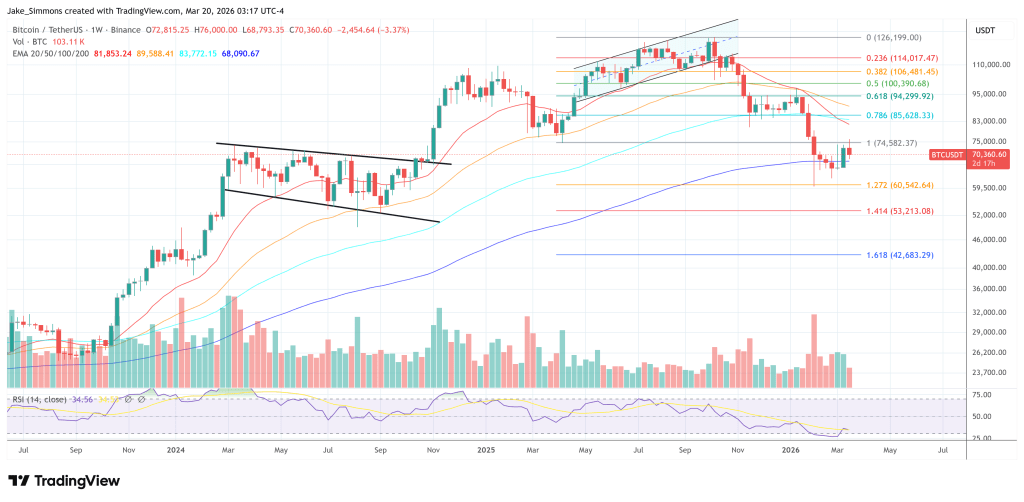
At press time, BTC traded at $70,360.

Bitcoin must break above the 1.0 Fib level, 1-week chart | Source: BTCUSDT on TradingView.com

Связанные с этим вопросы

QWhat is the core conclusion of Galaxy Digital's research note regarding Bitcoin and quantum computing?

AThe core conclusion is that while Bitcoin's quantum risk is real, the network is not sleepwalking into it, and developers are already doing substantial work on mitigation and migration.

QAccording to the report, what is the estimated amount of Bitcoin that may be vulnerable to a quantum attack under a broad definition?

AApproximately 7 million BTC, worth about $470 billion at recent prices, may be vulnerable under a broad 'long exposure' definition.

QWhat is the name of the leading protective proposal highlighted in the report for quantum resistance?

AThe leading protective proposal is BIP 360, or Pay-to-Merkle-Root.

QHow does the report describe the 'Hourglass' proposal in the context of quantum risk?

AIt describes Hourglass as a 'harm reduction' approach designed to limit the rate at which exposed coins could be extracted and sold during a quantum event, rather than freezing them outright.

QWhat structural protection does Bitcoin's UTXO model provide against quantum risk, according to the Galaxy analysis?

AIn Bitcoin, public keys are typically revealed only when coins are spent, meaning a large share of the supply remains protected behind hashed addresses until transaction time, which materially affects the scope and sequencing of exposure.

Похожее

Торговля

Спот
Фьючерсы

Популярные статьи

Тест по Bitcoin Биткоина

HTX Learn: Изучите Bitcoin halving и Заработаете Токены USDT

3.0k просмотров всегоОпубликовано 2024.04.16Обновлено 2024.04.16

Тест по Bitcoin  Биткоина

Что такое $BITCOIN

ЦИФРОВОЕ ЗОЛОТО ($BITCOIN): Комплексный анализ Введение в ЦИФРОВОЕ ЗОЛОТО ($BITCOIN) ЦИФРОВОЕ ЗОЛОТО ($BITCOIN) — это проект на основе блокчейна, работающий в сети Solana, который стремится объединить характеристики традиционных драгоценных металлов с инновациями децентрализованных технологий. Хотя он носит имя Биткойн, часто называемого “цифровым золотом” из-за его восприятия как средства хранения ценности, ЦИФРОВОЕ ЗОЛОТО является отдельным токеном, предназначенным для создания уникальной экосистемы в ландшафте Web3. Его цель — позиционировать себя как жизнеспособный альтернативный цифровой актив, хотя детали его применения и функциональности все еще развиваются. Что такое ЦИФРОВОЕ ЗОЛОТО ($BITCOIN)? ЦИФРОВОЕ ЗОЛОТО ($BITCOIN) — это токен криптовалюты, специально разработанный для использования в блокчейне Solana. В отличие от Биткойна, который выполняет широко признанную роль хранения ценности, этот токен, похоже, сосредоточен на более широких приложениях и характеристиках. Примечательные аспекты включают: Инфраструктура блокчейна: Токен построен на блокчейне Solana, известном своей способностью обрабатывать высокоскоростные и недорогие транзакции. Динамика предложения: ЦИФРОВОЕ ЗОЛОТО имеет максимальное предложение, ограниченное 100 квадриллионами токенов (100P $BITCOIN), хотя детали о его обращающемся предложении в настоящее время не раскрыты. Утилита: Хотя точные функциональные возможности не описаны, есть указания на то, что токен может быть использован для различных приложений, потенциально связанных с децентрализованными приложениями (dApps) или стратегиями токенизации активов. Кто создатель ЦИФРОВОГО ЗОЛОТА ($BITCOIN)? На данный момент личность создателей и команды разработчиков, стоящих за ЦИФРОВЫМ ЗОЛОТОМ ($BITCOIN), остается неизвестной. Эта ситуация типична для многих инновационных проектов в области блокчейна, особенно тех, которые связаны с децентрализованными финансами и феноменом мем-криптовалют. Хотя такая анонимность может способствовать культуре, ориентированной на сообщество, она усиливает опасения по поводу управления и ответственности. Кто инвесторы ЦИФРОВОГО ЗОЛОТА ($BITCOIN)? Доступная информация указывает на то, что у ЦИФРОВОГО ЗОЛОТА ($BITCOIN) нет известных институциональных спонсоров или значительных венчурных капиталовложений. Проект, похоже, функционирует по модели пирингового взаимодействия, сосредоточенной на поддержке и принятии сообществом, а не на традиционных путях финансирования. Его активность и ликвидность в основном сосредоточены на децентрализованных биржах (DEX), таких как PumpSwap, а не на устоявшихся централизованных торговых платформах, что еще больше подчеркивает его подход, ориентированный на grassroots. Как работает ЦИФРОВОЕ ЗОЛОТО ($BITCOIN) Операционные механизмы ЦИФРОВОГО ЗОЛОТА ($BITCOIN) можно подробно описать на основе его дизайна блокчейна и характеристик сети: Механизм консенсуса: Используя уникальный механизм доказательства истории (PoH) Solana в сочетании с моделью доказательства доли (PoS), проект обеспечивает эффективную валидацию транзакций, что способствует высокой производительности сети. Токеномика: Хотя конкретные дефляционные механизмы не были подробно описаны, большое максимальное предложение токенов подразумевает, что оно может быть предназначено для микротранзакций или нишевых случаев использования, которые еще предстоит определить. Интероперабельность: Существует потенциал для интеграции с более широкой экосистемой Solana, включая различные платформы децентрализованных финансов (DeFi). Однако детали относительно конкретных интеграций остаются неуточненными. Хронология ключевых событий Вот хронология, которая подчеркивает значимые вехи, касающиеся ЦИФРОВОГО ЗОЛОТА ($BITCOIN): 2023: Первоначальное развертывание токена происходит в блокчейне Solana, отмеченное его адресом контракта. 2024: ЦИФРОВОЕ ЗОЛОТО приобретает видимость, когда оно становится доступным для торговли на децентрализованных биржах, таких как PumpSwap, позволяя пользователям обменивать его на SOL. 2025: Проект наблюдает спорадическую торговую активность и потенциальный интерес к инициативам, возглавляемым сообществом, хотя на данный момент не зафиксировано никаких значительных партнерств или технических достижений. Критический анализ Сильные стороны Масштабируемость: Основная инфраструктура Solana поддерживает высокие объемы транзакций, что может повысить полезность $BITCOIN в различных сценариях транзакций. Доступность: Потенциально низкая цена торговли за токен может привлечь розничных инвесторов, способствуя более широкому участию благодаря возможностям дробного владения. Риски Отсутствие прозрачности: Отсутствие публично известных спонсоров, разработчиков или процесса аудита может вызвать скептицизм относительно устойчивости и надежности проекта. Волатильность рынка: Торговая активность сильно зависит от спекулятивного поведения, что может привести к значительной волатильности цен и неопределенности для инвесторов. Заключение ЦИФРОВОЕ ЗОЛОТО ($BITCOIN) является интригующим, но неоднозначным проектом в быстро развивающейся экосистеме Solana. Хотя он пытается использовать нарратив “цифрового золота”, его отход от установленной роли Биткойна как средства хранения ценности подчеркивает необходимость более четкого различения его предполагаемой утилиты и структуры управления. Будущее принятие и усвоение, вероятно, будут зависеть от решения текущей непрозрачности и более четкого определения его операционных и экономических стратегий. Примечание: Этот отчет охватывает синтезированную информацию, доступную на октябрь 2023 года, и с тех пор могут произойти события.

99 просмотров всегоОпубликовано 2025.05.13Обновлено 2025.05.13

Что такое $BITCOIN

Fractal Bitcoin: масштабирование Биткоина с помощью рекурсивной системы

Fractal Bitcoin — масштабное Layer-1-решнение, созданное на базе кода Биткоина, позволяющего достигать бесконечного масштабирования с помощью рекурсивного подхода.

2.2k просмотров всегоОпубликовано 2025.06.30Обновлено 2025.06.30

Fractal Bitcoin: масштабирование Биткоина с помощью рекурсивной системы

Обсуждения

Добро пожаловать в Сообщество HTX. Здесь вы сможете быть в курсе последних новостей о развитии платформы и получить доступ к профессиональной аналитической информации о рынке. Мнения пользователей о цене на BTC (BTC) представлены ниже.

活动图片