Rate Hikes to Save STRC, Selling Bitcoin to Preserve Credit: Strategy Picks Its Two Most Expensive Paths

链捕手Опубликовано 2026-06-30Обновлено 2026-06-30

Введение

Over the past six weeks, Strategy has faced a significant crisis of confidence, with its core securities MSTR and STRC experiencing sharp price declines. The situation escalated as the company utilized dollar reserves intended for dividends and interest payments to repurchase debt, and then sold a small amount of Bitcoin for the first time since 2022—an action that contradicted its "never sell" narrative and signaled potential liquidity strain. In response, Strategy introduced a Digital Credit capital framework. This formalized a series of measures to manage the pressure down its capital structure: ordinary shareholders have already borne costs through equity dilution from an $11.5 billion ATM offering; new rules enforce a hard dollar reserve covering at least 12 months of expected dividend and interest payments; the STRC dividend rate was increased from 11.5% to 12%; and, most notably, Bitcoin was officially integrated into the capital toolkit, with board authorization to sell up to $1.25 billion worth if needed to support obligations and repurchase programs. The market reacted with a mix of relief and skepticism. While the announcement triggered a sharp single-day rally in both MSTR and STRC, the preferred shares still trade at a significant discount. Supporters view the framework as pragmatic crisis management that provides a price floor and clearer rules. Critics argue that institutionalizing Bitcoin sales undermines the core investment thesis and, with Bitcoin's price ...

Over the past six weeks, Strategy's two core securities have experienced a significant crisis of confidence. The MSTR stock price fell below $87, hitting a new low since February 2024, down over 50% from its peak. STRC plummeted from near its par value to a historic low of $74 last Thursday, a 26% discount to its $100 par value.

Public discourse surrounding this global largest corporate Bitcoin holder has shifted from its previous long-termist narrative to widespread questioning of the sustainability of its financing model.

Just as market concerns intensified, Strategy yesterday launched a Digital Credit Capital Framework, formalizing what was previously a one-time Bitcoin sale for emergency purposes into an institutionalized capital management tool.

How the Pressure Mounted Step by Step

The earliest hidden trigger of this crisis dates back to May 15th. Strategy repurchased $1.5 billion of convertible bonds maturing in 2029 at an approximately 8% discount. This transaction utilized dollar reserves that were supposed to be earmarked specifically for preferred stock dividends and debt interest payments, slashing the company's cash coverage capacity from the promised 24 months to about 6 months.

In the last week of May, Strategy sold Bitcoin for the first time since 2022, offloading 32 BTC to demonstrate the company's ability to support dividends by liquidating assets. However, this signal was interpreted negatively by the market. For a company whose core narrative has long been "never selling Bitcoin," even a small-scale sale subtly conveyed that its funding chain was beginning to tighten.

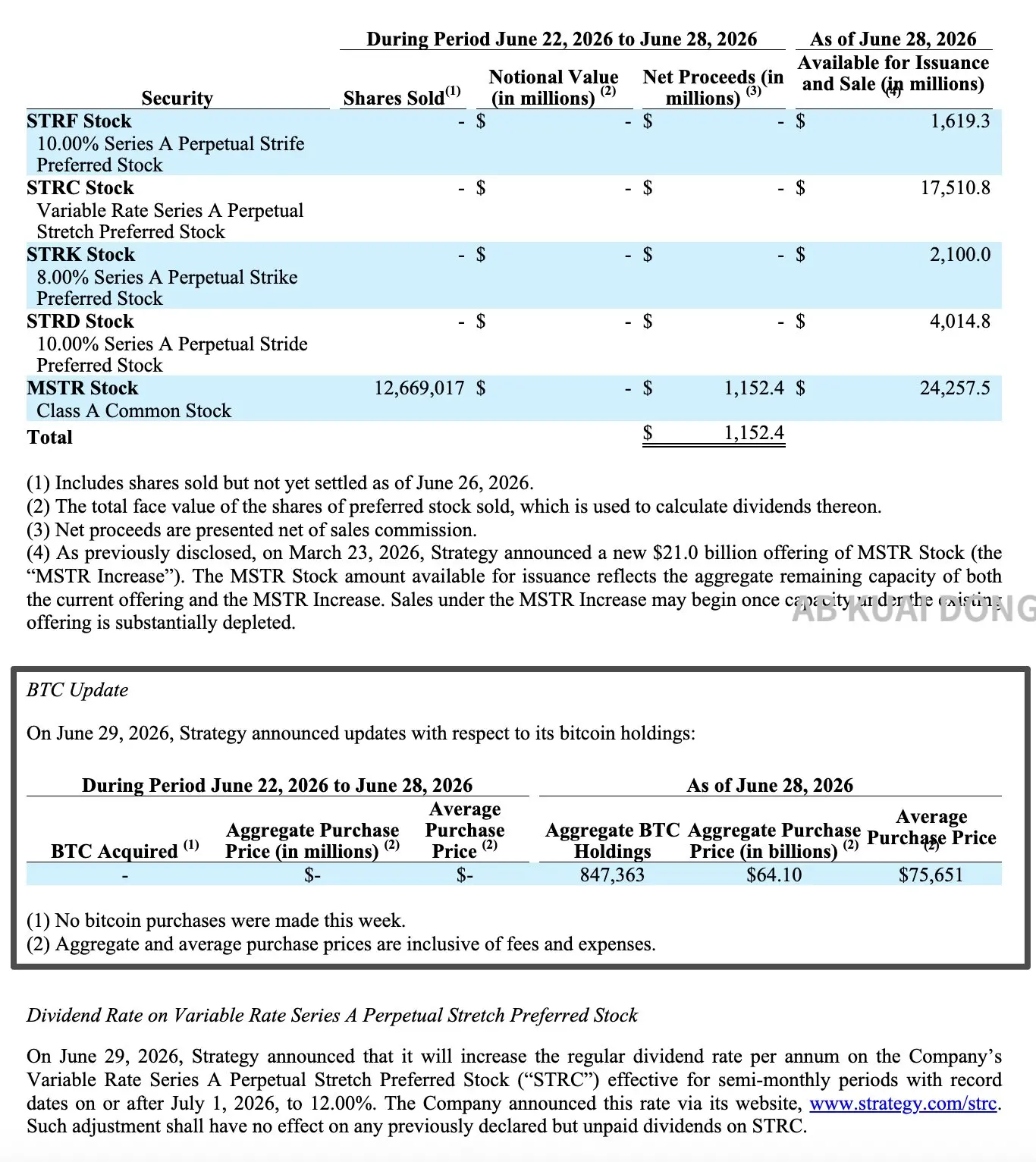
Subsequently, the company's shareholder meeting approved a plan to change STRC's dividends to twice a month, and dollar reserves also recovered to over $1 billion. Last week, Strategy sold over 12.66 million shares of MSTR through a common stock ATM offering, raising approximately $1.15 billion net. The secondary market is still digesting the new shares.

Meanwhile, the company's Bitcoin purchasing pace noticeably slowed. During the fundraising in the previous two weeks, about half was used to buy Bitcoin; in the third week, the purchase size drastically shrank, with most funds retained to pay STRC dividends.
On June 26th, STRC fell to its historic low of $74. Concurrent data showed that STRC's 90-day correlation coefficient with Bitcoin rose to nearly 0.70, the highest level since the product's launch in July 2025.

The Framework Passes Costs Down the Capital Structure

On June 29th, Strategy filed an 8-K form, introducing the Digital Credit Capital Framework. This framework includes hard coverage requirements for dollar reserves, a dynamic evaluation mechanism for STRC dividends, a total of $2 billion in repurchase authorization, and a BTC liquidation plan of up to $1.25 billion.

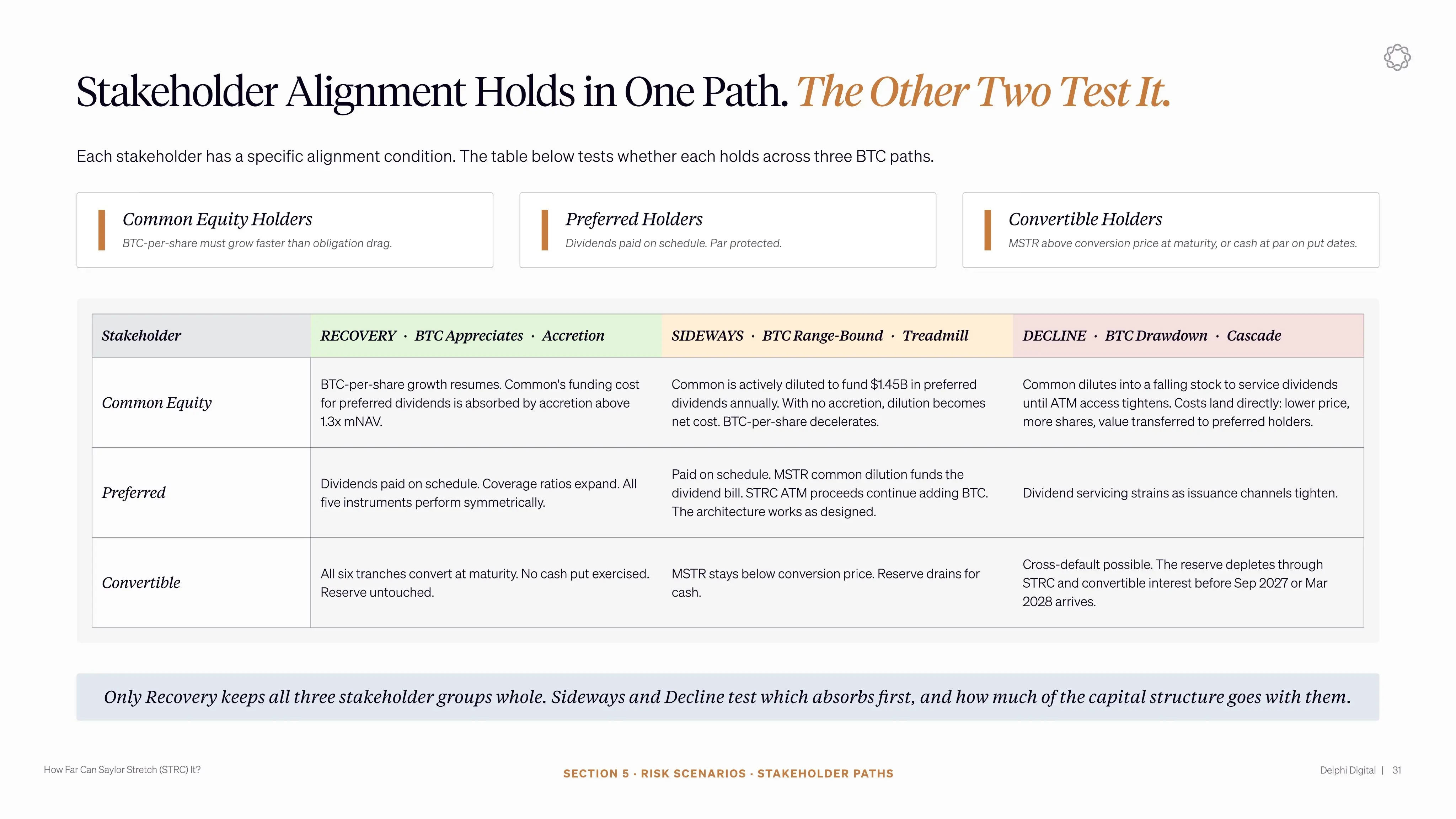
The emergence of the Digital Credit Capital Framework essentially channels the pressure accumulated over the past six weeks down the company's capital structure step by step.

Delphi Digital's analysis noted that when Bitcoin appreciates, the cost is borne by common shareholders paying preferred stock dividends. Once the mNAV falls below 1x, this transmission channel fails, forcing the company to turn to reserves and selling Bitcoin. Strategy is currently in this stage.
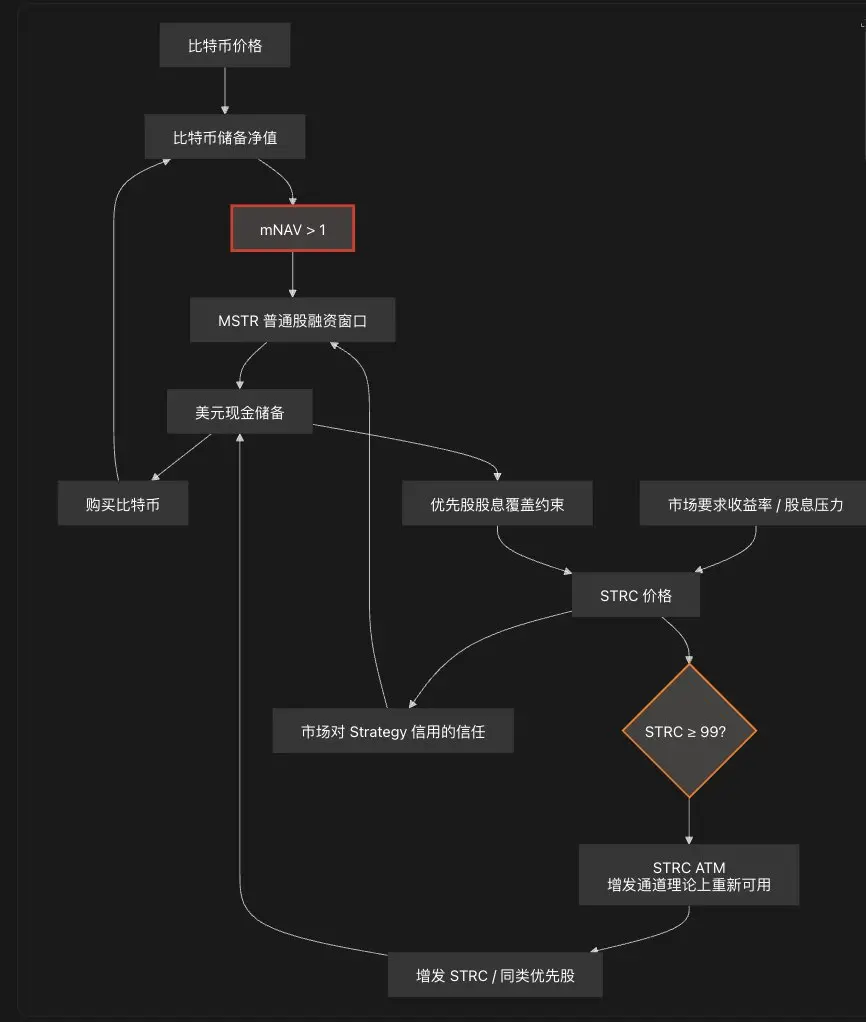
Image Source: X user @bitfish

The first wave of costs is borne by common shareholders. The entire $1.15 billion raised from last week's ATM offering was transferred into reserves, meaning common shareholders are already footing the bill for the preferred stock's solvency at the cost of equity dilution.

The second step is to establish hard rules for dollar reserves. The framework stipulates that this cash reserve can only be used to pay preferred stock dividends and debt interest. Management must maintain a size sufficient to cover at least the next 12 months of expected expenditures. As of June 28th, the company's reserve balance was $2.55 billion. Based on annualized dividend and interest expenses of approximately $1.76 billion, the coverage period is about 17.4 months.

The third step is to raise STRC's annualized dividend yield from 11.5% to 12%, effective July 1st. The company also stated that future dividend yields will be assessed monthly on a comprehensive basis and will not be increased solely because STRC trades below par value. This arrangement attempts both to maintain the preferred stock's attractiveness and avoid excessive future cash flow pressure.

The fourth step, and the one that elicited the strongest market reaction, is that Bitcoin itself is formally incorporated into the capital management toolkit. The Board authorized a BTC liquidation plan, allowing the sale of Bitcoin to raise up to $1.25 billion to replenish dollar reserves, pay preferred stock dividends and interest expenses, or fund the repurchase plan. If all uses—paying dividends/interest, repurchasing preferred and common stock—are counted, the theoretical liquidation scale could exceed $1.25 billion, with any excess requiring further Board approval.

It's worth noting that Zach Pandl, Head of Research at Grayscale Research, recently stated that, rather than raising STRC's dividend yield by 50 basis points, it would be better to directly sell over $3 billion worth of Bitcoin to more thoroughly fulfill cash payment obligations and restore market confidence. This view aligns with the company's new framework, indicating that the market has long recognized the company has few options left.

Faced with the three options of repurchasing STRC, selling Bitcoin, or cutting dividends, Strategy rejected the last one. The two $1 billion repurchase authorizations and the Bitcoin sale plan were simultaneously activated, and the dividend was not only not cut but raised by 50 basis points.
In the short term, the rate hike helps pull STRC back from deep discount to near par value. But in the long run, a higher dividend rate means future cash flow pressure hasn't truly eased, and Bitcoin has officially transformed from a long-term asset to be only bought and never sold into a capital management tool that can be liquidated under specific conditions.

The Market Remains Half-Convinced, Half-Skeptical

On the day the framework was announced, MSTR closed up 12.6%, and STRC rose 12.2% in sync, rebounding to $83.67, both marking the largest single-day gains recently. However, the STRC price still has about a 16% discount, with a considerable distance from the company's target range of $99 to $100.

Some supportive voices for Strategy view this as a relatively pragmatic crisis management move. Dollar reserve coverage has significantly improved from its previous strained state, and the introduction of repurchase tools provides an expectation of price support for the preferred stock. Benchmark Equity Research reiterated its Buy rating, maintaining a $570 price target. Based on MSTR's Monday closing price of $92.68, this target implies about 515% upside potential.

Analyst Mark Palmer pointed out in a report that the framework formally grants management permission to operate the capital machine in reverse when market conditions require, including repurchasing common and perpetual preferred stock, liquidating Bitcoin to fulfill obligations, and suspending common stock issuance when the stock price no longer trades at a premium to net asset value. He believes this means Strategy has become an active manager on both ends of the capital structure, which is a significant positive for shareholders.

But skeptical voices are equally clear. Crypto KOL @MengLayer pointed out that institutionalizing Bitcoin sales from a one-time emergency move not only weakens the narrative tension but, more directly, poses the problem that the current Bitcoin price is already below the company's average holding cost of about $75,700. Selling assets below cost to maintain the credit structure in this range is, in itself, a difficult operation, hardly an easy path.

Ripple CEO Brad Garlinghouse has previously stated that financial engineering itself does not create long-term value; an asset's long-term value ultimately stems from actual utility. He believes Strategy's model of relying on preferred stock financing to buy Bitcoin over the past year has already negatively impacted the overall crypto market.

More notably, this discussion has transcended the company level. Galaxy Digital CEO Mike Novogratz stated that the recent drop in Bitcoin price is fundamentally caused by the confidence collapse triggered by Strategy. As the world's largest corporate Bitcoin holder, Strategy's stock and preferred securities performance have become a key indicator for traders to gauge risk across the entire Bitcoin market.

Finally

Following the framework release, the market experienced a short-term rebound, but formally including Bitcoin as a capital management option has brought the previously implied tension to the surface.

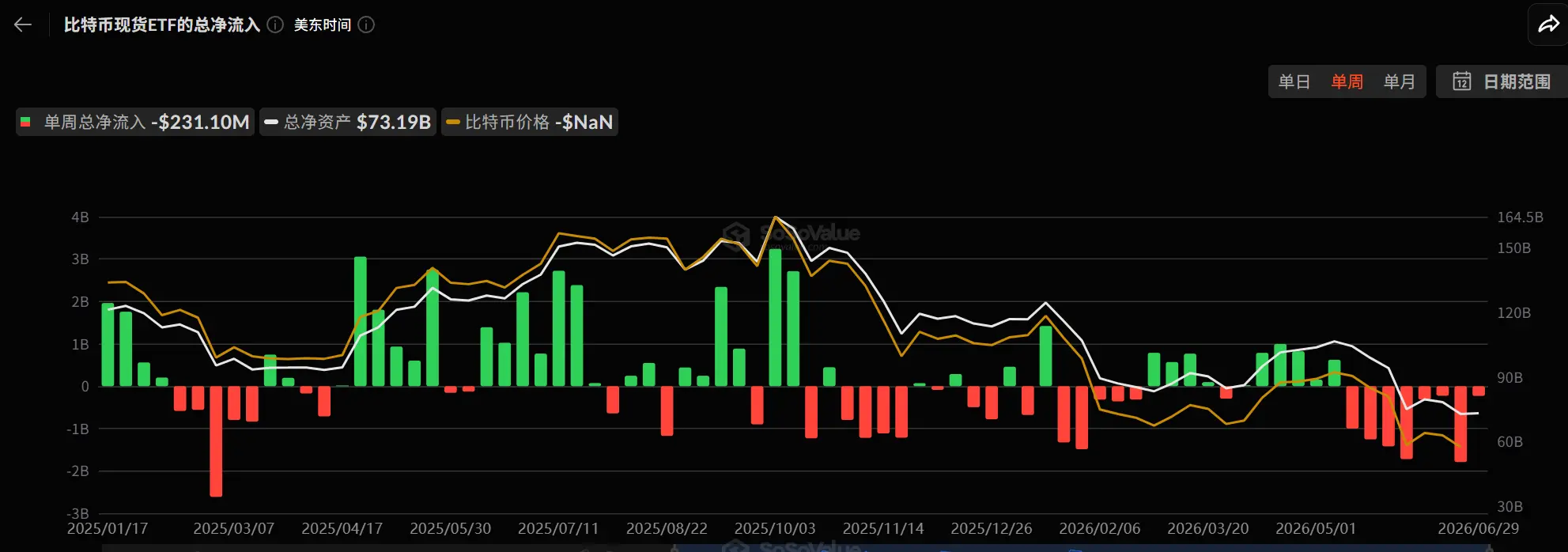
The flip side of market sentiment is also worth noting. For the week ending June 26th, U.S. spot Bitcoin ETFs saw a net outflow of $1.79 billion, marking the second-largest single-week net outflow on record, with net outflow weeks extending to seven consecutive weeks. Global non-mining publicly traded companies' net Bitcoin purchases last week were only $14.65 million, an 83% decrease month-over-month.
Meanwhile, the leveraged MicroStrategy ETFs (both long and short) launched in 2024 have each fallen over 90% since inception. Despite billions of dollars in inflows earlier, the leverage effect is magnifying losses dramatically.
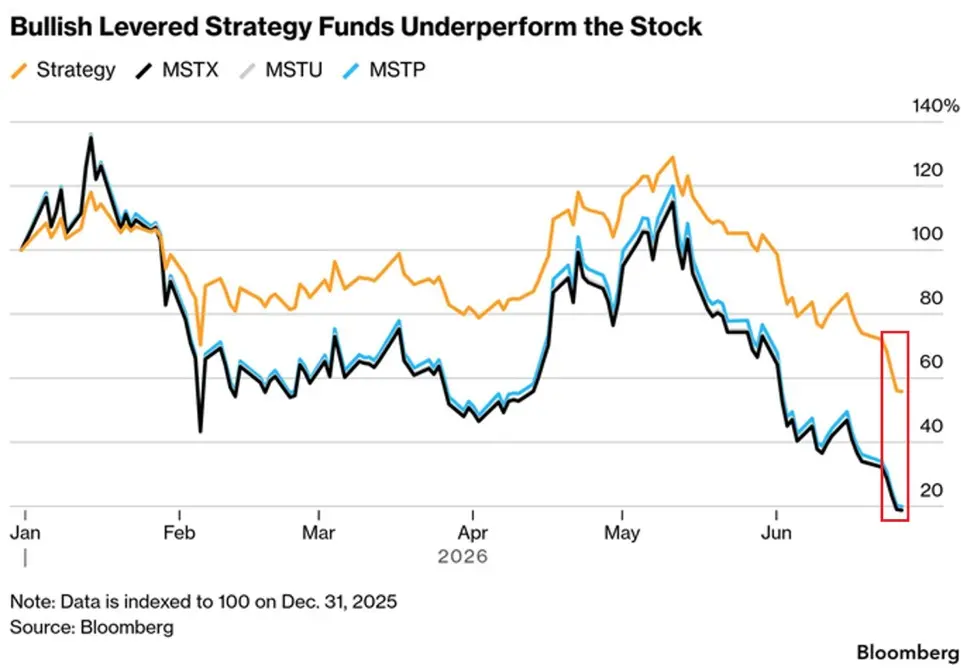
On one side, incremental buying from institutional channels like ETFs and public companies has clearly dried up; on the other, retail leverage exposure is being repeatedly crushed.

This new framework may alleviate liquidity and credit issues to some extent, giving Strategy more maneuvering room during Bitcoin's downturn. But whether STRC can truly return near par value ultimately depends on whether the market believes the company can sustainably cover these dividends without further dilution or Bitcoin liquidation. A rebound in Bitcoin price would make this task easier.


Трендовые криптовалюты

Связанные с этим вопросы

QWhat is the core crisis that Strategy's two key securities (MSTR and STRC) have faced in the past six weeks?

ABoth of Strategy's core securities have experienced a significant confidence crisis. MSTR's stock price fell below $87, hitting a new low since February 2024, marking a decline of over 50% from its peak. STRC plummeted from near its face value to a historical low of $74 last Thursday, representing a 26% discount to its $100 face value.

QWhat major action did Strategy take on June 29th to address its capital management issues?

AOn June 29th, Strategy filed an 8-K form to introduce its 'Digital Credit' capital framework. This framework institutionalized measures including hard coverage requirements for its US dollar reserves, a dynamic assessment mechanism for STRC dividends, a $2 billion total share repurchase authorization, and a plan allowing for the sale of up to $1.25 billion worth of Bitcoin to support these obligations.

QAccording to the article, how does the new capital framework transfer costs down the company's capital structure?

AThe framework transfers costs down the capital structure in several waves. First, common shareholders bear the cost through equity dilution (e.g., the $1.15 billion ATM offering). Second, it establishes hard rules for US dollar reserves dedicated to covering dividend and interest payments. Third, it increases the STRC dividend yield from 11.5% to 12%. Fourth and most critically, it formally authorizes the sale of Bitcoin as a capital management tool, shifting the potential cost onto the core 'never sell' asset itself.

QWhat are the main arguments from supporters and critics regarding Strategy's new capital framework?

ASupporters, like Benchmark Equity Research, view it as pragmatic crisis management that provides tools (reserve rules, buybacks) to stabilize the situation and demonstrates active capital structure management. Critics, however, argue that institutionalizing Bitcoin sales undermines the company's core 'never sell' narrative and forces it to sell assets below its average cost basis (~$75.7K) to maintain its credit structure, which is a costly and challenging move.

QWhat broader market trends does the article link to the pressures faced by Strategy?

AThe article links Strategy's difficulties to broader negative trends in the Bitcoin market. These include historic net outflows from US spot Bitcoin ETFs (e.g., $1.79 billion in the week ending June 26th), a significant decline in net Bitcoin buying by global non-mining public companies, and the severe underperformance (over 90% declines) of leveraged MicroStrategy ETFs, indicating a drying up of institutional buying and heavy losses in leveraged retail positions.

Похожее

Upbit добавил Gensyn, пока нарратив об AI-криптовалюте получает новый импульс на южнокорейском рынке

Криптобиржа Upbit объявила о поддержке торговли токеном GEN проекта Gensyn, децентрализованной сети для вычислений ИИ на GPU. Листинг включает торговые пары с южнокорейской воной, Bitcoin и USDT, что открывает проекту доступ к одному из самых активных розничных рынков криптовалют. Это событие усиливает видимость Gensyn в рамках устойчивой рыночной нарратива о пересечении блокчейна и искусственного интеллекта. Проект предлагает решение для координации открытого рынка вычислительных мощностей, необходимых для обучения ИИ-моделей, что отличает его от многих краткосрочных альткойнов. Однако листинг на крупной бирже, особенно с фиатной парой в Южной Корее, часто приводит к резкой краткосрочной волатильности. Первоначальный всплеск внимания и ликвидности может смениться коррекцией, когда рынок переключится с новости о листинге на фундаментальные вопросы: реальную активность сети, устойчивость токеномики и долгосрочный спрос на децентрализованные вычисления. Таким образом, листинг на Upbit служит важным катализатором для привлечения внимания трейдеров, но долгосрочная ценность GEN будет зависеть от способности проекта превратить этот интерес в реальное использование своей инфраструктуры.

bitcoinist5 мин. назад

Upbit добавил Gensyn, пока нарратив об AI-криптовалюте получает новый импульс на южнокорейском рынке

bitcoinist5 мин. назад

Генеральный директор Goliath Ventures признал себя виновным в деле о мошенничестве с криптовалютой на 250 миллионов долларов и согласился конфисковать предметы роскоши

Генеральный директор криптоинвестиционной компании Goliath Ventures Кристофер Александер Дельгадо признал себя виновным в сговоре с целью совершения мошенничества с использованием электронных средств связи, самом мошенничестве и отмывании денег. Он признал свою роль в криптовалютной финансовой пирамиде (схеме Понци), которая, по данным прокуратуры США, причинила инвесторам убытки не менее чем на 250 миллионов долларов. Схема действовала с января 2023 года по январь 2026 года. Инвесторам обещали месячную доходность от участия в криптовалютных ликвидных пулах, однако новые средства в основном использовались для выплат предыдущим вкладчикам и финансирования роскошного образа жизни руководства фирмы. Всего в пирамиду было привлечено не менее 400 миллионов долларов. В рамках соглашения о признании вины Дельгадо согласился конфисковать активы, приобретённые на средства от мошенничества. В список конфискации входят восемь объектов недвижимости, 11 автомобилей (включая Lamborghini, Rolls-Royce, Bentley), десятки роскошных часов, более 50 дизайнерских сумок и кошельков, ювелирные изделия, банковские счета и криптовалютные активы (Ethereum, USDC, Medieval Empires [MEE] токены). Приговор Дельгадо будет вынесен в октябре, ему грозит до 20 лет лишения свободы по каждому пункту обвинения в мошенничестве и до 10 лет за отмывание денег.

ambcrypto30 мин. назад

Генеральный директор Goliath Ventures признал себя виновным в деле о мошенничестве с криптовалютой на 250 миллионов долларов и согласился конфисковать предметы роскоши

ambcrypto30 мин. назад

Ripple расширяет глобальное соответствие требованиям перед дебатами по Закону о ясности в США

Краткое содержание: Ripple продолжает глобальную экспансию с акцентом на соответствие нормативным требованиям, получая новые лицензии в Сингапуре и Европе для развития институциональных продуктов с реальной полезностью. Эта стратегия направлена на укрепление позиций компании на регулируемых рынках, особенно для трансграничных платежей, и происходит на фоне дебатов о Законе о ясности криптовалютного регулирования в США. Ключевой момент для трейдеров заключается в том, чтобы рассматривать эти события как историю развития инфраструктуры и полезности, а не просто как очередной повод для спекуляций на цене. Успехи Ripple в области регулирования могут влиять на настроения рынка и перераспределение ликвидности между различными криптоактивами, особенно в условиях, когда рынок остается чувствительным к потокам ETF, макроэкономическим факторам и данным по деривативам. Важно отделять прогресс в получении глобальных лицензий от новостей по судебному иску SEC. Рынки склонны преувеличивать значение отдельных сигналов. Поэтому текущие шаги Ripple следует расценивать именно как сигнал о сдвиге в сторону регулируемой институциональной адаптации, а не как гарантию немедленного ценового движения. Следует наблюдать, подтвердят ли эту тенденцию последующие данные по потокам капитала, ончейн-метрикам и позициям на рынке деривативов.

bitcoinist50 мин. назад

Ripple расширяет глобальное соответствие требованиям перед дебатами по Закону о ясности в США

bitcoinist50 мин. назад

Заявка Goldman Sachs на создание траста XRP показывает, как Уолл-стрит тестирует возможности крипторынка

Американский банк Goldman Sachs раскрыл в документах SEC наличие экпозиции к XRP через регулируемые трастовые продукты, аналогичные инструментам Grayscale. Это не означает прямого владения токенами банком, но демонстрирует, как Уолл-стрит тестирует доступ к альткоинам через знакомые структуры — трасты, фонды и ценные бумаги, связанные с сектором. Такие инструменты позволяют институциональным инвесторам получать ценовое воздействие, соблюдая традиционные правила отчетности и хранения активов. Позиция, отраженная в отчетности Form 13F, является исторической и не сигнализирует о текущих сделках. Однако сам факт появления XRP в подобных filings показывает, что актив остается в поле зрения профессиональных инвестиционных каналов. Сообщается, что Goldman Sachs впоследствии перераспределил капитал из трастов XRP в другие акции, связанные с криптоиндустрией, что отражает зрелый подход: институты управляют экспозицией, ротируя между различными регулируемыми инструментами — прокси-токенами, акциями майнеров, бирж и трастами. Таким образом, ключевое значение имеет не громкий заголовок о покупке XRP, а наличие рабочих, регулируемых путей для институциональной экспозиции к активу, что подтверждается данными SEC.

bitcoinist50 мин. назад

Заявка Goldman Sachs на создание траста XRP показывает, как Уолл-стрит тестирует возможности крипторынка

bitcoinist50 мин. назад

Институциональные инвесторы избавляются от ETH, пока Ethereum падает на 36% с начала года – Давление продаж усиливается

Эфириум (ETH) продолжает торговаться в диапазоне $1,5–1,6 тыс. на фоне общей слабости рынка. Институциональные инвесторы, такие как FG Nexus, фиксируют убытки и выходят из позиций. FG Nexus продал дополнительные 3375 ETH на $5,34 млн, а его общие реализованные потери превысили $86,8 млн. Индекс Coinbase Premium остаётся отрицательным уже 53 дня подряд, что указывает на устойчивое давление продаж со стороны американских институциональных инвесторов. Чистый приток ETH на биржи (Netflow) также положителен два дня подряд, сигнализируя о преобладании продавцов над покупателями. Технический анализ показывает, что дневной индекс относительной силы (RSI) ETH находится на уровне 35, в медвежьей зоне, что говорит о доминировании продавцов. При сохранении текущего настроения существует риск тестирования уровня поддержки в $1,4 тыс. Краткосрочным позитивным сценарием может стать лишь боковое движение в коридоре $1,5–1,7 тыс.

ambcrypto54 мин. назад

Институциональные инвесторы избавляются от ETH, пока Ethereum падает на 36% с начала года – Давление продаж усиливается

ambcrypto54 мин. назад

Торговля

Спот

Популярные статьи

Тест по Bitcoin Биткоина

HTX Learn: Изучите Bitcoin halving и Заработаете Токены USDT

3.1k просмотров всегоОпубликовано 2024.04.16Обновлено 2024.04.16

Тест по Bitcoin  Биткоина

Что такое $BITCOIN

ЦИФРОВОЕ ЗОЛОТО ($BITCOIN): Комплексный анализ Введение в ЦИФРОВОЕ ЗОЛОТО ($BITCOIN) ЦИФРОВОЕ ЗОЛОТО ($BITCOIN) — это проект на основе блокчейна, работающий в сети Solana, который стремится объединить характеристики традиционных драгоценных металлов с инновациями децентрализованных технологий. Хотя он носит имя Биткойн, часто называемого “цифровым золотом” из-за его восприятия как средства хранения ценности, ЦИФРОВОЕ ЗОЛОТО является отдельным токеном, предназначенным для создания уникальной экосистемы в ландшафте Web3. Его цель — позиционировать себя как жизнеспособный альтернативный цифровой актив, хотя детали его применения и функциональности все еще развиваются. Что такое ЦИФРОВОЕ ЗОЛОТО ($BITCOIN)? ЦИФРОВОЕ ЗОЛОТО ($BITCOIN) — это токен криптовалюты, специально разработанный для использования в блокчейне Solana. В отличие от Биткойна, который выполняет широко признанную роль хранения ценности, этот токен, похоже, сосредоточен на более широких приложениях и характеристиках. Примечательные аспекты включают: Инфраструктура блокчейна: Токен построен на блокчейне Solana, известном своей способностью обрабатывать высокоскоростные и недорогие транзакции. Динамика предложения: ЦИФРОВОЕ ЗОЛОТО имеет максимальное предложение, ограниченное 100 квадриллионами токенов (100P $BITCOIN), хотя детали о его обращающемся предложении в настоящее время не раскрыты. Утилита: Хотя точные функциональные возможности не описаны, есть указания на то, что токен может быть использован для различных приложений, потенциально связанных с децентрализованными приложениями (dApps) или стратегиями токенизации активов. Кто создатель ЦИФРОВОГО ЗОЛОТА ($BITCOIN)? На данный момент личность создателей и команды разработчиков, стоящих за ЦИФРОВЫМ ЗОЛОТОМ ($BITCOIN), остается неизвестной. Эта ситуация типична для многих инновационных проектов в области блокчейна, особенно тех, которые связаны с децентрализованными финансами и феноменом мем-криптовалют. Хотя такая анонимность может способствовать культуре, ориентированной на сообщество, она усиливает опасения по поводу управления и ответственности. Кто инвесторы ЦИФРОВОГО ЗОЛОТА ($BITCOIN)? Доступная информация указывает на то, что у ЦИФРОВОГО ЗОЛОТА ($BITCOIN) нет известных институциональных спонсоров или значительных венчурных капиталовложений. Проект, похоже, функционирует по модели пирингового взаимодействия, сосредоточенной на поддержке и принятии сообществом, а не на традиционных путях финансирования. Его активность и ликвидность в основном сосредоточены на децентрализованных биржах (DEX), таких как PumpSwap, а не на устоявшихся централизованных торговых платформах, что еще больше подчеркивает его подход, ориентированный на grassroots. Как работает ЦИФРОВОЕ ЗОЛОТО ($BITCOIN) Операционные механизмы ЦИФРОВОГО ЗОЛОТА ($BITCOIN) можно подробно описать на основе его дизайна блокчейна и характеристик сети: Механизм консенсуса: Используя уникальный механизм доказательства истории (PoH) Solana в сочетании с моделью доказательства доли (PoS), проект обеспечивает эффективную валидацию транзакций, что способствует высокой производительности сети. Токеномика: Хотя конкретные дефляционные механизмы не были подробно описаны, большое максимальное предложение токенов подразумевает, что оно может быть предназначено для микротранзакций или нишевых случаев использования, которые еще предстоит определить. Интероперабельность: Существует потенциал для интеграции с более широкой экосистемой Solana, включая различные платформы децентрализованных финансов (DeFi). Однако детали относительно конкретных интеграций остаются неуточненными. Хронология ключевых событий Вот хронология, которая подчеркивает значимые вехи, касающиеся ЦИФРОВОГО ЗОЛОТА ($BITCOIN): 2023: Первоначальное развертывание токена происходит в блокчейне Solana, отмеченное его адресом контракта. 2024: ЦИФРОВОЕ ЗОЛОТО приобретает видимость, когда оно становится доступным для торговли на децентрализованных биржах, таких как PumpSwap, позволяя пользователям обменивать его на SOL. 2025: Проект наблюдает спорадическую торговую активность и потенциальный интерес к инициативам, возглавляемым сообществом, хотя на данный момент не зафиксировано никаких значительных партнерств или технических достижений. Критический анализ Сильные стороны Масштабируемость: Основная инфраструктура Solana поддерживает высокие объемы транзакций, что может повысить полезность $BITCOIN в различных сценариях транзакций. Доступность: Потенциально низкая цена торговли за токен может привлечь розничных инвесторов, способствуя более широкому участию благодаря возможностям дробного владения. Риски Отсутствие прозрачности: Отсутствие публично известных спонсоров, разработчиков или процесса аудита может вызвать скептицизм относительно устойчивости и надежности проекта. Волатильность рынка: Торговая активность сильно зависит от спекулятивного поведения, что может привести к значительной волатильности цен и неопределенности для инвесторов. Заключение ЦИФРОВОЕ ЗОЛОТО ($BITCOIN) является интригующим, но неоднозначным проектом в быстро развивающейся экосистеме Solana. Хотя он пытается использовать нарратив “цифрового золота”, его отход от установленной роли Биткойна как средства хранения ценности подчеркивает необходимость более четкого различения его предполагаемой утилиты и структуры управления. Будущее принятие и усвоение, вероятно, будут зависеть от решения текущей непрозрачности и более четкого определения его операционных и экономических стратегий. Примечание: Этот отчет охватывает синтезированную информацию, доступную на октябрь 2023 года, и с тех пор могут произойти события.

154 просмотров всегоОпубликовано 2025.05.13Обновлено 2025.05.13

Что такое $BITCOIN

Fractal Bitcoin: масштабирование Биткоина с помощью рекурсивной системы

Fractal Bitcoin — масштабное Layer-1-решнение, созданное на базе кода Биткоина, позволяющего достигать бесконечного масштабирования с помощью рекурсивного подхода.

2.4k просмотров всегоОпубликовано 2025.06.30Обновлено 2025.06.30

Fractal Bitcoin: масштабирование Биткоина с помощью рекурсивной системы

Обсуждения

Добро пожаловать в Сообщество HTX. Здесь вы сможете быть в курсе последних новостей о развитии платформы и получить доступ к профессиональной аналитической информации о рынке. Мнения пользователей о цене на BTC (BTC) представлены ниже.

活动图片