No Bull Market for BTC Without STRC Re-pegging

Odaily星球日报Опубликовано 2026-06-26Обновлено 2026-06-26

Введение

Summary: The sustained de-pegging of MicroStrategy's (MSTR) Strategy Preferred Shares (STRC) poses a severe threat to Bitcoin (BTC) and could prevent a bull market. STRC, designed to trade near a $100 target, has plunged to around $75, effectively shutting down MicroStrategy's cheapest and most efficient funding channel. This channel was critical for its "raise funds, buy BTC" business model. More critically, MicroStrategy now faces a massive cash outflow from these preferred shares. With approximately $10.49 billion of STRC outstanding at an 11.5% dividend yield, the annual cash obligation exceeds $1.2 billion. Combined with other preferred shares, the total annual payout nears $1.7 billion, depleting its current ~$1.4 billion cash reserve within a year. To address this, MicroStrategy is increasingly relying on common stock (MSTR) offerings via its ATM program. However, recent sales show most raised capital is now used to bolster cash reserves rather than buy more Bitcoin. This dilutes the key metric of BTC per share for common stockholders, eroding the foundation of its premium valuation. If STRC cannot re-peg, this costly dilution may continue. Worse, if cash pressure intensifies, selling Bitcoin becomes a real risk. As the largest corporate BTC holder (~847,363 BTC), any significant sales could crash the market. Thus, MicroStrategy is transforming from BTC's most reliable institutional buyer into a major potential seller, casting a significant shadow over Bitcoin's pri...

Original | Odaily Planet Daily(@OdailyChina)

Author|Azuma(@azuma_eth)

The "de-pegging" situation of MicroStrategy's preferred stock STRC continues to intensify.

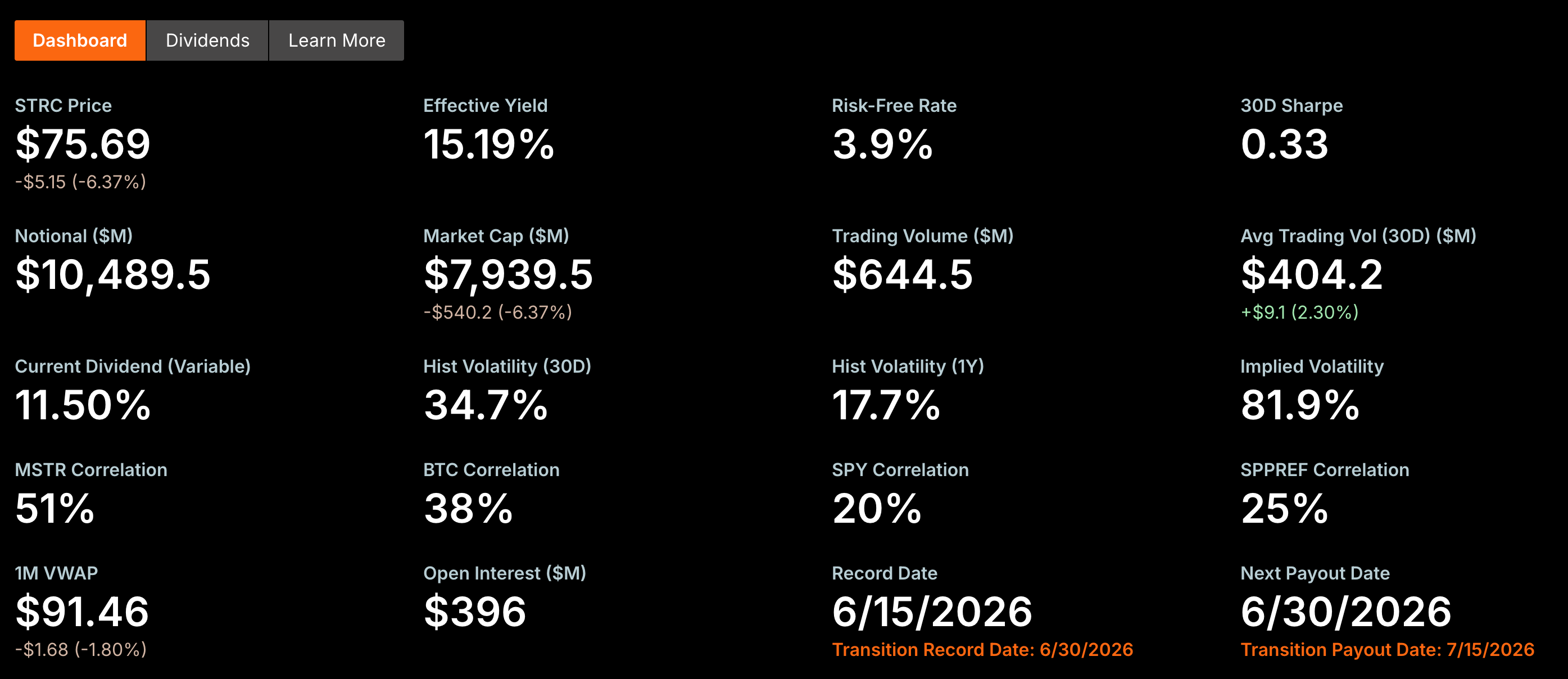
During yesterday's U.S. stock market session, STRC broke below the 80 mark for the first time, hitting a low of $73.62 at one point. Although it rebounded slightly at the close, the price was still only $75.69, nearly 25% "de-pegged" from the target par value of $100.

Last week, we wrote an article about STRC's de-pegging titled "STRC De-pegged by 11%, Can MicroStrategy's Perpetual Motion Machine Keep Running?", focusing on the reasons for STRC's de-pegging and briefly describing the potential future impacts.

However, based on community discussions, it seems many readers still don't fully understand just how dire the consequences of STRC's continued de-pegging are, so we decided to write another article to break down this issue.

MicroStrategy's Most Important Funding Channel Has Failed

What exactly is STRC? In a nutshell, this is MicroStrategy's cheapest and most efficient funding channel.

The essence of MicroStrategy's business model is to continuously raise funds from the market to accumulate more BTC, then raise more funds, and accumulate more BTC. This is a cycle that must keep running. MicroStrategy's high valuation, to a large extent, stems from the market's belief in its ability to continuously raise funds and buy BTC. As long as its fundraising ability exists, it can keep expanding its BTC holdings; and the growing BTC holdings, in turn, further support market expectations for its future fundraising capabilities.

Over the past few years, MicroStrategy has tried almost all fundraising methods—issuing common stock, convertible bonds, various types of preferred stock—and continuously invested the raised funds into BTC. Among all these fundraising instruments, STRC was once considered by the market to be the closest to "perfect," and Michael Saylor's proudest creation. Saylor once boasted that "STRC is a product designed by AI, humans couldn't have designed this."

As preferred stock, STRC's advantages are very clear. Issuing common stock could dilute existing shareholders' equity; issuing convertible bonds would burden the company with future debt repayment obligations; but STRC, as perpetual preferred stock, has no maturity date, does not dilute common shareholders, and only requires fixed dividend payments. For MicroStrategy and Saylor, this was almost the lowest-cost, most efficient way to raise funds.

From its inception, STRC was designed as a product pegged to $100. MicroStrategy's idea was to keep STRC trading around $100 long-term by dynamically adjusting the dividend rate (sounds a bit like an algorithmic stablecoin, doesn't it?). As long as the secondary market could maintain this price, the company could continuously issue new STRC close to par value, raising new funds to keep buying Bitcoin.

That is to say, STRC's core value lies in its continuous, never-ending fundraising capability, but this capability is premised on its price staying near the target par value. As STRC continues to de-peg, this funding channel has essentially been blocked. Because for any investor, if they can buy the same STRC in the secondary market for only $75, they would not participate in the company's new preferred stock issuance at a price close to $100.

For MicroStrategy, it must either keep increasing the dividend rate to attract funds (proven to have limited appeal), or accept the lower fundraising efficiency of discounted issuance (which actively breaks the original target par value). Either way, it means this funding machine is starting to experience increasing friction.

The Funding Tool Has Turned into a Cash Flow Burden

If it were just a temporary failure of fundraising ability, that might be one thing. The bigger problem is that STRC requires MicroStrategy to pay out substantial cash dividends continuously.

According to the latest official data disclosed by MicroStrategy, the current issuance size of STRC has reached approximately $10.49 billion, with a current dividend rate of 11.5%. This means that STRC alone corresponds to a cash dividend payment obligation of over $1.2 billion per year. Adding other preferred stocks like STRD, STRK, STRF issued by MicroStrategy, this number climbs further to about $1.7 billion.
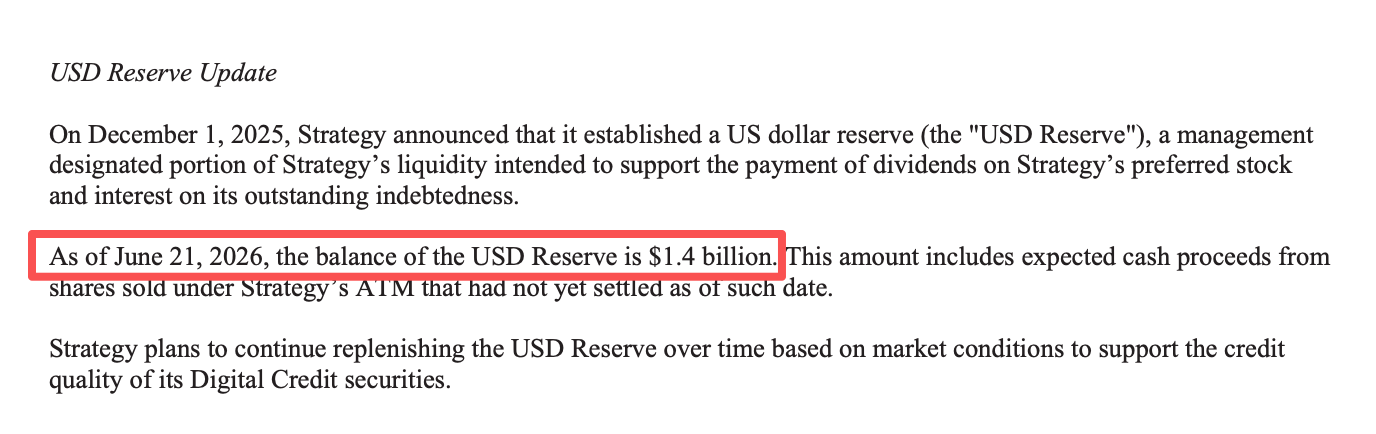
In the common stock issuance filing on June 21 (note, it's common stock, we'll discuss this in detail later), MicroStrategy disclosed that the company's cash reserves are approximately $1.4 billion. Based on this cash reserve level, MicroStrategy's book cash can cover less than a year of preferred stock dividend payments.
Breaking the Deadlock Requires Money, But Where Does the Money Come From?

Whether to sustain its own business model or to escape the current severe cash flow situation and avoid dividend payment default (more urgent now), MicroStrategy needs more funds. Theoretically, only three main "money-making" paths remain before MicroStrategy.

First, issuing common stock.

This is currently the most direct and mature method of financing. Through the ATM (At-the-Market Offering) program, MicroStrategy can continuously sell MSTR common stock to the market to raise funds.

However, common stock financing is not without cost. Continuous issuance means the number of outstanding shares keeps increasing. If the growth rate of BTC purchased with newly raised funds cannot outpace the share expansion rate, the growth of BTC per share will slow down, and common shareholders will face continuous dilution — note this point, it's important later.

Second, issuing more debt.

Over the past few years, MicroStrategy has repeatedly raised funds through debt instruments like convertible bonds, which were also an important funding source for its early large-scale BTC accumulation.

However, as preferred stock issuance expands and fixed cash outflows continue to increase, the market has started paying more attention to MicroStrategy's liquidity and debt repayment ability. In the current funding environment, if the company issues bonds again, investors will likely demand higher risk premiums, meaning financing costs will be significantly higher than in the past.

More importantly, bonds are different from preferred or common stock; their interest payments and principal repayments are rigid obligations. Against the backdrop of continuously declining cash reserves and increasing dividend payouts, further expanding debt will undoubtedly加重 the company's financial burden and also compress future fundraising space.

Third, selling BTC.

From a financial perspective, this is the fastest way to replenish cash reserves. MicroStrategy must have considered this path. The company stated on its official X account regarding dividend payment pressure: "When considering its massive Bitcoin reserves, it is sufficient to cover 32 years of dividend payments."

But for MicroStrategy, this is also an extremely risky choice. Earlier this month, MicroStrategy sold some of its Bitcoin holdings for the first time. Although the sale was only 32 BTC, and the official statement packaged it as an "active market desensitization test," mentioning that "more will be bought back later," it still caused a short-term market dip.

As the largest single holder of Bitcoin in the market, MicroStrategy's moves can easily trigger chain reactions. If it increases sales volume in the future, it will undoubtedly have a huge impact on the already fragile BTC price. If BTC declines further, MicroStrategy's so-called "reserves" would also shrink rapidly.

In summary, under the current circumstances, every feasible funding channel for MicroStrategy comes at a higher cost than before.

Has MicroStrategy Made Its Choice?

Based on MicroStrategy's latest moves, aside from hinting at possibly selling BTC, the company seems to have already chosen which path to take.

Since June, MicroStrategy has relied on its common stock ATM (At-the-Market Offering) program for three consecutive weeks to raise funds. The latest round (June 22) is particularly typical.
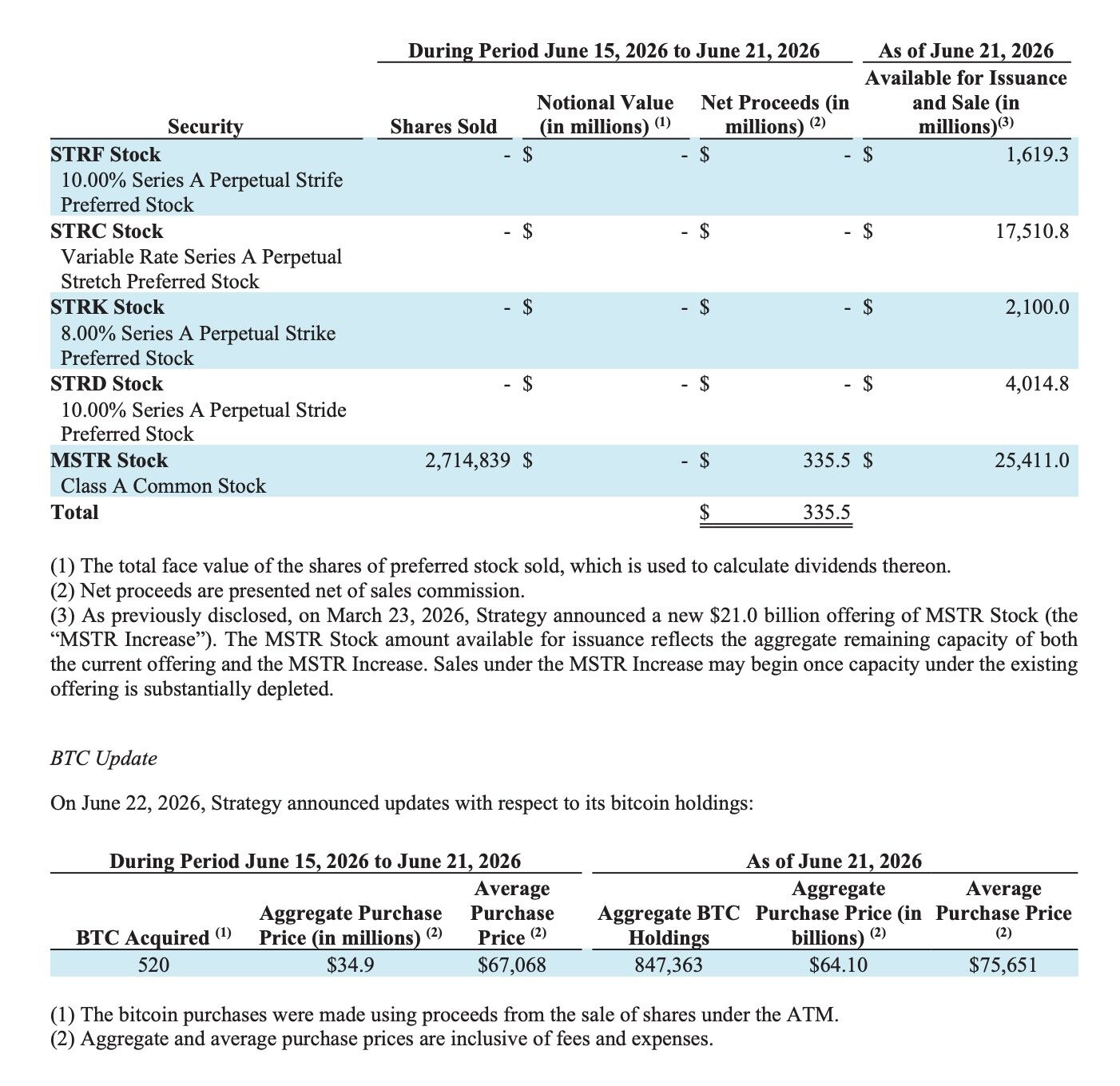
According to MicroStrategy's latest 8-K filing, the company sold a total of 2,714,839 shares of MSTR common stock within a week, raising $335.5 million in total. However, that same week, MicroStrategy only bought 520 BTC, spending a total of $34.9 million, with an average purchase price of about $67,068. In other words, out of the $335.5 million raised, only about one-tenth was actually used to continue accumulating BTC. The remaining funds were mainly used to replenish the company's cash flow reserves, increasing cash from about $1.1 billion to the current approximately $1.4 billion.

That seems somewhat effective? But there's another trap here.

For MSTR common shareholders, the most critical information to monitor is: for every new common share issued, how much BTC can ultimately be bought back with the funds raised, and is it enough to cover the BTC equity corresponding to this share? If the new fundraising can buy back more BTC than the amount originally corresponding to this share, then common shareholders' equity is actually increased; conversely, if the funds raised buy back less BTC than the amount corresponding to the new shares' BTC equity, then common shareholders experience dilution.

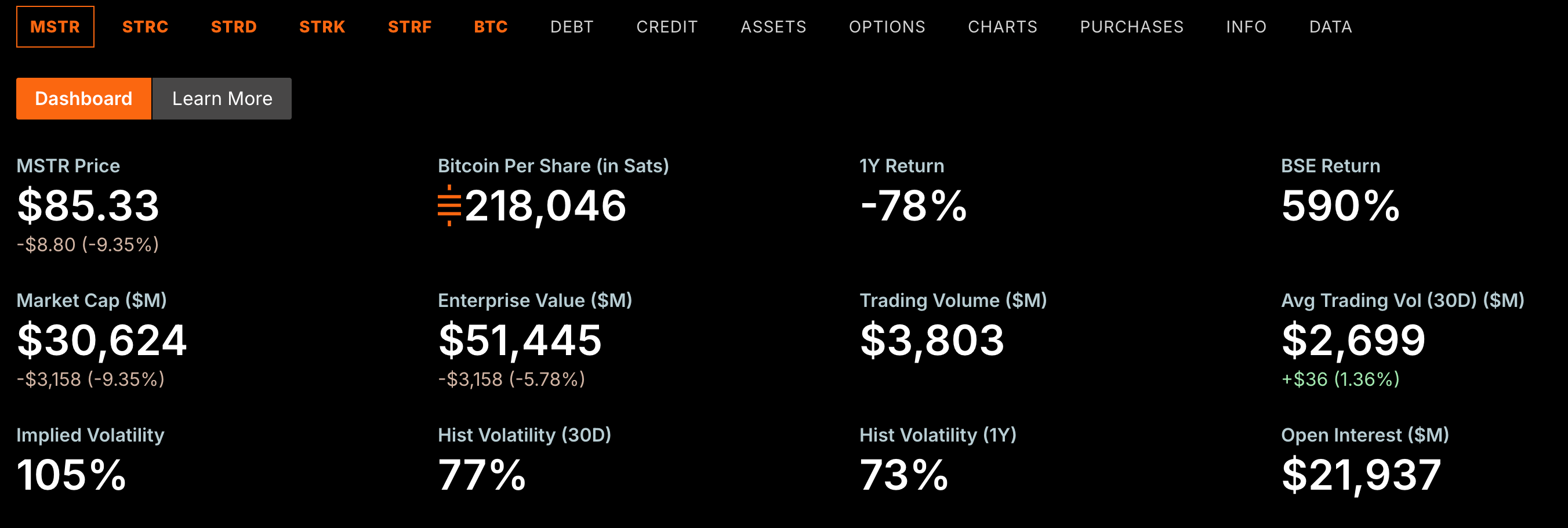
Clearly, MicroStrategy's recent common stock issuance has come at the cost of diluting common shareholder equity. MicroStrategy's official data also shows that the BTC per MSTR share has dropped from a peak of 220,900 Sats to 218,046 Sats.
This is the biggest limitation of common stock financing. For most listed companies, issuing common stock is just one of many financing methods; but for MicroStrategy, common stock is part of its business model itself.

Over the past few years, the reason MicroStrategy has been able to grow continuously is essentially by relying on the continuous operation of the "Raise Funds ➡️ Buy BTC ➡️ Consolidate Market Expectations ➡️ Raise Funds Again ➡️ Buy More BTC..." flywheel. The market's core expectation for MicroStrategy is its ability to continuously create more BTC equity for common shareholders, not dilution.

However, when MicroStrategy has to rely increasingly on common stock financing to replenish cash reserves rather than continue accumulating BTC, the operating logic of this flywheel changes. While in the short term, common stock financing can indeed alleviate MicroStrategy's cash pressure, it can hardly become a long-term solution to replace STRC.

Once common stock financing continuously erodes BTC per share equity, the foundation upon which MSTR's high premium relies may also be challenged, and this is precisely the core competitive advantage of MicroStrategy's entire business model.

What Will Happen to BTC?

Over the past few years, MicroStrategy has become the most important marginal buyer in the BTC market (arguably without the "one of"). To date, MicroStrategy has accumulated holdings of 847,363 BTC, accounting for about 4% of BTC's current circulating supply, worth over $50.7 billion. The market had long grown accustomed to Saylor's massive, unwavering weekly purchases.

But now, this situation is changing. MicroStrategy can still raise funds through common stock issuance, but most of the funds no longer flow into BTC; instead, they are prioritized for replenishing cash reserves. This means that under the same fundraising scale, the new buying pressure actually entering the BTC market is decreasing.

More disadvantageously, this situation may persist. If STRC cannot re-peg long-term, preferred stock financing remains blocked, MicroStrategy will have to rely long-term on common stock financing to maintain cash flow, possibly even further compressing the proportion of funds used for BTC accumulation. For the BTC market, this means the past's most stable and certain institutional buying pressure will no longer grow as consistently as it did in previous years.

But more alarmingly, if common stock issuance excessively dilutes MSTR shareholder equity, MicroStrategy may have to consider the other funding channel — selling BTC.

From weakened new buying pressure to the emergence of potential selling pressure, today's MicroStrategy is no longer BTC's biggest marginal buyer, but a giant sword hanging over BTC.


Трендовые криптовалюты

Связанные с этим вопросы

QWhat is STRC, and why is it considered the most important financing channel for MicroStrategy?

ASTRC is a series of preferred stock issued by MicroStrategy. It is considered the company's cheapest and most efficient financing channel because, as a perpetual preferred stock, it has no maturity date, does not dilute common shareholders, and only requires payment of fixed dividends. This structure allows MicroStrategy to raise capital at a low cost to continuously purchase Bitcoin, which is central to its business model.

QWhat are the main consequences of STRC's persistent de-pegging from its $100 target?

AThe persistent de-pegging of STRC from its $100 target severely impairs MicroStrategy's ability to issue new preferred shares at or near par value, effectively blocking this crucial financing channel. More critically, it turns STRC from a financing tool into a significant cash flow burden, as the company is obligated to pay over $1.2 billion annually in cash dividends on STRC alone, straining its liquidity.

QWhat three main options does MicroStrategy have to raise funds in the current situation, and what are their drawbacks?

A1. Issue common stock (MSTR): This dilutes common shareholders and erodes the key metric of Bitcoin per share if the new capital doesn't buy enough BTC to offset the dilution. 2. Issue more debt: Likely requires higher risk premiums (higher cost) and adds rigid interest payment obligations, further straining cash flow. 3. Sell Bitcoin: This directly contradicts the company's core investment thesis, risks triggering negative market sentiment and price declines for BTC, and depletes its primary asset.

QHow has the purpose of MicroStrategy's recent common stock (MSTR) issuance changed, and what negative side effect has this caused?

ARecently, the purpose of MicroStrategy's common stock issuances has shifted. Instead of primarily using the raised funds to buy more Bitcoin, a large portion (around 90% in the latest example) is now being used to replenish the company's cash reserves to cover its dividend obligations. This has caused the dilution of common shareholder equity, as evidenced by the decline in the key metric of Bitcoin per MSTR share from 220,900 satoshis to 218,046 satoshis.

QAccording to the article, how has MicroStrategy's role in the Bitcoin market changed, and what potential future risk does it pose?

AMicroStrategy has transitioned from being the most stable and significant marginal buyer in the Bitcoin market to becoming a potential source of selling pressure or 'a giant sword hanging over BTC.' Its new common stock issuances contribute less fresh buying pressure for BTC, and if its financial situation worsens, the company might be forced to sell its Bitcoin holdings to raise cash, which could negatively impact the market.

Похожее

После трёх кварталов падения: получится ли у крипторынка стабилизироваться в третьем квартале?

Криптовалютный рынок пережил худший квартал с 2022 года, общая капитализация упала на 12,6% до $2,1 трлн, а дневные объемы торгов снизились на 20,9%. Впервые за три года сократилась и капитализация стейблкоинов. Основные факторы спада — отток средств из биткоин-ETF, распродажа биткоинов корпоративным казначейством Strategy и ужесточение монетарной политики ФРС. Второй квартал завершился чистым оттоком $46,7 млрд из ETF, при этом в июне отток достиг рекордных $45 млрд. Ключевым событием третьего квартала станет заседание ФРС 28–29 июля. Мягкий сигнал может поддержать биткоин в диапазоне $68 000–84 000 и вернуть приток в ETF, тогда как жесткая риторика способна сместить торговый диапазон к $50 000–56 000. Законодательная неопределенность также давит на рынок: прогресс по закону CLARITY Act, определяющему регуляторные границы, замедлился, и вероятность его принятия в 2026 году упала до 40–45%. Несмотря на общий спад, два сегмента показали рост: объемы на рынках предсказаний выросли на 48,7%, а торговля токенизированными коллекционными предметами увеличилась на 143%. Сектор RWA продолжает стабильно развиваться, достигнув $28,1 млрд. Рынок, вероятно, миновал фазу острой распродажи, но для устойчивого восстановления необходимы ясность от ФРС и регуляторный прогресс.

marsbit12 ч. назад

После трёх кварталов падения: получится ли у крипторынка стабилизироваться в третьем квартале?

marsbit12 ч. назад

BIT Торговые часы: BTC по-прежнему под давлением 200 EMA на недельном графике, после отскока возможен перезапуск нисходящего движения; секторы хранения данных и полупроводников, выросшие ночью, начали падение в вечерней сессии

**Краткий обзор рынка: BTC под давлением, коррекция на рынке акций, внимание к данным и событиям** Рынок криптовалют демонстрирует осторожное восстановление. Bitcoin торгуется около $66 000, сталкиваясь со значительным сопротивлением в районе $68 000, где сосредоточены объемные "застрявшие" позиции. Ключевые технические уровни — 200-недельная скользящая средняя (~$63 333) и 200-недельная EMA (~$68 328). Аналитики отмечают низкую ликвидность, характерную для летнего периода. На фондовом рынке после сильного роста во вторник наблюдается коррекция. Фьючерсы на основные индексы США снижаются. Акции полупроводниковой и памяти, которые резко выросли накануне, падают в ночных торгах. Исключением стал SMCI, который вырос более чем на 15% после оптимистичного прогноза. На общий настрой негативно влияют рост цен на нефть (более $91 за баррель Brent) и доходности государственных облигаций США (10-летние — около 4,64%), что возрождает инфляционные опасения. Азиатские рынки показали нестабильную динамику. Индекс KOSPI в Корее вырос на 0,74%, а японский Nikkei 225 снизился на 0,18%. Основной риск для региона — ослабление японской иены до минимумов с 1986 года, что повышает вероятность вмешательства властей. **Ключевые события для наблюдения:** * **24 июля:** Финансовые отчеты Alphabet (Google), Tesla, IBM. Событие AMD, посвященное ИИ. * **25 июля:** Решение по процентной ставке ЕЦБ и пресс-конференция Кристин Лагард. Финансовые отчеты Intel, American Airlines, Honeywell и других. Данные по числу первичных заявок на пособие по безработице в США.

marsbit12 ч. назад

BIT Торговые часы: BTC по-прежнему под давлением 200 EMA на недельном графике, после отскока возможен перезапуск нисходящего движения; секторы хранения данных и полупроводников, выросшие ночью, начали падение в вечерней сессии

marsbit12 ч. назад

Бывший глава CFTC и президент Circle Тарберт: призывает к долгосрочной стратегии, но сам выводит $30 млн

Бывший председатель CFTC и президент Circle Хит Тарберт, публично пропагандируя долгосрочное видение компании для инвесторов на фоне падения акций на 70% с пиковых значений, сам активно распродавал свои акции CRCL. С момента IPO Circle он по плану 10b5-1 продал более 360 тысяч акций, выручив около 30 миллионов долларов, и при этом ни разу не докупал акции на открытом рынке. Эта разница между его публичными заявлениями и личными действиями вызвала критику. Карьера Тарберта демонстрирует классическое использование «вращающейся двери» между регулирующими органами и частным сектором. Уйдя с поста председателя CFTC в 2021 году, через 27 дней он занял должность главного юрисконсульта в маркет-мейкере Citadel Securities, который в тот момент находился под пристальным вниманием из-за скандала с акциями GameStop. Позже, уже работая в Citadel, Тарберт выступал за расширение полномочий CFTC на крипторынок, в то время как его работодатель планировал выход на этот рынок. В 2023 году Тарберт присоединился к Circle, где его опыт и связи сыграли ключевую роль в успешном проведении IPO компании в 2025 году. Однако его последующие массовые продажи акций, совпавшие с падением котировок и его же призывами к долгосрочным инвестициям, ставят под сомнение искренность его уверенности в будущем компании. Критики видят в его карьере образец превращения регуляторного опыта и политических связей в личную выгоду, в то время как риски несут обычные инвесторы, верящие его нарративам.

marsbit13 ч. назад

Бывший глава CFTC и президент Circle Тарберт: призывает к долгосрочной стратегии, но сам выводит $30 млн

marsbit13 ч. назад

Gate Research: Взлет «уолл-стритизации» криптофинансовых продуктов — это конкуренция или интеграция?

**Аналитический обзор Gate Research Institute: Волна "уолл-стритизации" криптофинансовых продуктов — конкуренция или интеграция?** Создание биткоина в 2009 году было ответом на финансовый кризис и стремлением построить децентрализованную систему без доверенных посредников. Однако к 2026 году значительная часть биткоинов (около 7,14%) хранится через ETF таких гигантов, как BlackRock. Это символизирует глубокую интеграцию традиционных финансов (TradFi) и крипторынка. С появлением биткоин-ETF, фьючерсов, RWA (токенизированных реальных активов) и государственных облигаций на блокчейне, традиционные институты получают всё больше влияния на выпуск, ценообразование, кастодию и дистрибуцию криптоактивов. Однако это не одностороннее поглощение, а взаимодополняющая конвергенция. Криптосфера приносит TradFi глобальную 24/7 ликвидность и программируемость, а TradFi предоставляет криптосфере регулируемые каналы, институциональное доверие и массовый доступ. Яркий пример — две противоположные, но ведущие к одной цели траектории: * **Путь А:** Криптобиржи, такие как Gate, начинают с токенизированных акций и CFD, а затем напрямую подключаются к инфраструктуре традиционных брокеров, предлагая реальную торговлю акциями США, Гонконга и Кореи за стейблкоины. * **Путь Б:** Традиционные брокеры, такие как Robinhood, интегрируют криптоактивы, а затем создают собственные Layer 2 для токенизации своих акций, стремясь к круглосуточной торговле. Обе стратегии нацелены на создание **универсального финансового аккаунта будущего** — единой точки доступа к акциям, криптовалютам, ETF, токенизированным облигациям и другим активам. Ключевой конкурентной борьбой становится не между CEX и брокерами, а между этими "супераккаунтами". Параллельно, слой RWA и токенизированных гособлигаций растёт даже на медвежьем рынке, становясь "прослойкой" для объединения капиталов. Хотя этот рынок (около $150 млрд токенизированных казначейских облигаций) ещё мал по сравнению с традиционным ($30 трлн), он демонстрирует устойчивый структурный тренд, привлекающий крупнейшие финансовые институты (JPMorgan, DTCC и др.). **Вывод:** "Уолл-стритизация" — это не поражение идеалов децентрализации, а формирование новой гибридной модели. Децентрализованные протоколы продолжают работать на базовом уровне, в то время как на уровне приложений и пользовательского опыта формируется более эффективный, глобальный и свободный объединённый рынок капитала, где активы TradFi и DeFi торгуются бок о бок в одном интерфейсе. Уолл-стрит не завоевала криптосферу, а криптосфера не обошла Уолл-стрит — они совместно строят новые финансовые рельсы.

marsbit13 ч. назад

Gate Research: Взлет «уолл-стритизации» криптофинансовых продуктов — это конкуренция или интеграция?

marsbit13 ч. назад

S&P Dow Jones и Pantera выпускают криптоиндекс, биткоин оставлен за бортом из-за «отсутствия прибыли»

Стандард энд Пурс (S&P Dow Jones Indices) совместно с Pantera Capital запускает индекс S&P Pantera Digital Asset Index. Новый индекс включает 18 токенов, но исключает биткоин, XRP и мем-токены. Критерием отбора послужила «финансовая жизнеспособность», по аналогии с S&P 500: протокол должен демонстрировать положительный доход в течение нескольких кварталов и распределять стоимость среди держателей токенов. Это первое применение фундаментального подхода к оценке криптоактивов со стороны крупнейшего в мире провайдера индексов. В первую пятерку активов вошли Ethereum (ETH), BNB, Solana (SOL), TRON (TRX) и Hyperliquid (HYPE). Pantera отмечает, что совокупный годовой доход всех протоколов индекса превышает $30 млрд. Биткоин был исключен по трем причинам: он рассматривается как монетарный актив, доступный через отдельные ETF; он не генерирует доход протокола; а смешивание его в индексе с доходными активами затрудняет фундаментальный анализ для институциональных инвесторов. Пока индекс является эталонным, но Pantera ведет переговоры о создании на его основе ETF и других инвестиционных продуктов. Компания также отмечает значительный разрыв на рынке: многие институциональные инвесторы готовы к аллокации в криптоактивы, но им не хватает структурированных продуктов, фокусирующихся на активах с реальной экономической деятельностью.

marsbit13 ч. назад

S&P Dow Jones и Pantera выпускают криптоиндекс, биткоин оставлен за бортом из-за «отсутствия прибыли»

marsbit13 ч. назад

Торговля

Спот

Популярные статьи

Тест по Bitcoin Биткоина

HTX Learn: Изучите Bitcoin halving и Заработаете Токены USDT

3.2k просмотров всегоОпубликовано 2024.04.16Обновлено 2024.04.16

Тест по Bitcoin  Биткоина

Что такое $BITCOIN

ЦИФРОВОЕ ЗОЛОТО ($BITCOIN): Комплексный анализ Введение в ЦИФРОВОЕ ЗОЛОТО ($BITCOIN) ЦИФРОВОЕ ЗОЛОТО ($BITCOIN) — это проект на основе блокчейна, работающий в сети Solana, который стремится объединить характеристики традиционных драгоценных металлов с инновациями децентрализованных технологий. Хотя он носит имя Биткойн, часто называемого “цифровым золотом” из-за его восприятия как средства хранения ценности, ЦИФРОВОЕ ЗОЛОТО является отдельным токеном, предназначенным для создания уникальной экосистемы в ландшафте Web3. Его цель — позиционировать себя как жизнеспособный альтернативный цифровой актив, хотя детали его применения и функциональности все еще развиваются. Что такое ЦИФРОВОЕ ЗОЛОТО ($BITCOIN)? ЦИФРОВОЕ ЗОЛОТО ($BITCOIN) — это токен криптовалюты, специально разработанный для использования в блокчейне Solana. В отличие от Биткойна, который выполняет широко признанную роль хранения ценности, этот токен, похоже, сосредоточен на более широких приложениях и характеристиках. Примечательные аспекты включают: Инфраструктура блокчейна: Токен построен на блокчейне Solana, известном своей способностью обрабатывать высокоскоростные и недорогие транзакции. Динамика предложения: ЦИФРОВОЕ ЗОЛОТО имеет максимальное предложение, ограниченное 100 квадриллионами токенов (100P $BITCOIN), хотя детали о его обращающемся предложении в настоящее время не раскрыты. Утилита: Хотя точные функциональные возможности не описаны, есть указания на то, что токен может быть использован для различных приложений, потенциально связанных с децентрализованными приложениями (dApps) или стратегиями токенизации активов. Кто создатель ЦИФРОВОГО ЗОЛОТА ($BITCOIN)? На данный момент личность создателей и команды разработчиков, стоящих за ЦИФРОВЫМ ЗОЛОТОМ ($BITCOIN), остается неизвестной. Эта ситуация типична для многих инновационных проектов в области блокчейна, особенно тех, которые связаны с децентрализованными финансами и феноменом мем-криптовалют. Хотя такая анонимность может способствовать культуре, ориентированной на сообщество, она усиливает опасения по поводу управления и ответственности. Кто инвесторы ЦИФРОВОГО ЗОЛОТА ($BITCOIN)? Доступная информация указывает на то, что у ЦИФРОВОГО ЗОЛОТА ($BITCOIN) нет известных институциональных спонсоров или значительных венчурных капиталовложений. Проект, похоже, функционирует по модели пирингового взаимодействия, сосредоточенной на поддержке и принятии сообществом, а не на традиционных путях финансирования. Его активность и ликвидность в основном сосредоточены на децентрализованных биржах (DEX), таких как PumpSwap, а не на устоявшихся централизованных торговых платформах, что еще больше подчеркивает его подход, ориентированный на grassroots. Как работает ЦИФРОВОЕ ЗОЛОТО ($BITCOIN) Операционные механизмы ЦИФРОВОГО ЗОЛОТА ($BITCOIN) можно подробно описать на основе его дизайна блокчейна и характеристик сети: Механизм консенсуса: Используя уникальный механизм доказательства истории (PoH) Solana в сочетании с моделью доказательства доли (PoS), проект обеспечивает эффективную валидацию транзакций, что способствует высокой производительности сети. Токеномика: Хотя конкретные дефляционные механизмы не были подробно описаны, большое максимальное предложение токенов подразумевает, что оно может быть предназначено для микротранзакций или нишевых случаев использования, которые еще предстоит определить. Интероперабельность: Существует потенциал для интеграции с более широкой экосистемой Solana, включая различные платформы децентрализованных финансов (DeFi). Однако детали относительно конкретных интеграций остаются неуточненными. Хронология ключевых событий Вот хронология, которая подчеркивает значимые вехи, касающиеся ЦИФРОВОГО ЗОЛОТА ($BITCOIN): 2023: Первоначальное развертывание токена происходит в блокчейне Solana, отмеченное его адресом контракта. 2024: ЦИФРОВОЕ ЗОЛОТО приобретает видимость, когда оно становится доступным для торговли на децентрализованных биржах, таких как PumpSwap, позволяя пользователям обменивать его на SOL. 2025: Проект наблюдает спорадическую торговую активность и потенциальный интерес к инициативам, возглавляемым сообществом, хотя на данный момент не зафиксировано никаких значительных партнерств или технических достижений. Критический анализ Сильные стороны Масштабируемость: Основная инфраструктура Solana поддерживает высокие объемы транзакций, что может повысить полезность $BITCOIN в различных сценариях транзакций. Доступность: Потенциально низкая цена торговли за токен может привлечь розничных инвесторов, способствуя более широкому участию благодаря возможностям дробного владения. Риски Отсутствие прозрачности: Отсутствие публично известных спонсоров, разработчиков или процесса аудита может вызвать скептицизм относительно устойчивости и надежности проекта. Волатильность рынка: Торговая активность сильно зависит от спекулятивного поведения, что может привести к значительной волатильности цен и неопределенности для инвесторов. Заключение ЦИФРОВОЕ ЗОЛОТО ($BITCOIN) является интригующим, но неоднозначным проектом в быстро развивающейся экосистеме Solana. Хотя он пытается использовать нарратив “цифрового золота”, его отход от установленной роли Биткойна как средства хранения ценности подчеркивает необходимость более четкого различения его предполагаемой утилиты и структуры управления. Будущее принятие и усвоение, вероятно, будут зависеть от решения текущей непрозрачности и более четкого определения его операционных и экономических стратегий. Примечание: Этот отчет охватывает синтезированную информацию, доступную на октябрь 2023 года, и с тех пор могут произойти события.

203 просмотров всегоОпубликовано 2025.05.13Обновлено 2025.05.13

Что такое $BITCOIN

Fractal Bitcoin: масштабирование Биткоина с помощью рекурсивной системы

Fractal Bitcoin — масштабное Layer-1-решнение, созданное на базе кода Биткоина, позволяющего достигать бесконечного масштабирования с помощью рекурсивного подхода.

2.4k просмотров всегоОпубликовано 2025.06.30Обновлено 2025.06.30

Fractal Bitcoin: масштабирование Биткоина с помощью рекурсивной системы

Обсуждения

Добро пожаловать в Сообщество HTX. Здесь вы сможете быть в курсе последних новостей о развитии платформы и получить доступ к профессиональной аналитической информации о рынке. Мнения пользователей о цене на BTC (BTC) представлены ниже.

活动图片














