I. Introduction to Kyrgyzstan
Kyrgyzstan, officially the Kyrgyz Republic (Кыргыз Республикасы / Kyrgyz Republic), is a landlocked country located in eastern Central Asia. It borders China’s Xinjiang Uyghur Autonomous Region to the east, Tajikistan to the south, Uzbekistan to the west, and Kazakhstan to the north. With a total area of approximately 199,900 square kilometers, it ranks fourth among the five Central Asian states by landmass. Its capital, Bishkek, is the nation’s largest city and serves as its political, economic, and cultural center, with a population of about 1.07 million.
According to the latest statistics, Kyrgyzstan’s total population stands at roughly 7 million, with an urbanization rate of approximately 37%. Its age structure is significantly skewed toward younger cohorts: less than 5% of the population is aged 65 or older, while over 70% falls within the youth and working-age demographics. This demographic profile implies a large potential consumer base for digital services and a natural audience foundation for cryptocurrency and blockchain adoption.
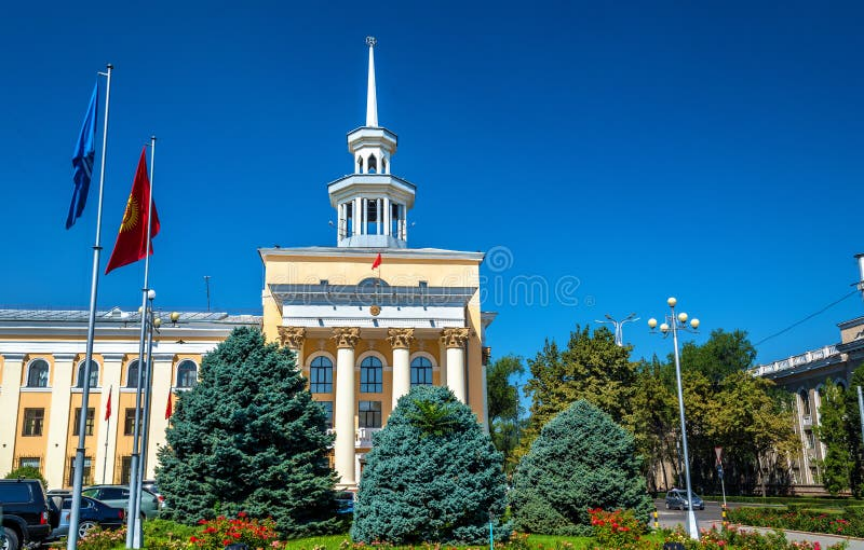
In terms of internet infrastructure, Kyrgyzstan’s internet penetration rate stands between 75% and 80%, while mobile phone penetration exceeds 130%. Mobile internet users constitute the vast majority of all internet users. Since the 2020s, the country has consistently advanced its digital infrastructure development: 4G networks cover major urban areas, and Bishkek along with several secondary cities enjoy relatively stable broadband and mobile data services. However, network coverage remains limited across rural and mountainous regions, constraining the speed of Web3 service penetration into lower-tier markets.
Historically, Kyrgyzstan shares deep-rooted ties with China in border trade, energy cooperation, and people-to-people exchanges. China is one of Kyrgyzstan’s largest trading partners, and numerous infrastructure cooperation projects have been implemented under the Belt and Road Initiative framework. This historical background provides cultural affinity and commercial trust for Chinese-origin Web3 enterprises such as TRON to operate in Kyrgyzstan. Justin Sun’s visit thus extends beyond business collaboration, it also embodies a broader strategic intent to deepen digital economic interconnectivity between the two nations.
Regarding local acceptance of cryptocurrency and Web3, Chainalysis’ Global Cryptocurrency Adoption Index ranks Kyrgyzstan 19th globally and places it at the top among Central Asian countries, indicating that public awareness of and participation in crypto assets already surpasses that of most economies of comparable size. This high adoption rate stems from both strong domestic demand for cross-border remittances and asset preservation, and from high receptivity among younger demographics toward digital assets. Additionally, long-standing Russian economic and cultural influence has cultivated broad openness and exploratory willingness toward emerging financial instruments, including cryptocurrencies.
All things considered, Kyrgyzstan is a relatively small yet digitally open Central Asian nation. Its youthful demographic structure, continuously improving internet infrastructure, deep historical ties with China, and leading global ranking in crypto adoption collectively form the societal and economic bedrock supporting its Web3 strategy.
II. Kyrgyzstan’s Web3 Strategy
Kyrgyzstan’s Web3 strategy is fundamentally a national pathway for a landlocked small economy to leapfrog ahead economically through digital finance. Its core concept comprises three progressive layers: First, legalization and regulation of virtual assets—establishing a legal framework for crypto trading, issuance, and services via legislation; second, industrial application of blockchain technology—including mining, data centers, and cross-border payments—under state-led initiatives; third, systematic construction of digital financial infrastructure, encompassing national stablecoins, central bank digital currencies (CBDCs), and a national crypto reserve.
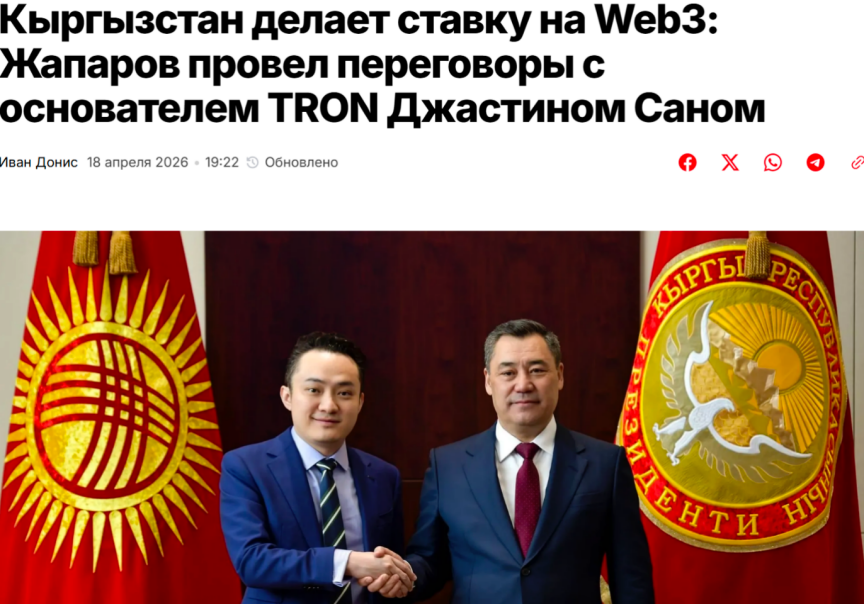
In terms of developmental evolution, Kyrgyzstan’s Web3 journey can be divided into three critical milestones. The first phase—the 2022 Legislative Pioneer Era—saw Kyrgyzstan become the first Central Asian country to introduce a comprehensive legal framework for virtual assets, delivering legal clarity to market participants and attracting mining capital from China, Russia, and elsewhere. The second phase—the 2025 Regulatory Systematization Era—witnessed parliamentary approval of comprehensive digital asset legislation, including key revisions to the Virtual Assets Law, introducing mechanisms such as stablecoin regulation, RWA tokenization, state-run mining, and a regulatory sandbox, which marks a policy shift from “free exploration” to “orderly regulation”. The third phase—the 2026 International Collaboration Era—began with CZ’s appointment as National Strategic Advisor for Blockchain and Web3 in April 2025 and continued with the introduction of Justin Sun and TRON in April 2026, signaling Kyrgyzstan’s entry into an acceleration phase powered by top-tier corporate partnerships.
The internal drivers behind this evolutionary logic are multifaceted. Abundant hydropower resources and low electricity costs provide a natural foundation for mining and data centers; its geographic centrality in Central Asia grants strategic access to the entire regional market; and the government’s strong openness and efficient policy execution provide institutional assurance. Kyrgyzstan is crafting a compelling case study in digital financial transformation—one that far exceeds its economic scale in strategic ambition.
III. Market Structure and Competition Landscape
From a Central Asian and broader Eurasian perspective, Kyrgyzstan’s Web3 market is characterized by a structure of “single dominant leader with multiple players competing". Here, “single dominant leader” does not refer to domestic market size, but rather to the country’s distinctive strategic path centered on high-level international partnerships that grant it first-mover advantages in regional competition.
In terms of legislative frameworks, the 2025 amendment to the Virtual Assets Law established a comprehensive and granular regulatory architecture. Regulatory authorities have been assigned 15 core functions spanning policy implementation, standard-setting, market entry, international cooperation, and enforcement oversight—all coordinated under the State Commission for Virtual Assets and Blockchain Technology Development, which reports directly to the President. The number of licensed virtual asset service providers continues to rise, and regulatory infrastructure projects are gradually emerging, steadily enhancing market maturity.
Regarding the mining ecosystem, statistical data for the first seven months of 2025 shows cryptocurrency exchange turnover reaching 1 trillion som (approximately USD 115 million), with industry tax revenue totaling around 1 billion som (approximately USD 11.5 million). Nationally, there are currently 169 cryptocurrency exchange operators, 13 digital asset exchanges, and 11 registered industrial cryptocurrency mining companies. New regulations (effective since January 2026) require all operational crypto exchanges to demonstrate a minimum capital of at least 1 billion som (approximately USD 115,000), a threshold expected to screen and regulate market participants over the medium to long term.
In terms of competitive positioning, neighboring Kazakhstan began embracing cryptocurrency mining as early as the early 2020s; Uzbekistan granted direct regulatory authority over digital assets via presidential decree; and Tajikistan has recently intensified research into blockchain applications. Kyrgyzstan’s key differentiation lies in the high-end nature of its international collaborations—from CZ to Justin Sun—the country engages directly with the world’s most elite Web3 resources and talent, bypassing generic international consulting firms. In the stablecoin domain, Kyrgyzstan is advancing not only KGST but also exploring gold-backed stablecoins and is promising to become one of the first countries globally to issue a sovereign stablecoin backed by physical gold.
IV. Core Risk Analysis
Although Kyrgyzstan’s Web3 strategy demonstrates robust momentum, investors and participants must remain clear-eyed about multiple risks confronting this initiative.
The primary risk is the structural tension between energy use and civilian livelihoods. The high energy consumption characteristic of mining operations creates visible pressure on residential electricity supply. Representatives from Bishkek have warned that large-scale cryptocurrency mining could disrupt household power delivery. Parliamentary data indicates that mining one bitcoin consumes approximately 800,000 kWh of electricity—enough to power roughly 1,200 apartments for one month. Winter peak electricity demand poses particular concern. As state-led national mining initiatives advance, fairness in energy allocation will remain a persistent source of social controversy and may challenge the sustainability of related policies.
The second risk is compliance cost pressure arising from overly rapid regulatory advancement. Starting in 2026, the 1-billion-som capital requirement, mandatory licensing regime, and national crypto reserve mechanism impose significant barriers to entry for small- and medium-sized startups. If regulatory frameworks evolve too quickly, they may stifle the healthy development of the domestic innovation ecosystem and result in market concentration where “large enterprises dominate, small players exit”, ultimately undermining diversified industry competition.
The third risk is uncertainty surrounding international partnerships. While the “dual-advisor” structure—featuring both CZ and Justin Sun—brings top-tier resources, it also means Kyrgyzstan’s Web3 strategy is partially contingent upon individual commercial interests and diplomatic relationships. Should the global crypto market experience major volatility or if associated enterprises face new regulatory pressures, the stability of these partnerships carries inherent uncertainty. Kyrgyzstan must strike a dynamic balance between leveraging external resources and preserving strategic autonomy.
The fourth risk is bottlenecks in human capital and technological infrastructure. As a landlocked country with a population of roughly 7 million and a modest economy, Kyrgyzstan still faces structural gaps in blockchain technical talent, internet penetration, and fintech startup ecosystems. Although joint sovereign AI R&D and digital banking services included in TRON proposals are directionally sound, their implementation demands substantial local talent and infrastructure support, making rapid, large-scale rollout unlikely in the short term.
V. Innovation Trends and Sector Opportunities
The most compelling aspect of Kyrgyzstan’s Web3 strategy lies in its systematic integration of multiple frontier trends.
Trend One: Dual-track national digital currency system. Kyrgyzstan is simultaneously piloting both the national stablecoin KGST and the central bank digital currency (CBDC) “Digital Som”. KGST is designed as a compliant, fiat-collateralized stablecoin (1:1 backed by real currency), targeting daily cross-border payments and settlement; “Digital Som” represents the nation’s sovereign CBDC exploration—with an official launch decision expected before year-end 2026. Coordinated advancement of these two instruments could enable Kyrgyzstan to build a complete digital currency infrastructure.
Trend Two: RWA tokenization unlocking digital transformation of the real economy. The 2025 Virtual Assets Law formally recognized the legality of tokenized real-world assets for the first time at the legislative level. Eligible assets include real estate, equipment, raw materials, and financial instruments. Given Kyrgyzstan’s abundant natural resources and comparatively low asset valuations, RWA tokenization could become a powerful tool to attract international capital. Kyrgyzstan may further explore tokenizing strategic assets including energy and mineral resources to open new financing channels.
Trend Three: Innovative practice of a national crypto reserve. Per the amended law, the national crypto reserve will be held by the state and accumulated through mining, issuance, tokenization, and targeted acquisitions, with the primary aim to strengthen national financial stability and support national digital initiatives. This arrangement signifies direct state participation in crypto markets; and the fate of this innovation hinges on transparency and governance quality in reserve management and usage.
Trend Four: A regulatory sandbox providing controlled experimental space for innovation. The President may authorize pilot regulation within designated zones and timeframes, allowing participants to develop innovative services and blockchain technologies under special conditions—without being fully bound by traditional legal constraints. Sandbox participants receive time-bound, non-transferable temporary licenses; business conditions follow current laws, while restrictions may be imposed with respect to duration, jurisdiction, transaction volume, and user scale. This mechanism offers secure testing environments for DeFi protocols, AI+blockchain applications, and other emerging use cases.
At the sector opportunity level, taking public blockchains as an example, TRON’s deployment in Kyrgyzstan positions itself not merely as a blockchain network but as the foundational technical infrastructure provider for the nation’s Web3 strategy. Justin Sun’s proposal for hydropower-driven data centers aligns closely with TRON’s green DePIN vision within its ecosystem; joint sovereign LLM development reflects the broader industry trend of AI+blockchain convergence; and digital banking services offer opportunities to embed TRON’s payment and settlement capabilities into traditional financial contexts. This “infrastructure + application ecosystem” dual-engine model lays the groundwork for TRON’s deep penetration across Central Asia.
From a cooperation mechanism perspective, the digital literacy enhancement program and blockchain technology promotion initiative proposed by Justin Sun represent a long-term ecosystem cultivation strategy. These soft-power collaborations will foster local demand for cryptocurrency and blockchain services over the medium to long term, building a sustainable user base for TRON’s growth. Especially in Central Asia, where youth populations dominate, the market potential for digital literacy education is significant.
It must be emphasized that the above investment logic is based on the current policy environment and partner relationships. This analysis is provided for informational purposes only and does not constitute any investment advice. Cryptocurrency markets are highly volatile; investors should conduct thorough risk assessments aligned with their own risk tolerance before making prudent decisions.
VI. Summary and Outlook
Based on the above analysis, Kyrgyzstan is undergoing a strategic transformation from an energy-dependent economy to a digital financial hub. Within less than two years, the country has completed a full-chain layout from pioneering legislation to appointing two globally preeminent Web3 figures, CZ and Justin Sun as strategic partners, demonstrating efficiency and strategic clarity rarely seen among emerging markets in Central Asia or globally.
From an investment timeline perspective, Kyrgyzstan’s Web3 strategy currently sits at a pivotal juncture of transitioning from the “infrastructure-building phase” to the “ecosystem-deployment phase”. The legislative framework is largely in place, top-tier partners have been onboarded, and the next critical step lies in how to convert paper-based agreements into quantifiable market outcomes. The progress of HTX’s operating license approval, the construction timeline of TRON’s data center, and the actual rollout of the KGST stablecoin will serve as crucial indicators for assessing the effectiveness of this strategy.
From a Central Asian and broader perspective, Kyrgyzstan’s Web3 strategy is redefining “the new financial pathway for small nations”. By proactively integrating elite international resources, constructing a systematic regulatory framework, and exploring innovations such as national digital currencies and national crypto reserves, the country stands poised to carve out differentiated competitiveness in the digital economy era. This Web3 experiment launched in Bishkek will not only shape Kyrgyzstan’s own economic future, but also offer a reference-worthy Asian model for developing countries worldwide seeking digital financial sovereignty. For investors and practitioners tracking the Central Asian Web3 landscape, Kyrgyzstan remains a strategically vital target worthy of sustained attention.