$35M Breakthrough: Irish Authorities Crack Bitcoin Wallet Linked To 2019 Drug Seizure

bitcoinistОпубликовано 2026-03-26Обновлено 2026-03-26

Введение

Irish authorities, with Europol's support, have successfully accessed a seized Bitcoin wallet containing 500 BTC (worth ~$35.4 million) linked to a 2019 drug case. The wallet, part of a larger 6,000 BTC seizure from a cannabis operation, had been inaccessible for years due to lost private keys. The breakthrough, involving technical decryption, raises the possibility of recovering the remaining 5,500 BTC (valued at ~$392 million) from other seized wallets. The assets were originally confiscated from Clifton Collins, who invested in Bitcoin early and stored his keys on a paper that was later lost.

Irish authorities have unlocked a seized Bitcoin (BTC) wallet linked to a large-scale drug case. The wallet, containing 500 BTC, had been inaccessible for seven years due to missing private keys, and opens the door to recovering a massive BTC stash from other seized wallets.

Irish Police Unlocks Seized Bitcoin Wallet

On Tuesday, Ireland’s National Police and Security Services announced that they had gained access to a seized crypto wallet containing 500 BTC, which were the proceeds of crime.

In a statement, the Criminal Assets Bureau (CAB), in collaboration with Europol’s European Cybercrime Centre, confirmed the seizure of approximately €30 million in crypto, worth around $35.4 million at current prices.

“Europol hosted operational meetings at its headquarters in The Hague, the Netherlands and provided critical support to Bureau investigators and analysts with the provision of highly complex technical expertise and decryption resources vital to the success of the operation,” authorities explained.

According to local reports, the wallet was seemingly part of a larger Bitcoin stash linked to a drug case. The wallet was seized, along with 11 other wallets, in 2019 and had been inaccessible to authorities over the past seven years due to the missing private keys.

The seizure marks a major development, as it is the first time the CAB has been able to access any of the wallets, which contained a total of 6,000 Bitcoin. Irish authorities did not confirm whether the recently seized assets were part of the case. However, data from the blockchain intelligence platform Arkham Intelligence suggests that the wallet is part of the assets stuck in limbo.

Arkham shows that a wallet associated with the case transferred 500 Bitcoin to an unknown address that subsequently moved the assets to Coinbase Prime on March 24. The wallet, labeled “Clifton Collins: Lost Keys,” had been inactive since January 2016.

The platform also links 13 other addresses to Collins, with total holdings of roughly 5,500 Bitcoin, worth $392.3 million at the time of writing.

Missing Keys Lock 5,500 BTC Away

The Bitcoin was originally confiscated from a 53-year-old former beekeeper from Dublin, Clifton Collins, who was involved in a “large-scale” cannabis operation nine years ago. Collins began cultivating cannabis full-time around 2005, renting properties around Ireland to grow crops and sell them in Dublin.

As reported by Bitcoinist, he managed to evade law enforcement until the police discovered €2,000 worth of cannabis in Collins’ vehicle in 2017, leading to his arrest and a wider investigation that uncovered his drug-growing operations.

During Bitcoin’s early years, Collins invested in BTC around 2011 and 2022, when it was worth only a fraction of its current value. As the flagship cryptocurrency surged in popularity and price, he decided to disperse his growing wealth across multiple virtual wallets, creating 12 wallets that were later seized by the police.

He told police that he had “meticulously” documented the keys to access these wallets on a sheet of paper hidden inside the aluminum cap of a fishing rod case kept at one of his rental properties in Galway.

Nonetheless, Collins claimed that the paper went missing after a break-in at his home. Reports argued that the fishing rod case could also have been likely incinerated after his landlord cleared the property and sent his belongings to a landfill following the arrest.

In any case, the loss of the sole copy of the private keys left the CAB with a digital fortune that remained inaccessible until now. The breakthrough could signal that a recovery of the 5,500 Bitcoin sitting in the other wallets is possible.

It’s worth noting that authorities had already forfeited assets worth $1.39 million, including $1.15 million in Bitcoin, to which Collins still had access codes.

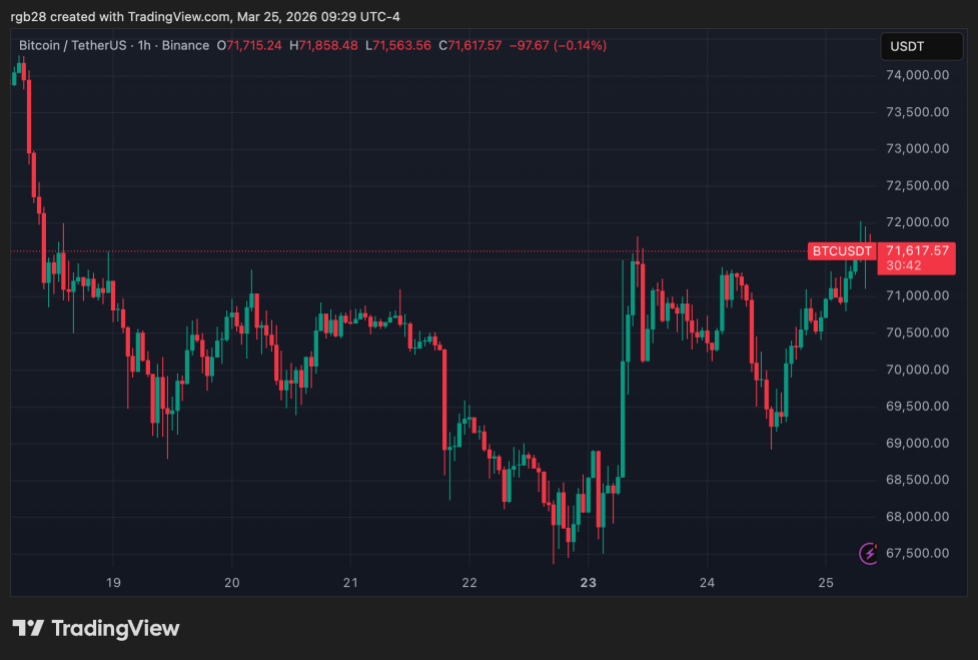
Bitcoin (BTC) trades at $71,617 in the one-week chart. Source: BTCUSDT on TradingView

Связанные с этим вопросы

QWhat was the total value of the Bitcoin wallet that Irish authorities successfully accessed, and how many BTC did it contain?

AThe Bitcoin wallet contained 500 BTC, which was worth approximately €30 million or $35.4 million at current prices.

QWhich law enforcement agencies collaborated to unlock the seized Bitcoin wallet, and what critical support did Europol provide?

AIreland’s Criminal Assets Bureau (CAB) collaborated with Europol’s European Cybercrime Centre. Europol hosted operational meetings and provided highly complex technical expertise and decryption resources vital to the success of the operation.

QWho was the original owner of the seized Bitcoin, and what criminal activity was he involved in?

AThe original owner was Clifton Collins, a 53-year-old former beekeeper from Dublin who was involved in a large-scale cannabis operation.

QHow did Clifton Collins store the private keys to his Bitcoin wallets, and what happened to them?

AHe stored the private keys on a sheet of paper hidden inside the aluminum cap of a fishing rod case. The paper went missing after a break-in at his home, and the fishing rod case was likely incinerated after his landlord cleared the property.

QHow much Bitcoin remains inaccessible in the other wallets linked to Clifton Collins, and what is its current estimated value?

ARoughly 5,500 Bitcoin remains inaccessible in the other wallets, which was worth approximately $392.3 million at the time the article was written.

Похожее

How Risky is the "Death Spiral" of MSTR and STRC?

Summary: This article explores the perceived "death spiral" risk between MicroStrategy (MSTR), its Bitcoin holdings, and its perpetual preferred stock (STRC), drawing comparisons to the LUNA-UST collapse. While both systems feature price anchors, high yields for holders, and potential feedback loops, their core mechanisms differ fundamentally. The MSTR-STRC structure relies on continuous financing to sustain its high dividend payouts, primarily through stock ATM offerings. A negative feedback cycle could occur: falling MSTR stock price makes raising equity capital harder, increasing pressure to sell Bitcoin, which undermines STRC confidence and further depresses MSTR. However, unlike LUNA-UST's automated, direct linkage, the MSTR-STRC loop is weaker and has brakes: STRC dividends can be deferred or rates lowered, and STRC holders have a $100/share liquidation preference in bankruptcy, providing a price floor. The company's sustainability hinges on its ability to continue financing. Its current ~$900 million USD reserves cover only about 6.3 months of its ~$1.71 billion annual interest/dividend burden. The next six months are critical, aligning with both the potential bottom in Bitcoin's four-year cycle and the depletion timeline of its reserves. While a LUNA-style catastrophic collapse is deemed highly unlikely due to structural differences, the key question is whether MicroStrategy can navigate this period through healthy deleveraging to restart its capital engine.

Foresight News13 мин. назад

How Risky is the "Death Spiral" of MSTR and STRC?

Foresight News13 мин. назад

How Much Debt Does Strategy Really Have? Is There a Risk of Implosion?

MicroStrategy's Debt Risk: A Turning Point in the "Never Sell" Strategy As of June 3, 2026, MicroStrategy holds 843,706 bitcoins (valued at ~$53.1B) but faces significant financial obligations. Its capital structure includes $6.75B in convertible notes and $15.48B in perpetual preferred stock (led by the $8.5B STRC series), creating an annual payout burden of ~$1.71B. With software revenue at only ~$500M, interest and dividend obligations far exceed operating income. A critical shift occurred in late May 2026 when the company sold 32 bitcoins for ~$2.5M to cover dividends, breaking CEO Michael Saylor's long-standing "never sell" pledge. This symbolic move triggered a sharp decline in both Bitcoin's price and MSTR stock, reflecting market fears about cash flow sustainability. The core of the strain is the STRC perpetual preferred stock, designed as a "permanent loan" with no maturity date but requiring high monthly dividends (currently 11.5%). Its business model relies on a three-part cycle: issuing new STRC shares, using proceeds to buy more Bitcoin and fund a USD reserve, and using that reserve to pay dividends. This cycle depends on continuous investor demand for STRC and Bitcoin's price appreciation. Analysis shows Bitcoin needs to appreciate at least 2.3% annually to cover the $1.71B in yearly obligations at current holdings. With Bitcoin price down ~22% from March 2026 highs, this pressure has intensified. The company's $900M USD reserve can only cover about 7 months of payments if STRC issuance stalls. Key risks are not immediate bankruptcy or forced Bitcoin liquidation (as BTC is not collateral), but rather: 1) The erosion of MSTR's premium to its Bitcoin holdings (mNAV), which would cripple its ability to raise cheap capital; 2) A vicious cycle where stagnant Bitcoin prices reduce STRC demand, draining the USD reserve and forcing BTC sales, further depressing prices. The period from February 2027 to September 2028 is a crucial test, with over $5.9B in convertible notes facing put options or maturity. In essence, MicroStrategy has evolved from a simple Bitcoin holder into a complex financial entity acting like a "private Bitcoin bank," leveraging its BTC holdings to create layered financial products. Its survival depends on maintaining Bitcoin's price trend, its stock premium, and market appetite for its preferred shares. The recent token sale marks not a betrayal of its Bitcoin thesis, but an admission that the leveraged strategy must eventually be paid for.

marsbit24 мин. назад

How Much Debt Does Strategy Really Have? Is There a Risk of Implosion?

marsbit24 мин. назад

Anthropic Cries Wolf: Is the AGI Threat Real, or Just an IPO Story?

Anthropic has published an article titled "When AI builds itself," discussing the emerging concept of "recursive self-improvement," where AI begins to actively participate in designing, training, testing, and optimizing its own subsequent versions. The company presents internal data showing that by May 2026, over 80% of code merged into its codebase was written by Claude, its AI model. Claude's capabilities have expanded to handling complex, open-ended engineering tasks, achieving a 76% success rate in such areas, and even contributing to research processes, such as optimizing code performance and conducting AI safety experiments. Anthropic outlines an evolution from human-driven development to AI-assisted workflows, culminating in the current stage where AI agents can autonomously write, run, and delegate code. The company cautions that the path toward a "closed loop," where AI continuously improves itself, is becoming visible. It calls for coordinated global mechanisms to potentially slow or pause frontier AI development to allow safety research and societal structures to catch up. However, the timing of this warning coincides with Anthropic's preparations for an IPO, framing the narrative not just as a safety concern but also as a demonstration of Claude's advanced capabilities and its integral role in accelerating Anthropic's own R&D—creating a potential "flywheel" effect for competitive advantage. This contrasts with OpenAI's recent, more policy-oriented discussion of the same risks, highlighting the competitive dynamics in the AI industry as companies position themselves in both the technological and regulatory landscape.

marsbit1 ч. назад

Anthropic Cries Wolf: Is the AGI Threat Real, or Just an IPO Story?

marsbit1 ч. назад

Торговля

Спот
Фьючерсы

Популярные статьи

Тест по Bitcoin Биткоина

HTX Learn: Изучите Bitcoin halving и Заработаете Токены USDT

3.1k просмотров всегоОпубликовано 2024.04.16Обновлено 2024.04.16

Тест по Bitcoin  Биткоина

Что такое $BITCOIN

ЦИФРОВОЕ ЗОЛОТО ($BITCOIN): Комплексный анализ Введение в ЦИФРОВОЕ ЗОЛОТО ($BITCOIN) ЦИФРОВОЕ ЗОЛОТО ($BITCOIN) — это проект на основе блокчейна, работающий в сети Solana, который стремится объединить характеристики традиционных драгоценных металлов с инновациями децентрализованных технологий. Хотя он носит имя Биткойн, часто называемого “цифровым золотом” из-за его восприятия как средства хранения ценности, ЦИФРОВОЕ ЗОЛОТО является отдельным токеном, предназначенным для создания уникальной экосистемы в ландшафте Web3. Его цель — позиционировать себя как жизнеспособный альтернативный цифровой актив, хотя детали его применения и функциональности все еще развиваются. Что такое ЦИФРОВОЕ ЗОЛОТО ($BITCOIN)? ЦИФРОВОЕ ЗОЛОТО ($BITCOIN) — это токен криптовалюты, специально разработанный для использования в блокчейне Solana. В отличие от Биткойна, который выполняет широко признанную роль хранения ценности, этот токен, похоже, сосредоточен на более широких приложениях и характеристиках. Примечательные аспекты включают: Инфраструктура блокчейна: Токен построен на блокчейне Solana, известном своей способностью обрабатывать высокоскоростные и недорогие транзакции. Динамика предложения: ЦИФРОВОЕ ЗОЛОТО имеет максимальное предложение, ограниченное 100 квадриллионами токенов (100P $BITCOIN), хотя детали о его обращающемся предложении в настоящее время не раскрыты. Утилита: Хотя точные функциональные возможности не описаны, есть указания на то, что токен может быть использован для различных приложений, потенциально связанных с децентрализованными приложениями (dApps) или стратегиями токенизации активов. Кто создатель ЦИФРОВОГО ЗОЛОТА ($BITCOIN)? На данный момент личность создателей и команды разработчиков, стоящих за ЦИФРОВЫМ ЗОЛОТОМ ($BITCOIN), остается неизвестной. Эта ситуация типична для многих инновационных проектов в области блокчейна, особенно тех, которые связаны с децентрализованными финансами и феноменом мем-криптовалют. Хотя такая анонимность может способствовать культуре, ориентированной на сообщество, она усиливает опасения по поводу управления и ответственности. Кто инвесторы ЦИФРОВОГО ЗОЛОТА ($BITCOIN)? Доступная информация указывает на то, что у ЦИФРОВОГО ЗОЛОТА ($BITCOIN) нет известных институциональных спонсоров или значительных венчурных капиталовложений. Проект, похоже, функционирует по модели пирингового взаимодействия, сосредоточенной на поддержке и принятии сообществом, а не на традиционных путях финансирования. Его активность и ликвидность в основном сосредоточены на децентрализованных биржах (DEX), таких как PumpSwap, а не на устоявшихся централизованных торговых платформах, что еще больше подчеркивает его подход, ориентированный на grassroots. Как работает ЦИФРОВОЕ ЗОЛОТО ($BITCOIN) Операционные механизмы ЦИФРОВОГО ЗОЛОТА ($BITCOIN) можно подробно описать на основе его дизайна блокчейна и характеристик сети: Механизм консенсуса: Используя уникальный механизм доказательства истории (PoH) Solana в сочетании с моделью доказательства доли (PoS), проект обеспечивает эффективную валидацию транзакций, что способствует высокой производительности сети. Токеномика: Хотя конкретные дефляционные механизмы не были подробно описаны, большое максимальное предложение токенов подразумевает, что оно может быть предназначено для микротранзакций или нишевых случаев использования, которые еще предстоит определить. Интероперабельность: Существует потенциал для интеграции с более широкой экосистемой Solana, включая различные платформы децентрализованных финансов (DeFi). Однако детали относительно конкретных интеграций остаются неуточненными. Хронология ключевых событий Вот хронология, которая подчеркивает значимые вехи, касающиеся ЦИФРОВОГО ЗОЛОТА ($BITCOIN): 2023: Первоначальное развертывание токена происходит в блокчейне Solana, отмеченное его адресом контракта. 2024: ЦИФРОВОЕ ЗОЛОТО приобретает видимость, когда оно становится доступным для торговли на децентрализованных биржах, таких как PumpSwap, позволяя пользователям обменивать его на SOL. 2025: Проект наблюдает спорадическую торговую активность и потенциальный интерес к инициативам, возглавляемым сообществом, хотя на данный момент не зафиксировано никаких значительных партнерств или технических достижений. Критический анализ Сильные стороны Масштабируемость: Основная инфраструктура Solana поддерживает высокие объемы транзакций, что может повысить полезность $BITCOIN в различных сценариях транзакций. Доступность: Потенциально низкая цена торговли за токен может привлечь розничных инвесторов, способствуя более широкому участию благодаря возможностям дробного владения. Риски Отсутствие прозрачности: Отсутствие публично известных спонсоров, разработчиков или процесса аудита может вызвать скептицизм относительно устойчивости и надежности проекта. Волатильность рынка: Торговая активность сильно зависит от спекулятивного поведения, что может привести к значительной волатильности цен и неопределенности для инвесторов. Заключение ЦИФРОВОЕ ЗОЛОТО ($BITCOIN) является интригующим, но неоднозначным проектом в быстро развивающейся экосистеме Solana. Хотя он пытается использовать нарратив “цифрового золота”, его отход от установленной роли Биткойна как средства хранения ценности подчеркивает необходимость более четкого различения его предполагаемой утилиты и структуры управления. Будущее принятие и усвоение, вероятно, будут зависеть от решения текущей непрозрачности и более четкого определения его операционных и экономических стратегий. Примечание: Этот отчет охватывает синтезированную информацию, доступную на октябрь 2023 года, и с тех пор могут произойти события.

99 просмотров всегоОпубликовано 2025.05.13Обновлено 2025.05.13

Что такое $BITCOIN

Fractal Bitcoin: масштабирование Биткоина с помощью рекурсивной системы

Fractal Bitcoin — масштабное Layer-1-решнение, созданное на базе кода Биткоина, позволяющего достигать бесконечного масштабирования с помощью рекурсивного подхода.

2.3k просмотров всегоОпубликовано 2025.06.30Обновлено 2025.06.30

Fractal Bitcoin: масштабирование Биткоина с помощью рекурсивной системы

Обсуждения

Добро пожаловать в Сообщество HTX. Здесь вы сможете быть в курсе последних новостей о развитии платформы и получить доступ к профессиональной аналитической информации о рынке. Мнения пользователей о цене на BTC (BTC) представлены ниже.

活动图片