# Simulation Related Articles

HTX News Center provides the latest articles and in-depth analysis on "Simulation", covering market trends, project updates, tech developments, and regulatory policies in the crypto industry.

Physical AI is Hot, Some New Thoughts from Me

The term "Physical AI" is gaining significant traction, marking a shift from AI that processes information to AI that understands and interacts with the physical world. Unlike traditional AI confined to screens, Physical AI involves integrating intelligence into robotic bodies to perform tasks in environments governed by gravity, friction, and inertia. The concept, formally defined in a 2020 paper, focuses on creating embodied systems that can complete perception-to-action cycles. 2026 is identified as a pivotal "deployment year," where the focus moves from demonstrations to practical utility. Companies like China's Zhiyuan Robotics have transitioned to live, unscripted factory deployments and announced mass production targets. Internationally, Figure AI, after a major funding round, shifted to its own neural system, while NVIDIA partnered with major industrial robot firms to upgrade millions of existing units with AI capabilities. A key trend is the crossover from the automotive supply chain. Companies like Aptiv and Valeo are entering the Physical AI space, leveraging their expertise in sensors, control systems, and mass production from the autonomous vehicle sector. This "technology spillover" is accelerating development, as seen with Tesla's plans to repurpose automotive production lines for its Optimus robot. The technical breakthrough enabling this progress is the engineering maturity of "world models." Previously theoretical, these AI models can now simulate physical interactions and generate vast, realistic synthetic training data for robots. Innovations from NVIDIA's Cosmos, Ant's LingBot-World, and others have made this capability more accessible, drastically reducing the cost and time needed for real-world data collection. This is driving a fundamental architectural shift in robotics: from the traditional "sense-plan-act" model, reliant on pre-programmed rules, to a "sense-reason-act" paradigm where neural networks reason and make decisions. This change represents a new paradigm where machines understand the world's physics. The competition is intense, with the landscape still forming. While the direction is clear, success will depend not just on AI algorithms but on manufacturing scalability, supply chain resilience, and efficient data strategies, with infrastructure providers potentially capturing significant value in this new era.

marsbit05/18 04:43

Physical AI is Hot, Some New Thoughts from Me

marsbit05/18 04:43

Auto Research Era: 47 Tasks Without Standard Answers Become the Must-Test Leaderboard for Agent Capabilities

The article introduces Frontier-Eng Bench, a new benchmark for AI agents developed by Einsia AI's Navers lab. Unlike traditional tests with clear answers, this benchmark presents 47 complex, real-world engineering tasks—such as optimizing underwater robot stability, battery fast-charging protocols, or quantum circuit noise control—where there is no single correct solution, only continuous optimization towards a limit. It shifts AI evaluation from static knowledge retrieval to a dynamic "engineering closed-loop": the AI must propose solutions, run simulations, interpret errors, adjust parameters, and re-run experiments to iteratively improve performance. This process tests an agent's ability to learn and evolve through long-term feedback, much like a human engineer tackling trade-offs between power, safety, and performance. Key findings from the benchmark reveal two patterns: 1) Improvements follow a power-law decay, becoming harder and smaller as optimization progresses, and 2) While exploring multiple solution paths (breadth) helps, sustained depth in a single path is crucial for breakthrough innovations. The research suggests this marks a step toward "Auto Research," where AI systems can autonomously conduct continuous, tireless optimization in scientific and engineering domains. Humans would set high-level goals, while AI agents handle the iterative experimentation and refinement. This could fundamentally change research and development workflows.

marsbit05/13 07:06

Auto Research Era: 47 Tasks Without Standard Answers Become the Must-Test Leaderboard for Agent Capabilities

marsbit05/13 07:06

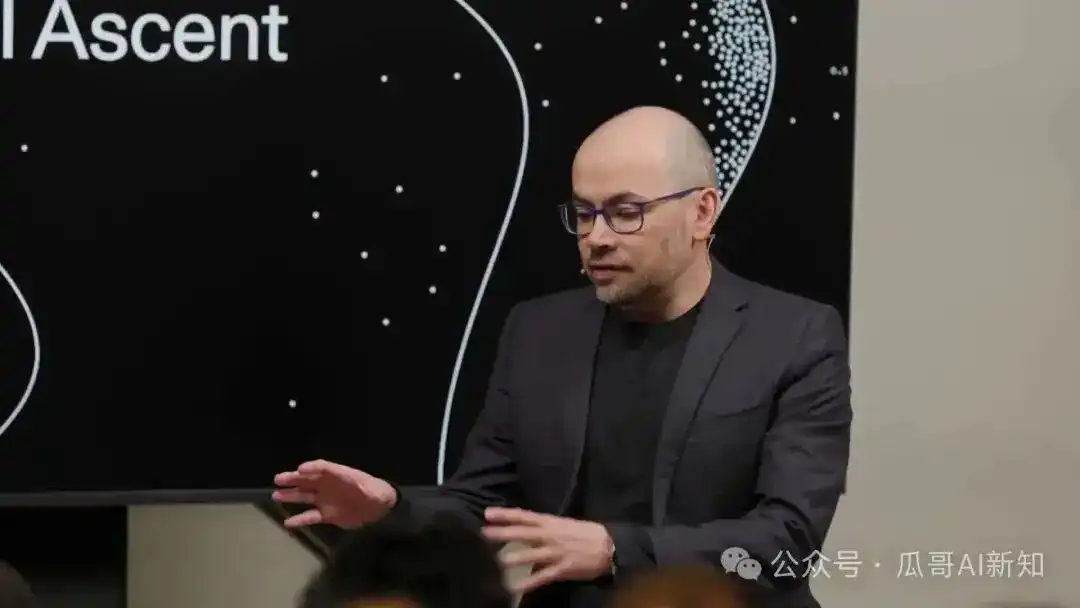
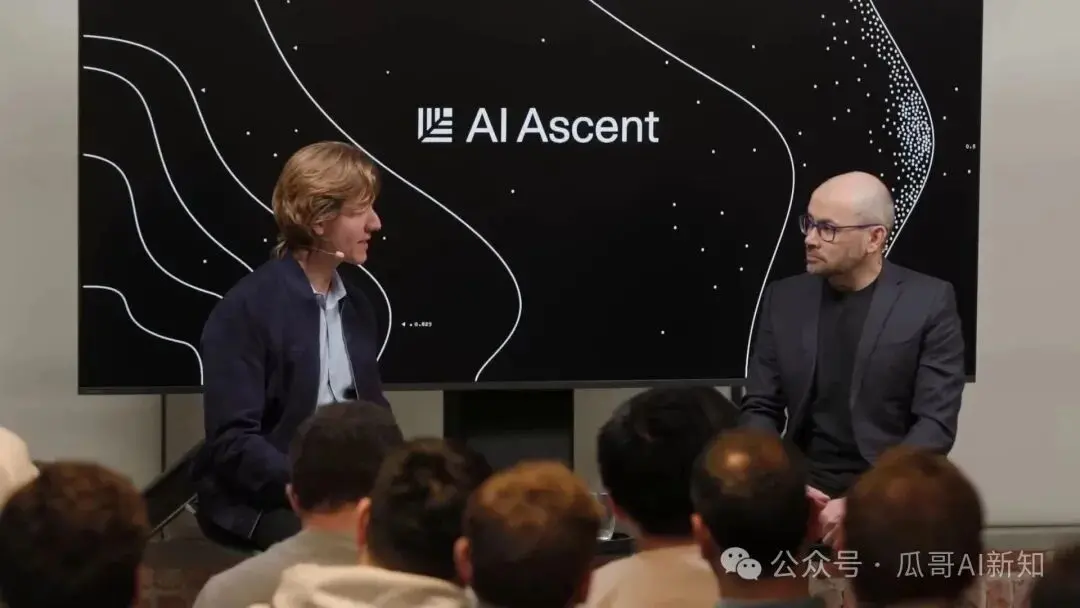
Sequoia Interview with Hassabis: Information is the Essence of the Universe, AI Will Open Up Entirely New Scientific Branches

Demis Hassabis, co-founder and CEO of Google DeepMind and Nobel laureate, discusses the path to AGI and its profound implications in a Sequoia Capital interview. He outlines his lifelong dedication to AI, tracing his journey from game development (e.g., *Theme Park*)—a perfect AI testing ground—to neuroscience and finally founding DeepMind in 2009. He emphasizes the critical lesson of being "5 years, not 50 years, ahead of time" for successful entrepreneurship. Hassabis reiterates DeepMind's two-step mission: first, solve intelligence by building AGI; second, use AGI to tackle other complex problems. He highlights the transformative potential of "AI for Science," particularly in biology where tools like AlphaFold have revolutionized protein folding. He envisions AI-powered simulations drastically shortening drug discovery from years to weeks and enabling personalized medicine. Furthermore, he predicts AI will spawn new scientific disciplines, such as an engineering science for understanding complex AI systems (mechanistic interpretability) and novel fields enabled by high-fidelity simulators for complex systems like economics. He posits a fundamental worldview where information, not just matter or energy, is the essence of the universe, making AI's information-processing core uniquely suited to understanding reality. He defends classical Turing machines as potentially sufficient for modeling complex phenomena, including quantum systems, as demonstrated by AlphaFold. On consciousness, Hassabis suggests first building AGI as a powerful tool, then using it to explore deep philosophical questions. He believes components like self-awareness and temporal continuity are necessary for consciousness but that defining it fully remains an open challenge. He predicts AGI could arrive around 2030 and, once achieved, would be used to probe the deepest questions of science and reality, much as envisioned in David Deutsch's *The Fabric of Reality*.

链捕手05/12 02:15

Sequoia Interview with Hassabis: Information is the Essence of the Universe, AI Will Open Up Entirely New Scientific Branches

链捕手05/12 02:15

a16z: The Next Frontier of AI, The Triple Flywheel of Robotics, Autonomous Science, and Brain-Computer Interfaces

a16z presents a comprehensive investment thesis for the next frontier of AI: Physical AI, centered on a synergistic flywheel of robotics, autonomous science, and novel human-computer interfaces (HCIs) like brain-computers. While the current AI paradigm scales on language and code, the most disruptive future capabilities will emerge from three adjacent fields leveraging five core technical primitives: 1) learned representations of physical dynamics (via models like VLA, WAM, and native embodied models), 2) embodied action architectures (e.g., dual-system designs, diffusion-based motion generation, and RL fine-tuning like RECAP), 3) simulation and synthetic data as scaling infrastructure, 4) expanded sensory channels (touch, neural signals, silent speech, olfaction), and 5) closed-loop agent systems for long-horizon tasks. These primitives converge to power three key domains: * **Robotics:** The literal embodiment of AI, requiring all primitives for real-world physical interaction and manipulation. * **Autonomous Science:** Self-driving labs that conduct hypothesis-experiment-analysis loops, generating structured, causally-grounded data to improve physical AI models. * **Novel HCIs:** Devices (AR glasses, EMG wearables, BCIs) that expand human-AI bandwidth and act as massive data-collection networks for real-world human experience. These domains form a mutually reinforcing flywheel: Robotics enable autonomous labs, which in turn generate valuable data for robotics and materials science. New interfaces provide rich human-physical interaction data to train better robots and scientists. Together, they represent a new scaling axis for AI, moving beyond the digital realm to interact with and learn from physical reality, promising significant emergent capabilities and value.

marsbit04/18 07:05

a16z: The Next Frontier of AI, The Triple Flywheel of Robotics, Autonomous Science, and Brain-Computer Interfaces

marsbit04/18 07:05

The Year of Physical AI: A Trillion-Dollar Gamble on 'How the World Works'

The year 2026 is being positioned as the dawn of the "Physical AI" era, marked by major funding rounds and technological breakthroughs. This shift signifies AI's evolution from understanding the digital world to perceiving and acting within the physical world. Key events include Yann LeCun's AMI Labs raising $1.03 billion to develop "world models," Fei-Fei Li's World Labs securing funding, and companies like Tesla deploying humanoid robots (Optimus) in factories. This transition expands the AI model competition into a broader infrastructure battle encompassing hardware, data, simulation, and real-world integration. The core debate is between two AI paths: the established LLM (Large Language Model) approach focused on text prediction and the emerging "world model" approach, which aims to understand physical states for action-oriented tasks. Hardware, particularly dexterous robotic hands, is a critical and expensive challenge. Companies are racing to build capable robotic bodies, with Tesla, Boston Dynamics, and Figure AI making significant progress. NVIDIA is positioning itself as the essential infrastructure provider for this new era, offering a full suite of development tools and platforms. A major bottleneck is the scarcity of high-quality physical world interaction data, with companies exploring solutions through real-world data collection, synthetic data generation, and human teleoperation. Substantial investments in Q1 2026, exceeding $6.4 billion, signal strong belief in Physical AI's potential, moving beyond concept validation into infrastructure building. While challenges like the sim-to-real gap, unproven business models, and safety regulations remain, the tangible engineering progress suggests this is a genuine technological inflection point, not merely a bubble. For the global Chinese community, this shift represents a significant structural opportunity to leverage their strengths in technology, engineering, hardware manufacturing, and cross-border collaboration to become key players in building the foundational layers of the Physical AI ecosystem.

marsbit04/03 09:39

The Year of Physical AI: A Trillion-Dollar Gamble on 'How the World Works'

marsbit04/03 09:39

From Campus to Capital: BUPT Senior Secures 30 Million Investment in 10 Days

Based on the provided text, here is the English summary: Guo Hangjiang, a 20-year-old senior student at Beijing University of Posts and Telecommunications, developed an AI engine called MiroFish in just 10 days. The project, which generates thousands of unique digital agents with distinct personalities, memories, and behaviors to simulate and predict outcomes in virtual worlds, quickly gained massive attention. It topped GitHub's global trending chart, amassing over 22,000 stars. His work caught the eye of Chinese billionaire Chen Tianqiao, former founder of Shanda Group and an advocate of the "super individual" theory. Impressed by a simple demo video, Chen committed 30 million RMB (approximately $4.1 million USD) to incubate the project, transforming Guo from an intern into a CEO overnight. MiroFish's core functionality involves processing a document (e.g., news, policy draft, novel) to extract entities and relationships into a knowledge graph using GraphRAG. It then spawns autonomous AI agents that can form groups, develop opinions, and exhibit herd mentality. A key feature is the "God's Perspective," allowing users to inject new variables (e.g., "Fed cuts rates by 50 basis points") and observe the simulated world recalibrate in real-time, enabling controlled experiments impossible in reality. The open-source framework, released under AGPL-3.0, utilizes the OASIS simulation engine, Zep Cloud for long-term memory, and is deployable via Docker. Demonstrated use cases include predicting the lost ending of the classic novel "Dream of the Red Chamber" and simulating market reactions to a Federal Reserve interest rate hike. The article notes that while MiroFish is a sophisticated multi-agent framework capable of revealing unforeseen scenarios, it has not published benchmark tests against real-world outcomes, inherits potential biases, and its simulated humans are not real. Chen Tianqio's investment is ultimately a bet on the emerging era of the "super individual."

比推03/16 06:45

From Campus to Capital: BUPT Senior Secures 30 Million Investment in 10 Days

比推03/16 06:45

活动图片